Vibrant Mediterranean Beef Stir-Fry with Feta, Zucchini and Cherry Tomatoes
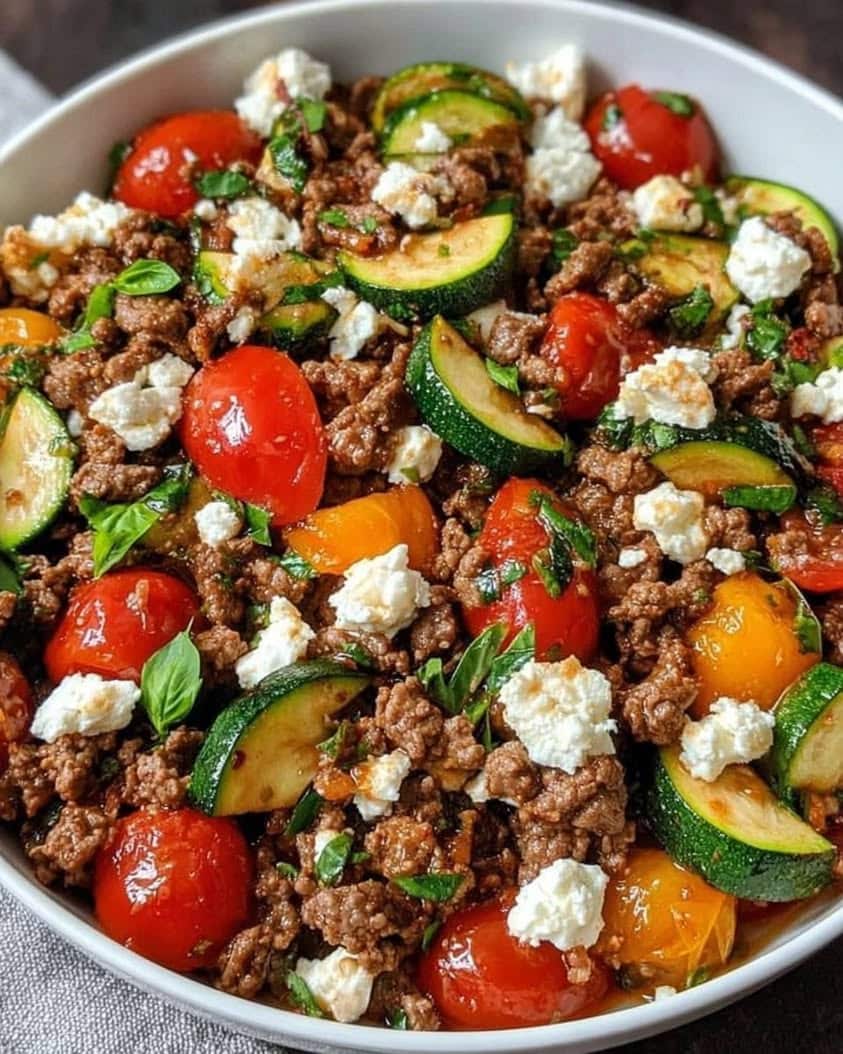
This Vibrant Mediterranean Beef Stir-Fry with Feta, Zucchini and Cherry Tomatoes brings the sunny flavors of the Greek islands straight to your weeknight dinner table. Therefore, when you take that first bite, you taste tender strips of seasoned beef mingling with sweet burst cherry tomatoes, crisp zucchini, and creamy, salty feta cheese. Consequently, this Mediterranean beef stir-fry with feta, zucchini and cherry tomatoes delivers bold flavor in under thirty minutes, which makes it a perfect choice for busy cooks who refuse to sacrifice taste for speed.
Moreover, the aroma alone will pull your family into the kitchen. As the beef sears in a hot skillet, it releases a rich, savory scent that blends beautifully with garlic, oregano, and a squeeze of fresh lemon. Meanwhile, the zucchini turns golden at the edges, and the cherry tomatoes blister and pop, creating a natural sauce that coats every ingredient. Because this Mediterranean beef stir-fry with feta, zucchini and cherry tomatoes relies on simple, fresh components, you never need fancy techniques or specialty equipment. Instead, a single skillet and a few quality ingredients do all the heavy lifting.
Additionally, this dish fits a wide range of eating styles without any fuss. For example, you can serve it over rice, toss it with pasta, or spoon it into warm pita bread. Furthermore, the combination of lean protein, colorful vegetables, and healthy fats keeps you satisfied for hours. Similarly, the Mediterranean diet itself has earned praise from nutritionists for supporting heart health and overall wellness, so this Mediterranean beef stir-fry with feta, zucchini and cherry tomatoes lets you eat well while enjoying every single bite.
Quick Recipe Highlights
- Flavor Profile: The beef brings a deep, savory note, while the feta adds a tangy, salty punch. Additionally, fresh lemon juice and oregano tie everything together with a bright, herbal finish.
- Texture: Tender beef strips contrast nicely with crisp-tender zucchini and juicy, bursting cherry tomatoes. Meanwhile, crumbled feta adds a creamy, crumbly element that keeps each bite interesting.
- Aroma: Garlic and oregano fill the air the moment they hit the hot pan. Consequently, the smell alone signals that something fresh and comforting is on the way.
- Visual Appeal: Deep green zucchini, ruby-red tomatoes, and snowy white feta create a stunning color contrast. Furthermore, a sprinkle of fresh parsley on top makes the dish look restaurant-worthy.
- Skill Level Needed: This recipe suits beginners because it requires only basic knife skills and simple skillet cooking. Moreover, the short cook time means you can watch the ingredients closely and adjust as you go.
- Special Equipment: You need a large skillet or wok, a sharp chef’s knife, and a cutting board. Likewise, a wooden spoon or spatula helps you toss everything without scratching your pan.
Recipe Overview
- Difficulty Level: This recipe earns an easy rating because it uses straightforward steps and common ingredients. Additionally, the total cooking time stays under fifteen minutes, so there is little room for error. Furthermore, even a first-time cook can produce impressive results with minimal practice.
- Category: This dish works as a main course for lunch or dinner. Similarly, you can serve it as part of a larger Mediterranean spread with hummus, tabbouleh, and warm flatbread.
- Cuisine: The recipe draws inspiration from Greek and broader Mediterranean cooking traditions. Consequently, it highlights ingredients like olive oil, oregano, lemon, and feta that define the region’s cuisine. Moreover, the stir-fry technique adds a modern, quick-cooking twist to those classic flavors.
- Cost: You can prepare this meal for roughly twelve to sixteen dollars for four servings. Furthermore, beef sirloin or flank steak often goes on sale, and zucchini and cherry tomatoes remain affordable year-round.
- Season: Summer offers the best version because zucchini and cherry tomatoes peak in flavor and price. However, modern grocery stores carry quality produce all year, so you can enjoy this Mediterranean beef stir-fry with feta, zucchini and cherry tomatoes whenever a craving strikes.
- Occasion: This recipe shines for weeknight dinners, casual gatherings, or meal prep Sundays. Additionally, it works beautifully for a light lunch the next day, and the leftovers taste just as good cold or gently reheated.
Why You’ll Love This Recipe
First and foremost, the taste and texture of this Mediterranean beef stir-fry with feta, zucchini and cherry tomatoes will win you over immediately. The beef stays juicy and tender because you slice it against the grain and cook it hot and fast. Meanwhile, the zucchini keeps a slight crunch, and the cherry tomatoes burst into a sweet, jammy sauce. Consequently, every forkful delivers a balanced mix of savory, salty, sweet, and bright notes that keep you coming back for more.
Secondly, convenience makes this recipe a weeknight hero. Because the entire dish comes together in one skillet, you spend less time cleaning and more time enjoying your meal. Additionally, the prep work takes only fifteen minutes, and the cook time clocks in at twelve minutes. Therefore, you can walk through the door at six and sit down to eat by half past six without any stress or complicated planning.
Thirdly, the nutritional profile gives you plenty of reasons to feel good about dinner. Lean beef supplies high-quality protein, iron, and zinc, while zucchini delivers fiber and vitamin C. Furthermore, cherry tomatoes pack antioxidants like lycopene, and olive oil provides heart-healthy monounsaturated fats. As a result, this Mediterranean beef stir-fry with feta, zucchini and cherry tomatoes supports a balanced diet without feeling like diet food.
Fourthly, this dish shines when you entertain. Because it looks beautiful on a platter with its vibrant colors, guests always assume you spent hours in the kitchen. Moreover, the recipe doubles easily, so you can feed a crowd without breaking a sweat. Consequently, whether you host a casual backyard dinner or a holiday gathering, this Mediterranean beef stir-fry with feta, zucchini and cherry tomatoes delivers impressive results every time.
Finally, the cost-effectiveness and accessibility of the ingredients make this recipe a smart choice for any budget. You likely already own the olive oil, garlic, and dried oregano in your pantry. Meanwhile, flank steak, zucchini, and cherry tomatoes remain easy to find at any supermarket. Therefore, you get a restaurant-quality meal at a fraction of the price, and you control exactly what goes into your food.
Historical Background and Cultural Significance
The origins of this dish trace back to the broader Mediterranean region, where cooks have combined olive oil, vegetables, and grilled meats for thousands of years. Specifically, Greek and Italian kitchens have long celebrated the marriage of tomatoes, zucchini, and salty cheese. Consequently, when you prepare this Mediterranean beef stir-fry with feta, zucchini and cherry tomatoes, you participate in a culinary tradition that stretches across centuries and countless family tables.
Culturally, the Mediterranean diet represents more than just food; it embodies a lifestyle centered on fresh ingredients, shared meals, and relaxed dining. In Greece, for instance, families gather around tables laden with vegetable dishes, grilled meats, and copious amounts of olive oil. Furthermore, feta cheese holds protected designation status in the European Union, which underscores its deep cultural importance to the region.
Over time, this recipe evolved as cooks adapted traditional Mediterranean flavors to modern, fast-paced kitchens. Originally, home cooks braised meats and vegetables slowly in clay pots. However, the rise of the stir-fry technique, borrowed from Asian cooking, introduced a quicker method that preserves texture and nutrients. Consequently, this Mediterranean beef stir-fry with feta, zucchini and cherry tomatoes represents a fusion of old-world flavor and new-world efficiency.
Regional variations abound across the Mediterranean. For example, Greek cooks might add a pinch of cinnamon or a splash of red wine vinegar, while Italian versions sometimes include basil and Parmesan instead of feta. Meanwhile, Middle Eastern interpretations might feature sumac, cumin, or tahini. Therefore, you can treat this recipe as a flexible template and adjust the seasonings to reflect your favorite corner of the Mediterranean.
Ingredient Deep Dive
Beef Sirloin or Flank Steak: Beef has played a central role in Mediterranean cooking since ancient times, particularly in Greek and Italian cuisines where grilled and braised meats anchor celebratory meals. Nutritionally, beef provides complete protein, heme iron, zinc, and B vitamins, all of which support muscle function and energy. When selecting beef for this Mediterranean beef stir-fry with feta, zucchini and cherry tomatoes, look for bright red color, fine marbling, and a fresh, clean scent. Store it in the coldest part of your refrigerator and use it within three to five days. If you prefer a substitute, chicken breast, lamb shoulder, or even firm tofu work beautifully in place of the beef.
Zucchini: Zucchini originated in Central America but found a loving home in Mediterranean kitchens after explorers brought it to Europe. Today, Italian and Greek cooks prize zucchini for its versatility and mild flavor that soaks up seasonings. Furthermore, zucchini offers vitamin C, potassium, and fiber with very few calories. Choose small to medium zucchini that feel firm and heavy for their size, and avoid any with soft spots or wrinkled skin. Store zucchini in a plastic bag in your crisper drawer for up to a week. If you need a substitute, yellow squash, eggplant, or green beans all work well.
Cherry Tomatoes: Cherry tomatoes trace their roots to the Andes region of South America, yet they became a staple of Mediterranean cuisine after Spanish and Italian traders carried them across the Atlantic. These small, sweet tomatoes burst with lycopene, vitamin C, and antioxidants that support heart health. When buying cherry tomatoes, pick firm, glossy ones with their stems still attached if possible. Keep them at room temperature away from direct sunlight to preserve their flavor. If cherry tomatoes are unavailable, grape tomatoes or chopped Roma tomatoes make excellent alternatives.
Feta Cheese: Feta originated in Greece and has been produced there for at least six thousand years, making it one of the world’s oldest cheeses. Traditionally made from sheep’s milk or a sheep and goat blend, feta brings a tangy, salty character that elevates any dish. Additionally, feta delivers calcium, protein, and beneficial bacteria from the brining process. Look for feta packed in brine rather than vacuum-sealed blocks, because the brine preserves moisture and flavor. Store feta in its brine in the refrigerator for up to two weeks. For a dairy-free option, try a almond-based or cashew-based vegan feta.
Olive Oil: Olive oil anchors Mediterranean cooking and has done so for thousands of years, with Greece, Italy, and Spain leading production today. Extra virgin olive oil contains polyphenols and monounsaturated fats that support cardiovascular health. Therefore, choose cold-pressed extra virgin olive oil for the best flavor and nutritional benefits. Store it in a cool, dark cabinet away from heat and light. If you run out, avocado oil or grapeseed oil make suitable substitutes for high-heat cooking.
Garlic and Oregano: Garlic and oregano form the aromatic backbone of countless Mediterranean recipes. Garlic originated in Central Asia but spread throughout the Mediterranean world via trade routes, while oregano grew wild on Greek hillsides. Together, they deliver antibacterial compounds and powerful antioxidants. Select firm garlic bulbs with tight skins, and choose dried oregano with a strong, sweet scent. Keep garlic in a cool, dry place and store dried oregano in an airtight jar away from light. Fresh thyme or marjoram can replace oregano in a pinch.
Common Mistakes to Avoid
- Overcrowding the pan: When you pile too much beef into the skillet, the meat steams instead of sears. Consequently, you lose the caramelized crust that gives this Mediterranean beef stir-fry with feta, zucchini and cherry tomatoes its depth of flavor. Therefore, cook the beef in two batches if needed.
- Slicing the beef with the grain: Cutting along the grain leaves you with tough, chewy strips. Instead, slice against the grain to shorten the muscle fibers. As a result, every bite stays tender and pleasant.
- Using cold beef straight from the fridge: Cold meat cooks unevenly and releases more moisture. Therefore, let the beef sit at room temperature for fifteen minutes before cooking. This small step makes a noticeable difference in texture.
- Skipping the marinade rest: Even a short ten-minute rest in olive oil, garlic, and oregano infuses flavor. Otherwise, the beef tastes flat compared to the vegetables. Consequently, plan ahead just a little to get maximum taste.
- Adding tomatoes too early: Cherry tomatoes break down quickly under high heat. If you add them at the start, they turn to mush before the beef finishes cooking. Instead, toss them in during the final two minutes.
- Using pre-crumbled feta: Pre-crumbled feta often contains potato starch or cellulose that dulls the flavor. Therefore, buy a block of feta packed in brine and crumble it yourself for the best taste and texture.
- Underseasoning the zucchini: Zucchini absorbs salt slowly, so it can taste bland if you season it lightly. Consequently, season the zucchini at the start of cooking and taste again before serving.
- Ignoring pan temperature: A lukewarm pan produces gray, steamed beef instead of golden-brown strips. Therefore, heat your skillet until a drop of water sizzles and evaporates on contact before adding oil or meat.
- Letting the dish sit too long before serving: This Mediterranean beef stir-fry with feta, zucchini and cherry tomatoes tastes best straight from the pan. If it sits, the tomatoes release extra liquid and the zucchini softens. Consequently, serve immediately for the best experience.
- Forgetting the finishing lemon: A squeeze of fresh lemon at the end brightens all the flavors and cuts through the richness of the feta. Without it, the dish can taste slightly heavy. Therefore, never skip this final touch.
Essential Techniques
Velveting the Beef: Velveting involves tossing sliced beef with a small amount of cornstarch and oil before cooking. This technique matters because the cornstarch creates a protective barrier that locks in moisture during high-heat cooking. To master it, combine one teaspoon of cornstarch with one tablespoon of oil and coat the beef evenly. Then, let it rest for ten minutes. A common pitfall involves using too much cornstarch, which creates a gummy texture. Therefore, measure carefully. You know you succeeded when the beef turns glossy and tender with a slight sheen.
Slicing Against the Grain: This technique determines whether your beef turns out tender or tough. The grain refers to the direction of the muscle fibers, and cutting perpendicular to those fibers shortens them. Consequently, your teeth cut through the meat easily. To master this, examine the beef and locate the visible lines running across the surface. Then, angle your knife perpendicular to those lines and slice thinly. A common pitfall involves cutting too thick, which leads to chewy results. You know you succeeded when each strip measures about a quarter inch thick and looks uniform.
High-Heat Searing: Searing creates the flavorful brown crust that defines a great stir-fry. This technique matters because the Maillard reaction produces hundreds of new flavor compounds. To master it, preheat your skillet over high heat for two to three minutes until it almost smokes. Then, add oil and beef in a single layer. A common pitfall involves moving the meat too soon, which prevents browning. Therefore, let each piece sit undisturbed for sixty to ninety seconds. You know you succeeded when the beef releases easily from the pan and shows a deep golden-brown color.
Bloomng Dried Herbs: Blooming means heating dried herbs in oil to release their essential oils. This technique matters because it amplifies the flavor of oregano and makes the whole dish taste richer. To master it, add the oregano to the hot oil for just fifteen to twenty seconds before adding other ingredients. A common pitfall involves burning the herbs, which turns them bitter. Therefore, keep the heat moderate during this step. You know you succeeded when the kitchen fills with a warm, herbal aroma.
Pro Tips for Perfect Mediterranean Beef Stir-Fry with Feta, Zucchini and Cherry Tomatoes
First, freeze your beef for twenty minutes before slicing. This firms up the meat and helps you cut thin, even strips with ease. Consequently, your Mediterranean beef stir-fry with feta, zucchini and cherry tomatoes cooks faster and more uniformly.
Second, pat the beef dry with paper towels before it hits the pan. Surface moisture steams the meat rather than searing it. Therefore, taking this extra step guarantees a beautiful golden crust.
Third, use a heavy-bottomed skillet or a carbon steel wok. These pans hold heat better than thin nonstick options. As a result, the temperature stays high even when you add cool ingredients.
Fourth, prep everything before you turn on the stove. Because stir-frying moves quickly, you will not have time to chop garlic or crumble feta mid-cook. Therefore, set out all ingredients in small bowls, a practice known as mise en place.
Fifth, add the feta off the heat. Feta melts quickly, and direct high heat turns it greasy. Instead, sprinkle it over the finished dish and let the residual warmth soften it slightly.
Sixth, finish with good olive oil rather than cooking oil. A drizzle of peppery extra virgin olive oil at the end adds a fresh, fruity note. Furthermore, this finishing touch makes the Mediterranean beef stir-fry with feta, zucchini and cherry tomatoes taste restaurant-quality.
Seventh, taste before serving and adjust the salt carefully. Feta brings plenty of salt, so you may need less than you expect. Consequently, seasoning in stages prevents an overly salty result.
Eighth, warm your serving plates. Hot food cools quickly on cold plates, and warm plates keep the dish at its best. Therefore, a quick thirty-second spin in the microwave does the trick.
Variations and Adaptations
Regional variations offer endless ways to enjoy this dish. For a Greek-inspired version, add chopped Kalamata olives and a pinch of dried mint. Meanwhile, an Italian twist might include fresh basil, a splash of balsamic vinegar, and shaved Parmesan. Additionally, a North African adaptation could feature cumin, harissa, and a squeeze of preserved lemon. Consequently, you can travel the Mediterranean without leaving your kitchen.
Seasonal adaptations keep the recipe fresh all year. In summer, use peak-season zucchini and cherry tomatoes for maximum sweetness. During fall, swap in butternut squash cubes and roasted red peppers. In winter, try mushrooms and kale for a heartier version. Furthermore, spring brings asparagus and peas that pair beautifully with the beef and feta.
Dietary modifications make this Mediterranean beef stir-fry with feta, zucchini and cherry tomatoes accessible to nearly everyone. For a dairy-free version, omit the feta or use a plant-based alternative. If you follow a low-carb lifestyle, serve the stir-fry over cauliflower rice or zucchini noodles. Additionally, a vegan version can replace the beef with chickpeas or tempeh and use a vegan feta substitute.
Flavor variations let you customize the profile. Add red pepper flakes for heat, or stir in a spoonful of sun-dried tomato paste for extra depth. Similarly, a drizzle of tahini or a sprinkle of za’atar transforms the dish entirely. Therefore, do not hesitate to experiment once you master the base recipe.
Texture modifications suit different preferences. If you like crunchier vegetables, cook the zucchini for just two minutes. For a softer, stew-like consistency, extend the cooking time and add a splash of broth. Meanwhile, toasted pine nuts or slivered almonds add a satisfying crunch on top.
Presentation alternatives keep leftovers exciting. Serve the stir-fry in warm pita pockets, over orzo pasta, or atop creamy polenta. Furthermore, you can stuff the mixture into bell pepper halves and bake for ten minutes. Consequently, one recipe yields many different meals throughout the week.
Serving and Presentation Guide
Plating techniques matter because we eat with our eyes first. To showcase this Mediterranean beef stir-fry with feta, zucchini and cherry tomatoes, spoon it onto a large white platter or shallow bowl. Then, arrange the beef strips on top and let the vegetables spill around them. Consequently, the colors pop and the dish looks intentional rather than haphazard.
Garnishing ideas elevate the visual appeal further. Scatter fresh parsley, mint, or basil over the top for a burst of green. Additionally, a few extra cherry tomato halves and a final crumble of feta create texture and height. A thin lemon wedge on the side adds color and invites diners to brighten their portion.
Traditional accompaniments ground the dish in Mediterranean tradition. Warm pita bread, fluffy couscous, or lemon rice all work beautifully. Moreover, a simple cucumber and tomato salad with olive oil and red wine vinegar rounds out the plate. Consequently, you create a complete meal that feels both nourishing and authentic.
Modern serving suggestions offer fresh takes. For example, pile the stir-fry into lettuce cups for a lighter option. Alternatively, spoon it over creamy hummus or whipped feta for a restaurant-style presentation. Likewise, a bed of farro or quinoa adds whole grains and extra protein.
Temperature considerations affect flavor perception. This dish tastes best served hot, straight from the pan. However, it also works at room temperature for buffets and picnics. Therefore, if you plan to serve it cold, dress it with a little extra lemon juice and olive oil to keep it moist.
Portion control tips help you plan for guests. A serving of roughly one and a half cups suits most adults, but hearty appetites may want more. Furthermore, if you serve the stir-fry with rice or pita, you can stretch the recipe to feed six. Consequently, you get flexibility without extra cooking.
Wine and Beverage Pairing
Wine pairings can transform this Mediterranean beef stir-fry with feta, zucchini and cherry tomatoes into a memorable dining experience. A dry Greek white like Assyrtiko cuts through the richness of the feta with crisp acidity. Meanwhile, a light red such as Xinomavro or Pinot Noir complements the beef without overpowering the vegetables. Furthermore, a chilled rosé from Provence bridges the gap between the savory meat and the bright tomatoes.
Non-alcoholic alternatives keep the meal inclusive. Sparkling water with lemon and fresh mint refreshes the palate between bites. Additionally, a cucumber-lime cooler or homemade lemonade pairs beautifully with the Mediterranean flavors. Similarly, chilled hibiscus tea offers a tart contrast that mirrors the feta’s tang.
Coffee and tea pairings may seem unusual for dinner, but they work well after the meal. A light Greek coffee or an herbal tisane with oregano and thyme echoes the seasonings in the dish. Consequently, the experience feels cohesive from first bite to last sip.
Temperature considerations matter for every beverage. Serve white wines and sparkling options well chilled, around forty-five degrees Fahrenheit. Red wines taste best slightly below room temperature, around sixty degrees. Similarly, serve iced teas over plenty of ice to keep them refreshing.
Serving suggestions ensure smooth service. Pour wine just before the meal so guests can sniff and taste while the food remains hot. Moreover, keep a pitcher of water on the table, since the feta and olives add sodium. Therefore, thoughtful beverage service rounds out the entire experience.
Storage and Shelf Life
Storage methods determine how long this Mediterranean beef stir-fry with feta, zucchini and cherry tomatoes stays delicious. Cool leftovers within two hours of cooking, then transfer them to shallow airtight containers. Consequently, the food cools quickly and avoids the danger zone where bacteria multiply.
Temperature requirements keep your food safe. Refrigerate leftovers at forty degrees Fahrenheit or below. Furthermore, place containers on a middle shelf rather than the door, where temperatures fluctuate. As a result, your stir-fry stays fresh for up to four days.
Container recommendations make a real difference. Glass containers with locking lids preserve flavor and prevent staining. Alternatively, high-quality plastic containers work well for short-term storage. However, avoid leaving the food in the original skillet, since metal can impart off flavors over time.
Signs of spoilage help you know when to toss leftovers. Any sour smell, slimy texture, or visible mold means it is time to discard the food. Additionally, if the beef looks gray or the vegetables appear dull and mushy, do not risk eating it. Consequently, when in doubt, throw it out.
Reheating instructions protect both flavor and texture. Warm leftovers gently in a skillet over medium heat for three to four minutes. Alternatively, microwave covered portions in thirty-second intervals. However, avoid overheating, because the beef toughens and the zucchini turns to mush.
Freezing guidelines extend shelf life further. You can freeze the stir-fry without the feta for up to three months. Then, thaw overnight in the refrigerator and reheat in a skillet. Finally, add fresh feta and a squeeze of lemon after reheating to restore the dish’s vibrancy.
Make Ahead Strategies
A prep timeline helps you streamline busy days. Slice the beef and store it in the marinade up to twenty-four hours ahead. Meanwhile, chop the zucchini and mince the garlic the night before. Consequently, dinner comes together in twelve minutes flat when you get home.
Storage between steps keeps prepped components fresh. Keep the marinated beef in one container and the chopped vegetables in another. Furthermore, store crumbled feta separately so it does not absorb liquid from the vegetables. As a result, every element stays at its best.
Quality impact assessment matters when you prep ahead. Marinating the beef overnight actually improves flavor and tenderness. However, cut zucchini can soften slightly after a day in the fridge. Therefore, for the crispest texture, chop the zucchini the same day you plan to cook.
Assembly tips speed up the final steps. Line up your bowls in cooking order: oil, beef, garlic, oregano, zucchini, tomatoes, lemon, and feta. Consequently, you simply grab and toss without searching for anything.
Reheating guidelines keep make-ahead portions tasting fresh. If you cook the entire dish ahead, reheat gently and add the feta and lemon at the end. Moreover, a quick toss in a hot skillet restores the seared texture better than a microwave.
Fresh element additions brighten reheated leftovers. Add a handful of fresh herbs, a squeeze of lemon, or a drizzle of olive oil right before serving. Therefore, nobody will guess the Mediterranean beef stir-fry with feta, zucchini and cherry tomatoes was made in advance.
Scaling Instructions
Halving the recipe works well for smaller households. Simply divide all ingredients by two, but keep the full amount of olive oil for proper searing. Additionally, use a smaller skillet so the beef does not overcrowd. Consequently, you get the same great flavor with less waste.
Doubling or tripling suits parties and meal prep. Multiply every ingredient by two or three, but cook the beef in batches to maintain high heat. Furthermore, use two skillets or cook in rounds. As a result, every piece of beef browns beautifully.
Equipment adjustments keep large batches manageable. A wide wok or a large roasting pan can handle bigger volumes. Meanwhile, have extra sheet pans ready to hold cooked batches. Therefore, the process stays organized and stress-free.
Timing modifications matter when scaling up. Larger batches take longer to prep, so allow thirty minutes instead of fifteen. Additionally, cooking in batches adds five to eight minutes to the total time. Consequently, plan accordingly for hungry crowds.
Storage considerations change with bigger batches. Divide leftovers into several shallow containers so they cool faster. Moreover, label each container with the date to track freshness. As a result, you can enjoy this Mediterranean beef stir-fry with feta, zucchini and cherry tomatoes throughout the week.
Nutritional Deep Dive
The macro breakdown of this dish supports a balanced plate. Each serving delivers roughly thirty grams of protein from the beef and feta, along with fifteen grams of carbohydrates from the vegetables. Additionally, healthy fats from olive oil and cheese round out the meal. Consequently, the macronutrient profile keeps you full and energized for hours.
Micronutrient analysis reveals impressive numbers. Beef provides iron, zinc, and vitamin B12, while zucchini delivers vitamin C, potassium, and fiber. Furthermore, cherry tomatoes supply lycopene and vitamin A, and feta adds calcium and phosphorus. Therefore, this Mediterranean beef stir-fry with feta, zucchini and cherry tomatoes contributes meaningfully to your daily nutrient needs.
Health benefits extend beyond basic nutrition. The Mediterranean diet pattern links to reduced inflammation, better heart health, and improved blood sugar control. Moreover, olive oil’s polyphenols offer antioxidant protection. As a result, this dish supports long-term wellness while tasting indulgent.
Dietary considerations vary by individual. People watching sodium should use less feta and skip added salt. Meanwhile, those with lactose intolerance may choose a sheep’s milk feta, which some find easier to digest. Consequently, small tweaks make the recipe work for many dietary needs.
Portion analysis helps with meal planning. One serving provides roughly four hundred calories when served alone. However, adding rice or pita pushes the total closer to six hundred. Therefore, adjust your sides based on your daily energy needs.
Weight management tips make this dish a smart choice. The high protein content promotes satiety, which helps prevent overeating later. Additionally, the fiber from vegetables slows digestion and stabilizes blood sugar. Consequently, this Mediterranean beef stir-fry with feta, zucchini and cherry tomatoes fits beautifully into a weight-conscious eating plan.
Dietary Adaptations
Gluten-free diners can enjoy this recipe with almost no changes. The core ingredients naturally contain no gluten, so just verify that your oregano and any added sauces are certified gluten-free. Furthermore, serve the stir-fry over rice or quinoa instead of pita. Consequently, you get a completely safe and satisfying meal.
Dairy-free versions require only one swap. Replace the feta with a plant-based alternative made from almonds, cashews, or tofu. Alternatively, simply omit the cheese and add extra olives for a salty kick. As a result, the Mediterranean beef stir-fry with feta, zucchini and cherry tomatoes becomes entirely dairy-free without losing character.
Vegan adaptations call for bigger changes. Swap the beef for chickpeas, lentils, or tempeh, and use a vegan feta substitute. Additionally, add a tablespoon of tamari or soy sauce for umami depth. Therefore, plant-based eaters can enjoy the same vibrant flavors.
Low-carb followers will love this dish as written. With only fifteen grams of carbohydrates per serving, it fits most low-carb plans. Furthermore, serve it over cauliflower rice or a bed of greens. Consequently, you keep the carb count low while maximizing flavor.
Keto dieters can make minor tweaks. The recipe already aligns well with keto, thanks to its high protein and healthy fat content. However, skip any added honey or sugary sauces, and double the olive oil for extra fat. As a result, this Mediterranean beef stir-fry with feta, zucchini and cherry tomatoes becomes a keto-friendly staple.
Paleo enthusiasts need just one adjustment. Omit the feta, since dairy does not fit the paleo framework. Additionally, use cassava flour instead of cornstarch if you velvet the beef. Therefore, you preserve the texture and flavor while staying within paleo guidelines.
Low-FODMAP eaters should watch the garlic. Replace fresh garlic with garlic-infused olive oil, which carries flavor without the FODMAPs. Furthermore, limit cherry tomatoes to a small portion, since they contain moderate FODMAPs. Consequently, sensitive stomachs can still enjoy this meal.
Other specific diets may require small changes. For a heart-healthy plan, reduce the feta and use lean sirloin. For a diabetic-friendly version, serve with whole grains to slow glucose absorption. Therefore, with a few thoughtful swaps, nearly anyone can enjoy this Mediterranean beef stir-fry with feta, zucchini and cherry tomatoes.
Troubleshooting Guide
Texture issues often trace back to cooking temperature or timing. If your beef turns out tough, you likely overcooked it or sliced with the grain. Therefore, slice thinly against the grain and cook for no more than three minutes total. Meanwhile, if the zucchini turns mushy, reduce the cook time and use medium-high heat instead of high.
Flavor balance problems usually stem from under or over-seasoning. If the dish tastes flat, add a squeeze of lemon and a pinch of salt. Conversely, if it tastes too salty, add a splash of olive oil and a handful of unsalted vegetables. Consequently, you can rescue the Mediterranean beef stir-fry with feta, zucchini and cherry tomatoes with small adjustments.
Temperature problems arise when the pan runs too hot or too cold. A smoking pan burns the garlic and herbs, while a lukewarm pan steams the beef. Therefore, preheat properly and adjust the burner as you cook. Additionally, remove the pan Print
Vibrant Mediterranean Beef Stir-Fry with Feta, Zucchini & Cherry Tomatoes
- Total Time: 30 minutes
- Yield: 4
Description
A quick and colorful stir-fry featuring tender beef strips, fresh zucchini, and burst cherry tomatoes, finished with tangy feta and a hint of lemon. Perfect for a weeknight dinner.
Ingredients
- 1 lb beef sirloin, thinly sliced
- 2 medium zucchini, sliced into half-moons
- 1 pint cherry tomatoes, halved
- 4 oz feta cheese, crumbled
- 3 tbsp olive oil
- 3 cloves garlic, minced
- 1 tsp dried oregano
- 1/2 tsp red pepper flakes (optional)
- Salt and black pepper to taste
- 2 tbsp fresh lemon juice
- 2 tbsp fresh parsley, chopped
Instructions
- Heat 2 tablespoons of olive oil in a large skillet or wok over medium-high heat. Add the beef strips and cook until browned, about 2-3 minutes. Remove beef from skillet and set aside.
- In the same skillet, add the remaining 1 tablespoon of olive oil. Add the zucchini and cook for 3-4 minutes until slightly softened. Add the garlic, oregano, and red pepper flakes, and cook for 30 seconds until fragrant.
- Add the cherry tomatoes to the skillet and cook for 2-3 minutes until they begin to burst. Return the beef to the skillet, pour in the lemon juice, and season with salt and pepper. Stir to combine and cook for another minute until heated through.
- Remove from heat and sprinkle with crumbled feta and fresh parsley. Serve immediately.
Notes
You can customize the seasonings to taste. For a spicier kick, add more red pepper flakes. Serve over rice, quinoa, or with crusty bread.
- Prep Time: 15 minutes
- Cook Time: 15 minutes
- Method: Main
- Cuisine: Mediterranean