Grilled Chicken with Herbed Yogurt Sauce, Rice and Fresh Salad: A Bright, Balanced Meal for Busy Weeknights
Grilled Chicken with Herbed Yogurt Sauce, Rice and Fresh Salad brings together everything you want on a warm evening plate. Juicy, char-kissed chicken meets a cool, tangy sauce packed with fresh herbs. Fluffy rice soaks up every drop, and a crisp cucumber tomato salad adds a pop of brightness. This is the kind of meal that feels special yet comes together in under an hour, which makes it perfect for weeknight dinners and weekend gatherings alike.
The first thing you notice is the aroma. Smoke from the grill mingles with mint, dill, and lemon rising from the yogurt sauce. Then you take a bite, and the contrast hits you: warm chicken against chilled sauce, tender rice against crunchy vegetables. Each component stands on its own, yet together they create a harmony that keeps you coming back for more. Whether you are new to cooking or a seasoned home chef, this grilled chicken with herbed yogurt sauce, rice and fresh salad delivers reliable results every time.
What makes this dish truly shine is its flexibility. You can grill indoors on a cast iron pan or outdoors on a charcoal grill. The herbed yogurt sauce comes together in minutes with ingredients you likely already have. The rice and cucumber tomato salad require almost no technique, just fresh produce and a simple dressing. In short, this recipe rewards minimal effort with maximum flavor, and that is exactly why it deserves a spot in your regular rotation.
Quick Recipe Highlights
- Flavor Profile: Smoky, charred chicken pairs with a cool, tangy yogurt sauce infused with garlic, lemon, and fresh herbs. The rice adds a mild, comforting base while the cucumber tomato salad brings acidity and freshness.
- Texture: You get a satisfying contrast between the tender, slightly charred chicken and the creamy yogurt sauce. Crunchy cucumbers and juicy tomatoes keep each bite lively and interesting.
- Aroma: Grilled meat, fresh mint, dill, and lemon zest fill the air as you assemble this dish. The scent alone signals a meal that is both wholesome and full of character.
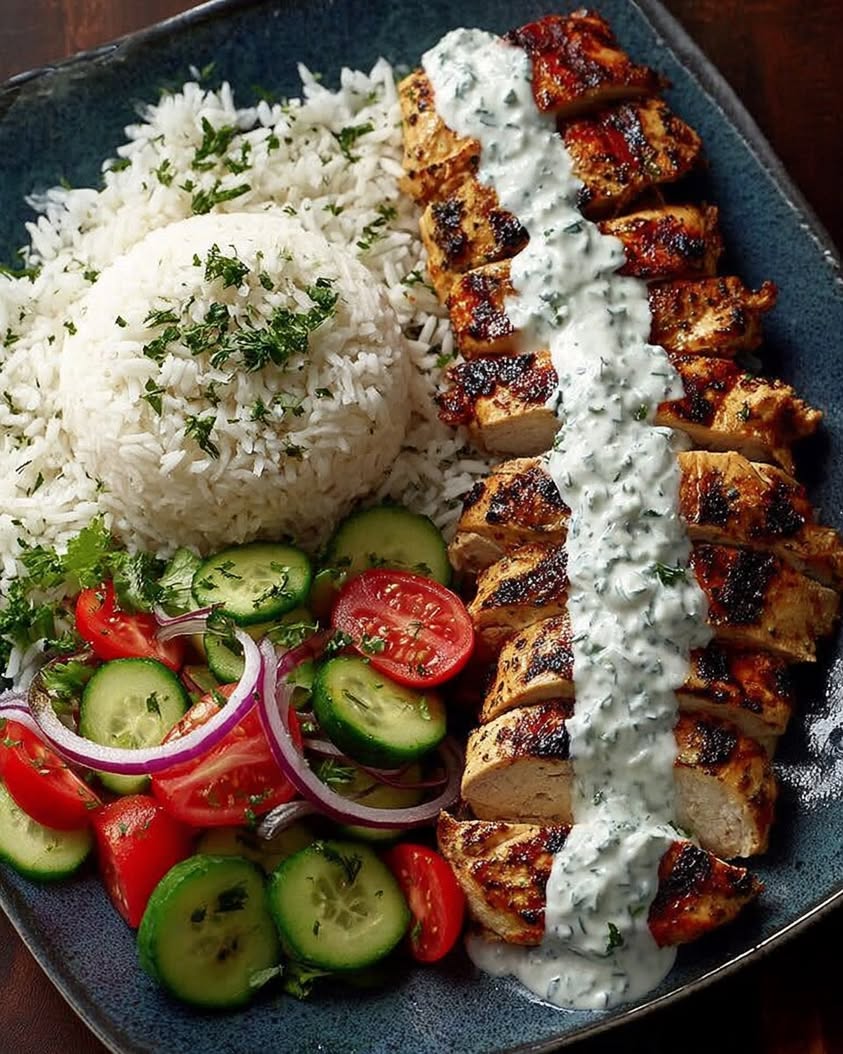
- Visual Appeal: Golden-brown chicken rests beside a mound of white rice and a colorful salad of red tomatoes and green cucumbers. A drizzle of white yogurt sauce ties the plate together beautifully.
- Skill Level Needed: Basic knife skills and a willingness to watch the grill are all you need. The sauce and salad require no cooking, and the rice simply simmers while you focus on the chicken.
- Special Equipment: A grill or grill pan, a small saucepan for rice, and a mixing bowl for the salad and sauce. A meat thermometer helps ensure perfectly cooked chicken but is not strictly necessary.
Recipe Overview
- Difficulty Level: This recipe sits comfortably at easy to moderate. The chicken requires attention to avoid overcooking, and the yogurt sauce benefits from proper seasoning. However, none of the steps demand advanced technique, so even a beginner can succeed with careful reading.
- Category: This dish works as a main course for lunch or dinner. It also functions as a meal prep option since the components store well separately. You can serve it as part of a larger spread or as a standalone plate.
- Cuisine: The recipe draws from Mediterranean and Middle Eastern traditions, where grilled meats, yogurt sauces, and fresh salads are staples. Rice adds a global touch that makes the meal universally appealing. The combination reflects a modern approach to healthy, flavor-forward cooking.
- Cost: Chicken thighs or breasts remain among the most affordable proteins. Rice, cucumbers, tomatoes, and yogurt are budget-friendly staples. Fresh herbs add a small expense but deliver outsized flavor, making this meal economical for four people.
- Season: Summer is the ideal time for this recipe when tomatoes and cucumbers peak in flavor. However, you can grill indoors year-round and use greenhouse produce in cooler months. The dish adapts beautifully to any season with minor tweaks.
- Occasion: Weeknight dinners, backyard cookouts, and casual dinner parties all suit this meal. It also works well for meal prep Sundays when you want healthy lunches ready to go. The presentation impresses guests without requiring restaurant-level effort.
Why You Will Love This Recipe
First and foremost, the taste and texture of this grilled chicken with herbed yogurt sauce, rice and fresh salad deliver pure satisfaction. The chicken develops a smoky crust from the grill while staying juicy inside. Meanwhile, the herbed yogurt sauce adds creaminess and tang that cuts through the richness of the meat. The rice provides a neutral canvas, and the cucumber tomato salad brings a refreshing crunch. Every element balances the others, creating a meal that feels complete and deeply satisfying.
Convenience matters too, especially on busy weeknights, and this recipe excels there. You can marinate the chicken in the morning or even the night before. The sauce and salad take ten minutes to prepare. The rice cooks unattended while you grill. As a result, you spend less time in the kitchen and more time enjoying your meal. Cleanup stays manageable since you use only a few pans and bowls.
From a nutritional standpoint, this dish offers plenty of advantages. Lean chicken provides high-quality protein. Yogurt contributes calcium and probiotics. Fresh vegetables deliver vitamins, fiber, and antioxidants. Rice supplies energy-giving carbohydrates. Together they create a balanced plate that supports an active lifestyle without feeling like diet food. You get real, wholesome nourishment in every serving.
Socially, this recipe shines when you entertain. The components sit beautifully on a platter or individual plates, inviting guests to customize their portions. The herbed yogurt sauce becomes a conversation piece, and the colorful salad adds visual drama. Because the recipe scales easily, you can feed a crowd without stress. Hosting becomes enjoyable rather than exhausting.
Finally, cost-effectiveness and accessibility make this meal a practical choice. You do not need exotic ingredients or specialty equipment. Most items come from your local grocery store at reasonable prices. The recipe welcomes substitutions based on what you have on hand. As a result, grilled chicken with herbed yogurt sauce, rice and fresh salad fits any budget while still tasting luxurious.
Historical Background and Cultural Significance
The origin story of grilled meat with yogurt sauce stretches across centuries and continents. In the Eastern Mediterranean and Middle East, cooks have long paired charred meats with cooling dairy-based sauces. The acidity in yogurt tenderizes meat and balances smoke, a technique born from practical need and refined through generations. Rice entered the picture through trade routes, becoming a staple alongside grilled dishes in Persian, Turkish, and Levantine kitchens.
Culturally, this combination holds deep importance in many regions. In Greece, souvlaki often comes with tzatziki, a yogurt sauce with cucumber and garlic. In Turkey, yogurt accompanies kebabs and grilled vegetables. In Iran, rice dishes like chelow form the centerpiece of festive meals. Cucumber and tomato salads appear across the Mediterranean as a standard side. This recipe honors those traditions while simplifying them for modern home cooks.
The evolution of this dish reflects how cooking adapts to available ingredients and changing tastes. Immigrant communities brought these flavors to the United States, where they merged with local produce and cooking methods. Today, home cooks embrace yogurt sauces for their health benefits and bright flavor. Grilling remains a beloved American pastime, making this fusion feel both familiar and exciting.
Regional variations abound, from Greek tzatziki to Indian raita to Lebanese labneh. Each version uses local herbs, spices, and dairy traditions. Some cooks add cumin or sumac, while others prefer dill and mint. Rice preparations differ too, ranging from plain steamed basmati to seasoned pilafs. Cucumber tomato salads vary in dressing, from olive oil and lemon to vinegar-based mixtures. This recipe celebrates that diversity while offering a reliable starting point.
Ingredient Deep Dive
Chicken. Chicken has become the world’s most popular poultry, valued for its mild flavor and versatility. Historically, it served as a affordable protein for families across cultures. Nutritionally, chicken provides lean protein, B vitamins, and minerals like selenium. When selecting chicken, look for firm flesh and a clean smell. Store it in the coldest part of your refrigerator and cook within two days. You can substitute turkey cutlets or pork chops if desired.
For this recipe, chicken thighs offer the best flavor and juiciness due to their higher fat content. Breasts work well too, especially if you pound them to even thickness. Bone-in cuts require longer grilling but deliver deeper flavor. Always let chicken rest before slicing to retain juices. This step makes a noticeable difference in texture and taste.
Yogurt. Yogurt has nourished humans for thousands of years, with origins in Central Asia and the Middle East. It holds cultural significance as a symbol of hospitality and health. Nutritionally, yogurt offers protein, calcium, probiotics, and vitamin B12. Choose plain, full-fat yogurt for the creamiest sauce. Store it tightly covered in the refrigerator and use within a week of opening. Greek yogurt or labneh make excellent substitutes for a thicker consistency.
The tang of yogurt complements grilled meat perfectly, cutting through richness while adding creaminess. Full-fat varieties taste best, but low-fat versions work if you prefer. Avoid flavored yogurts, which contain added sugar. If dairy-free, use coconut or almond yogurt, though the flavor will differ slightly. Freshness matters most, so check expiration dates carefully.
Rice. Rice feeds more than half the world’s population and holds deep cultural meaning in Asia, Latin America, and the Middle East. It symbolizes abundance and hospitality in many traditions. Nutritionally, rice provides carbohydrates, some protein, and essential minerals. Basmati, jasmine, and long-grain white rice all work well here. Store rice in an airtight container away from moisture. Brown rice offers more fiber but requires longer cooking.
For this dish, basmati rice shines because of its aromatic quality and fluffy texture. Jasmine rice offers a softer, slightly stickier result. If you prefer whole grains, brown rice adds nuttiness and chew. Rinsing rice before cooking removes excess starch and prevents clumping. Letting it rest after cooking ensures perfectly separate grains.
Cucumber. Cucumbers originated in India and spread across the ancient world, prized for their cooling properties. They appear in salads, pickles, and drinks across many cultures. Nutritionally, cucumbers are hydrating and low in calories, offering vitamin K and antioxidants. Select firm, dark green cucumbers without soft spots. Store them in the refrigerator crisper drawer and use within a week. English or Persian cucumbers have thinner skins and fewer seeds.
The crunch and freshness of cucumber balance the richness of grilled chicken and creamy sauce. If you use waxed cucumbers, peel them first. Seedier varieties benefit from scooping out the center to avoid wateriness. Salting cucumber slices draws out moisture and keeps the salad crisp. This small step elevates the final texture significantly.
Tomato. Tomatoes originated in South America and traveled worldwide through trade, becoming central to Mediterranean and global cuisines. They symbolize summer abundance and vibrant flavor. Nutritionally, tomatoes deliver lycopene, vitamin C, and potassium. Choose tomatoes that feel heavy for their size and smell sweet. Store them at room temperature away from direct sunlight. Cherry or grape tomatoes offer consistent sweetness year-round.
Ripe tomatoes bring acidity and juiciness that brighten the entire plate. Heirloom varieties add color and complexity. If tomatoes are out of season, cherry tomatoes provide the most reliable flavor. Never refrigerate tomatoes, as cold temperatures destroy their texture and taste. A pinch of salt enhances their natural sweetness.
Fresh Herbs. Mint, dill, and parsley have long histories in Mediterranean and Middle Eastern cooking. They add freshness and aroma that dried herbs cannot match. Nutritionally, herbs provide antioxidants and small amounts of vitamins. Choose bright, perky leaves without wilting or discoloration. Store herbs with stems in water or wrapped in damp paper towels. Cilantro, basil, or tarragon make fine substitutes.
Herbs transform simple yogurt into something memorable. Mint adds coolness, dill brings a grassy note, and parsley offers mild bitterness. Combining several herbs creates depth. Add them just before serving to preserve their flavor. A squeeze of lemon enhances their brightness.
Lemon and Garlic. These two ingredients form the backbone of countless cuisines. Lemon originated in Asia and spread through trade, while garlic has been cultivated for over five thousand years. Both offer impressive nutritional profiles and powerful flavor. Choose lemons that feel heavy and garlic bulbs that are firm and tight. Store lemons in the refrigerator and garlic in a cool, dark place. Bottled lemon juice and garlic paste work in a pinch but lack freshness.
The acidity of lemon tenderizes chicken and brightens the yogurt sauce. Garlic adds pungency that mellows when combined with dairy. Together they create a balanced, aromatic foundation. Adjust quantities to suit your taste preferences.
Common Mistakes to Avoid
- Overcooking the chicken. Dry, tough chicken ruins the entire meal, so use a thermometer and pull the meat at 165 degrees Fahrenheit. Resting the chicken for five minutes before slicing keeps the juices locked inside.
- Not seasoning the yogurt sauce enough. Yogurt needs generous salt, lemon, and herbs to taste vibrant. Under-seasoned sauce tastes flat and fails to complement the chicken. Taste and adjust before serving.
- Skipping the chicken marinade. Even a short marinade of olive oil, lemon, and garlic improves flavor and texture. Without it, the chicken can taste bland despite the sauce. Give it at least thirty minutes if possible.
- Using cold yogurt directly from the fridge. Cold sauce mutes flavors, so let the yogurt sit at room temperature for fifteen minutes before mixing. This small step makes the herbs and lemon shine.
- Cooking rice without rinsing. Excess starch creates gummy, clumpy rice that detracts from the plate. Rinse until the water runs clear for fluffy, separate grains every time.
- Making the salad too far ahead. Cucumbers and tomatoes release water over time, turning the salad soggy. Dress it just before serving to maintain crunch and freshness.
- Crowding the grill. Overcrowding steams the chicken instead of charring it, so leave space between pieces. Work in batches if necessary for proper grill marks.
- Ignoring resting time for the chicken. Cutting immediately after grilling causes juices to run out, leaving dry meat. Patience here pays off with moist, flavorful results.
- Using dried herbs instead of fresh. Dried herbs lack the brightness that makes this dish special, so choose fresh whenever possible. If using dried, reduce the quantity by half.
- Forgetting to taste the final plate. Each component should taste good on its own before combining. Adjust salt, acid, and herbs as needed for a cohesive meal.
Essential Techniques
Grilling Chicken to Perfection. Grilling is the heart of this recipe, and mastering it ensures juicy, flavorful results. Preheat your grill to medium-high heat and oil the grates to prevent sticking. Place chicken smooth-side down and resist the urge to move it for at least four minutes. This allows a proper crust to form. Flip once and continue cooking until the internal temperature reaches 165 degrees Fahrenheit. Let the meat rest before slicing. Visual cues include golden-brown grill marks and firm yet springy texture when pressed.
Building a Balanced Yogurt Sauce. The herbed yogurt sauce requires attention to balance. Start with full-fat plain yogurt and add freshly squeezed lemon juice, minced garlic, and chopped herbs. Season with salt and a touch of olive oil for richness. Stir until smooth and taste. Adjust acidity with more lemon, salt for seasoning, and herbs for freshness. The sauce should taste bright, creamy, and herbaceous. Common pitfalls include under-salting and using stale herbs. Aim for a sauce that makes you want another spoonful.
Cooking Fluffy Rice. Perfect rice begins with rinsing to remove surface starch. Use a ratio of one cup rice to one and a half cups water for basmati. Bring to a boil, reduce heat, cover, and simmer for fifteen minutes. Do not stir during cooking, as this creates gummy texture. Remove from heat and let rest covered for ten minutes. Fluff with a fork. Visual cues include steam holes on the surface and tender, separate grains. Avoid lifting the lid during cooking to maintain consistent heat.
Balancing the Cucumber Tomato Salad. This salad depends on contrasting textures and flavors. Slice cucumbers and tomatoes into similar-sized pieces for even eating. Salt the cucumbers briefly to draw out excess water, then pat dry. Dress with olive oil, lemon juice, salt, and pepper just before serving. Add thinly sliced red onion for bite if desired. The salad should taste bright, crunchy, and refreshing. Common pitfalls include over-dressing and letting the salad sit too long before serving.
Pro Tips for Perfect Grilled Chicken with Herbed Yogurt Sauce, Rice and Fresh Salad
Marinate the chicken for at least thirty minutes and up to eight hours for deeper flavor. Even a quick marinade of olive oil, lemon, and garlic makes a noticeable difference.
Use a meat thermometer to guarantee perfectly cooked chicken every time. Aim for 165 degrees Fahrenheit in the thickest part of the meat.
Let the yogurt sauce sit at room temperature for fifteen minutes before serving. This allows the herbs and garlic to infuse the yogurt fully.
Toast the rice in a little olive oil before adding water for a nuttier flavor and fluffier texture. This step takes two extra minutes and elevates the dish.
Salt the cucumber slices and let them drain for ten minutes before making the salad. This prevents the salad from becoming watery.
Grill extra chicken to use in salads, wraps, or grain bowls throughout the week. The herbed yogurt sauce doubles easily and keeps well.
Garnish the finished plate with extra fresh herbs and a drizzle of good olive oil for a restaurant-quality presentation.
Serve the sauce chilled but not ice-cold for the best flavor expression. Cold temperatures mute the herbs and lemon.
Variations and Adaptations
Regional variations offer endless inspiration. Greek cooks might add crumbled feta and oregano to the yogurt sauce. Middle Eastern versions could include sumac, za’atar, or tahini. Indian-inspired adaptations might incorporate cumin, coriander, and mint chutney. Turkish cooks may serve the chicken with bulgur instead of rice. Each region brings its own herbs and spices, so feel free to explore.
Seasonal adaptations keep this dish fresh year-round. In summer, use peak tomatoes and cucumbers for the best flavor. In fall, swap the salad for roasted root vegetables or a warm grain bowl. Winter calls for citrus segments and hearty greens. Spring brings tender herbs and radishes. The chicken and yogurt sauce remain constant while the sides shift with the seasons.
Dietary modifications make this recipe accessible to nearly everyone. Use coconut yogurt for dairy-free needs. Swap rice for cauliflower rice to reduce carbohydrates. Choose gluten-free soy sauce or tamari if you add a marinade with soy. Vegetarians can substitute grilled halloumi or portobello mushrooms for the chicken. Each adaptation preserves the spirit of the dish.
Flavor variations let you customize the plate. Add harissa or chili paste to the yogurt sauce for heat. Mix in pesto for an Italian twist. Use smoked paprika and cumin in the chicken marinade for a smoky note. Citrus zest adds brightness. Experiment with different herb combinations to find your favorite.
Texture modifications suit different preferences. For creamier rice, stir in a spoonful of butter or olive oil after cooking. For crunchier salad, add toasted nuts or seeds. For softer chicken, poach instead of grill. Each tweak changes the eating experience while keeping the core flavors intact.
Presentation alternatives range from rustic to elegant. Serve everything family-style on a large platter for casual gatherings. Plate individual portions with artistic drizzles for dinner parties. Pack components separately in containers for meal prep. Use lettuce cups instead of rice for a low-carb wrap. The options are limitless.
Serving and Presentation Guide
Plating techniques matter when you want to impress. Start with a bed of rice on one side of the plate. Fan sliced chicken over the rice. Spoon the cucumber tomato salad beside it. Drizzle the herbed yogurt sauce over the chicken or serve it in a small bowl on the side. Leave some white space on the plate for a clean, modern look.
Garnishing ideas elevate the visual appeal. Scatter fresh mint or dill leaves over the plate. Add a wedge of lemon for squeezing. Sprinkle sumac or paprika for color. Drizzle a little olive oil around the plate for shine. Toasted sesame seeds or pine nuts add texture and elegance.
Traditional accompaniments include warm pita bread, hummus, or baba ganoush. Pickled vegetables add tang. Olives bring brininess. A simple yogurt drink like ayran complements the meal. These additions turn a weeknight dinner into a feast.
Modern serving suggestions include grain bowls, lettuce wraps, and mezze platters. Layer the components in a bowl for a portable lunch. Use the chicken and sauce in tacos or flatbreads. Arrange everything on a large board for a shareable spread. The flexibility makes this recipe endlessly useful.
Temperature considerations affect enjoyment. Serve the chicken warm or at room temperature. Keep the yogurt sauce chilled but not ice-cold. Serve the rice hot. The salad tastes best at room temperature. This mix of temperatures creates a dynamic eating experience.
Portion control tips help with meal planning. A standard serving includes one chicken piece, one cup of rice, and one cup of salad. Adjust based on appetite and activity level. The yogurt sauce adds richness, so a little goes a long way. Save leftovers for next-day lunches.
Wine and Beverage Pairing
Wine pairings enhance the Mediterranean flavors of this dish. A crisp Sauvignon Blanc complements the herbs and lemon in the yogurt sauce. Dry rosé pairs beautifully with grilled chicken and fresh salads. For red lovers, a light Pinot Noir or Beaujolais works without overpowering the food. Sparkling wine adds celebration to any meal.
Non-alcoholic alternatives include sparkling water with lemon and mint. Iced green tea with cucumber offers refreshing contrast. A yogurt-based drink like lassi or ayran echoes the sauce on the plate. Homemade lemonade with fresh herbs delights guests of all ages.
Coffee and tea pairings may seem unusual, but certain options work well. Iced hibiscus tea brings tartness that cuts through richness. Chamomile tea offers calming notes after a satisfying meal. Avoid heavy coffee, which can overpower the delicate herbs.
Temperature considerations matter for beverages too. Serve white wine and sparkling options well-chilled. Red wines taste best slightly below room temperature. Non-alcoholic drinks should be ice-cold for maximum refreshment. The right temperature makes every sip enjoyable.
Serving suggestions include offering a variety of options so guests can choose. Set up a small beverage station with glasses and garnishes. Provide both alcoholic and non-alcoholic choices. This thoughtful touch makes everyone feel welcome.
Storage and Shelf Life
Storage methods determine how well leftovers keep. Refrigerate chicken in an airtight container for up to four days. Store rice separately for up to five days. Keep the yogurt sauce covered for up to four days. Store the salad undressed for up to two days. Proper storage preserves flavor and texture.
Temperature requirements matter for food safety. Keep all components below forty degrees Fahrenheit. Do not leave perishable food at room temperature for more than two hours. Reheat chicken to 165 degrees Fahrenheit before eating. Cold items should stay cold until serving.
Container recommendations include glass containers with tight-fitting lids. Glass does not absorb odors or stain like plastic. Use smaller containers for individual portions. Label with dates to track freshness. This system keeps your refrigerator organized and safe.
Signs of spoilage include off smells, slimy textures, and discoloration. If chicken smells sour or looks gray, discard it. Yogurt sauce that separates or smells yeasty should be thrown out. Wilted salad with mushy vegetables has passed its prime. When in doubt, throw it out.
Reheating instructions vary by component. Reheat chicken gently in a skillet or oven to avoid drying it out. Microwave rice with a splash of water and cover to steam. Serve yogurt sauce cold, never reheated. Enjoy the salad cold or at room temperature.
Freezing guidelines help with longer storage. Freeze cooked chicken for up to three months in freezer-safe bags. Rice freezes well for up to six months. Yogurt sauce does not freeze well due to separation. The salad should not be frozen. Thaw frozen items overnight in the refrigerator.
Make Ahead Strategies
A prep timeline makes this recipe even easier. Marinate the chicken the night before or the morning of serving. Make the yogurt sauce up to two days ahead and refrigerate. Cook the rice up to three days ahead and reheat gently. Chop vegetables and store separately for quick assembly.
Storage between steps keeps components fresh. Keep chicken in its marinade in the refrigerator. Store yogurt sauce in a covered bowl. Keep cooked rice in an airtight container. Hold chopped vegetables in separate containers. This organization streamlines the final assembly.
Quality impact assessment helps you decide what to prep ahead. Marinating improves flavor over time. Yogurt sauce tastes best within two days when herbs stay vibrant. Rice reheats well but loses some texture. Vegetables stay crisp if stored properly. Plan accordingly.
Assembly tips make serving fast and stress-free. Warm the rice while grilling the chicken. Toss the salad just before serving. Spoon the sauce into a bowl. Arrange everything on a platter or individual plates. This workflow keeps you calm and organized.
Reheating guidelines for prepped components ensure good results. Reheat rice with a splash of water in the microwave or on the stovetop. Warm chicken in a skillet over medium heat. Serve sauce and salad cold. These methods preserve texture and flavor.
Fresh element additions elevate make-ahead meals. Add fresh herbs to the sauce just before serving. Toss the salad with dressing at the last minute. Garnish with lemon wedges and olive oil. These small touches make prepped food taste freshly made.
Scaling Instructions
Halving the recipe works well for smaller households. Use two chicken pieces, half a cup of rice, and smaller portions of vegetables. Adjust the sauce with half the yogurt and herbs. Cooking times remain largely the same, though the rice may cook slightly faster.
Doubling or tripling the recipe suits gatherings and meal prep. Use a larger grill or cook in batches. Make extra sauce since it stores well. Cook rice in multiple pots or a larger pot. Double the salad but dress only what you need. This approach feeds a crowd with ease.
Equipment adjustments matter when scaling. A larger grill or griddle pan handles more chicken. Use a bigger saucepan for rice. Larger mixing bowls accommodate more salad. Sheet pans help organize components. Plan your equipment based on the quantity.
Timing modifications keep everything warm when serving. Cook rice first and keep it covered. Grill chicken in batches and keep warm in a low oven. Prepare the salad last for maximum freshness. This sequence ensures everything reaches the table at the right temperature.
Storage considerations change with larger quantities. Use multiple containers for leftovers. Label and date everything. Freeze what you will not eat within four days. Share extra portions with neighbors or freeze for later. Smart storage prevents waste.
Nutritional Deep Dive
The macro breakdown of this meal supports a balanced diet. Chicken provides high-quality protein for muscle repair. Rice delivers carbohydrates for energy. Yogurt adds protein and fat. Vegetables contribute fiber and micronutrients. Olive oil supplies healthy fats. Together they create a satisfying macronutrient profile.
Micronutrient analysis reveals impressive benefits. Chicken offers B vitamins, selenium, and zinc. Yogurt provides calcium, probiotics, and vitamin B12. Tomatoes deliver lycopene and vitamin C. Cucumbers add vitamin K and hydration. Herbs contribute antioxidants. This meal nourishes the body in multiple ways.
Health benefits include improved digestion from probiotics and fiber. Lean protein supports satiety and weight management. Antioxidants from vegetables and herbs combat inflammation. Healthy fats support heart health. This dish aligns with Mediterranean eating patterns known for longevity and wellness.
Dietary considerations vary by individual needs. Those watching sodium should season lightly. People with dairy sensitivities can use plant-based yogurt. Gluten-free eaters can enjoy this recipe as written. Low-carb dieters can swap rice for cauliflower rice. The recipe adapts to many dietary patterns.
Portion analysis helps with meal planning. A standard serving provides roughly 500 to 600 calories depending on portion sizes. Protein content reaches 35 to 40 grams. Carbohydrates range from 45 to 55 grams. Fat content sits around 15 to 20 grams. Adjust portions based on your goals.
Weight management tips include using more vegetables and less rice. Choose chicken breast over thighs for lower fat. Use low-fat yogurt for the sauce. Measure olive oil to control calories. These small changes support weight goals without sacrificing flavor.
Dietary Adaptations
Gluten-free adaptations require minimal changes since the recipe contains no gluten as written. Verify that your yogurt and spices are certified gluten-free. Use tamari instead of soy sauce if you add it to the marinade. Serve with gluten-free flatbread if desired. This recipe naturally suits gluten-free diets.
Dairy-free adaptations involve swapping yogurt for coconut or almond yogurt. Choose unsweetened varieties for savory dishes. Add extra lemon and herbs to compensate for flavor differences. Use olive oil instead of butter. The result remains creamy and delicious without dairy.
Vegan adaptations replace chicken with grilled tofu, tempeh, or portobello mushrooms. Use plant-based yogurt for the sauce. Marinate the plant protein in olive oil, lemon, and garlic. Adjust cooking times based on the substitute. The meal becomes entirely plant-based while retaining its character.
Low-carb adaptations swap rice for cauliflower rice or zucchini noodles. Keep the chicken and salad as written. Use full-fat yogurt for satiety. Add extra olive oil for healthy fats. This version suits keto and low-carb lifestyles.
Keto adaptations require higher fat and very low carbohydrates. Use cauliflower rice and full-fat yogurt. Add avocado to the salad. Drizzle generously with olive oil. Choose chicken thighs for higher fat content. This version keeps you in ketosis while enjoying bold flavors.
Paleo adaptations eliminate grains and dairy. Use cauliflower rice instead of regular rice. Replace yogurt sauce with a tahini-lemon dressing. Keep the chicken and vegetables as written. Add nuts and seeds for healthy fats. This version aligns with paleo principles.
Low-FODMAP adaptations require careful ingredient choices. Use lactose-free yogurt or a garlic-infused oil instead of fresh garlic. Choose cucumbers and tomatoes in moderate amounts. Skip onion in the salad. Use rice, which is low-FODMAP. This version suits sensitive digestive systems.
Other specific diets may require additional tweaks. Mediterranean diet followers can enjoy this recipe as written. Whole30 participants should skip the rice and use compliant yogurt alternatives. DASH diet followers should watch sodium levels. Always adjust based on your specific needs.
Troubleshooting Guide
Texture issues often arise with chicken and rice. Dry chicken results from overcooking, so use a thermometer and rest the meat. Mushy rice comes from too much water or stirring during cooking. Fix it by rinsing rice and using the correct ratio. Crunchy rice means it needs more liquid and time. Adjust and try again.
Flavor balance problems include bland or overly salty dishes. If the yogurt sauce tastes flat, add lemon, salt, and fresh herbs. If the chicken lacks flavor, marinate longer or add more seasoning. If the salad tastes dull, add acid and salt. Taste as you go and adjust gradually.
Temperature problems affect enjoyment. Cold chicken tastes less appealing, so reheat gently. Warm yogurt sauce tastes off, so keep it chilled. Room-temperature salad tastes best, so avoid refrigerating it too long. Serve components at their ideal temperatures for the best experience.
Equipment challenges include grill flare-ups and uneven cooking. Control flare-ups by moving chicken to a cooler zone. Use a grill pan indoors if outdoor grilling is not possible. Invest in a meat thermometer for consistent results. A lid on the grill helps with even cooking.
Ingredient substitutions can change results. If you swap chicken for tofu, adjust cooking times and add more marinade. If you use dried herbs instead of fresh, reduce the quantity. If you use a different rice variety, follow its cooking instructions. Each substitution requires small adjustments.
Timing concerns arise when coordinating multiple components. Cook rice first and keep it covered. Grill chicken next and let it rest. Toss the salad last for freshness. This sequence keeps everything warm and ready at the same time.
Recipe Success Stories
Community feedback has been overwhelmingly positive for this grilled chicken with herbed yogurt sauce, rice and fresh salad. Readers report making it weekly for their families. Many appreciate how easily it adapts to different diets. The sauce receives special praise for its bright, fresh flavor. Home cooks feel proud serving this dish to guests.
Variation successes include using the chicken in wraps and grain bowls. Some readers add harissa for heat and love the results. Others swap rice for quinoa and report excellent outcomes. A few creative cooks use the yogurt sauce as a dip for vegetables. The recipe inspires experimentation.
Adaptation stories highlight the recipe’s flexibility. One reader made it dairy-free for a family member with allergies. Another used leftover chicken for sandwiches the next day. A busy parent prepped everything on Sunday for easy weeknight meals. These stories show how the recipe fits real life.
Reader suggestions include adding pickled onions for extra tang. Toasting the rice in butter before cooking adds richness. Grilling lemon halves alongside the chicken adds smoky citrus flavor. A sprinkle of sumac on the finished plate adds color and brightness. These tips enhance an already excellent recipe.
Photography tips help readers capture beautiful images. Natural light works best for food photography. Arrange the plate with contrasting colors and textures. Drizzle the sauce artistically for visual interest. Garnish with fresh herbs for a pop of green. These small touches make photos shine.
Frequently Asked Questions
Can I use chicken breast instead of thighs? Yes, chicken breast works well in this recipe. Pound it to even thickness for consistent cooking, and be careful not to overcook it. Breasts dry out faster than thighs, so use a thermometer and pull at 165 degrees Fahrenheit. The yogurt sauce adds moisture and flavor regardless of which cut you choose.
How long should I marinate the chicken? Marinate for at least thirty minutes for basic flavor or Print
Grilled Chicken with Herbed Yogurt Sauce, Rice & Cucumber-Tomato Salad
- Total Time: 45 minutes
- Yield: 4
Description
A Mediterranean-inspired meal featuring juicy grilled chicken served with a creamy herbed yogurt sauce, fluffy rice, and a refreshing cucumber-tomato salad.
Ingredients
- 4 boneless, skinless chicken breasts
- 2 tablespoons olive oil
- 2 cloves garlic, minced
- 1 teaspoon dried oregano
- 1 teaspoon salt
- 1/2 teaspoon black pepper
- 1 cup plain Greek yogurt
- 1 tablespoon fresh lemon juice
- 1 tablespoon fresh dill, chopped
- 1 tablespoon fresh mint, chopped
- 1 cup long-grain white rice
- 2 cups water
- 1 cucumber, diced
- 2 tomatoes, diced
- 1/4 red onion, thinly sliced
- 2 tablespoons fresh parsley, chopped
- 1 tablespoon extra-virgin olive oil
- 1 tablespoon red wine vinegar
Instructions
- In a small bowl, combine olive oil, minced garlic, dried oregano, salt, and pepper. Rub the mixture over the chicken breasts and let marinate for at least 15 minutes.
- While the chicken marinates, prepare the herbed yogurt sauce: In a bowl, mix Greek yogurt, lemon juice, dill, and mint. Season with a pinch of salt and refrigerate until serving.
- Cook the rice: In a medium saucepan, bring water to a boil. Add rice, reduce heat to low, cover, and simmer for 18-20 minutes or until tender. Fluff with a fork.
- Preheat grill or grill pan to medium-high heat. Grill chicken for 6-7 minutes per side, or until internal temperature reaches 165°F (74°C). Remove from heat and let rest for 5 minutes.
- In a large bowl, combine cucumber, tomatoes, red onion, and parsley. Drizzle with extra-virgin olive oil and red wine vinegar, then toss to combine.
- Slice the grilled chicken. Serve with rice, cucumber-tomato salad, and a dollop of herbed yogurt sauce.
Notes
You can customize the seasonings to taste.
- Prep Time: 15 minutes
- Cook Time: 30 minutes
- Method: Main
- Cuisine: Mediterranean