Greek-Style Beef Meatballs with Creamy Sun-Dried Tomato Tzatziki: A Mediterranean Dinner Worth Sharing
Greek-Style Beef Meatballs with Creamy Sun-Dried Tomato Tzatziki bring the warm, sun-soaked flavors of the Mediterranean straight to your dinner table. Therefore, if you crave a meal that feels both comforting and fresh, this recipe delivers on every level. Juicy, herb-packed beef meatballs sear to a golden brown, and then they nestle into a cool, tangy tzatziki that gets a bold upgrade from sun-dried tomatoes. Meanwhile, the aroma of oregano, garlic, and mint fills your kitchen and promises something special. Consequently, this dish quickly becomes a weeknight favorite and a weekend showstopper alike.
Moreover, this recipe solves a common dinner dilemma. You want something impressive, yet you also need it on the table fast. Greek-Style Beef Meatballs with Creamy Sun-Dried Tomato Tzatziki strike that perfect balance, because the meatballs come together with simple pantry staples and the sauce requires no cooking at all. In addition, the creamy sun-dried tomato tzatziki chills while the meatballs cook, so everything lands on the plate at the same moment. As a result, you serve a restaurant-quality meal without the restaurant stress.
Above all, this dish celebrates bold contrasts. The savory, spiced beef pairs beautifully with the cool, refreshing yogurt sauce. Furthermore, the sun-dried tomatoes add a sweet-tart depth that ordinary tzatziki simply cannot match. Whether you serve these meatballs as an appetizer, a main course, or a party platter, guests always ask for the recipe. Therefore, keep this Greek-Style Beef Meatballs with Creamy Sun-Dried Tomato Tzatziki recipe close at hand, because you will make it again and again.
Quick Recipe Highlights
- Flavor Profile: These meatballs deliver savory, herbaceous beef with notes of oregano, garlic, and mint. The creamy sun-dried tomato tzatziki adds tang, sweetness, and a gentle garlic kick. Together, the flavors taste bright, rich, and unmistakably Mediterranean.
- Texture: Each meatball stays tender and juicy inside while developing a lightly caramelized crust outside. Meanwhile, the tzatziki brings a cool, silky creaminess that coats every bite. Finally, a sprinkle of crumbled feta adds a pleasant, salty crumble.
- Aroma: Fresh oregano and garlic perfume the kitchen as the meatballs sear. Additionally, the sun-dried tomatoes release a sweet, concentrated tomato scent into the sauce. Even before the first bite, the aroma signals a memorable meal.
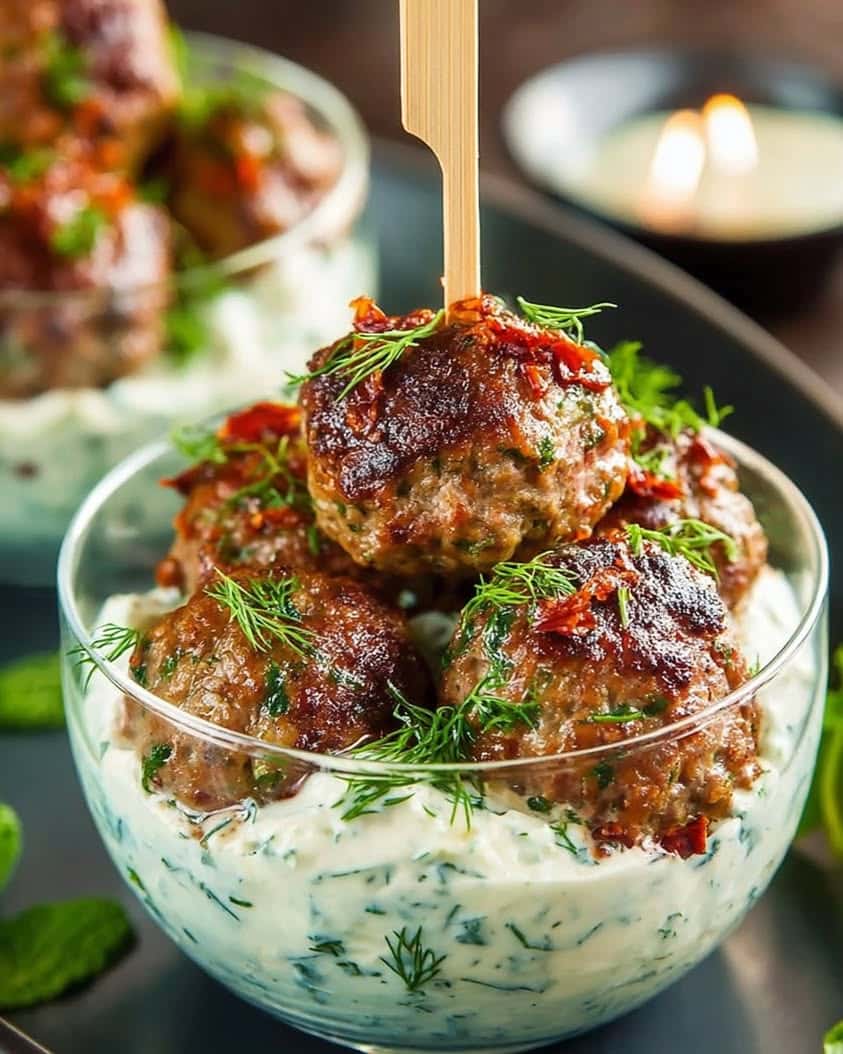
- Visual Appeal: Golden-brown meatballs rest on a swirl of pale pink tzatziki flecked with deep red tomatoes. Furthermore, fresh mint leaves and white feta crumbles add vibrant contrast. Consequently, the plate looks elegant enough for company.
- Skill Level Needed: This recipe suits confident beginners and busy home cooks. You only need basic mixing, shaping, and pan-searing skills. Therefore, even a first-time meatball maker can succeed with ease.
- Special Equipment: A large mixing bowl, a rimmed baking sheet, and a heavy skillet cover the essentials. In addition, a small ice cream scoop helps shape uniform meatballs. However, your clean hands work just as well.
Recipe Overview
- Difficulty Level: I rate this recipe easy to moderate because the techniques stay simple, yet the flavor payoff feels impressive. You mix, shape, and sear, and then you stir a no-cook sauce. Furthermore, the oven finishes the meatballs hands-free. As a result, the whole process stays relaxed and manageable.
- Category: This dish works as a main course, an appetizer, or a mezze platter centerpiece. You can also serve it over rice bowls, salads, or pita sandwiches. Consequently, it fits nearly any menu slot you need.
- Cuisine: The recipe draws from Greek culinary tradition, especially the classic keftedes and tzatziki pairing. Moreover, it borrows Mediterranean techniques like pan-searing and yogurt-based sauces. Additionally, the sun-dried tomato twist nods to Italian influences that blend seamlessly. Therefore, the final dish tastes authentically Mediterranean with a modern accent.
- Cost: Ground beef forms the main expense, and it usually costs between eight and twelve dollars. Pantry staples like breadcrumbs, eggs, and spices add only a few dollars more. Meanwhile, yogurt, cucumber, and sun-dried tomatoes round out the budget. Overall, you feed four to six people for roughly twenty dollars.
- Season: This recipe shines year-round, yet it feels especially welcome in spring and summer. During those months, fresh herbs and crisp cucumbers peak in flavor. In cooler months, the warm spices and hearty beef provide cozy comfort. Consequently, you can enjoy it in any season.
- Occasion: Serve these meatballs at casual family dinners, weekend gatherings, or holiday mezze spreads. They also work wonderfully for game days and potlucks, because they hold well and taste great at room temperature. Furthermore, the presentation impresses guests without demanding last-minute fuss.
Why You’ll Love This Recipe
First, the taste and texture appeal of Greek-Style Beef Meatballs with Creamy Sun-Dried Tomato Tzatziki sets it apart from ordinary meatball recipes. The beef stays juicy because the breadcrumbs and egg lock in moisture, and the pan-sear creates a savory crust. Meanwhile, the tzatziki cools the palate and adds tangy brightness. Every bite balances richness with freshness, so you never feel weighed down. Consequently, you reach for one more meatball again and again.
Second, convenience and preparation benefits make this recipe a weeknight hero. You need only one bowl for the meatballs and one for the sauce. Furthermore, the sauce requires zero cooking, because you simply stir and chill. The oven finishes the meatballs while you set the table or relax. As a result, you spend less time cleaning and more time enjoying dinner. Additionally, leftovers pack beautifully for lunch the next day.
Third, nutritional advantages give this dish real everyday value. Lean ground beef supplies protein, iron, and vitamin B12, while Greek yogurt delivers calcium and probiotics. Moreover, cucumber and fresh herbs add hydration and fiber with very few calories. Olive oil contributes heart-healthy fats, and sun-dried tomatoes offer antioxidants like lycopene. Therefore, you serve a meal that nourishes as much as it satisfies.
Fourth, social and entertaining value makes this recipe a party favorite. Meatballs make ideal finger food, and the tzatziki doubles as a dip for pita and vegetables. Guests build their own plates, which keeps the gathering relaxed and interactive. Furthermore, the dish looks stunning on a platter, so it earns compliments before anyone takes a bite. Consequently, you become the host everyone hopes will bring this dish.
Fifth, cost-effectiveness and accessibility keep this recipe within reach for any budget. Ground beef, yogurt, cucumber, and pantry spices cost little and stretch far. You can also swap in ground lamb, chicken, or turkey without changing the method. Additionally, most ingredients live in standard supermarkets, so no specialty shopping trip is required. Therefore, Greek-Style Beef Meatballs with Creamy Sun-Dried Tomato Tzatziki delivers impressive results for very little money.
Historical Background and Cultural Significance
The origin story of this dish begins in Greece, where keftedes have graced tables for centuries. Families have shaped seasoned ground meat into small rounds since ancient times, and each region guards its own blend of herbs. Furthermore, the word keftedes likely traces back to Persian roots, which shows how trade routes spread culinary ideas across the Mediterranean. Therefore, these meatballs carry a long, rich history in every bite.
Cultural importance surrounds tzatziki as well, because Greeks treat it as both a sauce and a meze staple. Yogurt has long symbolized hospitality in Greek homes, and hosts often set out bowls of tzatziki with bread before a meal. Additionally, the sauce cools grilled meats and vegetables during hot summer months. Consequently, pairing meatballs with tzatziki honors a deep, everyday tradition.
The evolution of this recipe reflects modern Mediterranean cooking, where cooks blend old and new with confidence. Traditional keftedes often use lamb, mint, and oregano, yet beef has become a popular stateside substitute. Moreover, the addition of sun-dried tomatoes brings a sweeter, deeper tomato note that modern palates adore. As a result, the dish bridges generations while staying fresh and current.
Regional variations abound across Greece and beyond. In Crete, cooks add raki and fresh mint, while island kitchens favor dill and lemon zest. Meanwhile, Anatolian and Middle Eastern versions incorporate cumin, cinnamon, or pine nuts. Additionally, some cooks bake instead of fry, and others simmer the meatballs in tomato sauce. Therefore, you can adapt this recipe freely and still honor its spirit.
Ingredient Deep Dive
Ground Beef: Ground beef anchors this recipe with rich, savory depth. Historically, Greeks raised cattle and sheep across the mainland and islands, so red meat became a celebration food. Nutritionally, beef provides complete protein, iron, zinc, and B vitamins that support energy and muscle health. Therefore, choose an eighty-five percent lean blend, because it stays juicy without turning greasy.
When you shop, look for bright red color and a clean, mild smell. Store the beef in the coldest part of your refrigerator and use it within two days. You can also freeze it for up to three months in an airtight bag. Furthermore, if you prefer a lighter option, substitute ground chicken or turkey. For a richer flavor, try ground lamb instead.
Sun-Dried Tomatoes: Sun-dried tomatoes concentrate the sweet, tangy essence of ripe tomatoes. Italians perfected the drying method, and Mediterranean cooks embraced the ingredient for its intense flavor and long shelf life. Additionally, these tomatoes deliver lycopene and antioxidants in a compact, flavorful package. Consequently, a small amount transforms the tzatziki dramatically.
Choose oil-packed tomatoes for softer texture and richer taste, or pick dry-packed ones for a leaner option. If you buy dry-packed tomatoes, soak them in warm water for ten minutes before chopping. Store opened jars in the refrigerator, and keep them submerged in oil for freshness. Moreover, roasted red peppers make a fine substitute in a pinch.
Greek Yogurt: Greek yogurt gives the sauce its signature tang and luxurious body. Greeks strain cow or sheep milk yogurt to remove whey, which creates a thick, creamy texture prized for centuries. Furthermore, the yogurt supplies protein, calcium, and probiotics that support gut health. Therefore, always choose plain, full-fat Greek yogurt for the best result.
Full-fat yogurt tastes richer and holds up better when mixed with watery cucumber. If you want a lighter sauce, use a two percent version, but drain the cucumber thoroughly. Store yogurt in its original container and check the date before serving. Additionally, you can substitute labneh or sour cream if needed.
Fresh Herbs: Oregano and mint define the flavor of these Greek meatballs. Ancient Greeks crowned victors with oregano and used mint in both food and medicine. Nutritionally, herbs add antioxidants and bright flavor with almost no calories. Consequently, fresh herbs outperform dried ones in this recipe, though dried oregano works in a pinch.
Select oregano with vivid green leaves and a strong, peppery scent. Choose mint with crisp, unblemished leaves and a cool aroma. Wrap herbs in damp paper towels, then store them in the refrigerator for up to a week. Furthermore, you can freeze chopped herbs in ice cube trays with olive oil for later use.
Feta Cheese: Feta adds a salty, briny bite that lifts the entire dish. Greeks have made feta for thousands of years, and it holds protected status in the European Union. Moreover, feta contributes calcium and protein, though it also carries significant sodium. Therefore, use it as a finishing touch rather than a main ingredient.
Buy feta packed in brine, because it stays creamier and fresher than vacuum-sealed blocks. Crumble it by hand for rustic texture, or cube it for neat presentation. Store feta in its brine in the refrigerator for up to two weeks. Additionally, goat cheese offers a tangy substitute if you prefer a milder option.
Common Mistakes to Avoid
- Overmixing the meat: When you mix ground beef too long, the proteins tighten and the meatballs turn dense and rubbery. Therefore, mix until the ingredients just combine, and then stop. A gentle hand keeps the texture light and tender.
- Skipping the breadcrumb soak: Dry breadcrumbs pull moisture from the meat, which leaves you with tough meatballs. Instead, soak the crumbs in milk or water for five minutes before mixing. This step guarantees a moist, tender interior every time.
- Using cold meat: Cold ground beef feels stiff and resists shaping, and it also cooks unevenly. Let the beef sit at room temperature for fifteen minutes before you begin. Consequently, the meatballs cook faster and hold their shape better.
- Underseasoning the mixture: Meatballs need bold seasoning, because the meat itself stays mild. Therefore, taste a tiny cooked sample before shaping the rest. Adjust the salt, oregano, and garlic until the flavor pops.
- Crowding the pan: When meatballs touch in the skillet, they steam instead of sear. Consequently, they lose the golden crust that makes them special. Therefore, work in batches and leave space between each meatball.
- Not draining the cucumber: Cucumber holds plenty of water, which can turn tzatziki thin and soupy. Grate the cucumber, then squeeze it dry in a clean towel. This simple step keeps the sauce thick and creamy.
- Chilling the sauce too late: Tzatziki needs at least thirty minutes in the refrigerator for the flavors to meld. If you serve it immediately, the garlic tastes harsh and the herbs stay flat. Therefore, make the sauce first and let it chill while the meatballs cook.
- Overbaking the meatballs: Lean beef dries out quickly once it passes the safe internal temperature. Therefore, pull the meatballs from the oven when they reach 160 degrees Fahrenheit. Let them rest for five minutes before serving.
- Rushing the rest period: Resting allows the juices to redistribute through the meatballs. If you cut into them right away, those juices spill onto the plate. Consequently, a short five-minute rest yields noticeably juicier results.
- Ignoring salt balance in the sauce: Feta, sun-dried tomatoes, and yogurt all carry salt, so extra salt can ruin the sauce. Therefore, taste the tzatziki before adding any salt. A squeeze of lemon often provides the balance you actually need.
Essential Techniques
Grating and Draining Cucumber: This technique matters because watery tzatziki ruins the texture of the entire dish. To master it, grate the cucumber on the large holes of a box grater, then wrap the shreds in a clean kitchen towel. Next, squeeze firmly over the sink until the towel stops dripping. Consequently, you end up with a thick, scoopable sauce that clings to the meatballs. A common pitfall involves skipping the squeeze, which leaves a puddle at the bottom of the bowl. Therefore, watch for dry shreds as your visual cue for success.
Pan-Searing for Crust: Searing builds flavor through the Maillard reaction, which creates the deep, savory crust on each meatball. Heat a heavy skillet over medium-high heat, add a thin layer of olive oil, and place the meatballs with space between them. Then, let them sit untouched for two to three minutes before turning. Consequently, a rich brown surface develops and the meatballs hold together. The common pitfall involves moving the meatballs too soon, which tears the crust. Therefore, look for a golden-brown ring around the base as your visual cue.
Gentle Mixing and Shaping: This technique determines whether your meatballs turn out tender or tough. To master it, use your fingertips to fold the mixture until it just holds together, then scoop uniform portions with a measuring spoon. Next, roll each portion lightly between your palms without compressing. Consequently, the meatballs stay airy and cook evenly. Meanwhile, a common pitfall involves packing the meat tightly, which produces dense, heavy results. Therefore, watch for a soft, slightly tacky surface as your visual cue for a properly shaped meatball.
Pro Tips for Perfect Greek-Style Beef Meatballs with Creamy Sun-Dried Tomato Tzatziki
First, chill the shaped meatballs for fifteen minutes before cooking, because cold meatballs hold their shape and sear more evenly. Additionally, this brief rest lets the breadcrumbs absorb flavor. As a result, the finished meatballs taste more cohesive.
Second, use a small cookie scoop for uniform sizes, since consistent meatballs cook at the same rate. Even sizing also makes the platter look professional. Therefore, invest in a scoop if you make meatballs often.
Third, toast the breadcrumbs in a dry pan for two minutes, because toasted crumbs add a subtle nutty flavor. This small step deepens the overall taste of the meatballs. Consequently, guests notice the extra layer of richness.
Fourth, add a tablespoon of grated onion to the meat mixture, since onion releases enzymes that tenderize the beef. Moreover, grated onion distributes evenly, unlike chopped pieces. Therefore, the meatballs stay moist and flavorful throughout.
Fifth, finish the meatballs under the broiler for two minutes, because this creates an extra-crisp top without overcooking. Watch them closely, since broilers vary in intensity. As a result, you get a beautiful, caramelized surface.
Sixth, fold the sun-dried tomatoes into the tzatziki at the end, because stirring too early bleeds color and softens their texture. Instead, gently fold them in just before serving. Consequently, each spoonful shows bright red flecks against the white yogurt.
Seventh, rest the meatballs on a warm platter, since a cold plate pulls heat from the food. Furthermore, a warm platter keeps the meatballs juicy until serving time. Therefore, heat your platter in a low oven for a few minutes.
Eighth, double the tzatziki batch, because the sauce tastes even better the next day and pairs with grilled chicken, vegetables, and pita. Additionally, leftovers make a fantastic sandwich spread. As a result, you get two meals from one easy sauce.
Variations and Adaptations
Regional Variations: Greek cooks across the mainland and islands prepare keftedes in distinct ways. In the Peloponnese, they often add grated tomato and a splash of red wine to the mixture. Meanwhile, Cretan cooks favor raki, mint, and a dusting of flour before frying. Furthermore, island versions frequently include dill, lemon zest, and fresh bread soaked in water. Therefore, you can travel the Greek map simply by changing a few ingredients in this recipe.
Seasonal Adaptations: In summer, lean into fresh herbs, juicy tomatoes, and grilled pita alongside the meatballs. Conversely, in winter, serve them over warm orzo or mashed potatoes with a drizzle of pan sauce. Additionally, autumn invites roasted eggplant and peppers on the side. Consequently, the dish evolves with what your garden or market offers each season.
Dietary Modifications: You can swap ground beef for ground chicken, turkey, or lamb without changing the method. For a lighter version, use ground chicken breast and bake instead of sear, because baking reduces added fat. Furthermore, gluten-free breadcrumbs and dairy-free yogurt open the recipe to more guests. Therefore, almost every diner can enjoy this meal with small adjustments.
Flavor Variations: Add a teaspoon of cumin for a warmer, Middle Eastern profile, or stir harissa into the yogurt for gentle heat. Alternatively, blend chopped roasted red peppers into the tzatziki for a smoky note. Moreover, a squeeze of lemon and a pinch of sumac brighten everything beautifully. Consequently, you never get bored with the same flavor combination.
Texture Modifications: For crunchier meatballs, roll them in panko before searing, because the coarse crumbs create a crisp shell. For a softer, spoonable dish, simmer the browned meatballs in tomato sauce for twenty minutes. Additionally, you can shape the mixture into small patties for burgers or sliders. Therefore, texture becomes a creative choice rather than a fixed rule.
Presentation Alternatives: Thread meatballs onto skewers with cherry tomatoes and cucumber for a party-friendly format. Alternatively, pile them into warm pita with tzatziki, lettuce, and red onion for a satisfying sandwich. Moreover, a mezze board with olives, dolmas, and hummus turns the dish into a shared feast. As a result, the same recipe serves many different occasions.
Serving and Presentation Guide
For plating techniques, spread a generous swoosh of creamy sun-dried tomato tzatziki across the base of a shallow bowl. Then, arrange four or five warm meatballs on top, slightly overlapping for height. Furthermore, spoon a little extra sauce over one meatball to create visual movement. Consequently, the plate looks intentional and polished with almost no effort.
For garnishing ideas, scatter crumbled feta, torn mint leaves, and a few thin strips of sun-dried tomato over the top. Additionally, a light drizzle of olive oil adds sheen and richness. A pinch of red pepper flakes brings color and a hint of heat. Therefore, the garnish does double duty by adding flavor and beauty.
Traditional accompaniments include warm pita bread, Greek salad, and roasted lemon potatoes. Moreover, rice pilaf soaks up the sauce beautifully and stretches the meal. Pickled onions or peperoncini add a tangy counterpoint. Consequently, a simple spread feels like a taverna feast at home.
Modern serving suggestions lean into bowls and boards. For example, serve the meatballs over quinoa or cauliflower rice for a lighter, grain-free plate. Alternatively, build a mezze board with the meatballs at the center, surrounded by hummus, olives, and vegetables. Therefore, the dish fits contemporary eating styles without losing its identity.
Temperature considerations matter for both components. Serve the meatballs hot or warm, because cold beef loses its appeal quickly. Meanwhile, keep the tzatziki chilled until the last moment, then let it sit for five minutes so the chill softens slightly. Consequently, the contrast between warm and cool makes each bite memorable.
Portion control tips help when you feed a crowd. Plan on four to five meatballs per person for a main course and two to three for an appetizer. Additionally, set out small bowls of sauce so guests can add more as they like. Therefore, everyone eats exactly how much they want.
Wine and Beverage Pairing
For wine pairings, reach for a crisp white like Assyrtiko, which comes from Santorini and pairs naturally with Greek flavors. Its bright acidity cuts through the richness of the beef beautifully. Alternatively, a dry rosé or a light Xinomavro red works wonderfully with the tomato and herb notes. Furthermore, a chilled Beaujolais offers soft fruit that complements the spices.
For non-alcoholic alternatives, sparkling water with lemon and fresh mint refreshes the palate between bites. Additionally, a cucumber-lime cooler echoes the tzatziki flavors on the plate. Sweet iced tea with a squeeze of orange also pairs surprisingly well. Therefore, everyone at the table has a thoughtful option.
For coffee and tea pairings, a light herbal tea like mint or chamomile cleanses the palate after the meal. Moreover, a medium-roast coffee with subtle sweetness stands up to the garlic and oregano. If you prefer iced options, cold brew with a splash of milk works nicely. Consequently, the finish feels as considered as the meal itself.
Temperature considerations matter here too. Serve white wines and rosés well chilled, around forty-five to fifty degrees Fahrenheit. Meanwhile, serve light reds slightly cool, around fifty-five degrees, to keep them refreshing. As a result, each sip lifts the food rather than weighing it down.
For serving suggestions, pour wines into stemmed glasses to concentrate aromas, and set water glasses alongside. Additionally, offer a small pitcher of the non-alcoholic cooler so guests can refill at will. Therefore, hosting feels effortless and generous.
Storage and Shelf Life
For storage methods, place cooled meatballs in an airtight container and cover them with a paper towel before sealing. The towel absorbs excess moisture and keeps the crust from turning soggy. Furthermore, store the tzatziki in a separate container with a tight lid. Consequently, each component keeps its ideal texture.
For temperature requirements, keep both the meatballs and the sauce in the refrigerator at or below forty degrees Fahrenheit. Never leave them at room temperature for more than two hours. Additionally, cool the meatballs within one hour of cooking before refrigerating. Therefore, food safety stays firmly under control.
For container recommendations, use shallow glass containers for the meatballs so they chill quickly and evenly. Moreover, a glass jar with a lid works perfectly for the tzatziki. Avoid deep plastic tubs, because they trap heat and slow cooling. As a result, your leftovers stay fresh and taste great.
For signs of spoilage, watch for sour smells, slick textures, or mold on the sauce. Furthermore, meatballs that feel slimy or smell off should go straight into the trash. When in doubt, throw it out, because dairy and meat both spoil quickly. Consequently, you protect yourself and your family.
For reheating instructions, warm the meatballs in a covered skillet over medium-low heat with a splash of water. Alternatively, reheat them in a 325-degree oven for ten minutes. Meanwhile, serve the tzatziki cold, straight from the refrigerator. Therefore, the contrast returns as if freshly made.
For freezing guidelines, freeze cooked meatballs on a tray for one hour, then transfer them to a freezer bag. They keep for up to three months, and you can reheat them directly from frozen. However, avoid freezing the tzatziki, because the cucumber turns watery and the yogurt separates. As a result, freeze only the meatballs for best quality.
Make Ahead Strategies
For the prep timeline, make the tzatziki one day ahead so the flavors fully develop. Additionally, you can shape the raw meatballs up to twenty-four hours in advance and keep them covered in the refrigerator. Then, cook them fresh right before dinner. Consequently, the actual cooking takes only twenty minutes.
For storage between steps, keep raw shaped meatballs on a parchment-lined sheet pan in a single layer. Cover them tightly with plastic wrap so they do not dry out or absorb other odors. Meanwhile, store the tzatziki in a lidded jar. Therefore, both components stay pristine until cooking time.
For quality impact assessment, the tzatziki actually improves overnight as the garlic mellows and the herbs infuse. The meatballs, however, taste best when cooked within a day of shaping. Furthermore, cooked meatballs reheat well for two to three days. As a result, make-ahead planning costs you nothing in flavor.
For assembly tips, rewarm the meatballs gently and stir the tzatziki before serving, because it may thicken in the refrigerator. Then, plate as directed and garnish at the last second. Consequently, the presentation looks freshly made.
For reheating guidelines, use gentle heat to avoid drying out the beef. A covered pan with a tablespoon of water creates steam that keeps the meatballs moist. Additionally, the microwave works in a pinch on medium power for one-minute intervals. Therefore, you never sacrifice texture for speed.
For fresh element additions, add the chopped fresh mint and feta right before serving, since these ingredients lose their appeal over time. Furthermore, a final squeeze of lemon revives the whole plate. As a result, made-ahead meals taste bright and new.
Scaling Instructions
For halving the recipe, use one pound of ground beef, one egg, and half the breadcrumbs, and reduce the spices by half as well. Additionally, make a smaller batch of tzatziki with one cup of yogurt and half a cucumber. Consequently, you feed two to three people with no waste.
For doubling or tripling, multiply every ingredient except the salt, and then adjust the seasoning after mixing. Furthermore, brown the meatballs in batches so the pan never crowds, because crowding steams the meat. If you triple the recipe, consider using two skillets or a large sheet pan under the broiler. Therefore, big-batch cooking stays manageable.
For equipment adjustments, use a larger mixing bowl and a second sheet pan when you scale up. Moreover, a wide Dutch oven can sear more meatballs at once than a standard skillet. Additionally, a food processor speeds up cucumber grating for large batches of tzatziki. As a result, the right tools keep the process smooth.
For timing modifications, expect searing to take longer when you cook in more batches. Furthermore, large batches of meatballs may need two extra minutes in the oven. Meanwhile, the tzatziki timing stays the same regardless of batch size. Consequently, plan for a slightly longer cook window.
For storage considerations, divide leftovers into smaller containers so they cool faster and reheat evenly. Additionally, label each container with the date. Therefore, you track freshness without guesswork.
Nutritional Deep Dive
For the macro breakdown, each serving of four meatballs with sauce delivers roughly thirty grams of protein, fifteen grams of carbohydrates, and twenty grams of fat. The protein comes mostly from the beef and Greek yogurt, which makes the meal satisfying and muscle-friendly. Furthermore, the fat includes heart-healthy olive oil and naturally occurring beef fats. Consequently, the dish fits a balanced plate.
For micronutrient analysis, the beef supplies iron, zinc, and vitamin B12, while the yogurt adds calcium and probiotics. Additionally, the sun-dried tomatoes contribute lycopene, potassium, and vitamin C. Fresh mint and oregano bring antioxidants that support overall wellness. Therefore, this recipe offers far more than empty calories.
For health benefits, the Mediterranean pattern of eating links yogurt, olive oil, herbs, and lean protein to heart health and reduced inflammation. Moreover, protein-rich meals keep you full longer, which helps with appetite control. The probiotics in yogurt also support digestive health. As a result, you feel good after eating this meal.
For dietary considerations, the recipe contains dairy, eggs, and gluten unless you substitute. Watch the sodium if you follow a low-salt diet, because feta and sun-dried tomatoes both carry salt. Additionally, choose lean beef to reduce saturated fat. Therefore, small tweaks align the dish with most eating plans.
For portion analysis, four meatballs with a generous scoop of tzatziki make a satisfying main course at around five hundred calories. If you serve the dish as an appetizer, two meatballs with sauce land near two hundred fifty calories. Furthermore, adding pita or rice raises the total, so plan accordingly. Consequently, you control the numbers with simple choices.
For weight management tips, load half the plate with vegetables or salad and keep the meatballs to four. Additionally, use extra tzatziki as a low-calorie flavor booster instead of heavy sauces. As a result, you enjoy a filling meal without overeating.
Dietary Adaptations
Gluten-Free: Swap standard breadcrumbs for gluten-free panko or crushed pork rinds, and the meatballs become fully gluten-free. Additionally, check your oregano and other spice blends for hidden gluten. Serve the meatballs with gluten-free pita or over rice. Consequently, diners with celiac needs enjoy the same great meal.
Dairy-Free: Use a thick dairy-free yogurt made from coconut or almond milk in place of Greek yogurt. Furthermore, skip the feta or use a dairy-free almond-based feta alternative. The meatballs themselves contain no dairy if you soak the breadcrumbs in water instead of milk. Therefore, the recipe adapts easily.
Vegan: Replace the beef with a plant-based ground substitute or cooked lentils mixed with mushrooms. Moreover, use aquafaba instead of egg as a binder, and choose vegan yogurt for the sauce. Additionally, omit the feta or use a cashew-based version. As a result, plant-based eaters get a bold, satisfying dish.
Low-Carb: Trade breadcrumbs for almond flour and serve the meatballs over greens instead of rice. Furthermore, the tzatziki already fits low-carb plans beautifully. Consequently, the meal stays under ten net carbs per serving.
Keto: Use almond flour as the binder and full-fat Greek yogurt in the sauce. Additionally, add extra olive oil and feta to boost healthy fats. Therefore, the macros align well with ketogenic targets.
Paleo: Choose almond flour or crushed pork rinds for the binder and skip the feta. Moreover, use coconut yogurt for the sauce and confirm that your sun-dried tomatoes contain no added sugar. As a result, the dish fits paleo guidelines.
Low-FODMAP: Use garlic-infused olive oil instead of fresh garlic, and choose a lactose-free yogurt. Furthermore, keep the cucumber portion modest and skip the onion in the meatballs. Consequently, sensitive stomachs handle the meal comfortably.
Troubleshooting Guide
Texture issues: If your meatballs turn out dry, the likely culprits are overmixing, overcooking, or too little binder. Therefore, add an extra tablespoon of milk-soaked breadcrumbs next time and pull the meatballs at 160 degrees. Furthermore, let them rest before serving so the juices redistribute. Consequently, your next batch turns out tender and juicy.
Flavor balance: When the tzatziki tastes flat, add a squeeze of lemon and a pinch of salt, then taste again. If the sauce tastes too garlicky, stir in extra yogurt to mellow it. Moreover, if the meatballs taste bland, boost the oregano and add a touch more feta. As a result, the flavors come into harmony.
Temperature problems: If the pan runs too hot, the crust burns before the inside cooks, so lower the heat to medium. Conversely, if the meatballs steam instead of sear, the pan needs more time to preheat. Additionally, use an instant-read thermometer to confirm doneness. Therefore, you avoid both burnt and undercooked results.
Equipment challenges: When you lack a heavy skillet, use a cast-iron pan or a sturdy sheet pan under the broiler. Print
Greek-Style Beef Meatballs with Creamy Sun-Dried Tomato Tzatziki
- Total Time: 45 minutes
- Yield: 4
Description
Juicy Mediterranean-spiced beef meatballs served with a creamy sun-dried tomato tzatziki sauce.
Ingredients
- 500g ground beef
- 1 small onion, grated
- 2 cloves garlic, minced
- 1/4 cup chopped fresh parsley
- 1 teaspoon dried oregano
- 1/2 teaspoon ground cumin
- 1/2 teaspoon salt
- 1/4 teaspoon black pepper
- 1 large egg
- 1/4 cup breadcrumbs
- 2 tablespoons olive oil
- 1 cup Greek yogurt
- 1/2 cup chopped sun-dried tomatoes
- 1/2 cucumber, grated and squeezed dry
- 1 tablespoon lemon juice
- 1 tablespoon chopped fresh dill
Instructions
- In a large bowl, combine ground beef, grated onion, garlic, parsley, oregano, cumin, salt, pepper, egg, and breadcrumbs. Mix until well incorporated.
- Shape the mixture into 16 small meatballs. Heat olive oil in a large skillet over medium heat. Cook meatballs for 10-12 minutes, turning occasionally, until browned and cooked through.
- Meanwhile, in a medium bowl, mix Greek yogurt, sun-dried tomatoes, grated cucumber, lemon juice, and dill. Season with salt and pepper to taste.
- Serve meatballs warm with the creamy sun-dried tomato tzatziki on the side or drizzled over.
Notes
You can customize the seasonings to taste.
- Prep Time: 15 minutes
- Cook Time: 30 minutes
- Method: Main
- Cuisine: Greek