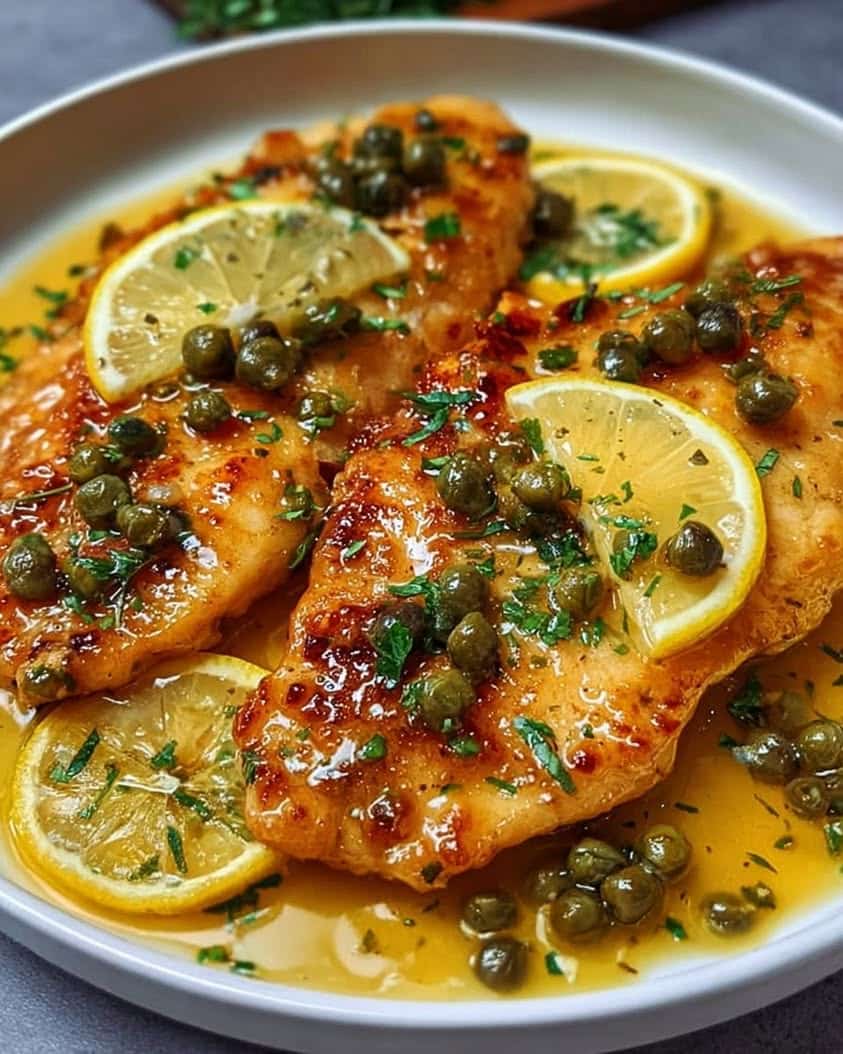
Chicken Piccata with Lemon & Capers: A Bright, Easy Dinner
Chicken Piccata with Lemon & Capers brings a restaurant-quality meal straight to your home kitchen in about 35 minutes. This classic Italian-American dish features thin cutlets of chicken that get dredged in flour, pan-fried until golden, then bathed in a glossy sauce made from white wine, fresh lemon juice, and briny capers. Because the recipe relies on simple pantry staples, you can pull it together on a busy weeknight without stress. Additionally, the bright acidity and savory depth make it feel elegant enough for a weekend dinner party.
When you make Chicken Piccata with Lemon & Capers, your kitchen fills with the irresistible aroma of garlic, butter, and citrus. The first bite delivers a satisfying contrast between the tender, juicy chicken and the crisp, lightly browned crust. Meanwhile, the sauce adds a zesty, tangy punch that wakes up your taste buds. Consequently, this dish pairs beautifully with pasta, roasted vegetables, or a simple green salad. Even picky eaters often ask for seconds because the flavors balance so well.
Many home cooks shy away from pan sauces, yet Chicken Piccata with Lemon & Capers is remarkably forgiving. The technique of deglazing the pan with wine captures all the caramelized bits, which form the backbone of the sauce. In addition, the capers provide little bursts of salty brightness that keep every bite interesting. As a result, you get a meal that tastes complex but demands only basic skills. Keep reading to discover why this recipe deserves a permanent spot in your rotation.
Quick Recipe Highlights
- Flavor Profile: The sauce balances tangy lemon, dry white wine, and salty capers with a rich butter finish. Each element harmonizes without overpowering the others. Consequently, the overall taste feels vibrant, clean, and deeply savory.
- Texture: Thin chicken cutlets offer a tender, juicy interior while the flour coating provides a delicate crispness. The sauce clings lightly to the meat and adds a silky mouthfeel. Meanwhile, the capers deliver tiny pops of texture that keep the dish lively.
- Aroma: Fresh lemon zest and garlic release bright, citrusy notes as soon as they hit the warm pan. The wine reduces and mingles with butter to create a nutty, inviting scent. Therefore, your kitchen smells like a charming trattoria.
- Visual Appeal: Golden-brown cutlets rest on a white plate, glistening under a pale yellow sauce. Green parsley and dark capers scatter across the top for contrast. Additionally, a lemon wedge on the side adds a pop of sunny color.
- Skill Level Needed: You only need basic knife skills and comfort with a skillet. If you can dredge chicken and stir a sauce, you can master this recipe. Furthermore, the entire process moves quickly, so timing matters more than technique.
- Special Equipment: A large stainless steel or cast iron skillet works best because it develops fond without reacting to acid. You also need a meat mallet or rolling pin to pound the cutlets thin. In addition, a pair of tongs and a whisk make the job easier.
Recipe Overview
- Difficulty Level: This recipe earns an Easy rating because it uses straightforward steps and common ingredients. The most technical moment involves deglazing the pan, which simply means adding liquid and scraping up browned bits. Even a beginner can succeed on the first try. Therefore, you should feel confident diving right in.
- Category: Chicken Piccata works as a main course for lunch or dinner. It also fits nicely into a multi-course Italian meal as a secondi, or second plate. Moreover, you can serve it over pasta to create a one-bowl dinner.
- Cuisine: This dish reflects Italian-American cooking, which blends Italian traditions with American ingredients and tastes. Italian immigrants adapted veal piccata into a chicken version during the mid twentieth century. Over time, lemon and capers became the signature elements. Consequently, the recipe now appears on menus across the United States.
- Cost: Four servings cost roughly twelve to sixteen dollars using store-brand staples. Chicken breasts or thighs provide the most affordable protein. Capers, lemons, and wine add a few dollars more, yet you likely own the flour, butter, and garlic already.
- Season: You can enjoy Chicken Piccata with Lemon & Capers all year long. Spring and summer highlight its bright, citrusy character, while fall and winter appreciate its warm, comforting sauce. Because lemons stay available year-round, no season limits this dish.
- Occasion: This recipe suits casual family dinners, romantic date nights, and holiday gatherings with friends. It also works well for meal prep because the flavors deepen overnight. Additionally, you can serve it for a celebratory birthday dinner without much effort.
Why You’ll Love This Recipe
First, the taste and texture appeal of Chicken Piccata with Lemon & Capers hits every note you want in a main dish. The chicken stays juicy because you cook it quickly over medium-high heat and then return it to the sauce just before serving. Meanwhile, the flour coating browns into a light crust that soaks up the lemony butter sauce. The capers add salty bursts that contrast with the smooth, tangy glaze. Consequently, each bite feels balanced and satisfying.
Second, convenience and preparation benefits make this recipe a weeknight hero. You need only one skillet, so cleanup stays minimal. The entire dish comes together in thirty-five minutes from start to finish. Furthermore, you can prep the chicken and measure the sauce ingredients ahead of time. As a result, dinner lands on the table faster than takeout.
Third, nutritional advantages give you reasons to feel good about serving this meal. Chicken provides lean protein that supports muscle repair and keeps you full. Olive oil and butter supply healthy fats in moderation. Lemon juice adds vitamin C, while capers contribute antioxidants. Therefore, you enjoy a balanced plate without sacrificing flavor.
Fourth, social and entertaining value makes Chicken Piccata with Lemon & Capers a reliable choice for guests. The dish looks impressive on a platter, yet you do not need to fuss over complicated plating. You can pair it with a simple salad and crusty bread for a complete spread. Moreover, the recipe scales easily for four to twelve people. Consequently, hosting feels relaxed and enjoyable.
Fifth, cost-effectiveness and accessibility round out the appeal. Almost every grocery store stocks capers, lemons, and white wine. If you skip the wine, you can use broth and a splash of vinegar. The protein remains affordable, especially when chicken goes on sale. In addition, leftovers taste great the next day, which stretches your budget further.
Historical Background and Cultural Significance
The origin story of piccata traces back to Italy, where cooks prepared veal with lemon and butter. The word piccata comes from the Italian verb picchiare, which means to pound or flatten. Italian chefs pounded veal thin to ensure quick, even cooking. Consequently, the technique became a hallmark of the dish. When Italian immigrants arrived in the United States, they adapted the recipe to local ingredients.
Cultural importance grew as Italian-American restaurants embraced chicken piccata in the 1950s and 1960s. Home cooks loved how affordable chicken replaced expensive veal. The dish appeared at weddings, Sunday suppers, and holiday tables. Meanwhile, capers became a signature garnish that signaled sophistication. Therefore, piccata earned a permanent place in American comfort food.
The evolution of the recipe continued through the decades. Some cooks added shallots, garlic, or cream to enrich the sauce. Others swapped in chicken broth when wine seemed too strong. Television chefs popularized the dish in the 1990s, which pushed it further into the mainstream. As a result, modern versions vary widely while keeping the lemon-caper core intact.
Regional variations reveal how cooks personalize Chicken Piccata with Lemon & Capers. In the Northeast, chefs often use more butter and a splash of cream. Southern cooks might add a pinch of cayenne for heat. On the West Coast, fresh herbs like tarragon or basil appear more often. Regardless of region, the bright, briny character remains the constant thread.
Ingredient Deep Dive
Chicken serves as the foundation of this recipe, and its cultural significance spans every continent. People have raised chickens for thousands of years because they provide affordable, versatile protein. Nutritionally, chicken offers high-quality protein, B vitamins, and minerals like selenium. When you select chicken, look for firm, pink flesh without a strong odor. Store it in the coldest part of your fridge and cook within two days. If you prefer, you can substitute turkey cutlets or pork tenderloin slices. Additionally, firm tofu works for a plant-based version.
Capers bring the signature briny punch that defines Chicken Piccata with Lemon & Capers. These small flower buds grow throughout the Mediterranean, where cooks have pickled them for centuries. They deliver antioxidants and a small amount of vitamin K. Choose capers packed in brine rather than salt, and rinse them if you want less sodium. Keep the jar in your refrigerator after opening, where they last for months. If you run out, chopped green olives or pickled jalapeños offer a similar salty kick.
Lemon provides the bright acidity that lifts the entire dish. Originating in Asia, lemons spread through the Mediterranean and became essential in Italian cooking. They supply vitamin C, fiber, and plant compounds that support health. Pick lemons that feel heavy for their size and have smooth, glossy skin. Store them in the crisper drawer for up to two weeks. When you need a substitute, use lime juice or a splash of white wine vinegar.
White wine adds depth and helps deglaze the pan. Winemaking dates back thousands of years, and dry whites like Pinot Grigio or Sauvignon Blanc work best here. The alcohol cooks off, leaving behind subtle fruit and acidity. Choose a wine you would drink, and avoid sweet varieties. Store leftover wine in the fridge for up to five days. If you prefer no alcohol, use chicken broth with a teaspoon of lemon juice.
Butter and olive oil create the rich, silky sauce base. Butter has been churned for millennia, while olive oil anchors Mediterranean cuisine. Together they provide healthy fats and a luxurious mouthfeel. Buy unsalted butter so you control the seasoning, and choose extra virgin olive oil for the best flavor. Keep butter wrapped in the fridge and olive oil in a cool, dark cabinet. For a dairy-free option, use vegan butter or additional olive oil.
Garlic and shallots build aromatic depth in the sauce. Garlic originated in Central Asia and now flavors dishes worldwide, while shallots bring a milder onion note. Both offer antioxidants and trace minerals. Select firm, dry heads of garlic and shallots with no soft spots. Store them in a cool, dry place away from sunlight. If you lack shallots, use a small yellow onion or a tablespoon of chopped chives.
Common Mistakes to Avoid
- Overcrowding the pan causes the chicken to steam instead of brown. Work in batches so each cutlet has space. Consequently, you get a crisp, golden crust every time.
- Skipping the flour dredge leaves the sauce thin and the chicken pale. The flour helps thicken the pan sauce and creates a lovely texture. Therefore, always dredge and shake off the excess.
- Using thick chicken breasts leads to uneven cooking. Pound them to an even quarter-inch thickness for fast, consistent results. Otherwise, the outside burns before the inside cooks through.
- Burning the garlic happens when you add it too early over high heat. Add garlic after the shallots soften and reduce the heat slightly. As a result, you avoid a bitter taste.
- Forgetting to scrape the fond wastes the best flavor in the pan. Pour in the wine and stir vigorously to lift every browned bit. This step deepens the sauce dramatically.
- Adding lemon juice too early mutes its brightness. Stir it in at the end, off the heat. Consequently, the citrus flavor stays vivid.
- Overcooking the chicken makes it dry and tough. Cook each side for only two to three minutes until golden. Then return the cutlets to the sauce just to warm through.
- Using cold butter creates a broken, greasy sauce. Let the butter come to room temperature or cut it into small cubes. Whisk constantly for a smooth, glossy finish.
- Neglecting to taste before serving leaves the seasoning unbalanced. Sample the sauce and adjust salt, pepper, or lemon as needed. Therefore, your final dish tastes perfect.
- Letting the dish sit too long before serving causes the crust to soften. Plate and serve immediately for the best texture. If you must wait, keep the chicken warm in a low oven.
Essential Techniques
Pounding chicken cutlets ranks as the most important technique for Chicken Piccata with Lemon & Capers. Uniform thickness guarantees even cooking, which prevents dry edges and raw centers. Place each breast between two sheets of plastic wrap and use a meat mallet or heavy pan. Work from the center outward with gentle, firm strikes. You want a quarter-inch thickness, roughly the size of your palm. Common pitfalls include tearing the meat or leaving thick spots. Visually, the cutlet should look flat and consistent across its surface.
Dredging creates the light coating that browns beautifully and thickens the sauce. Pat the chicken dry first so the flour adheres properly. Then dip each cutlet into seasoned flour and shake off the excess. A thin, even layer works better than a thick blanket. If you pile on too much flour, the coating turns gummy. You will know you succeeded when the raw chicken looks dusted, not caked.
Pan-frying develops the golden crust and the flavorful fond that defines the sauce. Heat olive oil and a knob of butter over medium-high until shimmering. Lay the cutlets in the pan without crowding, and resist moving them for two minutes. When the edges turn opaque and the underside looks golden, flip once. Common mistakes include using low heat, which steams the meat, or high heat, which burns the butter. The visual cue is a rich amber color on both sides.
Deglazing transforms the browned bits into a savory sauce. After removing the chicken, pour wine into the hot pan and stir immediately. The liquid will sizzle and release the fond from the bottom. Keep scraping until the pan looks clean and the wine reduces by half. If you skip this step, the sauce tastes flat. You will know it worked when the liquid turns light brown and smells nutty.
Finishing the sauce with cold butter creates a velvety texture known as monter au beurre. Remove the pan from heat and whisk in small butter cubes one at a time. Each addition should melt before you add the next. This technique adds shine and body without breaking. A common pitfall involves adding all the butter at once, which makes the sauce greasy. The final sauce should coat the back of a spoon smoothly.
Pro Tips for Perfect Chicken Piccata with Lemon & Capers
First, season the flour generously with salt and pepper before dredging. This step seasons the chicken from the outside in. Consequently, every bite carries balanced flavor without last-minute adjustments.
Second, use a stainless steel or cast iron skillet rather than nonstick. These materials develop fond, which forms the backbone of the sauce. Nonstick pans prevent browning, so you lose depth.
Third, keep your mise en place ready before you turn on the heat. The cooking moves quickly, and you will not have time to chop garlic mid-sauté. Therefore, measure everything into small bowls ahead of time.
Fourth, warm your serving plates in a low oven. Hot plates keep the chicken and sauce at the right temperature. As a result, the dish stays appealing from first bite to last.
Fifth, add a pinch of sugar if the sauce tastes too acidic. A tiny amount balances the lemon without making the dish sweet. Consequently, the flavors round out beautifully.
Sixth, sprinkle fresh parsley at the very end for color and freshness. Dried herbs lack the same bright pop. Additionally, a little lemon zest amplifies the citrus aroma.
Seventh, taste the sauce right before serving and adjust. A final pinch of salt or squeeze of lemon can elevate the whole dish. Therefore, never skip this quick check.
Eighth, rest the cooked chicken for two minutes before slicing or serving. This brief rest lets the juices redistribute. As a result, the meat stays tender and moist.
Variations and Adaptations
Regional variations of Chicken Piccata with Lemon & Capers appear across Italy and the United States. In Rome, cooks sometimes use veal and serve it with artichokes. In Sicily, a splash of Marsala wine replaces the white wine for a sweeter note. American versions often add cream for a richer sauce. Each region adapts the dish to local tastes while preserving the lemon-caper essence.
Seasonal adaptations let you enjoy this recipe all year. In spring, add fresh peas or asparagus to the sauce. During summer, toss in cherry tomatoes and basil. Fall invites mushrooms and thyme, while winter calls for a creamier version with wilted spinach. Consequently, the dish never feels repetitive.
Dietary modifications make the recipe accessible to more people. For gluten-free needs, use almond flour or a gluten-free blend for dredging. Dairy-free cooks can swap butter for vegan butter or olive oil. Vegan versions use tofu or seitan in place of chicken. Each change requires small adjustments, yet the core flavor remains.
Flavor variations let you play with the profile. Add a teaspoon of Dijon mustard for tang, or a pinch of red pepper flakes for heat. A splash of heavy cream creates a luxurious texture. Smoked paprika adds a subtle depth. Therefore, you can customize the dish to match your mood.
Texture modifications suit different preferences. For a crunchier coating, double-dip the chicken in flour and egg before frying. If you prefer a lighter dish, skip the flour and simply sear the chicken. You can also thicken the sauce with a cornstarch slurry instead of butter. Each option changes the mouthfeel while keeping the taste familiar.
Presentation alternatives help you serve the dish in creative ways. Spoon the chicken and sauce over angel hair pasta, mashed potatoes, or polenta. For a low-carb plate, serve it over zucchini noodles or cauliflower rice. You can also slice the chicken and pile it onto crusty bread for a sandwich. Consequently, one recipe yields many meals.
Serving and Presentation Guide
Plating techniques set the stage for a beautiful meal. Place one cutlet slightly off-center on a warm plate. Spoon the sauce over the top so it cascades down the sides. Arrange capers and parsley artfully around the chicken. Therefore, the plate looks polished without much effort.
Garnishing ideas add color and freshness. A sprinkle of chopped parsley brightens the pale sauce. Thin lemon slices or twists add elegance. For a rustic look, scatter a few extra capers and a grind of black pepper. Additionally, a light dusting of lemon zest lifts the aroma.
Traditional accompaniments include spaghetti, linguine, or risotto. A simple green salad with vinaigrette cuts through the richness. Crusty bread helps soak up every drop of sauce. Consequently, you create a complete Italian-American spread.
Modern serving suggestions appeal to contemporary tastes. Try serving the chicken over farro, quinoa, or cauliflower puree. A side of roasted broccolini adds color and crunch. For a lighter plate, pair it with a shaved fennel salad. Therefore, you can update the dish without losing its character.
Temperature considerations matter for both flavor and safety. Serve the chicken hot, around 165 degrees Fahrenheit internally. The sauce should stay warm but not boiling. If the dish cools, reheat gently over low heat with a splash of broth. As a result, the texture stays tender.
Portion control tips help you plate confidently. One cutlet with about two tablespoons of sauce makes a satisfying serving. Add a half-cup of pasta or vegetables for a balanced plate. If you serve a larger group, arrange the chicken on a platter and let guests help themselves. Consequently, everyone gets a fair share.
Wine and Beverage Pairing
Wine pairings for Chicken Piccata with Lemon & Capers focus on crisp, dry whites. A Pinot Grigio offers light fruit and clean acidity. Sauvignon Blanc brings herbal notes that echo the capers. Chardonnay with moderate oak adds a buttery counterpoint. Therefore, choose a wine that mirrors the dish’s brightness.
Non-alcoholic alternatives work just as well. Sparkling water with lemon and a splash of cranberry juice feels festive. Iced green tea with mint refreshes the palate. A homemade lemonade with fresh herbs adds a playful touch. Consequently, everyone can enjoy a thoughtful pairing.
Coffee and tea pairings suit those who prefer warm drinks. A light green tea complements the citrus notes. Chamomile tea soothes between bites. Avoid heavy dark roasts, which overpower the delicate sauce. Therefore, stick with mild, aromatic options.
Temperature considerations apply to every beverage. Serve white wine chilled but not ice cold, around fifty-five degrees Fahrenheit. Sparkling water tastes best well chilled. Hot tea should sit at a comfortable sipping temperature. As a result, the drink enhances rather than distracts.
Serving suggestions include offering a small pitcher of sauce on the side. Guests can add more if they like. Place lemon wedges in a small bowl for extra zing. Therefore, the table feels welcoming and interactive.
Storage and Shelf Life
Storage methods for Chicken Piccata with Lemon & Capers keep leftovers safe and tasty. Cool the dish within two hours of cooking. Then transfer chicken and sauce into separate airtight containers. This separation prevents the coating from getting soggy. Consequently, you preserve the texture for the next meal.
Temperature requirements for refrigeration sit at forty degrees Fahrenheit or below. Place containers in the main compartment rather than the door. The door fluctuates in temperature more often. As a result, the food stays consistently cold.
Container recommendations include glass containers with locking lids. Glass does not stain or hold odors. BPA-free plastic also works for short-term storage. Therefore, choose a container that seals tightly.
Signs of spoilage include a sour smell, slimy texture, or cloudy sauce. If you notice any of these, discard the food immediately. Do not taste it to check. Consequently, you protect your health.
Reheating instructions matter for texture. Warm the chicken in a covered skillet over low heat with a splash of broth. Avoid the microwave, which toughens the meat. Heat until the internal temperature reaches 165 degrees Fahrenheit. As a result, the dish tastes almost as good as fresh.
Freezing guidelines help you plan ahead. Freeze the chicken and sauce separately for up to three months. Thaw overnight in the refrigerator before reheating. The coating may soften slightly, yet the flavor stays intact. Therefore, freezing works well for busy weeks.
Make Ahead Strategies
Prep timeline matters when you plan to make Chicken Piccata with Lemon & Capers ahead. You can pound, dredge, and refrigerate the cutlets up to twenty-four hours in advance. Measure the sauce ingredients into small bowls the night before. Consequently, cooking takes only twenty minutes on the day of serving.
Storage between steps keeps each component fresh. Place dredged chicken on a parchment-lined sheet pan and cover with plastic wrap. Refrigerate the sauce ingredients in separate containers. Do not mix the wine and lemon juice until cooking. As a result, the flavors stay bright.
Quality impact assessment shows minimal loss with advance prep. The flour coating may absorb moisture, so pat the chicken dry before frying. Sauces made ahead taste nearly identical when reheated gently. Therefore, make-ahead works well for this recipe.
Assembly tips help you finish quickly. Have the skillet hot and the sauce ingredients within reach. Work in batches if needed, keeping cooked chicken warm in a low oven. Then build the sauce and return the chicken for a final simmer. Consequently, serving happens in minutes.
Reheating guidelines for prepped components ensure safety and taste. Warm the sauce over low heat and add the chicken just before serving. Stir in the final butter off the heat. As a result, the sauce stays glossy.
Fresh element additions brighten make-ahead meals. Add chopped parsley, lemon zest, or extra capers right before serving. These small touches restore the just-cooked feel. Therefore, no one guesses the dish was prepped in advance.
Scaling Instructions
Halving the recipe works easily because the ingredients divide cleanly. Use two chicken breasts, half the flour, and half the wine. Keep the same pan size to maintain browning. Consequently, the cooking time stays similar.
Doubling or tripling the recipe requires more pan batches. Crowding the skillet ruins the crust, so cook the chicken in two or three rounds. Keep finished cutlets warm in a two-hundred-degree oven. Then make the sauce in the same pan, doubling the liquid. As a result, you feed a crowd with ease.
Equipment adjustments help when scaling up. Use a larger skillet or a wide braising pan for the sauce. You may need two pans for frying. A warming tray or sheet pan in the oven holds the chicken beautifully. Therefore, plan your equipment before you start.
Timing modifications matter when you cook multiple batches. The total time may stretch by ten to fifteen minutes. Start the sauce only after all chicken is cooked and resting. Consequently, the sauce stays hot and smooth.
Storage considerations change with larger quantities. Use multiple containers to cool food faster. Do not stack hot containers in the fridge. As a result, the food reaches a safe temperature quickly.
Nutritional Deep Dive
Macro breakdown for one serving of Chicken Piccata with Lemon & Capers shows roughly thirty-five grams of protein, fifteen grams of fat, and twelve grams of carbohydrates. These numbers vary with portion size and brand choices. The protein supports satiety and muscle maintenance. Therefore, the dish fits a balanced eating plan.
Micronutrient analysis reveals vitamin C from lemon, iron from chicken, and vitamin K from parsley. Capers add antioxidants like quercetin. Garlic offers manganese and vitamin B6. Consequently, the recipe delivers more than just calories.
Health benefits include lean protein, healthy fats, and anti-inflammatory compounds. Lemon and garlic may support immune function. Olive oil promotes heart health. As a result, you nourish your body while enjoying a flavorful meal.
Dietary considerations matter for people with specific needs. The recipe contains gluten from flour, dairy from butter, and alcohol from wine. Each of these has easy substitutes. Therefore, most diets can adapt the dish.
Portion analysis helps with weight management. One cutlet with sauce lands around three hundred fifty calories. Adding pasta or bread increases the count. Measure your sides to stay within your goals. Consequently, you control the total intake.
Weight management tips include serving extra vegetables and skipping the bread. Use less butter in the sauce for a lighter version. Choose chicken breast over thighs to reduce fat. As a result, you enjoy the dish without guilt.
Dietary Adaptations
Gluten-free versions swap the all-purpose flour for almond flour, rice flour, or a gluten-free blend. The coating browns slightly faster, so watch the pan closely. Use gluten-free broth if you replace the wine. Consequently, the dish suits celiac and gluten-sensitive diners.
Dairy-free adaptations replace butter with vegan butter, coconut oil, or extra olive oil. The sauce loses a bit of richness yet stays flavorful. Add a tablespoon of nutritional yeast for a savory note. Therefore, dairy-free eaters enjoy the same bright taste.
Vegan versions use pressed tofu, seitan, or portobello mushroom caps in place of chicken. Dredge them the same way and pan-fry until golden. Use vegetable broth instead of chicken broth. As a result, plant-based diners get a satisfying meal.
Low-carb adaptations skip the flour and use a light dusting of almond flour. Serve over zucchini noodles or sautéed greens. The sauce remains low in carbohydrates. Consequently, the dish fits a low-carb lifestyle.
Keto versions use almond flour and add extra butter or olive oil for fat. Avoid breaded sides and choose cauliflower rice. The macros align well with ketogenic targets. Therefore, keto followers can enjoy this classic.
Paleo adaptations replace flour with arrowroot or coconut flour. Use ghee instead of butter and skip the wine in favor of broth with lemon. The result stays close to the original. As a result, paleo eaters have a workable option.
Low-FODMAP adaptations omit garlic and shallots. Use garlic-infused oil for flavor without the FODMAPs. Choose broth without onion or garlic. Consequently, sensitive stomachs handle the dish well.
Other specific diets such as Mediterranean or DASH fit naturally. The olive oil, lemon, and lean protein align with both plans. Just watch the sodium from capers and adjust. Therefore, many healthy eating patterns include this recipe.
Troubleshooting Guide
Texture issues often stem from overcooking or undercooking the chicken. If the meat feels tough, you likely cooked it too long. Slice thin and simmer briefly in the sauce to soften. If the center looks pink, return it to the pan for another minute. Consequently, you fix the problem quickly.
Flavor balance problems arise when the sauce tastes too sour or too flat. Add a pinch of sugar for excess acidity. Add salt and a knob of butter for a flat taste. A squeeze of lemon revives a dull sauce. Therefore, small adjustments save the dish.
Temperature problems include a sauce that breaks or chicken that cools too fast. If the sauce looks greasy, whisk in a tablespoon of warm broth. If the chicken cools, warm it gently in the sauce. As a result, the dish returns to its best state.
Equipment challenges appear when you lack a meat mallet or large skillet. Use a heavy saucepan or rolling pin to pound the chicken. A wide Dutch oven works for frying. Therefore, you can still make the recipe with what you own.
Ingredient substitutions help when you run out of something. Use lime for lemon, green olives for capers, or broth for wine. Each swap changes the flavor slightly yet keeps the dish intact. Consequently, you never need to abandon the recipe.
Timing concerns arise when guests arrive late or the chicken finishes early. Keep the chicken warm in a low oven and make the sauce at the last minute. The sauce takes only five minutes. As a result, you serve a hot, fresh meal.
Recipe Success Stories
Community feedback shows that home cooks love how quickly Chicken Piccata with Lemon & Capers comes together. Many readers report making it on busy weeknights after work. They appreciate the short ingredient list and one-pan cleanup. Consequently, the recipe has become a repeat favorite in many households.
Variation successes include adding mushrooms, artichokes, and sun-dried tomatoes. One reader swapped chicken for shrimp and loved the result. Another used the sauce over grilled salmon. As a result, the recipe inspires creativity in the kitchen.
Adaptation stories highlight gluten-free and dairy-free versions. A reader with celiac disease praised the almond flour coating. Another used coconut oil instead of butter and reported excellent results. Therefore, the recipe welcomes many dietary needs.
Reader suggestions include doubling the sauce for pasta lovers. Some recommend adding a splash of cream for a richer finish. Others suggest a pinch of red pepper flakes for heat. Consequently, the community keeps improving the dish.
Photography tips help readers capture beautiful images. Shoot near a window for natural light. Use a white or light gray plate to make the golden chicken pop. Add a lemon wedge and parsley for color. As a result, your photos look as good as the meal tastes.
Frequently Asked Questions
Can I make Chicken Piccata with Lemon & Capers without wine? Yes, you can replace the wine with chicken broth and a teaspoon of lemon juice or white wine vinegar. The sauce loses a bit of complexity yet still tastes bright and savory. Use the same amount of liquid called for in the recipe.
How thin should I pound the chicken? Aim for about a quarter inch thick. This thickness cooks quickly and evenly while staying juicy. If the cutlets vary in size, pound them until they look uniform. Even thickness prevents dry edges and raw centers.
Can I use chicken thighs instead of breasts? Absolutely. Boneless, skinless thighs work well and stay moist. Pound them to an even thickness just like breasts. The cooking time may increase by a minute or two per side.
What can I use instead of capers? Chopped green olives, pickled jalapeños, or even chopped dill pickles offer a similar salty, briny punch. Each substitute changes the flavor slightly, so taste the sauce before serving. Adjust the lemon and salt accordingly.
Is this recipe gluten-free? Not as written because of the flour. However, you can easily make it gluten-free by using almond flour, rice flour, or a one-to-one gluten-free blend. The coating browns a little faster, so watch the pan closely.
How do I keep the coating from falling off? Pat the chicken dry before dredging, and press the flour gently into the meat. Let the coated cutlets rest for five minutes before frying. Also, do not Print
Chicken Piccata with Lemon & Capers
- Total Time: 30 minutes
- Yield: 4
Description
A classic Italian-American dish featuring thinly sliced chicken breasts sautéed in a lemony, buttery sauce with capers and fresh parsley.
Ingredients
- 4 boneless, skinless chicken breasts, pounded to 1/4-inch thickness
- Salt and freshly ground black pepper, to taste
- 1/2 cup all-purpose flour, for dredging
- 4 tablespoons unsalted butter, divided
- 2 tablespoons olive oil
- 1/4 cup fresh lemon juice (about 1 large lemon)
- 1/2 cup chicken broth
- 2 tablespoons capers, drained and rinsed
- 2 tablespoons chopped fresh parsley
- Lemon slices, for garnish (optional)
Instructions
- Season the chicken breasts with salt and pepper on both sides. Dredge each breast in flour, shaking off any excess.
- In a large skillet, heat 2 tablespoons of butter and the olive oil over medium-high heat. Add the chicken and cook until golden brown and cooked through, about 3-4 minutes per side. Transfer to a plate and keep warm.
- Reduce heat to medium. Add the lemon juice and chicken broth to the skillet, scraping up any browned bits. Simmer for 2 minutes, until slightly reduced.
- Stir in the remaining 2 tablespoons of butter until melted and the sauce is smooth. Add the capers and parsley.
- Return the chicken to the skillet and spoon the sauce over the top. Cook for 1-2 minutes to heat through. Garnish with lemon slices if desired. Serve hot.
Notes
You can customize the seasonings to taste. For a thicker sauce, you can add a little cornstarch slurry. Serve with pasta, rice, or crusty bread to soak up the sauce.
- Prep Time: 15 minutes
- Cook Time: 15 minutes
- Method: Main
- Cuisine: Italian-American