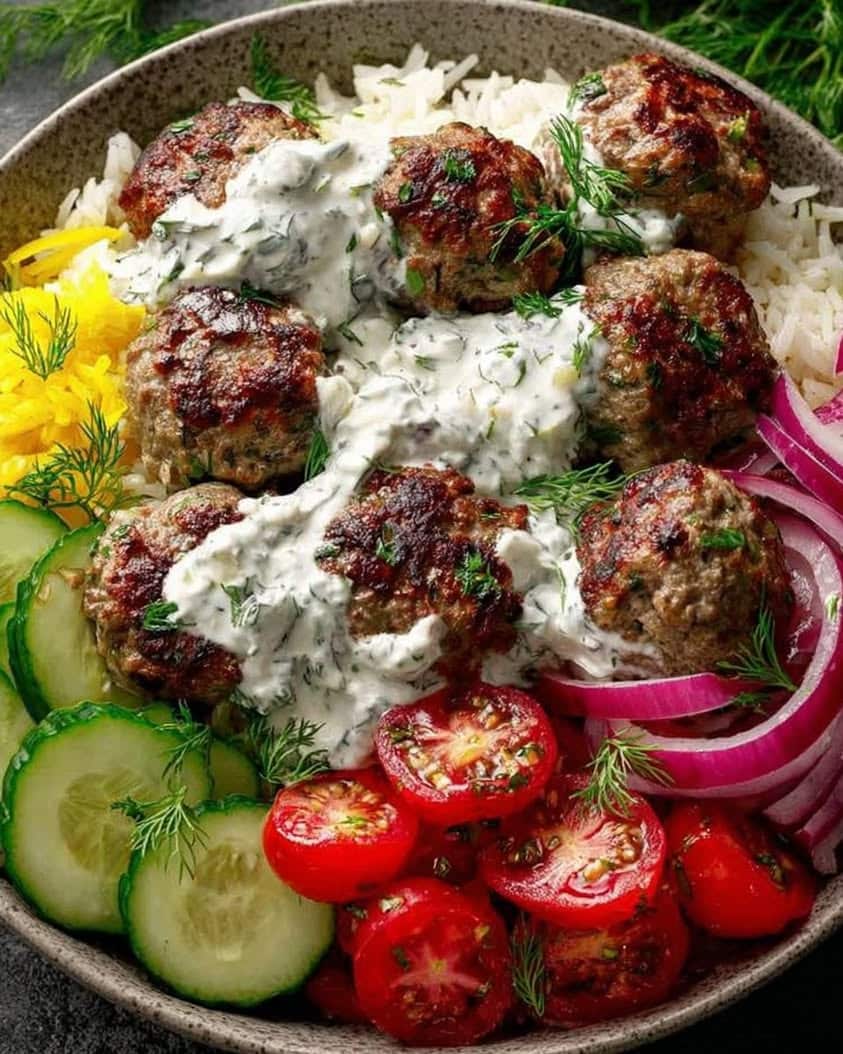
Mediterranean Meatball Rice Bowl with Tzatziki and Fresh Veggies: Easy Healthy Dinner
This Mediterranean Meatball Rice Bowl with Tzatziki and Fresh Veggies is the easy healthy dinner you have been searching for this week. I absolutely love creating meals that feel both indulgent and nourishing, and this bowl hits that perfect balance every time. Imagine perfectly seasoned lamb and beef meatballs, juicy and packed with fresh herbs, resting on a bed of fluffy, lemon-kissed rice. Then, you add a rainbow of crisp cucumbers, juicy tomatoes, and peppery red onions, all brought together with a generous drizzle of cool, creamy tzatziki sauce. It is a complete, satisfying meal that delivers restaurant quality right from your own kitchen.
When I first crafted this Mediterranean Meatball Rice Bowl with Tzatziki and Fresh Veggies, my goal was to simplify a classic flavor profile without losing any of the authenticity. Consequently, this recipe uses accessible ingredients and straightforward techniques that even beginner cooks can master with confidence. Moreover, the components come together quickly, making it an ideal choice for a busy weeknight when you want something far more exciting than a basic takeout container. The aromatic blend of garlic, oregano, and cumin will fill your kitchen with an irresistible fragrance, promising a delicious meal even before you take the first bite.
Furthermore, this healthy dinner recipe is incredibly versatile and perfect for meal prepping. You can prepare the meatballs and tzatziki sauce ahead of time, and then simply assemble your bowl when you are ready to eat. As a result, you get all the flavors of a labor-intensive Mediterranean feast with a fraction of the effort. Therefore, whether you are feeding your family on a Tuesday night or impressing guests at a casual dinner party, this vibrant and flavorful bowl is guaranteed to be a hit. Consequently, this recipe is not just a meal; it is an experience that transports you to a sunny seaside taverna with every single forkful.
Quick Recipe Highlights
- Flavor Profile: This dish is a harmonious blend of savory, herbaceous meatballs, bright and tangy tzatziki, and crisp, fresh vegetables. The garlic and oregano in the meatballs pair beautifully with the cool, dill-forward yogurt sauce, while a squeeze of lemon adds a refreshing citrus note that ties everything together. Each bite offers a delicious contrast of rich and light flavors.
- Texture: You will enjoy a wonderful variety of textures in this bowl, from the tender, juicy meatballs and fluffy rice to the crunchy cucumbers and creamy tzatziki. The combination of smooth yogurt, crisp veggies, and hearty meat is incredibly satisfying. Therefore, this bowl keeps your palate engaged from the first bite to the last.
- Aroma: The cooking process will release an incredible aroma of sizzling garlic, earthy cumin, and fragrant oregano. Fresh dill and lemon zest add a bright, clean scent to the tzatziki and rice, respectively, creating an overall welcoming and appetite-inducing olfactory experience. It is the kind of smell that brings everyone to the kitchen.
- Visual Appeal: This is a genuinely vibrant and colorful dish with the deep brown of the seared meatballs, the bright white of the tzatziki, and the vivid reds, greens, and purples of the fresh vegetables. The layers of color and texture make it a feast for the eyes. You will be proud to serve this stunning bowl to any guest.
- Skill Level Needed: This easy healthy dinner requires only fundamental cooking skills such as mixing, rolling, and pan-searing. The steps are straightforward and forgiving, which makes it a perfect recipe for novice cooks. Honestly, if you can roll a meatball, you have all the skills necessary to make this exceptional dish.
- Special Equipment: You will chiefly need a large skillet or sauté pan for searing the meatballs and a medium saucepan for cooking the rice. A box grater for the cucumber and garlic is helpful for the tzatziki. Beyond these basic kitchen tools, no other special equipment is required for this recipe.
Recipe Overview
- Difficulty Level: I have classified this recipe as easy because the techniques involved are basic and the steps are simple to follow. There are no complicated procedures or temperamental steps that might cause stress. Even though it has multiple components, each one is very straightforward to prepare, making the process stress-free and enjoyable. This is the perfect kind of recipe for a relaxing Sunday afternoon meal prep session.
- Category: This recipe is an excellent choice for a main course for either lunch or dinner. It fits neatly into the categories of “bowl food,” “weeknight dinner,” and “meal prep.” Furthermore, it is substantial enough to be served as a whole meal on its own without the need for any additional side dishes, simplifying your cooking plan.
- Cuisine: The dish draws its primary inspiration from the culinary traditions of Greece and the broader Eastern Mediterranean region. You will find echoes of classic recipes like Greek meatballs (keftedes) and the ubiquitous tzatziki sauce that is a staple in Greek tavernas. This recipe takes those beloved elements and combines them into a convenient, modern meal format that is popular in the United States. It celebrates the fresh, simple, and healthful ingredients that define this vibrant style of cooking.
- Cost: This is a moderately economical meal to prepare, especially when you consider the quality and quantity of food you get. Ground beef and lamb are reasonably priced, and a lot of the cost goes toward fresh produce like tomatoes, cucumbers, and herbs. However, by buying items like Greek yogurt and fresh herbs, you can expect the total cost to be still less than a similar restaurant meal. Additionally, you will likely have many of the pantry staples, like rice and spices, on hand already, which helps bring the cost down.
- Season: While you can enjoy this meal year-round, it is especially perfect during the spring and summer months when the weather is warm. This is because the dish relies on cool, crisp vegetables and a refreshing yogurt sauce, which are ideal for hot days. Moreover, fresh tomatoes, cucumbers, and herbs are at their peak flavor and most affordable price during the summer season. Generally, it is a light yet filling meal that will not weigh you down in the heat.
- Occasion: This recipe is wonderfully versatile when it comes to occasions. It is an ideal quick and easy dinner option for a busy weeknight, yet it is also special enough to serve at a casual weekend get-together. The build-your-own-bowl aspect makes it fun for a family dinner where everyone can customize their own plate, or you can set up a buffet for a small party. It is truly a meal that works for any relaxed or semi-formal occasion.
Why You Will Love This Recipe
The primary reason you will adore this Mediterranean Meatball Rice Bowl with Tzatziki and Fresh Veggies is its incredible depth of flavor. The meatballs are seasoned with a distinctive blend of warm spices and fresh herbs, which creates a savory taste that is anything but ordinary. Additionally, the cool, garlicky tzatziki provides a perfect counterpoint, and the fresh vegetables add a necessary brightness and crunch. Therefore, each element complements the others, resulting in a truly satisfying and memorable flavor experience. It is not just another generic dinner; it is a taste journey that excites the taste buds.
Convenience is another massive factor, as this healthy dinner comes together in under an hour. This is possible because you can easily multitask, like cooking the rice while you prepare the meatballs and chopping the vegetables while everything cooks. Moreover, the recipe is forgiving and does not demand constant attention, giving you time to relax or handle other tasks. Furthermore, the leftovers are absolutely fantastic, and you can assemble the bowls for lunch the next day in just a few minutes. Therefore, you can enjoy a delicious, high-quality meal multiple times a week with minimal effort.
From a nutritional standpoint, this bowl is a true powerhouse. It provides a great balance of lean protein from the meat and yogurt, complex carbohydrates from the rice, and a vast array of vitamins and antioxidants from the fresh vegetables. Additionally, the olive oil provides heart-healthy monounsaturated fats and the fresh herbs offer their own health-promoting properties. This dish proves that eating well does not mean sacrificing flavor or satisfaction. Consequently, you can feel fantastic about what you are fueling your body with, making it a regular part of a healthy diet.
This recipe is also excellent for social occasions because it is interactive and crowd-pleasing. When you set up a “bowl bar” with all the components, guests can customize their meal to their own preferences. For example, someone can add extra tomatoes, while another might skip the onions or load up on tzatziki. Consequently, this accommodates various tastes effortlessly and makes for a relaxed, fun, and memorable dining experience. It is incredibly convenient for entertaining because most of the components can be prepared in advance.
Finally, this dish is wonderfully cost-effective because it uses relatively inexpensive ingredients to create an impressive and luxurious-tasting meal. A small amount of high-quality meat goes a long way when combined with rice and vegetables, stretching your grocery budget further. Therefore, it is an economical recipe that does not feel cheap or frugal in any way. It offers great value for the money, especially when compared to the cost of ordering similar bowls from a restaurant or meal delivery service. This makes it a winning choice for families or students on a budget.
Historical Background and Cultural Significance
The Mediterranean diet, which heavily inspires this dish, is not merely a diet but rather a way of life for the people living in countries bordering the Mediterranean Sea. Consequently, the cultural significance is deeply rooted in traditions of communal eating, fresh seasonal produce, and simple cooking methods. Since ancient times, grains, legumes, olive oil, fresh vegetables, and grilled meats have been the cornerstones of these cuisines. Archaeological evidence suggests that similar combinations of meatballs and grains have been a part of the human diet for centuries, evolving with regional tastes.
The meatball itself, known as “keftedes” in Greece and “kofta” in the Middle East and Turkey, has an ancient and storied history. Spiced meatballs were likely created to stretch small amounts of meat into a more substantial meal, a practice born out of necessity. As a result, they are a cornerstone of rustic, home-style cooking. Moreover, these small, seasoned meatballs were efficient for cooking with simple equipment and over open flames. Also, the use of herbs like mint and oregano has been used in the Eastern Mediterranean for both flavor and their natural preservative qualities.
Tzatziki, a strained yogurt sauce with cucumber, garlic, and herbs, is a quintessential element of Greek cuisine. Its origins can be traced back to similar yogurt-based sauces from Persia and India, which made their way to Greece over centuries of trade and cultural exchange. Initially, people used yogurt as a way to preserve milk in the warm climate, and mixing it with vegetables made it an even more refreshing and nutritious side. Therefore, this sauce not only provided flavor but also helped balance the richness of grilled meats. It is a testament to how simple ingredients can be transformed into something deliciously complex.
Throughout the years, the concept of the “rice bowl” has become a global phenomenon, largely due to its convenience and versatility. The Mediterranean Meatball Rice Bowl is a modern adaptation that combines the ancient culinary traditions of the region with a contemporary, fast-paced lifestyle. While a traditional Greek taverna might serve the components separately, this bowl format is a practical and visually appealing way to enjoy them together. Consequently, this recipe illustrates how classic cuisines evolve and remain relevant in modern gastronomy. Therefore, by preparing it, you are participating in a long and delicious culinary lineage.
Ingredient Deep Dive
Ground Lamb and Beef: The foundation of the meatballs, combining lamb and beef is a classic choice for creating a richer, more complex flavor. Historically, lamb has been a central protein in Mediterranean cultures due to the region’s pastoral landscape. Consequently, it provides a distinct, slightly gamey flavor and a tender texture due to its higher fat content. Beef is often added to provide a more neutral base and helps the meatballs hold their shape better. When shopping, look for ground lamb and beef with a higher fat percentage, as this will ensure the meatballs remain juicy and do not dry out during cooking. If you cannot find lamb, you can use all beef, all pork, or even ground chicken or turkey for a lighter version.
The protein in this dish is not just a source of flavor but also an essential part of its structure and nutritional value. When the meatballs are seared, the Maillard reaction on the exterior creates a deeply savory crust that is highly desirable. This reaction, combined with the herbs and spices, forms a robust flavor foundation. You can store raw ground meat in the refrigerator for a day or two, but it is best cooked fresh for maximum flavor. Furthermore, the meatballs can be perfectly cooked ahead and reheated without sacrificing quality, which is great for meal prep.
Greek Yogurt: As the key component of the tzatziki sauce, Greek yogurt provides a thick, creamy texture and a pleasantly tart flavor. Greek yogurt is made by straining regular yogurt to remove the excess whey, resulting in a much thicker, more protein-dense product. This thick consistency is essential for a perfect tzatziki, as it is hearty enough to cling to the meatballs and rice. Moreover, the acidity of the yogurt is a beautiful counterbalance to the richness of the meat. You must use full-fat or 2% Greek yogurt for the best texture; the fat helps carry the flavors.
Beyond its culinary role, Greek yogurt is an incredibly healthy ingredient, packed with protein and probiotics that are beneficial for gut health. When selecting Greek yogurt, look for one with no added sugars, as you will be adding your own seasonings. It is a versatile ingredient that defines the character of the tzatziki. Also, it is absolutely critical to use a thick, strained yogurt; otherwise, your tzatziki sauce will be watery and thin. Storing it in the fridge is essential, and it generally has a good shelf life, although you should always check the expiration date to ensure freshness.
Fresh Herbs and Garlic: The combination of fresh dill, mint, and garlic is the aromatic soul of this Mediterranean Meal. Dill is ubiquitous in Greek cooking, lending a bright, slightly sweet, and herbaceous flavor to tzatziki and meatballs alike. Mint, on the other hand, adds a cool, refreshing note that works wonders with the rich lamb and cooling yogurt. Garlic provides a pungent, savory kick that is essential for both the meatballs and the sauce, truly tying all the flavors together. These herbs elevate the dish from a simple meal into a fragrant, complex culinary experience.
Using fresh herbs is one of the tips that truly makes a difference in this recipe. Fresh dill and mint have a vibrancy that dried herbs simply cannot replicate. When you are shopping, try to find herbs with vibrant colors and no wilting or yellowing. Store them in the fridge wrapped in a damp paper towel. While dried herbs can be substituted if you are truly in a pinch, the final flavor will not be as bright and aromatic. Furthermore, that powerful garlic punch is diluted when dried, so always reach for fresh bulbs for this recipe if you can.
Cucumbers and Tomatoes: These fresh vegetables are essential for adding texture, color, and a fresh, hydrating flavor to your bowl. English cucumbers or Persian cucumbers, which have thin skins and few seeds, are ideal because they do not need to be peeled and stay wonderfully crunchy. Tomatoes, especially ripe, juicy heirloom varieties or cherry tomatoes, add a burst of sweetness and a brilliant splash of red to the dish. They provide necessary acidity that cuts through the fat of the meatballs. Therefore, these veggies are not just a side note; they are crucial to the overall balance of the meal.
Freshness is of the utmost importance with these components. When at the grocery store, choose cucumbers that are firm and not wrinkled and tomatoes that are fragrant and heavy for their size. Because they are served raw, you want them at their peak flavor. Also, remember to salt the chopped cucumber for the tzatziki and let it sit for about ten minutes. Then, ensure you squeeze out all the excess water. This simple step is the secret to a thick, non-watery tzatziki sauce. The leftovers can be stored in the fridge for a few days, so they are perfect to use in this salad.
Common Mistakes to Avoid
- Overworking the Meatball Mixture: It can be tempting to mix the meatball ingredients until they are perfectly combined, but this is a mistake. When you overwork the ground meat, the proteins bind too tightly and create a tough, dense, and chewy meatball. Therefore, you should mix the ingredients just until they are evenly incorporated and no dry spots remain. A light touch, using your hands, is the most effective way to get a tender, juicy result.
- Skipping the Onion Rinse: A mistake in flavor balance is forgetting to rinse the grated onion for the meatballs. The raw onion contains sulfurous compounds that are harsh and can overpower the mixture and give the meatballs an unpleasant, oniony bite. To avoid this, finely grate a small onion and place the shreds in a fine-mesh sieve. Rinse under cold water, then squeeze out the excess moisture before adding it to your meat mixture.
- Using a Thin Yogurt for Tzatziki: Making a watery tzatziki sauce is a classic mishap. Using regular, non-strained yogurt will result in a thin, liquid sauce that will pool at the bottom of the bowl instead of clinging to the ingredients. Therefore, it is paramount to use a thick, strained Greek yogurt or labneh. Additionally, you must salt the grated cucumber and let it sit to draw out the moisture, then squeeze it as dry as possible before adding it to the yogurt.
- Not Resting Meatballs Before Cooking: Placing the raw meatballs directly into a hot skillet is a common mistake that can cause them to fall apart and not brown properly. You should allow the meatballs to rest in the refrigerator for at least 15-20 minutes on a plate or sheet pan. During this time, the mixture firms up, which makes them much easier to handle and helps them hold their shape during the searing process.
- Overcrowding the Pan: A key step to a good sear is searing the meatballs in a single layer without crowding the pan. If you pack the skillet too full, the meatballs will steam in their own juices instead of browning, resulting in a gray, unappetizing exterior. Therefore, you should cook them in batches to ensure that each meatball gets proper contact with the hot pan and develops a beautiful golden-brown crust.
- Undercooking the Garlic in the Rice: Cooking the garlic just for a moment in the olive oil before adding the liquid is a crucial step for the rice. If you just throw raw garlic into the boiling water, it will taste very sharp and rather unpleasant. Sauteing it gently for 30 to 60 seconds until it is fragrant, but not browned, softens the flavor and mellows it out, infusing the whole pot of rice with a delicious, subtle garlic undertone.
- Adding All the Tzatziki Toppings: In the chaos of assembling dinner, you might be tempted to mix all the tzatziki sauce directly into the bowl. However, for the optimal presentation and taste, it is much better to serve the sauce on the side or drizzle it over the top. This allows each person to add as much or as little as they like. Also, it keeps the crispy vegetables from getting too soggy and provides nice visual appeal.
- Skipping the Lemon Juice: You might think the lemon juice is a minor detail, but it is actually essential. The bright, acidic lemon juice is the “secret” ingredient that brings all the different components of the dish together. A final squeeze of fresh lemon over the finished bowl provides a pop of flavor and freshness that cuts through the richness. Without it, the dish can taste a little flat and heavy.
- Using Dried Herbs for the Tzatziki: Dried herbs can be a lifesaver, but they simply will not do the job in this particular sauce. Dried dill and mint have a somewhat dusty, hay-like flavor that is very disappointing when compared to the fresh, clean flavor of the real thing. So, while you can use dried oregano for the meatballs in a pinch, always buy fresh dill and mint for your tzatziki and garnish for the best flavor possible.
- Not Letting the Meatballs Rest: You should not cut into the meatballs immediately after pulling them from the oven or pan. Just like a steak, the juices need time to redistribute throughout the meatball. If you cut into them too soon, those flavorful juices will spill out onto the cutting board, leaving you with a dry and less flavorful meatball. Letting them rest for 5-10 minutes will ensure they are juicy and delicious.
Essential Techniques
The Perfect Meatball Sear: Searing, or browning, the meatballs is a primary technique that should not be skipped. To start, heat your large skillet over medium-high heat with a generous glug of olive oil. When the oil is shimmering, carefully add the meatballs one by one, ensuring not to overcrowd the pan. This initial contact with high heat creates a deeply flavorful, caramelized crust that is a hallmark of a great meatball. Moreover, this browned exterior helps to lock in moisture and juices, ensuring the inside remains tender and succulent.
Throughout the searing process, you should turn each meatball occasionally to ensure even browning on all sides. This might seem tedious, but it is well worth the effort for the resulting flavor and appearance. After they are uniformly golden, you will often then cover the pan and finish cooking them through on a lower heat. Alternatively, you can transfer them to an oven to finish, which is a foolproof and “hands-off” method. This two-stage process first creates flavor, then guarantees the meatballs are fully cooked without burning the outside.
Draining Cucumbers for Tzatziki: The technique of salting and draining the cucumbers is not optional; it is the very secret to a thick, creamy tzatziki sauce. Cucumbers are mostly water, and if you add them to the yogurt without drawing that water out first, your sauce will be thin and watery. To properly perform this, grate the cucumber using a box grater and toss it with a pinch of kosher salt in a small colander placed over a bowl. Let it sit for about 10 to 15 minutes to allow the salt to work its magic.
After resting, you will need to squeeze out the excess moisture. Place the grated cucumber in the middle of a clean kitchen towel, gather the corners, and wring the towel over the sink until no more water comes out. This process enriches the texture of your sauce, making it thick and luxurious. It also allows the tzatziki to act as a cohesive sauce that clings to the meatballs and rice rather than pooling at the bottom of the bowl. Mastering this step is much more important than one might think.
Toasting Rice Grains: Toasting the rice grains in olive oil before boiling is a simple yet effective technique that elevates the final dish. After sautéing the garlic, add the dry rice and stir to coat every grain with the oil. Continue to toast it for 2 to 3 minutes until the grains become slightly translucent at the edges and you smell a nutty, toasted aroma. This process adds a layer of flavor to the rice that plain boiled rice simply does not have. It also helps the individual grains stay separate and fluffy after cooking, preventing a gummy result.
Additionally, this technique allows the garlic and any other spices to deeply infuse into the rice. The oil also helps to create a barrier around the starch, preventing it from breaking down too quickly. You can use any variety of rice for this process, though long-grain white rice or basmati are the best choices. Ultimately, this is a simple step that will dramatically improve the overall quality of your Mediterranean Meatball Rice Bowl. It turns a simple side into a flavorful part of the main event.
Pro Tips for Perfect Mediterranean Meatball Rice Bowl
Make sure to use a microplane or fine grater for your garlic and lemon zest in both the meatballs and the tzatziki. This ensures the flavors are distributed evenly without biting into large chunks. Furthermore, it helps the garlic to seamlessly meld into the yogurt sauce and the meat mixture, creating a more harmonious flavor profile. This also releases more of the aromatic oils in the garlic and lemon, intensifying their impact on the dish.
Chilling the formed meatballs is a step you should never skip, even if you are short on time. You can place them in the refrigerator for even 15 minutes to let the mixture set. This will firm up the fat making the meatballs easier to handle and much less likely to fall apart in the pan. A great make-ahead tip is to form and chill the meatballs up to 24 hours in advance of cooking. This means that you can pull them from the fridge and start searing them as soon as the pan is hot.
Use two forks to shred the meatballs at the end of cooking, if you prefer that style for your bowl. If you can stick to leaving them whole, that is great, but roughly chopped meatballs can be easier to eat and will get better incorporated with the other ingredients. In addition, this distribution lets you have meat in every bite, which is exactly what you want. Either way, visualize the final bite texture and work backwards to achieve exactly what you prefer.
To make the best tzatziki, taste it and adjust the seasoning before you serve it. Make sure it is well-seasoned with salt and pepper, as the flavors can get a bit muted when it is cold. Additionally, if you want a more pronounced garlic flavor, let the tzatziki sit for a while before serving, giving the garlic time to infuse into the yogurt. A drizzle of olive oil on top right before serving adds a nice touch of richness and a beautiful finish.
Rinsing your cooked rice under cold water is a good technique if you intend to use it as a bed for the rest of the ingredients. This helps to remove the surface starch that makes sticky rice, thus ensuring that your rice stays fluffy and separate. In this bowl, you want the rice to be light and airy to contrast with the hearty meatballs. If the rice is sticky or clumped, it creates an unpleasant texture in the bowl, so this is an easy fix.
Season at every step of the way, starting with the meatballs, then the rice, and finally the vegetables. Finishing each component with seasoning ensures that your bowl is full of flavor in every single forkful rather than just tasting bland at the end. Remember, you can always add more salt but you cannot take it out, so start with a small pinch and work your way up. It is always better to build layers of flavor from the ground up, so the sum is greater than its parts.
Get your water hot and ready before you turn to the rest of your prep. This is a classic recipe writing trick, but it works for a reason. When your pan is hot and the meatballs are ready to go, you do not want to be waiting for the water to boil. So, put a pot of water on early and bring it to a boil while you are preparing the other ingredients. To be more specific, using boiling water also speeds up the total cooking time of the rice.
Let the assembled tzatziki sit in the fridge for a minimum of 30 minutes before serving allowing the flavors to truly marry. The garlic and herbs will infuse into the yogurt and create a more complex and rounded flavor. This is a great step to do first thing, before you start cooking the meatballs and rice. Finally, if you have the time, making the tzatziki a day ahead is the best way to get the most flavor and makes for an even easier dinner the next day.
Variations and Adaptations
Regional Variations: The Mediterranean region is vast and diverse, and its meatball recipes reflect that. In Turkey, you might find köfte, which often include some grated onion and are sometimes cooked in a tomato-based sauce. The tzatziki in some areas might be made with a bit of vinegar, while in others, they use sour cream instead of just yogurt. Also, this area of the world has countless varieties of rice pilafs, from simple versions to those loaded with tiny noodles, such as orzo. You can think of this recipe as a beautiful canvas for exploring these different regional twists.
Seasonal Adaptations: While this specific Mediterranean Meatball Rice Bowl is perfect in the summer, you can adapt it to fit the best produce of every season. In the fall or winter, you might not have flavorful ripe tomatoes, so you can swap them for a roasted red pepper or some sundried tomatoes. Additionally, you could add some roasted butternut squash or sweet potatoes to the bowl for a sweet and warm note. Sautéed spinach or kale could replace the cucumbers for a hearty and nutritious twist in the cooler months.
Dietary Modifications: This recipe is incredibly easy to adapt to suit various dietary needs. For a gluten-free diet, the recipe is naturally gluten-free, just double check that your ground meat is not seasoned with gluten. For a dairy-free version, you could try a tzatziki made with a plant-based yogurt alternative, such as a thick coconut or soy yogurt. To make this a low-carb bowl, simply swap the rice for some cauliflower rice. These simple changes can open up your healthy dinner routine to even more possibilities.
Flavor Variations: You can easily change the flavor profile by tweaking the spices in the meatballs and the herbs in the tzatziki. For a spicier version, you could add a pinch of red pepper flakes, sumac, or a bit of harissa paste to the meatball mixture. Moreover, a few drops of a good quality hot sauce would be great swirled into the tzatziki. Alternatively, you can switch up the fresh herbs in the tzatziki for some fresh chives or oregano, which are also wonderful classic Mediterranean flavors.
Texture Modifications: If you prefer a bit of a bite from your tzatziki, you might choose not to grate the cucumber but instead chop it into super fine dice. On the other hand, if you want a completely smooth sauce, you can use a blender to blend the tzatziki until it is totally creamy. In the rice bowl, if you enjoy an added crunch, you can toss a handful of toasted pine nuts, slivered almonds, or even crispy chickpeas on top. Therefore, you can completely control the texture of your bowl to match what sounds best to you.
Presentation Alternatives: While the bowl is a wonderful way to serve this dish, you could also show it off in a more elevated way. You can serve the meatballs on a large platter with the tzatziki in a separate bowl for dipping, as you might in a taverna. Alternatively, you could try serving it on a bed of fresh greens for a lighter, salad-based meal. Slicing the meatballs and serving over the tzatziki with a flatbread like pita is also a fantastic, restaurant-style alternative that looks stunning.
Serving and Presentation Guide
The best way to plate this Mediterranean Meatball Rice Bowl is to start with a generous bed of the lemony rice at the bottom of a nice, wide bowl. This creates a hearty foundation that will absorb all the delicious juices from the meat and the tzatziki. Use the back of your spoon to create a slight well in the center of the rice. This well is a great little trick to catch the meat and the sauce, creating a beautiful presentation and ensuring that all of the delicious flavors stay in the bowl and reach your fork.
When it comes to garnishing, the opportunities are endless, but a few staples always work. A sprinkle of fresh, chopped dill and mint added at the very end is not just for beauty; it adds freshness and a pop of color that is essential. Along with a wedge of lemon, a scattering of crumbled feta cheese is a welcome addition for any cheese lovers out there. Also, a final drizzle of high-quality extra-virgin olive oil over the whole bowl adds flavor and a luxurious shine that looks great on camera.
You can also serve this dish “family style” which is a very traditional way of enjoying it. Place the rice in a large serving dish, top it with the baked meatballs and veggies, and then drizzle some of the tzatziki over the top. This beautiful, abundant presentation invites people to dig in and serve themselves. It is an interactive and social way to eat that is perfect for a casual dinner party or a family gathering. The vibrant colors of the dish make it a stunning centerpiece for any table.
Pay attention to the temperature of each component as you are assembling the bowls. The rice and meatballs should be wonderfully hot and steamy, while the fresh vegetables and tzatziki should be cool, which creates a pleasurable temperature contrast in every bite. If you are serving this at a party and want to keep it warm, set the meatballs and rice in serving dishes over some warm water. Keep the tzatziki chilled until the last minute to keep it thick and refreshing. It is this attention to temperature that really elevates the dish.
For portion control, a good rule of thumb is to use about a cup of cooked rice, 4 to 5 meatballs, and as many vegetables as you like in each bowl. This creates a satisfying portion that is filling without being too heavy. Remember that the bowl itself will have a lot of volume due to the fresh vegetables, so you might be surprised at how much a single bowl can hold. Ultimately, the best guide is to load up your bowl with a beautiful balance of every element, ensuring that every single bite is equally as delicious.
Wine and Beverage Pairing
When it comes to wine, this dish is fantastic with a crisp, dry, and refreshing white wine. A classic Greek wine like Assyrtiko from Santorini is an ideal match because its high acidity and citrusy, mineral notes cut beautifully through the fat of the lamb and balance the creaminess of the tzatziki. If you cannot find that varietal in your local store, any dry, unoaked white like Sauvignon Blanc, Pinot Grigio, or a dry Vermentino will also be excellent. These wines will not overpower the fresh herbs and vegetables.
For those who prefer red wine, look for a light-bodied, high-acid Print
Mediterranean Meatball Rice Bowl with Tzatziki & Fresh Veggies
- Total Time: 45 minutes
- Yield: 4
Description
Juicy herbed meatballs served over fluffy rice with crisp cucumber, tomatoes, red onion, and creamy tzatziki. A fresh and flavorful Mediterranean-inspired bowl that’s perfect for a weeknight dinner.
Ingredients
- 1 lb ground lamb or beef
- 1/2 cup breadcrumbs
- 1 egg
- 3 cloves garlic, minced
- 1 tsp dried oregano
- 1 tsp ground cumin
- 1/2 tsp salt
- 1/4 tsp black pepper
- 2 tbsp olive oil
- 1 cup uncooked white rice
- 2 cups water
- 1 cup Greek yogurt
- 1 cucumber, grated and squeezed dry
- 1 tbsp lemon juice
- 1 tbsp fresh dill, chopped
- 1/2 tsp salt (for tzatziki)
- 1 cup cherry tomatoes, halved
- 1/2 red onion, thinly sliced
- 1/2 cup kalamata olives
- Fresh parsley for garnish
Instructions
- Cook rice according to package instructions with 2 cups water and a pinch of salt. Fluff with a fork and set aside.
- In a large bowl, combine ground meat, breadcrumbs, egg, minced garlic, oregano, cumin, salt, and pepper. Mix until well combined.
- Roll the mixture into 1-inch meatballs (about 16-20).
- Heat olive oil in a large skillet over medium heat. Add meatballs in a single layer and cook for 8-10 minutes, turning occasionally, until browned on all sides and cooked through (internal temperature 160°F).
- For tzatziki: In a small bowl, mix Greek yogurt, grated cucumber, lemon juice, dill, and 1/2 tsp salt. Stir until smooth. Refrigerate until serving.
- Assemble bowls: Divide rice among 4 bowls. Top with meatballs, cherry tomatoes, red onion, and olives. Add a generous dollop of tzatziki.
- Garnish with fresh parsley and serve immediately.
Notes
You can customize the seasonings to taste. Add a pinch of cinnamon or allspice to the meatballs for extra warmth. For a gluten-free option, use gluten-free breadcrumbs or omit them and use almond flour. Leftover tzatziki can be stored in the fridge for up to 3 days.
- Prep Time: 15 minutes
- Cook Time: 30 minutes
- Method: Main
- Cuisine: Mediterranean