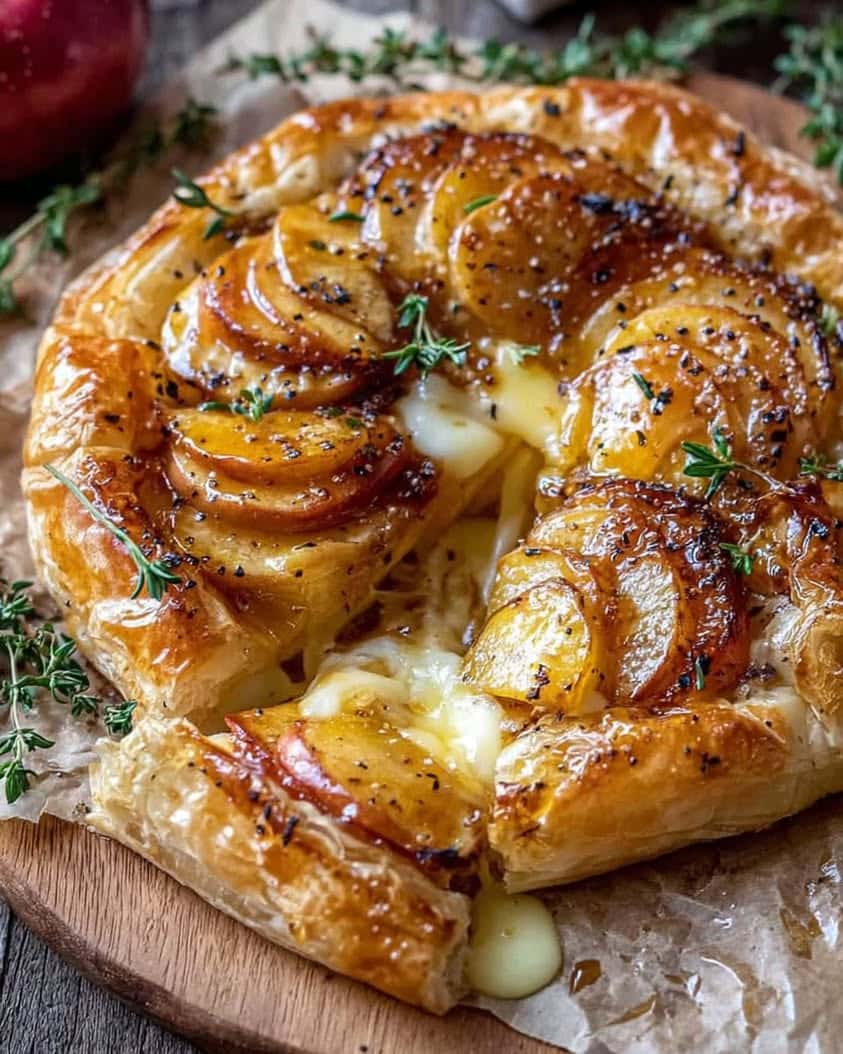
Golden Baked Brie with Caramelized Apples and Thyme: The Ultimate Fall Appetizer
Golden Baked Brie with Caramelized Apples and Thyme is the appetizer that steals the spotlight at every gathering. This warm, gooey wheel of brie arrives at the table wrapped in golden puff pastry, crowned with sweet caramelized apples and fragrant fresh thyme. The contrast between the flaky crust, the molten interior, and the buttery apple topping creates a truly unforgettable bite that guests will whisper about long after the party ends.
I first discovered this combination at a small winery in Sonoma during apple harvest season, and I have been obsessed ever since. The way the creamy brie pairs with the slightly tart, caramelized apples is pure magic. The thyme adds an unexpected herbal note that elevates the entire dish from simple comfort food to something genuinely sophisticated. This Golden Baked Brie with Caramelized Apples and Thyme recipe has since become my signature contribution to every fall gathering, holiday party, and cozy dinner at home.
What makes this recipe particularly special is its deceptive simplicity. Despite looking like something from a high-end restaurant kitchen, it comes together with minimal fuss and basic ingredients. The step-by-step process is forgiving, and the results are consistently impressive. Whether you are hosting a formal dinner party or simply craving a cozy weekend snack, this baked brie delivers warmth, flavor, and elegance in every slice.
Quick Recipe Highlights
- Flavor Profile: This dish balances rich, buttery brie with sweet-tart caramelized apples and subtle earthy thyme notes. The combination creates a complex taste experience that transitions from creamy to fruity to herbal with each bite.
- Texture: The exterior offers a flaky, golden puff pastry crust while the interior delivers a warm, velvety brie that practically melts on contact with your tongue. The caramelized apples provide a soft, jam-like texture that contrasts beautifully with the crisp pastry.
- Aroma: As this bakes, your kitchen fills with the intoxicating scent of butter, pastry, and sweet apples mingling with the fresh, woodsy fragrance of thyme. It is an aroma that promises comfort and indulgence before you ever take a bite.
- Visual Appeal: The golden-brown pastry creates a stunning presentation, especially when brushed with egg wash for that glossy, bakery-worthy finish. The apple topping adds vibrant color and rustic charm, making this an impressive centerpiece for any appetizer spread.
- Skill Level Needed: This recipe requires only basic kitchen confidence. If you can roll out prepared puff pastry and stir apples in a skillet, you can absolutely master this dish on your first attempt without any professional training.
- Special Equipment: You will need a baking sheet, parchment paper, a medium skillet, and a pastry brush. No special gadgets or expensive tools are required to create this stunning appetizer.
Recipe Overview
- Difficulty Level: The overall difficulty is easy because the techniques involved are straightforward and forgiving. Caramelizing apples requires only basic sautéing skills, and wrapping brie in puff pastry simply demands careful handling rather than complicated culinary expertise.
- Category: This Golden Baked Brie with Caramelized Apples and Thyme works perfectly as an appetizer, starter, or even a light main course. It also shines as part of a cheese board or as the centerpiece of a grazing table for entertaining.
- Cuisine: The recipe draws inspiration from French cuisine, specifically the tradition of baking brie in pastry known as brie en croute. The addition of caramelized apples and thyme gives it a distinctly American autumnal twist that pays homage to fall harvest traditions.
- Cost: This is a moderately affordable appetizer for its impressive presentation. A wheel of brie costs around eight to twelve dollars, and puff pastry is typically four to six dollars. Apples and thyme are inexpensive, making the total cost around fifteen to twenty dollars for eight generous servings.
- Season: Autumn is absolutely the best season for this recipe when apples are at their peak and the weather calls for warm, comforting food. However, this dish works beautifully throughout the winter holidays and even into early spring when you crave something cozy.
- Occasion: This golden baked brie is perfect for Thanksgiving gatherings, holiday parties, Christmas Eve celebrations, and cozy dinner parties with friends. It also works wonderfully for brunch spreads, game day snacks, or anytime you want to impress guests with minimal effort.
Why You Will Love This Recipe
The taste experience of this golden Baked Brie with Caramelized Apples and Thyme is nothing short of extraordinary. Each bite offers a symphony of flavors and textures that satisfy every craving simultaneously. The buttery, creamy brie melts into a luxurious pool that coats your palate, while the sweet caramelized apples add fruity brightness and the thyme contributes an unexpected savory depth that keeps you coming back for more.
Convenience is another major selling point for this recipe. You can prepare the entire dish ahead of time and refrigerate it until you are ready to bake, making it ideal for busy hosts. The hands-on time is minimal, requiring just about fifteen minutes of active work before the oven takes over. This means you can spend more time enjoying your guests and less time stressed in the kitchen.
Nutritionally, this appetizer offers more benefits than you might expect from something so indulgent. Brie provides protein and calcium, while apples contribute fiber and vitamin C. The thyme brings antioxidant properties, and when you serve this with fresh fruit or vegetables, you create a balanced, satisfying starter that does not leave you feeling overly stuffed.
From an entertaining perspective, this dish delivers tremendous value. It looks impressive, smells incredible, and tastes like something from a five-star restaurant. Guests will assume you spent hours preparing it, yet it requires very little actual effort. The wow factor is through the roof, and it consistently generates compliments and requests for the recipe from fellow partygoers.
Finally, this recipe is incredibly cost-effective when you consider the impact it makes. For about fifteen to twenty dollars in ingredients, you create a centerpiece appetizer that would cost forty dollars or more at a restaurant. The ingredients are available at any grocery store, and the preparation is straightforward enough for beginner cooks while still feeling special enough for experienced entertainers.
Historical Background and Cultural Significance
The practice of baking brie in pastry dates back centuries in French cuisine. This technique, known as brie en croute, was developed as a way to serve the soft cheese in a more elegant and portable fashion. French farmers would wrap their prized brie wheels in bread dough or pastry to preserve them and make them easier to transport, discovering along the way that the combination created something truly delicious.
Brie itself has a storied history that reaches back more than a thousand years. Named after the historical region of Brie in northern France, this soft cheese was historically reserved for royalty and nobility. Historical records show that Charlemagne first tasted brie in the eighth century and immediately fell in love with it. The cheese became known as the King of Cheeses, and it held a place of honor in French culinary tradition for centuries.
The evolution of baked brie in America took off during the 1980s and 1990s as home cooks began experimenting with puff pastry as a readily available shortcut. The addition of caramelized apples and thyme represents a more recent innovation that aligns with the farm-to-table movement. This modern twist combines the classic French preparation with distinctly American autumn flavors that celebrate apple harvest traditions.
Regional variations of this dish exist across the United States, particularly in apple-growing regions like Washington state, Michigan, and New England. Some versions incorporate maple syrup or brown sugar instead of caramelized apples, while others add nuts, cranberries, or figs. The core concept of warm, melted brie with something sweet and herbal remains consistent, making it a versatile canvas for regional creativity.
Ingredient Deep Dive
Brie cheese stands at the center of this dish, and understanding this ingredient is essential for success. Brie originated in the Île-de-France region and has been produced since the eighth century. This soft-ripened cheese develops its creamy interior through careful aging, during which the rind transforms to a white, velvety texture while the inside becomes increasingly runny. Nutritionally, brie provides excellent protein and calcium, making it a satisfying choice for appetizers.
When selecting brie for this recipe, look for a wheel that is slightly springy to the touch without being overly soft or runny. The rind should be pristine white with perhaps a light dusting of mold spores, which is completely normal. For the best results, choose a double or triple cream brie for maximum richness, and avoid anything labeled as aged brie, which will be harder and less melty. Store brie in the refrigerator wrapped in parchment paper and use it within a week of purchase.
Apples are the second crucial component in this golden Baked Brie with Caramelized Apples and Thyme. Apples have been cultivated for thousands of years, with evidence of their use dating back to ancient civilizations in Asia and Europe. They were brought to North America by European settlers in the seventeenth century, and today the United States produces over 5,000 varieties. Nutritionally, apples provide fiber, vitamin C, and various antioxidants that support heart health.
For caramelization purposes, choose a firm, slightly tart apple variety like Honeycrisp, Granny Smith, or Pink Lady. These varieties hold their shape during cooking and provide a pleasant contrast to the rich brie. Avoid overly sweet varieties like Red Delicious, which can become mushy and overly sweet when caramelized. Store apples in the refrigerator crisper drawer where they will stay fresh for several weeks, and always wash them thoroughly before use.
Fresh thyme provides the herbal element that ties this entire dish together. Thyme has been used in Mediterranean cooking for millennia, with ancient Egyptians using it in their embalming practices and ancient Greeks incorporating it into their rituals. This fragrant herb offers impressive health benefits, including antimicrobial properties and a rich supply of vitamin C, vitamin A, and iron. Fresh thyme is essential for this recipe because dried thyme simply lacks the same vibrancy and aromatic intensity.
When selecting fresh thyme, look for bright green leaves with no signs of wilting or yellowing. The stems should be flexible, not brittle, and the fragrance should be immediately apparent. Store fresh thyme wrapped in damp paper towels inside a plastic bag in the refrigerator where it will keep for about a week. If you absolutely must substitute, use one-third of the amount of dried thyme, though the flavor will be noticeably less vibrant.
Puff pastry serves as the golden wrapper for this dish and simplifies the entire process. Modern puff pastry relies on a technique of repeatedly folding butter into dough to create hundreds of thin layers. When baked, the water in the butter creates steam that separates these layers, producing the characteristic flaky, airy texture. Frozen puff pastry from the grocery store works beautifully here and saves hours of labor compared to making it from scratch.
For the best results, purchase all-butter puff pastry rather than versions made with vegetable shortening for superior flavor and texture. Thaw frozen puff pastry in the refrigerator overnight rather than at room temperature to keep the butter workable and prevent cracking. If you do need to make puff pastry from scratch, prepare to spend several hours creating the multiple folds required, though the effort pays off in an exceptionally flaky result.
Common Mistakes to Avoid
- Choosing an overripe or underripe brie creates disappointing results because an overripe brie will leak excessively while an underripe brie will not melt properly. Look for brie that has a slight give when pressed but holds its shape without becoming runny.
- Skipping the brie chilling step allows the cheese to soften too much during assembly, making it impossible to wrap cleanly. Always chill the brie thoroughly before attempting to wrap it in pastry.
- Overcooking the apples makes them mushy and watery, which ruins the texture of the finished dish. Cook them just until they are tender and caramelized, about ten to twelve minutes, so they retain some structure.
- Using wet apples prevents proper caramelization because the excess moisture steams the fruit instead of browning it. Pat the sliced apples dry with paper towels before cooking them.
- Cutting the pastry too small creates gaps where the brie can escape during baking, resulting in a mess on your baking sheet. Ensure the pastry overlaps generously when wrapping the brie.
- Applying too much egg wash causes the pastry to become glossy and darkened rather than golden brown. Use a light coating and brush off any excess that pools around the bottom.
- Baking at the wrong temperature affects the final texture because too high bakes the pastry before the brie melts while too low leaves you with soggy pastry. Stick to 400 degrees Fahrenheit for the best balance.
- Skipping the ventilation slits on top traps steam inside the pastry, causing it to puff unevenly or crack. Cut three to four decorative slits in the top of the wrapped brie before baking.
- Letting the brie cool completely before serving ruins the experience because the cheese will re-solidify and lose its luxurious texture. Serve this dish within ten minutes of removing it from the oven.
- Overloading the top with apples makes the pastry collapse under the weight and interferes with even browning. Use a generous but measured amount that does not overwhelm the pastry.
Essential Techniques
Caramelizing apples requires understanding the science of browning. When heat is applied to the natural sugars in apples, they undergo the Maillard reaction, which creates the complex, nutty flavors and golden-brown color associated with caramelization. Start with a hot pan and a small amount of butter, then add the apples in a single layer without overcrowding, which would cause them to steam rather than brown. Allow them to cook undisturbed for several minutes before stirring so they develop proper color.
Wrapping the brie in puff pastry demands gentle handling and attention to seam integrity. Begin with a thawed but still cold pastry sheet, and roll it slightly if necessary to ensure it is large enough to fully encase the brie wheel. Center the chilled brie on the pastry, then bring the edges up and over the top, pinching and folding the seams to create a secure seal. This tight wrapping ensures the brie stays contained while it melts during baking.
Applying egg wash properly contributes significantly to the golden appearance that defines this dish. Egg wash is simply a beaten egg combined with a tablespoon of water or milk. This creates a protein coating that browns beautifully when exposed to oven heat. Use a pastry brush to apply a thin, even layer over the entire surface of the wrapped pastry, taking care to cover all the folds and seams for uniform color.
Creating proper steam vents prevents the pastry from cracking as the brie melts and releases moisture. We all know that steam builds up inside the sealed pastry during baking, creating pressure that can cause unsightly explosions. Use a sharp knife to cut three or four slits into the top of the pastry, which allows the steam to escape while also creating a decorative pattern that enhances the presentation.
Pro Tips for Perfect Baked Brie
Chill your brie in the freezer for fifteen minutes before wrapping, and you will find it much easier to handle and wrap neatly. The firmer cheese will stay put on the pastry and never poke through, giving you a perfectly sealed package every time. This simple step makes the entire assembly process significantly less stressful and more precise.
Use Granny Smith apples for the best balance of sweetness and tartness. Their firm texture means they hold up well during caramelization, and their pronounced tartness cuts through the richness of the brie beautifully. If you prefer sweeter apples, Honeycrisp offers a fantastic alternative that still maintains its structure during cooking.
Splash a teaspoon of brandy or bourbon into the apples during the final minute of caramelization for added depth and complexity. The alcohol will cook off quickly, leaving behind a warm, nutty undertone that pairs perfectly with the brie and thyme. Even a small amount of good quality vanilla extract can provide a similar aromatic boost without the alcohol.
Place your baking sheet on the center rack of the oven to ensure even heat circulation around the pastry. This positioning allows the hot air to reach all sides of the pastry equally, promoting consistent browning and thorough cooking. Avoid placing the sheet too close to the top element, which can cause the pastry to brown too quickly while the brie remains cold at the center.
Let the finished brie rest for five minutes before serving, and you will find it easier to slice cleanly without the molten cheese flowing everywhere. This brief rest period allows the cheese to set slightly, making serving much more manageable while still maintaining that luxurious warm, gooey texture. Your guests will appreciate the neat, beautiful presentation this creates.
Keep a spare sheet of puff pastry in the freezer so you always have a back-up measurement if something goes wrong with the first attempt. Pastry can tear, stick, or become too warm, leaving you with a frustrating situation. Having a spare on hand reduces stress and ensures you can always salvage the dish.
Variations and Adaptations
Regional variations of baked brie reflect local tastes and ingredient availability. In New England, cooks often add maple syrup to the caramelized apples, creating a distinctly New England flavor profile. Pacific Northwest versions typically incorporate local pear varieties or add toasted hazelnuts for crunch. Southern interpretations might include a touch of bourbon or pecans, celebrating the regions culinary traditions.
Seasonal adaptations allow you to enjoy this dish year-round with appropriate fruit substitutions. During the summer months, pair the brie with fresh figs or peach slices cooked down with a little honey and thyme. In spring, consider using strawberries or rhubarb for a bright, tart contrast. The basic technique remains identical; simply swap out the apples for whatever fruit is at its peak.
Dietary modifications make this recipe accessible to more people without sacrificing flavor. For a gluten-free version, use gluten-free puff pastry or alternatively serve the melted brie in a small cast iron skillet topped with the caramelized apples, though you will miss the flaky crust. That said, most grocery stores now stock reliable gluten-free puff pastry options that bake up beautifully.
Flavor variations invite creative experimentation based on your personal preferences. Consider adding a drizzle of honey on top of the finished dish for extra sweetness, or sprinkle with crushed red pepper for a touch of heat. Fresh rosemary can replace or complement the thyme for a different herbal profile. Toasted walnuts add fantastic crunch and nutty depth when sprinkled over the apples.
For people following specific diets, several easy swaps make this recipe more inclusive. To keep this dish vegetarian, simply use a vegan brie alternative and plant-based puff pastry. For a lower-carb approach, skip the puff pastry entirely and bake the brie in a small oven-safe dish. The caramelized apples and thyme carry enough flavor that you will miss the pastry less than you might expect.
Serving and Presentation Guide
Plating this baked brie effectively transforms it from a simple appetizer to a stunning centerpiece. Transfer the finished brie to a large wooden cutting board or ceramic platter, providing enough surrounding space for accompaniments. Arrange crackers, baguette slices, and fresh fruit around the brie in an inviting, abundant arrangement that encourages grazing and social interaction. The contrast of textures and colors creates visual appeal that draws people in immediately.
Garnishing ideas elevate this dish to restaurant-quality presentation. A final sprinkle of fresh thyme leaves over the top adds color and reinforces the herbaceous notes. A light drizzle of quality honey creates a beautiful golden shine. Edible flowers or fresh apple slices arranged artfully around the platter provide additional visual interest that impresses guests before they even take their first bite.
Traditional accompaniments complement the flavors and textures of the baked brie beautifully. A crusty baguette sliced thinly provides the perfect vehicle for scooping up the creamy cheese and caramelized apples. Crisp apple slices or juicy pear slices add freshness and crunch. Toasted walnut or pecan halves introduce a nutty element that pairs wonderfully with the thyme. For a touch of acidity, include cornichons or a small dish of stone-ground mustard.
Modern serving suggestions keep this classic dish relevant and exciting. Consider serving individual portions in small ramekins for a brunch or buffet setting. Alternatively, top the baked brie with additional caramelized apples and a sprinkle of flaky sea salt just before serving for an elegant finish. You might also serve it with pear slices, dried cranberries, and candied walnuts for a more elaborate grazing board experience.
Temperature considerations are crucial for the optimal enjoyment of this dish. The ideal serving temperature is warm, when the brie is fully melted but not so hot that it burns your mouth. As the brie cools, the cheese will begin to set and thicken, which is perfectly fine for continued enjoyment. Just know that the texture evolves from molten to creamy over the course of thirty to forty-five minutes.
Wine and Beverage Pairing
Wine pairings for this golden baked brie enhance the dining experience significantly. A crisp Chardonnay with notes of apple and butter creates a harmonious pairing that echoes the flavors in this dish. Alternatively, a dry Riesling offers bright acidity that cuts through the richness of the brie beautifully. For red wine lovers, a light-bodied Pinot Noir provides enough fruitiness to complement the apples without overpowering the cheese.
Non-alcoholic alternatives ensure everyone at your gathering can enjoy a complementary beverage. Sparkling apple cider makes a festive choice that mirrors the apple flavors in the dish. A cold-pressed apple juice served with sparkling water and fresh thyme creates an elegant, refreshing mocktail. For tea lovers, a warm cup of chamomile or a crisp apple spice tea provides a soothing accompaniment to this cozy appetizer.
Beyond standard pairings, consider craft beer options for a more casual yet thoughtful approach. A Belgian-style farmhouse ale offers a yeasty complexity that stands up to the brie. A hard cider, especially one with a dry profile, creates an apple-forward pairing that works particularly well with this dish during autumn and holiday gatherings. Whatever you serve, temperature matters, as both white wines and ciders should be chilled while red wines should be served slightly below room temperature.
Storage and Shelf Life
Proper storage methods extend the enjoying window for this baked brie, though it is best enjoyed fresh from the oven. If you have leftovers, allow the brie to cool completely and then wrap it tightly in plastic wrap or aluminum foil. Store the wrapped brie in the refrigerator, where it will remain safe to eat for up to three days. Please note that reheating will not restore the original texture, but it still tastes delicious.
Temperature requirements matter for both fresh and cooked brie. Raw brie should be stored in the refrigerator at or below 40 degrees Fahrenheit. Once baked, the dish follows the same guidelines. Reheated leftovers should reach an internal temperature of 165 degrees Fahrenheit to ensure food safety. When in doubt about the age or condition of your baked brie, remember the adage when in doubt, throw it out.
Container recommendations for storing leftover baked brie focus on protection from air and moisture. A glass container with a tight-fitting lid works well because it will not absorb odors and provides a good seal. If using aluminum foil, wrap the brie very tightly to minimize air exposure. For the best results, consume leftovers within two days, as the pastry will become increasingly soggy with extended refrigeration.
Signs of spoilage indicate that your baked brie has passed its prime. Visible mold that appears after several days of refrigeration suggests the dish should be discarded. An off or sour smell that persists upon reheating is another clear warning sign. If the pastry feels unusually slimy or wet, this indicates bacterial growth, and the dish should not be consumed. Trust your senses and err on the side of caution.
Make Ahead Strategies
Advance preparation allows you to get ahead of party day stress while still serving a delicious, impressive appetizer. Prepare the caramelized apples up to two days ahead of time and store them in an airtight container in the refrigerator. Assemble the entire brie and pastry package the night before, wrap it well, and refrigerate it, so it is ready to pop into the oven when your guests begin to arrive.
To properly assemble the brie ahead of time, chill the brie before wrapping, then wrap it tightly in the pastry. Place the wrapped brie on a baking sheet, cover it with plastic wrap, and refrigerate it for up to 24 hours. When you are ready to bake, remove the plastic wrap, apply the egg wash, and bake as directed. This approach allows you to spread your preparation work across multiple days.
Quality assessment reveals that make-ahead preparation works remarkably well for this dish. The caramelized apples actually benefit from resting as the flavors meld and deepen. The pastry remains perfectly fine when refrigerated and baked within 24 hours. Therefore, you can confidently prepare this dish well in advance without sacrificing quality, which is a significant advantage for entertaining.
Reheating guidelines apply specifically to baked and assembled leftovers. To reheat refrigerated cooked brie, place it in the oven at 325 degrees Fahrenheit for 10 to 15 minutes until warmed through. The microwave will work in a pinch, but it often makes the pastry soggy and the texture less appealing. Individual portions might be more effectively reheated in a toaster oven or air fryer at a lower temperature setting.
Scaling Instructions
Halving this recipe allows you to create a perfect appetizer for smaller gatherings. Simply use a smaller brie wheel, around eight ounces, and a single sheet of puff pastry. Reduce the apple quantities to about two medium apples and cut the thyme, butter, and brown sugar measurements in half proportionally. The cooking time needs slight adjustment, generally reducing by five minutes, since the smaller portion cooks faster.
Doubling the recipe for larger parties is equally straightforward when you use multiple brie wheels. The key is to prepare two separate pastry-wrapped brie packages rather than trying to combine them into one giant version. This ensures even cooking and manageable serving portions. Bake both on the same baking sheet but leave at least two inches of space between them for proper air circulation.
Scaling to larger quantities such as tripling requires some practical adjustments. You may need to caramelize the apples in multiple batches to prevent overcrowding and ensure proper browning. Use two baking sheets positioned on different oven racks, rotating them halfway through cooking for even browning. If you are serving a large crowd, consider making one brie per ten to twelve guests to ensure everyone gets several generous servings.
Storage considerations for scaled-up quantities simply require more refrigeration space and appropriate containers. Leftover baked brie can be stored in the same way regardless of quantity, so just ensure each portion is properly wrapped. Large-format events might benefit from serving the brie directly from the baking sheet to simplify cleanup and reduce transfer risk.
Nutritional Deep Dive
The macro breakdown of this baked brie provides valuable perspective. A typical serving of approximately one-eighth of the dish, about 2.5 ounces, contains roughly 300 calories. This includes approximately 15 grams of fat, 12 grams of saturated fat, 25 grams of carbohydrates, 15 grams of sugar, and 12 grams of protein. The majority of calories come from the cheese and puff pastry, which makes portion control important for those mindful of their intake.
Beyond the basic macros, several micronutrients appear in meaningful amounts in this dish. Brie contributes approximately 200 milligrams of calcium per serving, supporting bone health. Apples provide about 10 percent of the recommended daily vitamin C intake per serving. Thyme adds small amounts of iron, manganese, and vitamin K. These micronutrients, while modest, contribute to the overall nutritional profile of this appetizer.
Health benefits exist even in this indulgent dish, when consumed in moderation. The calcium from the brie supports bone density and muscle function. The apples provide fiber, particularly pectin, which aids in digestive health and promotes feelings of fullness. The antioxidants in both apples and thyme offer cell-protective benefits that counteract some of the less favorable nutritional aspects of the dish.
Dietary considerations for specific populations matter when serving this recipe. Those watching their saturated fat intake should eat smaller portions or choose a reduced-fat brie, though remember that reduces the melt quality. Individuals with dairy sensitivities will not tolerate this dish and should seek alternatives. The recipe naturally contains gluten from the puff pastry, making it unsuitable for those with celiac disease without modifications.
Dietary Adaptations
For a gluten-free adaptation, begin by finding a reliable gluten-free puff pastry brand. These are more common now than ever before, and most bake beautifully with similar results. Alternatively, skip the pastry entirely and bake the brie in a small ceramic baking dish, topping it with the caramelized apples during the final five minutes of baking. This approach eliminates the gluten concern while maintaining the core flavors.
For a dairy-free version, several high-quality vegan brie alternatives fill this role. These plant-based cheeses often melt well and provide a similar creamy texture. Pair them with dairy-free puff pastry that uses vegetable shortening in place of butter. The caramelized apples and thyme remain unchanged. Please note that vegan brie alternatives have different melting points, so you may need to adjust the baking time slightly to prevent drying.
For a low-carb adaptation, focus on limiting the pastry portion dramatically. Serve the melted brie directly in a cast iron skillet topped with the caramelized apples, allowing guests to scoop it onto low-carb crackers or fresh vegetables. This approach removes the puff pastry entirely, significantly reducing the carbohydrate content per serving. The resulting dish tastes delicious while containing only a fraction of the original carbs.
For keto-friendly adjustments, the same technique for low-carb applies, with emphasis on selecting fruit-conscious toppings. Reduce the apple quantity and compensate with extra thyme and perhaps a sprinkle of toasted pecans for crunch. The brie itself is keto-friendly. The primary sugar concern comes from caramelized brown sugar, which you can reduce or replace with a keto-friendly alternative like monk fruit sweetener without losing the caramelization effect.
Troubleshooting Guide
Texture issues most commonly involve brie that stays solid or leaks excessively. If your brie did not melt enough, the cheese was underripe, or your oven temperature ran low. Preheat thoroughly and consider adding a few extra minutes of baking time. If your brie leaked, you wrapped it too loosely, or the pastry seams were not sealed properly. Chill the brie more thoroughly next time and pinch the seams tightly to create a secure seal.
Flavor balance challenges often result from overpowering apple sweetness or muted herbal notes. Taste your apple mixture before baking, and remember that the flavor concentrates as it cooks. If the apples taste too sweet, add a squeeze of lemon juice or reduce the brown sugar. When thyme flavor tastes weak, use fresh thyme exclusively and add a final sprinkle of fresh leaves after baking to brighten the herb character.
Temperature problems typically involve brie that is over or underbaked. If the pastry browns too quickly around the edges while the center remains pale, your oven runs hot, or the pastry was not crimped tightly enough. Reduce the oven temperature by 25 degrees. If the brie bubbles out of the pastry, your oven runs too cool, causing the cheese to melt before the pastry sets.
Equipment challenges most often involve sticky pastry or uneven browning. If the puff pastry sticks to your countertop, use a lightly floured surface and work quickly to prevent the pastry from warming too much. If you do not have a pastry brush, spoon the egg wash over the pastry instead. For even baking, invest in a heavy-duty baking sheet that will not warp at high temperatures.
Recipe Success Stories
Community feedback consistently highlights the crowd-pleasing nature of this baked brie. One reader from Ohio shared how she brought this dish to her church potluck and returned home with an empty dish and a dozen requests for the recipe. Another reader from California described how this appetizer saved her when she needed a last-minute contribution for a dinner party, noting she completed the entire process in less than an hour with ingredients she already had on hand.
Each reader brings their own favorites and tweaks to the recipe based on their family preferences. One creative mother experimented with adding chopped, toasted walnuts to the apple mixture, creating a crunchy texture that her children loved. Another grandmother substituted pears for apples during the winter when pears were fresher and more abundant. A group of friends in Vermont started a tradition of making this every year during apple-picking season.
These adaptation stories demonstrate the flexibility within this recipe. A reader from Florida, lacking access to fresh apple varieties, experimented with mango and pineapple, discovering unexpected tropical flavor combinations that worked surprisingly well. Another used frozen peaches when peaches were out of season, and while they were softer in texture, the flavor won everyone over. These stories show how this basic framework invites personalization and creativity.
Frequently Asked Questions
What is the best brie for baking?
The best brie for baking is a double or triple cream brie that is chilled but not fully hardened, as these varieties melt the creamiest and hold their shape well when wrapped in pastry. A standard 8 to 12 ounce wheel works perfectly for this recipe, and aging matters less than the cream content.
Can I use frozen puff pastry?
Absolutely, frozen puff pastry is the standard and best choice for this recipe, and most home cooks rely on it exclusively. Just remember to thaw it in the refrigerator overnight, not at room temperature, to keep all those butter layers intact and prevent cracking.
How do I get the pastry golden brown?
In short, the key is to apply a generous but even coating of egg wash, which browns beautifully in a hot oven. Add a sprinkle of flaky salt directly on the wet egg wash to add both visual texture and flavor contrast.
Can I make this ahead of time?
Yes, you can prepare this dish up to 24 hours in advance and refrigerate it uncovered or loosely
Print
Golden Baked Brie with Caramelized Apples and Thyme
- Total Time: 45 minutes
- Yield: 6
Description
A luxurious yet simple appetizer featuring a whole wheel of brie baked until molten, topped with sweet caramelized apples and fresh thyme. Perfect for gatherings or cozy nights in.
Ingredients
- 1 (8 ounce) wheel brie cheese
- 1 sheet puff pastry, thawed
- 2 tablespoons unsalted butter
- 2 apples (such as Honeycrisp), peeled, cored, and sliced thin
- 2 tablespoons brown sugar
- 1 teaspoon lemon juice
- 1 teaspoon fresh thyme leaves, plus extra for garnish
- 1 egg, beaten (for egg wash)
Instructions
- Preheat oven to 400°F (200°C). Line a baking sheet with parchment paper.
- In a skillet over medium heat, melt butter. Add apple slices, brown sugar, and lemon juice. Cook, stirring occasionally, until apples are soft and caramelized, about 8-10 minutes. Remove from heat and stir in thyme leaves.
- Place the brie wheel in the center of the puff pastry sheet. Top with the caramelized apple mixture, spreading evenly.
- Fold the pastry over the brie, pleating and pinching to seal completely. Brush the pastry with beaten egg.
- Place the wrapped brie seam-side down on the prepared baking sheet. Bake for 25-30 minutes or until golden brown and puffed. Let rest for 5 minutes before serving.
- Garnish with additional fresh thyme leaves and serve warm with crackers or bread.
Notes
You can customize the seasonings to taste. For a nutty twist, add chopped walnuts to the apple mixture. Serve immediately for the best melted texture.
- Prep Time: 15 minutes
- Cook Time: 30 minutes
- Method: Appetizer
- Cuisine: American