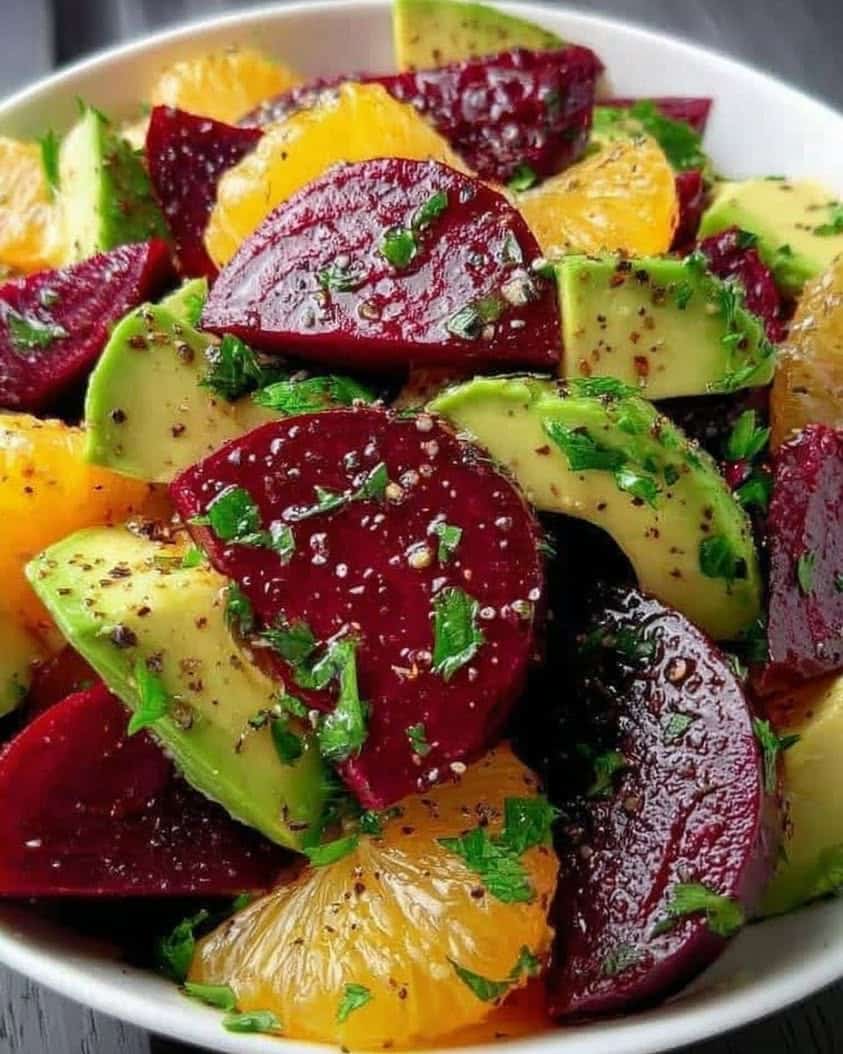
Citrus Beet and Avocado Glow Salad Recipe for Radiant Skin
This Citrus Beet and Avocado Glow Salad recipe for radiant skin is your new go-to meal for a vibrant, healthy glow. Imagine a plate filled with jewel-toned roasted beets, creamy ripe avocado, and bright citrus segments all tossed together. The earthy sweetness of the beets pairs perfectly with the tangy orange juice and the smooth, buttery avocado. Every forkful delivers a burst of freshness and a satisfying crunch from toasted nuts or seeds. You will feel energized and nourished after eating this beautiful, nutrient-dense salad.
We designed this Citrus Beet and Avocado Glow Salad recipe for radiant skin to be both simple and stunning. It proves that eating for beauty does not mean sacrificing flavor. The combination of ingredients works synergistically to support your skin health from the inside out. You get a powerful dose of antioxidants, healthy fats, and essential vitamins in one bowl. This salad is perfect for a light lunch, a side dish for dinner, or a show-stopping contribution to a potluck. Everyone at the table will appreciate its bold colors and refreshing taste.
Preparing this Citrus Beet and Avocado Glow Salad recipe for radiant skin is a mindful experience. First, you roast the beets until they become tender and caramelized. The aroma of roasting beets fills your kitchen with a sweet, earthy scent. Meanwhile, you can segment the citrus fruits and whip up a simple honey-lime vinaigrette. Assembling the salad is quick and rewarding. You arrange the roasted beets, avocado slices, and citrus segments on a bed of greens. Finally, you drizzle the dressing and sprinkle some crunchy toppings. The result is a restaurant-quality dish made right in your own home.
Quick Recipe Highlights
- Flavor Profile: This salad offers a delightful balance of sweet, tangy, and savory notes. The roasted beets provide a deep, caramelized sweetness that complements the bright acidity of the citrus. Creamy avocado adds a rich, mild flavor that ties all the elements together beautifully.
- Texture: You will experience a wonderful variety of textures in every single bite. The tender, soft beets contrast perfectly with the crisp, juicy citrus segments. The smooth, buttery avocado and the crunchy toasted pepitas or walnuts add another layer of satisfaction.
- Aroma: The dominant aromatic notes come from the roasted beets and the fresh citrus. You will smell a sweet, earthy fragrance from the beets mixed with the bright, zesty scent of oranges and grapefruit. The honey-lime dressing adds a subtle floral and tangy aroma.
- Visual Appeal: This salad is a feast for the eyes with its vibrant, natural colors. The deep magenta beets, bright orange citrus, and lush green avocado create a stunning palette. The dark greens and the sprinkle of white seeds and black sesame finish the picture perfectly.
- Skill Level Needed: This is an excellent recipe for beginner cooks and experienced home chefs alike. It involves basic techniques like roasting, chopping, and whisking a vinaigrette. The most complex part is segmenting citrus, but it is easy to learn with a little practice.
- Special Equipment: You will need a few basic kitchen tools to prepare this recipe. A sharp chef’s knife and a sturdy cutting board are essential for chopping vegetables and segmenting citrus. A baking sheet with parchment paper is needed for roasting the beets.
Recipe Overview
- Difficulty Level: We consider this an easy recipe because the steps are straightforward and the ingredients are simple to prepare. Roasting beets is a hands-off process that requires minimal active work. Assembling the salad is just a matter of arranging the components artfully on a plate. A confident beginner can master this dish on their first try.
- Category: This dish fits perfectly into several meal categories for your weekly plan. It works beautifully as a light main course salad for a healthy lunch or dinner. It also serves as an elegant side salad for grilled chicken, fish, or steak. You can even serve it as a beautiful starter course for a dinner party.
- Cuisine: The inspiration for this salad draws from modern American and Mediterranean culinary traditions. The combination of beets, citrus, and avocado is popular in many sun-drenched cuisines. The use of fresh herbs, a simple vinaigrette, and crunchy seeds reflects a focus on fresh, whole ingredients. This is a globally inspired dish that feels both familiar and exciting.
- Cost: The overall cost for this salad is quite reasonable, especially when beets and citrus are in season. Avocados can vary in price, but you only need one for four servings. The other ingredients like greens, nuts, and seeds are pantry staples with a good shelf life. You will likely spend under fifteen dollars to make this entire recipe from scratch.
- Season: This salad is incredibly versatile and shines in multiple seasons. It is most perfect during the late winter and early spring when citrus fruits are at their peak. Roasted beets are available year-round and bring warmth to a winter meal. In the summer, you can use fresh local citrus and enjoy the salad cold.
- Occasion: You can serve this Citrus Beet and Avocado Glow Salad recipe for radiant skin for any occasion that calls for a beautiful dish. It is a wonderful choice for holiday gatherings like Easter or a spring brunch. It also makes a healthy and satisfying weekday lunch that feels like a treat. You will love bringing this salad to a potluck or barbecue as a colorful contribution.
Why You Will Love This Recipe
The taste and texture combination in this salad is absolutely addictive. You get the sweet, earthy flavor of the roasted beets against the bright, acidic pop of orange and grapefruit segments. The creamy avocado provides a luxurious mouthfeel that balances everything out. Finally, the crunchy toasted pepitas or walnuts add a satisfying nuttiness and texture. Each bite is a new adventure for your taste buds, making you crave more.
Convenience is a huge factor in why you will love this Citrus Beet and Avocado Glow Salad recipe for radiant skin. You can roast the beets up to three days in advance and store them in the fridge. The dressing also keeps well for a week in a jar, ready to be shaken and poured. When you are ready to eat, you simply assemble the fresh ingredients. This makes it an ideal recipe for meal prep or a quick, healthy dinner after a busy day.
The nutritional advantages of this salad are truly outstanding for your skin and overall health. Beets are packed with betalains, which are powerful antioxidants that fight inflammation. Avocados provide healthy monounsaturated fats and vitamin E, which are crucial for glowing skin. Citrus fruits deliver a massive dose of vitamin C, which supports collagen production. Eating this salad is a delicious way to invest in your long-term well-being.
This salad also has incredible social and entertaining value for your gatherings. It presents beautifully on a large platter, making it a centerpiece of the table. Guests will be impressed by the vibrant colors and the thoughtful combination of flavors. Because it can be served at room temperature, it is stress-free for the host. You can prepare all the components ahead of time and assemble it just before serving.
Finally, the cost-effectiveness and accessibility of the ingredients make this a winner. Beets, oranges, and avocados are widely available at most grocery stores for a reasonable price. You can use pre-cooked, vacuum-sealed beets to save even more time, though roasting is best. The other ingredients like greens, nuts, and vinegar are common pantry items. You can create a gourmet, skin-loving salad without a massive grocery bill.
Historical Background and Cultural Significance
The beet, the star of our Citrus Beet and Avocado Glow Salad recipe for radiant skin, has a long and fascinating history. Ancient civilizations, including the Romans, used beets for their medicinal properties long before they became a common food. They valued the root for treating ailments related to the blood and digestion. The leafy greens were also consumed, but the root itself was the primary focus. It took centuries for the sweet, earthy flavor of the beet to be appreciated in culinary contexts across Europe.
Citrus fruits, another key component, have a history that is equally rich and global. Originating in Southeast Asia, oranges and grapefruits traveled along trade routes to the Middle East and Europe. They were symbols of luxury and status, often given as gifts during the winter holidays. Today, citrus is a staple in kitchens worldwide, prized for its bright flavor and high vitamin C content. The combination of citrus with earthy ingredients like beets is a hallmark of modern cooking.
The avocado holds a sacred place in the culinary and cultural traditions of Mesoamerica. Ancient Aztecs and Mayans revered the avocado for its rich, creamy texture and nutritional density. Its name comes from the Aztec word “ahuacatl,” which means “testicle,” due to its shape. The fruit became a global phenomenon only in the last century, spreading from Central America to the world. Its healthy fats and versatility have made it a modern superfood staple in everything from salads to smoothies.
This specific combination of beets, avocado, and citrus is a more recent culinary creation, rooted in the health and wellness movement. Chefs started combining these ingredients to create visually stunning and nutrient-packed dishes. The “glow salad” concept became popular on social media as people sought foods that promised beautiful skin. This recipe is a contemporary take on that trend, celebrating the natural synergy of these powerful ingredients. It represents a modern understanding of how food directly impacts our health and appearance.
Ingredient Deep Dive
Beets have been cultivated for thousands of years, originally for their leaves before the root became popular. They hold cultural significance in Eastern European cuisine, where borscht is a national treasure. Nutritionally, beets are a powerhouse of betalains, which are potent antioxidants with anti-inflammatory properties. They are also a great source of folate, manganese, and potassium, all essential for good health. When selecting beets, look for firm, smooth roots with fresh, unwilted greens still attached if possible. Store them in a plastic bag in the refrigerator crisper drawer for up to two weeks. You can substitute golden beets for a milder, sweeter flavor and a different color profile.
Avocados are a fruit, not a vegetable, and they have a creamy texture unlike any other. In Mesoamerican culture, the avocado was considered a fertility fruit and a symbol of love. Their nutritional benefits are immense, as they are loaded with heart-healthy monounsaturated fats and fiber. They also provide vitamins C, E, K, and B-6, along with potassium and folate. To select a ripe avocado, gently squeeze it near the stem; it should yield slightly to pressure without being mushy. You can store unripe avocados on the counter and ripe ones in the refrigerator. If you need a substitute, use a handful of hemp seeds for healthy fats and a different texture.
Citrus fruits like oranges and grapefruits bring a burst of sunshine and acidity to this salad. Oranges originated in Asia and were spread by explorers, becoming a cure for scurvy on long voyages. Grapefruits are a more recent hybrid, first documented in the Caribbean in the 18th century. Both are exceptional sources of vitamin C, which is vital for collagen synthesis and immune function. When buying citrus, choose fruits that feel heavy for their size, indicating they are juicy. Store them on the counter for up to a week or in the refrigerator for longer life. You can swap in blood oranges for a deeper color and berry-like flavor.
The greens in this salad, such as arugula or mixed baby greens, provide a peppery or mild base. Arugula has a long history in the Mediterranean, where it was used as both a food and an aphrodisiac. It is packed with vitamin K, which is essential for bone health, and antioxidants like sulforaphane. Choose leaves that are crisp, bright, and free from any yellowing or wilting. Store them in a breathable bag in the refrigerator, and wash them just before using. Spinach or watercress makes a great substitute if you want a different texture or flavor profile.
Toasted pepitas, or pumpkin seeds, add a wonderful crunch and a dose of skin-healthy minerals. These seeds have been a staple in Mexican cuisine for centuries, used in moles and snacks. They are rich in zinc, which is crucial for skin repair and oil regulation. Look for raw, unsalted pepitas in the bulk section or baking aisle. Toast them in a dry skillet over medium heat until they are fragrant and lightly browned. You can substitute toasted walnuts, almonds, or sunflower seeds for a different flavor and texture.
Common Mistakes to Avoid
- Overcooking the beets until they are mushy ruins their texture. You should roast them just until they are fork-tender but still hold their shape. Check them after 40 minutes, as cooking times vary based on size.
- Using unripe avocado is a common problem that results in a hard, flavorless fruit. You must choose avocados that give slightly to gentle pressure at the stem. A ripe avocado will have a creamy, buttery texture.
- Adding the dressing too early will turn the greens soggy and wilted. Always dress the salad right before serving to maintain a crisp texture. Toss the greens lightly, then add the toppings.
- Failing to segment the citrus properly can result in bitter, tough pith in your salad. You should use a sharp knife to cut away all the white pith and membranes. Only the juicy segments should go into the bowl.
- Skipping the step of toasting the nuts or seeds is a missed opportunity for flavor. Toasting brings out their natural oils and creates a deeper, nuttier taste. Just a few minutes in a hot pan makes a huge difference.
- Not properly cleaning the beets can leave a gritty texture in your salad. Scrub the beets well under running water before roasting to remove any dirt. Peeling them after they cool is also easier and cleaner.
- Using too much dressing will overwhelm the delicate flavors of the salad. Start with a light drizzle and toss gently, adding more only if needed. You can always serve extra dressing on the side.
- Cutting the avocado too far in advance causes it to turn brown and unappetizing. Cut the avocado right before you are ready to plate the salad. Squeeze a little lime juice on it to prevent oxidation.
Essential Techniques
Roasting beets is the foundational technique that brings out their natural sweetness and tender texture. It is important because roasting concentrates the sugars and deepens the earthy flavor, which is lost in boiling. To master it, you should scrub the beets, wrap them individually in foil, and roast at 400 degrees Fahrenheit. Check for doneness by piercing them with a fork; it should slide in with little resistance. A common pitfall is not wrapping them tightly, which can cause them to dry out. A visual cue for success is when the skin starts to wrinkle and pull away from the flesh.
Segmenting citrus, also known as supreming, is a skill that elevates your salad presentation. This technique is important because it removes the bitter white pith and membrane, leaving only perfect, juicy segments. To master it, slice off the top and bottom of the fruit, then cut away the peel in strips. Finally, cut along the membranes to release each segment. A common pitfall is cutting too deeply into the flesh, which wastes the fruit. A visual cue for success is seeing clean, wedge-shaped pieces with no white pith attached.
Making a simple vinaigrette is a basic but essential technique for any salad. It is important because a well-emulsified dressing coats every leaf evenly and balances the flavors. To master it, you should whisk the vinegar, citrus juice, and seasonings together first. Then, slowly drizzle in the oil while whisking constantly to create an emulsion. A common pitfall is adding the oil too quickly, which causes the dressing to separate. A visual cue for success is a thick, cloudy, and homogenous mixture that clings to the whisk.
Pro Tips for Perfect Citrus Beet and Avocado Glow Salad Recipe for Radiant Skin
For the most tender and flavorful beets, roast them whole with their skins on. This method locks in moisture and prevents them from becoming waterlogged. After roasting, let them cool slightly and the skins will slip right off.
Use a mix of citrus fruits like navel oranges, blood oranges, and grapefruit for a complex flavor. The different colors and levels of sweetness make the salad more visually interesting. Taste your citrus before adding it to adjust the dressing’s acidity.
Toast your pepitas or nuts in a dry skillet over medium heat for just two to three minutes. Shake the pan frequently to prevent burning and ensure even toasting. Once they are fragrant and lightly browned, remove them immediately.
Assemble this salad on a large, flat platter rather than a deep bowl for the best presentation. Arranging the components in sections allows each ingredient to shine. It also prevents the avocado from getting crushed by the other toppings.
To keep your avocado perfectly green, toss it in a little of the lime juice from the dressing. This acid helps to slow down the oxidation process that causes browning. Do this right before you place the slices on the salad.
Make the dressing at least 15 minutes before serving to allow the flavors to meld together. The honey needs time to dissolve fully into the acidic liquids. A quick shake in a mason jar is the easiest way to mix and store it.
Variations and Adaptations
For a regional variation, consider adding crumbled feta cheese or goat cheese for a tangy, salty element. This is a common addition in Mediterranean-style salads that pairs beautifully with beets. The creamy cheese adds another layer of texture and flavor that many people love. You can also sprinkle on some fresh dill or mint for an herbal note.
Seasonal adaptations can keep this salad exciting all year long. In the summer, substitute grilled peaches or nectarines for the citrus segments. In the fall, add some roasted butternut squash cubes alongside the beets. For a winter version, try using pomegranate arils for a burst of tartness and color.
Dietary modifications are simple to implement for this recipe. To make it vegan, simply use maple syrup instead of honey in the dressing. It is naturally gluten-free and dairy-free, so it fits many dietary needs. You can also add a protein like grilled chicken or chickpeas to make it a heartier meal.
Flavor variations are endless if you experiment with different herbs and spices. Add a pinch of smoked paprika or cumin to the dressing for a warm, smoky flavor. Fresh herbs like basil, cilantro, or chives can completely change the profile. A sprinkle of red pepper flakes adds a welcome touch of heat.
Texture modifications allow you to customize the crunch factor of your salad. Instead of pepitas, try using toasted pine nuts, sliced almonds, or crushed pistachios. For a crispy element, you can add some fried shallots or croutons. A handful of toasted coconut flakes adds a tropical twist and extra chew.
Presentation alternatives can make this salad suitable for different occasions. For individual servings, layer the ingredients in a glass jar for a beautiful, portable lunch. For a party, serve the components deconstructed on a board so guests can build their own. You can also stuff this salad into a pita pocket for a satisfying sandwich.
Serving and Presentation Guide
For plating, start by creating a bed of dressed greens on a large, white platter for maximum color contrast. Then, arrange the roasted beets, avocado slices, and citrus segments in an overlapping pattern on top. This method showcases each ingredient as a star element of the dish. The white plate will make the vibrant magenta, green, and orange colors pop dramatically.
Garnishing ideas can elevate your Citrus Beet and Avocado Glow Salad recipe for radiant skin to a new level. A sprinkle of flaky sea salt and freshly cracked black pepper is essential right before serving. Add a few fresh mint leaves or microgreens for a touch of elegance. A final drizzle of extra virgin olive oil adds a beautiful sheen and richness.
Traditional accompaniments for this type of salad often include crusty bread or a light soup. It pairs wonderfully with a bowl of roasted tomato soup for a comforting meal. Grilled fish or chicken is another classic side that complements the flavors. The salad itself is substantial enough to be the main event for a light lunch.
Modern serving suggestions involve using this salad as a filling or topping. It makes an excellent topping for a grain bowl with quinoa or farro. You can also chop the ingredients smaller and use it as a filling for lettuce wraps. For a trendy appetizer, serve it on top of crostini with a smear of goat cheese.
Temperature considerations are key for the best eating experience. The beets should be roasted and then allowed to cool to room temperature before assembling. The avocado and citrus should be served cold or at cool room temperature. A room temperature salad allows all the flavors to wake up and meld together perfectly.
Portion control tips are helpful when serving this salad as part of a larger meal. As a main course, plan for about one and a half cups of the assembled salad per person. As a side dish, a generous half-cup serving is usually sufficient. The hearty ingredients like avocado and beets make it quite filling even in smaller portions.
Wine and Beverage Pairing
Wine pairings for this salad are delightful when you choose a wine that can handle the acidity of the citrus. A crisp Sauvignon Blanc from New Zealand or the Loire Valley is a classic choice. Its herbaceous notes and bright acidity mirror the flavors in the dressing. For a red option, a light-bodied Pinot Noir served slightly chilled works surprisingly well with the earthy beets.
Non-alcoholic alternatives are just as satisfying and can be very creative. A sparkling water with a splash of pomegranate juice and a lime wedge is refreshing. A chilled hibiscus iced tea offers a tart, floral note that enhances the citrus. You can also serve a simple, high-quality sparkling lemonade for a palate-cleansing effect.
Coffee or tea pairings are less common but can work for a brunch service. A light, floral green tea like jasmine or a Sencha would not overpower the salad. For a stronger option, an iced Earl Grey tea with its bergamot notes can complement the citrus. Avoid heavy, dark roasts that might clash with the delicate flavors.
Temperature considerations for beverages are important, especially for a salad served at room temperature. Serve all wines and sparkling drinks very cold to provide a refreshing contrast. Iced tea should be full of ice to maintain its chill throughout the meal. The goal is to have the beverage cleanse the palate between bites of the rich, creamy salad.
Serving suggestions for drinks include using elegant glassware to match the beautiful presentation. Wine glasses should be stemmed to keep the wine from warming from your hand. For non-alcoholic drinks, a highball glass with a ice sphere looks very sophisticated. Always garnish your drinks with a slice of citrus or a sprig of mint for continuity.
Storage and Shelf Life
Proper storage methods are crucial to keep this salad fresh and delicious. You should store the individual components separately, not assembled, for the best results. The roasted beets can be kept in an airtight container in the refrigerator for up to five days. The dressing stays good in a sealed jar in the fridge for up to a week.
Temperature requirements are simple since all the components are cold ingredients. Refrigerate any leftovers immediately at a temperature below 40 degrees Fahrenheit. Do not leave the assembled salad out at room temperature for more than two hours. Avocado and citrus can spoil faster if left out in the heat.
Container recommendations focus on airtight seals to prevent odors from transferring. Glass containers are the best choice for storing beets and dressing, as they do not stain or absorb smells. For the greens, use a container lined with a paper towel to absorb excess moisture. This helps them stay crisp for an extra day or two.
Signs of spoilage are easy to spot and should be taken seriously. If the avocado turns dark brown or develops a slimy texture, you must discard it. Citrus that smells fermented or looks moldy should be thrown away. Beets that become soft and slimy have gone bad and are not safe to eat.
Reheating instructions are not applicable for this salad, as it is best served cold or at room temperature. You can, however, gently warm the roasted beets in a microwave if you prefer them warm. Do not reheat the entire salad, as the greens and avocado will become unappetizing. Add the warm beets to a fresh bed of greens and other ingredients.
Freezing guidelines are not recommended for this salad’s components. Avocado and citrus do not freeze well and will become mushy and watery upon thawing. Roasted beets can be frozen, but their texture will become less firm and more watery. It is best to enjoy this salad fresh for the best flavor and texture.
Make Ahead Strategies
A smart prep timeline can make serving this salad incredibly easy and stress-free. Three days before serving, roast the beets and store them in the fridge. One day before, you can make the dressing and toast your pepitas or nuts. On the day of serving, you simply wash the greens, segment the citrus, and slice the avocado.
Storage between steps is straightforward if you keep each component in its own container. The roasted beets should be stored in a bowl or container with a lid to keep them moist. The dressing can sit in a mason jar on the counter for a few hours before serving. Keep the toasted seeds in a paper bag or a dry container to maintain their crunch.
Assessing the quality impact of making ahead is important for the final dish. The beets actually taste better after a day or two in the fridge as the flavors meld. The citrus will also release some juice that can be used in the dressing. The only element that must be fresh is the avocado and the greens, which should be prepared last.
Assembly tips for serving time are all about efficiency and presentation. Lay out all the prepped components on your counter before you begin to plate. Start by dressing the greens and arranging them on the platter. Then, quickly slice the avocado and arrange it with the beets and citrus on top.
Reheating guidelines apply only if you want to serve the beets slightly warm. You can reheat the pre-roasted beets in a microwave for 20 to 30 seconds. Do not reheat any other component of the salad. Allow the warm beets to cool for a minute before placing them on the greens to avoid wilting.
Fresh element additions right before serving will make your make-ahead salad taste just made. Always slice and add the avocado at the very last minute. A final sprinkle of fresh herbs like mint or basil adds life and aroma. A last-minute squeeze of fresh lime juice over the finished salad brightens everything up.
Scaling Instructions
Halving this Citrus Beet and Avocado Glow Salad recipe for radiant skin is very straightforward for a single serving. Simply use one medium beet, half an avocado, and one orange. The amount of dressing should be roughly halved, using two tablespoons of oil and one of vinegar. The cooking time for a single beet will be slightly shorter, so check it after 30 minutes.
Doubling or tripling this recipe for a party requires only simple multiplication of ingredients. Use three to four large beets for a double batch and roast them on two separate baking sheets. You will need two to three avocados and about eight oranges for a triple batch. The dressing recipe scales up easily in a larger jar or bowl.
Equipment adjustments are necessary when scaling this recipe up for a crowd. You will need a very large platter or multiple serving dishes to plate the salad attractively. Use a very large salad bowl if you choose to toss everything together rather than arrange it. Have extra knives and cutting boards ready if you are prepping with help.
Timing modifications are minor when scaling, but you should plan for more prep work. Roasting a larger quantity of beets does not change the cooking time much, just the prep. Chopping and segmenting citrus for a large group will take significantly longer. Give yourself an extra 15 to 20 minutes for the vegetable prep for a double batch.
Storage considerations are important when making a big batch of this salad. You absolutely must store the components separately if you have leftovers. The assembled salad does not store well, so only dress what you will eat immediately. Have plenty of containers ready for the leftover beets, dressing, and nuts.
Nutritional Deep Dive
A macro breakdown of this Citrus Beet and Avocado Glow Salad recipe for radiant skin reveals a balanced and satisfying dish. It is a great source of healthy fats from the avocado and nuts, which provide energy and satiety. The beets and citrus contribute natural sugars and carbohydrates for quick fuel. You get a moderate amount of protein from the nuts and seeds, making it a well-rounded meal.
A micronutrient analysis highlights why this salad is so beneficial for your skin and body. It is exceptionally high in vitamin C from the citrus, which is a key antioxidant. The beets provide folate and manganese, while the avocado offers potassium and vitamin E. This combination supports everything from immune function to healthy cell regeneration.
The specific health benefits of this salad extend beyond just great skin. The anti-inflammatory properties of the beets and avocado can help reduce joint pain and swelling. The fiber content from the greens, nuts, and beets supports a healthy digestive system. The healthy fats are excellent for brain health and hormone production.
Dietary considerations are important for people with specific health goals or conditions. This salad is naturally low in saturated fats and free from cholesterol. It is packed with fiber, which is beneficial for blood sugar regulation and heart health. For those on a low-sodium diet, you can omit the added salt and use herbs for flavor.
A portion analysis shows that one serving of this salad is filling but not overly heavy. A standard serving of about one and a half cups contains roughly 350 to 400 calories. This makes it an excellent option for those looking to maintain or lose weight. The high water and fiber content will help you feel full and satisfied.
Weight management tips using this salad are effective because of its nutrient density. Starting a meal with this salad can help you eat fewer calories overall. The healthy fats and fiber slow down digestion, preventing blood sugar spikes. You can make it a complete meal by adding a lean protein like grilled shrimp or tofu.
Dietary Adaptations
For a gluten-free adaptation, you do not need to change a thing about this recipe. All the core ingredients, including beets, avocado, citrus, and nuts, are naturally free of gluten. Ensure your vinegar and any packaged nuts are certified gluten-free to be safe. This salad is a perfect choice for anyone with celiac disease or a gluten sensitivity.
To make this recipe dairy-free, it is already prepared that way by default. The dressing uses no dairy, and the salad contains no cheese or cream. If you want to add a cheesy flavor, use a dairy-free feta or nutritional yeast. This makes it suitable for those with lactose intolerance or a dairy allergy.
A vegan adaptation requires one simple swap to the dressing. Replace the honey with an equal amount of maple syrup or agave nectar. Both options provide the same sweetness and will bind the dressing effectively. The rest of the salad is completely plant-based and perfect for a vegan diet.
For a low-carb adaptation, you should reduce the amount of beets and citrus. Use just a few slices of each for flavor and color, and focus on the greens and avocado. You can add more low-carb vegetables like cucumber or radishes for bulk. The avocados and nuts provide plenty of healthy fats to keep you full.
A keto-friendly version requires more significant modifications to the recipe. Completely omit the beets and citrus, as they are too high in carbs. Replace them with more avocado, cucumber, and some fresh herbs. Use a dressing made with pure oil and vinegar with no sweetener at all. This version will be high in fat and very low in carbohydrates.
The Paleo diet is fully compatible with this salad as written. All ingredients are whole, unprocessed foods that fit the paleo framework. Use raw honey in the dressing if you follow a strict paleo diet. Avoid any added legumes or grains, which this recipe does not include anyway.
For a Low-FODMAP adaptation, you must be careful with the avocado and nuts. A serving of avocado should be limited to one-eighth of a fruit to stay within low-FODMAP limits. Choose macadamia nuts or pecans instead of walnuts or cashews for a low-FODMAP option. The citrus and beets are generally low in FODMAPs in moderate serving sizes.
Troubleshooting Guide
If you end up with mushy beets, the likely issue is overcooking them in too much water. Next time, roast them dry in foil with no added water to concentrate their flavor. You can salvage slightly soft beets by dicing them and marinating them in a little vinaigrette. This will help them absorb flavor and firm up slightly.
A flavor balance that is too acidic can be fixed easily by adding a pinch of sugar or honey. Stir in a little more oil to mellow out the sharpness of the vinegar. If the salad is already assembled, a few cubes of avocado or a sprinkle of nuts can help. The creaminess of the Print
Citrus Beet & Avocado Glow Salad
- Total Time: 1 hour
- Yield: 4
Description
A vibrant, refreshing salad that combines earthy roasted beets with creamy avocado and bright citrus flavors, perfect for a light and healthy meal.
Ingredients
- 3 medium beets, roasted and cubed
- 2 ripe avocados, diced
- 1 large orange, segmented
- 1/2 cup red onion, thinly sliced
- 1/4 cup fresh cilantro, chopped
- 2 tablespoons olive oil
- 2 tablespoons fresh orange juice
- 1 tablespoon lemon juice
- 1 teaspoon honey or agave
- Salt and pepper to taste
- 1/4 cup crumbled feta cheese (optional)
Instructions
- Preheat oven to 400°F (200°C). Wrap beets in foil and roast for 45-60 minutes until tender. Let cool, then peel and cube.
- In a small bowl, whisk together olive oil, orange juice, lemon juice, honey, salt, and pepper to make the dressing.
- In a large bowl, combine roasted beets, avocado chunks, orange segments, red onion, and cilantro.
- Pour dressing over the salad and gently toss to combine.
- Top with crumbled feta if desired. Serve immediately.
Notes
You can customize the seasonings to taste. For extra crunch, add toasted nuts or seeds.
- Prep Time: 15 minutes
- Cook Time: 45 minutes
- Method: Main
- Cuisine: American