How to Make Greek Chicken Meatballs with Homemade Tzatziki
If you are craving a meal that feels both fresh and satisfying, then you need to learn how to make Greek Chicken Meatballs with Homemade Tzatziki. These tender meatballs burst with Mediterranean flavor, thanks to a blend of fresh herbs, garlic, and warming spices. Moreover, the cool, creamy tzatziki sauce perfectly complements the savory meatballs, creating a balanced dish that works for weeknight dinners or special gatherings. Once you try this easy recipe, you will find yourself making it on repeat.
The beauty of this dish lies in its simplicity and vibrant taste. Ground chicken stays incredibly moist when mixed with grated onion and a touch of olive oil, while dried oregano and mint provide that signature Greek aroma. Additionally, homemade tzatziki requires just a few minutes of stirring, yet it tastes far superior to store-bought versions. You can serve these meatballs over rice, tucked into warm pita bread, or alongside a crisp Greek salad for a complete meal.
Beyond the incredible flavor, these Greek Chicken Meatballs with Homemade Tzatziki offer a healthier alternative to traditional beef meatballs. Chicken is leaner, but when prepared correctly, it remains juicy and tender. Furthermore, the tzatziki sauce uses Greek yogurt, which adds protein and a tangy richness without heavy cream. This combination supports a balanced diet while still delivering the comfort food experience you crave.
Quick Recipe Highlights
- Flavor Profile: The meatballs offer a savory, herbaceous taste with hints of garlic and lemon, while the tzatziki provides a cool, tangy contrast. Cumin adds warmth, and fresh dill brightens the entire dish.
- Texture: These meatballs are tender and moist on the inside with a lightly golden, crispy exterior. The tzatziki is smooth and creamy, with small cucumber pieces adding a pleasant crunch.
- Aroma: As the meatballs cook, your kitchen fills with the scent of oregano, garlic, and lemon zest. The fresh dill in the tzatziki adds a clean, herbal note.
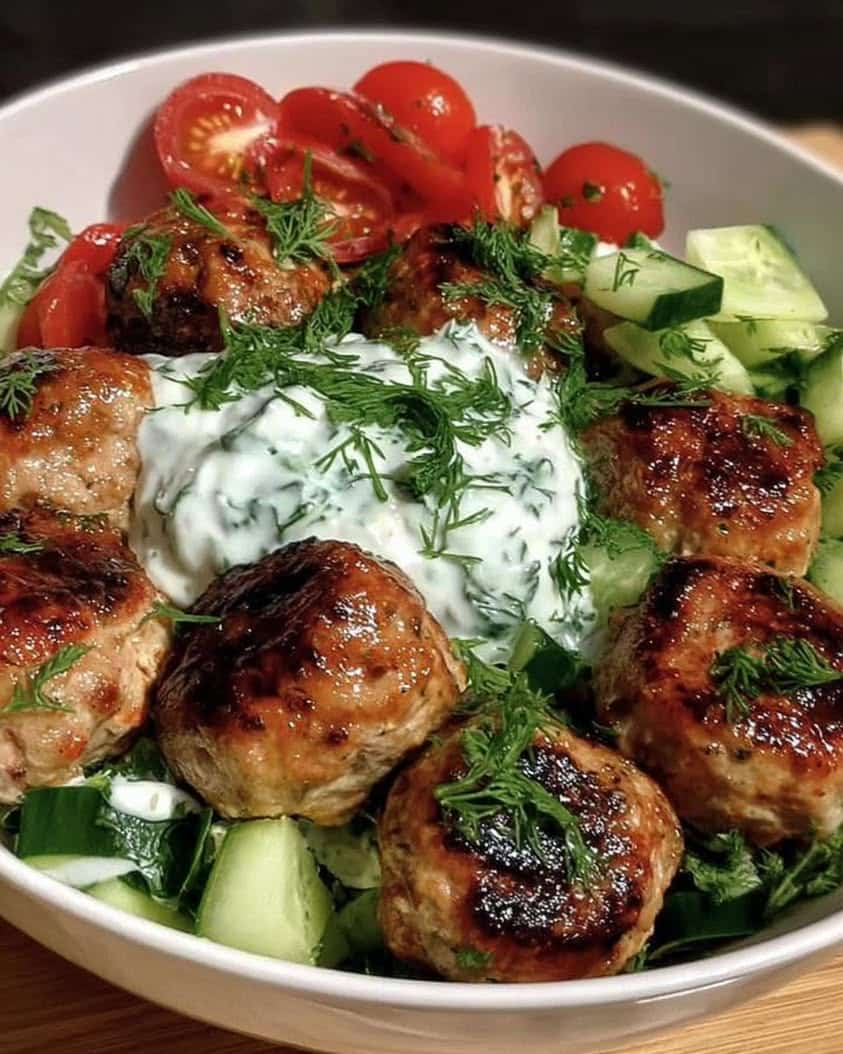
- Visual Appeal: The golden-brown meatballs look appetizing against the bright white tzatziki sauce. A sprinkle of fresh dill and a dusting of paprika creates an inviting presentation.
- Skill Level Needed: This recipe is perfect for beginners. The steps are straightforward, and you only need basic kitchen skills like mixing, shaping, and pan-frying.
- Special Equipment: You need a large skillet for cooking the meatballs, a box grater for the onion and cucumber, and a mixing bowl. No specialty gadgets are required.
Recipe Overview
- Difficulty Level: This recipe earns an easy rating because the techniques are simple. You mix ingredients, form meatballs, and cook them in a skillet. The tzatziki requires only stirring. Even novice cooks can achieve excellent results on their first attempt.
- Category: These Greek Chicken Meatballs with Homemade Tzatziki work as an appetizer, main course, or meal prep component. They fit into Mediterranean, low-carb, and high-protein meal plans.
- Cuisine: This dish draws inspiration from traditional Greek keftedes, which are typically made with ground lamb or beef. Using chicken creates a lighter version while preserving the classic Mediterranean flavors of oregano, mint, and garlic.
- Cost: Ground chicken is an affordable protein option. Canned tomatoes, yogurt, and fresh herbs add minimal expense. This meal costs significantly less than restaurant Greek food and feeds a family for under fifteen dollars.
- Season: This recipe shines in spring and summer when fresh herbs are abundant and you want a light, refreshing meal. However, the warming spices also make it comforting during cooler months.
- Occasion: Serve these meatballs at casual weeknight dinners, summer barbecues, or meal prep lunches. They also make excellent party appetizers when served with toothpicks and extra tzatziki for dipping.
Why You Will Love This Recipe
The taste and texture of these meatballs truly win you over. First, the combination of ground chicken with grated onion and garlic creates incredible moisture. Then, the fresh herbs and spices deliver a complex flavor that feels authentic and satisfying. The tzatziki adds a cooling contrast that balances the savory meatballs perfectly. Every bite offers a burst of Mediterranean goodness that leaves you wanting more. Additionally, the exterior gets nicely browned, providing a slight crunch that contrasts with the tender interior.
Convenience is another major advantage. You can prepare the meatball mixture and tzatziki in under fifteen minutes. The actual cooking time is only twenty minutes, making this a thirty-five minute meal from start to finish. Furthermore, cleanup is easy since you only use one skillet and a few bowls. This recipe also freezes beautifully, so you can double the batch and have ready-to-heat meatballs for busy nights. The process is so simple that you can even involve kids in shaping the meatballs.
Nutritionally, these meatballs support your wellness goals. Ground chicken provides high-quality protein with less saturated fat than beef or lamb. Greek yogurt in the tzatziki adds probiotics and calcium. Additionally, the herbs and garlic offer antioxidants and anti-inflammatory benefits. Each serving contains around 350 calories while keeping you full and energized. This dish fits perfectly into a balanced eating plan without sacrificing flavor or satisfaction.
Socially, these meatballs are a crowd-pleaser. Their vibrant presentation and bold Mediterranean flavors appeal to a wide range of palates. You can serve them at parties, potlucks, or family gatherings with confidence. The interactive nature of dipping meatballs into tzatziki encourages conversation and sharing. Moreover, guests often ask for the recipe, making it a great dish to have in your entertaining repertoire. The leftovers also taste great cold, so you can pack them for picnics or lunchboxes.
Cost-effectiveness makes this recipe a smart choice. Ground chicken costs less than many other protein options, and the remaining ingredients are pantry staples. A single batch feeds four people generously or provides leftovers for lunch. The ingredients are widely available at any grocery store, so you do not need to search for specialty items. Additionally, you can easily adjust the recipe based on what you have on hand, such as using dried herbs instead of fresh. This flexibility ensures you can enjoy this meal any time.
Historical Background and Cultural Significance
The origins of Greek meatballs, known as keftedes, trace back thousands of years to ancient Greece. The word keftedes derives from the Persian word kofta, which means to grind. Historically, cooks used leftover meat mixed with bread and herbs to create these flavorful balls. Over centuries, the recipe traveled across the Mediterranean, with each region adding its own twist. In Greece, keftedes became a staple of home cooking and taverna menus alike.
From a cultural perspective, meatballs hold a special place in Greek cuisine. They often appear at family gatherings, religious celebrations, and festive occasions. The act of shaping meatballs is a communal activity, with family members gathering in the kitchen to help. Additionally, tzatziki sauce represents the Greek love for fresh, simple ingredients. The combination of yogurt, cucumber, garlic, and dill showcases the countrys agricultural bounty. These foods connect modern Greeks to their culinary heritage.
The evolution of this recipe reflects changing dietary preferences. Traditional keftedes use lamb or beef, but health-conscious cooks began substituting chicken in the late twentieth century. This adaptation maintained the essential flavors while reducing fat content. Additionally, the use of Greek yogurt in tzatziki became more common as yogurt gained popularity outside of Greece. Today, this lighter version enjoys widespread appeal, especially among those seeking Mediterranean diet principles. The recipe continues to evolve with new herbs and spices.
Regionally, variations of this dish abound across Greece and neighboring countries. In the Cyclades islands, cooks add mint and cinnamon for a sweeter profile. On the mainland, parsley and oregano dominate. Turkish kofta often includes cumin and sumac. Similarly, tzatziki variations exist with mint, dill, or even walnuts. This regional diversity highlights the flexibility of the basic formula. Each version tells a story of local ingredients and cultural influences. Embracing these variations enriches your cooking experience.
Ingredient Deep Dive
Ground chicken is the star of this recipe. Chicken has been a dietary staple in many cultures for centuries, valued for its mild flavor and lean protein. Nutritionally, ground chicken provides essential B vitamins, selenium, and phosphorus. It supports muscle growth and repair while keeping calorie counts reasonable. When selecting ground chicken, look for a package that is pink and moist without any discoloration. Avoid packages with excess liquid, which can indicate poor quality. Store ground chicken in the coldest part of your refrigerator and use it within one to two days.
Greek yogurt serves as the base for the tzatziki sauce. Yogurt has ancient origins in the Middle East and Central Asia, where nomadic peoples discovered its probiotic benefits. Greek yogurt is thicker than regular yogurt because it is strained to remove whey. This strain process concentrates the protein and creates a rich, creamy texture. Choose plain, full-fat Greek yogurt for the best flavor and consistency. Low-fat versions work but produce a thinner sauce. Store yogurt in the refrigerator and check for a clean, tangy smell. For a dairy-free option, use coconut yogurt.
Cucumbers add a refreshing crunch to the tzatziki. Cucumbers originated in India over three thousand years ago and spread through trade routes to Europe. They are low in calories but high in water content, making them hydrating. Cucumbers also contain vitamin K and several antioxidants. For this recipe, use English cucumbers because they have fewer seeds and thinner skin. Grate the cucumber and then squeeze out excess moisture using a clean towel or cheesecloth. This step prevents the tzatziki from becoming watery. If you cannot find English cucumbers, regular cucumbers work after removing the seeds.
Garlic is essential for both the meatballs and the tzatziki. Garlic has been used for thousands of years, prized for its flavor and medicinal properties. It contains allicin, a compound linked to immune support and heart health. Use fresh garlic rather than pre-minced jars for the best flavor. When selecting garlic, choose bulbs that are firm and heavy with tight skin. Store garlic in a cool, dark place with good air circulation. If you run out of fresh garlic, garlic powder can substitute at a ratio of one-eighth teaspoon per clove.
Fresh dill provides the signature herbaceous note in tzatziki. Dill has a long history in Greek cooking, dating back to ancient times. It is rich in antioxidants and has a calming effect on digestion. When choosing dill, look for bright green fronds without any yellowing or wilting. Store fresh dill in the refrigerator wrapped in a damp paper towel inside a plastic bag. Alternatively, freeze chopped dill in ice cube trays with water for later use. Dried dill can replace fresh, but use only one-third the amount as dried herbs are more concentrated.
Common Mistakes to Avoid
- Overmixing the meatball mixture. When you overmix, the chicken releases too much moisture, resulting in dense, dry meatballs. Mix just until the ingredients combine, then stop.
- Skipping the grated onion step. If you add chopped onion instead of grated, the meatballs will have uneven texture and may fall apart. Grated onion incorporates evenly and adds moisture.
- Not squeezing the cucumber dry. Wet cucumber makes the tzatziki thin and watery. Always grate and squeeze the cucumber thoroughly before stirring it into the yogurt.
- Cooking meatballs on too high heat. High heat burns the exterior while leaving the inside raw. Use medium heat to ensure even cooking and a golden crust.
- Overcrowding the skillet. When you crowd the pan, the meatballs steam instead of brown. Cook in batches if needed to maintain a single layer.
- Forgetting to season the tzatziki. Without salt and pepper, the tzatziki tastes flat. Season to taste and let it rest for flavors to meld.
- Using pre-minced garlic in a jar. Jarred garlic lacks the pungent, fresh flavor that elevates both the meatballs and tzatziki. Always mince fresh garlic for the best results.
- Not resting the meatballs after cooking. Letting them rest for a few minutes allows juices to redistribute, keeping them moist. Cutting into them immediately causes dryness.
Essential Techniques
Grating onion and cucumber is a crucial technique for both components. For the meatballs, grating the onion releases its moisture, which keeps the chicken tender. Use the large holes of a box grater and grate directly over a bowl. For the tzatziki, grate the cucumber using the same method. After grating, transfer the cucumber to a clean kitchen towel or cheesecloth. Gather the corners and twist tightly to squeeze out as much liquid as possible. This step prevents a watery sauce. The goal is to remove about two tablespoons of liquid from a half cucumber.
Shaping meatballs properly ensures even cooking and attractive presentation. Lightly wet your hands to prevent the mixture from sticking. Roll the mixture between your palms using gentle pressure to form uniform balls. Aim for meatballs about one and a half inches in diameter. If you want perfectly equal sizes, use a cookie scoop or measuring spoon. Place the shaped meatballs on a plate or tray. For best results, refrigerate them for fifteen minutes before cooking. This chilling step helps them hold their shape during frying.
Pan-frying meatballs to golden perfection requires attention to heat management. Start with a heavy-bottomed skillet, preferably cast iron or stainless steel. Add just enough olive oil to coat the bottom, about two tablespoons. Heat the oil over medium heat until it shimmers but does not smoke. Gently place the meatballs in the skillet, leaving space between each one. Cook for three to four minutes per side, turning carefully with tongs. The meatballs should have a deep golden-brown crust. After browning, check the internal temperature with a meat thermometer, which should read 165 degrees Fahrenheit.
Pro Tips for Perfect Greek Chicken Meatballs
Always use freshly ground chicken from the butcher counter or grind your own. Pre-packaged ground chicken often contains added moisture and fillers that affect texture. If you grind your own, use boneless, skinless thighs for the juiciest meatballs.
Add a tablespoon of plain breadcrumbs or almond flour to the meatball mixture if it feels too wet. This addition helps absorb excess moisture and binds the ingredients without making them dry. You can also use crushed pork rinds for a low-carb alternative.
Toast the spices before adding them to the meatball mixture. A quick thirty seconds in a dry skillet releases their essential oils and deepens the flavor. Let them cool slightly before mixing to avoid cooking the chicken prematurely.
Rest the tzatziki in the refrigerator for at least thirty minutes before serving. This resting period allows the flavors to meld and the sauce to thicken. The garlic and dill become more pronounced, creating a more harmonious sauce.
Use a microplane zester for the lemon zest instead of a standard grater. A microplane creates fine, fluffy zest that incorporates seamlessly into the meatballs. Avoid the white pith, which adds bitterness. Just the yellow part of the rind.
When forming the meatballs, make a small indent in the center of each one with your thumb. This trick prevents the meatballs from puffing up into spheres while cooking, ensuring they cook evenly. It also creates a little well for holding tzatziki later.
Brush the cooked meatballs with a little extra olive oil and fresh lemon juice before serving. This finishing touch adds brightness and moisture. It also makes them glisten beautifully for presentation.
Variations and Adaptations
Regional variations of these meatballs appear throughout the Mediterranean. In Cyprus, cooks add a pinch of cinnamon and allspice for warmth. In Turkey, the meatballs often include grated tomato and red pepper flakes. Lebanese versions use a mix of chicken and lamb with pine nuts. Each variation reflects local spice preferences and ingredient availability. You can experiment with these regional twists to find your favorite. Additionally, you can adjust the herb ratios based on what grows in your garden.
Seasonal adaptations keep this recipe interesting year-round. In summer, add fresh mint and chopped tomatoes to the meatball mixture. In fall, incorporate roasted red peppers or a dash of smoked paprika. Winter versions benefit from a pinch of cinnamon and allspice. Spring invites fresh lemon thyme or chives. These seasonal tweaks use what is freshest and most affordable. They also prevent recipe fatigue and keep your cooking inspired. Always adjust seasoning levels to complement the new ingredients.
Dietary modifications make this dish accessible to many eaters. To make it gluten-free, use certified gluten-free breadcrumbs or ground almonds. For dairy-free tzatziki, substitute the yogurt with coconut yogurt or cashew cream. A vegan version uses chickpea flour and flax eggs instead of chicken, though the texture differs. Low-carb eaters can skip the breadcrumbs entirely and use grated zucchini instead. Each adaptation maintains the core flavor profile while accommodating specific dietary needs. Taste test and adjust seasonings as needed.
Flavor variations offer endless creativity. Add a teaspoon of harissa paste for a spicy North African twist. Include sun-dried tomatoes and olives for a more intense Mediterranean flavor. Swap the dill in the tzatziki for fresh mint or cilantro. Try using smoked paprika instead of sweet paprika for a bold, smoky taste. These changes keep the recipe exciting and prevent boredom. Just remember to balance strong flavors with the existing ingredients to avoid overwhelming the dish.
Serving and Presentation Guide
Plating these meatballs elegantly does not require professional skills. Start by spreading a generous layer of tzatziki across the bottom of a serving platter. Arrange the meatballs on top in a single layer. This technique creates a beautiful contrast and ensures every meatball gets some sauce. For individual servings, spoon a dollop of tzatziki onto each plate and place three to four meatballs on top. Drizzle with extra olive oil and a squeeze of lemon juice for brightness.
Garnishing adds visual appeal and flavor. Sprinkle fresh dill or parsley over the meatballs. Add a few thin slices of red onion for color and crunch. A dusting of paprika or sumac adds warmth and sophistication. Lemon wedges on the side let guests add more acidity. For a pop of color, scatter cherry tomato halves or Kalamata olives around the platter. Edible flowers, like nasturtiums, also work for special occasions and impress guests.
Traditional accompaniments enhance the meal. Serve these meatballs with warm pita bread or flatbread for scooping up the tzatziki. A classic Greek salad with tomatoes, cucumbers, feta, and olives complements the flavors. Rice pilaf or lemon potatoes make excellent side dishes. For a lighter option, serve over a bed of mixed greens with a simple vinaigrette. The meatballs also pair well with roasted vegetables like zucchini, bell peppers, and eggplant.
Modern serving suggestions keep this dish relevant. Create a meatball bowl with quinoa, roasted vegetables, and a generous drizzle of tzatziki. Serve the meatballs as sliders on mini buns with tzatziki spread. Skewer them for appetizers with a small cup of tzatziki for dipping. For a party, offer a build-your-own pita bar with meatballs, tzatziki, and various toppings. These contemporary presentations appeal to different palates and occasions.
Temperature considerations matter for the best experience. Serve the meatballs hot or warm, as they lose moisture when cold. The tzatziki should be cold or at room temperature for the best flavor contrast. If you prepare everything ahead, reheat the meatballs gently in a skillet or oven. Avoid microwaving, which can make them rubbery. Let the tzatziki sit at room temperature for ten minutes before serving to take the chill off. This attention to temperature enhances the overall dining experience.
Wine and Beverage Pairing
Wine pairings for these Greek Chicken Meatballs with Homemade Tzatziki emphasize freshness and acidity. A crisp Assyrtiko from Santorini works wonderfully, with its citrus notes and mineral finish. Alternatively, a dry Sauvignon Blanc from New Zealand offers herbal undertones that complement the dill and oregano. For red wine lovers, a light-bodied Pinot Noir or a chilled Beaujolais provides enough fruit without overwhelming the dish. Avoid heavy, oaky wines that mask the delicate flavors of the chicken and herbs.
Non-alcoholic alternatives are equally delightful. Sparkling water with a squeeze of lemon or lime refreshes the palate. Mint tea, served cold or hot, echoes the herbs in the meatballs. A classic Greek frappe coffee makes an interesting pairing for a light meal. For a festive option, combine sparkling water with a splash of pomegranate juice and fresh mint. These beverages keep the Mediterranean theme consistent and accommodate guests who do not drink alcohol.
Temperature considerations apply to all beverages. Serve white wines chilled but not ice-cold, as extreme cold numbs the flavors. Red wines benefit from being slightly cool, around 60 degrees Fahrenheit. Non-alcoholic drinks should be well-chilled, with ice added to glasses. If serving coffee, ensure it is hot or properly iced. The contrast between warm meatballs and cold tzatziki extends to the beverage selection, creating a harmonious temperature experience.
Serving suggestions enhance the pairing. Offer wine in stemmed glasses to allow air contact, which opens up aromas. For non-alcoholic drinks, use tall glasses filled with ice for visual appeal. Garnish drinks with a sprig of mint or a cucumber slice to continue the Mediterranean theme. Set up a small drink station so guests can help themselves. This approach makes entertaining easy and keeps the focus on the food.
Storage and Shelf Life
Storing leftover meatballs requires proper technique to maintain quality. Allow the meatballs to cool completely at room temperature before refrigerating. Place them in an airtight container, separating layers with parchment paper if stacking. Properly stored, cooked meatballs last three to four days in the refrigerator. The tzatziki sauce should be stored separately in a sealed container. It remains fresh for up to five days, though it may thicken slightly over time. Stir it before serving to restore its creamy texture.
Temperature requirements are critical for food safety. Keep both meatballs and tzatziki refrigerated at 40 degrees Fahrenheit or below. Never leave them at room temperature for more than two hours. If you plan to serve them at a party, use a chafing dish or slow cooker on the warm setting. For the tzatziki, place the serving bowl over a larger bowl filled with ice to keep it cold. This attention to temperature prevents bacterial growth and keeps your food safe.
Container recommendations affect freshness. Use glass or BPA-free plastic containers with tight-fitting lids. Avoid metal containers, as they can impart a metallic taste to the yogurt-based tzatziki. For freezing, use freezer-safe bags or containers, removing as much air as possible. Label containers with the date and contents. Mason jars work well for storing tzatziki, but leave headspace as the sauce may expand slightly when frozen. Always use clean utensils when handling leftovers.
Signs of spoilage are easy to spot. Discard meatballs if they develop a sour smell, slimy texture, or off-color patches. Tzatziki that separates, smells sour, or shows mold growth should be thrown away. Trust your senses; when in doubt, do not eat it. Reheat only the amount you plan to eat, as repeated heating and cooling degrade quality. Frozen meatballs should be used within three months for best flavor and texture. Thaw them overnight in the refrigerator before reheating.
Make Ahead Strategies
Planning ahead makes this recipe even more convenient. You can prepare the meatball mixture up to twenty-four hours in advance. After mixing, cover the bowl tightly with plastic wrap and refrigerate. The flavors meld and deepen overnight, resulting in even tastier meatballs. Similarly, the tzatziki can be made a day ahead. Actually, many people prefer it the next day because the garlic mellows and the flavors integrate. Stir the tzatziki before serving to recombine any separated liquids.
Storage between steps requires careful attention. If you shape the meatballs ahead, place them on a parchment-lined baking sheet and refrigerate for up to four hours. Cover them loosely with plastic wrap to prevent drying. For longer storage, freeze the uncooked meatballs on the baking sheet until solid, then transfer them to a freezer bag. Cook them directly from frozen, adding a few extra minutes to the cooking time. Do not thaw frozen meatballs, as they can become mushy.
Quality impact assessment shows that make-ahead preparation does not compromise the dish. In fact, the meatballs are often more flavorful the next day. The tzatziki maintains its quality for several days. However, add fresh herbs to the tzatziki right before serving for the brightest flavor. If you plan to serve the meatballs for a party, cook them completely and reheat gently in the oven. This approach eliminates last-minute stress while delivering excellent results.
Assembly tips simplify final preparation. When ready to serve, reheat the meatballs in a 350-degree Fahrenheit oven for ten to twelve minutes. Transfer them to a serving platter and spoon a portion of tzatziki alongside. Alternatively, you can warm the meatballs in a skillet with a splash of water or broth, covered, for five minutes. This method keeps them moist. For a party, set up a buffet with warm meatballs in a slow cooker and tzatziki in a bowl on ice. Guests can serve themselves.
Fresh element additions elevate the make-ahead version. Just before serving, squeeze fresh lemon juice over the meatballs and sprinkle with fresh dill. Add a handful of chopped fresh mint to the tzatziki if desired. A drizzle of extra virgin olive oil and a pinch of flaky sea salt finishes the dish. These small touches restore the vibrant, fresh quality that makes this recipe special. They also impress guests who might not realize you prepared everything ahead of time.
Scaling Instructions
Halving the recipe is straightforward for smaller households. Simply cut all ingredient quantities in half. For the meatballs, use one egg yolk instead of a whole egg to maintain binding. The cooking time remains similar, but you may need to cook in smaller batches. Store the extra tzatziki or reduce the cucumber and yogurt accordingly. This scaled version works perfectly for a dinner for two or a light lunch. Adjust seasoning to taste, as halved spices may need slight tweaking.
Doubling or tripling the recipe for crowds requires some adjustments. When scaling up, maintain the same ingredient ratios. Use a larger mixing bowl and consider cooking in multiple skillets or a large, oven-safe pan. You can also bake the meatballs in the oven at 400 degrees Fahrenheit for fifteen to eighteen minutes for even cooking. This method frees up stovetop space and simplifies batch cooking. The tzatziki scales easily, but prepare it in a large bowl and refrigerate until serving.
Equipment adjustments become necessary with larger batches. If your skillet cannot hold all the meatballs in a single layer, work in batches. Alternatively, use two skillets simultaneously. For oven baking, line a rimmed baking sheet with parchment paper and arrange the meatballs without crowding. A convection oven speeds up cooking and promotes even browning. For the tzatziki, a stand mixer with a paddle attachment can mix large quantities efficiently. Always have extra storage containers ready for leftovers.
Nutritional Deep Dive
Macro breakdown reveals a balanced dish. Each serving, which includes about four meatballs and two tablespoons of tzatziki, contains approximately 350 calories, 25 grams of protein, 15 grams of fat, and 12 grams of carbohydrates. The fat content comes primarily from olive oil and yogurt, which are heart-healthy fats. Protein from chicken supports muscle maintenance and satiety. Carbohydrates are modest, making this meal suitable for low-carb diets. The exact values depend on ingredient brands and portion sizes.
Micronutrient analysis shows this recipe provides several essential vitamins and minerals. Chicken is rich in B vitamins, particularly niacin and B6, which support energy metabolism. Garlic contributes manganese and vitamin C. Cucumbers offer vitamin K and small amounts of potassium. Greek yogurt provides calcium, phosphorus, and riboflavin. Fresh dill adds vitamin A and iron. Together, these ingredients create a nutrient-dense meal that supports overall health. The combination also provides antioxidants that fight inflammation.
Health benefits extend beyond basic nutrition. The probiotics in Greek yogurt support gut health and digestion. Garlics allicin may help lower blood pressure and cholesterol. The herbs offer anti-inflammatory properties. This meal also fits a Mediterranean diet, which is associated with reduced risk of chronic diseases. Eating lean protein like chicken can help with weight management. The high water content in tzatziki promotes hydration. Overall, this dish supports a balanced, health-conscious lifestyle.
Portion analysis helps with mindful eating. A standard serving of four meatballs provides a satisfying amount of protein. Pairing with a side of vegetables or salad rounds out the meal without excessive calories. For weight management, consider serving three meatballs instead of four and increasing vegetable portions. The tzatziki adds flavor with minimal calories, only about 30 calories per two tablespoons. This allows you to enjoy a generous amount without guilt. Mindful portion sizes prevent overeating while maintaining enjoyment.
Dietary Adaptations
Gluten-free adaptation requires simple swaps. Replace breadcrumbs with gluten-free panko, almond flour, or crushed gluten-free crackers. Ensure all other ingredients, such as spices and yogurt, are certified gluten-free. The cooking process remains unchanged. This adaptation allows those with celiac disease or gluten sensitivity to enjoy the recipe safely. Always check labels for hidden gluten, especially in spice blends. The result is equally tender and flavorful.
Dairy-free adaptation uses plant-based yogurt for the tzatziki. Coconut yogurt or cashew yogurt work well, though they have a different flavor profile. To help the sauce thicken, strain the yogurt through a cheesecloth-lined sieve for an hour. Omit the Parmesan cheese if included. For the meatballs, the recipe already uses no dairy, so no changes are needed. This version is suitable for lactose intolerance or vegan preferences. Taste test and adjust salt levels as plant yogurts vary.
Vegan adaptation requires a complete protein swap. Use a plant-based ground meat substitute, crumbled tofu, or a mixture of cooked lentils and mushrooms. Bind the mixture with flax eggs and breadcrumbs. The cooking time may decrease since plant proteins often cook faster. For the tzatziki, use vegan yogurt and adjust seasoning. This adaptation creates a satisfying, plant-based version of the dish. Serve with extra vegetables for a complete meal.
Low-carb and keto adaptations minimize carbohydrates. Omit the breadcrumbs in the meatballs; use grated zucchini or almond flour instead. Serve the meatballs over cauliflower rice or a bed of greens instead of pita. The tzatziki is already low-carb, but ensure the yogurt is plain and full-fat. This version keeps net carbs under ten grams per serving. It is ideal for those following ketogenic or low-carb lifestyles. The meatballs remain juicy and flavorful without the carbs.
Troubleshooting Guide
Texture issues usually stem from moisture imbalance. If your meatballs turn out dry, you likely overmixed or overcooked them. Next time, mix gently and check the internal temperature at fifteen minutes. If they fall apart during cooking, the mixture needs a binder. Add an extra egg yolk or two tablespoons of breadcrumbs. Chill the formed meatballs for twenty minutes before cooking. These steps ensure tender, cohesive meatballs every time.
Flavor balance problems are easy to fix. If the meatballs taste bland, increase the salt and garlic. Lemon zest and extra herbs brighten the flavor. For the tzatziki, if it is too garlicky, add more yogurt or a squeeze of lemon juice to mellow it. If it is too sour, add a pinch of sugar. Balancing flavors is subjective, so taste as you go. Remember that flavors deepen as the dish rests, so adjust accordingly.
Temperature problems often involve uneven cooking. If meatballs are burnt on the outside but raw inside, your heat is too high. Reduce the stovetop to medium-low and cook longer. If they cook unevenly, ensure all meatballs are the same size. Use a cookie scoop for consistency. An oven thermometer verifies the actual temperature, as stovetops vary. Patience is key; rushing the cooking process leads to poor results.
Equipment challenges can affect the outcome. A nonstick skillet is easiest for beginners, but cast iron or stainless steel work if properly seasoned. If your skillet is too small, cook in batches to avoid overcrowding. A meat thermometer takes the guesswork out of doneness. If you lack a box grater, use a food processor to grate onion and cucumber, but avoid overprocessing. Simple tools suffice, but using the right ones makes the process smoother.
Recipe Success Stories
Community feedback consistently praises this recipe for its simplicity and flavor. One reader shared that her family requests these meatballs every week. She noted that even her picky children loved them. Another reader said the tzatziki was the best she had ever made, rivaling her favorite Greek restaurant. These stories confirm that the recipe is accessible and rewarding for cooks of all levels. The positive reviews continue to pour in, inspiring others to try it.
Variation successes show the recipes versatility. A home cook in Texas added chopped jalapeno to the meatballs for a spicy kick. She said the heat paired beautifully with the cool tzatziki. Another variation involved using ground turkey instead of chicken, which worked perfectly Print
Greek Chicken Meatballs with Homemade Tzatziki
- Total Time: 40 minutes
- Yield: 4
Description
Juicy and flavorful chicken meatballs seasoned with Mediterranean herbs, served with a cool and creamy homemade tzatziki sauce. Perfect for a healthy and delicious main course.
Ingredients
- 1 lb ground chicken
- 1/2 cup breadcrumbs
- 1/4 cup finely chopped red onion
- 2 cloves garlic, minced
- 1 large egg
- 1 teaspoon dried oregano
- 1/2 teaspoon dried dill
- 1/2 teaspoon salt
- 1/4 teaspoon black pepper
- 1 tablespoon olive oil
- For the tzatziki: 1 cup Greek yogurt
- 1/2 cucumber, grated and squeezed dry
- 1 clove garlic, minced
- 1 tablespoon fresh dill, chopped
- 1 tablespoon lemon juice
- 1/2 teaspoon salt
Instructions
- Preheat oven to 400°F (200°C) and line a baking sheet with parchment paper.
- In a large bowl, combine ground chicken, breadcrumbs, red onion, garlic, egg, oregano, dill, salt, and pepper. Mix until well combined.
- Form the mixture into 1.5-inch meatballs and place them on the prepared baking sheet.
- Drizzle meatballs with olive oil and bake for 20-25 minutes until golden brown and cooked through (internal temperature reaches 165°F).
- While meatballs bake, prepare the tzatziki: In a medium bowl, combine Greek yogurt, grated cucumber, garlic, fresh dill, lemon juice, and salt. Stir well and refrigerate until serving.
- Serve meatballs warm with tzatziki sauce on the side.
Notes
You can customize the seasonings to taste. For a gluten-free version, use gluten-free breadcrumbs. The tzatziki can be made a day ahead for better flavor.
- Prep Time: 15 minutes
- Cook Time: 25 minutes
- Method: Main
- Cuisine: Greek