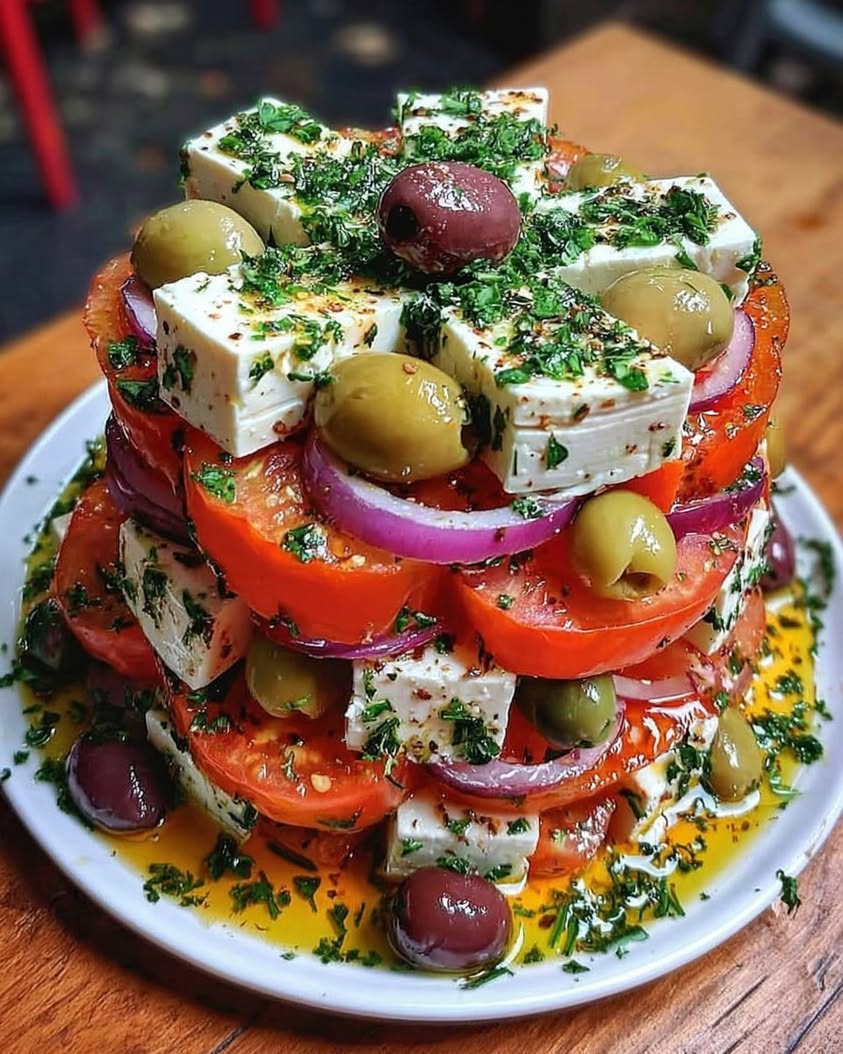
The Ultimate Greek Feta Salad Tower Recipe for a Showstopping Appetizer
Picture this: a perfectly stacked tower of creamy feta cheese, crisp cucumbers, juicy tomatoes, and tangy kalamata olives, all drizzled with a robust herb vinaigrette. This Greek Feta Salad Tower recipe transforms a classic Greek salad into an elegant, individual appetizer that wows guests at any dinner party. The combination of cool, crunchy vegetables and salty, tangy feta creates a symphony of Mediterranean flavors that feels both familiar and excitingly fresh. Each bite delivers a burst of briny olive, sweet tomato, and refreshing cucumber, all tied together with a zesty lemon-oregano dressing.
What makes this Greek Feta Salad Tower so special is its stunning presentation without demanding hours in the kitchen. By using a simple ring mold or a biscuit cutter, you can layer these ingredients into a beautiful, restaurant-quality dish in under twenty minutes. This recipe is ideal for busy home cooks who want to impress, as it requires no cooking whatsoever. You simply chop, layer, and serve, making it a perfect go-to for summer picnics, holiday gatherings, or casual weeknight appetizers. The tower format also ensures perfectly portioned servings, eliminating the mess of a tossed salad and making it easy for guests to grab and enjoy.
Beyond its visual appeal, this Greek Feta Salad Tower recipe is a celebration of fresh, wholesome ingredients that are naturally good for you. The feta provides a satisfying dose of protein and calcium, while the vegetables deliver essential vitamins and antioxidants. The olive oil-based dressing adds heart-healthy fats, rounding out a dish that feels indulgent yet light. Whether you are following a Mediterranean diet, looking for gluten-free appetizer ideas, or simply craving a vibrant, no-cook meal, this tower fits the bill perfectly. It is a versatile recipe that adapts beautifully to seasonal produce and dietary needs, ensuring it becomes a staple in your cooking rotation.
Quick Recipe Highlights
- Flavor Profile: This tower balances salty feta cheese with sweet cherry tomatoes and briny kalamata olives. The tangy red wine vinegar and lemon juice cut through the richness, while fresh oregano and mint add an herbaceous finish. Every layer contributes a distinct but harmonious note.
- Texture: The firm, crumbly feta contrasts beautifully with the juicy, soft tomatoes and the crisp, cool cucumber slices. Kalamata olives provide a tender, meaty bite, and the red onion offers a slight crunch. The dressing coats each element without making anything soggy, preserving the delightful textural variety.
- Aroma: The moment you assemble this tower, the air fills with the bright scent of fresh lemon and oregano. The earthy aroma of extra virgin olive oil mingles with the pungent, grassy notes of mint and the distinct brine from the feta and olives. It is an olfactory promise of the fresh, clean flavors to come.
- Visual Appeal: The layered construction creates a striking vertical presentation that immediately draws the eye. Vibrant red tomatoes, deep purple olives, bright white feta, and green cucumber slices stack into a colorful, appetizing column. Finishing with a sprig of fresh herbs adds a touch of elegance that makes any table look polished.
- Skill Level Needed: This recipe is incredibly beginner-friendly and requires no advanced cooking techniques. The most challenging step involves slicing vegetables evenly and using a ring mold for stacking. Anyone with basic knife skills can master this dish, making it a confidence-building project for new cooks.
- Special Equipment: A 3-inch round ring mold or a clean, empty tuna can with both ends removed is essential for shaping the tower. A sharp chef’s knife and a cutting board are necessary for precise vegetable prep. You will also need a small bowl for whisking the simple vinaigrette.
Recipe Overview
- Difficulty Level: We rate this recipe as easy because it involves no heat, no complicated techniques, and no precise timing. The primary tasks are chopping vegetables and layering them in a mold. Even a complete novice can achieve beautiful results on the first try, as long as they take care with the vegetable slices.
- Category: This dish fits perfectly as an appetizer, a light lunch, or a refreshing side salad. It works beautifully on a mezze platter alongside hummus and pita bread. You can also serve two towers per person as a main course salad for a healthy, satisfying meal.
- Cuisine: This recipe draws directly from Greek culinary tradition, celebrating the classic horiatiki salad. The core ingredients, feta, olives, tomatoes, cucumber, and oregano, are staples of the Greek table. The tower presentation, however, is a modern, Western twist that elevates the rustic salad into a fine dining experience, showing how traditional Greek food can evolve.
- Cost: This is a very affordable dish to prepare, especially when tomatoes and cucumbers are in season. A block of good feta cheese is the most expensive component, but you only need a few ounces. Olives, onions, and herbs are pantry-friendly staples, and the dressing uses basic ingredients like olive oil and vinegar, keeping the total cost per serving well under five dollars.
- Season: While you can make this year-round, it truly shines during the summer months. Peak-season tomatoes and cucumbers offer unparalleled sweetness and crunch. The no-cook preparation is a blessing on hot days when you want a fresh, light meal without heating up the kitchen. In winter, you can use high-quality grape tomatoes and English cucumbers from the grocery store.
- Occasion: This tower is a star at summer barbecues, elegant cocktail parties, and festive holiday brunches. It is a wonderful choice for dinner parties because you can prepare all components ahead of time and assemble just before serving. It also makes a sophisticated, healthy option for potlucks or picnic gatherings where easy transport is a bonus.
Why You Will Love This Recipe
First, the taste and texture combination is absolutely irresistible. The creamy, salty feta melts on your tongue, while the crisp cucumber and juicy tomato provide refreshing counterpoints. The briny olives add depth, and the tangy vinaigrette brings everything together. This is not just a salad. It is an experience. Each forkful offers a different blend of textures and flavors, from the crunch of the onion to the softness of the cheese. It satisfies cravings for something savory, fresh, and deeply flavorful without being heavy or greasy. You will find yourself craving this tower as a go-to for a light, fulfilling snack or a stunning starter.
Second, the convenience and preparation benefits are unmatched. You need only twenty minutes from start to finish, and there is absolutely no cooking involved. This recipe is a lifesaver when you are short on time but still want to serve something impressive. You can chop the vegetables and measure the dressing ingredients up to a day in advance. When guests arrive, you simply stack the towers in a minute. Cleanup is also a breeze, as you only use a cutting board, a knife, a bowl, and a ring mold. This ease makes the Greek Feta Salad Tower recipe perfect for busy weeknights or last-minute entertaining when stress is the last thing you need.
Third, the nutritional advantages make this a smart choice for health-conscious cooks. This tower is packed with vegetables, providing a generous serving of fiber, vitamins A and C, and potassium. Feta cheese offers high-quality protein and calcium while being lower in fat than many other cheeses. The extra virgin olive oil dressing contributes monounsaturated fats that support heart health. This dish is naturally gluten-free and can easily be made vegetarian or low-carb. You can enjoy a generous portion without guilt, knowing you are nourishing your body with real, whole foods that taste incredible and leave you feeling energized.
Fourth, this recipe offers exceptional social and entertaining value. The individual tower presentation creates a sense of occasion and makes guests feel special. It encourages conversation as everyone admires the beautiful plating before digging in. Because the towers are pre-portioned, there is no passing of bowls or awkward serving spoons. This setup is perfect for cocktail parties where guests are standing and mingling. The vibrant colors and fresh ingredients also photograph beautifully, making this a hit for social media sharing. You will receive endless compliments and requests for the recipe, making you the star of any gathering you host.
Fifth, the cost-effectiveness and accessibility of ingredients make this a practical recipe to repeat. All the components are available at any standard grocery store year-round. You do not need specialty stores or expensive imports. A single block of feta and a few vegetables serve multiple people without breaking the bank. This recipe is also a fantastic way to use up leftover vegetables from your fridge. The dressing requires pantry staples like olive oil, vinegar, and dried oregano. You can achieve a high-end presentation with everyday ingredients, proving that elegance does not require a premium budget or a trip to a fancy market.
Historical Background and Cultural Significance
The Greek salad, or horiatiki, which translates to village salad, has ancient roots in Greek cuisine. For centuries, Greek farmers and villagers relied on simple, fresh ingredients available in their gardens and local markets. Tomatoes, cucumbers, onions, and olives grew abundantly in the Mediterranean climate. Feta cheese, made from sheep or goat milk, was a staple protein that could be preserved in brine. The original salad was a rustic meal, a way to combine the land’s bounty into a filling, refreshing dish that provided sustenance during long, hot workdays. It was never served with lettuce, as the core concept was to highlight the vegetables themselves.
Feta cheese itself holds a special, protected status in Greek culture. It is considered a national product and is produced in specific regions using traditional methods. The word feta comes from the Italian word fetta, meaning slice, referring to the way the cheese is cut from a large block. In Greek cuisine, feta is not just an ingredient. It is a symbol of hospitality and shared meals. Breaking bread and sharing a plate of feta with olives is a deeply ingrained social ritual. The combination of feta with fresh vegetables represents the core of the Greek philosophy of eating: simple, high-quality ingredients prepared with respect for their natural flavors.
The evolution of the Greek salad into a layered tower is a modern culinary innovation. As Greek cuisine gained international popularity in the late 20th century, chefs began experimenting with presentation. The deconstructed and stacked salad trend emerged from fine dining kitchens, where chefs sought to add visual drama to classic dishes. By using ring molds, they elevated the humble village salad into a refined appetizer. This Greek Feta Salad Tower recipe is a beautiful fusion of old and new, honoring the authentic flavors of Greece while embracing contemporary plating techniques that appeal to modern diners looking for Instagram-worthy food.
Regional variations of the Greek salad exist across Greece and the Mediterranean diaspora. In some coastal areas, cooks add capers or caper leaves for extra brininess. In northern Greece, you might find the salad with a sprinkle of dried oregano and a generous pour of local olive oil. Some versions include bell peppers or even a hard-boiled egg. The tower format, however, is not a traditional Greek presentation. It is a culinary adaptation that has become popular in restaurants and home kitchens worldwide. This recipe represents a dynamic, living tradition where classic flavors are continuously reinterpreted for new audiences while still paying homage to the Greek countryside and its timeless ingredients.
Ingredient Deep Dive
Feta cheese is the undisputed star of this Greek Feta Salad Tower recipe. This brined curd white cheese has been made in Greece for thousands of years, traditionally from sheep milk or a blend of sheep and goat milk. It holds a Protected Designation of Origin status in the European Union, meaning only cheese made in specific regions of Greece can legally be called feta. Nutritionally, feta is an excellent source of calcium, phosphorus, and protein. It is also lower in fat and calories than many aged cheeses like cheddar or parmesan. When selecting feta, look for a block stored in brine, as it has a creamier texture and milder saltiness than pre-crumbled varieties. The block form is essential for slicing into neat layers for your tower. Store leftover feta in its brine in an airtight container in the refrigerator for up to three weeks. For a substitution, consider halloumi, which has a similar firm texture, although it is saltier and requires grilling. Fresh goat cheese, or chèvre, also works well, offering a tangy, creamy profile that complements the other ingredients beautifully.
Tomatoes are the next crucial component, providing sweetness, acidity, and juicy burst. In Greek cuisine, tomatoes are a relatively recent addition, only becoming widespread in the 19th century after being introduced from the Americas. Today, they are indispensable. Tomatoes are rich in lycopene, a powerful antioxidant linked to reduced risk of heart disease and certain cancers. They also deliver vitamin C and potassium. For this tower, you want firm, ripe tomatoes that hold their shape. Roma or plum tomatoes are ideal because they have fewer seeds and denser flesh. Grape or cherry tomatoes work well if sliced into thick rounds. Avoid overly soft or watery tomatoes, as they will make the tower collapse. Store tomatoes at room temperature to preserve their flavor. Refrigeration kills their taste and texture. If you need a substitution, roasted red peppers from a jar, drained and patted dry, offer a smoky sweetness that mimics the texture of tomatoes, though they lack the same acidity.
Cucumbers add the essential crispness and freshness that balances the dish. They have been cultivated in the Mediterranean region for over three thousand years. Cucumbers are very low in calories yet high in water content, making them incredibly hydrating. They also provide small amounts of vitamin K and silica, which is good for skin health. For this recipe, choose English cucumbers, also called hothouse or seedless cucumbers. They have thin, tender skin and fewer seeds, which means less water and a better texture. Regular garden cucumbers can be used, but you must peel them and scoop out the seeds to avoid a soggy tower. Select cucumbers that are firm, dark green, and free of soft spots. Store them in the refrigerator crisper drawer. If you need an alternative, zucchini, sliced and lightly salted to draw out moisture, can provide a similar crunch, though it has a milder flavor.
Kalamata olives bring the essential briny, fruity depth that anchors the tower. These almond-shaped olives are named after the city of Kalamata in southern Greece. They are harvested when fully ripe and then cured in red wine vinegar or olive oil, giving them a distinctive tangy, bold flavor. Nutritionally, olives are a good source of healthy monounsaturated fats and vitamin E. They are also rich in iron and antioxidants. For the best flavor in this recipe, buy whole, pitted Kalamata olives in brine. Pre-sliced olives can be mushy and less flavorful. Drain and pat them dry before using to prevent excess moisture from ruining the layers. Store opened olives in their brine in the fridge for up to a month. If you cannot find Kalamata olives, Castelvetrano olives, which are mild, buttery, and green, offer a different but pleasant flavor. Regular black olives are a less flavorful but acceptable substitute.
Red onion provides a sharp, pungent kick that cuts through the richness of the feta and olive oil. Onions have been a staple of Mediterranean diets for millennia, valued for both their culinary and medicinal properties. They contain quercetin, a powerful anti-inflammatory compound, and are a good source of prebiotic fiber. For this tower, slice the red onion very thinly, ideally using a mandoline or a sharp knife. To tame its bite, soak the slices in cold water for ten minutes before draining and patting them dry. This step mellows the harshness while preserving the crunch. Store whole red onions in a cool, dark, dry place. Once cut, wrap tightly and refrigerate for up to a week. A mild white or sweet Vidalia onion can substitute, or you can use thinly sliced shallots for a more delicate onion flavor.
The dressing for the Greek Feta Salad Tower recipe is a simple but powerful vinaigrette. Extra virgin olive oil is the foundation, providing fruity, peppery notes and heart-healthy fats. Choose a good quality Greek olive oil for authenticity. Red wine vinegar adds necessary acidity to balance the oil and complement the tomatoes. Fresh lemon juice brightens the dressing and adds a clean finish. Dried oregano is the quintessential Greek herb, bringing an earthy, slightly floral aroma. A pinch of salt and black pepper rounds out the flavors. For the best results, whisk the ingredients together vigorously or shake them in a jar to emulsify them slightly. You can customize the dressing by adding a minced garlic clove, a teaspoon of Dijon mustard for emulsification, or a tablespoon of fresh chopped mint or parsley for an herbaceous boost.
Common Mistakes to Avoid
- Using wet vegetables is a common error that leads to a collapsed, soggy tower. Always pat tomatoes, cucumber slices, and olives dry with paper towels before layering. Excess moisture will soften the feta and make the stack slide.
- Slicing ingredients unevenly ruins the structural integrity of the tower. Aim for uniform quarter-inch slices for cucumbers and tomatoes. If one slice is thicker than another, the tower will lean or topple over. Take your time with knife work.
- Choosing a soft, crumbly feta that crumbles apart when you try to slice it is a problem. You need a firm block of feta that holds its shape. Avoid pre-crumbled feta for this application because it will not create clean layers.
- Overcrowding the tower with too many layers makes it unstable and difficult to serve. Stick to one layer of each ingredient, repeating for a maximum of three full rounds. A tall, skinny tower is more likely to fall over than a short, wide one.
- Skipping the brine soak for red onions results in a harsh, overpowering onion flavor. Soaking the slices in cold water for ten minutes tames their bite dramatically. This small step makes a huge difference in the overall balance of the tower.
- Forgetting to season the vegetables before layering leads to a bland tower. Sprinkle a tiny pinch of salt on the tomato and cucumber slices as you layer them. This step brings out their natural flavors and prevents the dish from tasting flat.
- Assembling the towers too far in advance of serving is a mistake. The salt from the feta and dressing will draw water from the vegetables, creating a puddle and a sad, collapsed tower. Assemble within thirty minutes of serving for the best texture.
- Using a ring mold that is too small makes it extremely difficult to layer ingredients without crushing them. A three-inch diameter mold is the ideal size. Anything smaller will create a frustrating, messy experience and a dense, unappetizing stack.
- Drizzling the dressing over the entire tower before serving causes the base to become waterlogged. Instead, drizzle the dressing around the tower on the plate, or add it just before lifting the mold. A light drizzle on top is fine, but reserve most for the plate.
- Pressing down firmly on the ingredients while stacking compresses them and eliminates the airy, beautiful texture. You want a gentle touch. Allow the ingredients to rest naturally against each other without forcing them into a tight, compact block.
Essential Techniques
Mastering even slicing is the most important technique for this recipe. Uneven slices create an unstable tower and an unprofessional appearance. Use a sharp chef’s knife and a stable cutting board. For cucumbers, cut off the ends and then slice crosswise into rounds that are exactly a quarter-inch thick. For tomatoes, slice off the stem end, then cut into similarly thick rounds. Consistency is more important than speed. If you own a mandoline slicer, use it for the cucumbers and onions. This tool guarantees identical thickness and saves time. Practice makes perfect. After a few attempts, you will develop a rhythm that allows you to produce beautiful, uniform slices effortlessly.
Another essential technique is properly layering inside the ring mold. Place the ring mold on your serving plate. Start with a layer of cucumber slices, arranging them in a single, even layer that covers the bottom of the mold completely. Press down gently but firmly to create a stable base. Next, add a layer of tomato slices, again covering the entire surface. Then, add a layer of feta slices, followed by a scattering of olives and onions. Repeat this sequence for a second and third layer, depending on the height of your mold. The key is to press down lightly after each complete set of layers to remove any air pockets and encourage stability. The final layer should be the most visually appealing, so reserve a perfect slice of feta and a beautiful tomato slice for the top.
Finally, the technique for unmolding the tower cleanly is critical for presentation. Once you have finished layering, place a flat plate or platter on top of the mold. In one swift, confident motion, flip the entire assembly over. Lift the ring mold straight up and away. If the ingredients stick, use a small offset spatula or a butter knife to gently loosen the edges before lifting. Alternatively, you can lift the mold directly without flipping. Place one hand gently on top of the tower to hold it steady. With the other hand, pull the mold straight up. This method requires a steady hand but works well for shorter towers. Whichever method you choose, do not wiggle the mold, as this can cause the layers to separate and collapse.
Pro Tips for Perfect Greek Feta Salad Tower
For the best flavor, let your feta cheese come to room temperature for about fifteen minutes before assembly. Cold feta has a firmer, more brittle texture and a less pronounced flavor. Room temperature feta is creamier and its saltiness becomes more balanced, melding better with the other ingredients.
Use a small offset spatula or a butter knife to carefully slide the feta slices into the ring mold. Feta can be fragile and may crumble if you try to press it directly with your fingers. Gently coax the slices into place to maintain their shape and create clean, defined layers.
Add a thin, even layer of Kalamata olives around the inside wall of the ring mold during assembly. When you lift the mold, the olives will be visible on the outside of the tower, creating a beautiful mosaic effect that immediately signals the flavors within.
Drizzle the vinaigrette around the tower on the plate, not directly over the top, unless you plan to serve immediately. This method keeps the tower crisp and stable. Guests can then pull the tower apart and dip each component into the dressing, controlling the amount they get.
Garnish the plate with a light dusting of dried oregano, a twist of fresh black pepper, and a tiny sprinkle of flaky sea salt just before serving. These finishing touches add visual contrast and a final burst of flavor that elevates the entire dish.
For an even more impressive presentation, add a few microgreens or small basil leaves around the base of the tower. This adds a pop of fresh green color and a hint of subtle, peppery flavor that complements the Mediterranean theme perfectly.
Variations and Adaptations
Regional variations of this Greek Feta Salad Tower recipe can take you in exciting directions. A Cypriot-inspired version might swap the Kalamata olives for spicy, cracked green Cypriot olives and add a layer of tahini or hummus at the base. An Italian twist could replace the oregano with fresh basil and add a layer of sliced fresh mozzarella, creating a Caprese-style tower with Greek accents. For a Turkish influence, substitute the feta with beyaz peynir, a similar brined white cheese, and add a sprinkle of sumac and pul biber, or Aleppo pepper, to the dressing. These small changes honor the spirit of the dish while introducing new flavor profiles from neighboring cuisines.
Seasonal adaptations allow you to enjoy this tower year-round. In the summer, use heirloom tomatoes in a rainbow of colors for a visually stunning display. In the fall, add thin slices of roasted red beets, which provide earthiness and a beautiful magenta color. In the winter, substitute the fresh cucumber with roasted or grilled zucchini slices, which hold up better and offer a smoky depth. Spring calls for the addition of fresh, tender pea shoots or a layer of sliced radishes for a peppery crunch. By adjusting the vegetables to what is ripe and available, you keep the recipe fresh and exciting throughout the year while still maintaining the core concept of a layered feta tower.
Dietary modifications make this dish incredibly inclusive. For a vegan version, replace the feta with a high-quality vegan feta made from almonds or cashews, or use firm tofu that has been marinated in a brine of lemon juice, salt, and nutritional yeast. The rest of the ingredients are naturally plant-based. For a lower-carb adaptation, skip the tomatoes, which are higher in sugar, and substitute with roasted bell peppers and grilled artichoke hearts. You can also increase the proportion of cucumber and feta. For a heartier, protein-packed version, add a layer of chilled, cooked chickpeas or a layer of flaked, grilled salmon between the vegetables. These adaptations ensure that everyone at your table can enjoy the impressive presentation and bright flavors of the tower.
Texture modifications can completely change the experience of the Greek Feta Salad Tower recipe. For a creamier tower, spread a thin layer of whipped feta or a mixture of feta and Greek yogurt between the vegetable layers. This adds a luscious, smooth element that contrasts with the crunch. For a crunchier tower, add a layer of toasted pine nuts or crushed pita chips between the vegetables. You can also use pickled red onions instead of fresh ones for a softer texture and a tangier flavor. For a completely different mouthfeel, grill the cucumber and tomato slices briefly on a hot grill pan before assembling. This imparts a smoky char and slightly softens the vegetables, adding depth and warmth to the dish.
Presentation alternatives are fun to explore. Instead of a tall tower, you can use a smaller ring mold to create mini towers that serve as appetizer bites. For a family-style presentation, layer all the ingredients in a wide, shallow glass bowl, creating a deconstructed tower that guests can serve themselves. You can also skip the mold entirely and simply fan the slices of cucumber, tomato, and feta on a large platter in a circular pattern, then scatter the olives and onions on top and drizzle with the dressing. This rustic approach is faster and equally beautiful, especially for a casual gathering. For a modern, minimalist look, serve each component in separate small bowls, allowing guests to build their own bite-sized towers at the table.
Serving and Presentation Guide
Plating techniques for the Greek Feta Salad Tower are all about creating a clean, elegant frame for your work. Use a large, white dinner plate to provide a neutral canvas that makes the colors pop. Before placing the tower, swipe a small spoonful of the vinaigrette across the plate in a bold arc or a few artistic dots. This adds a professional touch and ensures every bite has dressing. Center the tower on the plate, then carefully lift the ring mold as described. If the tower leans slightly, use your hands or a spatula to gently coax it upright before removing the mold completely. The goal is a perfect cylinder that stands tall and proud.
Garnishing ideas can elevate your Greek Feta Salad Tower from impressive to unforgettable. A single, fresh oregano sprig placed on top of the tower adds a classic, herbaceous note and a visual cue to the flavors within. A twist of fresh lemon zest over the top releases bright, citrusy oils that invigorate the senses. A light scattering of edible flowers, such as chive blossoms or nasturtiums, introduces unexpected color and a mild, peppery flavor. For a touch of elegance, drizzle a high-quality aged balsamic glaze around the plate in a few delicate circles. This adds sweetness and a beautiful dark contrast against the white plate.
Traditional accompaniments for this dish include warm, crusty pita bread or crusty sourdough to soak up any remaining dressing. You can also serve it alongside a bowl of creamy hummus or tzatziki for dipping. A small dish of extra Kalamata olives and pepperoncini peppers on the side allows guests to customize their experience. For a more substantial meal, pair the tower with grilled lamb chops, roasted chicken, or a simple grilled fish fillet. The fresh, bright flavors of the tower perfectly complement grilled proteins without overwhelming them.
Modern serving suggestions for the Greek Feta Salad Tower recipe include using it as a centerpiece on a large grazing board. Arrange multiple mini towers on a board alongside other mezze items like dolmades, falafel, and roasted vegetables. This creates a stunning, interactive appetizer display for parties. Another modern idea is to serve the tower in a clear glass jar or a wide-mouthed Mason jar, layering the ingredients directly inside. This makes it perfect for portable lunches, picnics, or outdoor concerts. Just add the dressing right before eating and shake or stir to combine.
Temperature considerations are important for the best eating experience. All components should be cold or at room temperature. There is no reason to heat anything. A chilled tower on a hot summer day is incredibly refreshing. However, do not serve the tower immediately from a refrigerator that is extremely cold, as the feta can become hard and the flavors can be muted. Allow the assembled tower to sit at room temperature for about ten minutes before serving. This short rest allows the ingredients to lose their chill and the flavors to meld together beautifully.
Portion control tips ensure everyone gets the perfect amount. One tower, made with a three-inch ring mold, is a generous appetizer serving. For a main course, two towers per person is appropriate. If you are serving a large crowd, make the towers slightly shorter by using only two layers of each ingredient. This makes them easier to eat standing up and prevents waste. Always make one extra tower for the cook to test, which is a professional secret that guarantees the rest are perfect. The Greek Feta Salad Tower is naturally portion-controlled, which is one of its greatest strengths for entertaining.
Wine and Beverage Pairing
Wine pairings for the Greek Feta Salad Tower recipe should complement its bright acidity, saltiness, and fresh herbs. A classic, bone-dry Assyrtiko from the island of Santorini is an ideal match. Its high acidity and mineral notes cut through the richness of the feta and the olive oil, while its citrus flavors echo the lemon in the dressing. Another excellent choice is a crisp, unoaked Sauvignon Blanc from New Zealand or the Loire Valley. Its grassy, herbal notes align perfectly with the oregano, and its zesty acidity mirrors the red wine vinegar. For a red wine option, a light-bodied, chilled Xinomavro or a Pinot Noir from a cool climate works well. Serve these wines slightly chilled to enhance their refreshing qualities.
Non-alcoholic alternatives are equally thoughtful and delicious. A sparkling water with a splash of fresh lemon or lime juice and a sprig of mint is a simple, elegant palate cleanser that mirrors the tower’s flavors. A classic Greek lemonade, made with fresh lemon juice, water, and a touch of honey, is a perfect, sweet-tart companion. For a more sophisticated option, try a non-alcoholic sparkling rosé or a botanical tonic water with a slice of cucumber and a few Kalamata olives as a garnish. These drinks are refreshing and complex enough to stand up to the bold flavors of the dish without overwhelming them.
For coffee and tea pairings, this dish is best enjoyed with a cold beverage rather than a hot one. However, if you are serving it as part of a brunch, a strong, cold-brew coffee with a splash of milk can offer a pleasant contrast to the salty, savory feta. An iced Greek mountain tea, made from Sideritis, which has a mild, earthy, and slightly floral flavor, is a traditional and calming pairing. Herbal teas like iced mint or iced chamomile are also gentle accompaniments that cleanse the palate between rich bites. These tea options provide a subtle, aromatic background that does not compete with the main flavors of the dish.
Temperature considerations for beverages are straightforward. Serve all wines and non-alcoholic drinks well-chilled. The crispness of a cold beverage is essential to balance the warm, room-temperature ingredients of the tower. Avoid serving the tower with flat, warm water, which will not cleanse the palate effectively. Always have ice on hand for water or soda. If you are serving red wine, chill it for about twenty minutes before serving to bring it to a cool, refreshing temperature. This rule is especially true for lighter reds that pair best with this type of fresh, vegetable-forward dish.
Serving suggestions for beverages include offering a small pour of wine or a sparkling drink in a stemless glass that allows guests to easily hold it while standing. For a party, set up a small self-serve beverage station with the wine, sparkling water, and lemonade already chilled. You can also rim the glasses with a bit of dried oregano and flaky salt for a fun, thematic touch that hints at the flavors of the tower. The goal is to make the beverage pairing as effortless and enjoyable as the food, allowing guests to focus on the beautiful presentation and the delightful conversation it encourages.
Storage and Shelf Life
Storage methods for the components of the Greek Feta Salad Tower are straightforward, but the assembled tower does not store well. The vegetables release water, and the feta softens, leading to a mushy, unappealing texture. Therefore, store all components separately if you plan to make them ahead of time. Place sliced cucumbers in a single layer on a paper towel-lined plate, cover with plastic wrap, and refrigerate. This keeps them crisp. Store sliced tomatoes in a separate container at room temperature, as refrigeration ruins their texture. Keep the feta block in its brine in an airtight container in the fridge. The dressing can be stored in a sealed jar in the refrigerator for up to a week.
Temperature requirements are critical for food safety. All perishable ingredients, including feta, olives, and cut vegetables, must stay refrigerated below 40 degrees Fahrenheit until assembly. Never leave the assembled tower at room temperature for more than two hours. If you are serving outdoors in hot weather, reduce that time to one hour. After serving, discard any uneaten towers. Do not attempt to refrigerate and re-serve Print
Greek Feta Salad Tower
- Total Time: 15 minutes
- Yield: 4
Description
A stunning layered salad tower featuring crisp vegetables, creamy feta, and tangy olives, perfect as a centerpiece appetizer or light main course.
Ingredients
- 2 large ripe tomatoes, sliced
- 1 large cucumber, sliced
- 1/2 red onion, thinly sliced
- 1/2 cup Kalamata olives, pitted
- 200g block feta cheese, sliced
- 1/4 cup extra-virgin olive oil
- 2 tablespoons red wine vinegar
- 1 teaspoon dried oregano
- Salt and freshly ground black pepper to taste
- Fresh parsley for garnish
Instructions
- Arrange a layer of tomato slices on a serving plate in a circle.
- Top with a layer of cucumber slices, then a layer of red onion slices.
- Add a layer of feta cheese slices and scatter some Kalamata olives.
- Repeat layers until all ingredients are used, creating a tower shape.
- In a small bowl, whisk together olive oil, red wine vinegar, oregano, salt, and pepper.
- Drizzle the dressing over the salad tower and garnish with fresh parsley.
- Serve immediately or refrigerate for up to 1 hour before serving.
Notes
You can customize the seasonings to taste. For added crunch, include sliced bell peppers or croutons between layers.
- Prep Time: 15 minutes
- Cook Time: 0 minutes
- Method: Appetizer
- Cuisine: Greek