Vibrant Roasted Beets & Carrots with Creamy Burrata Salad Recipe: A Perfect Side Dish
Welcome to a recipe that transforms humble root vegetables into a stunning masterpiece. This Vibrant Roasted Beets & Carrots with Creamy Burrata Salad recipe is more than just a side dish. It is a celebration of earthy sweetness, creamy richness, and brilliant color. You will find that the natural sugars in the beets and carrots caramelize beautifully in the oven, creating a tender, savory-sweet base. This process makes this Vibrant Roasted Beets & Carrots with Creamy Burrata Salad recipe an irresistible addition to any meal.
Furthermore, the star of this Vibrant Roasted Beets & Carrots with Creamy Burrata Salad recipe is undoubtedly the burrata. This fresh Italian cheese offers a luxurious, creamy center that contrasts perfectly with the warm, roasted vegetables. As you cut into the burrata, it spills its rich, velvety cream over the vibrant beets and carrots, creating a cohesive and deeply satisfying dish. Consequently, this combination of textures and temperatures makes this Vibrant Roasted Beets & Carrots with Creamy Burrata Salad recipe a guaranteed crowd-pleaser.
Additionally, this dish is incredibly versatile and surprisingly simple to prepare. Whether you are a seasoned cook or a beginner, this Vibrant Roasted Beets & Carrots with Creamy Burrata Salad recipe will make you look like a professional. The ingredients are straightforward, but the final presentation is elegant enough for a holiday table or a special dinner party. Therefore, prepare to impress your guests with this simple yet sophisticated salad that celebrates the best of seasonal produce.
Quick Recipe Highlights
- Flavor Profile: This dish offers a complex interplay of sweet, savory, and tangy elements. The roasted beets and carrots provide a deep, caramelized sweetness. The creamy burrata adds a rich, milky flavor that balances the earthiness of the vegetables. A bright balsamic glaze or a simple vinaigrette adds acidity to cut through the richness, creating a perfectly balanced bite.
- Texture: The textural contrast is one of the most compelling features of this dish. The roasted beets and carrots become incredibly tender on the inside with slightly chewy, caramelized edges. This softness is beautifully countered by the cool, creamy, and almost liquid center of the burrata cheese. Finally, a sprinkle of toasted nuts or seeds adds a welcome crunch, making every mouthful interesting.
- Aroma: The aroma of this dish is warm and inviting, primarily driven by the roasting process. As the beets and carrots cook, they release a sweet, earthy scent that fills the kitchen with comfort. The addition of herbs like thyme or rosemary adds a fragrant, woody note. The final assembly introduces the fresh, lactic aroma of the burrata, which is subtle but distinct.
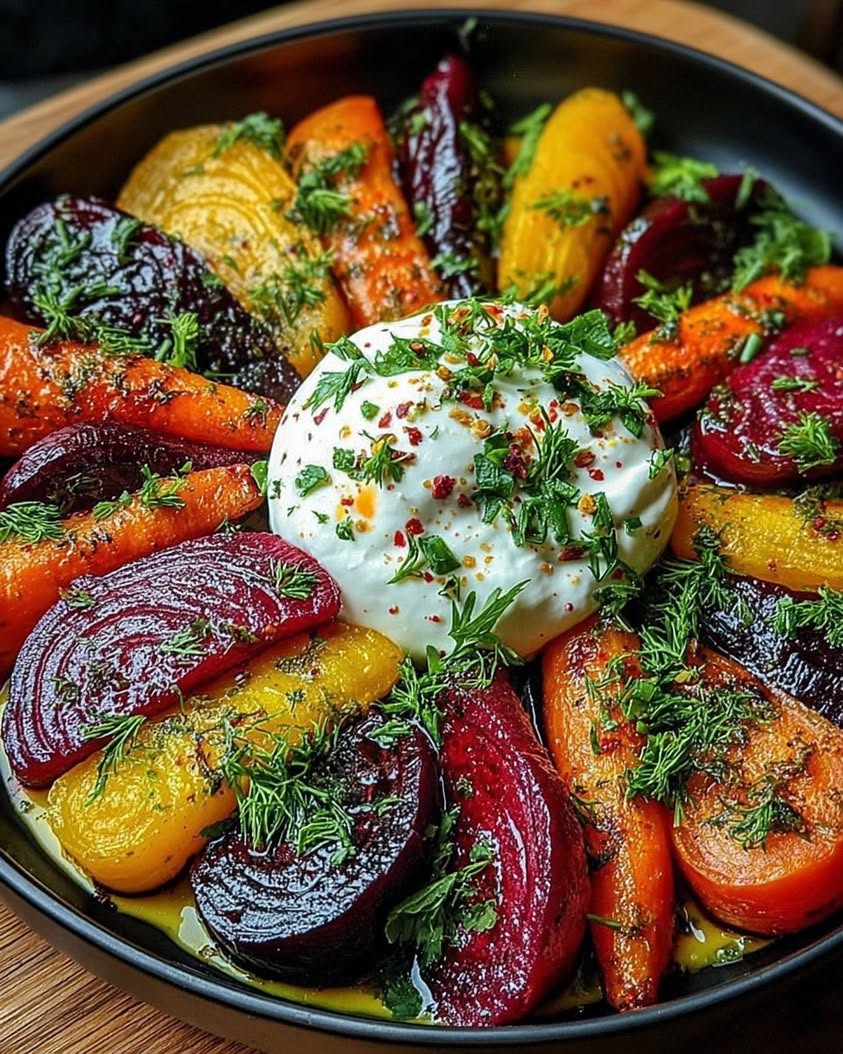
- Visual Appeal: This Vibrant Roasted Beets & Carrots with Creamy Burrata Salad recipe is a feast for the eyes. The deep magenta of the beets contrasts stunningly with the bright orange of the carrots. The pure white, glossy burrata placed in the center acts as a beautiful focal point. A drizzle of dark balsamic glaze and a sprinkle of fresh green herbs create a final, restaurant-quality presentation that is sure to impress.
- Skill Level Needed: This is an excellent recipe for beginners, but it also satisfies experienced cooks who appreciate simplicity. The primary skills required are basic knife work for peeling and chopping vegetables and the ability to monitor roasting times. Assembling the salad is straightforward, demanding more artistry than technical skill. Therefore, it is a perfect confidence-boosting dish for those new to cooking.
- Special Equipment: You will need a large baking sheet or two smaller ones to give the vegetables enough space to roast without steaming. Parchment paper or a silicone baking mat is recommended for easy cleanup. A sharp chef’s knife and a vegetable peeler are essential for preparing the produce. A small bowl for whisking the dressing is the only other tool required.
Recipe Overview
- Difficulty Level: We rate this Vibrant Roasted Beets & Carrots with Creamy Burrata Salad recipe as Easy. The reason is that the hands-on time is minimal, and the oven does most of the work. There are no complicated techniques like emulsifying sauces or tempering eggs. As long as you can chop vegetables and check for doneness, you will succeed with this recipe.
- Category: This dish primarily fits into the side dish and salad categories. It works wonderfully alongside roasted meats, fish, or even a simple piece of grilled chicken. However, it can also be served as a light main course for lunch or a vegetarian dinner. Its elegant presentation also makes it a fantastic choice for an appetizer or starter at a dinner party.
- Cuisine: While inspired by modern American cooking with Italian influences, this dish celebrates seasonal farm-to-table principles. The technique of roasting root vegetables is foundational across many European cuisines. The use of burrata, a specialty cheese from the Puglia region of Italy, brings a distinct Mediterranean touch. This combination creates a dish that feels both rustic and refined, familiar yet special.
- Cost: The cost of this Vibrant Roasted Beets & Carrots with Creamy Burrata Salad recipe is moderate, primarily driven by the price of burrata. Beets and carrots are typically very affordable, especially when in season. A high-quality burrata can cost between four to six dollars, but its rich flavor justifies the expense. Overall, the cost per serving is quite reasonable for the high-quality, restaurant-style result you achieve.
- Season: While you can find beets and carrots year-round, this recipe is at its peak during the fall and winter months. The cool weather concentrates the natural sugars in root vegetables, making them sweeter and more flavorful. Roasting them provides a warming, comforting dish perfect for colder days. However, in the spring and summer, you can use smaller, fresher vegetables and serve the salad at room temperature for a lighter version.
- Occasion: This dish is perfect for a wide range of occasions. It is elegant enough for holiday feasts like Thanksgiving, Christmas, or Easter. It also makes a stunning addition to a summer barbeque or a casual weeknight dinner. Its vibrant colors and rich flavors mean it rarely fails to impress guests at a dinner party or potluck.
Why You’ll Love This Recipe
First, the taste and texture appeal of this Vibrant Roasted Beets & Carrots with Creamy Burrata Salad recipe is simply unmatched. The roasting process transforms simple vegetables into something magical by concentrating their sweetness and developing a deep, savory flavor. Then, when you add the cool, creamy burrata, you create a perfect contrast in both temperature and texture. The creamy cheese acts as a rich sauce that binds all the elements together. This combination of warm, tender vegetables with a cool, creamy element creates a luxurious mouthfeel that is deeply satisfying. Every single bite delivers a symphony of sweet, savory, and rich flavors that will leave you craving more.
Second, the convenience and preparation benefits make this recipe a winner for busy home cooks. You spend only about fifteen minutes actively preparing the ingredients before the oven takes over. The hands-off cooking time allows you to prepare the rest of your meal or simply relax. Furthermore, the assembly is incredibly simple, requiring no fancy plating skills. You simply arrange the roasted vegetables on a platter and nestle the burrata in the center. This ease of preparation means you can create an impressive dish without spending hours in the kitchen, making it a true lifesaver for entertaining.
Third, the nutritional advantages of this dish are significant, making it a healthy choice you can feel good about. Beets are packed with antioxidants and nitrates that support healthy blood pressure and athletic performance. Carrots are an excellent source of vitamin A and beta-carotene, which are crucial for good vision and immune function. The olive oil used for roasting provides healthy monounsaturated fats. While burrata is a full-fat cheese, it is high in protein and calcium. Therefore, this salad is not only delicious but also provides a good balance of nutrients, fiber, and healthy fats.
Fourth, the social and entertaining value of this Vibrant Roasted Beets & Carrots with Creamy Burrata Salad recipe is extremely high. Its vibrant colors and artful presentation make it a conversation starter at any gathering. When you place the platter on a table, the bright magenta and orange vegetables against the white cheese are visually stunning. Guests love the interactive element of cutting into the burrata and watching the cream spill out. It feels like a special, chef-driven creation, which makes your guests feel valued and impressed by your cooking abilities. As a result, this dish is a reliable way to elevate any social meal.
Fifth, the cost-effectiveness and accessibility of the ingredients appeal to a wide range of budgets and lifestyles. Beets and carrots are among the most affordable vegetables in the grocery store. They have a long shelf life, so you can buy them in advance. The remaining ingredients, such as olive oil, vinegar, salt, and pepper, are likely pantry staples. The only specialty item is burrata, which is now widely available in most well-stocked supermarkets. Consequently, you can create a dish that tastes incredibly gourmet without breaking the bank, making it an excellent choice for both budget-conscious cooks and those looking to splurge a little.
Historical Background and Cultural Significance
The story of this Vibrant Roasted Beets & Carrots with Creamy Burrata Salad recipe begins with the history of its core ingredients. Beets have been cultivated for thousands of years, originally for their leaves rather than their roots. The ancient Romans and Greeks valued beets for their medicinal properties. Carrots, too, have a long history, with ancient varieties being purple or white. It was not until the 17th century that Dutch growers developed the familiar bright orange carrot we know today. Both vegetables were staples in European peasant cooking because they stored well through long winters and provided essential nutrients.
The cultural importance of roasted root vegetables is deeply rooted in many culinary traditions. In Northern Europe, the technique of roasting vegetables alongside meat was a practical way to create a complete meal. This method, known as “pan roasting,” allows the vegetables to absorb the flavorful juices from the meat. The tradition continues today in classic British Sunday roasts and American Thanksgiving dinners. These dishes represent comfort, hearth, and the bounty of the harvest. They are connected to family gatherings and the simple, profound pleasure of sharing a warm, home-cooked meal.
The evolution of this specific Vibrant Roasted Beets & Carrots with Creamy Burrata Salad recipe reflects modern culinary trends. The addition of burrata, a cheese that exploded in popularity in the 2010s, elevates the dish from a humble side to a trendy appetizer. This move shows the influence of Italian cuisine on global food culture. Chefs and home cooks began looking for ways to use burrata beyond simple antipasto plates, pairing it with roasted vegetables, grilled fruit, and fresh salads. Therefore, this recipe is a perfect example of how traditional ingredients are reimagined in contemporary cooking to create something new and exciting.
Regional variations of this dish are numerous and reflect local palates. In the Mediterranean, you might find roasted beets and carrots paired with feta cheese and olives rather than burrata. In the Middle East, they are often seasoned with cumin and sumac and served with a creamy tahini dressing. Some versions include roasted garlic, toasted nuts like walnuts or pistachios, and fresh herbs like mint or dill. This adaptability is a testament to the versatility of the central concept. It shows how a simple pairing of sweet roasted vegetables and creamy cheese can be adapted to suit different flavor profiles across the globe.
Ingredient Deep Dive
Beets are the star ingredient of this Vibrant Roasted Beets & Carrots with Creamy Burrata Salad recipe, and their history is as colorful as their flesh. Cultivated since antiquity, beets were first appreciated for their leafy greens in ancient Greece and Rome. They later became valued for their deep red roots, which were used as a natural dye. Nutritionally, beets are a powerhouse of health benefits; they are exceptionally high in folate, manganese, and fiber. Their most celebrated compound is betalain, a powerful antioxidant that gives them their rich color. When selecting beets, choose ones that are firm, smooth, and heavy for their size, with fresh, unwilted greens attached. To store them, remove the greens and keep the roots in a plastic bag in the refrigerator, where they will last for several weeks. If you cannot find fresh beets, you can substitute canned or pre-cooked beets, though they will be less sweet and lack the caramelized edges from roasting.
Carrots provide a wonderful sweetness and color contrast in this dish and are a cornerstone of healthy eating. Originally from Persia, carrots were once white and purple before the now-common orange variety was developed. They are famously rich in beta-carotene, which the body converts into vitamin A, essential for eye health and immune function. Carrots also provide a good amount of fiber and vitamin K1. When shopping for carrots, look for those that are firm, crisp, and bright in color, avoiding any that are limp or cracked. For the best flavor, buy carrots with their tops still attached, as they will be fresher. Store them in a perforated bag in the crisper drawer of your refrigerator, where they can stay fresh for several weeks. If you run out of carrots, parsnips are an excellent substitute, offering a similar sweet, earthy flavor with a hint of spice.
Burrata is the creamy, decadent heart of this Vibrant Roasted Beets & Carrots with Creamy Burrata Salad recipe, offering a luxurious texture that transforms the dish. Originating from the Murgia region of southern Italy, burrata is a fresh cheese made from mozzarella and cream. The outside is a solid shell of fresh mozzarella, while the inside is a soft, stringy curd mixed with fresh cream, known as “stracciatella.” Nutritionally, it is high in protein and calcium, but it is also a full-fat cheese, so moderation is key. When selecting burrata, look for a cheese that feels heavy for its size, indicating it is full of cream. The package should have a recent expiration date. Store it in its original brine in the refrigerator and consume it within a day or two of opening for the best flavor and texture. For a dairy-free alternative, you can use a high-quality cashew-based ricotta or a vegan mozzarella, though the texture will be different.
Extra virgin olive oil is the essential fat for roasting the vegetables and building the dressing in this recipe. Olive oil has been a staple of Mediterranean cuisine for millennia and is prized for its rich, fruity flavor and numerous health benefits. It is packed with monounsaturated fats and powerful antioxidants like polyphenols, which are heart-healthy and anti-inflammatory. For roasting, choose a good quality extra virgin olive oil with a robust, peppery flavor, as this will shine through in the final dish. Store olive oil in a cool, dark place away from heat and light to prevent it from going rancid. If you need a substitute for roasting, avocado oil has a high smoke point and a neutral flavor, making it an excellent alternative. For the dressing, you could also use a nut oil like walnut or hazelnut for a different flavor profile.
Balsamic vinegar is the final key component that ties all the flavors together with its sweet and tangy acidity. Balsamic vinegar originates from the Modena and Reggio Emilia regions of Italy, where it has been made for centuries from cooked grape must. Traditional balsamic vinegar is aged for years in wooden barrels, becoming thick, sweet, and syrupy. The common balsamic vinegar you find in stores offers a more affordable, thinner, and tangier option suitable for vinaigrettes. Nutritionally, it offers a small number of antioxidants. When selecting balsamic vinegar for this recipe, a good quality, moderately priced bottle is perfect for the dressing. For a thicker, sweeter glaze, you can reduce standard balsamic vinegar in a saucepan. Store balsamic vinegar in a cool, dark pantry, and it will last for several years. An excellent substitution is sherry vinegar, which also offers a complex, slightly sweet acidity.
Common Mistakes to Avoid
- One common mistake is overcrowding the baking sheet when roasting the beets and carrots. If the vegetables are packed too tightly, they will steam instead of roast. This process prevents the caramelization that is so crucial for developing deep, sweet flavor. Therefore, use a large baking sheet or divide the vegetables between two sheets to give them enough space.
- Another error is peeling the beets before roasting them. While you can peel them raw, roasting them with the skin on is much easier. The skin peels off effortlessly under running water after they are cooked. Additionally, the skin helps protect the beets from drying out during the long roasting time. So, wait until after roasting to remove the peel.
- Failing to cut the vegetables into uniform sizes is a frequent issue. If the pieces are different sizes, some will be overcooked while others remain crunchy. For even cooking, try to cut your beets and carrots into roughly one-inch cubes or similar bite-sized pieces. This uniformity ensures that every piece is perfectly tender at the same time.
- Using the wrong type of cheese is a critical mistake to avoid. This recipe specifically calls for burrata, not standard mozzarella. Regular mozzarella is a solid, dry cheese that does not have the creamy center. Burrata is essential for achieving that signature oozing, rich texture that makes this salad so special.
- Another pitfall is skipping the resting time after roasting the vegetables. When the vegetables come out of the oven, they are piping hot. Placing the cold burrata on top immediately will cause the cheese to melt rather than just soften. Allowing the vegetables to cool for ten to fifteen minutes creates a better temperature contrast and a more pleasant texture.
- Forgetting to season the vegetables before roasting is a missed opportunity. Salt and pepper are essential for drawing out the natural flavors of the beets and carrots. A generous pinch of salt enhances their sweetness and prevents them from tasting flat. Do not be shy with the seasoning, as it is the foundation of the dish’s flavor.
- Neglecting to pat the burrata dry before placing it on the salad can lead to a watery dish. Burrata sits in a brine or liquid to stay fresh. If you place it on the platter while still wet, the brine will mix with your dressing and create a soggy, unappealing base. Gently blot it dry with a paper towel for the best results.
- A final common error is adding the dressing too early. If you dress the salad long before serving, the vegetables will become soggy and the dressing will pool at the bottom of the platter. It is best to drizzle the balsamic vinaigrette or glaze right before serving. This ensures the salad remains fresh, vibrant, and beautifully presented.
Essential Techniques
Mastering the technique of roasting is crucial for the success of this Vibrant Roasted Beets & Carrots with Creamy Burrata Salad recipe. Roasting is a dry-heat cooking method that uses hot air to cook food, typically at a high temperature around 400 to 425 degrees Fahrenheit. This high heat triggers the Maillard reaction, a chemical process that browns the sugars and amino acids on the surface of the vegetables. This browning creates hundreds of complex, savory, and sweet flavor compounds that you cannot achieve through boiling or steaming. To master this, ensure your oven is fully preheated before adding the vegetables. Toss the beets and carrots in enough oil to coat them lightly, and spread them in a single, even layer. A common pitfall is checking the vegetables too early; let them roast undisturbed for at least 20 minutes before stirring. The visual cues for success are a deep, caramelized color and a fork that inserts easily into the thickest part of a piece.
Another essential technique is seasoning properly, which goes beyond just adding salt and pepper. Salt is critical because it draws moisture out of the vegetables, which then evaporates in the oven, allowing the remaining sugars to concentrate and caramelize more efficiently. However, seasoning should occur in layers. First, you salt the vegetables before roasting. Then, you season the dressing or vinaigrette with salt and pepper. Finally, you can add a finishing salt, like flaky sea salt, just before serving for a final pop of flavor and texture. To master this, taste your components at each stage. A common pitfall is underestimating how much salt you need, which results in a flat-tasting dish. The visual cue for proper salting is that the vegetables look glossy and have a slight glisten, not that they are covered in white crystals.
Creating a vinaigrette is a fundamental skill for this recipe that elevates the final dish. A classic vinaigrette is simply an emulsion of oil and acid, typically a 3:1 ratio of oil to vinegar. The technique involves slowly whisking the oil into the vinegar to create a temporary, creamy blend. For a more stable emulsion, you can add a small amount of Dijon mustard or honey, which acts as an emulsifier. To master this, start by whisking the vinegar, mustard, honey, salt, and pepper together in a small bowl. Then, add the oil in a slow, steady stream while whisking constantly. A common pitfall is adding the oil too quickly, which causes the vinaigrette to separate and become watery. The visual cue for success is a vinaigrette that looks thick, creamy, and cohesive, not separated into oil and vinegar layers.
Learning how to handle and present burrata is a final key technique for this dish. Burrata is a delicate cheese that requires gentle handling to preserve its creamy center. When you take it out of the package, you should drain the brine and gently pat the ball dry with a paper towel. For serving, you have a choice: you can place the burrata whole in the center of the salad, allowing guests to break it open themselves. Alternatively, you can gently tear it into a few large pieces for a more casual presentation. A common pitfall is slicing the burrata with a knife, which can be messy and crush the delicate structure. It is best to use your hands or two forks to gently pull it apart. The visual cues for success are a shiny, white, unbroken ball of cheese that, when opened, reveals a creamy, flowing center.
Pro Tips for Perfect Vibrant Roasted Beets & Carrots with Creamy Burrata Salad
First, for the deepest flavor, do not peel your beets before roasting. The skin helps the beet retain moisture and prevents it from drying out. Once the beets are tender, the skin slips right off under cool running water. This method is dramatically easier and yields a better result than peeling raw, slippery beets.
Second, consider roasting the beets and carrots separately if you are concerned about color bleeding. Beets are notorious for staining other vegetables a deep pink. If you want the carrots to remain a bright, distinct orange, line a separate baking sheet for the beets or wrap them in a foil packet. This step keeps the colors pristine and vibrant.
Third, elevate the flavor of your vinaigrette by using the warm roasted pan to deglaze it. After you remove the vegetables from the baking sheet, add a splash of balsamic vinegar to the hot pan. Scrape up all the browned bits from the bottom, then pour this flavorful liquid into your dressing. This simple trick adds an incredible depth of roasted flavor to your vinaigrette.
Fourth, always bring your burrata to room temperature before serving. Cold burrata from the refrigerator has a firm, less creamy texture. Letting it sit out for 20 to 30 minutes allows the center to soften and become luxuriously oozy. This small step makes a massive difference in the final mouthfeel of the salad.
Fifth, do not be afraid to add a textural element for contrast. A handful of toasted walnuts, pecans, or pine nuts adds a wonderful crunch against the soft vegetables and creamy cheese. You could also add some crunchy seeds like pumpkin seeds or sunflower seeds. This textural variation keeps each bite interesting and satisfying.
Sixth, finish the dish with a generous pinch of flaky sea salt right before serving. The larger, crunchier crystals of salt provide a final burst of flavor and a pleasant pop of texture. This finishing salt contrasts beautifully with the creamy burrata and sweet vegetables. It is a professional chef technique that is easy to replicate at home.
Variations and Adaptations
Regional variations on this dish are plentiful and exciting, reflecting local tastes and available ingredients. In the Mediterranean, for instance, you might see the roasted vegetables paired with creamy feta cheese, Kalamata olives, and a sprinkle of dried oregano. Another popular version includes roasted red peppers alongside the beets and carrots. In the Middle East, the recipe often takes on a warmer flavor profile with spices like cumin, coriander, and smoked paprika. A drizzle of creamy tahini sauce replaces the balsamic vinaigrette. These regional twists show how the core concept of roasted vegetables and creamy cheese can be adapted into different global cuisines with just a few simple changes.
Seasonal adaptations allow you to enjoy this dish throughout the year with the best produce available. In the spring, you can incorporate tender new potatoes, asparagus spears, and fresh peas along with the carrots and beets. During the summer, grilled vegetables like zucchini, bell peppers, and eggplant make a fantastic addition or substitute. In the fall, swap out some carrots for sweet potatoes or butternut squash for a deeper, sweeter flavor. Winter versions can include hearty root vegetables like parsnips, turnips, and celery root. By adjusting the vegetables based on the season, you keep the recipe fresh, exciting, and aligned with the most flavorful produce.
Dietary modifications make this Vibrant Roasted Beets & Carrots with Creamy Burrata Salad recipe accessible to nearly everyone. For a vegan version, you can substitute the burrata with a creamy, high-quality cashew-based ricotta. You could also use a marinated tofu or a vegan mozzarella. For a dairy-free option, a dollop of thick coconut yogurt or a creamy avocado dressing would work wonderfully. To make it gluten-free, simply ensure that your balsamic vinegar and any other packaged ingredients are certified gluten-free. The base of roasted vegetables is naturally gluten-free, so this adaptation is quite easy. For a nut-free version, simply omit any toasted nuts you plan to add, or substitute them with toasted seeds like sunflower or pumpkin seeds.
Flavor variations can completely transform the profile of this dish while keeping the same structure. You can experiment with different herbs, such as substituting fresh thyme with rosemary, sage, or tarragon. A sprinkle of red pepper flakes adds a touch of heat that contrasts nicely with the sweet vegetables. For a sweeter version, drizzle the roasted vegetables with a honey-balsamic glaze. For a more savory, umami-rich dish, add a splash of soy sauce or balsamic reduction to the roasting pan. Each variation offers a new and exciting way to enjoy this versatile recipe.
Texture modifications are a great way to customize the dish to your preferences. For a crispier vegetable texture, you can roast them at a higher temperature for a shorter time, ensuring they are browned on the outside but still have a slight bite. Conversely, for a very soft, almost melting texture you can roast them covered with foil for the first half of the cooking time, then uncover to brown. You can also add crunchy elements like croutons, toasted breadcrumbs, or even crispy fried shallots. A drizzle of a thick, syrupy balsamic reduction adds a different kind of texture and a potent flavor punch.
Presentation alternatives can change the whole feel of the dish from a rustic platter to an elegant single serving. For a formal dinner party, consider serving individual plates. Arrange a few pieces of roasted beet and carrot in an artful circle on the plate. Place a small piece of burrata in the center and drizzle the vinaigrette around the plate. Alternatively, you can serve the salad in a large glass bowl for a more casual, family-style meal. You could also serve the roasted vegetables on a bed of arugula or mixed greens for added freshness and volume.
Serving and Presentation Guide
Plating techniques for this Vibrant Roasted Beets & Carrots with Creamy Burrata Salad recipe can range from rustic to refined, depending on the occasion. For a rustic, family-style presentation, use a large, wide, shallow platter. Spread the roasted beets and carrots in a single, even layer across the platter. Then, place the whole balls of burrata strategically on top, allowing them to be the visual focal point. For a more modern, individual presentation, arrange the vegetables in a neat circle on the plate, leaving the center open. Place a piece of torn burrata in that center. This gives each diner the perfect balance of vegetables and cheese on their fork.
Garnishing ideas are crucial for adding the final touch of color, texture, and flavor to this dish. A sprinkle of fresh, chopped herbs is a must; mint, basil, chives, or dill all work beautifully. A final drizzle of a high-quality balsamic glaze creates beautiful dark streaks on the white cheese and orange vegetables. A pinch of flaky sea salt and a crack of black pepper are essential. Toasted nuts or seeds add crunch and visual interest. Finally, a few edible flowers or microgreens can elevate the presentation to a truly restaurant-quality level, making the dish look as good as it tastes.
Traditional accompaniments for this salad are often simple and complementary to the rich flavors. A crusty loaf of bread is a classic choice, as it is perfect for soaking up the creamy cheese and balsamic dressing. The salad pairs beautifully with roasted chicken, grilled fish, or a seared steak for a complete meal. It also serves as an excellent side dish for hearty winter stews or braised meats. For a vegetarian dinner, you can serve it alongside a lentil or grain salad to create a satisfying and balanced plate.
Modern serving suggestions can transform this dish for different dining experiences. For a light lunch, serve the salad on a bed of arugula or mixed greens to add freshness and volume. For a trendy appetizer, you can serve individual portions in small bowls or on spoons as a “deconstructed” salad. The dish also works wonderfully as a component of a larger grazing board or charcuterie platter. For a brunch setting, serving the vegetables and burrata on toasted sourdough bread creates a delicious and satisfying open-faced sandwich.
Temperature considerations are important for achieving the best eating experience. The roasted vegetables should be served warm, not piping hot, to create a pleasant contrast with the cool, creamy burrata. Allowing the vegetables to rest for 10 to 15 minutes after roasting achieves this perfectly. The burrata should be at room temperature to maximize its creamy, oozy texture. The vinaigrette can be stored at room temperature or lightly warmed to emulsify it better. Combining these different temperatures creates a dynamic and sensory-eating experience.
Portion control tips can help you serve this rich dish appropriately. For a side dish, plan for about one ball of burrata for every two to four people, depending on the size of the cheese. For a main course, estimate one whole burrata ball per person. For the vegetables, a generous cup of roasted vegetables per person as a side is a good guideline. If serving as part of a multi-course meal, you can reduce the portion size slightly. Adjusting the quantity based on the role the dish plays in the meal ensures no waste and happy guests.
Wine and Beverage Pairing
Wine pairings for this Vibrant Roasted Beets & Carrots with Creamy Burrata Salad recipe are delightful and complement the richness of the cheese and the sweetness of the vegetables. A crisp, unoaked white wine is an excellent choice. A Sauvignon Blanc, with its herbaceous notes and bright acidity, will cut through the creamy burrata and balance the sweetness of the vegetables. Another fantastic option is a Vermentino, an Italian white wine that offers a pleasant minerality and a slightly bitter finish that works well with beets. A dry Rosé, with its subtle red fruit flavors and good acidity, is also a versatile and refreshing pairing for this dish.
Non-alcoholic alternatives are equally important for offering a delicious beverage option for all guests. A sparkling water with a squeeze of lemon or lime is a simple, refreshing palate cleanser. For a more sophisticated pairing, try a non-alcoholic sparkling wine or a botanical tonic water. The bitterness of the tonic water can help balance the richness of the cheese. A chilled, unsweetened hibiscus iced tea is another wonderful choice, offering a tart and fruity flavor profile that mirrors the acidity of a good wine. These options ensure everyone can enjoy a beverage that complements the meal.
Coffee or tea pairings are less conventional but can still be successful, particularly if the dish is served as a starter for a brunch or lunch menu. A light, floral white tea like Silver Needle has a delicate flavor that will not overpower the salad. A chamomile tea offers a gentle, apple-like sweetness that can complement the roasted carrots. For a coffee pairing, a light roast with high acidity and fruity notes, like a Kenyan or Ethiopian coffee, would be a good choice. The bright, citrusy notes in the coffee can stand up to the balsamic dressing without overwhelming the delicate cheese.
Temperature considerations for your beverage are just as important as for the food itself. White wines and Rosés should be served well-chilled, around 45 to 50 degrees Fahrenheit, to enhance their refreshing qualities. Non-alcoholic sparkling drinks are best served ice-cold. Iced tea should be served over generous amounts of ice. If you are serving coffee, it should be served hot but not scalding. The goal is to provide a temperature contrast that enhances the warm and cool elements of the salad itself, creating a holistic sensory experience.
Serving suggestions for your chosen beverage can elevate the entire dining experience. Pour a small glass of white wine in a beautiful stemware to allow the aromas to develop. For non-alcoholic drinks, use highball glasses filled with ice and garnished with a slice of lemon or lime. For a special touch, you could even create a simple cocktail. A classic Aperol Spritz, with its bright orange color and bitter-sweet flavor, is a fantastic and beautiful pairing. Its bubbles and bitterness are perfect for cutting through the richness of the burrata and the sweetness of the Print
Vibrant Roasted Beets & Carrots with Creamy Burrata Salad
- Total Time: 45 minutes
- Yield: 4
Description
A colorful and refreshing salad featuring sweet roasted beets and carrots, paired with creamy burrata cheese and a tangy balsamic glaze.
Ingredients
- 4 medium beets, peeled and cubed
- 4 large carrots, peeled and sliced
- 2 tablespoons olive oil
- Salt and pepper to taste
- 1 teaspoon dried thyme
- 8 ounces burrata cheese
- 2 cups mixed salad greens
- 1/4 cup balsamic glaze
- 1/4 cup toasted walnuts
- Fresh basil leaves for garnish
Instructions
- Preheat oven to 400°F (200°C).
- In a bowl, toss beets and carrots with olive oil, salt, pepper, and thyme.
- Spread vegetables on a baking sheet in a single layer. Roast for 25-30 minutes until tender and caramelized.
- Let roasted vegetables cool slightly.
- Arrange mixed greens on a serving platter.
- Top greens with roasted beets and carrots.
- Tear burrata cheese into pieces and distribute over the salad.
- Drizzle with balsamic glaze and sprinkle with toasted walnuts.
- Garnish with fresh basil leaves and serve immediately.
Notes
You can customize the seasonings to taste.
- Prep Time: 15 minutes
- Cook Time: 30 minutes
- Method: Main
- Cuisine: American