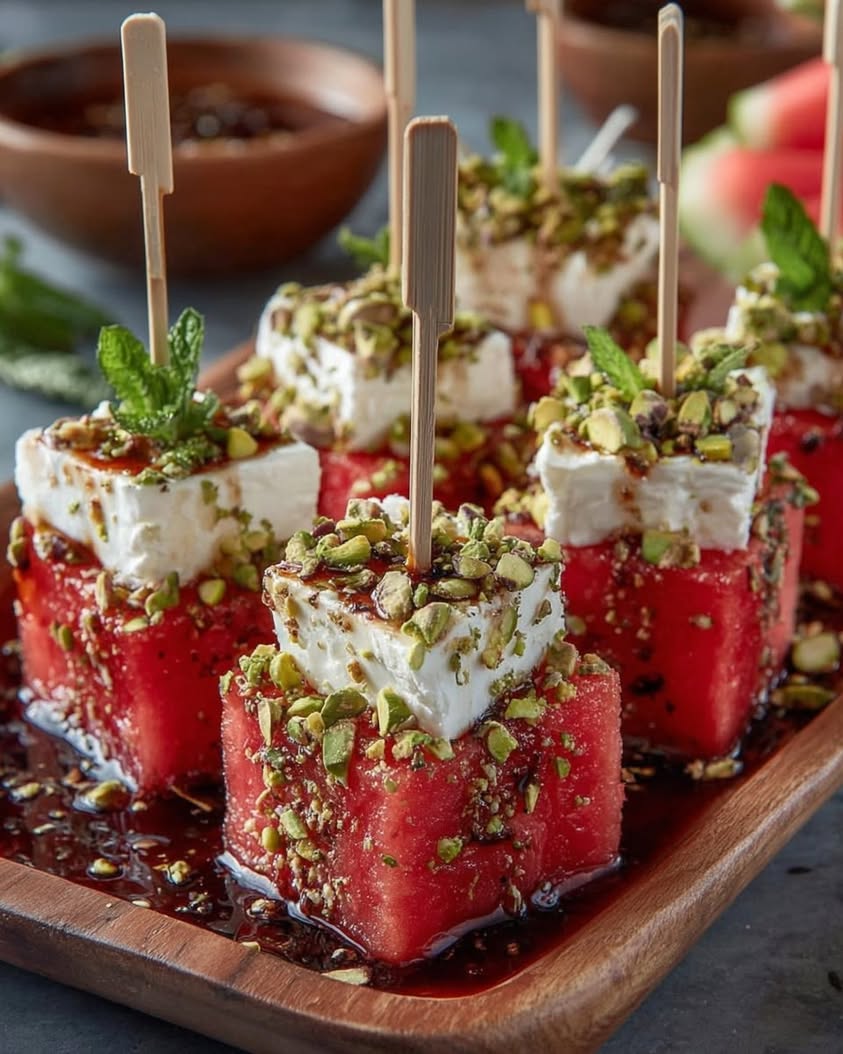
Hot Honey Watermelon Feta Bites with Mint: A Perfect Summer Appetizer
Summer calls for refreshing, simple appetizers that impress without requiring hours in a hot kitchen. These Hot Honey Watermelon Feta Bites with Mint deliver exactly that, combining the sweetness of ripe watermelon with the tangy saltiness of feta cheese, all elevated by a drizzle of spicy honey and finished with fresh mint. Every bite offers a contrast of temperatures, textures, and flavors that makes this dish unforgettable.
The magic of these watermelon feta bites lies in their balance. The cold, juicy watermelon cubes provide a hydrating base that feels like summer itself. Meanwhile, the creamy, briny feta crumbles add richness and depth. A warm, spicy honey drizzle brings heat that lingers pleasantly, while the mint adds a cool, herbaceous finish. This appetizer captures the essence of Mediterranean flavor profiles with a bold, American twist.
Because this recipe requires no cooking beyond warming the honey, it is perfect for both novice cooks and experienced entertainers. You can assemble the ingredients in under twenty minutes. The visual presentation, with its vibrant red, white, and green colors, makes it a showstopper at any gathering. For those searching for a quick and easy summer snack, these Hot Honey Watermelon Feta Bites with Mint are a clear winner.
Quick Recipe Highlights
- Flavor Profile: Sweet, salty, spicy, and herbaceous combine into a single bite. The watermelon offers natural sugar, while feta provides sharp saltiness. Hot honey adds heat, and mint offers a fresh finish.
- Texture: Crunchy, juicy, creamy, and crisp elements create a layered mouthfeel. The watermelon bursts with juice, feta crumbles softly, and the mint leaves offer a gentle snap.
- Aroma: The honey releases floral, spicy notes when warmed. Fresh mint adds a bright, cool scent that contrasts with the rich feta. Watermelon provides a subtle, sweet, watery fragrance.
- Visual Appeal: Bright red watermelon cubes contrast with white feta crumbles and vibrant green mint leaves. A golden drizzle of honey glazes the top, creating an appetizing, colorful platter.
- Skill Level Needed: This recipe demands basic knife skills and the ability to warm honey. No complex techniques are involved, making it accessible to anyone.
- Special Equipment: A sharp knife and a cutting board suffice for preparation. A small saucepan is needed to warm the honey, and a serving platter completes the setup.
Recipe Overview
- Difficulty Level: This dish earns an easy rating because it involves simple assembly. The only cooking step is warming the honey, which takes minutes. The ingredients require no special preparation or advanced techniques.
- Category: These bites fit perfectly as an appetizer, snack, or light dessert. They can also serve as a unique side dish for grilled meats at a summer barbecue.
- Cuisine: The flavor combination draws inspiration from Greek cuisine, where watermelon and feta appear together in salads. However, the addition of hot honey brings a Southern American influence, creating a fusion dish.
- Cost: Watermelon and mint are affordable, especially in summer. Feta cheese costs slightly more but is available at reasonable prices. Honey represents a pantry staple. The total cost remains low per serving.
- Season: Watermelon reaches its peak sweetness from June through August. Mint grows abundantly in warmer months. Therefore, summer is the ideal season to prepare this recipe at its best.
- Occasion: This appetizer suits backyard barbecues, pool parties, picnics, and potlucks. It also works as an elegant starter for dinner parties or holiday gatherings where a light bite is needed.
Why You Will Love This Recipe
The taste experience of these Hot Honey Watermelon Feta Bites with Mint is extraordinary. You get the cold, juicy crunch of fresh watermelon first. Then the creamy, salty feta melts on your tongue. The hot honey brings a gentle warmth that stimulates your palate. Finally, the mint leaves a cooling sensation that makes you want another bite immediately. This combination keeps your taste buds engaged and excited.
Convenience is a huge benefit here. You can prepare the ingredients in advance and assemble them just before serving. The recipe requires only five minutes of actual cooking. That means you can spend more time with your guests instead of being stuck in the kitchen. Additionally, clean-up is minimal since you only use a cutting board, knife, and a small saucepan.
Nutritionally, this snack offers advantages over heavy appetizers. Watermelon provides hydration and vitamins A and C. Feta cheese contains protein and calcium while being lower in fat than many other cheeses. Mint aids digestion and provides antioxidants. The honey, though sweet, is a natural energy source. These ingredients create a relatively healthy option compared to fried or processed party foods.
Social entertaining becomes effortless with this recipe. The vibrant colors and artful presentation impress guests immediately. People love the novelty of the flavor combination and often ask for the recipe. This dish encourages conversation about food and travel, making it a great icebreaker. It also travels well for potlucks and picnics without requiring reheating.
Cost-effectiveness and accessibility make this recipe a winner. Watermelon is one of the most affordable fruits during summer, often costing just a few dollars for a whole melon. Feta cheese is widely available at grocery stores. Honey and mint are common pantry items. For the price of a premium appetizer from a restaurant, you can feed a crowd with these delicious bites.
Historical Background and Cultural Significance
The combination of watermelon and feta cheese has roots in Mediterranean cuisine, particularly in Greece and the Middle East. Watermelon has been cultivated for thousands of years, with evidence of its domestication dating back to ancient Egypt. Feta cheese, a brined curd white cheese, has been produced in Greece for centuries. The pairing appeared in traditional Greek salads during the early twentieth century.
In Greek culture, watermelon and feta represent the spirit of summer. The fruit offers relief from heat while the cheese provides protein and salt lost through perspiration. This combination is often served during village festivals and family gatherings. It symbolizes abundance, hospitality, and the joy of simple pleasures. Many Greek families have their own variations, some adding olives, others adding oregano.
The addition of hot honey represents a more recent evolution. Hot honey gained popularity in American cuisine during the early 2000s, particularly in the South. It combines the sweetness of honey with the heat of chili peppers, creating a versatile condiment. The fusion of hot honey with Mediterranean flavors represents culinary globalization at its finest.
Regional variations exist across the Mediterranean. In Turkey, watermelon is often paired with white cheese similar to feta. In Italy, people combine watermelon with ricotta salata, a salted, aged ricotta. Moroccan cuisine includes watermelon in salads with preserved lemons and olives. Each variation reflects local tastes and available ingredients.
Ingredient Deep Dive
Watermelon holds deep cultural significance across many societies. In ancient Egypt, watermelons were placed in tombs to nourish the dead in the afterlife. In China, watermelon seeds are often roasted and eaten during celebrations. Watermelon is also a symbol of summer in the United States, associated with picnics and barbecues. Nutritionally, watermelon is low in calories and high in lycopene, a powerful antioxidant linked to heart health and cancer prevention.
When selecting a watermelon, look for a uniform shape without bruises or soft spots. The melon should feel heavy for its size, indicating high water content. A creamy yellow spot on the bottom indicates it ripened on the ground. Store whole watermelons at room temperature for up to a week. Once cut, refrigerate pieces in an airtight container for up to three days. If you cannot find a good watermelon, substitutes like cantaloupe or honeydew work but change the flavor profile.
Feta cheese has a rich history in Greek cuisine, dating back to Homeric times. The word feta means slice in Italian, referring to the way the cheese is cut for serving. Traditionally, feta is made from sheep milk, giving it a tangy, salty flavor. Nutritionally, feta provides calcium, protein, and phosphorus while being lower in fat than aged cheeses. It also contains probiotics beneficial for digestive health.
When selecting feta, choose blocks submerged in brine rather than pre-crumbled varieties. The brine keeps the cheese moist and flavorful. Look for a creamy white color without yellowish tinges. Store feta in its brine in the refrigerator for up to two weeks. If you need a dairy-free option, vegan feta made from almonds or tofu works well. For a milder taste, try ricotta salata or cotija cheese.
Hot honey combines the sweetness of honey with the heat of chili peppers. This condiment has exploded in popularity recently, appearing on pizzas, fried chicken, and cheese boards. The heat comes from steeping chili flakes or fresh peppers in warm honey. Nutritionally, honey offers antioxidants and antibacterial properties while chili peppers provide capsaicin, which boosts metabolism.
When buying hot honey, check the ingredient list for real honey and natural chili peppers rather than artificial flavors. You can also make your own by steeping dried chili flakes in warm honey for twenty minutes. Store hot honey at room temperature in a sealed jar for up to three months. If you prefer less heat, use regular honey with a dash of cayenne pepper. For more heat, add extra chili flakes or a splash of hot sauce.
Fresh mint adds brightness to this dish. Mint has been used since ancient times in Mediterranean, Middle Eastern, and Asian cuisines. It aids digestion and freshens breath. Nutritionally, mint is rich in vitamins A and C and contains antioxidants. When selecting mint, look for leaves that are vibrant green without wilting. Store fresh mint in a glass of water with a plastic bag over the top in the refrigerator for up to a week.
Common Mistakes to Avoid
- Using overripe or mushy watermelon creates a watery, unappetizing bite. Always choose a firm, crisp melon for the best texture.
- Crumbling feta too early leads to dry, crumbly pieces that lose their creamy texture. Keep the feta in brine until just before assembly.
- Overheating the honey makes it too thin and runny. Warm it gently until it flows easily but remains thick enough to coat the watermelon.
- Adding mint too early causes it to wilt and turn brown. Add mint leaves just before serving for the best appearance and flavor.
- Cutting watermelon pieces too small makes them difficult to pick up and eat. Aim for one-inch cubes for easy handling.
- Using pre-crumbled feta cheese results in dry, less flavorful bites. Always buy a block of feta and crumble it yourself.
- Skipping the brine rinse on feta makes the bites overly salty. Rinse the feta block briefly to remove excess salt if needed.
Essential Techniques
Cutting watermelon correctly ensures even, attractive cubes. Start by slicing off both ends of the watermelon to create flat surfaces. Stand the melon on one end and cut away the rind in strips from top to bottom, following the curve of the fruit. Once all rind is removed, cut the watermelon into slices, then into strips, and finally into cubes. This technique removes all white rind and produces uniform pieces that look professional. A common pitfall is leaving too much rind attached, which makes the bites tough.
Crumbling feta cheese properly creates pieces that stick to the watermelon. Instead of crumbling between your fingers, use a fork to break the cheese into small, uneven chunks. Alternatively, you can cut the feta into small cubes for a neater presentation. The key is keeping the pieces large enough to be visible but small enough to stay on top of the watermelon. Avoid pressing too hard, which turns the feta into a paste.
Warming honey correctly ensures it coats the bites without becoming watery. Place the honey in a small saucepan over low heat for one to two minutes. Stir occasionally until it becomes thin and pourable. Do not let it boil, as boiling destroys some of the honey beneficial enzymes. If you are using homemade hot honey, strain out the chili flakes before warming to prevent them from sticking to the bites. The honey should be warm but not hot when drizzled.
Arranging the bites for presentation creates an inviting visual display. Start with a large, flat platter to allow space between each bite. Place the watermelon cubes in rows or a circular pattern. Sprinkle crumbled feta over the top, aiming for even distribution. Drizzle the warm honey in a zigzag pattern across the entire platter. Finally, place a small mint leaf on top of each bite for a pop of color.
Pro Tips for Perfect Hot Honey Watermelon Feta Bites with Mint
Chill the watermelon cubes for at least thirty minutes before serving. Cold watermelon contrasts beautifully with the warm honey, creating a temperature contrast that elevates the eating experience.
Toast some sesame seeds or pine nuts as a garnish for added crunch and nutty flavor. The seeds complement the creamy feta and add visual interest to the dish.
Use a microplane to grate a small amount of lime zest over the finished bites. The citrus oils add brightness and cut through the richness of the feta and honey.
Prepare the honey mixture in advance and keep it in a squeeze bottle for easy drizzling. This method gives you precise control over the amount of honey on each bite.
Serve these bites immediately after assembly because the watermelon releases water over time. If you need to prepare ahead, keep all components separate and assemble just before serving.
Experiment with different honey varieties like orange blossom or lavender honey to change the flavor profile. Each honey type brings different floral notes that pair uniquely with the other ingredients.
Variations and Adaptations
Regional variations of this dish appear across the globe. In Greece, people often add kalamata olives and a drizzle of olive oil instead of hot honey. In Italy, cooks use balsamic glaze instead of honey and add fresh basil. Mexican versions incorporate chili powder and lime juice for a tangy, spicy kick. Each variation maintains the core watermelon and feta combination while adding local flavors.
Seasonal adaptations allow you to enjoy this recipe year-round. In spring, try using strawberries instead of watermelon for a different sweet base. In autumn, roasted figs or pears work well with the honey and feta. Winter versions can feature roasted beets or persimmons. Always adjust the spice level to match the fruits natural sweetness for the best balance.
Dietary modifications make this dish accessible to many. For a vegan version, replace feta with a plant-based alternative made from almonds or tofu. Use agave syrup instead of honey for a vegan sweetener. For a gluten-free option, ensure that any added ingredients like seeds or spices are certified gluten-free. This recipe is naturally gluten-free as written.
Flavor variations can completely transform the dish. Add a sprinkle of black pepper or red pepper flakes for extra heat. Drizzle with balsamic reduction instead of honey for a tangy-sweet version. Include fresh basil or cilantro instead of mint for a different herbal note. Each variation creates a new experience while keeping the dish fundamentally the same.
Texture modifications add interest. For crunch, add toasted pumpkin seeds or crushed pistachios on top. For creaminess, add small dollops of goat cheese or labneh alongside the feta. For a pop of acidity, include pickled shallots or capers. These additions layer new sensations onto the existing textures, making each bite more complex.
Serving and Presentation Guide
Plating techniques can make or break this appetizer. For a casual gathering, arrange the bites on a large wooden board with no specific pattern. For a formal dinner, place each bite on a separate small plate or spoon. For a buffet, stack the bites in a pyramid shape for height. Always leave space between bites to prevent them from sticking together.
Garnishing ideas elevate the visual appeal. Fresh edible flowers like nasturtiums or borage add color and elegance. A sprinkle of flaky sea salt just before serving enhances the contrast between sweet and salty. A drizzle of extra virgin olive oil on top adds richness and shine. These elements create a dish that looks as good as it tastes.
Traditional accompaniments include crusty bread or pita chips for soaking up any extra honey. For a more substantial appetizer, serve the bites alongside grilled halloumi skewers or stuffed grape leaves. For a complete meal, pair with a Greek salad and grilled chicken or lamb. These additions turn the appetizer into a full menu.
Modern serving suggestions include placing the bites on individual skewers for easy handling at cocktail parties. You can also serve them in martini glasses layered with additional feta and mint for a chic presentation. For a brunch option, serve them alongside mimosas or Bellinis for a sophisticated pairing.
Wine and Beverage Pairing
Wine pairings for these bites complement their sweet and salty profile. A crisp Sauvignon Blanc from New Zealand or France has herbal notes that echo the mint. A dry rosé from Provence offers red fruit flavors that match the watermelon. For white wine lovers, an Assyrtiko from Greece provides mineral notes and acidity that cut through the feta richness.
Non-alcoholic alternatives are equally appealing. Sparkling water with a splash of lime juice cleanses the palate between bites. Iced green tea with mint adds a refreshing, complementary flavor. Lemonade made with fresh lemons and a touch of honey echoes the sweetness of the dish. These options keep everyone hydrated and happy.
Coffee and tea pairings work for after-dinner serving. A light, fruity iced tea like peach or hibiscus complements the watermelon. For coffee lovers, a cold brew with a bright acidity pairs well. Herbal teas like chamomile or lemongrass provide a soothing finish. Serve these beverages chilled for the best experience.
Storage and Shelf Life
Proper storage methods keep these bites fresh if you have leftovers, though they are best eaten immediately. Store assembled bites in an airtight container in the refrigerator for up to four hours. The watermelon will release water over time, so expect some liquid at the bottom. Separate components last longer, with cut watermelon staying fresh for two days and crumbled feta lasting up to a week.
Temperature requirements are important for food safety. Keep the bites refrigerated below 40 degrees Fahrenheit until just before serving. If serving outdoors during summer, set the platter on ice to maintain a cold temperature. Never leave the bites at room temperature for more than two hours. This prevents bacterial growth and keeps the watermelon crisp.
Container recommendations help maintain quality. Use a glass or ceramic dish with a tight-fitting lid for refrigeration. Avoid metal containers, which can react with the acidity in the honey. For serving, a flat platter works best. Line the platter with paper towels to absorb excess moisture from the watermelon.
Make Ahead Strategies
A prep timeline helps you stay organized. Up to one day in advance, cut the watermelon into cubes and store in an airtight container in the refrigerator. Crumble the feta and store separately. Make the hot honey and keep it at room temperature. Wash and dry the mint leaves, then store them in a damp paper towel in a plastic bag in the refrigerator.
Storage between steps is straightforward. Keep all components refrigerated except the honey, which stays at room temperature. Assemble the bites no more than thirty minutes before serving. This timing ensures the watermelon remains firm and the mint stays fresh. If you are transporting the dish, keep the components separate and assemble on site.
Scaling Instructions
Halving the recipe is simple. Use half a medium watermelon instead of a whole one. Reduce the feta to four ounces and the mint to a small handful. Halve the honey amount as well, using about two tablespoons. The prep time remains the same because you are still cutting and assembling. This works well for small gatherings or date nights.
Doubling or tripling the recipe requires only ingredient adjustments. Use two or three times the amount of each ingredient. You will need a larger platter or multiple platters for even presentation. The timing stays the same, though warming larger amounts of honey may take an extra minute. For large crowds, set up a assembly station where guests can build their own bites.
Nutritional Deep Dive
The macro breakdown of this dish varies by serving size. One serving, consisting of three to four bites, contains approximately 120 calories, 4 grams of fat, 20 grams of carbohydrates, and 4 grams of protein. Watermelon provides mostly water and natural sugars, while feta adds protein and fat. The honey contributes simple carbohydrates that provide quick energy.
Micronutrient analysis reveals strong benefits. Watermelon is rich in lycopene, an antioxidant linked to reduced risk of heart disease and cancer. It also provides vitamin C for immune support and vitamin A for eye health. Feta offers calcium for bone health and selenium for thyroid function. Mint provides small amounts of iron and manganese.
Dietary Adaptations
For a gluten-free version, ensure that all ingredients are certified gluten-free. This recipe is naturally gluten-free since it contains no wheat, barley, or rye. However, check the labels on any pre-made hot honey for potential cross-contamination. Serve with gluten-free crackers or bread if you want a crunchy element.
For a dairy-free version, replace feta cheese with a plant-based alternative. Many grocery stores now carry vegan feta made from almonds or tofu. These products offer a similar tangy, salty flavor. You can also omit the feta entirely and use avocado chunks for creaminess. The honey and mint will still provide plenty of flavor.
For a low-carb version, use less honey or replace it with a sugar-free honey alternative. The watermelon naturally contains carbs, so this adaptation is challenging. You can reduce the portion size to keep carbs lower. Alternatively, consider using cucumber slices instead of watermelon as the base for a keto-friendly option.
Troubleshooting Guide
If the bites taste too salty, rinse the feta block under cold water before crumbling. Some feta varieties are saltier than others, so adjust accordingly. You can also balance the saltiness with extra honey drizzle or a squeeze of lime juice. If the watermelon is not sweet enough, add a light dusting of powdered sugar to the cubes before topping.
If the honey is too runny, you have likely overheated it. Next time, warm it only until it moves like thick syrup. You can thicken overheated honey by stirring in a small amount of powdered sugar or cornstarch. If the honey is too thick, warm it slightly longer or add a teaspoon of warm water while stirring constantly.
Recipe Success Stories
Community feedback for this recipe has been overwhelmingly positive. One reader from Texas wrote that she served these bites at her daughter graduation party and received over thirty requests for the recipe. She added a sprinkle of cayenne pepper to the honey for extra heat, which her guests loved. Another reader from California substituted basil for mint and reported that the flavor was equally delicious.
Variation successes include a version where the cook used grilled watermelon slices instead of raw cubes. The caramelization from grilling added a smoky depth that paired beautifully with the feta and honey. Another success story involved adding balsamic glaze along with the hot honey for a sweet and sour contrast that became the star of the dish.
Frequently Asked Questions
Can I prepare these bites the night before? It is not recommended because the watermelon releases water over time. However, you can prep all components separately and assemble just before serving.
What if I cannot find hot honey? You can make your own by steeping dried chili flakes in warm honey for twenty minutes. Strain the flakes before using for a smooth texture.
Can I use seedless watermelon? Yes, seedless watermelon is preferred for this recipe because it provides a cleaner eating experience. Remove any stray seeds you find.
What type of feta is best? Feta from sheep milk or a blend of sheep and goat milk offers the best flavor and texture. Avoid low-fat varieties, which tend to be dry and crumbly.
Can I use dried mint instead of fresh? Dried mint does not provide the same cool, fresh sensation as fresh mint. Stick with fresh mint for the best result.
How should I cut the watermelon? Cut the watermelon into one-inch cubes for easy handling. Uniform pieces ensure even distribution of toppings.
Can I add protein to this dish? Yes, you can add grilled shrimp or chicken strips alongside the bites for a more substantial appetizer. Keep the protein light and simply seasoned.
What if the honey is too spicy? Serve the honey on the side so guests can control how much they use. You can also mix the hot honey with regular honey to reduce the heat level.
How long do leftovers last? Leftovers keep in the refrigerator for up to four hours, but the texture will deteriorate. It is best to eat these bites immediately after assembly.
Can I use other herbs instead of mint? Basil, cilantro, or parsley all work well as substitutes. Each herb brings a different flavor profile that changes the dish character.
Additional Resources
Related recipes on this blog include a Watermelon Feta Salad with Balsamic Glaze and a Grilled Watermelon Steak with Chimichurri. Both recipes use similar ingredients and techniques, making them perfect for a themed summer menu. You will also find a guide on How to Cut Watermelon for Beginners that includes video demonstrations.
Technique guides available include How to Warm Honey Without Burning It and How to Crumble Feta Cheese Evenly. These guides provide step-by-step instructions and troubleshooting tips for each process. They are designed to help you master the skills needed for this recipe and others.
Ingredient information for hot honey includes a complete guide with brand recommendations and homemade recipes. You will also find a seasonal produce guide that tells you when watermelon and mint are at their peak quality and lowest price. These resources help you make informed decisions about your ingredient purchases.
Equipment recommendations include our favorite sharp knives for cutting watermelon, a non-reactive saucepan for warming honey, and serving platters that showcase colorful dishes. Each recommendation includes price ranges and durability ratings so you can choose items that fit your budget and needs.
Seasonal variations for this recipe include using strawberries in spring, peaches in late summer, and roasted grapes in autumn. Each variation includes specific instructions for preparing the alternative fruit and adjusting the honey and mint quantities for the best balance.
PrintHot Honey Watermelon Feta Bites with Mint
- Total Time: 10 minutes
- Yield: 4
Description
A refreshing and spicy-sweet appetizer featuring juicy watermelon, creamy feta, and a drizzle of hot honey, finished with fresh mint.
Ingredients
- 4 cups cubed seedless watermelon (1-inch cubes)
- 1/2 cup crumbled feta cheese
- 2 tablespoons hot honey (or 2 tbsp honey + 1/2 tsp red pepper flakes)
- 1/4 cup fresh mint leaves, thinly sliced
- 1 tablespoon lime juice
- 1/4 teaspoon salt (optional)
Instructions
- Arrange watermelon cubes on a serving platter in a single layer.
- Sprinkle crumbled feta cheese evenly over the watermelon.
- Drizzle hot honey over the top, followed by lime juice.
- Scatter sliced mint leaves over the dish.
- If desired, add a pinch of salt before serving. Serve immediately or chill briefly.
Notes
You can customize the seasonings to taste. For extra heat, increase red pepper flakes if making your own hot honey.
- Prep Time: 10 minutes
- Cook Time: 0 minutes
- Method: Appetizer
- Cuisine: American