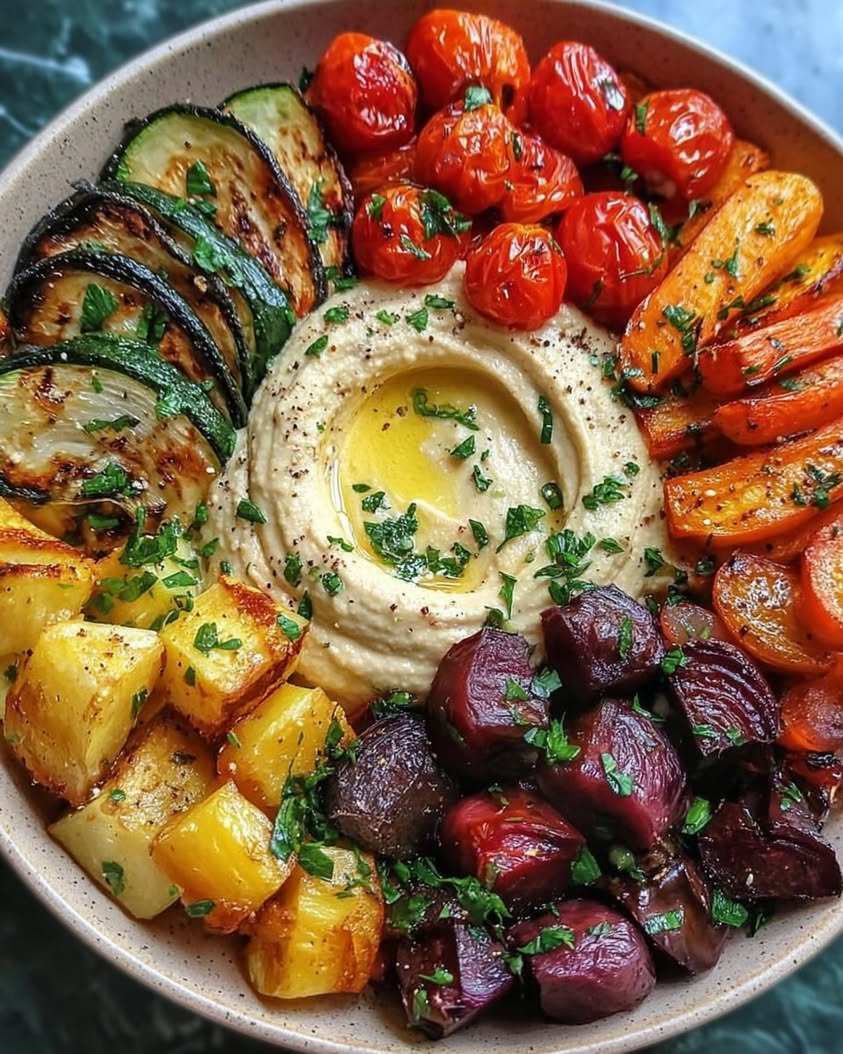
Roasted Veggie and Hummus Bowl Recipe for a Healthy Lunch
You will absolutely love this Roasted Veggie and Hummus Bowl Recipe for a Healthy Lunch. It brings together the earthy sweetness of oven-roasted vegetables with the creamy, tangy richness of homemade hummus. As you take your first bite, the caramelized edges of the veggies provide a delightful crunch, while the smooth hummus melts on your tongue. The combination of warm roasted zucchini, bell peppers, and sweet potatoes creates a symphony of flavors that feels both comforting and fresh. This bowl is not just a meal; it is an experience that satisfies your cravings for something hearty yet wholesome.
Imagine opening your lunch box and seeing a vibrant array of colors. The deep orange of the sweet potatoes, the bright red of the bell peppers, and the verdant green of the zucchini all come together in a beautiful presentation. The aroma of roasted garlic and paprika fills the air, making your mouth water before you even take a bite. This Roasted Veggie and Hummus Bowl Recipe for a Healthy Lunch is designed to be your go-to meal prep solution. It is incredibly versatile, allowing you to swap in seasonal vegetables or your favorite store-bought hummus if you are short on time.
Furthermore, this recipe is a powerhouse of nutrition. It is packed with fiber from the vegetables and plant-based protein from the chickpeas in the hummus. You will feel energized and full for hours after eating. The best part is that this bowl comes together with simple, everyday ingredients. You do not need any fancy kitchen gadgets or exotic spices. Just a sheet pan, a food processor, and a little bit of your time. Let us dive into why this Roasted Veggie and Hummus Bowl Recipe for a Healthy Lunch deserves a permanent spot in your weekly rotation.
Quick Recipe Highlights
- Flavor Profile: This bowl offers a beautiful balance of savory, sweet, and smoky flavors. The roasted vegetables develop a natural sweetness, which is perfectly offset by the tangy lemon juice in the hummus. A hint of smoked paprika adds a subtle earthy warmth.
- Texture: You will experience a wonderful contrast of textures in every spoonful. The roasted vegetables have a tender interior with slightly crispy, caramelized edges. The hummus is silky smooth and creamy, while a sprinkle of toasted pine nuts or seeds adds a satisfying crunch.
- Aroma: The scent of roasting vegetables is incredibly inviting. Sweet potatoes and onions caramelize, releasing a sweet and savory fragrance. The garlic in the hummus and the warm spices mingle together, creating an aroma that promises comfort and satisfaction.
- Visual Appeal: This bowl is a feast for the eyes. The bright, rich colors of the roasted vegetables stand out against the pale, creamy hummus. A drizzle of olive oil and a sprinkle of fresh parsley or cilantro add a final touch of elegance.
- Skill Level Needed: This recipe is perfect for cooks of all skill levels. If you can chop vegetables and press a button on a food processor, you can make this bowl. It is a very forgiving recipe that is hard to mess up.
- Special Equipment: You will need a large baking sheet for roasting the vegetables and a food processor or high-speed blender for the hummus. A sharp chef’s knife and a cutting board are essential for prep.
Recipe Overview
- Difficulty Level: We rate this recipe as Easy. The techniques are straightforward, involving basic chopping, roasting, and blending. There is no precise timing required, and you can easily adjust the seasonings to your taste. Even a beginner cook will feel confident making this Roasted Veggie and Hummus Bowl Recipe for a Healthy Lunch.
- Category: This dish fits perfectly into the lunch, dinner, or meal prep category. It is a complete bowl meal that includes vegetables, protein, and healthy fats. You can also serve it as a hearty side dish or a light main course.
- Cuisine: While inspired by modern Mediterranean and Middle Eastern flavors, this bowl is a fusion creation. The technique of roasting vegetables is universal, but the combination with hummus and warm spices like cumin and paprika gives it a distinct Mediterranean flair. It is a global comfort food.
- Cost: This is a very budget-friendly recipe. Chickpeas, vegetables, and basic pantry staples are all inexpensive. A batch of homemade hummus costs a fraction of store-bought options. You can easily feed a family of four for under ten dollars.
- Season: This recipe shines in the late summer and fall when vegetables like zucchini, bell peppers, and sweet potatoes are at their peak. However, it is incredibly adaptable for any season. Use butternut squash in winter or asparagus in the spring.
- Occasion: This bowl is perfect for a casual weekday lunch, a healthy dinner after a long day, or a potluck gathering. It travels well in a container, making it ideal for office lunches or picnics. It is a crowd-pleaser that appeals to vegetarians and meat-eaters alike.
Why You Will Love This Recipe
The taste and texture appeal of this bowl is simply unmatched. The roasting process does something magical to vegetables. It concentrates their natural sugars, giving them a deep, caramelized sweetness that you cannot achieve with steaming or boiling. Each bite offers a satisfying chew, a burst of flavor, and a comforting warmth. The hummus provides a cool, creamy counterpoint that brings everything together. It is a flavor combination that feels both familiar and exciting, a true testament to simple, high-quality ingredients.
Convenience is a major reason why this Roasted Veggie and Hummus Bowl Recipe for a Healthy Lunch will become a staple in your home. The entire meal comes together in under an hour, with most of that time being hands-off roasting. You can easily double the recipe to have lunches ready for the whole week. The hummus keeps beautifully in the fridge, and the roasted vegetables reheat quickly. This recipe eliminates the stress of deciding what to eat for lunch, providing a delicious and healthy option that is always ready to go.
From a nutritional standpoint, this bowl is a winner. It is loaded with dietary fiber from the chickpeas and vegetables, which promotes healthy digestion and keeps you feeling full. The healthy fats from the olive oil and tahini support heart health and help your body absorb fat-soluble vitamins. You get a solid dose of plant-based protein from the chickpeas, which is crucial for muscle repair and energy levels. This is a balanced meal that nourishes your body without weighing you down.
This bowl also has incredible social and entertaining value. It is a fantastic dish to serve at a casual get-together. You can set up a bowl bar with different toppings, allowing guests to customize their meals. Offer options like feta cheese, pickled onions, fresh herbs, or a sprinkle of za’atar. It is an interactive and fun way to share a meal. People love the beautiful presentation and the chance to build their own perfect bowl, making any meal feel special and festive.
Finally, the cost-effectiveness and accessibility of this recipe are unbeatable. All the ingredients are widely available at any grocery store. You do not need expensive exotic ingredients. A bag of chickpeas costs pennies, and a few root vegetables are incredibly affordable. This Roasted Veggie and Hummus Bowl Recipe for a Healthy Lunch proves that eating healthy does not have to be expensive or complicated. It is a testament to how delicious and satisfying simple, whole foods can be when prepared with care.
Historical Background and Cultural Significance
The concept of combining roasted vegetables with a legume-based dip is deeply rooted in the culinary traditions of the Middle East and the Mediterranean region. Hummus itself, a creamy blend of chickpeas, tahini, lemon, and garlic, has been a staple food for centuries. Its origins are fiercely debated, with countries like Lebanon, Israel, and Palestine all claiming it as their own. Regardless of its exact birthplace, hummus has been a source of nourishment and community for generations, often served as part of a larger meze spread alongside fresh vegetables, pickles, and warm pita bread.
In many cultures, the act of roasting vegetables is a foundational cooking technique. The dry heat of an oven or an open fire transforms simple produce into something deeply flavorful and satisfying. In the Mediterranean, vegetables like eggplant, peppers, and tomatoes are often charred over a flame or roasted until their skins blister, creating the base for dishes like baba ganoush or roasted pepper salads. This method of cooking connects us to ancient traditions of using fire to enhance natural flavors, a practice that predates recorded history.
The evolution of the bowl meal, which combines grains, vegetables, and a protein into a single dish, is a more modern phenomenon. It gained popularity in the West as a convenient and healthy way to eat. The Roasted Veggie and Hummus Bowl is a perfect example of this trend. It takes the ancient flavors of Mediterranean hummus and roasted vegetables and packages them into a practical, Western-friendly format. This bowl represents a beautiful fusion of old-world culinary wisdom and modern meal-prep convenience.
Regional variations of this concept are endless. In North Africa, you might find a bowl with harissa-roasted vegetables and a spiced chickpea stew. In Greece, the hummus might be replaced with a thick tzatziki, and the vegetables would be drizzled with olive oil and oregano. In Turkey, you might see a bowl featuring roasted eggplant with a garlic yogurt sauce. This recipe is a blank canvas, inviting you to explore different spice blends, vegetable combinations, and dips from around the world. It is a celebration of global flavors, all in one bowl.
Ingredient Deep Dive
Chickpeas (Garbanzo Beans) are the heart of this hummus and have a rich cultural history. They have been cultivated in the Middle East for over 7,000 years. They are a symbol of sustenance and simplicity. Nutritionally, they are a powerhouse, packed with protein, fiber, iron, and folate. When selecting chickpeas, you can use dried beans you cook yourself, but canned chickpeas are a wonderful convenience item. Look for BPA-free cans and rinse them well to reduce sodium. Store unopened cans in a cool, dark place. For substitutions, you can use white beans like cannellini for a different flavor, but the texture will be slightly less creamy.
Tahini is a paste made from toasted, ground sesame seeds. It is a crucial ingredient in authentic hummus. Sesame seeds are one of the oldest oilseed crops known to humanity, with a history dating back to 1600 BCE. Tahini provides a rich, nutty flavor and a smooth, pourable consistency. It loads the hummus with healthy fats, calcium, and antioxidants. When buying tahini, look for a brand that is well-stirred, as the oil can separate. Store it in the refrigerator after opening to prevent rancidity. If you do not have tahini, you can use a bit of Greek yogurt (for creaminess) or a tablespoon of toasted sesame oil mixed with a little olive oil, but the flavor will change.
Sweet Potatoes are the star vegetable in this bowl. They are native to Central and South America and have been a dietary staple for thousands of years. They are incredibly rich in beta-carotene, which your body converts into vitamin A. They also provide vitamin C, potassium, and fiber. For this Roasted Veggie and Hummus Bowl Recipe for a Healthy Lunch, select firm, unblemished sweet potatoes that feel heavy for their size. Store them in a cool, dark, and well-ventilated place, away from onions. You can substitute sweet potatoes with butternut squash, carrots, or regular potatoes, though the cooking time may vary slightly.
Zucchini and Bell Peppers add color, texture, and moisture to the bowl. Zucchini is a summer squash with a very mild flavor, making it a perfect canvas for roasting spices. Bell peppers are packed with vitamin C and add a sweet, juicy crunch. When selecting these, look for firm vegetables with bright, shiny skins. Store them in the crisper drawer of your refrigerator. For a different flavor profile, you can substitute zucchini with eggplant and bell peppers with chunks of red onion or fennel. The key is to cut them into similar-sized pieces to ensure even roasting.
Common Mistakes to Avoid
- Overcrowding the pan. If you pile too many vegetables on your baking sheet, they will steam instead of roast. This prevents caramelization and leads to soggy veggies. Use a large pan and give them space.
- Not drying the chickpeas. For the hummus, wet chickpeas will make it watery and thin. After rinsing canned chickpeas, drain them very well and pat them dry with a clean towel. For an even creamier hummus, peel the skins off the chickpeas first.
- Under-seasoning the vegetables. Roasted vegetables need a generous amount of salt and oil to develop their best flavor. Do not be shy. Toss them well with spices, salt, and a good glug of olive oil before baking.
- Using cold tahini. Cold tahini is thick and difficult to mix. It can cause your hummus to seize up and become grainy. Let your tahini come to room temperature before you start blending the hummus.
- Skipping the ice. Adding an ice cube to your hummus while it blends is a chef’s secret. It helps create an incredibly light and airy texture. It prevents the hummus from becoming too thick or heavy.
- Not tasting and adjusting. You must taste your hummus and roasted vegetables before serving. The flavor of tahini and lemon can vary. Add more salt, lemon juice, or garlic until the balance tastes perfect to you.
- Burning the garlic. If you add whole garlic cloves to the baking sheet, they can burn easily and become bitter. Either wrap them in foil with a little oil or add them halfway through the roasting time.
- Cutting vegetables unevenly. If your vegetable pieces are different sizes, some will burn while others remain undercooked. Take the time to cut everything into uniform, bite-sized cubes for even cooking.
Essential Techniques
Roasting Vegetables for Caramelization is the most important technique in this recipe. The goal is to get beautiful, brown, caramelized edges on the vegetables. This happens when the natural sugars in the vegetables are exposed to high heat. To master this, you must preheat your oven to 425F (220C) and use a heavy-duty sheet pan. Spread the vegetables in a single layer without overlapping. Do not move them around while they cook; let them sit undisturbed for the first 20 minutes. You will know they are ready when they are tender with golden-brown spots and a slightly shriveled appearance.
Making Ultra-Smooth Hummus relies on a few key steps. First, you must process the tahini and lemon juice together until the mixture becomes pale and thick. This step is called emulsifying. It helps the hummus achieve a light, fluffy texture. Then, add the garlic and a pinch of salt. Process again. Finally, add the chickpeas and an ice cube. Blend for a full 3-4 minutes, scraping down the sides as needed. The result should be a hummus that is silky smooth and almost pourable. A common pitfall is not blending long enough; patience is key here.
Properly Tempering the Hummus is a subtle but crucial technique. After you blend the hummus, it will be very thick. To achieve the perfect consistency, you need to slowly drizzle in cold water and a bit of extra-virgin olive oil while the processor is running. Add just enough until the hummus is smooth but holds its shape on a spoon. This step allows you to control the texture precisely. A visual cue for success is when the hummus forms a soft ribbon when you lift up the blade. Stop adding liquid when it looks glossy and smooth.
Layering the Bowl for Presentation makes your meal look restaurant-quality. Start by spreading a generous base of hummus in the bottom of your serving bowl. Use the back of a spoon to create a well or a swirl in the center. Then, pile the warm roasted vegetables on top, arranging them neatly but not too perfectly. This creates a beautiful contrast of colors and textures. Finally, drizzle the entire bowl with a little more olive oil and sprinkle with fresh herbs, salt, and pepper. This architecture ensures you get a bit of everything in every bite.
Pro Tips for Perfect Roasted Veggie and Hummus Bowl
- Always preheat your baking sheet in the oven for 5 minutes before adding the vegetables. This gives them an immediate blast of heat, ensuring they start caramelizing right away.
- Do not peel the chickpeas for the hummus unless you are aiming for an ultra-silky texture. Leaving the skins on adds valuable fiber and helps the hummus hold its shape.
- For extra savory depth, add a pinch of smoked paprika and a tiny pinch of cayenne pepper to the hummus. It adds a subtle warmth without being spicy.
- Cool the roasted vegetables slightly before piling them onto the hummus. If they are too hot, they can cause the hummus to become watery and separate.
- Toast your pine nuts or seeds in a dry skillet over medium heat for just 2-3 minutes. Watch them closely; they burn quickly. This step adds a wonderful nutty flavor and crunch.
- For the best flavor, make the hummus a day ahead of time. The flavors meld and deepen overnight in the refrigerator, creating a much more complex and delicious result.
- If you are short on time, you can use a high-quality store-bought hummus. Look for one with simple ingredients like olive oil, tahini, and lemon. It will still be delicious.
- Season the vegetables with a touch of balsamic vinegar or maple syrup before roasting. This helps accelerate the caramelization process and adds a subtle sweet-tangy flavor.
Variations and Adaptations
Regional Variations can transport your bowl to different parts of the world. Add a Mediterranean twist by topping the bowl with crumbled feta cheese, Kalamata olives, and a sprinkle of dried oregano. For a Middle Eastern flavor, use a spice blend of za’atar on the vegetables and serve with pickled turnips. An Indian-inspired version would involve roasting the vegetables with garam masala and turmeric, then serving them over a bed of spiced red lentil dal instead of hummus. Each variation offers a new and exciting flavor journey.
Seasonal Adaptations ensure you always use the freshest produce. In the spring, use asparagus spears, snap peas, and baby potatoes. In the summer, incorporate cherry tomatoes, eggplant, and corn kernels. For fall and winter, substitute with butternut squash, Brussels sprouts, and parsnips. Remember to adjust the roasting time based on the density of the vegetable. Hearty root vegetables take longer than tender asparagus. This Roasted Veggie and Hummus Bowl Recipe for a Healthy Lunch is a perfect vehicle for whatever is in season at your local market.
Dietary Modifications are easy to accommodate. To make this bowl gluten-free, simply ensure your hummus does not contain any wheat-based additives and serve it without pita bread. It is naturally dairy-free. For a lower-carb option, reduce the amount of sweet potatoes and add more zucchini, bell peppers, and leafy greens like kale. To increase the protein, top the bowl with grilled chicken, roasted tofu, or a hard-boiled egg. The base recipe is so versatile that it can fit into almost any dietary lifestyle.
Serving and Presentation Guide
Plating Techniques can elevate this simple bowl into a work of art. Use a wide, shallow bowl to show off the ingredients. As mentioned, start with a generous layer of hummus. Create a swirl with the back of your spoon. Pile the roasted vegetables in the center, letting some tumble over the edge of the hummus. Finally, drizzle with a high-quality extra-virgin olive oil and a squeeze of fresh lemon juice. The oil should pool nicely in the swirl of the hummus, creating a shiny, inviting finish.
Garnishing Ideas add the final touch of flavor and flair. A sprinkle of fresh parsley or cilantro adds a pop of green and a fresh, herbaceous note. Toasted pine nuts or sliced almonds provide a welcome crunch. A dash of smoked paprika or sumac on the hummus adds a beautiful color and a hint of spice. Pickled red onions add a tangy, acidic bite that cuts through the richness. You can even add a few whole chickpeas that have been pan-fried in a little oil and salt for an extra savory garnish.
Traditional Accompaniments make this a full meal. Warm, soft pita bread is the classic partner for hummus and vegetables. You can also serve it with a side of tabbouleh salad or a simple cucumber and tomato salad. For a heartier meal, add a side of fluffy quinoa or brown rice. A simple bowl of olives and some fresh, crunchy vegetables like carrot sticks and radish slices complete the Mediterranean feast. These sides turn your bowl into a true spread.
Wine and Beverage Pairing
Wine Pairings for this bowl should be light and refreshing. A crisp, dry white wine like a Sauvignon Blanc or a Pinot Grigio works beautifully. The high acidity in these wines cuts through the creaminess of the hummus and complements the roasted vegetables. A light, chilled Rosé is another excellent choice, as its fruity notes pair well with the sweetness of the root vegetables. If you prefer red, reach for a low-tannin, light-bodied red like a Beaujolais or a very chilled Pinot Noir. Avoid heavy, oaky wines.
Non-Alcoholic Alternatives are equally delicious. A sparkling water with a squeeze of fresh lemon or lime is a perfect palate cleanser. A classic mint lemonade is incredibly refreshing and echoes the Mediterranean flavors. For a warmer option, a cup of unsweetened iced green tea with a hint of mint is lovely. If you want something more complex, try a kombucha with a ginger or turmeric flavor. These beverages will not overpower the delicate flavors of your Roasted Veggie and Hummus Bowl Recipe for a Healthy Lunch.
Storage and Shelf Life
Storage Methods are crucial to keeping your bowl fresh. Store the hummus and the roasted vegetables in separate airtight containers. The hummus will stay fresh in the refrigerator for up to 5 days. The roasted vegetables will last for 4-5 days. Keep them in the main part of the fridge, not the door, to maintain a consistent temperature. If you have already assembled a bowl, store it covered in the refrigerator for up to 24 hours, but the texture of the hummus may change slightly.
Reheating Instructions are simple. To enjoy the bowl hot, reheat the vegetables separately. You can spread them on a baking sheet and warm them in a 350F oven for 5-7 minutes or microwave them for 1-2 minutes. Do not microwave the hummus, as it will become oily and separate. Instead, let it sit at room temperature for 15 minutes before serving to take the chill off. You can also assemble the bowl cold for a delicious and refreshing salad-like lunch. Both methods are delightful.
Make Ahead Strategies
Prep Timeline is your best friend for this recipe. Start by making the hummus up to 3 days in advance. This is the most time-consuming part. On the day you plan to serve the bowl, you can simply roast the vegetables. You can also chop all the raw vegetables up to 2 days ahead of time. Store them in a sealed bag in the refrigerator. This way, you only need to toss them in oil and spices before roasting. This reduces your active cooking time to just a few minutes.
Quality Impact Assessment is important for make-ahead planning. The hummus actually improves in flavor after a day in the fridge. The roasted vegetables are best on the day they are made. They will lose a bit of their crispness the next day, but they are still delicious. If you are making this for a week of lunches, roast a big batch of vegetables and store them. They will reheat wonderfully. The key is to avoid mixing the hot vegetables with the cold hummus until you are ready to eat.
Scaling Instructions
Halving the Recipe is straightforward. Simply cut all the ingredient amounts in half. Use a single medium sweet potato, one zucchini, and one bell pepper. For the hummus, use half a can of chickpeas. The roasting time will likely be shorter because the pan will be less crowded, so keep a close eye on the vegetables. Start checking for doneness at 20 minutes. All the other steps remain the same, and you will have 2 servings.
Doubling or Tripling is very easy but requires some equipment adjustments. If you double the recipe, you will likely need two baking sheets to avoid overcrowding. Rotate the pans halfway through the roasting time for even cooking. For the hummus, a standard food processor can handle a double batch, but a triple batch might strain the motor. You can make the hummus in two separate batches to ensure a smooth result. All cooking times will remain similar, though a full oven may take slightly longer to recover heat.
Nutritional Deep Dive
Macro Breakdown of this bowl is very balanced. A standard serving provides about 35-40 grams of carbohydrates, primarily from the sweet potatoes and chickpeas. These are complex carbohydrates that provide sustained energy. You will get about 15 grams of plant-based protein from the chickpeas and a small amount from the vegetables. The healthy fats from the olive oil and tahini account for roughly 20-25 grams per serving. This makes for a satisfying and energizing meal with a good balance of macros.
Micro nutrient Analysis reveals a treasure trove of vitamins and minerals. Sweet potatoes are a massive source of Vitamin A, crucial for eye health and immune function. Bell peppers provide a hefty dose of Vitamin C. Chickpeas are rich in iron, folate, and magnesium. Tahini contributes calcium and phosphorus for bone health. The olive oil provides polyphenols, which are powerful antioxidants. This single bowl delivers an impressive amount of your daily nutrient needs, making it a truly healthy lunch option.
Dietary Adaptations
Gluten-Free adaptation is already achieved in this recipe. The ingredients contain no wheat, barley, or rye. Just ensure that your tahini and any spice blends are certified gluten-free to avoid cross-contamination. This bowl is naturally safe for those with celiac disease or gluten sensitivity.
Vegan adaptation is also already achieved. This bowl is entirely plant-based. It contains no animal products of any kind. It is a perfect meal for vegans looking for a delicious, protein-packed, and satisfying lunch or dinner option.
Low-Carb adaptation requires a simple swap. Replace the sweet potatoes with lower-carb vegetables like cauliflower florets, broccoli, or extra zucchini. You can also add some roasted mushrooms for an umami flavor. You might also want to reduce the amount of hummus slightly, as chickpeas do contain carbohydrates. This version will still be very filling and flavorful.
Troubleshooting Guide
Texture Issues with hummus are common. If your hummus is too thick, blend in cold water one tablespoon at a time until it reaches the desired consistency. If it is too thin, you may have added too much liquid or the chickpeas were too wet. To fix this, blend in a few more chickpeas or a tablespoon of tahini. For grainy hummus, it was likely under-blended or the tahini was cold. Blend for a full 4 minutes next time and use room temperature tahini.
Flavor Balance issues can be easily fixed. If the hummus is too bitter, add a pinch of sugar or a little more lemon juice to balance it. If it is too salty, add a raw, peeled potato chunk and blend it in; the potato will absorb some of the salt. If the bowl is too bland, season the vegetables more generously with salt and spices before roasting. A final drizzle of good olive oil and a squeeze of lemon juice over the assembled bowl can brighten everything up.
Frequently Asked Questions
Can I use canned chickpeas for this Roasted Veggie and Hummus Bowl Recipe for a Healthy Lunch?
Yes, absolutely. Canned chickpeas are a perfect convenience item. Just be sure to rinse them well in a colander to remove excess sodium and the starchy liquid. Drain them very well and pat them dry with a paper towel to get the best texture for your hummus.
How can I make the hummus creamier?
The key to creamy hummus is blending it for a long time and adding an ice cube. Process the tahini and lemon juice first. Then, add the chickpeas and an ice cube. Blend for at least 3-4 minutes until it is very smooth and almost fluffy.
Can I use other vegetables?
Yes, you can use almost any vegetable you like. Cauliflower, broccoli, eggplant, asparagus, and cherry tomatoes are all excellent options. Just be mindful of cooking times. Harder vegetables like carrots or potatoes will need to be cut smaller or parboiled before roasting.
What can I use instead of tahini?
If you do not have tahini, you can substitute it with a bit of Greek yogurt for creaminess, though this is not vegan. You can also use a tablespoon of toasted sesame oil or a few tablespoons of sunflower seed butter for a nut-free alternative.
How long do the roasted vegetables last?
The roasted vegetables will last in an airtight container in the refrigerator for up to 5 days. They will lose a bit of their initial crispness but will still be delicious. Reheat them in the oven or microwave before serving.
Can I freeze this bowl?
You can freeze the hummus for up to 3 months, but the texture may change slightly upon thawing. The roasted vegetables do not freeze well, as they become mushy. It is best to make the components fresh or within a few days of serving.
Is this bowl high in protein?
This bowl contains a good amount of plant-based protein, around 15 grams per serving, primarily from the chickpeas. While it is not a protein powerhouse, it is a very balanced meal. You can boost the protein by adding cooked chicken, tofu, or a hard-boiled egg.
What spices work best on the vegetables?
A combination of cumin, smoked paprika, and garlic powder works beautifully. You can also use za’atar, Italian seasoning, or a simple mix of salt, pepper, and dried oregano. The spices are very flexible based on your taste.
Can I make this bowl grain-free?
Yes, this bowl is naturally grain-free if you do not add any grains like quinoa or rice. The vegetables and hummus are the main components, so skipping the grains is no problem at all.
How do I prevent the vegetables from being soggy?
The most important tip is to not overcrowd the baking sheet. Spread the vegetables in a single layer with space between them. Also, ensure your oven is fully preheated to 425F. A hot oven creates steam quickly, which helps with caramelization instead of steaming.
Additional Resources
Related Recipes that pair perfectly with this bowl include a simple Lentil Soup, a fresh Greek Salad, or some quick and easy Garlic Naan. For dessert, try a light and refreshing Lemon Olive Oil Cake. These recipes all share a similar flavor profile and make for a complete, delicious meal plan for the week.
Technique Guides on our site can help you master the art of roasting. We have a comprehensive guide on how to perfectly roast any vegetable, with tips on seasoning, temperature, and timing. There is also a guide on making the creamiest hummus from scratch, which dives deeper into the science behind emulsifying tahini.
Ingredient Information can help you shop smarter. We have a detailed guide on the different varieties of sweet potatoes and how to choose the best one. There is also a breakdown of the different types of olive oil and which ones are best for cooking versus drizzling over finished dishes. This knowledge will elevate all your cooking.
Equipment Recommendations are important for consistent results. A heavy-duty, rimmed baking sheet is a must for good roasting. A high-speed blender or a large food processor is essential for silky hummus. We have reviews of our favorite kitchen tools that we trust to use in our own homes, ensuring you get the best results every time.
Seasonal Variations for this bowl change with the calendar. In the fall, we love using roasted but Print
Roasted Veggie and Hummus Bowl
- Total Time: 45 minutes
- Yield: 4
Description
A hearty and healthy bowl with roasted vegetables, creamy hummus, and a tangy tahini drizzle perfect for a nutritious meal.
Ingredients
- 1 large sweet potato, cubed
- 1 red bell pepper, sliced
- 1 zucchini, sliced
- 1 red onion, sliced
- 2 tablespoons olive oil
- 1 teaspoon smoked paprika
- 1/2 teaspoon salt
- 1/4 teaspoon black pepper
- 1 cup cooked quinoa
- 1 cup hummus
- 2 tablespoons tahini
- 1 tablespoon lemon juice
- 2 tablespoons water
- Fresh parsley for garnish
Instructions
- Preheat oven to 400°F (200°C). Line a baking sheet with parchment paper.
- Toss sweet potato, bell pepper, zucchini, and onion with olive oil, smoked paprika, salt, and pepper. Spread evenly on the baking sheet.
- Roast for 25-30 minutes, stirring halfway, until vegetables are tender and slightly charred.
- Meanwhile, prepare the tahini drizzle by whisking together tahini, lemon juice, and water until smooth. Add more water if needed for desired consistency.
- To assemble: Divide quinoa between bowls, top with roasted vegetables, a generous dollop of hummus, and drizzle with tahini sauce.
- Garnish with fresh parsley and serve warm or at room temperature.
Notes
You can customize the seasonings to taste. Add chickpeas or grilled chicken for extra protein.
- Prep Time: 15 minutes
- Cook Time: 30 minutes
- Method: Main
- Cuisine: American