The Ultimate Burrata Bruschetta Recipe for Easy Summer Entertaining
This Burrata Bruschetta recipe is the ultimate appetizer for summer entertaining. It combines juicy, vine-ripened tomatoes with creamy, decadent burrata cheese. The contrast between warm, crispy toasted bread and the cool, rich center is truly unforgettable. Each bite offers a burst of fresh flavors and satisfying textures. It is a dish that feels incredibly elegant without demanding hours in the kitchen. The simplicity of the ingredients allows their quality to shine through completely. This is a recipe you will turn to again and again for gatherings.
The magic of this Burrata Bruschetta recipe lies in its careful balance. Sweet cherry tomatoes are macerated with garlic, basil, and high-quality olive oil. This creates a bright and aromatic topping that perfectly complements the cheese. The bread is toasted until it is golden and crunchy, providing a sturdy base. When you cut into the burrata, the creamy stracciatella spills out, merging with the tomato juices. The result is a harmonious blend of freshness and indulgence. It is a flavor experience that defines easy summer entertaining.
This particular Burrata Bruschetta recipe is designed for maximum impact with minimal effort. You do not need any special cooking skills to pull it off successfully. The preparation is straightforward, focusing on assembling components rather than complex techniques. Because of this, you can spend more time with your guests and less time in the kitchen. The recipe highlights the beauty of seasonal produce and high-quality ingredients. It is a perfect example of how simple foods can taste extraordinary. This combination of ease and elegance makes it a winner for any occasion.
Quick Recipe Highlights
- Flavor Profile: The taste is a perfect marriage of sweet, tangy tomatoes and rich, milky cheese. The garlic and fresh basil add a fragrant, savory depth that ties everything together.
- Texture: You experience a satisfying crunch from the toasted bread, followed by the soft, squishy burst of tomatoes. Then, the creamy, almost liquid center of the burrata provides a luxurious mouthfeel.
- Aroma: The smell of toasted bread mingles with the sharp, clean aroma of fresh basil and garlic. There is also a distinct grassy, fruity note from the extra-virgin olive oil.
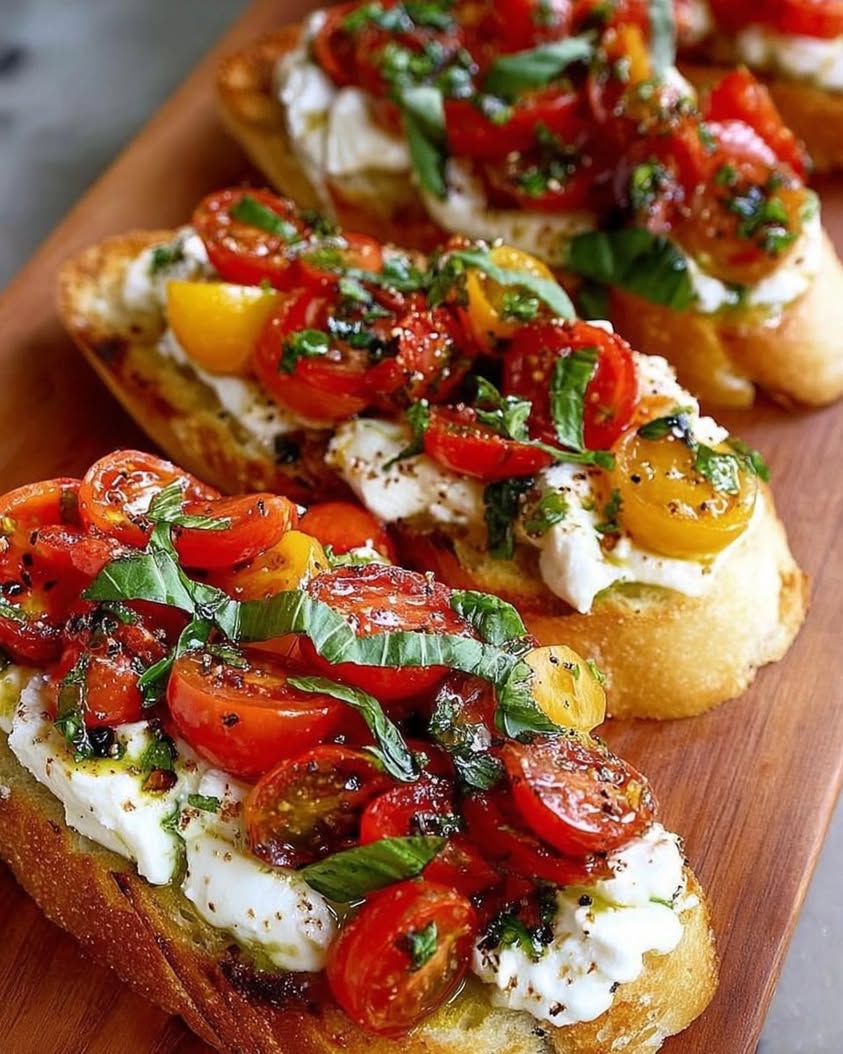
- Visual Appeal: The vibrant red of the tomatoes pops against the pristine white of the burrata. A drizzle of olive oil and a few whole basil leaves add a final touch of green elegance.
- Skill Level Needed: This recipe requires only basic knife skills for dicing tomatoes and mincing garlic. The technique is about assembly, not cooking, so even a beginner can achieve perfect results.
- Special Equipment: You will need a sharp knife, a cutting board, a mixing bowl, and a toaster or oven for the bread. No specialty gadgets are required for this simple dish.
Recipe Overview
- Difficulty Level: We classify this as an easy recipe because there are no complex cooking methods involved. The success depends entirely on the quality of your ingredients and simple preparation. You are essentially creating a composed salad on toast, which is very forgiving.
- Category: This dish is best categorized as an appetizer, starter, or antipasto. It works wonderfully as a light lunch when paired with a simple green salad. It is also a fantastic addition to a larger tapas or finger-food spread.
- Cuisine: The recipe is rooted in Italian culinary tradition, specifically from the Puglia region where burrata was born. It builds upon the classic concept of bruschetta, elevating it with a modern, creamy twist. This nod to classic Italian flavors appeals to a wide audience.
- Cost: The cost is moderate, primarily driven by the burrata cheese, which is a premium ingredient. High-quality, ripe tomatoes and a good extra-virgin olive oil also contribute to the final price. However, the cost per serving is still reasonable for a special appetizer.
- Season: This recipe is best enjoyed during the summer months, from June through September. This is when tomatoes are at their peak ripeness, offering the most intense sweet flavor and juicy texture. Using in-season produce is key to the dish’s success.
- Occasion: It is perfect for backyard barbecues, pool parties, casual dinner parties, and holiday gatherings. The recipe feels fancy enough for a celebration but is simple enough for a weeknight treat. It is guaranteed to impress your guests without causing you stress.
Why You’ll Love This Recipe
The taste and texture appeal of this Burrata Bruschetta recipe is its main draw. You get a powerful flavor combination that is both comforting and refreshing. The creamy burrata acts as a cooling counterpoint to the vibrant, acidic tomatoes. The crispy bread provides a satisfying structural element that makes it easy to eat. It is a very sensory experience that feels both sophisticated and rustic. This balance of textures and temperatures is what makes the dish so addictive.
Regarding convenience and preparation benefits, this recipe is a clear winner. You can have it on the table in under 30 minutes from start to finish. There is no stove or complicated cooking involved, which keeps cleanup to a minimum. You can also prep the tomato mixture an hour in advance to let the flavors meld. This makes it an incredibly efficient option for busy hosts who want to serve something impressive. It truly is one of the easiest ways to create a gourmet appetizer.
From a nutritional standpoint, this recipe offers several advantages when enjoyed in moderation. Tomatoes are a fantastic source of lycopene, a powerful antioxidant. The olive oil is rich in heart-healthy monounsaturated fats and vitamin E. Burrata, while indulgent, provides calcium and protein to the dish. It is a well-rounded snack that provides energy and satiety. It is a beautiful way to enjoy whole, unprocessed ingredients.
For social and entertaining value, this dish is a crowd-pleaser. Its beautiful presentation makes it an attractive centerpiece on any appetizer table. Because it is served at room temperature, you can focus on your guests without worrying about timing. It encourages sharing and conversation as people dip bread into the creamy center. The dish looks much more difficult than it actually is, which always makes a great impression. It is the perfect conversation starter for a summer party.
Finally, the cost-effectiveness and accessibility of this recipe are notable. While burrata can be a splurge, the other ingredients are very affordable and widely available. You can often find fresh burrata at local grocery stores or Italian markets. The recipe requires only a few key items, minimizing the impact on your grocery bill. It offers a high return on investment in terms of flavor and presentation for the price. It is a small luxury that feels very special.
Historical Background and Cultural Significance
The origin story of this dish is a fusion of two distinct Italian food traditions. Bruschetta dates back to ancient Rome, where farmers would toast bread over a fire. They then rubbed it with garlic and drizzled it with olive oil to test the new harvest’s flavor. Burrata, on the other hand, is a much more recent invention from the 20th century. It was created in the region of Puglia as a way to use leftover mozzarella curd. The combination of these two elements creates a modern classic.
Culturally, both components hold significant importance in Italian cuisine. Bruschetta represents the simple, rustic food culture of central Italy. It embodies the principle of using few, high-quality ingredients to create a delicious meal. Burrata is a symbol of the rich, dairy-producing traditions of Southern Italy. It is often seen as a luxurious treat, reserved for special occasions or Sunday lunches. Together, they represent a marriage of Italian culinary values.
The evolution of this recipe is a story of culinary innovation and global fusion. For decades, bruschetta was a basic antipasto, typically topped with diced tomatoes and basil. As burrata gained popularity in the late 20th century, chefs began experimenting with its application. Placing a whole ball of burrata on top of a classic bruschetta became a playful and decadent upgrade. This variation quickly spread from Italian restaurants to home kitchens around the world. It is a testament to the creativity of modern cooking.
Regional variations of this combination can be found throughout Italy and beyond. In Puglia, you might find the burrata paired with roasted peppers or arugula. In Tuscany, the bruschetta base might be rubbed with a clove of garlic for extra flavor. Some modern American versions add a balsamic glaze for sweetness and acidity. Others incorporate prosciutto for a salty, savory element. Each variation adds a new dimension while respecting the core concept.
Ingredient Deep Dive
Burrata cheese is the star of the show and holds significant cultural importance in Italian dairy. It originated in the Murgia area of Puglia in the early 20th century. The name burrata literally means buttery, which describes its rich, creamy texture. Nutritionally, it is a good source of protein and calcium, though it is high in fat. When selecting burrata, look for a firm, slightly springy pouch that feels heavy for its size. The package should be intact without any leakage of the cream inside.
To store burrata, keep it submerged in its liquid in the refrigerator. Use it within 2 to 3 days of purchase for the best flavor and texture. If you cannot find burrata, you can substitute fresh buffalo mozzarella for a similar, albeit firmer, experience. A high-quality stracciatella cheese used as a spread is another excellent alternative. The key is to find a cheese that is very fresh and mild. The creaminess is the most important characteristic to replicate.
Tomatoes are another critical ingredient, providing the acidity and juice for the topping. Culturally, the tomato has been a staple of Italian cuisine since it was imported from the Americas. They are packed with vitamin C and lycopene, a powerful antioxidant linked to heart health. For this Burrata Bruschetta recipe, choose ripe but firm cherry or grape tomatoes. Roma tomatoes are also a good choice due to their low seed content and meaty flesh. Avoid overly soft or mealy tomatoes which will create a watery topping.
When storing tomatoes, keep them at room temperature on the counter away from direct sunlight. Refrigeration destroys their flavor and texture, turning them mealy. If you need an alternative, high-quality sun-dried tomatoes packed in oil can be used. They will provide a more intense, concentrated flavor. For a different twist, roasted red peppers from a jar offer a sweet, smoky substitute. The goal is to maintain a vibrant, acidic component that balances the cheese.
Extra-virgin olive oil is the final non-negotiable ingredient for the best Burrata Bruschetta. Its history in the Mediterranean diet is ancient, dating back thousands of years to ancient Greece and Rome. Nutritionally, it is rich in monounsaturated fats and polyphenols, which are anti-inflammatory. When selecting a bottle, look for a harvest date and a dark bottle to protect from light. A good quality oil will have a fruity, peppery finish that stands out.
Store your olive oil in a cool, dark cabinet away from the stove and heat. It should be used within six months to a year for optimal flavor. If you do not have extra-virgin, you can use a good quality virgin olive oil. For a different flavor profile, you can use avocado oil, which has a high smoke point. However, you will miss the distinctive fruity notes of olive oil. Do not use regular vegetable oil as it lacks the necessary flavor complexity.
Common Mistakes to Avoid
- Using stale or low-quality bread is a common error. The bread is the foundation of the dish and needs to be sturdy enough to hold the toppings. A brittle or flavorless bread will ruin the entire experience. Always choose a high-quality, crusty loaf like ciabatta or sourdough.
- Over-toasting the bread until it is rock hard is another frequent mistake. The bread should be golden and crunchy on the outside but still soft enough to bite. If it is too hard, it will be difficult to eat and may break apart. Watch the toast closely and remove it as soon as it is lightly browned.
- Not draining the tomatoes of excess liquid before adding them to the bowl. This extra juice can make the bruschetta soggy and watery very quickly. Lightly salting them beforehand draws some of the moisture out. Drain off this liquid before adding the olive oil and basil.
- Using cold burrata straight from the refrigerator is a big mistake. The cheese becomes rubbery and loses its creamy, luxurious texture. You must let it sit at room temperature for at least 30 minutes before serving. This allows the center to become soft and spreadable.
- Adding the tomatoes too far in advance is a planning error. While you can prep them, they should only be combined with the oil and basil shortly before serving. The salt from the tomatoes will draw out water and make the topping soupy. Aim for assembly within an hour of serving.
- Not seasoning the tomato mixture sufficiently is a flavor issue. Tomatoes need salt to bring out their natural sweetness and acidity. Be generous with flaky sea salt and fresh black pepper. Tasting and adjusting the seasoning is a critical step.
- Using a poor-quality olive oil can really diminish the final dish. This is a recipe where the olive oil is a primary flavor, not just a cooking fat. A bitter or rancid oil will ruin the delicate balance of flavors. Always use a fresh, high-quality extra-virgin olive oil.
- Skipping the garlic rub on the toast is a missed opportunity for flavor. The gentle heat from the toast releases the garlic’s oils, creating a savory base note. Rub the cut clove firmly over the hot surface of the bread. It adds a subtle but important layer of flavor.
- Cutting the burrata incorrectly can ruin the presentation. You should gently tear or slice it open at the table to create a dramatic effect. Pre-cutting the cheese into pieces will cause it to lose its shape. Let guests break into the center themselves for the best experience.
- Serving the bruschetta on a flat plate without any sides can be messy. The creamy center and juices will spill out quickly. A small rimmed plate or a bowl is better for catching the delicious mess. It also makes it easier for guests to scoop up every last bit.
Essential Techniques
Toasting bread properly is a fundamental technique for this Burrata Bruschetta recipe. You want to achieve a golden-brown crust that is sturdy but not hard. Grilling or broiling the bread gives it a lovely smoky flavor and beautiful grill marks. If you use a toaster, make sure the slots are wide enough for thick slices. The key is to toast it until it is crisp on the outside but still has a slight chew inside. You can also brush the bread lightly with olive oil before toasting for extra flavor and crispiness.
Perfectly macerating the tomatoes is another critical skill for this Burrata Bruschetta recipe. You need to dice the tomatoes into even, bite-sized pieces so they release their juices uniformly. Adding a pinch of salt helps break down the cell walls and draw out moisture. Then, you let them sit for about 5 to 10 minutes before adding the other ingredients. This process creates a beautiful, flavorful juice that will soak into the bread. Be careful not to over-macerate, as the tomatoes can become too mushy.
Handling and serving burrata requires a gentle touch and some know-how. Always remove the cheese from the refrigerator 30 minutes before serving to bring it to room temperature. When you are ready to assemble, carefully remove the burrata from its liquid and pat it dry gently. Place the whole ball on top of the tomato mixture. Encourage guests to cut into the cheese themselves, which creates a beautiful, dramatic presentation. The goal is to keep the cheese intact until the moment of service.
Assembling the bruschetta is about layering textures and flavors for the best experience. Spread the macerated tomato mixture evenly over the toasted bread, leaving a small border. Then, carefully place the whole ball of burrata in the center of the bread. Drizzle a generous amount of high-quality olive oil over the top. Finally, finish with fresh basil leaves, flaky sea salt, and a crack of black pepper. This final, careful assembly ensures each bite is perfectly balanced.
Pro Tips for Perfect Burrata Bruschetta
Always use a serrated knife to cut the bread for this Burrata Bruschetta recipe. A serrated blade will slice through a crusty loaf cleanly without crushing the interior. This ensures you get a nice, even surface for toasting. It also prevents the bread from tearing unevenly.
Warm the serving plate slightly before plating the finished dish. A cold plate can chill the warm toast and the room-temperature cheese too quickly. Placing the plates in a low oven for a few minutes helps maintain the ideal temperature. This small step makes a noticeable difference in the eating experience.
For the best Burrata Bruschetta recipe, consider using a mix of tomato colors for visual appeal. Combining red, yellow, and orange cherry tomatoes creates a beautiful, vibrant topping. The different colors also offer slightly varying levels of sweetness. This adds a subtle complexity to the flavor and looks fantastic on the plate.
Do not overwork the burrata when you move it from its packaging to the bread. Handle it gently with your hands to avoid piercing the outer pouch. If you break the skin, the creamy center will leak out prematurely. A gentle scooping motion with a slotted spoon works well for a clean transfer.
Use the best balsamic vinegar you can afford for a finishing drizzle. A thick, aged balsamic glaze adds a sweet, tangy complexity that cuts through the richness. It also adds a beautiful dark swirl to the white cheese. If you do not have a glaze, reduce some regular balsamic vinegar on the stove.
For an extra layer of flavor, add a pinch of red pepper flakes to the tomato mixture. The subtle heat warms the palate and complements the creamy cheese beautifully. It does not make the dish spicy but adds a new dimension. Start with a small pinch and adjust to your taste.
When serving this Burrata Bruschetta recipe to a crowd, assemble it just before guests arrive. The bread will become soggy very quickly once it is topped with the tomatoes. You can keep the toasted bread and the tomato mixture separate until you are ready. This ensures every piece remains perfectly crunchy.
Garnish the finished dish with a few whole fresh basil leaves for a burst of color and aroma. Tearing the leaves just before adding them releases their essential oils. This adds a final, fragrant note to the finished dish. It also provides a beautiful, professional-looking finish.
Variations and Adaptations
Regional variations of this dish offer exciting new flavor profiles to explore. A classic Caprese-inspired version adds slices of fresh mozzarella and a balsamic drizzle. Another variation from the Amalfi coast incorporates lemon zest and arugula for a peppery bite. In some regions, they use a sweet, roasted red pepper spread called peperonata instead of tomatoes. These variations highlight the adaptability of the core concept.
Seasonal adaptations are a wonderful way to enjoy this dish year-round. During the fall, you can swap the tomatoes for roasted butternut squash and sage. In the winter, caramelized onions with a touch of balsamic vinegar create a warm, savory topping. Spring calls for fresh peas, mint, and lemon zest for a bright, green version. Each season offers new ingredients that pair beautifully with the creamy burrata.
Dietary modifications are easy with this Burrata Bruschetta recipe. For a gluten-free version, simply serve the burrata and tomatoes on gluten-free crackers or sturdy polenta slices. You can also serve the topping in a lettuce cup for a low-carb option. If you need a dairy-free alternative, a high-quality vegan cashew cream can be used. The key is to find a creamy, tangy substitute that mimics the texture of burrata.
Flavor variations allow you to customize the dish to your personal preferences. Adding a few slices of grilled peach or nectarine introduces a sweet, smoky element. A drizzle of honey or a sprinkle of crushed pistachios adds an unexpected crunch. For a spicier version, marinate the tomatoes with a finely diced jalapeno. The possibilities are endless based on your favorite ingredients.
Texture modifications can change the entire experience of this Burrata Bruschetta recipe. For a crunchier topping, add toasted pine nuts or chopped walnuts. You can also swap the fresh tomatoes for a roasted tomato jam for a deeper, more concentrated flavor. Serving the mixture on a crostini or a cracker creates a different, more portable texture. Experimenting with the base and toppings keeps the dish fresh.
Presentation alternatives can transform the dish for different occasions. Instead of individual toasts, create a large bread bowl or a platter with the mixture on top. You can also serve the burrata, tomatoes, and toasted bread separately as a build-your-own station. In a more modern presentation, you can slice the burrata into rounds and layer it on the toast. Each presentation style offers a unique visual and interactive experience.
Serving and Presentation Guide
Plating techniques for this Burrata Bruschetta recipe should focus on height and drama. Place the toasted bread on a warmed plate or a wooden board. Pile the tomato mixture generously on the center of the bread. Then, carefully place the whole ball of burrata on top of the pile. This creates a beautiful, domed structure that looks incredibly appetizing.
Garnishing ideas are simple but crucial for a professional finish. A fresh basil leaf placed on top of the burrata adds a pop of green color. A drizzle of balsamic glaze in a zigzag pattern over the plate adds visual interest. A final sprinkle of flaky sea salt and cracked black pepper provides texture and flavor. The garnishes should enhance, not overwhelm, the main components.
Traditional accompaniments make this dish a complete meal or snack. A simple arugula salad with a lemon vinaigrette provides a peppery contrast. Thin, crispy breadsticks or grissini add a fun, dippable element. A bowl of marinated olives offers a salty, briny counterpoint to the creamy cheese. These side dishes round out the appetizer nicely.
Modern serving suggestions make this Burrata Bruschetta recipe more interactive. You can set up a burrata bar with different toppings and breads for guests to choose from. Offer options like roasted peppers, pesto, sun-dried tomatoes, and prosciutto. This allows everyone to customize their own bruschetta according to preference. It is a fun and memorable way to serve this dish.
Temperature considerations are key for the best eating experience. The bread should be served warm or at room temperature, not cold. The burrata should be at room temperature, not chilled. The tomato mixture should be at room temperature as well. This way, all the flavors are at their peak and meld together perfectly.
Portion control tips are helpful for serving a crowd. A single serving should consist of one large slice or two smaller slices of bread. As a starter, plan for one serving per person. As a main course for a light lunch, you might serve two. Providing the bread and toppings separately allows guests to control their own portion size.
Wine and Beverage Pairing
Wine pairings for this Burrata Bruschetta recipe should complement its creamy texture and acidic tomatoes. A crisp, unoaked Italian white wine like Pinot Grigio is a classic choice. The high acidity of the wine cuts through the richness of the cheese beautifully. A Vermentino from Sardinia also works well with its herbaceous notes. Both wines enhance the freshness of the dish without overpowering it.
For those who prefer red wine, a light-bodied, chilled red is an excellent option. A young Dolcetto from Piedmont offers low tannins and juicy berry flavors. A Lambrusco, a slightly fizzy red wine from Emilia-Romagna, is another fantastic choice. Its bubbles and acidity help cleanse the palate between bites. These reds provide a fruity counterpoint without being too heavy.
Non-alcoholic alternatives are plentiful and can be just as delightful. A sparkling San Pellegrino with a squeeze of lemon is refreshing and cleanses the palate. A high-quality, cloudy apple juice offers a sweet-tart balance that works well. An iced herbal tea, like lemon verbena or mint, provides a clean, aromatic finish. These options ensure everyone at the table has a great pairing.
Coffee and tea pairings are less traditional but can be very successful for a brunch setting. A mild, brewed iced coffee with a touch of cream can complement the richness of the cheese. An unsweetened iced green tea offers a grassy, vegetal note that matches the basil. A sparkling water with a splash of balsamic vinegar creates a unique, palate-cleansing drink. These alternatives expand the possibilities for service.
Temperature considerations are vital for any beverage pairing with this dish. White wines and sparkling wines should be served well-chilled but not ice-cold. Red wines like Lambrusco are best served slightly chilled, around 50 to 55 degrees Fahrenheit. Non-alcoholic drinks should be served over ice to maintain their refreshing quality. The right temperature enhances the overall dining experience.
Serving suggestions for beverages should be as thoughtful as the food presentation. Use stemless wine glasses for a casual, modern look. Provide a small pitcher of chilled water infused with lemon and herbs. For a party, set up a self-serve beverage station with the paired options. This makes the experience more interactive and allows guests to choose their preference.
Storage and Shelf Life
Storage methods for the individual components of this Burrata Bruschetta recipe are specific. The leftover burrata should be returned to its liquid and sealed tightly in its original container. It will last for 1 to 2 days in the refrigerator. The tomato mixture can be stored in an airtight container in the fridge for up to 2 days. Storing them separately is crucial to prevent sogginess.
Temperature requirements are important for maintaining quality and safety. Burrata must always be kept refrigerated at 35 to 40 degrees Fahrenheit. It should never sit out at room temperature for more than two hours. The tomato mixture can also be left out for a similar period. After that, any leftovers should be promptly refrigerated to prevent bacterial growth.
Container recommendations for storage focus on airtight and moisture-free conditions. Use glass or BPA-free plastic containers with tight-fitting lids. For the burrata, keep it submerged in its brine to prevent drying out. For the tomato topping, use a shallow container to prevent the tomatoes from crushing under their own weight. Proper containers preserve the texture and flavor of each element.
Signs of spoilage are easy to identify for both components of this Burrata Bruschetta recipe. The burrata will have a sour, off-putting smell if it has gone bad. The texture will become slimy or grainy, indicating spoilage. The tomato mixture will develop a cloudy liquid and a musty smell. Any signs of mold on either component mean you should discard it immediately.
Reheating instructions are only relevant for the bread component of this dish. The bread can be reheated in a toaster or a low oven at 300 degrees Fahrenheit for a few minutes. This will restore its crispiness and warmth. You should never reheat the burrata or the tomato mixture. They are best served at room temperature or chilled.
Freezing guidelines suggest that you should not freeze any component of this Burrata Bruschetta recipe. The burrata will become watery and grainy when thawed, losing its luxurious texture. The tomatoes will also break down and become mushy upon freezing. The bread will become stale and dry. This dish is best made fresh for optimal quality.
Make Ahead Strategies
Prep timeline for this Burrata Bruschetta recipe is designed for efficiency and freshness. Up to two hours before serving, you can dice the tomatoes and mince the garlic. Store them separately in the refrigerator until you are ready to combine them. You can also toast the bread up to one hour ahead of time. Keep it in a low oven to stay warm and crisp.
Storage between steps is crucial for maintaining the quality of the components. The prepped tomatoes and garlic should be stored in separate airtight containers. The toasted bread can be stored in a paper bag, which will allow moisture to escape. Do not combine the ingredients until just before serving. Following this timeline ensures the best texture and flavor.
Quality impact assessment is important when making this Burrata Bruschetta recipe ahead of time. The tomato topping will lose some of its vibrant texture if made too far in advance. The bread will lose its crunchiness if exposed to moisture. The burrata is best served fresh from the refrigerator and allowed to come to room temperature. The overall quality is highest when the dish is assembled close to serving time.
Assembly tips for make-ahead success focus on keeping components separate. Arrange the toasted bread on a serving platter, but do not add the topping. Keep the tomato mixture in a bowl, covered, at room temperature. Keep the burrata in its packaging in the fridge until the last minute. When you are ready to serve, simply assemble the components together.
Reheating guidelines for the bread are the only make-ahead concern. If you toasted the bread an hour earlier, place it in a 350 degree Fahrenheit oven for 3 to 5 minutes. This will re-crisp the crust and warm the interior. Do not reheat the bread in a microwave, as it will become rubbery. A warm, crunchy base is essential for the best experience.
Fresh element additions should be made at the last moment for the best results. The fresh basil should be torn or added whole just before serving. The final drizzle of olive oil and the balsamic glaze should be applied at the table. This ensures the aromatic oils and vibrant colors are at their peak. The fresh elements are what make the dish feel alive.
Scaling Instructions
Halving the recipe for this Burrata Bruschetta is very straightforward. Simply reduce all ingredient quantities by half. For example, use half the tomatoes, half the basil, and one clove of garlic instead of two. The only tricky part is the burrata, which is sold in single balls. You can either use half a ball or make two single portions. The cooking time for the bread does not change.
Doubling or tripling this Burrata Bruschetta recipe is equally simple. Just multiply all ingredient quantities by the desired factor. The tomato mixture will need a larger bowl to accommodate the extra volume. You will also need more slices of bread and more burrata balls. The assembly process may take a bit longer, but the individual steps remain the same.
Equipment adjustments are necessary when scaling up the recipe. You will need a larger mixing bowl for the tomato mixture. A large baking sheet or two may be needed to toast all the bread slices at once. You might also need a large platter or board for the final presentation. Having enough space and tools is important for efficient assembly.
Timing modifications when scaling up are minor but notable. The maceration time for the tomatoes remains the same, as it is based on chemistry, not volume. The toasting time for the bread may increase slightly if you are toasting multiple batches. Assembly will take a few extra minutes due to the larger quantity. Overall, the recipe is very forgiving and scales easily.
Storage considerations are important when making a large batch of this Burrata Bruschetta recipe. It is best to assemble the bruschetta just before serving to prevent sogginess. If you need to store the components, keep the tomato mixture and the bread separate. The tomato mixture can be stored in the fridge for up to 2 days. The bread is best enjoyed fresh on the day it is made.
Nutritional Deep Dive
Macro breakdown for one serving of this Burrata Bruschetta recipe is moderate. A single serving typically contains around 350 to 450 calories. The fat content is significant, coming primarily from the burrata and olive oil. The carbohydrates are mainly from the bread and the natural sugars in the tomatoes. Protein is provided by the cheese, offering about 10 to 15 grams per serving.
Micronutrient analysis reveals a wealth of vitamins and minerals in this dish. Tomatoes are an excellent source of vitamin C, potassium, and the antioxidant lycopene. Basil provides vitamin K and small amounts of calcium and iron. The olive oil is rich in vitamin E, a powerful antioxidant. The cheese offers calcium and phosphorus for bone health. This makes the dish more nutrient-dense than many other appetizers.
Health benefits of the key ingredients in this Burrata Bruschetta recipe are notable. Lycopene from tomatoes is linked to a reduced risk of certain cancers and heart disease. The monounsaturated fats in olive oil support heart health and reduce inflammation. The probiotics in fresh burrata may promote gut health. The dish provides a good balance of macros, making it a satisfying and healthy choice.
Dietary considerations are important for those with specific health goals. This dish is naturally vegetarian and can be made gluten-free with a simple adjustment. It is not suitable for a vegan diet due to the cheese. It is also not low-fat, but the fats are considered healthy. For those watching their sodium, use less salt and skip the flaky sea salt on top.
Portion analysis suggests that one serving is an appropriate appetizer portion. A single serving provides a good balance of protein, fat, and carbohydrates. It should not be considered a full meal but is a substantial starter. For a lighter version, you can use a smaller slice of bread and less cheese. You can also double the tomato mixture to increase the volume of vegetables.