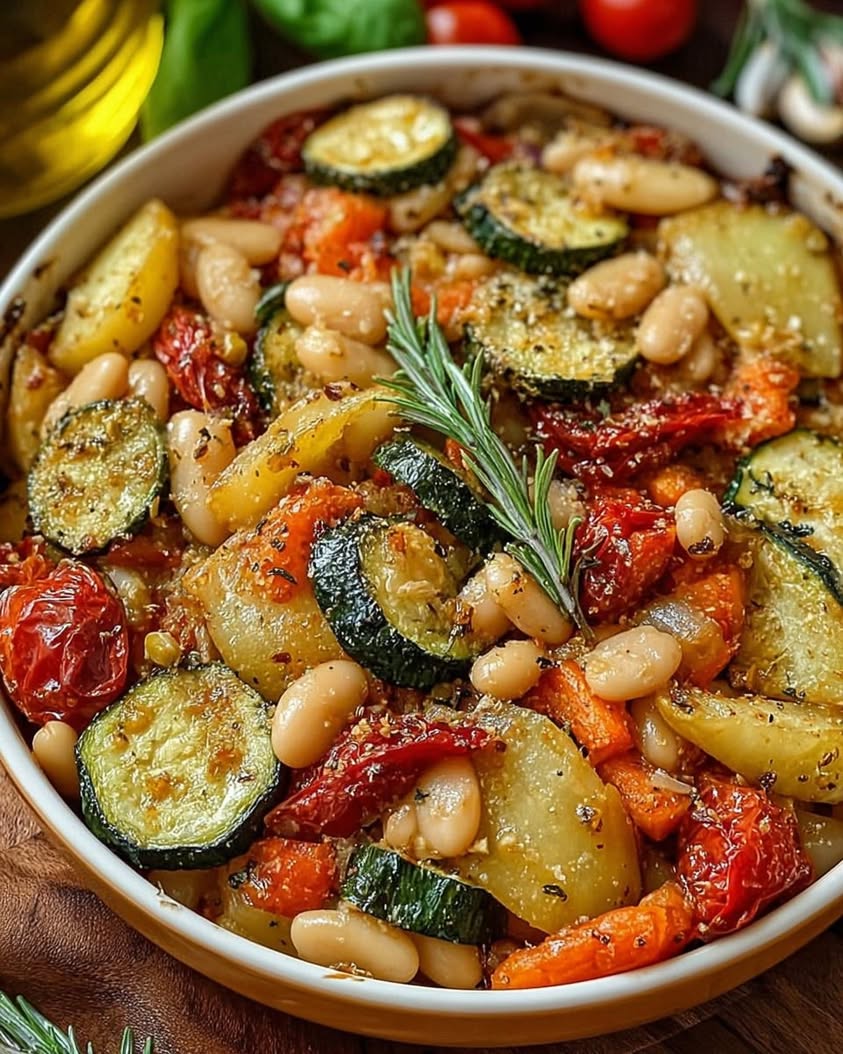
Rustic Roasted Vegetable Bake with Cannellini Beans: A Cozy One-Dish Dinner
Let me tell you about the weeknight dinner that changed my entire approach to comfort food. This Rustic Roasted Vegetable Bake with Cannellini Beans is the kind of meal that makes you feel accomplished without spending hours in the kitchen. It combines the natural sweetness of roasted vegetables with the creamy, earthy richness of cannellini beans. You get a hearty, satisfying dish that works for busy families or relaxed Sunday suppers. The magic happens when the vegetables caramelize in the oven. Then they mingle with garlic, herbs, and white beans to create a sauce that coats every bite. It is a cozy one-dish dinner that delivers on flavor, texture, and nostalgia.
I stumbled upon this recipe while trying to clear out my vegetable drawer one rainy afternoon. What started as a throw-together meal quickly became a household favorite. The beauty of this Rustic Roasted Vegetable Bake with Cannellini Beans is its flexibility. You can use whatever vegetables you have on hand. Bell peppers, zucchini, eggplant, onions, and cherry tomatoes all work beautifully. The cannellini beans add protein and creaminess. They turn a simple vegetable roast into a complete meal. Each time I make it, the kitchen fills with the aroma of roasting garlic and herbs. It smells like warmth and comfort. It is the perfect dish for fall and winter evenings when you crave something nourishing and straightforward.
There is something deeply satisfying about a one-pan meal. This Rustic Roasted Vegetable Bake with Cannellini Beans requires minimal cleanup. You simply chop your vegetables, toss them with olive oil and seasonings, and roast everything together. The cannellini beans go in during the last twenty minutes. They absorb all those delicious pan juices. The result is a dish that feels both rustic and elegant. It is substantial enough to serve as a main course. Yet it is light and vegetable-forward enough to leave you feeling good. With fresh herbs and a squeeze of lemon, every forkful is bright and comforting. This is food that nourishes your body and your soul. I am confident you will love it as much as my family does.
Quick Recipe Highlights
- Flavor Profile: This dish is savory and earthy with a hint of sweetness from roasted bell peppers and onions. The garlic becomes mellow and sweet during roasting. Fresh rosemary and thyme add an aromatic, herbal note. A final squeeze of lemon brightens everything wonderfully.
- Texture: The vegetables are tender with caramelized edges. The cannellini beans are creamy and soft. They provide a lovely contrast to the slightly chewy roasted vegetable pieces. Every bite has a mix of soft and toothsome textures.
- Aroma: The scent of roasting garlic and herbs fills your kitchen. It is warm, inviting, and deeply savory. The caramelizing vegetables release a sweet, almost nutty fragrance that makes everyone hungry.
- Visual Appeal: This dish is a feast for the eyes. The vibrant reds, oranges, and greens of the vegetables look beautiful against the white beans. A sprinkle of fresh parsley or basil adds a pop of color right before serving.
- Skill Level Needed: This recipe is perfect for beginner and experienced cooks alike. You simply need basic knife skills and the ability to follow simple roasting instructions. There are no complicated techniques involved. It is very forgiving.
- Special Equipment: You will need a large sheet pan or a 9×13-inch baking dish. Mixing bowls and a chef’s knife are also necessary. A microplane or garlic press is helpful but not required. That is it.
Recipe Overview
- Difficulty Level: I rate this recipe as easy because the steps are straightforward and beginner-friendly. You chop vegetables, toss them with oil and herbs, and let the oven do the hard work. There are no precise timing requirements. Each step involves simple techniques that anyone can master. Even if you are new to cooking, you can successfully make this dish on your first try.
- Category: This dish works beautifully as a main course for a vegetarian dinner or a hearty side dish for a meat-based meal. It pairs well with crusty bread, a simple green salad, or grains like quinoa or farro. It also works as a filling for wraps or a topping for polenta.
- Cuisine: While not tied to a single country, this recipe draws inspiration from Mediterranean cooking traditions. It features olive oil, garlic, fresh herbs, and white beans. These ingredients are staples in Italian, Greek, and Southern French cuisines. The rustic, roasted preparation is both homey and sophisticated.
- Cost: This is a very budget-friendly meal. Seasonal vegetables are typically inexpensive. Canned cannellini beans cost about one to two dollars per can. Dried beans are even cheaper if you prepare them yourself. The herbs and olive oil are pantry staples. This entire dish often costs less than ten dollars to make.
- Season: This dish is perfect year-round. During fall and winter, you can use hearty vegetables like butternut squash, Brussels sprouts, and carrots. In spring and summer, zucchini, bell peppers, and cherry tomatoes shine. It is adaptable to whatever is fresh and local at your market.
- Occasion: This Rustic Roasted Vegetable Bake with Cannellini Beans is ideal for casual dinners, meal prep for the week, or potluck gatherings. It is impressive enough for a dinner party with friends. It is also comforting enough for a quiet night at home with your family. It travels well and tastes great at room temperature.
Why You Will Love This Recipe
The taste and texture combination in this dish is truly exceptional. The roasted vegetables develop deep, concentrated flavors as they caramelize in the oven. They become tender on the inside but slightly crisp around the edges. The cannellini beans add a creamy, buttery quality that balances the roasted vegetables perfectly. The garlic and fresh herbs infuse everything with aromatic warmth. A final squeeze of lemon adds a bright, acidic finish. This contrast between savory, sweet, and bright makes every bite interesting. It is comfort food that feels both indulgent and wholesome.
The convenience of this recipe cannot be overstated. You only need one pan and about fifteen minutes of active prep time. The oven handles the rest. This makes it perfect for busy weeknights when you want a healthy, homemade meal without spending hours cooking. The cleanup is minimal. It is also an excellent meal prep option. You can make a large batch on Sunday and enjoy it throughout the week. The flavors actually improve after a day or two in the refrigerator. It reheats beautifully in the oven or microwave.
Nutritionally, this dish is a powerhouse. It is packed with fiber from the vegetables and beans. Fiber supports healthy digestion and keeps you feeling full and satisfied. The cannellini beans provide plant-based protein. They are also a good source of iron, folate, and magnesium. The colorful vegetables deliver a wide range of vitamins and antioxidants. You get vitamin C from bell peppers, vitamin A from carrots, and potassium from zucchini. Olive oil adds healthy monounsaturated fats that support heart health. This is a meal that nourishes your body from the inside out.
This recipe also shines for its social and entertaining value. It is the kind of dish that brings people together. When you bring a steaming baking dish to the table, everyone is immediately drawn in by the beautiful colors and irresistible aroma. It is a conversation starter. It is also a flexible dish. You can customize it based on your guests preferences or dietary restrictions. It is naturally vegetarian and can easily be made vegan and gluten-free. Your guests will appreciate the thought and care you put into a meal that accommodates everyone.
Cost-effectiveness and accessibility are two more major advantages. The ingredients for this Rustic Roasted Vegetable Bake with Cannellini Beans are affordable and widely available. You can find everything at your local grocery store or farmers market. Canned beans are a pantry staple. Seasonal vegetables are often on sale. You can also use leftover vegetables from your refrigerator. This dish is a fantastic way to reduce food waste while creating something delicious. It proves that eating well does not have to be expensive or complicated.
Historical Background and Cultural Significance
The combination of roasted vegetables and beans is rooted in ancient culinary traditions. In Mediterranean countries, people have been cooking vegetables with legumes for thousands of years. This practice dates back to the Roman Empire. They understood the nutritional value of pairing grains and legumes with fresh produce. The concept of roasting vegetables in olive oil and herbs is a cornerstone of rustic Mediterranean cooking. It reflects a resourceful approach to using available ingredients. The flavors are simple yet profound.
In Italy, dishes similar to this Rustic Roasted Vegetable Bake with Cannellini Beans are known as “verdure al forno” or oven-baked vegetables. Tuscan cuisine heavily features cannellini beans. They are often called “fagioli” and appear in soups, stews, and side dishes. The tradition of eating beans with vegetables comes from the concept of “cucina povera” or peasant cooking. This philosophy emphasizes making the most of humble, inexpensive ingredients. It is a testament to creativity and resourcefulness.
Over time, this recipe has evolved to reflect modern tastes and convenience. Canned beans made the dish much faster to prepare. Global trade introduced new vegetables and herbs to different regions. Home cooks began experimenting with different combinations. The essential technique of roasting vegetables and combining them with beans remained constant. Today, this dish is celebrated for its versatility and health benefits. It has become a staple in vegetarian and plant-based cooking around the world.
Regional variations of this dish are plentiful. In Greece, cooks might add olives and feta cheese. In Spain, they use smoked paprika and chorizo. In France, a similar dish features ratatouille vegetables and white beans. Middle Eastern versions incorporate cumin, coriander, and tahini. Each culture adds its own unique twist while preserving the fundamental idea of roasted vegetables with beans. This adaptability is why the recipe has remained popular for centuries. It is a canvas for creativity.
Ingredient Deep Dive
Cannellini beans are the heart of this dish. They are large, white Italian beans with a creamy texture and mild, nutty flavor. In Italian culture, they symbolize comfort and sustenance. They have been cultivated in Italy for centuries. Nutritionally, they are excellent sources of plant-based protein, fiber, and complex carbohydrates. They also provide iron, potassium, and folate. When selecting cannelli beans, look for cans with no added salt or preservatives. Dried beans are also a great option. To prepare them, soak them overnight and then cook them until tender. Canned beans should be rinsed and drained before use to reduce sodium. If you cannot find cannellini beans, great northern beans or navy beans work well as substitutes.
Olive oil is another crucial ingredient. Extra-virgin olive oil adds fruity, peppery notes and healthy fats. In Mediterranean traditions, olive oil is considered a source of vitality. It is used for cooking, dressing, and even medicinal purposes. For this recipe, choose a good quality olive oil that you enjoy the taste of. Store it in a cool, dark place away from heat and light. You can substitute avocado oil or grapeseed oil if needed. The quality of the oil significantly affects the final flavor of the dish.
Garlic is essential for its aromatic punch. When roasted, garlic becomes mellow, sweet, and almost creamy. It has been used for thousands of years in various cuisines for both flavor and health benefits. Garlic contains allicin, a compound linked to immune support and heart health. Choose firm, plump bulbs with tight skin. Store garlic in a cool, dry, well-ventilated area. Do not refrigerate it. You can substitute garlic powder in a pinch, but fresh garlic provides the best flavor. Roasted whole cloves are a wonderful addition if you have the time.
Fresh herbs like rosemary and thyme are essential. Rosemary adds piney, slightly citrusy notes. Thyme contributes earthy, minty undertones. Both herbs have long histories in Mediterranean cooking. They are used for seasoning meats, vegetables, and stews. Rosemary is rich in antioxidants and anti-inflammatory compounds. Thyme is a good source of vitamin C and has antimicrobial properties. Choose herbs with vibrant color and fresh scent. Store them in the refrigerator wrapped in a damp paper towel. Dried herbs work as substitutes. Use about one-third the amount called for fresh herbs.
Bell peppers add sweetness, color, and crunch. Red, yellow, and orange peppers are sweeter than green ones. They are excellent sources of vitamin C and beta-carotene. Choose peppers with firm, glossy skin and no soft spots. Store them in the refrigerator crisper drawer. You can substitute with any color of bell pepper or even poblano peppers for a mild heat. Roasting brings out their natural sugars beautifully.
Zucchini and summer squash add moisture and tenderness. They are low in calories but rich in vitamin C and potassium. Choose small to medium squash for the best flavor and texture. They should be firm and free of blemishes. Store them in a plastic bag in the refrigerator. They are very perishable. Use them within a few days. You can substitute yellow summer squash or eggplant. Zucchini absorbs the flavors of the herbs and olive oil wonderfully.
Cherry tomatoes burst with sweetness when roasted. They become jammy and concentrated. Tomatoes are rich in lycopene, an antioxidant linked to heart health. Choose tomatoes that are firm and brightly colored. Store them at room temperature for best flavor. Do not refrigerate them. You can substitute grape tomatoes or large tomatoes cut into wedges. Roasted tomatoes add a tangy, sweet element that balances the savory beans and vegetables.
Common Mistakes to Avoid
- Overcrowding the baking pan is a frequent error. When you crowd the vegetables, they steam instead of roast. The result is soggy, not caramelized. Use a large sheet pan and spread the vegetables in a single layer. Use two pans if necessary.
- Cutting vegetables unevenly leads to inconsistent cooking. Some pieces become mushy while others remain raw. Take the time to chop vegetables into uniform sizes. About one-inch cubes work well for most vegetables. This ensures even roasting.
- Forgetting to season properly can result in bland food. Vegetables need enough salt and pepper. Season generously before roasting. You can always add more at the end, but you cannot remove excess salt. Taste and adjust as you go.
- Adding the beans too early is a common pitfall. They can become mushy and fall apart. Add the cannellini beans during the last twenty minutes of cooking. This keeps them creamy but intact. They will absorb flavor without breaking down completely.
- Using too much oil makes the dish greasy. You need enough to coat the vegetables lightly. About two to three tablespoons for a full sheet pan is sufficient. Toss the vegetables to ensure even coating. Extra oil can be added later if needed.
- Skipping the preheating step leads to poor results. A hot oven is crucial for caramelization. Always preheat your oven to the specified temperature. Give it at least fifteen minutes to reach the right heat. This ensures the vegetables roast instead of steam.
- Neglecting to flip the vegetables halfway results in uneven browning. Flipping ensures all sides get exposure to the heat. Use a spatula to turn the vegetables once during cooking. This promotes even caramelization and tenderness.
- Using poor quality olive oil can ruin the flavor. Cheap oil can taste bitter or rancid. Invest in a decent extra-virgin olive oil. It makes a noticeable difference in the final dish. You can taste the quality.
- Forgetting to garnish diminishes the presentation. A sprinkle of fresh herbs, a squeeze of lemon, or a drizzle of good olive oil adds brightness. Do not skip this final step. It elevates the dish from good to great.
- Not tasting before serving is a missed opportunity. Always taste your finished dish. Adjust seasoning with salt, pepper, or lemon juice. This is your last chance to perfect the flavor. Trust your palate.
Essential Techniques
Proper roasting technique is the foundation of this recipe. Roasting uses dry heat to cook food, concentrating its flavors and creating caramelized edges. The key is high heat, usually between 400 and 425 degrees Fahrenheit. This temperature allows the vegetables to brown without burning. The Maillard reaction occurs, producing complex, savory flavors. To master roasting, ensure your oven is properly preheated. Use a heavy-duty sheet pan for even heat distribution. Do not line the pan with parchment if you want the best browning. The direct contact with the metal helps create crisp edges. Flip the vegetables halfway through cooking to ensure even browning. Look for deep golden color and tender texture as visual cues. The vegetables should be easily pierced with a fork but not mushy.
Another essential technique is properly preparing the cannellini beans. If using dried beans, soak them overnight in plenty of cold water. This rehydrates them and reduces cooking time. Drain and rinse before cooking. Simmer them gently until tender but not falling apart. This usually takes one to two hours depending on the age of the beans. If using canned beans, always rinse and drain them thoroughly. This removes excess sodium and any metallic taste. Pat them dry with a paper towel before adding them to the pan. This helps them brown slightly and maintain their shape. Adding them too early can cause them to disintegrate. Timing is everything.
Chopping vegetables with precision is a skill that improves the dish significantly. Uniform pieces ensure even cooking. For this recipe, aim for one-inch cubes. This size allows the vegetables to cook through in about forty minutes without burning. A sharp chef knife makes the task safer and easier. Use a claw grip to protect your fingers. Cut stable surfaces first. Cut round vegetables like zucchini in half lengthwise before slicing. This creates a flat surface and prevents rolling. Consistent size is more important than perfect shapes. Practice and patience will improve your speed and accuracy over time.
Seasoning in layers is a technique used by professional chefs. It involves adding salt and other seasonings at different stages of cooking. Start by tossing the vegetables with salt, pepper, and herbs before roasting. This draws out moisture and helps the flavors penetrate. After roasting, taste the dish and adjust the seasoning. The final addition of fresh herbs and lemon juice adds a bright finish. This layering creates depth and complexity. Do not rely on a single seasoning moment. Taste as you go and adjust accordingly. Your palate is the best guide.
Pro Tips for Perfect Rustic Roasted Vegetable Bake
Always start with room temperature vegetables. Cold vegetables straight from the refrigerator take longer to roast. They can also cause the oven temperature to drop. Let your chopped vegetables sit on the counter for about fifteen minutes before roasting. This simple step promotes even cooking and better caramelization.
Use two sheet pans if you are making a large batch. Overcrowding is the enemy of good roasting. Spreading the vegetables in a single layer allows hot air to circulate around each piece. This creates crispy edges and prevents steaming. If your pan is crowded, use two pans and rotate them halfway through cooking.
Toast the cannellini beans lightly before adding them to the pan. Drain and rinse the beans. Then toss them with a little olive oil and roast them alone for five minutes. This firms up their texture slightly. They will hold their shape better through the rest of cooking. The beans get a slightly nutty flavor from the toasting.
Add a splash of balsamic vinegar about five minutes before the dish is done. The acidity brightens all the flavors. It also adds a subtle sweetness that pairs beautifully with the roasted vegetables. A tablespoon is usually enough. Stir it in gently and return the pan to the oven for the final few minutes.
Let the dish rest for five to ten minutes after removing it from the oven. This allows the juices to redistribute and the flavors to meld. The beans and vegetables will be easier to handle. The dish will also taste better at a slightly lower temperature. Serve it warm, not piping hot.
Garnish generously just before serving. A handful of fresh parsley or basil adds color and freshness. A drizzle of good extra-virgin olive oil adds richness. A squeeze of lemon juice brightens everything. These finishing touches take the dish from good to restaurant-quality. Do not skip them.
Variations and Adaptations
Regional variations of this Rustic Roasted Vegetable Bake with Cannellini Beans are endless. For a Greek-inspired version, add Kalamata olives, oregano, and crumbled feta cheese during the last five minutes of cooking. The salty, briny olives and creamy feta complement the roasted vegetables beautifully. Serve with warm pita bread for a complete meal. This variation is especially popular during summer when tomatoes and zucchini are at their peak.
Seasonal adaptations allow you to enjoy this dish all year long. In fall and winter, swap summer vegetables for hearty options like butternut squash, Brussels sprouts, and carrots. Roast them with sage or thyme instead of summer herbs. The sweetness of the squash pairs wonderfully with the earthy beans. In spring, use asparagus, artichokes, and peas. Each season brings new flavors and textures to the dish. It keeps the recipe exciting and fresh.
Dietary modifications are simple to make. For a vegan version, omit any optional cheese and use only plant-based ingredients. The olive oil and beans provide plenty of richness. For a gluten-free adaptation, ensure all seasonings and broths are certified gluten-free. The recipe is naturally gluten-free. For a lower-carb version, reduce the amount of beans and increase the non-starchy vegetables. More zucchini, bell peppers, and greens work well. You can also add cauliflower for extra volume.
Flavor variations can transform the dish entirely. Add a pinch of red pepper flakes for heat. Use smoked paprika for a deeper, smokier flavor. Stir in a spoonful of pesto just before serving. Try different herb combinations like oregano, marjoram, or tarragon. Each variation offers a completely new taste experience. Experiment freely. You might discover your own signature version.
Texture modifications can change the mouthfeel. For a softer dish, cook the vegetables covered with foil for the first thirty minutes. Remove the foil for the last fifteen to allow browning. For extra crispiness, broil the finished dish for two to three minutes. This creates a beautiful, golden crust on top. For a saucier dish, add a splash of vegetable broth or white wine before roasting. The liquid creates a light sauce as it reduces.
Presentation alternatives make this dish suitable for various occasions. For a family-style meal, serve it directly from the baking dish. For a more elegant presentation, transfer the vegetables and beans to a large, shallow platter. Arrange them artfully. Drizzle with olive oil and sprinkle with fresh herbs. Garnish with halved cherry tomatoes and a few whole roasted garlic cloves. It looks stunning and inviting.
Serving and Presentation Guide
Plating techniques can elevate this dish from simple to stunning. For individual servings, use shallow bowls that show off the colorful vegetables and beans. Create a mound of the roasted vegetable bake in the center of each bowl. Place a few whole roasted garlic cloves on top. Drizzle a little extra-virgin olive oil around the edges. The bright green of fresh herbs against the deep reds and oranges of the vegetables creates a gorgeous contrast.
Garnishing ideas are plentiful and make a big difference. A generous sprinkle of fresh parsley adds color and freshness. Basil leaves add a beautiful green hue and a sweet, aromatic flavor. Toasted pine nuts or slivered almonds add crunch. A light dusting of nutritional yeast adds a cheesy, umami flavor without dairy. Shaved Parmesan cheese is a classic choice if you are not avoiding dairy. Each garnish adds its own layer of flavor and texture.
Traditional accompaniments pair beautifully with this dish. Crusty bread is essential for soaking up the delicious pan juices. A simple green salad with a lemon vinaigrette provides a fresh, crisp contrast. Cooked grains like quinoa, farro, or couscous make the meal heartier. Polenta is another wonderful base. It provides a creamy foundation for the vegetables and beans. Serve the dish over a bed of creamy polenta for a comforting meal.
Modern serving suggestions keep the dish fresh and versatile. Use it as a filling for tacos or wraps. Spoon it over avocado toast for a quick lunch. Serve it alongside grilled chicken or fish for a balanced dinner. Add a fried egg on top for a satisfying breakfast or brunch. The possibilities are endless. The dish adapts to any meal of the day.
Temperature considerations are important for the best dining experience. Serve this dish warm, not piping hot. The flavors are most harmonious when the dish has rested for a few minutes. Room temperature servings are also delicious. This dish tastes even better the next day. The flavors continue to meld and deepen in the refrigerator. If serving cold, bring it to room temperature for about twenty minutes before serving.
Portion control tips help you manage serving sizes. A generous serving is about one and a half cups. This amount provides a satisfying main course for most adults. For a side dish, a three-quarter cup serving is appropriate. The dish is nutrient-dense and filling, so most people feel satisfied with one serving. Leftovers store well for easy lunches or dinners throughout the week.
Wine and Beverage Pairing
Wine pairings for this Rustic Roasted Vegetable Bake with Cannellini Beans are delightful. A light to medium-bodied red wine like Pinot Noir or Barbera complements the earthy flavors. The wine’s bright acidity cuts through the richness of the olive oil and beans. A dry rosé is also an excellent choice. Its crisp, fruity notes enhance the roasted vegetables without overpowering them. If you prefer white wine, choose a full-bodied option like an oaked Chardonnay or a Viognier. The wine’s richness matches the creaminess of the beans beautifully.
Non-alcoholic alternatives are equally satisfying. A sparkling water with a squeeze of lemon or a splash of pomegranate juice provides a refreshing contrast. Herbal teas like rosemary or thyme tea complement the dish’s flavors. A good-quality sparkling apple cider is another festive option. It adds a touch of sweetness that balances the savory notes. For a mocktail, combine soda water with a splash of cranberry juice and a sprig of rosemary. It is sophisticated and delicious.
If you are serving this dish for a brunch or lighter meal, consider a floral and fruity beverage. An iced hibiscus tea with a touch of honey is lovely. It has a tartness that mirrors the lemon garnish in the dish. A classic lemonade with fresh mint is also perfect. The bright citrus cuts through the richness of the olive oil. These options are hydrating and refreshing.
Temperature considerations apply to beverages as well. Serve white wines and rosés chilled. Serve red wines at cool room temperature, around 60 to 65 degrees Fahrenheit. Non-alcoholic drinks are best served over ice or chilled. If you are serving the dish warm, a cool beverage provides a pleasant contrast. If you are serving the dish at room temperature, a room temperature beverage can be equally pleasant. Consider the overall experience and adjust accordingly.
Storage and Shelf Life
Proper storage methods ensure your leftovers remain delicious. Allow the Rustic Roasted Vegetable Bake with Cannellini Beans to cool completely before storing. Place it in an airtight container. Glass containers are ideal because they do not retain odors. Plastic containers also work well. Store the dish in the refrigerator within two hours of cooking. This prevents bacterial growth and maintains food safety.
Temperature requirements are strict for food safety. Keep the refrigerator temperature at or below 40 degrees Fahrenheit. Stored properly, this dish will stay fresh for three to four days. The flavors often improve after a day in the refrigerator. The vegetables soften slightly, and the beans absorb more of the herbs and seasonings. It is worth making extra just for the leftovers.
Container recommendations affect quality. Use a container with a tight-fitting lid. This prevents the dish from absorbing other odors in the refrigerator. It also prevents moisture loss. If you are storing a large batch, divide it into smaller portions. This allows the dish to cool faster and reheat more evenly. Smaller portions are also easier to grab for quick lunches.
Signs of spoilage are important to recognize. If you notice a sour or off odor, discard the dish. Mold growth is another clear sign. If the vegetables become slimy or the beans develop a strange texture, do not eat them. When in doubt, throw it out. Food safety is always the top priority. The dish can also be frozen for longer storage.
Reheating instructions vary depending on your method. The best way to reheat this dish is in the oven. Preheat your oven to 350 degrees Fahrenheit. Place the leftovers in an oven-safe dish. Cover with foil to prevent drying out. Heat for fifteen to twenty minutes or until warmed through. The microwave is faster but can make the vegetables a bit soggy. If using a microwave, heat in thirty-second intervals. Stir between intervals for even heating.
Freezing guidelines allow you to enjoy this dish months later. This dish freezes well. Allow it to cool completely. Then transfer it to a freezer-safe container or zip-top bag. Remove as much air as possible to prevent freezer burn. Label the container with the date and contents. Freeze for up to three months. To thaw, transfer the container to the refrigerator overnight. Reheat using the oven method described above. The texture may be slightly softer after freezing. Add a fresh squeeze of lemon or a sprinkle of fresh herbs to brighten it up.
Make Ahead Strategies
A prep timeline makes this recipe even more convenient. You can complete most of the preparation up to two days in advance. Chop all the vegetables and store them in separate containers in the refrigerator. Prepare the fresh herbs and store them wrapped in a damp paper towel. Measure out the olive oil and seasonings. This reduces your active cooking time to almost nothing on the day you plan to serve the dish.
Storage between steps requires careful planning. Once you have roasted the vegetables and beans, allow the dish to cool completely. Then store it in an airtight container in the refrigerator. It will stay fresh for up to four days. The flavors continue to develop. This makes it perfect for meal prep. You can also store the roasted vegetables and beans separately. Combine them only when you are ready to reheat. This prevents the beans from becoming too soft.
Quality impact assessment is important when making ahead. Most dishes improve with time as flavors meld. This Rustic Roasted Vegetable Bake with Cannellini Beans is no exception. The herbs and seasonings infuse the vegetables and beans more deeply. The texture may soften slightly, but many people prefer the softer texture. The dish remains delicious even after several days in the refrigerator. Freezing may affect the texture of some vegetables. Zucchini and summer squash can become watery after thawing. Use more sturdy vegetables if you plan to freeze the dish.
Assembly tips streamline the process. When you are ready to serve, preheat your oven to 350 degrees Fahrenheit. Transfer the pre-roasted vegetables and beans to a baking dish. Add a splash of olive oil or vegetable broth to refresh the moisture. Cover with foil and heat for fifteen to twenty minutes. Uncover for the last five minutes to crisp the edges. This method produces results very close to freshly roasted vegetables.
Reheating guidelines ensure the best texture. Oven reheating is the best method for preserving quality. The microwave is faster but can make the dish watery. If using the microwave, place the leftovers in a microwave-safe dish. Cover with a damp paper towel. This adds moisture and prevents the vegetables from drying out. Heat in one-minute intervals, stirring between each. Add a fresh squeeze of lemon or fresh herbs after reheating to restore brightness.
Fresh element additions can revitalize leftovers. Before serving, add a handful of fresh baby spinach or arugula. The heat from the dish will wilt the greens slightly. They add a fresh, peppery note. A dollop of pesto or a spoonful of tapenade adds a burst of flavor. Fresh herbs like parsley or basil are essential. A final drizzle of extra-virgin olive oil adds richness. These simple additions make leftovers taste newly made.
Scaling Instructions
Halving the recipe is straightforward. Use half the amounts of all ingredients. The cooking time remains about the same. Use a smaller baking dish, such as an 8×8-inch square dish. The vegetables will roast in a similar amount of time. Check for doneness a few minutes early. Smaller batches tend to cook slightly faster because there is less moisture in the pan.
Doubling or tripling the recipe requires some adjustments. Use a larger sheet pan or two separate pans. Do not overcrowd the pan. Spread the vegetables in a single layer. If using two pans, rotate them between the upper and lower oven racks halfway through cooking. This ensures even roasting. The cooking time may increase by five to ten minutes for larger batches. The extra moisture from more vegetables can slow down the browning process.
Equipment adjustments are necessary for larger batches. You may need to use a roasting pan instead of a sheet pan. A large roasting pan provides more surface area. It also has higher sides, which can trap steam. If using a deep pan, consider removing the vegetables and beans partway through. Return the liquid to the pan and continue roasting the vegetables without the beans. This helps them brown more effectively.
Timing modifications are key for successful scaling. Check the vegetables for doneness beginning at the thirty-minute mark. Larger batches may need up to fifty minutes. The vegetables are done when they are tender and caramelized. The beans should be heated through and slightly browned on the edges. Use visual cues rather than relying strictly on the timer. Every oven and pan behaves Print
Rustic Roasted Vegetable Bake with Cannellini Beans
- Total Time: 45 minutes
- Yield: 4
Description
A hearty and healthy one-pan dish featuring roasted seasonal vegetables and creamy cannellini beans, baked with herbs and a touch of garlic for a comforting rustic meal.
Ingredients
- 2 medium zucchini, chopped
- 1 red bell pepper, chopped
- 1 yellow bell pepper, chopped
- 1 large eggplant, chopped
- 1 red onion, wedged
- 4 cloves garlic, minced
- 3 tablespoons olive oil
- 1 teaspoon dried oregano
- 1 teaspoon dried thyme
- 1/2 teaspoon salt
- 1/4 teaspoon black pepper
- 1 (15 oz) can cannellini beans, drained and rinsed
- 1/2 cup vegetable broth
- 2 tablespoons balsamic vinegar
- 1/4 cup fresh parsley, chopped (for garnish)
Instructions
- Preheat oven to 400°F (200°C).
- In a large bowl, toss zucchini, bell peppers, eggplant, red onion, and garlic with olive oil, oregano, thyme, salt, and pepper until well coated.
- Spread the vegetables in a single layer on a large baking sheet. Roast for 20 minutes, stirring halfway through.
- Remove from oven and add the cannellini beans and vegetable broth to the baking sheet. Gently stir to combine.
- Return to oven and bake for an additional 10 minutes, until beans are heated and vegetables are tender.
- Drizzle with balsamic vinegar and stir gently. Garnish with fresh parsley before serving.
Notes
You can customize the seasonings to taste. Add other vegetables like cherry tomatoes or mushrooms for variety. Serve as a main dish or alongside crusty bread.
- Prep Time: 15 minutes
- Cook Time: 30 minutes
- Method: Main
- Cuisine: American