Caramelized Butternut Squash, Carrots, Broccoli & Sweet Potato with Feta, Walnuts & Cranberry-Honey Glaze: A Fall Feast
Imagine a dish where the natural sweetness of roasted vegetables meets the tangy bite of feta cheese, all while a sticky cranberry-honey glaze ties everything together. This Caramelized Butternut Squash, Carrots, Broccoli & Sweet Potato with Feta, Walnuts & Cranberry-Honey Glaze is exactly that kind of culinary experience. It transforms simple, humble ingredients into a centerpiece that feels both rustic and refined. The aroma of roasting sweet potatoes and butternut squash fills your kitchen with a warm, comforting scent, while the final drizzle of glaze adds a touch of elegance.
This recipe is not just about flavor; it is about creating a meal that feels special without requiring hours of complicated work. The combination of caramelized edges on the squash and sweet potatoes, the slight crunch of broccoli, and the creamy saltiness of feta creates a symphony of textures and tastes. We specifically developed this Caramelized Butternut Squash & Sweet Potato Bake with Feta and Cranberry Honey to be a versatile side dish or a hearty vegetarian main course. It pairs beautifully with roasted chicken or a simple grain like quinoa, making it a perfect addition to your weekly meal rotation.
What truly sets this dish apart is the cranberry-honey glaze. It adds a glossy finish and a burst of tart-sweet flavor that complements the earthy vegetables and rich walnuts. The feta cheese, crumbled on top right before serving, provides a salty counterpoint that makes every bite crave-worthy. Whether you are preparing a holiday feast or a simple weeknight dinner, this Caramelized Butternut Squash, Carrots, Broccoli & Sweet Potato with Feta, Walnuts & Cranberry-Honey Glaze delivers satisfaction and a beautiful presentation with minimal effort.
Quick Recipe Highlights
- Flavor Profile: Sweet and savory with a tangy finish. The natural sugars in the vegetables caramelize beautifully, while the cranberry-honey glaze adds a bright, fruity note. Salty feta and earthy walnuts round out the profile perfectly.
- Texture: A delightful mix of tender, caramelized edges from the squash and sweet potatoes, with slightly crisp broccoli florets. The walnuts add a satisfying crunch, and the feta provides a creamy, crumbly contrast.
- Aroma: The scent of roasting root vegetables with a hint of honey and cranberry fills the air. The walnuts release their nutty fragrance as they toast, creating a warm and inviting kitchen environment.
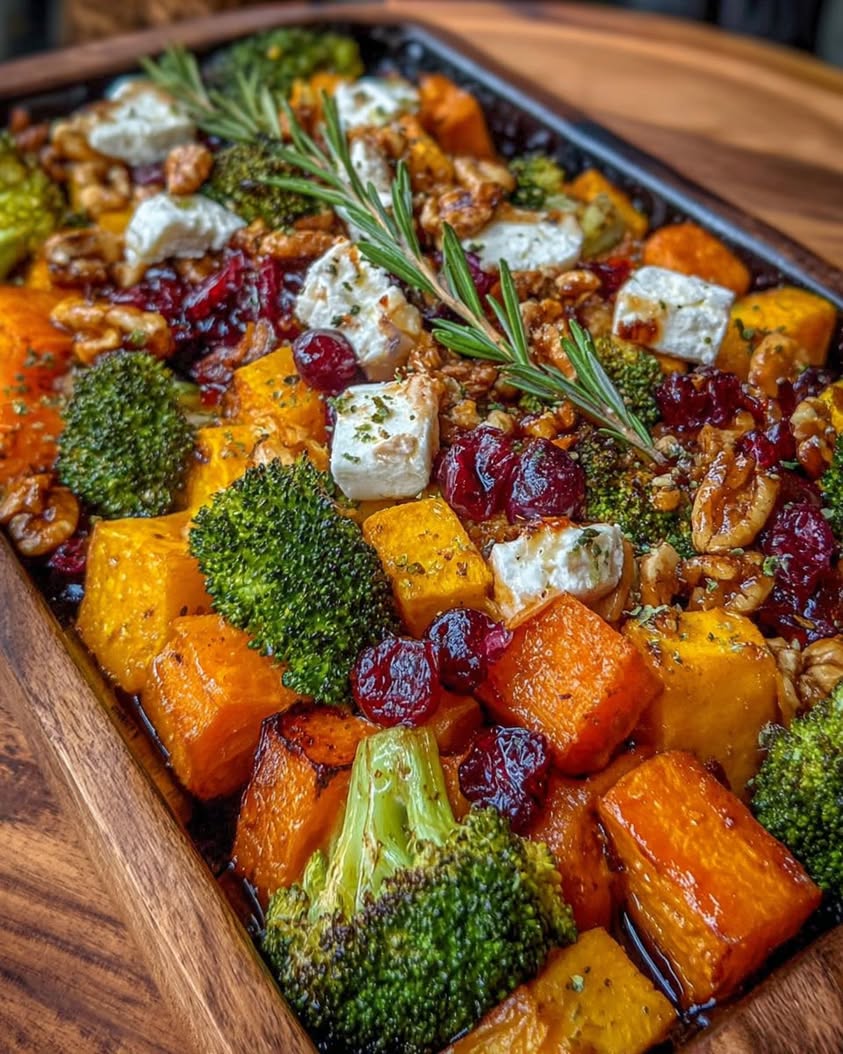
- Visual Appeal: A vibrant medley of orange, green, and white. The deep orange of butternut squash and sweet potatoes contrasts with the bright green broccoli and the stark white of crumbled feta, all glistening under the glossy cranberry-honey glaze.
- Skill Level Needed: This recipe is incredibly approachable for beginners. The only challenging part might be cubing the butternut squash, but pre-cut options are available. The roasting process is straightforward and forgiving.
- Special Equipment: You will need a large baking sheet or a roasting pan. A sharp chef’s knife and a sturdy vegetable peeler are helpful for prepping the squash and sweet potatoes. A small saucepan is used for the glaze.
Recipe Overview
- Difficulty Level: We rate this as an easy recipe because the steps are simple and the ingredients are forgiving. The prep involves basic chopping, and the oven does most of the work. Roasting is a hands-off cooking method that reduces stress, making this a perfect dish for beginner cooks or busy weeknights.
- Category: This dish functions beautifully as a vegetarian main course when served with a side of rice or quinoa. It also shines as a substantial side dish alongside roasted chicken, pork tenderloin, or grilled fish. It is perfect for holiday dinners like Thanksgiving or Easter.
- Cuisine: While not tied to a specific national cuisine, this recipe draws inspiration from modern American and Mediterranean cooking. The combination of roasted root vegetables, nuts, feta cheese, and a fruit-based glaze is reminiscent of warm, rustic dishes found in Mediterranean households and contemporary American bistros.
- Cost: This is a budget-friendly recipe. Root vegetables like carrots, sweet potatoes, and butternut squash are generally inexpensive, especially in the fall. Feta cheese and walnuts are moderately priced, but a little goes a long way. The cranberry juice and honey are pantry staples for many, keeping the overall cost low.
- Season: This dish is a celebration of autumn and winter. Butternut squash and sweet potatoes are at their peak during these cooler months, offering the best flavor and sweetness. The warm, hearty nature of the dish also makes it ideal for comforting cold-weather meals.
- Occasion: This Caramelized Butternut Squash & Sweet Potato Bake with Feta and Cranberry Honey is appropriate for a wide range of occasions. It is impressive enough for a holiday table, yet simple enough for a casual Sunday dinner. It also works well for potlucks, as it can be served at room temperature.
Why You’ll Love This Recipe
The first bite of this dish reveals an incredible depth of flavor. The caramelization process concentrates the natural sugars in the vegetables, creating a sweet, almost candy-like taste on the edges. This sweetness is immediately balanced by the salty, tangy crumbles of feta cheese. The walnuts offer a pleasant, earthy crunch, while the cranberry-honey glaze adds a sticky, tart finish that lingers on your palate. It is a perfect balance of savory and sweet, making each forkful exciting and satisfying.
One of the greatest benefits of this recipe is its convenience. After a quick 20 minutes of chopping, the oven takes over, freeing you up to prepare other parts of your meal or simply relax. The ingredients are incredibly forgiving, so you do not need to worry about precise measurements. If your squash cubes are a bit larger, just add a few more minutes to the roasting time. This makes the Caramelized Butternut Squash & Sweet Potato Bake with Feta and Cranberry Honey a reliable dish even for novice cooks who are still gaining confidence in the kitchen.
From a nutritional standpoint, this recipe is a powerhouse. It is loaded with fiber from the butternut squash, sweet potatoes, broccoli, and carrots. These vegetables are also packed with essential vitamins like Vitamin A, C, and potassium. The walnuts provide healthy omega-3 fatty acids, and the feta offers a source of calcium and protein. This dish allows you to enjoy a decadent-tasting meal that is actually incredibly good for you, supporting both your health goals and your taste buds.
This dish is a wonderful option for entertaining. It looks stunning on a serving platter, with its vibrant colors and glossy glaze. Since it can be roasted and then served at room temperature, it takes the pressure off having to coordinate multiple hot dishes at the exact same moment. Your guests will be impressed by the complex flavors and beautiful presentation, and you will enjoy the ease of serving it. It is a conversation starter that feels elegant and homey at the same time.
Finally, this recipe is extremely cost-effective and accessible. All the main ingredients can be found in any standard grocery store year-round, though they are especially affordable in the fall. A single batch can feed a family of six as a side dish, or four as a main course, making it a great option for stretching your grocery budget. The ingredients are simple and humble, yet when combined with a bit of care and a flavorful glaze, they transform into something truly special. You get maximum flavor for a minimal investment.
Historical Background and Cultural Significance
While this specific combination is a modern creation, its roots lie deep in the history of agricultural societies. Roasting root vegetables is one of the oldest cooking methods known to humanity. Ancient civilizations across the Mediterranean, the Americas, and Asia discovered that cooking starchy tubers and gourds over an open fire unlocked their natural sweetness and made them easier to digest. Butternut squash, a type of winter squash, was cultivated by indigenous peoples in North America for thousands of years. Sweet potatoes have a similar ancient history in South America and the Caribbean.
The cultural importance of combining sweet and savory elements in a single dish is a hallmark of many culinary traditions. The concept of pairing roasted vegetables with a sweet glaze can be seen in various forms across the Middle East and Europe. For example, dishes like tzimmes, a traditional Ashkenazi Jewish stew, feature sweet potatoes and carrots cooked with dried fruits like prunes or apricots. Similarly, many Moroccan tagines combine sweet squash or pumpkin with savory meats and spices, often finished with a drizzle of honey.
The evolution of this particular dish reflects a broader trend in modern cooking: the fusion of global flavors with local, seasonal produce. The use of feta cheese, a staple of Greek and Balkan cuisine, adds a salty, briny component that is not traditional in American roasting. The addition of walnuts, popular in both Mediterranean and American baking, provides texture and richness. The cranberry-honey glaze, however, is a distinctly North American touch, utilizing a native fruit that was a crucial food source for Native American tribes and early European settlers.
Today, variations of this dish appear on countless holiday tables and food blogs, a testament to its universal appeal. In the United States, it has become a beloved fall and winter staple, often serving as a vegetarian centerpiece or a colorful side for Thanksgiving. Regional adaptations might see the addition of pomegranate seeds in California, hazelnuts in the Pacific Northwest, or a maple syrup glaze in New England. This constant evolution demonstrates how a simple idea can be endlessly reimagined, adapting to local tastes and available ingredients while keeping the core concept of caramelized vegetables with a sweet-savory finish.
Ingredient Deep Dive
Butternut squash is the star of this show, and its history is as rich as its flavor. Native to Central and South America, it has been cultivated for over 5,000 years. Nutritionally, it is incredibly dense, providing a massive amount of Vitamin A in the form of beta-carotene, as well as Vitamin C, potassium, and fiber. When selecting a butternut squash, look for one that feels heavy for its size with a matte, beige skin free of soft spots or cuts. You can store it in a cool, dark place for up to a month. Pre-cut cubes are a great time-saving substitution if you are short on prep time.
Sweet potatoes complement the squash perfectly, adding another layer of sweetness and a slightly different texture. Originating in Central and South America, they have become a global staple. They are an excellent source of complex carbohydrates, Vitamin A, and Vitamin B6. Choose sweet potatoes that are firm and smooth, without sprouts or cracks. Store them in a cool, dark, and well-ventilated area, but do not refrigerate them, as this can alter their taste. Japanese sweet potatoes or purple sweet potatoes can be used for a fun color variation.
Broccoli and carrots add color, texture, and a fresh, earthy flavor to the mix. Broccoli, a member of the cabbage family, is packed with Vitamin K, Vitamin C, and sulforaphane, a compound linked to cancer prevention. Look for tight, dark green florets and firm stalks. Carrots, another root vegetable, are famous for their Vitamin A content and natural sweetness. Choose carrots that are firm and vibrant in color. Both should be stored in the crisper drawer of your refrigerator. You can substitute broccoli with cauliflower for a milder flavor, or carrots with parsnips for a more peppery taste.
The toppings are what truly elevate this dish. Feta cheese is a brined curd cheese traditionally made in Greece from sheep’s milk or a mixture of sheep and goat milk. It provides a salty, tangy, and creamy counterpoint to the sweet vegetables. Look for blocks of feta stored in brine, as they are more flavorful and moist than crumbled versions. Walnuts add a crucial crunch and a dose of healthy omega-3 fatty acids. Toasting them lightly activates their oils and enhances their flavor. Store walnuts in an airtight container in the refrigerator to prevent them from going rancid.
Common Mistakes to Avoid
- Crowding the baking sheet. If you pile all the vegetables on top of each other, they will steam instead of caramelize. This prevents that beautiful browning and deep flavor. Use a large sheet pan and leave space between the pieces.
- Underseasoning the vegetables before roasting. Salt is critical for drawing out moisture and enhancing the natural sweetness of the vegetables. Be generous with salt and pepper before they go into the oven.
- Not drying the vegetables after washing them. Adding wet vegetables to a hot oven creates steam, which again prevents caramelization. Pat them completely dry with a clean kitchen towel after washing.
- Using a dark, non-stick baking sheet without adjusting temperature. Dark pans absorb more heat and can cause the bottoms of the vegetables to burn before the tops are tender. If you use one, consider lowering your oven temperature by 25 degrees.
- Adding the glaze too early. The glaze can burn if added at the beginning of roasting. It should only be added in the last 10-15 minutes of cooking to create a sticky finish without burning.
- Forgetting to toss the vegetables halfway through. For even cooking and caramelization, you need to flip the vegetables at least once during the roasting process.
- Adding the feta cheese and walnuts before the final roast. If you add them too early, the feta will melt into a puddle and the walnuts will burn. Always sprinkle them on after the final glazing step or right before serving.
- Using pre-shredded feta cheese. Pre-shredded cheese often contains anti-caking agents that prevent it from melting and tasting as good as block feta. Always buy a block and crumble it yourself.
- Skipping the cooling time. Letting the dish rest for a few minutes after roasting allows the flavors to meld and the glaze to set slightly. Serving it straight from the oven can be too hot and messy.
Essential Techniques
Mastering the art of caramelization is the most important technique for this recipe. Caramelization is the browning of sugars, a chemical process that occurs when vegetables are exposed to high dry heat. To achieve this, the oven must be hot, around 425 degrees Fahrenheit. You also need to ensure the vegetables are in a single layer with enough space around each piece. The dry heat and space allow moisture to evaporate quickly, concentrating the natural sugars and turning the edges a beautiful golden brown. Watch for the edges to become dark brown and slightly crispy, but not blackened, as a visual cue for success.
Uniform cutting is another crucial technique. If you cut your butternut squash and sweet potatoes into different sizes, the smaller pieces will burn before the larger pieces are cooked through. Aim for evenly sized cubes, about one inch in size. This ensures that all the vegetables cook at the same rate, leading to a consistent texture throughout the dish. Use a sharp knife and a steady hand. You can also use a mandoline for very consistent cuts, but a chef’s knife works perfectly well with practice. This attention to detail makes a significant difference in the final outcome.
The technique for making the cranberry-honey glaze is simple but requires attention. You need to simmer the cranberry juice and honey together over medium heat. The goal is to reduce the liquid by about half, which thickens it into a syrupy consistency. This reduction concentrates the flavor and helps the glaze cling to the vegetables. Do not walk away from the pan, as the sugar content in the honey can cause it to burn quickly. You know the glaze is ready when it coats the back of a spoon and leaves a clear trail when you run your finger through it.
Pro Tips for Perfect Caramelized Butternut Squash & Sweet Potato Bake with Feta and Cranberry Honey
For the best caramelization, preheat your baking sheet in the oven while it is heating up. Adding the vegetables to a hot pan gives them an immediate sear, accelerating the browning process and creating a better crust on the bottom. Just be careful when you pull the hot pan out.
Do not skip the step of patting your vegetables dry. Any excess moisture will turn into steam in the hot oven, preventing caramelization. Spend an extra minute or two with paper towels to ensure they are as dry as possible before seasoning and oiling them.
Use a high smoke point oil like avocado oil or grapeseed oil. Olive oil can be used, but it has a lower smoke point and can burn in a 425-degree oven, lending a bitter flavor to the dish. A neutral oil with a high smoke point is best for this high-heat roasting.
Season the vegetables in layers. Start with salt and pepper before roasting. Then, after the glaze is applied, you can add a final pinch of flaky sea salt right before serving. This layering technique builds depth of flavor.
Toast the walnuts separately in a dry skillet over medium heat for 2-3 minutes until fragrant. This brings out their nutty flavor and prevents them from becoming soggy when added to the hot dish. Keep a close eye on them, as they burn easily.
If you want a more intense cranberry flavor, add a tablespoon of orange zest to the glaze along with the honey and juice. The orange zest will brighten the flavor and complement the sweet and tart notes beautifully.
For the best texture, roast the broccoli on a separate baking sheet for the last 15 minutes of the total cooking time. This allows you to pull it out when it is perfectly tender-crisp, while the other, heartier vegetables continue to roast until perfectly tender.
Variations and Adaptations
Regional variations of this dish can be found across the United States. In the Southwest, you might see the addition of roasted poblano peppers and a sprinkle of cotija cheese instead of feta. A dash of chili powder or cumin could be added to the vegetables before roasting. In the Northeast, a drizzle of pure maple syrup often replaces the honey in the glaze, and toasted pecans might be substituted for walnuts, celebrating local ingredients.
Seasonal adaptations make this recipe a year-round winner. In the spring, you could swap the butternut squash and sweet potatoes for asparagus, baby carrots, and new potatoes. A lemon-herb glaze with fresh thyme and rosemary would be a refreshing change. In the summer, grilled zucchini, bell peppers, and red onion could be used, paired with a simple balsamic reduction instead of the cranberry glaze, and served with fresh basil.
Dietary modifications are simple to accommodate. For a dairy-free version, simply omit the feta cheese or substitute it with a dairy-free feta alternative made from almonds or tofu. You can also add a sprinkle of nutritional yeast for a cheesy flavor. For a vegan version, use maple syrup or agave nectar instead of honey. The rest of the dish is naturally plant-based and incredibly satisfying.
Flavor variations can completely change the character of the dish. You could add a teaspoon of smoked paprika and a pinch of cayenne pepper to the vegetables for a smoky, spicy kick. For a more herbaceous profile, toss the roasted vegetables with fresh chopped parsley, mint, and dill right before serving. A dash of balsamic vinegar added to the glaze can give it a more complex, tangy depth.
Serving and Presentation Guide
Plating this dish is all about showcasing its vibrant colors. Arrange the roasted vegetables on a large, shallow serving platter instead of piling them in a deep bowl. This allows the individual pieces to be seen and appreciated. Spread them out in an even layer so the glaze can shine. The golden-orange hues of the squash and sweet potatoes create a beautiful base against the dark green broccoli and bright orange carrots.
Garnishing is key to a stunning presentation. After arranging the vegetables, crumble the feta cheese generously over the top, making sure to distribute it evenly. Then, sprinkle the toasted walnuts over the entire dish. For the final touch, drizzle a little extra cranberry-honey glaze right before serving. Adding a final sprinkle of fresh thyme leaves or chopped parsley can add a pop of green and a fresh aroma. The glossy glaze on the vegetables and the white crumbles of feta create an incredibly appetizing visual.
Temperature considerations are important for the best eating experience. This dish is delicious served warm, straight from the oven. However, it is also excellent at room temperature, making it a fantastic option for buffets or potlucks. The flavors actually meld and deepen as it sits. If serving cold, let it come to room temperature first for the best flavor, but avoid reheating it in the microwave, as this can make the vegetables soggy. A quick reheat in a hot oven for 5 minutes works perfectly.
Wine and Beverage Pairing
This dish pairs wonderfully with a variety of wines that can stand up to its sweet and savory flavors. A dry Riesling is an excellent choice because its crisp acidity cuts through the sweetness of the glaze and the richness of the feta. Another great option is a Viognier, which offers stone fruit flavors that complement the roasted vegetables. For white wine lovers, a lightly oaked Chardonnay will also work well.
For red wine drinkers, a Pinot Noir is your best bet. Its lighter body and bright red fruit flavors, like cherry and raspberry, will not overwhelm the dish. The earthiness of the walnuts and the sweetness of the glaze find common ground with a good Pinot Noir. A Beaujolais, made from Gamay grapes, is another excellent light-bodied red that offers a juicy, fruit-forward profile that pairs beautifully with the caramelized flavors.
For non-alcoholic alternatives, a sparkling apple cider or a cranberry spritzer is a fantastic choice. The bubbles and tartness provide a refreshing contrast. A good quality ginger ale can also work, as its spiciness complements the sweet and savory notes. For a warm beverage, a cup of Earl Grey tea, with its bergamot notes, can pair surprisingly well with the sweet glaze and nuts.
Storage and Shelf Life
Storing leftovers properly ensures you can enjoy this dish again later. Allow the vegetables to cool completely to room temperature. Transfer them to an airtight container. Layer a piece of paper towel on top of the vegetables before sealing the container to absorb excess moisture and help the vegetables stay crisp. It is best to store the feta cheese and walnuts separately to prevent them from becoming soggy.
In the refrigerator, this dish will keep well for 3 to 4 days. The flavors actually meld and deepen overnight, making the leftovers almost better than the original dish. For reheating, the oven is your best friend. Spread the desired amount on a baking sheet and reheat at 350 degrees Fahrenheit for about 10 minutes, or until warmed through. This method revives the caramelized edges. Avoid the microwave, as it will make the vegetables mushy and soft.
Freezing is not highly recommended for this particular recipe. The texture of the vegetables, especially the broccoli and the glossy glaze, can become watery and mushy upon thawing and reheating. However, if you must freeze them, place the cooled vegetables in a freezer-safe bag, removing as much air as possible. They can be frozen for up to 2 months. Thaw them overnight in the refrigerator and reheat in a hot oven to try to salvage some texture, but expect a softer result.
Make Ahead Strategies
This recipe is perfect for prepping ahead of time. The vegetables can be chopped and stored in the refrigerator up to two days in advance. Place the cubed butternut squash, sweet potatoes, carrots, and broccoli florets in separate airtight containers or resealable bags. This significantly cuts down on the day-of cooking time. You can also make the cranberry-honey glaze up to a week ahead and store it in a jar in the refrigerator.
On the day you plan to serve the dish, simply toss the pre-chopped vegetables with oil, salt, and pepper on a baking sheet and roast them. This streamlined approach makes it easy to manage a large meal or a busy weeknight. If you are serving it for a holiday, you can roast all the vegetables the day before, but do not add the glaze. Reheat them in a hot oven, then toss with the glaze, feta, and walnuts just before serving for the best texture.
Assembling the dish completely before serving is not recommended if you want the feta and walnuts to stay fresh. The feta will dry out and the walnuts will lose their crunch if they sit in the hot vegetables for too long. The best strategy is to have all your components ready and then do the final assembly and garnish right before you bring the dish to the table. This ensures the most appealing texture and flavor.
Scaling Instructions
Halving this recipe is very straightforward. Simply divide all ingredient quantities by two. You will only need one sheet pan for the vegetables. The cooking time may be slightly shorter because there is less food on the pan, so start checking for doneness a few minutes early. The glaze ingredients can be reduced in a small saucepan, and the cooking time will be shorter.
Doubling or tripling the recipe is also easy, but you must use multiple sheet pans. Do not try to crowd all the vegetables onto a single large pan, as this will lead to steaming instead of roasting. Use two or three baking sheets and rotate their positions in the oven halfway through the cooking time to ensure even browning. You may need to add an extra 5 to 10 minutes to the total roasting time when using multiple pans. The glaze can be doubled or tripled in a larger saucepan.
When scaling up, you may need to adjust your equipment. You will need more large bowls for tossing the vegetables with oil and seasonings. You might also need a second large baking sheet. The timing for the glaze will increase slightly as the larger volume of liquid takes longer to reduce. Be patient and watch for the visual cue of the syrup coating the back of a spoon. For storage, you will need large, shallow containers to allow the vegetables to cool quickly and evenly before refrigerating.
Nutritional Deep Dive
This dish is a nutritional powerhouse, primarily composed of complex carbohydrates and fiber. Each serving provides a significant amount of dietary fiber from the butternut squash, sweet potatoes, carrots, and broccoli. Fiber aids in digestion, promotes satiety, and helps regulate blood sugar levels. The protein content is modest, coming mainly from the feta cheese and walnuts. A single serving provides about 8-10 grams of protein, making it a satisfying side or a lighter main course.
On the micronutrient front, this dish is exceptionally rich in vitamins. Butternut squash and sweet potatoes are among the best sources of Vitamin A in the form of beta-carotene, which is crucial for eye health, immune function, and skin health. Broccoli and carrots add substantial Vitamin C and Vitamin K. Walnuts provide essential omega-3 fatty acids, which are anti-inflammatory and support brain health. Feta cheese contributes calcium for bone health.
The health benefits of this dish extend beyond basic nutrition. The combination of fiber, healthy fats, and protein helps to stabilize blood sugar levels, preventing the energy crashes often associated with simple carbohydrate-heavy meals. The antioxidants found in the vegetables, walnuts, and cranberries help combat oxidative stress and reduce inflammation in the body. This makes the Caramelized Butternut Squash & Sweet Potato Bake with Feta and Cranberry Honey a genuinely nourishing choice that supports overall wellness.
Dietary Adaptations
To make this recipe gluten-free, simply ensure that all your ingredients are certified gluten-free. This recipe is naturally gluten-free, as there are no wheat-based ingredients. The main things to check are the cranberry juice, which should be pure juice without additives, and the walnuts, which are typically gluten-free. The dish is safe for those with celiac disease or gluten sensitivity without any modifications.
For a dairy-free adaptation, the only change needed is to omit the feta cheese. You can replace it with a high-quality dairy-free feta alternative made from almond, cashew, or tofu. Nutritional yeast can also be sprinkled on top for a cheesy, umami flavor. The rest of the ingredients are naturally dairy-free. This simple swap makes the dish accessible to those with lactose intolerance or a dairy allergy.
To make this recipe suitable for a low-carb or Keto diet, you will need to make a few adjustments. The sweet potatoes and butternut squash are high in carbohydrates. You can replace them with lower-carb vegetables like cauliflower, zucchini, and bell peppers. Use a sugar-free sweetener like monk fruit or stevia in the glaze instead of honey. Increase the amount of broccoli and add some other low-carb veggies to bulk up the dish while keeping the carb count low.
Troubleshooting Guide
If your vegetables are not caramelizing and are instead steaming, the most common cause is overcrowding the pan. The moisture released by the vegetables cannot evaporate if they are piled on top of each other. Next time, use a larger baking sheet or split the vegetables between two pans. Ensure they are in a single layer with space between each piece. Another cause can be not preheating the baking sheet, which provides an initial sear.
If your glaze is too thin and runny, it was not reduced enough. You need to simmer the cranberry juice and honey mixture for a longer period to allow more water to evaporate. The ideal consistency is thick enough to coat the back of a spoon. If your glaze is too thick or has crystallized, you may have overcooked it. Add a tablespoon of water or more cranberry juice and gently reheat it, whisking constantly, to thin it out to the correct consistency.
If your vegetables are burning on the outside but are still hard in the center, your oven temperature might be too high. Try reducing the temperature by 25 degrees Fahrenheit. Also, ensure your vegetable cubes are uniform in size. Smaller cubes will cook faster than larger ones. If you are using a dark or non-stick baking sheet, it absorbs more heat, so you should lower the temperature. Always check your oven with an independent thermometer to ensure accuracy.
Recipe Success Stories
One of our readers, Sarah from Vermont, shared that this dish became the unexpected star of her Thanksgiving dinner. She was tasked with bringing a vegetarian option and was nervous it would be underwhelming next to the turkey. She reported that her relatives, many of whom are devoted meat-eaters, went back for second and third helpings, and the dish was completely gone before the pumpkin pie was even served. She credits the salty feta and sweet glaze with winning everyone over.
A home cook named David wrote in to say he adapted the recipe for a camping trip. He pre-chopped all the vegetables and pre-made the glaze at home. At the campsite, he assembled everything in a cast-iron Dutch oven and cooked it over the campfire coals. He said the smoky flavor added an incredible new dimension to the Caramelized Butternut Squash & Sweet Potato Bake with Feta and Cranberry Honey. He recommended using foil to cover the pot for the first part of cooking to steam the vegetables, then removing the lid to caramelize them.
Another reader, Maria, adapted the recipe to be vegan by swapping the honey for maple syrup and using a store-bought vegan feta. She also added a can of drained and rinsed chickpeas to the roasting pan for extra protein. She said it was a huge hit with her vegan dinner guests and that the chickpeas became wonderfully crispy and flavorful. She now makes it for her weekly meal prep, often serving it over a bed of arugula with a simple lemon vinaigrette.
Frequently Asked Questions
Can I use frozen vegetables for this recipe? Fresh vegetables are highly recommended for the best caramelization and texture. Frozen vegetables contain a lot of water, which will release during roasting and cause the dish to steam rather than brown. If you are in a pinch, you can use frozen, but you will need to drain off excess liquid and expect a softer, less caramelized result.
Can I prepare this dish ahead of time for a party? Yes, you can roast the vegetables a day in advance. Let them cool completely, then store them in an airtight container in the refrigerator. On the day of your party, reheat them in a hot oven (400 degrees Fahrenheit) for about 10 minutes. Then, toss them with the glaze and add the feta and walnuts just before serving to keep them fresh and crunchy.
What is the best way to peel and cube butternut squash? Use a sharp vegetable peeler to remove the tough skin. Then, cut the squash in half lengthwise and scoop out the seeds. Place the flat side down on a cutting board and cut it into 1-inch slices, then into 1-inch cubes. A sharp, heavy chef’s knife is essential for safety and ease. You can also buy pre-cut butternut squash cubes at most grocery stores to save time.
Can I substitute the cranberry-honey glaze with something else? Absolutely. A balsamic glaze reduction is a fantastic substitute, offering a tangy and sweet flavor. Alternatively, a simple maple syrup and Dijon mustard glaze works wonderfully. For a savory twist, you can skip the sweet glaze altogether and toss the roasted vegetables with a lemon-herb vinaigrette after they come out of the oven.
Is this recipe suitable for a gluten-free diet? Yes, this recipe is naturally gluten-free. None of the main ingredients contain gluten. However, always double-check the labels on your cranberry juice and any other packaged ingredients to ensure they are processed in a gluten-free facility if you have a severe sensitivity. The nuts and Print
Caramelized Butternut Squash, Carrots, Broccoli & Sweet Potato with Feta, Walnuts & Cranberry-Honey Glaze
- Total Time: 45 minutes
- Yield: 4
Description
A vibrant and sweet-savory roasted vegetable medley with a tangy cranberry-honey glaze, topped with salty feta and crunchy walnuts. Perfect as a holiday side or hearty main.
Ingredients
- 1 small butternut squash, peeled, seeded, and diced
- 2 large carrots, peeled and sliced
- 2 cups broccoli florets
- 1 medium sweet potato, peeled and diced
- 3 tbsp olive oil
- Salt and black pepper to taste
- 1/2 cup dried cranberries
- 1/4 cup honey
- 1/4 cup water
- 1/2 cup crumbled feta cheese
- 1/2 cup chopped walnuts
Instructions
- Preheat oven to 425°F (220°C). Line a large baking sheet with parchment paper.
- In a large bowl, combine butternut squash, carrots, broccoli, and sweet potato. Drizzle with olive oil, season with salt and pepper, and toss to coat.
- Spread vegetables in a single layer on the prepared baking sheet. Roast for 25-30 minutes, stirring halfway through, until tender and caramelized.
- While vegetables roast, make the glaze: In a small saucepan, combine dried cranberries, honey, and water. Bring to a simmer over medium heat, then reduce heat and cook for 5-7 minutes until cranberries are plump and mixture thickens slightly. Remove from heat.
- Transfer roasted vegetables to a serving platter. Drizzle with the cranberry-honey glaze and toss gently.
- Top with crumbled feta cheese and chopped walnuts. Serve warm or at room temperature.
Notes
You can customize the seasonings to taste. For extra flavor, add a pinch of cinnamon or smoked paprika before roasting. Walnuts can be toasted for added crunch.
- Prep Time: 15 minutes
- Cook Time: 30 minutes
- Method: Main
- Cuisine: American