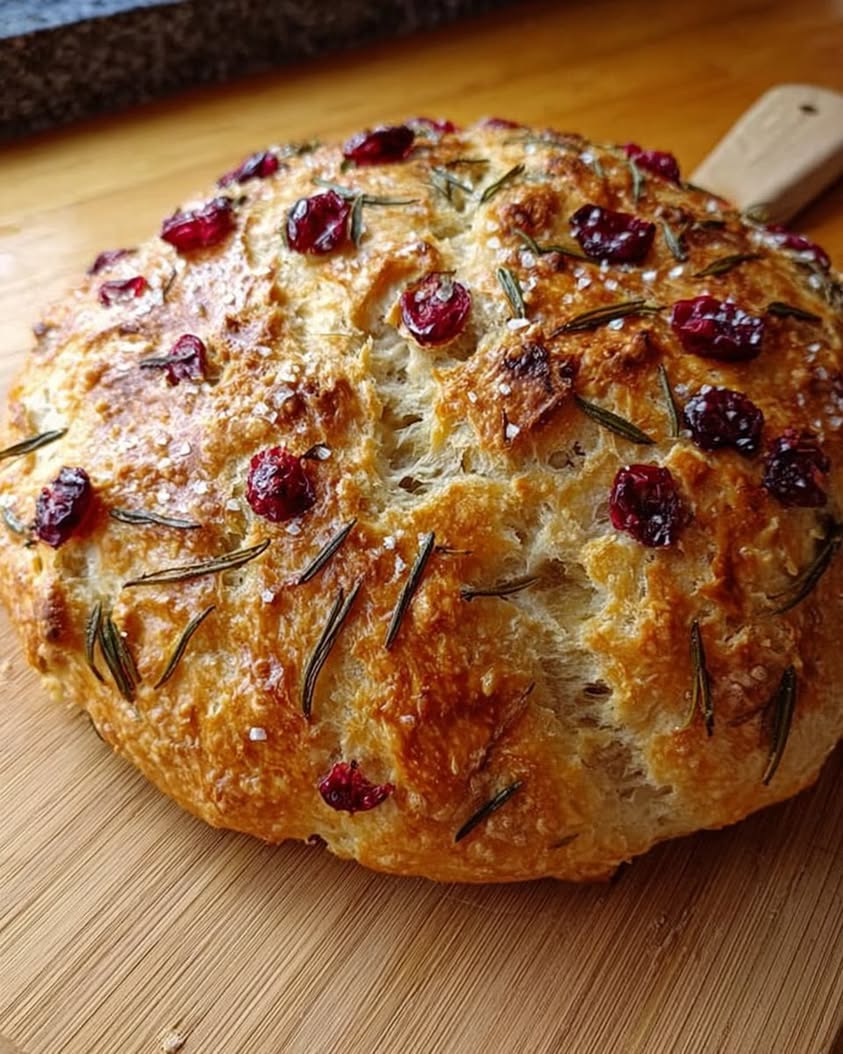
No-Knead Rosemary Cranberry Bread with Olive Oil and Sea Salt: A Rustic Artisan Loaf for Everyone
Have you ever walked past a bakery and stopped in your tracks because of that incredible smell? The aroma of freshly baked bread, mingled with fragrant herbs and a hint of fruitiness, is a truly intoxicating experience. With this No-Knead Rosemary Cranberry Bread with Olive Oil and Sea Salt, you can bring that same magic directly into your own kitchen. This is not just another bread recipe; it is a journey of simple ingredients transforming into something extraordinary.
Imagine a crust that shatters under your knife, revealing a soft, airy interior dotted with tart cranberries and fragrant rosemary. A generous drizzle of good olive oil and a final sprinkling of sea salt elevate this loaf to a whole new level of flavor. The best part, however, is the process. There is no complicated kneading, no messy countertops, and no special skills required. This is a recipe designed for everyone, from the seasoned baker to the complete beginner who simply wants to create a beautiful, delicious loaf of bread.
We will walk you through every step, from mixing the incredibly wet dough to the final, satisfying slice. You will learn the secrets behind the long, slow fermentation that builds such incredible taste and texture. By the time you pull this golden loaf from the oven, you will not only have a stunning centerpiece for your table but also a new-found confidence in your baking abilities. This No-Knead Rosemary Cranberry Bread with Olive Oil and Sea Salt is about to become your new favorite staple.
Quick Recipe Highlights
- Flavor Profile: This bread offers a beautiful balance of savory and sweet. The peppery, floral notes of fresh rosemary perfectly complement the tart burst of dried cranberries. Extra virgin olive oil adds a rich, fruity undertone, while flaky sea salt provides a subtle, satisfying crunch that enhances every other flavor.
- Texture: Expect a dramatically crisp, deeply golden crust that gives way to a soft, chewy crumb with an open, irregular structure. The wet dough creates large air pockets, resulting in a light and airy interior that is perfect for sopping up sauces or olive oil. The cranberries add little chewy pockets of sweetness.
- Aroma: The scent of this baking bread is heavenly and fills your entire home. You will smell the intoxicating fragrance of rosemary mingling with the warm, yeasty aroma of the dough. As it bakes, the olive oil contributes a grassy, fruity note that makes the entire experience deeply comforting.
- Visual Appeal: This loaf is a rustic beauty. It bakes up round and generous, with a deep amber-brown crust that is beautifully blistered and cracked. Specks of green rosemary and deep red cranberries are visible throughout the crumb, and the final sprinkle of sea salt crystals glistens on the surface, making it look like it came straight from a professional bakery.
- Skill Level Needed: This recipe is perfect for beginners. Because there is no kneading, the physical technique is virtually nonexistent. The most challenging part is waiting for the dough to rise, and that requires zero effort. Anyone can successfully make this loaf on their very first try.
- Special Equipment: You will need a large mixing bowl, a Dutch oven or a heavy-bottomed pot with a lid, and a piece of parchment paper. A digital kitchen scale is highly recommended for accuracy, but measuring cups work well too. That is it, no stand mixer or bread machine required.
Recipe Overview
- Difficulty Level: We classify this as an easy recipe because it requires no active physical work like kneading. The process relies on a long, slow fermentation which does the hard work for you. The main skills involve accurately measuring ingredients and mastering the simple technique of shaping a slack dough. It is an incredibly forgiving recipe for any home cook.
- Category: This is an artisan bread recipe that falls perfectly into the categories of side dish, appetizer base, or even a hearty snack. It is wonderful for serving alongside soups and stews, or as the foundation for a gourmet grilled cheese. It also makes an excellent breakfast toast with butter and jam.
- Cuisine: This recipe draws heavily from the Italian and Provencal culinary traditions. The combination of rosemary, olive oil, and sea salt is a classic Mediterranean trifecta. The no-knead technique itself, popularized by Jim Lahey of the Sullivan Street Bakery, has roots in rustic French and Italian bread-making methods that favor time over effort.
- Cost: This is a very cost-effective recipe to make. The primary ingredients—flour, water, salt, and yeast—are pantry staples that cost pennies per serving. Dried cranberries and fresh rosemary are affordable additions, and a good quality olive oil is the only potentially pricier ingredient, but you only need a few tablespoons. Overall, this loaf costs less than a fraction of what you would pay for a similar artisan loaf at a bakery.
- Season: While you can make this bread all year round, it is especially wonderful in the fall and winter. The flavors of rosemary and cranberries are classic holiday pairings, but the bread also shines in the spring and summer when fresh rosemary is in abundant supply in the garden. It is a versatile loaf for any season.
- Occasion: This bread is perfect for a wide range of occasions. It makes a stunning and impressive hostess gift for a dinner party. It is a welcome addition to any holiday table, from Thanksgiving to Christmas. It also elevates a simple weeknight soup dinner into something special, making any day feel like a celebration.
Why You Will Love This Recipe
Taste and Texture Appeal. The taste of this bread is a symphony of contrasts. The crust is incredibly crisp and shatters when you bite into it, while the interior crumb is soft, tender, and full of nooks and crannies. The tartness of the cranberries cuts through the richness of the olive oil, and the piney freshness of the rosemary lingers pleasantly on your palate. The flaky sea salt on top provides a final, perfect pop of salinity that brings every single flavor into sharp focus. It is a deeply satisfying eating experience that you will crave again and again.
Convenience and Preparation Benefits. The sheer convenience of this method is its greatest selling point. You combine all the ingredients in a single bowl, stir them together with a spoon for about a minute, and then you walk away. The dough does all the work over the next 12 to 18 hours as it develops its flavor and structure through a slow, cold fermentation. The active time is genuinely only about 15 minutes, making it perfect for a busy lifestyle. You can mix the dough one evening and bake the bread the next day.
Nutritional Advantages. As a whole food, this homemade bread is far healthier than most commercially produced loaves. It contains no preservatives, dough conditioners, or added sugars. You control the quality of the ingredients, allowing you to use high-quality olive oil and unbleached flour. The cranberries provide a dose of antioxidants, and the rosemary offers anti-inflammatory properties. Moreover, the long fermentation process makes the bread easier to digest for many people.
Social and Entertaining Value. Imagine the look on your guests faces when you pull a gorgeous, steaming hot loaf of bread out of your oven. The act of baking bread is itself an act of hospitality and love. This bread becomes a conversation starter and a shared experience. People love to tear into a warm, crusty loaf and dip it into good olive oil or a hearty soup. It instantly elevates any gathering, from a casual lunch to a formal dinner party, and makes you look like a culinary hero.
Cost-effectiveness and Accessibility. Baking your own bread is one of the most economical ways to enjoy high-quality food. This recipe uses only the most basic and inexpensive ingredients. You can buy a large bag of flour and a jar of yeast that will last for dozens of loaves. Dried cranberries and rosemary are also very affordable. For a fraction of the cost of a single artisan loaf from a specialty bakery, you can produce an entire loaf, and you get the immense satisfaction of having made it yourself.
Historical Background and Cultural Significance
The concept of no-knead bread is a relatively recent innovation in the long history of baking, but it is rooted in ancient traditions. For centuries, bakers have known that time is a crucial ingredient for developing flavor and structure. The technique of using a very wet dough and a long, slow fermentation was common in many European farmhouses. However, it was largely forgotten in the industrial age. The true modern revival came in 2006 when Jim Lahey of the Sullivan Street Bakery in New York published his now-famous recipe in the New York Times.
This recipe takes those fundamental principles and marries them with classic Mediterranean flavors. Rosemary has been used in cooking and medicine since ancient times, with roots in Greek, Roman, and Egyptian cultures. It symbolizes remembrance and fidelity. Cranberries are native to North America and were a staple food for Native American tribes, who used them for their nutritional and preservative qualities. Combining these two ingredients creates a unique fusion of New World and Old World flavors.
Olive oil holds a profound cultural significance in the Mediterranean region, often referred to as liquid gold. It has been a cornerstone of the diet and economy for thousands of years. In this bread, the olive oil does more than just add flavor; it tenderizes the crumb and contributes to the crispness of the crust. Sea salt, harvested from evaporated seawater, is one of the oldest and most essential ingredients in human history. It was used to preserve food and as a form of currency.
The evolution of this recipe reflects a broader movement towards slow food and simple living. People are increasingly turning away from processed, packaged foods and rediscovering the joy of making things from scratch. This No-Knead Rosemary Cranberry Bread with Olive Oil and Sea Salt is a perfect example of that trend. It takes a handful of humble ingredients and, through the magic of time and patience, transforms them into something deeply nourishing and beautiful. It is a recipe that connects us to centuries of baking tradition while fitting perfectly into our modern, busy lives.
Ingredient Deep Dive
Bread Flour. Bread flour is the backbone of this loaf. Culturally, wheat has been a staple grain for human civilization for thousands of years, and bread flour is its refined form with a higher protein content. Nutritionally, it provides complex carbohydrates for sustained energy and a moderate amount of protein. When selecting bread flour, look for unbleached varieties for the best flavor and texture. Store it in an airtight container in a cool, dry place, or even in the freezer for long-term storage. If you do not have bread flour, you can substitute all-purpose flour, but the resulting bread will be slightly less chewy and have a softer crumb.
Active Dry Yeast. Yeast is the living microorganism that makes bread rise. Its history is ancient; humans have used it for leavening bread for over 5,000 years. Beyond its functional role, yeast contributes a significant amount of flavor to the final loaf through the process of fermentation. Nutritionally, it is a source of B vitamins. When selecting yeast, ensure it is fresh and within its expiration date. Store it in a cool, dark place or in the refrigerator after opening. You can substitute instant yeast for active dry, but you can mix it directly with the dry ingredients without proofing it first.
Dried Cranberries. Dried cranberries bring a burst of tart sweetness and a chewy texture to the bread. Cranberries are native to North America and have a long history of use by indigenous peoples for food and medicine. They are rich in antioxidants, particularly proanthocyanidins, which are known for their urinary tract health benefits. When selecting dried cranberries, look for ones that are plump and moist, and check the ingredient list to avoid those with added sugars or oils. Store them in a sealed bag in a cool, dark place. You can substitute dried cherries, golden raisins, or chopped dried apricots for a different flavor profile.
Fresh Rosemary. Fresh rosemary adds an aromatic, piney, and slightly floral flavor that is essential to this recipe. Rosemary is an evergreen herb native to the Mediterranean region and has been used for centuries in cooking, medicine, and even as a symbol of remembrance. It contains antioxidants and anti-inflammatory compounds. For the best flavor, always choose fresh rosemary over dried. Look for vibrant, green sprigs with no signs of wilting. Store it in the refrigerator wrapped in a damp paper towel inside a plastic bag. You can substitute dried rosemary, but use only one-third of the amount, as the flavor is much more concentrated.
Extra Virgin Olive Oil. The olive oil contributes richness, fruitiness, and a tenderizing effect on the crumb. Olive oil is a cornerstone of the Mediterranean diet, celebrated for its heart-healthy monounsaturated fats and antioxidants. Its cultural significance is immense, dating back to ancient Greece and Rome. When selecting olive oil, choose a good quality extra virgin variety for the best flavor. Store it in a cool, dark place away from heat and light. For a different flavor, you can substitute a light olive oil or even a neutral oil like avocado oil, but the final bread will be less flavorful.
Flaky Sea Salt. The final sprinkle of flaky sea salt is not just a garnish; it provides a crucial textural and flavor contrast. Sea salt is harvested through the evaporation of seawater and retains trace minerals that give it a more complex flavor than table salt. Flaky salt, like Maldon, has a delicate, pyramid-like crystal structure that provides a satisfying crunch. Use it sparingly on top of the loaf just before baking. You can substitute kosher salt or any other coarse sea salt, but the texture will be slightly different.
Common Mistakes to Avoid
- Not Using a Kitchen Scale: Measuring flour by volume with cups is notoriously inaccurate. A cup of flour can vary by 20% or more depending on how you scoop it. Using a scale ensures you have the correct hydration level, which is critical for a wet, no-knead dough. This is the number one mistake that can ruin your bread.
- Skipping the Long Fermentation: The 12 to 18 hour rise is not optional. This long, slow fermentation is what develops the complex flavor and the open, airy crumb structure. If you rush this step, you will end up with a dense, bland loaf of bread. Be patient and let the dough do its work.
- Using a Cold Dutch Oven: A hot Dutch oven is essential for creating the initial burst of steam that creates a crispy crust. Never put your dough into a cold pot. Preheat your Dutch oven in the oven for at least 30 minutes before you bake. This ensures a perfect, golden crust.
- Over-flouring Your Work Surface: The dough will be very sticky, and you will be tempted to add a lot of flour. However, too much flour will dry out the dough and make the bread dense. Use a gentle touch and only a light dusting of flour to prevent sticking. Wet your hands slightly to help handle the dough.
- Not Scoring the Dough: Scoring is the shallow cut you make on top of the dough right before baking. This cut directs the expansion of the bread as it bakes, preventing it from bursting unpredictably on the sides. If you skip this step, your loaf will have an ugly, irregular crack. Use a very sharp knife or a bread lame.
- Opening the Oven Too Early: For the first 30 minutes of baking, the bread needs to be in a sealed pot to trap steam. Opening the oven or the Dutch oven lid too early will release that steam, resulting in a pale, soft crust. Resist the urge to peek until the timer goes off.
- Using Old or Inactive Yeast: Yeast is a living organism and can die over time. If your yeast is old or has been stored improperly, it may not have enough power to raise the dough. Always check the expiration date and consider proofing your yeast in warm water for a few minutes to ensure it is active and bubbly.
- Baking on the Top Rack: The top of the loaf can burn easily once the lid is removed. It is best to bake the bread on the middle or lower-middle rack of the oven. This provides even heat distribution and prevents the top from darkening too quickly while the bottom finishes baking.
- Skipping the Cooling Time: It is incredibly tempting to slice into the bread when it is still warm from the oven. However, cutting into a hot loaf will cause the interior to become gummy and doughy. Let the bread cool completely on a wire rack for at least one hour. This allows the steam to escape and the crumb structure to set.
- Not Using Parchment Paper: Lining your Dutch oven with parchment paper makes it extremely easy to lift the dough in and out of the hot pot. Without it, the dough can stick and burn, making removal difficult and messy. Always use a sling of parchment paper for the easiest and safest handling.
Essential Techniques
The Mixing Method. The technique for mixing a no-knead dough is simple but specific. You combine all the dry ingredients first to ensure the yeast and salt are evenly distributed. Then, you add the warm water and olive oil and stir everything together with a wooden spoon or a stiff spatula. You mix until there are no dry patches of flour left and you have a uniformly shaggy, sticky dough. Do not over-mix; just a minute or so of stirring is sufficient. The dough is supposed to look wet and rough at this stage.
Mastering the Wet Dough. The hallmark of no-knead bread is its high hydration. This extremely wet dough is what makes the long fermentation necessary and also what creates the open, airy crumb. It is important to understand that you cannot treat this dough like a traditional bread dough. It will be sticky and loose, not firm and smooth. You will shape it using a gentle touch and a heavily floured surface, or by using wet hands to prevent sticking. Embrace the wetness; it is the key to your success.
Creating Steam in the Oven. Steam is the most critical element for achieving a crackling crust. The Dutch oven method is the easiest way to create this steam at home. The heavy, preheated pot traps the moisture released from the dough as it bakes, creating a steamy environment. This steam keeps the surface of the dough soft and pliable, allowing it to expand fully before the crust sets. After about 30 minutes, you remove the lid to allow the crust to dry out and turn golden brown and crisp.
The Art of Shaping a Slack Dough. Shaping a high-hydration dough is a skill that improves with practice. You lightly flour your work surface and your hands. Then, you gently coax the dough into a round boule shape by tucking the edges underneath. You do not need to stretch or pull the dough aggressively. The goal is to create surface tension on the top of the loaf, which helps it rise up rather than spread out flat. Visual cues include seeing a smooth, taut dome on top of the loaf.
Pro Tips for Perfect No-Knead Rosemary Cranberry Bread
1. For the most intense rosemary flavor, gently crush the fresh rosemary needles between your fingers before adding them to the dough. This releases the aromatic oils and distributes the flavor more evenly throughout the bread. Do not chop the rosemary too finely, as you want to see and taste distinct green flecks in the finished loaf.
2. Consider rehydrating your dried cranberries in warm water or orange juice for 15 minutes before adding them to the dough. This simple step plumps them up and prevents them from drawing moisture out of the dough, which can make the bread dry. Drain them well and pat them dry before mixing them in.
3. The temperature of your water is crucial. It should be warm, around 105 to 110 degrees Fahrenheit. If the water is too hot, it will kill the yeast. If it is too cold, it will slow down the fermentation. A good rule of thumb is that the water should feel pleasantly warm to the inside of your wrist, like bathwater.
4. When you are ready to bake, place your Dutch oven in the oven as it preheats. You want both the oven and the pot to be at the full 450 degrees Fahrenheit for at least 30 minutes. This ensures the pot is searing hot, which creates the immediate burst of steam needed for the best crust.
5. Do not skip the final proofing step after shaping. This 30-minute rest on the parchment paper allows the gluten to relax and the dough to start its final rise. Cover it loosely with a towel to prevent the surface from drying out. It will puff up slightly during this time.
6. For an even more dramatic crust, you can spray the dough with a little water from a spray bottle just before you put the lid on the Dutch oven. This adds a bit more moisture into the pot. The resulting crust will be even shatteringly crisp.
Variations and Adaptations
Regional Variations. This recipe lends itself beautifully to regional twists. For a Tuscan-inspired version, swap the cranberries for chopped sun-dried tomatoes and add a tablespoon of chopped fresh sage. For a taste of the American Southwest, replace the rosemary with chopped fresh cilantro and the cranberries with dried corn kernels and a pinch of cumin. These simple changes can transport the flavor profile to a completely different part of the world.
Seasonal Adaptations. Embrace the changing seasons by swapping out the mix-ins. In the spring, use fresh chopped chives and dried morel mushrooms. In the summer, fold in fresh blueberries and a little lemon zest. In the fall, try chopped fresh sage and crisp apple chunks. Each season offers unique flavors that will make this bread feel new and relevant all year.
Dietary Modifications. For a gluten-free version, you can use a high-quality gluten-free all-purpose flour blend. Note that the texture will be denser and less airy. For a vegan version, the base recipe is already vegan-friendly. To make it oil-free, simply omit the olive oil from the dough and increase the water by two tablespoons. The bread will be slightly less tender but still delicious.
Flavor Variations. Expand the savory profile by adding half a cup of grated Parmesan cheese or crumbled feta cheese along with the rosemary. For a spicy version, add a teaspoon of red pepper flakes or a few twists of black pepper. You could also add a tablespoon of honey or maple syrup to the dough for a sweeter, more complex background flavor that contrasts with the tart cranberries.
Texture Modifications. For a bread with a denser, more sandwich-friendly crumb, you can reduce the water in the recipe by about 50 grams, or about four tablespoons. This will make the dough easier to shape and result in a more uniform texture. For a nutty crunch, fold in half a cup of toasted walnuts or pecans along with the cranberries. Toast the nuts beforehand to enhance their flavor.
Presentation Alternatives. Instead of baking the dough in a round boule, you can shape it into a long, oval batard. You can also bake it in a greased loaf pan for a classic sandwich bread shape. For individual servings, divide the dough into smaller pieces and bake them as rolls for about 20 to 25 minutes. Each presentation offers a different aesthetic for your table.
Serving and Presentation Guide
Plating Techniques. The beauty of this rustic bread is that it needs very little help to look stunning. Serve the whole loaf on a large wooden cutting board or a rustic bread basket lined with a clean, colorful kitchen towel. For a more refined presentation, you can slice it neatly and fan the slices out on a platter. Always present the cut side of the bread to show off the beautiful crumb and the specks of cranberries and rosemary.
Garnishing Ideas. A simple yet elegant garnish is a drizzle of high-quality extra virgin olive oil over the cut slices and another light sprinkle of flaky sea salt. A few fresh rosemary sprigs placed artfully on the board or platter reinforce the flavor of the bread. For a sweet and salty contrast, serve the bread with a small dish of honey or a high-quality balsamic glaze for dipping.
Traditional Accompaniments. This bread is the perfect partner for a bowl of hearty Italian minestrone soup or a creamy roasted tomato bisque. It is also excellent alongside a fresh green salad with a tangy vinaigrette. For a cheese board, it pairs wonderfully with sharp cheddar, creamy goat cheese, or a nutty Gruyere. A simple dish of olive oil and balsamic vinegar for dipping is always a crowd-pleaser.
Modern Serving Suggestions. Use thick slices of this bread as the base for gourmet avocado toast topped with cherry tomatoes and everything bagel seasoning. It also makes incredible croutons for a Caesar salad. Simply cube the bread, toss with olive oil, salt, and pepper, and bake until golden. You can also use it to make a decadent bread pudding for dessert.
Temperature Considerations. This bread is best enjoyed warm from the oven or at room temperature. If you are serving it later, reheat it in a 350-degree Fahrenheit oven for about 10 minutes to refresh the crust. Avoid microwaving the bread, as it will make the crust soft and rubbery. If you have leftover slices, you can toast them for a wonderful crunch.
Portion Control Tips. One recipe yields one large loaf that serves about eight people as a side dish. For a larger gathering, you can easily double the recipe and bake two loaves. If you are serving it as an appetizer, one loaf can easily serve 10 to 12 people. For individual portions, slice the bread into thick, generous slices.
Wine and Beverage Pairing
Wine Pairings. The herbaceous and fruity notes of this bread make it a fantastic companion for wine. For a white, try a crisp Sauvignon Blanc, whose grassy notes will echo the rosemary. A rich, unoaked Chardonnay will complement the olive oil. For reds, a light-bodied Pinot Noir is a beautiful match, as its earthy, berry flavors play off the cranberries. A Chianti Classico, with its Sangiovese base, is also a classic and excellent pairing.
Non-alcoholic Alternatives. A sparkling water with a slice of lemon or lime provides a clean, palate-cleansing contrast to the breads richness. A high-quality apple cider or a non-alcoholic rosé are also wonderful choices. A simple iced herbal tea, such as a rosemary and mint blend, directly ties into the flavors of the bread itself, creating a harmonious pairing.
Coffee and Tea Pairings. This bread makes a surprisingly excellent partner for a morning cup of coffee. The bitterness of a dark roast coffee cuts through the breads sweetness and savory fat. For tea, a robust Earl Grey with its bergamot notes is a lovely match. A chai tea, with its warm spices, also creates a comforting and complex flavor experience, especially in the fall.
Temperature Considerations. White wines should be served chilled, around 45 to 50 degrees Fahrenheit. Light reds like Pinot Noir are best served slightly cool, around 55 to 60 degrees. Coffee and tea should be served hot to contrast with the room temperature or warm bread. If you are serving a sparkling beverage, ensure it is well-chilled for the most refreshing experience.
Serving Suggestions. When serving wine, pour a small amount and allow guests to sip and taste the bread together. Provide small dipping bowls of olive oil and balsamic vinegar to enhance the pairing. For a non-alcoholic option, offer a pitcher of infused water with rosemary springs and cranberries to echo the flavors of the meal. This creates a cohesive and thoughtful experience.
Storage and Shelf Life
Storage Methods. The best way to store this bread is to keep it in a paper bag at room temperature. A paper bag allows air to circulate, which helps maintain the crispness of the crust. Avoid storing it in a plastic bag, as the trapped moisture will make the crust soft and chewy. If the crust does soften, you can refresh it in a hot oven for a few minutes.
Temperature Requirements. Store the bread at a cool room temperature, ideally between 65 and 70 degrees Fahrenheit. Do not store it in the refrigerator. The cold environment of a refrigerator actually speeds up the staling process, causing the bread to become dry and stale much more quickly. The best place is on your countertop, covered loosely with a cloth or in a paper bag.
Container Recommendations. A paper bag is the ideal container for short-term storage. For longer storage, you can use a bread box, which provides the perfect balance of airflow and humidity. A ceramic bread crock is another excellent option, as it is breathable. Never use an airtight plastic container, as it will ruin the crust texture.
Signs of Spoilage. Given the low moisture content, this bread is not very prone to mold, but it can happen. Look for any fuzzy green or white spots on the surface. If you see mold, discard the entire loaf immediately. The most common sign of age is staleness, where the bread becomes hard and dry. This is still safe to eat but will not taste very good.
Reheating Instructions. The best way to revive day-old bread is to reheat it in the oven. Preheat your oven to 350 degrees Fahrenheit. Place the whole loaf directly on the oven rack or on a baking sheet for about 10 to 15 minutes. This will restore the crisp crust and warm the soft interior. Alternatively, you can slice the bread and toast individual slices.
Freezing Guidelines. This bread freezes beautifully. To freeze, let the bread cool completely after baking. Then, wrap it tightly in a layer of plastic wrap, followed by a layer of aluminum foil. This double wrapping prevents freezer burn. You can freeze the whole loaf or pre-slice it for convenience. It will keep for up to three months. To thaw, simply leave it at room temperature for a few hours, and reheat in the oven.
Make Ahead Strategies
Prep Timeline. The beauty of this recipe is that you can spread the work over two days. On day one, mix the dough in the evening, taking just about 15 minutes. Then, let it ferment at room temperature for 12 to 18 hours overnight. On day two, you shape, proof, and bake the bread. This timeline allows you to have fresh bread for lunch or dinner with minimal effort on the day of serving.
Storage Between Steps. After the initial long fermentation, the dough can be stored in the refrigerator for up to 24 hours. This cold retard slows down the yeast activity even further, which can actually deepen the flavor of the bread. If you refrigerate the dough, you will need to let it sit at room temperature for about 45 minutes Print
No-Knead Rosemary Cranberry Bread with Olive Oil & Sea Salt
- Total Time: 13 hours (includes rising time)
- Yield: 8
Description
A simple, rustic no-knead bread infused with fresh rosemary, dried cranberries, and a touch of olive oil, topped with flaky sea salt.
Ingredients
- 3 cups all-purpose flour
- 1 1/2 teaspoons salt
- 1/2 teaspoon active dry yeast
- 1 1/2 cups warm water (110°F)
- 2 tablespoons olive oil
- 1/2 cup dried cranberries
- 2 tablespoons fresh rosemary, finely chopped
- 1 teaspoon flaky sea salt (for topping)
Instructions
- In a large bowl, whisk together flour, salt, and yeast. Add warm water and olive oil; stir until a shaggy dough forms. Fold in cranberries and rosemary.
- Cover the bowl with plastic wrap and let the dough rest at room temperature for 12-18 hours until bubbly and doubled in size.
- Turn the dough onto a generously floured surface. Fold it over itself a few times to shape into a round loaf. Place on a parchment-lined baking sheet, cover with a towel, and let rise for 30 minutes.
- Preheat oven to 450°F. Place a Dutch oven inside to heat for 30 minutes.
- Carefully transfer the dough (with parchment) into the hot pot. Sprinkle the top with flaky sea salt. Cover and bake for 30 minutes, then uncover and bake 15 more minutes until golden brown and hollow-sounding when tapped.
- Cool completely on a wire rack before slicing. Brush with additional olive oil if desired.
Notes
You can customize the seasonings to taste.
- Prep Time: 15 minutes
- Cook Time: 45 minutes
- Method: Bread
- Cuisine: American