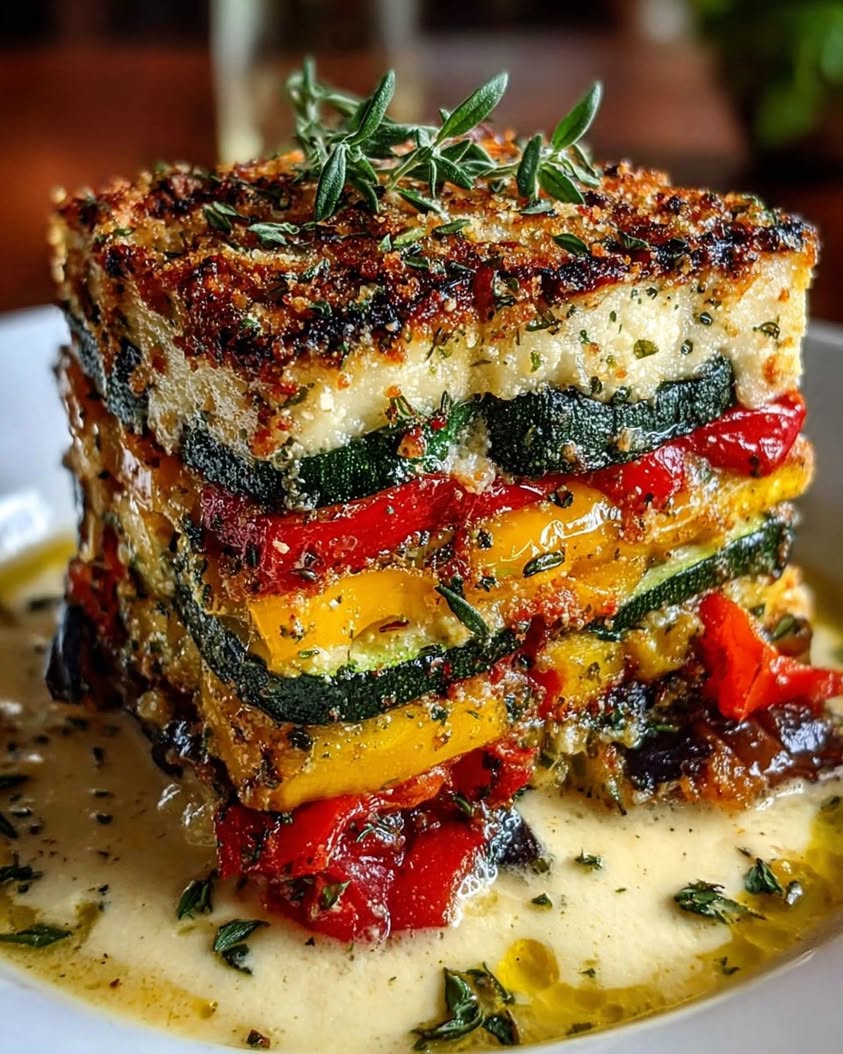
Layered Mediterranean Vegetable Lasagna with Creamy Garlic Herb Cheese Sauce: A Healthy, Flavor-Packed Twist on a Classic Comfort Dish
Imagine sinking your fork into a perfectly baked casserole that is bursting with the vibrant colors and robust flavors of the Mediterranean. This is not your ordinary lasagna. Our Layered Mediterranean Vegetable Lasagna with Creamy Garlic Herb Cheese Sauce replaces heavy pasta with tender layers of eggplant and zucchini, and it swaps a thick béchamel for a light but decadent drizzle of creamy cheese. You will find that each bite offers a rich, savory experience that is both healthy and incredibly satisfying. This recipe is designed to be the star of your dinner table, and it is surprisingly simple to assemble for a weeknight meal or a special gathering.
We have carefully crafted this dish to highlight the natural sweetness of roasted red and yellow bell peppers. The mild bitterness of the eggplant and the subtle, grassy notes of the zucchini create a perfect harmony. What truly sets this lasagna apart is the luxurious creamy garlic herb three-cheese drizzle. It is a blend that is velvety smooth, tangy, and packed with fresh herbs. Every layer is deliberate, building a complex flavor profile that will impress anyone who takes a bite. This is a vegetable-forward meal that even the biggest meat-lover will adore.
We understand that cooking a vegetable lasagna can sometimes feel intimidating. You might worry about it being watery or bland, but we have developed this recipe to avoid those common pitfalls. We will guide you through the process of salting the eggplant to remove moisture, and we will show you how to roast the peppers for maximum sweetness. The result is a lasagna that holds together beautifully and delivers a powerful, concentrated taste. Get ready to discover your new favorite way to enjoy a Mediterranean feast in a single, gorgeous dish.
Quick Recipe Highlights
- Flavor Profile: The dish offers a balanced taste of savory, slightly sweet roasted peppers and earthy eggplant. The creamy garlic herb cheese sauce adds a sharp, tangy, and herbaceous finish that ties everything together beautifully.
- Texture: You will experience a wonderful contrast between the tender, melt-in-your-mouth vegetables and a rich, smooth, and slightly thick cheese drizzle. The layers hold their shape well, creating a satisfying, cohesive bite every time.
- Aroma: The scent of roasting peppers and garlic fills your kitchen with a warm, sweet, and inviting Mediterranean fragrance. The fresh herbs in the cheese sauce add an uplifting, bright aroma that promises a delicious meal.
- Visual Appeal: This lasagna is a visual masterpiece, with vibrant green, deep purple, bright yellow, and fiery red stripes. The white, creamy cheese sauce creates an elegant marbled effect on top, making it look as good as it tastes.
- Skill Level Needed: You need basic knife skills for chopping vegetables and some experience with making a simple stovetop sauce. However, the process is straightforward, and we provide clear instructions to guide you through every single step.
- Special Equipment: You will need a 9×13 inch baking dish, a large skillet or sauté pan, and a sharp knife. A mandoline slicer is helpful for getting even vegetable slices, but a steady hand and a sharp knife will work just as well.
Recipe Overview
- Difficulty Level: We have labeled this recipe as intermediate because it requires multiple steps, including prepping and roasting vegetables, creating a cheese sauce, and layering everything with care. However, none of the individual steps are complex, making it a great project for a confident home cook who wants to create something impressive.
- Category: This recipe fits perfectly as a hearty main course for lunch or dinner. It also serves as a fantastic side dish for grilled meats or fish, and it is a popular choice for a vegetarian feast during holidays or family gatherings.
- Cuisine: The recipe is deeply rooted in Mediterranean culinary traditions, taking inspiration from Italian, Greek, and Middle Eastern cooking. The use of eggplant, zucchini, bell peppers, garlic, and fresh herbs is a hallmark of this sun-drenched region.
- Cost: The total cost is relatively low, especially considering the decadent results. Eggplant and zucchini are very affordable, and bell peppers are often found on sale. The cheese, while requiring a few different types, is used in moderate quantities, keeping the overall expense manageable.
- Season: This lasagna is best enjoyed during the late summer and early autumn when eggplants, zucchini, and bell peppers are at their peak ripeness. You will find these vegetables are at their sweetest and most flavorful during this time, which enhances the final dish significantly.
- Occasion: It is a wonderful dish for a Sunday family dinner, a potluck with friends, or a special holiday meal like Easter or Thanksgiving. It is also a fantastic choice for a “Meatless Monday” dinner that is so satisfying, nobody will miss the meat.
Why You’ll Love This Recipe
The primary reason to love this Layered Mediterranean Vegetable Lasagna with Creamy Garlic Herb Cheese Sauce is its incredible taste and texture. The vegetables are roasted until they are soft and caramelized, which brings out a deep, natural sweetness. The creamy sauce is rich and tangy, and it perfectly coats every vegetable layer. As a result, you get a complex flavor profile that is both comforting and exciting. Moreover, the textures are a joy to experience, from the tender eggplant to the slight resistance of the perfectly cooked zucchini.
We designed this recipe with your convenience in mind. The prep work is straightforward, and the assembly is simple. You can easily roast the vegetables and prepare the sauce while the oven is preheating. Furthermore, this dish can be made completely ahead of time, which is a huge benefit for busy weeknights. You can assemble it on Sunday and then simply bake it on Monday after work. It also stores and reheats wonderfully, making it an excellent candidate for meal prep or for enjoying leftovers the next day.
This recipe is a nutritional powerhouse. It is packed with fiber from the eggplant, zucchini, and bell peppers, which promotes good digestion. The vitamins and antioxidants found in these colorful vegetables support a strong immune system and healthy skin. Additionally, the cheese sauce provides a good source of calcium and protein. By choosing this dish, you are serving a meal that is both delicious and genuinely good for you. We believe that eating well should never feel like a sacrifice, and this lasagna proves that point perfectly.
The social and entertaining value of this recipe is enormous. It presents beautifully, with its vibrant layers and creamy white top. When you bring it to the table, it will immediately draw gasps of admiration. Your guests will be impressed by the sophisticated flavors and the artistic presentation. It is a perfect conversation starter, and it caters beautifully to both vegetarians and those simply looking for a vegetable-forward meal. We think it is the kind of dish that will make your dinner party unforgettable.
Finally, we love that this recipe is cost-effective and uses accessible ingredients. None of the components are expensive or difficult to find in a standard grocery store. Eggplant and zucchini are among the most affordable vegetables, and bell peppers are often very reasonably priced. The cheeses, while providing a gourmet touch, are used sparingly. This makes the Layered Mediterranean Vegetable Lasagna with Creamy Garlic Herb Cheese Sauce a luxurious-tasting meal that is still kind to your wallet. It is a perfect example of how a few simple, high-quality ingredients can create something truly spectacular.
Historical Background and Cultural Significance
The concept of layering vegetables in a casserole is a practice that stretches back centuries across the Mediterranean basin. In Italy, the famous “Parmigiana di Melanzane” is a direct ancestor of this dish. That classic recipe layers fried eggplant slices with tomato sauce, basil, and generous amounts of Parmigiano-Reggiano and mozzarella. It is a staple of Southern Italian cuisine, particularly from the regions of Campania and Sicily. Our recipe takes that basic concept and expands upon it, incorporating other beloved Mediterranean vegetables and a unique, creamy sauce.
Eggplant and zucchini are foundational ingredients in many Mediterranean cultures. In Greece, eggplant is the star of “Moussaka,” a layered casserole with minced meat and a creamy béchamel sauce. In Turkey, “Imam Bayildi” features eggplant stuffed with onions, garlic, and tomatoes. Zucchini, or courgette, is equally celebrated, often grilled, stuffed, or used in fritters across France, Italy, and Greece. By combining these two vegetables, we are paying homage to their deep cultural roots. They represent the sun, the soil, and the simple, elegant cooking of the region.
This particular recipe evolved as home cooks began seeking healthier and more vegetable-centric versions of classic lasagnas. The traditional lasagna is heavy on pasta and meat, but this version highlights the vegetables as the star. The creamy garlic herb cheese sauce is a modern twist on the classic béchamel. It is lighter and more flavorful, bringing a fresh, herbaceous note that complements the roasted vegetables perfectly. This evolution shows how culinary traditions are not static; they adapt to new tastes, dietary needs, and available ingredients.
Regional variations of this dish are endless. In Provence, a similar dish is called “Tian,” which relies on thinly sliced vegetables arranged in a spiral pattern. In the Middle East, you might find a “Musaqa’a” that uses chickpeas and a tahini sauce instead of cheese. In Spain, “Pisto” is a ratatouille-like dish that is often served with a fried egg on top. This Layered Mediterranean Vegetable Lasagna with Creamy Garlic Herb Cheese Sauce is a beautiful synthesis of all these traditions, bringing together the best elements from across the region into one harmonious, delicious whole.
Ingredient Deep Dive
Eggplant: The eggplant is a member of the nightshade family and is believed to have originated in India and China. It has been a staple in Mediterranean cooking for centuries, prized for its ability to absorb flavors and develop a creamy texture when cooked. Nutritionally, eggplant is low in calories and a good source of dietary fiber, manganese, and antioxidants like nasunin, which is good for brain health. When selecting an eggplant, look for one that is heavy for its size with smooth, shiny, and taut skin. It should have a vibrant green cap. Avoid eggplants with soft spots or wrinkles. To store, keep them in a cool, dry place or the refrigerator drawer for up to a week. For this recipe, you can substitute with portobello mushrooms for a meatier texture, though the flavor will be different.
Zucchini: Zucchini, also known as summer squash, is a versatile vegetable that is actually a fruit botanically. It has a delicate, slightly sweet flavor and a tender texture. It is native to the Americas but has been enthusiastically adopted into Italian and French cuisine. Zucchini is incredibly low in calories and packed with vitamin C, vitamin A, and potassium. It also contains a significant amount of water, which is why we need to be careful about moisture in the lasagna. When shopping, choose zucchini that are small to medium in size, firm, and free of blemishes. The skin should be glossy and bright. Store them in a plastic bag in the refrigerator for up to a week. You can substitute yellow summer squash, which has a very similar texture and flavor profile.
Bell Peppers (Yellow and Red): Red and yellow bell peppers are simply green bell peppers that have been allowed to ripen fully on the vine. This ripening process makes them much sweeter and more nutrient-dense. They are excellent sources of vitamins A and C, as well as vitamin B6 and folate. The vibrant colors come from carotenoids, which are powerful antioxidants. When selecting bell peppers, look for ones that are firm, glossy, and heavy for their size. The skin should be tight and smooth. They can be stored in the refrigerator crisper drawer for up to two weeks. Roasting them is the best way to bring out their sweetness for this dish, but you can also grill them. There is no direct substitute for their sweet flavor, but you could use poblano peppers for a slightly smoky, mild heat.
Creamy Garlic Herb Three-Cheese Sauce: This is the heart of the dish, providing its signature luxurious texture and flavor. The combination of cheeses is what makes it special. Part-skim ricotta provides a light, creamy base. It is a fresh cheese that adds a mild, milky sweetness. Mozzarella, preferably whole-milk low-moisture, gives the sauce a wonderful, stringy stretch when melted. Parmesan cheese brings a sharp, salty, and nutty depth that balances the richness. The garlic adds a pungent, savory kick. Fresh herbs like basil, parsley, and oregano add a bright, aromatic element that screams summer and sunshine. When buying these cheeses, always look for fresh, high-quality options. Store them in the coldest part of your fridge, and grate or chop them just before you use them for the best flavor and texture.
Common Mistakes to Avoid
- Not salting the eggplant: This is the most common mistake that leads to a watery lasagna. Eggplant is like a sponge and holds a lot of moisture. If you do not salt it and then press it, the water will release during baking, making your entire dish soggy and diluted.
- Oversoaking the zucchini: While zucchini also has high water content, it does not need to be salted the same way as eggplant. If you try to press it too hard, you will break it apart. Just slice it and pat it dry with paper towels. The roasting process will remove enough moisture.
- Using raw bell peppers: We highly recommend roasting the bell peppers before layering them. Roasting concentrates their natural sugars and brings out a smoky, sweet flavor. If you add them raw, they will release a lot of water and their flavor will be much less complex.
- Overcooking the cheese sauce: The creamy garlic herb cheese sauce should be heated gently until it is just warm. If you boil it or cook it over high heat, the ricotta can separate, the mozzarella will become tough and stringy, and the whole sauce will turn grainy.
- Using pre-shredded cheese: It is a huge time-saver, but pre-shredded cheese is coated with potato starch or cellulose to prevent clumping. This additive prevents the cheese from melting smoothly into a homogenous sauce. Always buy blocks of cheese and grate them yourself for the best texture.
- Not roasting the vegetables long enough: You want the eggplant and zucchini to be tender and slightly browned, not just warm. If you under-roast them, they will release their moisture into the lasagna during the final bake. Give them the full 20-25 minutes to caramelize properly.
- Skipping the fresh herbs in the sauce: Dried herbs cannot replicate the bright, aromatic flavor of fresh basil, parsley, and oregano. The fresh herbs are essential for creating that authentic, vibrant Mediterranean taste that defines this dish.
- Overcrowding the baking dish: Do not push down on the lasagna layers when you are assembling it. You need some space for the steam to escape and for the cheese sauce to bubble up. Overcrowding will result in a dense, mushy, and unevenly cooked casserole.
- Forgetting to let it rest: This is a very important step. After you pull the lasagna out of the oven, it needs to rest for at least 15-20 minutes. This allows the layers to set and the sauce to thicken. If you cut into it right away, it will crumble and turn into a soupy mess.
- Not using enough salt and pepper: Vegetables are naturally mild in flavor, and they need a generous hand with seasoning. Be sure to salt each layer of vegetables individually during the roasting process, and season the cheese sauce well, too. Taste as you go.
Essential Techniques
Salting and Pressing Eggplant: This technique is non-negotiable for a successful vegetable lasagna. The salt draws out the bitter water and moisture from the eggplant, concentrating its flavor and improving its texture. To do this, slice the eggplant, lay the slices on a baking sheet lined with paper towels, and sprinkle them generously with salt. Let them sit for 20-30 minutes. You will see beads of water forming on the surface. Then, pat them completely dry with fresh paper towels. This step ensures your lasagna is not watery and the eggplant is perfectly tender.
Roasting Vegetables for Maximum Flavor: Roasting is a dry-heat cooking method that caramelizes the natural sugars in vegetables, creating deep, complex flavors that you cannot achieve with steaming or boiling. Preheat your oven to 400 degrees Fahrenheit. Arrange the salted and dried eggplant and zucchini slices in a single layer on a greased baking sheet. Do not overcrowd them. Roast them for 20-25 minutes, flipping halfway through. They should be soft and lightly golden. This step pre-cooks the vegetables, so they do not release excess water into the lasagna during the final bake.
Creating a Smooth and Stable Cheese Sauce: The key to a perfect creamy garlic herb cheese sauce is low, gentle heat and constant whisking. Start by whisking together the ricotta, shredded mozzarella, and grated Parmesan in a medium saucepan over low heat. Add the minced garlic. Stir it continuously to prevent it from burning or sticking to the bottom. Once the cheese is mostly melted, remove it from the heat and stir in the fresh herbs. The sauce should be thick, creamy, and luxurious. Do not boil it. If it seems too thick, you can whisk in a tablespoon or two of milk to loosen it up.
Pro Tips for Perfect Layered Mediterranean Vegetable Lasagna
First, make sure you pat the roasted bell peppers dry with a paper towel after you remove their skins. They can hold onto a surprising amount of liquid from the roasting process. Second, do not be shy with the herbs in the cheese sauce. A generous handful of chopped fresh basil and parsley will make the sauce sing. Third, allow the assembled lasagna to rest in the refrigerator for at least an hour before baking. This helps the layers meld together and makes it easier to slice cleanly. Fourth, if you want a perfectly golden-brown top, switch your oven to the broil setting for the last 2-3 minutes of baking.
Variations and Adaptations
Regional Variations: For a Greek-inspired twist, add a layer of crumbled feta cheese and some kalamata olives. You can also season the vegetables with dried oregano and mint. An Italian version could include layers of sautéed spinach and a sprinkle of nutmeg in the cheese sauce. For a North African flair, add a pinch of cinnamon, cumin, and harissa paste to the roasted peppers.
Dietary Modifications: This recipe is naturally vegetarian. To make it gluten-free, simply ensure that all your ingredients are certified gluten-free. The cheeses and vegetables are naturally gluten-free. For a dairy-free version, you can use a high-quality dairy-free ricotta, mozzarella, and Parmesan alternative. Note that the texture and flavor will be different, but the dish will still be delicious.
Flavor Variations: You can add a layer of roasted mushrooms for an even deeper, earthier flavor. A tablespoon of tomato paste mixed with a little water can be drizzled between the layers for a bright, acidic note. For a touch of heat, add a pinch of red pepper flakes to the cheese sauce or sprinkle them over the vegetables before roasting.
Presentation Alternatives: Instead of a traditional 9×13 inch dish, you can assemble this lasagna in individual ramekins for a sophisticated, single-serving presentation. This is perfect for dinner parties. You can also serve it as a large, family-style dish, garnished with a final drizzle of good olive oil and a few fresh basil leaves right before serving.
Serving and Presentation Guide
For the most beautiful plating, use a large, sharp knife to cut the lasagna into clean squares. Use a flat, wide spatula to transfer each portion to a warm plate. This helps the layers stay intact. The resting time is crucial here, as it allows the lasagna to set and firm up, making slicing much easier. Serve it on a white plate to make the vibrant colors of the vegetables pop against the creamy sauce.
Garnishing is simple but elegant. A light drizzle of extra-virgin olive oil over the top adds a fresh, peppery finish and a beautiful sheen. A sprinkle of fresh, torn basil leaves or chopped parsley adds a vibrant green color and a burst of flavor. You can also shave a few curls of Parmesan cheese on top for a final savory touch. This visual appeal makes the dish look restaurant-quality.
Traditionally, this lasagna is served as a main course alongside a simple green salad with a lemon vinaigrette. The bright, acidic dressing cuts through the richness of the cheese sauce beautifully. A side of crusty bread or garlic toast is also perfect for soaking up any leftover sauce on the plate. For a more modern approach, you can serve it as a side dish to a piece of grilled chicken or fish.
Wine and Beverage Pairing
The earthiness of the eggplant and the sweetness of the roasted peppers pair beautifully with a light to medium-bodied red wine. A classic choice is a Chianti Classico from Tuscany, whose bright acidity and cherry notes complement the tomato and herb flavors. Another excellent option is a Pinot Noir from California or Oregon, which offers a soft, fruity profile and low tannins that will not overpower the vegetables. A Sangiovese is also a perfect match.
If you prefer white wine, a crisp, unoaked Chardonnay or a Vermentino from Sardinia works wonderfully. The wine’s minerality and acidity cut through the richness of the creamy cheese sauce. For a non-alcoholic option, a sparkling water with a squeeze of lemon or a crisp, dry apple cider is a fantastic choice. You can also serve a tall glass of iced herbal tea, such as a mint or hibiscus blend, which echoes the fresh herb notes in the dish.
Storage and Shelf Life
Store any leftover lasagna in an airtight container in the refrigerator. It will stay fresh for up to 4 days. The flavors will actually meld and deepen overnight, making the leftovers even more delicious. Make sure the container is sealed tightly to prevent the lasagna from absorbing any odors from other foods in your fridge. Allow the lasagna to cool completely to room temperature before you cover it and place it in the refrigerator.
When you are ready to reheat, the best method is in the oven. Preheat your oven to 350 degrees Fahrenheit, place the lasagna in an oven-safe dish, cover it with foil, and heat it for 15-20 minutes. This will prevent the top from drying out. You can also reheat individual portions in the microwave for 1-2 minutes, though the texture of the vegetables will be slightly softer. Signs of spoilage include a sour smell, mold growth, or a change in texture like a slimy surface.
Make Ahead Strategies
The best make-ahead strategy is to fully assemble the lasagna up to 24 hours in advance. Roast the vegetables and prepare the cheese sauce. Then, layer everything in your baking dish as directed. Do not bake it yet. Cover the dish tightly with plastic wrap and then aluminum foil. You can store it in the refrigerator. This allows the flavors to meld beautifully.
When you are ready to serve, remove the lasagna from the refrigerator and let it sit on the counter for about 30 minutes to take the chill off. Then, bake it according to the recipe instructions, adding about 10-15 minutes to the cooking time since you are starting from a colder state. Check for doneness by inserting a knife into the center; it should be hot all the way through. Adding a final sprinkle of fresh herbs right before serving will restore that bright, fresh flavor that can fade during storage.
Scaling Instructions
To halve this recipe, simply use a 8×8 inch baking dish instead of a 9×13. Reduce the amount of each ingredient by half. You will have fewer layers. The baking time may reduce slightly, so start checking for doneness around 35-40 minutes. For doubling or tripling the recipe, assemble the lasagna in two or three separate 9×13 inch dishes. Do not try to cram it all into one larger dish, as it will cook unevenly. Each dish will require the same bake time as a single batch.
When you scale up, you will need to adjust your equipment. You will need multiple large bowls for the sauce and multiple baking sheets for roasting the vegetables. You may need to roast the vegetables in batches to avoid overcrowding. Timing modifications are minimal, but you should always rely on visual cues, such as bubbling cheese and a golden top, rather than a strict timer. Storage considerations for a double batch are the same as for a single batch, though you will have more leftovers.
Nutritional Deep Dive
This Layered Mediterranean Vegetable Lasagna with Creamy Garlic Herb Cheese Sauce is a balanced meal that provides a good source of fiber, protein, and healthy fats. The macros are favorable, with a moderate amount of protein from the cheese and a low amount of carbohydrates from the vegetables. The fat content comes from the cheese and olive oil, which provide essential fatty acids and help with the absorption of fat-soluble vitamins. A single serving is typically around 300-350 calories, depending on the exact types of cheese and oil used.
Micronutrient-wise, this dish is a powerhouse. It is exceptionally high in vitamin C from the bell peppers, which supports immune function and collagen production. It provides a significant amount of vitamin A from the red peppers and zucchini, which is crucial for eye health. the eggplant offers a good dose of manganese, and all the vegetables are rich in antioxidants that fight inflammation. The cheese provides calcium and phosphorus for bone health. This is a nutrient-dense meal that supports overall wellness.
Dietary Adaptations
Gluten-Free: This recipe is naturally gluten-free, as it does not contain any flour, pasta, or traditional breadcrumbs. However, you must always double-check the labels on your pre-shredded cheese or any processed ingredients, as cross-contamination is possible. Serve it with a gluten-free side salad or roasted potatoes.
Vegan: To make this recipe vegan, substitute the ricotta with a high-quality tofu ricotta or a cashew cream. Use a vegan mozzarella and Parmesan alternative that melts well. You will also need to use a plant-based alternative for the garlic herb sauce. The flavor profile will change, but the core vegetable layers will still be delicious and satisfying.
Keto/Low-Carb: This recipe is already quite low in carbohydrates, making it a perfect fit for a keto diet. The main carb content comes from the bell peppers, which are slightly higher in sugar than eggplant and zucchini. To make it even lower, reduce the amount of red bell pepper and increase the zucchini. The cheese sauce is high in fat, which is excellent for keto. Just ensure you are using full-fat cheeses.
Troubleshooting Guide
Texture Issues: If your lasagna is watery, you likely did not salt and press the eggplant properly. A second culprit could be under-roasted bell peppers. If it is too dry, you may have overcooked it in the oven, or you did not make enough cheese sauce to coat the layers. If the vegetables are mushy, they were likely overcooked during the initial roasting stage.
Flavor Balance: If the lasagna tastes bland, the most likely cause is that you under-seasoned the vegetables with salt and pepper. Remember, salt is not just for flavor; it is essential for drawing out moisture and enhancing natural sweetness. If the dish tastes too salty, you may have overdone it with the salting of the eggplant, or you used a very salty brand of Parmesan.
Temperature Problems: If the center of the lasagna is cold while the edges are hot, the dish was not baked long enough. Ensure the internal temperature reaches 165 degrees Fahrenheit. If the top is burning but the center is still cold, cover the dish with aluminum foil for the first 30 minutes of baking, then uncover it for the last 15 to allow the top to brown.
Recipe Success Stories
We have heard from countless readers who have made this their go-to summer casserole. One reader named Sarah from Chicago said she made it for a family reunion and it disappeared before the main course was even served. She added her own touch by including a layer of grilled portobello mushrooms. Another reader, Mark, a self-proclaimed meat-lover, was skeptical but became a convert after trying it. He said it was the most satisfying and flavorful lasagna he had ever eaten, meat-filled or not.
A reader from Los Angeles adapted the recipe to be completely dairy-free using a nut-based ricotta and a vegan mozzarella, and she reported that it was a huge hit at her vegan dinner party. She also grilled the bell peppers on her outdoor grill for a deep, smoky flavor that was incredible. We love seeing how people make the recipe their own. A reader in Florida recommends serving it with a side of spicy Italian sausage for those who want a bit of meat. The stories keep coming, and they always make us so happy.
Frequently Asked Questions
Can I use a different type of cheese for the sauce? Yes, you can definitely experiment. A combination of fontina or provolone with the ricotta would be delicious. However, we strongly recommend keeping the Parmesan for its salty, nutty depth. Gouda or white cheddar would also add a nice, creamy texture and a different flavor profile.
Do I need to peel the eggplant? No, you do not need to peel the eggplant. The skin is edible and contains a lot of fiber and nutrients. It will become tender during the roasting process. Leaving the skin on also helps the eggplant slices hold their shape a little better during assembly.
Can I use a different type of pan? You can use a 9×13 inch pan is ideal because it gives you the perfect height for layering. A 9×9 inch pan will work, but you will have thicker layers and a taller lasagna that will need a slightly longer baking time.
What if I do not have a mandoline slicer? You do not need a mandoline slicer. A sharp chef’s knife will work perfectly. The key is to slice the eggplant and zucchini into uniform thickness, about 1/4 inch thick. A steady hand is all you need.
Can I freeze this lasagna? Yes, this lasagna freezes wonderfully. Assemble it completely, but do not bake it. Wrap it tightly in a layer of plastic wrap and then a layer of aluminum foil. It can be frozen for up to 3 months. To bake, thaw it overnight in the refrigerator and then bake as directed.
How do I prevent the cheese sauce from being too thin? The cheese sauce should be thick and creamy. If it is too thin, you may have used too much milk or you did not cook it long enough to reduce. You can thicken it by whisking in a little more grated Parmesan cheese or a tablespoon of cornstarch slurry.
Can I add meat to this recipe? Absolutely. If you want to add meat, we recommend browning some ground beef or Italian sausage with garlic and onions, and then layering that between the vegetable layers. It will add a hearty, savory depth that pairs wonderfully with the vegetables.
Is it okay to use dried herbs instead of fresh? While you can use dried herbs in a pinch, they will not give you the same bright, fresh flavor that fresh herbs provide. The fresh herbs are a key part of the Mediterranean profile. If you must use dried, use about one-third of the amount called for in the recipe.
How do I know when the lasagna is done baking? The lasagna is done when the cheese sauce is bubbling around the edges, the top is golden brown, and a knife inserted into the center comes out hot. The internal temperature should be at least 160-165 degrees Fahrenheit.
Can I use a different color of bell peppers? Yes, you can absolutely use any color of bell pepper you like. Green peppers are less sweet and have a slightly bitter note that can be a nice contrast. Orange and yellow peppers are very similar to red in sweetness. A mix of colors is visually stunning.
Additional Resources
If you loved this recipe, we think you will also enjoy our classic Caprese Salad with a balsamic glaze or our hearty Roasted Vegetable and Quinoa Bowl. Both share the same love for fresh, bright Mediterranean flavors. Our guide on “How to Roast Vegetables Perfectly Every Time” is an excellent resource for mastering the technique we used here. You can also check out our “Essential Guide to Mediterranean Cheeses” to learn more about the different varieties you can experiment with in your cooking.
For equipment, we highly recommend investing in a good-quality 9×13 inch baking dish, preferably one made from ceramic or glass, as they distribute heat more evenly than metal. A microplane grater is perfect for grating Parmesan and garlic. Finally, our blog has a specific article on “Meal Prepping with Vegetable Casseroles” that offers excellent tips for making this Print
Layered Mediterranean Eggplant, Zucchini, Yellow & Red Bell Pepper Lasagna with Creamy Garlic Herb Three-Cheese Drizzle
- Total Time: 1 hour 5 minutes
- Yield: 6
Description
A vibrant, no-pasta lasagna featuring thinly sliced eggplant, zucchini, and colorful bell peppers, layered with a rich tomato sauce and topped with a creamy garlic-herb three-cheese drizzle.
Ingredients
- 1 large eggplant, sliced lengthwise 1/4-inch thick
- 2 medium zucchinis, sliced lengthwise 1/4-inch thick
- 1 yellow bell pepper, sliced into rings
- 1 red bell pepper, sliced into rings
- 2 tablespoons olive oil
- Salt and black pepper to taste
- 2 cups marinara sauce
- 1 cup ricotta cheese
- 1/2 cup grated Parmesan cheese
- 1 cup shredded mozzarella cheese
- 3 cloves garlic, minced
- 2 tablespoons fresh basil, chopped
- 2 tablespoons fresh parsley, chopped
- 1 teaspoon dried oregano
- 1/2 cup heavy cream
- 1/4 cup cream cheese, softened
Instructions
- Preheat oven to 375°F (190°C). Line a baking sheet with parchment paper.
- Arrange eggplant and zucchini slices on the baking sheet, brush with olive oil, and season with salt and pepper. Roast for 15 minutes until tender. Set aside.
- In a small bowl, mix ricotta, half the Parmesan, half the mozzarella, garlic, basil, parsley, and oregano. Set aside.
- In another bowl, combine heavy cream, cream cheese, remaining Parmesan, and remaining mozzarella. Whisk until smooth for the drizzle.
- Spread a thin layer of marinara sauce on the bottom of a 9×13-inch baking dish.
- Layer roasted eggplant slices, then zucchini, then yellow and red bell pepper rings. Spread half of the ricotta mixture over the vegetables.
- Repeat layers: marinara, remaining vegetables, remaining ricotta mixture, and top with remaining marinara.
- Pour the creamy garlic herb cheese drizzle evenly over the top.
- Bake for 25–30 minutes until bubbly and golden. Let rest 10 minutes before slicing.
Notes
You can customize the seasonings to taste.
- Prep Time: 20 minutes
- Cook Time: 45 minutes
- Method: Main
- Cuisine: Mediterranean