The Ultimate Greek Style Loaded Hummus Recipe for Healthy Snacking
Imagine scooping up a creamy, dreamy hummus that is loaded with fresh Mediterranean toppings. This Greek Style Loaded Hummus recipe for healthy snacking brings the flavors of a Greek salad right to your bowl. You will find a smooth base of chickpeas mixed with tahini, olive oil, and lemon juice. On top, you will see crunchy cucumbers, juicy tomatoes, tangy feta cheese, and briny Kalamata olives. This dish is not just a snack; it is a meal component that satisfies both your hunger and your craving for something bright and flavorful.
What makes this Greek Style Loaded Hummus recipe for healthy snacking so special is how it transforms simple ingredients into a vibrant platter. The hummus itself is light yet luxurious, with a texture that feels rich on your tongue. Each topping adds a new layer of texture and taste, from the pop of cherry tomatoes to the smooth bite of feta. Whether you are hosting a party or just need a quick lunch, this hummus bowl delivers big on flavor without requiring any cooking. You can prepare it in no time, which makes it perfect for busy weekdays or lazy weekends.
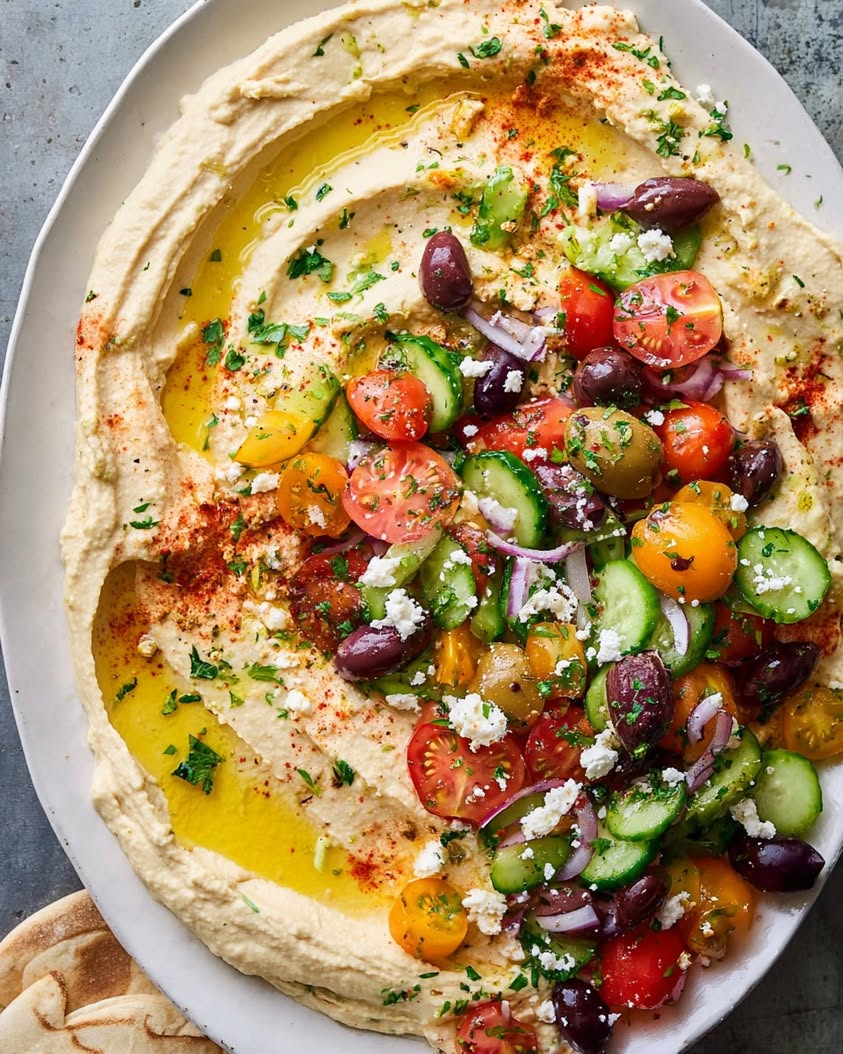
The colors of this dish are absolutely stunning. You will see a pale golden hummus topped with bright red tomatoes, deep green olives, white crumbles of feta, and fresh herbs. Every spoonful offers a new combination of creamy and crunchy elements. This Greek Style Loaded Hummus recipe for healthy snacking also works beautifully as a dip for pita chips, raw vegetables, or warm bread. It fits right into a Mediterranean diet and provides a generous amount of fiber, protein, and healthy fats. You will feel good about eating it, and you will want to make it again and again.
Quick Recipe Highlights
- Flavor Profile: This hummus bowl delivers a balance of savory, tangy, and salty notes. The creamy hummus has a mild nuttiness from tahini, while the toppings add acidity from lemon juice and brine from the olives. The feta cheese contributes a salty, creamy finish that ties everything together nicely.
- Texture: You will experience a wonderful contrast between the smooth, silky hummus and the firm, crunchy vegetables. The cucumbers provide a crisp bite, while the tomatoes burst with juice. The feta crumbles add a soft, crumbly element that melts in your mouth slightly.
- Aroma: When you make this Greek Style Loaded Hummus recipe for healthy snacking, your kitchen will fill with the fresh scent of lemon zest and garlic. The olive oil contributes a grassy, fruity aroma that enhances the overall experience. The herbs, especially parsley or oregano, add an earthy fragrance that reminds you of the Mediterranean coast.
- Visual Appeal: This dish is a feast for the eyes with its beautiful layers and colors. The hummus forms a creamy canvas for the vibrant toppings. The red tomatoes, green cucumbers, purple olives, and white feta create an artistic presentation that looks impressive on any table.
- Skill Level Needed: This recipe is perfect for beginners and experienced cooks alike. You do not need any special cooking techniques to succeed. If you can use a food processor or even a whisk, you can make this hummus with ease.
- Special Equipment: You will need a food processor or a high-speed blender to create the smoothest hummus. A sharp knife and a cutting board are essential for chopping the vegetables. A small offset spatula can help you create beautiful swirls on top of the hummus.
Recipe Overview
- Difficulty Level: This Greek Style Loaded Hummus recipe for healthy snacking earns an easy rating because it requires no cooking at all. You simply blend the ingredients for the base and chop the toppings. The process is straightforward and forgiving, so even a novice cook can achieve excellent results on the first try.
- Category: This dish falls into the appetizer and snack categories, but it also works as a light lunch or a side dish. You can serve it at parties, picnics, or potlucks. It also fits into the meal prep category because you can make the hummus base ahead of time.
- Cuisine: The cuisine is Greek with strong Mediterranean influences. Hummus itself has roots in the Middle East, but the addition of Greek salad toppings gives it a distinct Hellenic twist. This fusion of traditions creates a dish that honors both cultures while offering something fresh and exciting.
- Cost: This recipe is very cost-effective, especially if you use pantry staples like canned chickpeas and olive oil. Tahini can be a bit pricey, but a jar lasts for many batches. Fresh vegetables and feta cheese are generally affordable, and you can buy them in small quantities to keep costs low.
- Season: Summer is the best season for this recipe because fresh tomatoes and cucumbers are at their peak. The dish also shines in spring when herbs are abundant. However, you can enjoy it year-round by using high-quality produce from the grocery store.
- Occasion: This hummus bowl is perfect for casual gatherings, game day parties, and family dinners. It also works well for holiday appetizers or as a healthy snack for kids. You can bring it to a picnic or serve it as a starter for a Mediterranean-themed meal.
Why You Will Love This Recipe
The taste of this Greek Style Loaded Hummus recipe for healthy snacking is absolutely irresistible. The creamy hummus serves as a neutral, rich base that lets the bold toppings shine. First, you get the nutty flavor of the chickpeas and tahini. Then, the fresh vegetables add a burst of acidity and crunch. The feta cheese brings a salty, tangy finish that makes each bite a complete experience. The combination of textures keeps your palate engaged from start to finish.
Convenience is another major reason to love this recipe. You do not need to turn on the oven or stand over a stove. The entire process takes about 20 minutes of active prep time. You can easily double the recipe for a crowd without adding extra effort. This Greek Style Loaded Hummus recipe for healthy snacking also stores well in the refrigerator, so you can enjoy leftovers for days. It is the ultimate no-cook, no-fuss dish for busy people.
Nutritionally, this dish is a powerhouse. Chickpeas are loaded with fiber and plant-based protein, which help keep you full and satisfied. Tahini provides healthy fats and minerals like calcium and iron. The fresh vegetables contribute vitamins A and C, while the olive oil offers antioxidants. Additionally, this Greek Style Loaded Hummus recipe for healthy snacking aligns with a Mediterranean diet, which is known for its heart-healthy benefits. You can feel good about feeding this to your family.
Socially, this hummus bowl is a crowd-pleaser that encourages sharing and conversation. When you set it out on a table, people naturally gather around it. The beautiful presentation invites guests to dig in with pita chips or fresh veggies. It is the perfect appetizer for parties because it caters to many dietary preferences, including vegetarian and gluten-free options. The interactive nature of dipping and scooping makes it a fun, engaging dish for any gathering.
Cost-effectiveness and accessibility are also big wins for this recipe. You can find all the ingredients at any standard grocery store. Canned chickpeas are very inexpensive, and a jar of tahini lasts for months. The fresh vegetables and feta are affordable, especially when you buy them in season. This Greek Style Loaded Hummus recipe for healthy snacking proves that eating healthy does not have to break the bank. You get a gourmet-tasting dish without spending a fortune.
Historical Background and Cultural Significance
Hummus has ancient roots that trace back to the Middle East, particularly to countries like Lebanon, Syria, and Egypt. The word hummus means chickpea in Arabic, which is the primary ingredient. Historians believe that people have been eating chickpeas for thousands of years. The earliest known recipes for hummus date back to the 13th century in Cairo. Over time, this simple dish spread across the Mediterranean region, evolving with local ingredients and tastes.
In Greek cuisine, hummus did not originally play a major role. However, the Greeks have a long tradition of using chickpeas in dishes like revithia, which are stewed chickpeas. The addition of tahini, lemon, and garlic came from neighboring cultures. Today, Greek hummus is often lighter and brighter, with extra lemon juice and olive oil. The loaded version with Greek salad toppings represents a modern fusion that celebrates both traditions. This Greek Style Loaded Hummus recipe for healthy snacking pays homage to that culinary journey.
The cultural importance of hummus cannot be overstated. In many Middle Eastern countries, it is a staple food that people eat daily. It also holds symbolic value as a dish that brings families together. Sharing hummus is a sign of hospitality and friendship. In Greece, meze dishes like hummus are central to social gatherings. People sit around a table, share small plates, and enjoy each other’s company. This loaded hummus recipe captures that spirit of communal eating.
Regional variations of hummus are fascinating. In Israel, hummus is often served warm with whole chickpeas and a drizzle of olive oil. In Lebanon, it is typically smoother and more garlicky. In Turkey, you might find hummus spiced with cumin or paprika. The Greek variation tends to be more acidic and herb-forward. This Greek Style Loaded Hummus recipe for healthy snacking incorporates elements from several traditions, creating a unique and delicious hybrid that appeals to a wide audience.
Ingredient Deep Dive
Chickpeas are the heart of any hummus, and they have a long history in Mediterranean agriculture. They are one of the earliest cultivated legumes, dating back over 7,000 years. Nutritionally, chickpeas are rich in fiber, protein, folate, and iron. They support digestive health and help regulate blood sugar. When selecting chickpeas, look for cans with no added salt, or cook dried chickpeas from scratch. Canned chickpeas are convenient, but be sure to drain and rinse them well to remove excess sodium. Store any unused chickpeas in a sealed container in the refrigerator for up to three days.
Tahini is another crucial ingredient that adds depth and creaminess to the hummus. Tahini is made from ground sesame seeds and has a nutty, slightly bitter flavor. It is packed with healthy unsaturated fats, calcium, and antioxidants. When buying tahini, look for a brand that is smooth and pourable, not thick and pasty. You should stir the jar well before using it because the oil separates naturally. Store tahini in the pantry for up to six months or in the fridge to extend its shelf life. If you cannot find tahini, you can substitute it with sunflower seed butter or well-blended almond butter.
Olive oil is a cornerstone of Greek cuisine and this recipe. High-quality extra virgin olive oil provides a fruity, peppery flavor that enhances the hummus. It also contains powerful anti-inflammatory compounds. Choose a bottle that is dark-colored to protect it from light, and look for a harvest date to ensure freshness. Store olive oil in a cool, dark cupboard away from the stove. Substituting with avocado oil or a light vegetable oil will change the flavor profile but still work technically.
Fresh lemon juice adds necessary acidity and brightness. It also helps balance the richness of the tahini and olive oil. Roll the lemon on the counter before slicing to get the most juice. Use only fresh juice, not bottled, for the best flavor. The zest can also be added for an extra citrusy kick. Limes can be substituted if needed. Garlic is another key ingredient that adds a pungent, savory note. Use fresh garlic cloves for the strongest flavor. Roasted garlic can be used for a milder, sweeter taste.
Feta cheese is the star of the Greek salad-inspired toppings. Authentic Greek feta is made from sheep’s milk or a mixture of sheep and goat milk. It has a tangy, salty flavor and a crumbly texture. Feta is rich in calcium, protein, and vitamin B12. Look for blocks of feta stored in brine, which keeps it moist and flavorful. Crumble the feta just before serving to maintain its texture. You can substitute with a vegan feta alternative or simply omit it for a dairy-free version.
Kalamata olives bring a distinct briny, fruity flavor to the dish. These dark purple olives are named after the city of Kalamata in Greece. They are cured in red wine vinegar, which gives them a unique taste. Olives are high in healthy monounsaturated fats and antioxidants. Buy them pitted to save time, but whole olives have a better texture if you pit them yourself. Store any leftover olives in their brine in the refrigerator for up to two weeks. You can substitute with black olives or green olives if needed.
Cherry tomatoes and cucumbers add freshness and crunch. Choose tomatoes that are firm and brightly colored. Grape tomatoes are a good alternative. English cucumbers are ideal because they have fewer seeds and a thinner skin. Regular cucumbers work fine, but you may want to peel them. Herbs like parsley and oregano add an aromatic, earthy finish. Use fresh herbs if possible, as dried herbs have a more concentrated flavor. Mint also pairs beautifully with this Greek Style Loaded Hummus recipe for healthy snacking.
Common Mistakes to Avoid
- Over-process the hummus or under-process it. Too much blending will make the hummus gummy, while not enough will leave it grainy. Process just until smooth, scraping down the sides as needed.
- Skip the step of peeling the chickpeas. The skins can cause a gritty texture in the hummus. Take a few extra minutes to remove them for a silky-smooth result.
- Use cold ingredients straight from the refrigerator. Cold chickpeas and tahini will not blend as easily, leading to a lumpy texture. Let them sit at room temperature for 10 minutes before starting.
- Add too much or too little lemon juice. The acidity is crucial for flavor balance. Start with two tablespoons and adjust to your taste.
- Drain the chickpeas but forget to reserve the liquid. The aquafaba, or chickpea liquid, can help thin the hummus if it is too thick.
- Top the hummus at least an hour before serving. The vegetables will release moisture and make the hummus watery. Add the toppings just before serving for the best presentation.
- Use low-quality olive oil. The flavor of the oil is very prominent in this dish. Invest in a good extra virgin olive oil for the best result.
- Forget to season the hummus with salt. Chickpeas and tahini need salt to bring out their flavor. Do not skip this step, but use salt sparingly at first and taste as you go.
- Skip the rest time for the hummus. Letting the hummus sit for 30 minutes allows the flavors to meld together. This step makes a noticeable difference in the final taste.
- Cut the vegetables too large. Oversized chunks can be difficult to scoop onto a chip. Dice the toppings into small, uniform pieces for easy eating.
Essential Techniques
Mastering the smooth hummus texture is the most important technique for this recipe. Start by draining and rinsing the chickpeas very well. Then, gently rub them between your hands or a clean kitchen towel to remove the skins. This step may seem tedious, but it is the secret to ultra-smooth hummus. Process the chickpeas alone first in the food processor until they form a paste. This breaks them down before you add the liquids. The result will be a much creamier final product without any graininess.
Tempering the tahini is a helpful technique that many people overlook. Tahini can be thick and bitter if used straight from the jar. Before adding it to the food processor, whisk it vigorously with the lemon juice and a few tablespoons of ice water. This process lightens the tahini and makes it creamier. It also helps the hummus whip up to a fluffy consistency. The lemon juice and water will emulsify with the tahini, creating a smooth base that incorporates easily into the chickpeas.
Emulsifying the olive oil properly ensures a rich, silky hummus. Instead of dumping all the oil in at once, add it slowly through the feed tube while the processor is running. This allows the oil to incorporate evenly into the hummus. It creates a smooth, uniform texture that is not greasy. The same technique applies if you are adding ice water to adjust the consistency. Stream it in gradually while the machine runs for the best results.
Creating a beautiful swirl on top of the hummus is a simple yet effective presentation technique. After spreading the hummus onto a serving plate, use the back of a spoon to make gentle circular motions. This creates a well in the center that can hold the toppings and olive oil. The swirl also adds visual interest and makes the dish look more appetizing. Drizzle the olive oil into the well first, then add the toppings for a professional finish.
Pro Tips for Perfect Greek Style Loaded Hummus
Use a high-speed blender or a good food processor for the smoothest hummus. A regular blender might not break down the chickpeas as well. If you have a smaller machine, you may need to work in batches to avoid overheating the motor.
Add an ice cube or a tablespoon of ice water while blending the hummus. This keeps the mixture cool and helps create a light, airy texture. The cold liquid also prevents the hummus from becoming too thick.
Toast a handful of pine nuts or walnuts in a dry skillet until fragrant. Sprinkle them over the finished hummus for an added layer of crunch and a nutty flavor. This is a classic Greek touch that adds sophistication.
Make your own pita chips by cutting pita bread into triangles and baking them with olive oil and salt. They are way better than store-bought chips and complement the hummus perfectly. You can make them a day ahead to save time.
Let the hummus rest in the refrigerator for at least 30 minutes before serving. This allows the garlic and lemon flavors to meld and mellow out. The texture will also firm up slightly, making it easier to scoop.
Do not be afraid to adjust the seasoning at the end. Taste the hummus after it rests and add more salt, lemon juice, or cumin if needed. Everyone’s palate is different, so trust your own taste buds.
Use a vegetable peeler to create thin ribbons of cucumber or carrot for a decorative garnish. This adds a touch of elegance and makes the dish feel more special for guests.
Variations and Adaptations
Regional variations of loaded hummus are endless. In Egypt, you might find hummus topped with whole chickpeas and cumin. In Lebanon, pine nuts and minced lamb are popular additions. For an Italian twist, try topping the hummus with sun-dried tomatoes and basil. A Mexican version could include black beans, corn, and a sprinkle of chili powder. Each variation brings a new cultural perspective to the dish.
Seasonal adaptations are also easy to implement. In spring, add fresh peas, radishes, and mint. In summer, use grilled zucchini and cherry tomatoes. Autumn calls for roasted pumpkin seeds and caramelized onions. Winter versions can include roasted bell peppers and pomegranate seeds. The hummus base stays the same, but the toppings change with the seasons.
Dietary modifications are simple with this recipe. For a vegan version, simply omit the feta cheese. Use a plant-based feta or a sprinkle of nutritional yeast for a cheesy flavor. The hummus itself is already vegan. For a lower fat version, reduce the amount of olive oil in the hummus and replace it with an equal amount of aquafaba.
Flavor variations can be achieved by adding different spices to the hummus base. Smoked paprika, cumin, or za’atar are excellent choices. You can also puree roasted red peppers into the hummus for a sweeter, smokier flavor. Adding a spoonful of harissa paste will give it a spicy kick. Experiment with different herb combinations for endless possibilities.
Texture modifications are also fun to explore. For a chunkier dip, fold in some whole chickpeas after pureeing the hummus. You can also add a layer of caramelized onions on top for a soft, sweet element. Using different cheese, like crumbled goat cheese or grated parmesan, changes the texture and flavor profile.
Presentation alternatives can make the dish feel very different. Instead of a flat bowl, serve the hummus in a shallow, wide platter. This allows for more surface area for the toppings. You can also serve it in individual ramekins for a more formal setting. A large wooden board with the hummus in the center and crudites around it makes a beautiful grazing table.
Serving and Presentation Guide
Plating techniques for this Greek Style Loaded Hummus recipe for healthy snacking are all about creating visual depth. Start by spreading the hummus onto a large, shallow plate. Use the back of a spoon to create swirls and edges that catch the olive oil. The toppings should be arranged in a composed pattern, not just thrown on. Group the tomatoes, cucumbers, and olives in separate clusters for a beautiful, organized look.
Garnishing ideas can elevate the dish to the next level. A drizzle of high-quality extra virgin olive oil is essential. Add a sprinkle of smoked paprika or mild chili flakes for color. Fresh herbs like parsley, dill, or mint add a bright, aromatic finish. Capers or pickled peppers also make a great garnish. A final squeeze of lemon juice just before serving adds a last burst of freshness.
Traditional accompaniments for this dip include warm pita bread, pita chips, or crusty bread. Fresh vegetables like carrot sticks, cucumber slices, and bell pepper strips are also perfect for dipping. In Greece, this would be served as part of a meze platter with olives, cheese, and grilled meats. The hummus is just one part of a larger, communal meal.
Modern serving suggestions include using it as a spread for wraps or sandwiches. You can also thin the hummus with extra lemon juice and water to make a salad dressing. It works great as a sauce for grain bowls or roasted vegetables. This recipe is versatile enough to fit into many modern meal formats.
Temperature considerations are important for the best eating experience. The hummus should be served at room temperature, not cold from the fridge. Cold hummus will be thick and less flavorful. Take it out of the refrigerator about 30 minutes before serving. The toppings, especially the vegetables, should be at room temperature as well.
Portion control tips can help you serve this dish perfectly. If using it as an appetizer, plan for about a quarter cup of hummus per person. For a main dish with bread and salad, half a cup per person is appropriate. The toppings should be generous but not overwhelming. A good rule is to use about a tablespoon of each topping per serving.
Wine and Beverage Pairing
Wine pairings for this Greek Style Loaded Hummus recipe for healthy snacking are delightful and varied. A crisp, dry white wine like Assyrtiko from Greece is a perfect match. Its high acidity cuts through the richness of the hummus and feta. A Sauvignon Blanc or a dry Riesling also works well. The herbal and citrus notes in these wines complement the lemon and herbs in the dish.
Non-alcoholic alternatives are just as satisfying. A sparkling water with a squeeze of lemon or lime makes a refreshing palate cleanser. Mint tea, served iced or hot, is a traditional Greek beverage that pairs beautifully with the flavors. You can also try a homemade lemonade with fresh mint. A ginger beer or a kombucha with floral notes would also work nicely.
If you prefer red wine, choose a light-bodied option. A Pinot Noir or a young Gamay will not overpower the delicate flavors. A chilled red wine like a Lambrusco is another interesting choice. It has a slight fizz that cleanses the palate. Avoid heavy, tannic reds that could clash with the creamy texture of the hummus.
Temperature considerations for beverages are similar to the food. White wines and sparkling waters should be served cold. Red wines are best at a slight chill, about 55 degrees Fahrenheit. Non-alcoholic drinks should be served over ice to keep them refreshing. Serve all beverages in glasses that complement the presentation.
Storage and Shelf Life
Storage methods for leftover hummus are straightforward. Transfer the hummus to an airtight container, removing as much air as possible. If you have already added the toppings, try to remove them first. The toppings will release moisture and make the hummus watery over time. Store the hummus separately from the toppings for the best results.
Temperature requirements are critical for safety. Hummus must be stored in the refrigerator at or below 40 degrees Fahrenheit. Do not leave it at room temperature for more than two hours. If you are serving it at a party, place the bowl on a bed of ice to keep it cool. This is especially important if the hummus contains dairy feta cheese.
Container recommendations include glass or plastic containers with tight-fitting lids. A flat, shallow container is better than a deep one because it allows the hummus to cool evenly. Alternatively, you can store the hummus in the original serving bowl if you cover it tightly with plastic wrap. Make sure the wrap touches the surface of the hummus to prevent a skin from forming.
Signs of spoilage to watch for include any off smells, mold, or a change in texture. The hummus will develop a slightly sour smell if it is bad. If you see any liquid separation or bubbles, it may be starting to ferment. Always discard hummus that has been stored for longer than five to seven days.
Reheating instructions are rarely needed because hummus is served cold. If you prefer it at room temperature, let it sit out for 20 minutes before serving. Do not microwave the hummus, as this will alter its texture and flavor. You can gently stir in a little olive oil if it has thickened too much in the fridge.
Freezing guidelines for hummus are helpful for bulk preparation. Hummus freezes very well for up to three months. Transfer it to a freezer-safe container, leaving some room for expansion. Thaw it overnight in the refrigerator before using. You may need to stir it well and add a little olive oil or lemon juice to restore its original texture.
Make Ahead Strategies
Prep timeline for this Greek Style Loaded Hummus recipe for healthy snacking is very flexible. You can make the hummus base up to three days in advance. Store it in the refrigerator in an airtight container. The flavors will actually improve as they meld together. The day before serving, you can chop the vegetables and crumble the feta cheese. Store them separately in the refrigerator in sealed containers.
Storage between steps is simple if you are preparing the dish over two days. Keep the hummus and the vegetable toppings in separate containers. Do not combine them until you are ready to serve. This prevents the vegetables from getting soggy and the hummus from absorbing extra moisture. The olives can be stored in their brine until the day of serving.
Quality impact assessment shows that this recipe holds up very well to advance preparation. The hummus actually tastes better on the second day because the garlic and lemon have had time to mellow. The vegetables, however, are best when freshly chopped. If you chop them too far in advance, they will lose their crunch. Chop the vegetables no more than 12 hours before serving.
Assembly tips for the big day are very straightforward. Take the hummus out of the refrigerator about 30 minutes before serving to let it come to room temperature. Spread it onto your serving plate and create your swirls. Drain the chopped vegetables well and pat them dry with paper towels. Arrange them on top of the hummus and finish with a drizzle of olive oil and fresh herbs.
Reheating guidelines do not apply here because the dish is served cold or at room temperature. However, if you want to warm the pita bread, you can do that just before serving. Wrap the pita in foil and warm it in a 350 degree oven for 10 minutes. This makes it soft and pliable for dipping.
Fresh element additions can be made just before serving to enhance the dish. Sprinkle some fresh herbs like parsley or dill on top. Add a squeeze of fresh lemon juice. A pinch of sea salt or smoked paprika can also add a final touch of flavor. These small additions make the hummus taste freshly made, even if you prepared it days ago.
Scaling Instructions
Halving the recipe is very easy to do. Simply use one can of chickpeas instead of two and adjust the other ingredients accordingly. The food processor will still work fine with half the volume. The prep time will be slightly shorter because you have fewer vegetables to chop. The servings will be reduced to about three, making it perfect for a small family.
Doubling or tripling this Greek Style Loaded Hummus recipe for healthy snacking is ideal for parties. You will need a larger food processor, or you can work in batches. For a very large batch, you can use a stand mixer with the paddle attachment, though the texture will be slightly different. The ingredient amounts are easy to multiply, just maintain the same ratios.
Equipment adjustments are necessary when scaling. For a large batch, you may need to process the hummus in multiple batches to avoid overloading your machine. Let the motor cool between batches to prevent overheating. Use a large platter or a sheet pan to spread the hummus for serving to a crowd.
Timing modifications are minimal when scaling. The active prep time increases, but not proportionally. Chopping twice as many vegetables takes time, but the blending time remains the same. Plan for an additional 10 minutes of prep time for each doubling. The resting time for the flavors to meld remains the same at 30 minutes.
Storage considerations for scaled batches are important. Store any leftover hummus in multiple smaller containers rather than one large one. This allows it to cool faster and stay fresh longer. If you are making a very large batch, consider freezing some of it in smaller portions for future use. This is a great way to have hummus ready for unexpected guests.
Nutritional Deep Dive
Macro breakdown for this Greek Style Loaded Hummus recipe for healthy snacking is well balanced. A serving of about half a cup of hummus with toppings contains approximately 200 to 250 calories. Carbohydrates make up about 20 grams, mostly from the chickpeas. Protein is around 8 to 10 grams, which is great for a plant-based snack. Fat content is about 12 to 15 grams, coming from the olive oil, tahini, and feta. This balance makes it a satisfying snack that will keep you full.
Micronutrient analysis reveals that this dish is rich in several important vitamins and minerals. Chickpeas are high in folate, iron, and manganese. Tahini provides calcium, magnesium, and phosphorus. The vegetables add vitamin C from the tomatoes and vitamin K from the cucumbers. Feta cheese contributes vitamin B12 and selenium. The olive oil contains vitamin E, a powerful antioxidant.
Health benefits of the ingredients are extensive. The fiber in chickpeas and vegetables supports digestive health and helps regulate blood sugar. The healthy fats from olive oil and tahini are beneficial for heart health. The antioxidants in the vegetables and olive oil help reduce inflammation. Feta cheese, despite being high in sodium, provides probiotics that are good for gut health.
Dietary considerations are important for many people. This recipe is naturally gluten-free, provided you serve it with gluten-free dippers. It is also vegetarian and can be easily made vegan by omitting the feta. It is relatively low in sugar and contains no added sugars. The sodium content is moderate, so people watching their salt intake should be mindful.
Portion analysis shows that one serving is very filling despite the calorie count. The combination of protein, fiber, and fat creates a high satiety index. This means you will feel full and satisfied after eating a moderate amount. Unlike many snacks that leave you craving more, this hummus bowl provides lasting energy.
Weight management tips include using this dish as a meal replacement for a light lunch or dinner. Pair it with a large side salad to increase the volume without adding many calories. Use raw vegetables for dipping instead of pita chips to reduce carbohydrates. This hummus is also a great pre- or post-workout snack because of its balanced macronutrient profile.
Dietary Adaptations
Gluten-free adaptation is already inherent in this recipe. Chickpeas, vegetables, and feta are all naturally gluten-free. The only concern is the dipper. Serve the hummus with gluten-free crackers, rice cakes, or fresh vegetables. If using pita, make sure you buy gluten-free pita bread. The recipe itself does not contain any wheat or gluten.
Dairy-free adaptation requires one simple change. Omit the feta cheese entirely or replace it with a vegan feta made from tofu or nuts. You can also use a sprinkle of nutritional yeast for a cheesy flavor. The rest of the ingredients are naturally dairy-free. Be Print
Greek Style Loaded Hummus
- Total Time: 15 minutes
- Yield: 6
Description
A vibrant and hearty appetizer featuring creamy hummus topped with classic Greek ingredients like olives, tomatoes, cucumber, feta cheese, and a drizzle of olive oil. Perfect for sharing.
Ingredients
- 1 can (15 oz) chickpeas, drained and rinsed
- 1/4 cup tahini
- 3 tablespoons lemon juice
- 2 tablespoons olive oil, plus more for drizzling
- 1 clove garlic, minced
- 1/2 teaspoon salt
- 1/4 teaspoon ground cumin
- 1/4 cup water (or as needed for consistency)
- 1/2 cup cherry tomatoes, halved
- 1/2 cup cucumber, diced
- 1/4 cup Kalamata olives, halved
- 1/4 cup crumbled feta cheese
- 2 tablespoons chopped fresh parsley
- 1 tablespoon chopped fresh dill (optional)
- Paprika for garnish
Instructions
- In a food processor, combine chickpeas, tahini, lemon juice, 2 tablespoons olive oil, garlic, salt, cumin, and water. Process until smooth, scraping down sides as needed. Add more water if too thick.
- Transfer hummus to a serving plate or shallow bowl, spreading it into an even layer. Use a spoon to create a slight well in the center.
- Top the hummus evenly with cherry tomatoes, cucumber, olives, feta cheese, parsley, and dill if using.
- Drizzle with additional olive oil and sprinkle with paprika for color.
- Serve immediately with warm pita bread, pita chips, or fresh vegetables.
Notes
You can customize the seasonings to taste. For extra flavor, add a pinch of smoked paprika or a drizzle of balsamic glaze. Store leftovers in the refrigerator for up to 2 days.
- Prep Time: 15 minutes
- Cook Time: 0 minutes
- Method: Appetizer
- Cuisine: Greek