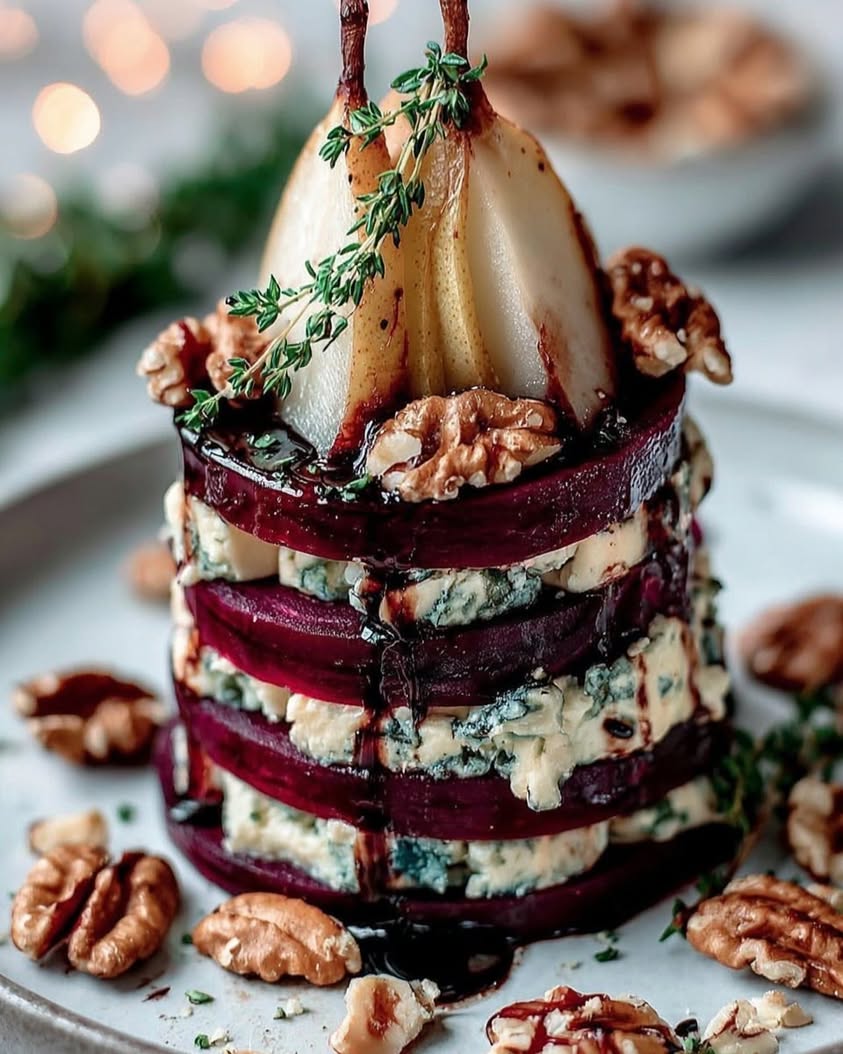
Roasted Beet Blue Cheese Towers: A Rustic Elegant Appetizer
Imagine a dish that feels both rustic and elegant, a perfect combination of earthy sweetness and tangy creaminess. These Roasted Beet Blue Cheese Towers with Pear and Balsamic Glaze are exactly that. They make a stunning appetizer for any dinner party, and honestly, they are surprisingly simple to assemble. You can impress your guests without spending all day in the kitchen. The deep ruby red of the roasted beets contrasts beautifully with the creamy white blue cheese and the crisp, pale green of the pear slices. It is a visual feast before you even take a bite.
This Roasted Beet Blue Cheese Towers with Pear and Balsamic Glaze recipe is all about balancing flavors and textures. The sweet, earthy notes of the roasted beets provide a solid foundation. Then, the tangy, salty crumbles of blue cheese add a sharp, creamy punch. Sliced pear introduces a refreshing, juicy crunch that lightens the whole dish. Finally, a drizzle of sweet and tangy balsamic glaze brings everything together, adding a glossy finish that coats each layer. You get a little bit of everything in every single bite, a true harmony of tastes that works wonderfully as a starter or a light lunch.
Furthermore, this recipe is highly adaptable for various occasions. You can serve these towers as an elegant appetizer at a holiday gathering, a sophisticated starter for a romantic dinner, or a beautiful addition to a brunch buffet. They are naturally gluten-free, which makes them a crowd-pleaser for many dietary needs. The process itself is quite straightforward. Roasting the beets brings out their natural sugars and concentrates their flavor. While the beets roast, you can prepare the other ingredients and whip together a quick balsamic reduction. Then, once the beets have cooled, you simply layer everything into towers. It really is that simple.
Quick Recipe Highlights
- Flavor Profile: This dish is a beautiful dance of sweet earthy beets, tangy salty blue cheese, fresh crisp pear, and sweet tart balsamic glaze. Every layer contributes a distinct note that plays well with the others, creating a complex yet approachable flavor profile.
- Texture: You experience a wonderful contrast of textures with each forkful. The roasted beets are tender and slightly dense, the blue cheese is creamy and crumbly, the pear slices offer a crisp juicy snap, and the glaze provides a smooth sticky finish over everything.
- Aroma: The scent is deeply inviting and earthy from the roasted beets, with sweet notes coming from the balsamic reduction as it simmers. The sharp, funky aroma of blue cheese adds a distinct savory layer that sets the stage for the rich taste experience.
- Visual Appeal: The presentation is where these towers truly shine. The vibrant red beets, the stark white blue cheese, the pale green pears, and the dark glossy balsamic glaze create a visual masterpiece. It is a stack of colors that looks incredibly sophisticated on any plate.
- Skill Level Needed: This recipe is perfect for beginner and intermediate cooks alike. The techniques are simple, like roasting vegetables and reducing a glaze. The real key is in the assembly, which requires a gentle hand but is very easy to master with a little practice.
- Special Equipment: You will need basic kitchen tools for this recipe. A baking sheet for roasting the beets, a small saucepan for the balsamic glaze, a sharp knife for slicing, and a small cookie cutter or ring mold for the towers are helpful but not strictly necessary.
Recipe Overview
- Difficulty Level: This is an easy recipe to prepare. The cooking steps are straightforward, and the assembly is quite simple once you have all your components ready. Roasted Beet Blue Cheese Towers with Pear and Balsamic Glaze requires no advanced culinary techniques. Most of the time is passive roasting time, making it a very low-stress dish to put together.
- Category: These towers fit perfectly as an appetizer or a starter course. You could also serve them as a light lunch or a substantial side dish alongside a simple green salad or a bowl of soup. They are versatile enough to shine in multiple meal categories.
- Cuisine: While not tied to a single specific cuisine, this recipe draws inspiration from modern American and European culinary traditions. The use of roasted beets and blue cheese is classic in European cooking, while the stacked tower presentation is a hallmark of contemporary restaurant-style plating in the United States.
- Cost: The recipe is relatively affordable and uses seasonal ingredients. Beets and pears are typically very inexpensive, especially when they are in season. A small wedge of good-quality blue cheese is the most expensive component, but a little goes a long way, as you only need a few ounces for this recipe.
- Season: This dish is at its absolute best during the fall and early winter months. This is the peak season for both beets and pears, when they are sweetest and most flavorful. The hearty flavors also perfectly complement the cooler weather and the spirit of autumn gatherings.
- Occasion: These towers are ideal for elegant dinner parties, holiday celebrations like Thanksgiving or Christmas, and special occasions such as anniversaries or birthday dinners. They also make a fantastic and impressive appetizer for New Year’s Eve parties or bridal showers.
Why You’ll Love This Recipe
First and foremost, the taste and texture combination in this Roasted Beet Blue Cheese Towers with Pear and Balsamic Glaze recipe is utterly addictive. Each bite is an experience. You get the sweet, concentrated earthiness of the beet, immediately followed by the tangy, creamy saltiness of the blue cheese. Then, a crisp slice of pear offers a refreshing, juicy crunch that cuts through the richness. Finally, the balsamic glaze ties everything together with its sweet and sour complexity. It is a symphony of flavors and textures that feels incredibly sophisticated yet completely approachable. You will find yourself craving this unique and satisfying combination long after the last tower is gone.
Secondly, this recipe offers incredible convenience and preparation benefits for the busy home cook. Most of the cooking time is hands-off, as the beets simply roast in the oven. You can easily make the components ahead of time. Roast the beets and prepare the balsamic glaze a day or two in advance. Then, when you are ready to serve, you just need to slice the pears, crumble the cheese, and assemble the towers. This make-ahead aspect reduces stress significantly when you are hosting. Moreover, the assembly itself takes only a few minutes, meaning you can serve these show-stopping appetizers to your guests with almost no last-minute fuss.
Furthermore, there are significant nutritional advantages to this dish. Beets are a powerhouse of nutrients, packed with fiber, folate, and manganese. They are also known for their high levels of antioxidants and nitrates, which can support heart health and blood pressure regulation. Pears add a good dose of vitamin C and fiber. Even the blue cheese, while used sparingly, provides calcium and protein. Consequently, this appetizer is not just delicious but also nourishing. It feels like a wholesome, health-conscious choice that you can feel good about serving to your family and friends. You are indulging in a treat that also offers genuine nutritional value.
In addition, Roasted Beet Blue Cheese Towers with Pear and Balsamic Glaze have fantastic social and entertaining value. They are a guaranteed conversation starter. The moment you place a platter of these colorful, perfectly stacked towers on the table, your guests will be impressed. They look like something from a professional kitchen. People will be curious about the flavors and the construction. This creates a wonderful opportunity for shared enjoyment and interaction. Serving these towers elevates the entire dining experience. It shows your guests that you have put thought and care into their enjoyment, making them feel special and appreciated.
Finally, this recipe is highly cost-effective and accessible. The core ingredients are simple, seasonal, and generally very affordable. You do not need expensive cuts of meat or exotic imported items. A few beets, a couple of pears, a small portion of blue cheese, and some balsamic vinegar are all you need. These are items you can easily find in any grocery store. Moreover, the recipe is easily scalable. You can make a single tower for a simple lunch or double or triple the recipe for a large party without any issues. It is a low-cost way to produce a high-impact dish that tastes and looks like a million bucks.
Historical Background and Cultural Significance
The individual components of this recipe have rich histories, even if the tower format is a modern invention. Beets themselves have been cultivated for thousands of years, originally grown for their leafy greens and later for their medicinal properties. The ancient Romans recognized their value, and beetroots were a staple in many European diets by the Middle Ages. Their deep red color has long been associated with vitality and health. In Eastern European cuisines, beets are a foundational ingredient in soups like borscht, a dish deeply embedded in cultural identity. The journey of the beet from a simple root vegetable to a star ingredient in haute cuisine is a testament to its enduring appeal.
Blue cheese, on the other hand, has a history filled with folklore and regional pride. Its discovery is often attributed to accident, where cheese was stored in caves and developed mold. Legend has it that a young French shepherd left his lunch in a cave and returned months later to find the mold had transformed his cheese. Regardless of its origin, blue cheese became a treasured specialty. In France, Roquefort is known as the “Cheese of Kings and Popes.” Italy produces Gorgonzola, and England has Stilton. Each region boasts its own unique variety, protected by strict production standards. These cheeses are not just food; they are a symbol of terroir, tradition, and artisan craftsmanship.
The idea of combining beets and blue cheese is a more recent culinary tradition, likely emerging in the late 20th century as chefs began to experiment with sweet and savory pairings. This flavor combination quickly became a classic, appearing on salads and appetizer menus across the globe. The sweet, earthy beets perfectly balance the salty, tangy funk of the blue cheese. Adding pear introduces another layer of sweetness and a fresh, juicy texture. The balsamic glaze, a reduction of traditional balsamic vinegar from Modena, Italy, adds a final sweet and sour note that ties the whole dish together. This evolution reflects a broader trend in modern cooking: celebrating simple, high-quality ingredients and letting their natural flavors shine.
Regionally, variations of this combination are popular. In Italy, you might find a similar dish using Gorgonzola and a drizzle of aged balsamic. In France, Roquefort might be paired with roasted beets and apples. In the United States, the tower presentation is a nod to fine dining plating techniques. These Roasted Beet Blue Cheese Towers with Pear and Balsamic Glaze represent a convergence of these traditions. They take the classic flavor pairing and present it in a visually stunning, modern way. It is a dish that respects its roots while embracing contemporary culinary aesthetics. It shows how food can travel across cultures and evolve, always finding new ways to delight our palates.
Ingredient Deep Dive
Let us begin with beets, the heart of the tower. Beets have been cultivated for over 2,000 years, and their cultural significance varies. In ancient times, they were used medicinally and as a symbol of love and beauty. Nutritionally, they are a true superfood. They are exceptionally rich in folate, manganese, and potassium. They also contain betalains, powerful antioxidants that have anti-inflammatory properties. The nitrates in beets are well-known for their ability to improve blood flow and lower blood pressure. When selecting beets, look for ones that are firm, smooth, and heavy for their size. Avoid any that have soft spots or are shriveled. The greens should be bright and fresh, a sign of a recently harvested vegetable.
For storage, you should remove the greens from the beets as soon as you get them home. The greens will draw moisture out of the root, causing the beets to become soft. Store the beets in a plastic bag in the refrigerator drawer, where they can last for several weeks. If you cannot find fresh red beets, golden beets offer a milder, sweeter flavor and a beautiful yellow color. You could even use candy cane or Chioggia beets for a striking striped effect. Canned beets are a convenient, albeit softer, alternative. Just be sure to drain and pat them very dry before using them, as they contain much more moisture than roasted ones. This is a good option when you are short on time.
Now, let us talk about blue cheese, the tangy star of the show. This cheese is defined by the blue or green veins of mold that run through it, which give it its characteristic pungent, salty flavor and creamy texture. Culturally, it is a symbol of artisanal food production. Its nutritional profile is interesting as well. It is a good source of calcium, protein, and phosphorus. It also contains Vitamin A and several B vitamins. However, it is high in sodium and saturated fat, so moderation is key. When selecting blue cheese, choose a wedge rather than pre-crumbled cheese. Pre-crumbled cheese often has a drier texture and less complex flavor. Look for a wedge that is creamy-colored with well-distributed veins of blue or green mold. It should feel moist but not slimy.
Storing blue cheese correctly is important to preserve its unique character. Wrap it loosely in wax paper or parchment paper, then place it in a partially open plastic bag. This allows the cheese to breathe and prevents it from becoming too moist or too dry. It will last in the refrigerator for up to three weeks. For substitutions, Gorgonzola is a fantastic choice, offering a slightly milder and creamier profile than Roquefort or Stilton. If you find blue cheese too strong, you can substitute it with crumbled feta cheese for a tangy, salty flavor, or goat cheese for a creamy, tangy, and less pungent alternative. Each will change the final flavor of the towers, but all will be delicious in their own right.
Next is the pear, which provides a refreshing crunch and natural sweetness. Pears have been cultivated for thousands of years, with evidence of their use dating back to prehistoric times in Europe and Asia. They have a long association with longevity and good health. Nutritionally, pears are an excellent source of dietary fiber, which supports digestive health. They also provide a good amount of Vitamin C and potassium. When selecting pears for this recipe, you want them to be ripe but still firm. A ripe pear will yield slightly to gentle pressure near the stem, but should not be mushy. Bosc or Anjou pears are excellent choices because they hold their shape well when sliced. Avoid very soft, overripe pears, as they will fall apart in the tower.
Storage of pears is a bit of an art. They ripen best at room temperature. If your pears are not ripe yet, keep them on the counter. Once they reach your desired ripeness, you can store them in the refrigerator for several days to slow down the process. For substitutions, apples are a fantastic alternative. A crisp, sweet-tart apple like Honeycrisp or Fuji will work beautifully, offering a similar crunchy texture. If you cannot find fresh pears, you could try using dried pears that have been rehydrated, though the texture will be very different. As for the balsamic vinegar, it is the soul of the sauce. A good quality balsamic vinegar from Modena, Italy, is a worthwhile investment. It has a complex, sweet, and sour taste that is irreplaceable.
Common Mistakes to Avoid
- Not roasting the beets properly is a common error. You want them to be fork-tender all the way through. Under-roasted beets will be hard and woody. Over-roasted beets can become dry and shriveled. Roast them until a knife glides in with little resistance, usually about 45 minutes to an hour for medium-sized beets.
- Using a weak or low-quality balsamic vinegar for the glaze is another mistake. The glaze is a concentrated reduction, so using a cheap vinegar will result in a thin, watery, and sour glaze. Invest in a decent quality balsamic vinegar to ensure a rich, syrupy, and deeply flavored final product.
- Skipping the step to pat the roasted beet slices dry can ruin your towers. Roasted beets are still quite moist. If you do not blot them with a paper towel, the excess moisture will make the towers soggy and unstable. They will slide apart before you can even serve them.
- Assembling the towers while the beets are still warm is a mistake you should avoid. Warm beets will cause the blue cheese to melt and the pear to soften and release its juice. This creates a messy, unappealing texture. Allow the roasted beets to cool completely to room temperature before you start building your towers.
- Using too much blue cheese can overwhelm the other delicate flavors. While blue cheese is delicious, it is also very strong. You want it to be a supporting player, not the star. A thin, even layer of crumbled cheese on each layer of beet is the perfect amount.
- Not slicing the pears thinly enough is a structural error. Thick pear slices are difficult to stack and will cause the tower to be wobbly and uneven. Aim for slices that are about 1/8-inch thick. They should be sturdy enough to hold their shape but thin enough to layer neatly.
- Forgetting to layer in the right order can lead to a flavor imbalance. The most common and successful order is beet, cheese, pear, then a drizzle of glaze. This sequence ensures that every component is tasted in the right order and that the tower has a solid base.
- Over-drizzling the balsamic glaze is a common pitfall. The glaze is intensely flavored and sticky. A little goes a long way. A few drips on top of the tower and a small pool on the plate are sufficient. Too much glaze will mask the flavors of the other ingredients.
Essential Techniques
Roasting beets to perfection is the primary technique for this dish. This method concentrates their natural sugars and develops a deep, earthy sweetness. To master it, you should first scrub the beets clean but leave them unpeeled. Wrap each beet individually in aluminum foil to trap steam and heat evenly. Roast them at 400 degrees Fahrenheit until they are easily pierced with a fork. The timing depends on the size of the beets, but it usually takes about 45 to 60 minutes. Once they are cool enough to handle, the skins will slip off easily with your hands or a paper towel. This method yields tender, flavorful beets without any messy peeling before cooking. The visual cue for success is when the beet is uniformly tender and the skin wrinkles slightly.
Making a balsamic glaze is a simple reduction that creates a complex sauce. You need to simmer good-quality balsamic vinegar over medium-low heat until it reduces by about half and becomes thick and syrupy. The key is patience. Do not rush the process with high heat, or the vinegar will burn and become bitter. You will know it is ready when it coats the back of a spoon and slowly drips off like maple syrup. As it cools, it will thicken further. A common pitfall is reducing it too much, which results in a hard, candy-like consistency. If you overshoot, you can add a splash of water and gently reheat it to thin it out. The visual cue is a glossy, syrupy texture that clings to the spoon.
Layering and assembling the towers is where precision matters for the final presentation. After slicing the cooled roasted beets into even rounds (about 1/4-inch thick), you should place a slice on a serving plate. Then, add a small amount of crumbled blue cheese in the center. Next, place a thin slice of pear directly on top of the cheese. Gently press down to secure the layers. Continue this layering process, alternating beet, cheese, and pear, until you reach your desired height. A 3-layer tower is usually a good height for stability. The final layer should be a beet slice. The trick is to keep the stack centered and balanced. If a layer is uneven, the tower will lean. Using a small cookie cutter or ring mold can help you create perfectly uniform, professional-looking towers.
Pro Tips for Perfect Roasted Beet Blue Cheese Towers with Pear and Balsamic Glaze
A good tip is to use a mandoline slicer for perfectly uniform beet and pear slices. This ensures all your ingredients are the same thickness, which makes stacking much easier and creates a more professional-looking final dish. Uniformity is key for stability and visual appeal.
You should toast some walnuts or pecans to add a crunchy element. A few chopped, toasted nuts sprinkled on top of the tower before serving adds a wonderful textural contrast. The nutty flavor also complements the beet and blue cheese beautifully, adding another layer of complexity.
Consider using a squeeze of fresh lemon juice over the pear slices. This will prevent them from browning if you are making them ahead of time. The lemon juice also adds a bright, acidic note that helps balance the richness of the cheese and the sweetness of the beets.
Another great tip is to add a small handful of arugula or microgreens to the plate. These peppery greens add a fresh, vibrant element and a beautiful pop of color. They also provide a nice contrast in texture and a slight bitterness that cuts through the other flavors.
You can also use a piping bag to apply the blue cheese in a more controlled manner. If you want a cleaner presentation, you can process the blue cheese with a little cream cheese or mascarpone to make a soft, spreadable mixture. Then, pipe a small rosette onto each beet layer for a perfectly neat result.
Finally, let the assembled towers rest for a few minutes at room temperature before serving. This allows the flavors to meld together slightly. The tower will also become a bit more stable as the ingredients settle. However, do not let them sit for too long, or they may start to get soggy.
Variations and Adaptations
Regional variations are a fantastic way to explore new flavors. In place of standard blue cheese, you could use a creamy Gorgonzola for a milder Italian twist. A French Roquefort would provide a much sharper, saltier punch. You could also swap the balsamic glaze for a honey-Dijon vinaigrette or a simple citrus vinaigrette. For a Spanish influence, try adding some crumbled Manchego cheese and a drizzle of honey instead of the balsamic glaze. Each regional adaptation offers a unique perspective on the core ingredients.
Seasonal adaptations are also easy and rewarding. In the fall, you can add a few fresh sage leaves between the layers or serve the towers on a bed of roasted delicata squash. In the spring, you can use fresh, tender baby beets and replace the pears with fresh, crisp apples. In the summer, you could incorporate fresh figs instead of pears, which pair wonderfully with blue cheese. You can even grill the beet slices in the summer for a smoky flavor profile. Adapting the recipe to what is in season is a great way to keep it fresh and exciting.
Dietary modifications are simple to accommodate. For a vegan version, you can substitute a high-quality vegan blue cheese alternative. Many plant-based brands now offer excellent options made from cashews or coconut oil. You could also use a savory cashew cream as a base layer. For a dairy-free version, simply use a dairy-free cheese alternative or omit the cheese entirely. The towers will still be delicious, with the beets and pears providing plenty of flavor. You can also make it nut-free by simply omitting any optional nut garnish.
Flavor variations are a great way to personalize the recipe. You could add a sprinkle of fresh thyme or rosemary to the beets before roasting for an herbal note. A pinch of flaky sea salt and cracked black pepper is essential. For a bit of heat, you could add a sprinkle of red pepper flakes to the final tower. A dash of cinnamon or nutmeg in the balsamic glaze can add warmth. You can also experiment with different types of vinegar. Try using a fig balsamic or a pomegranate balsamic for a slightly different sweet and tangy profile.
For texture modifications, you can add a layer of toasted nuts or seeds between the beet and cheese. Toasted pumpkin seeds or sunflower seeds offer a delightful crunch. You could also create a creamy element by adding a thin layer of goat cheese or a dollop of whipped ricotta. For a more substantial dish, you can place the towers on a bed of arugula or mixed greens dressed with a simple vinaigrette. This turns the appetizer into a more complete salad. You could even grill the pear slices for a warm, caramelized texture that adds a new dimension.
Presentation alternatives can also change the feel of the dish. Instead of tall towers, you can create a simple layered salad by arranging the ingredients on a plate. You can also serve the components deconstructed, allowing guests to build their own bites. For a party, you can create a single large torte by layering all the ingredients in a springform pan. Once set, you can slice it into wedges. This makes it easier to serve for a larger crowd. You can also stack the ingredients in a small glass or jar for a beautiful, individual parfait-style presentation.
Serving and Presentation Guide
Plating these towers is crucial for a wow factor. Start with a clean, flat plate. Place one or two towers in the center of the plate. Then, create a swoosh or a small pool of balsamic glaze on the plate. You can use a squeeze bottle or a spoon to create a decorative pattern. The glaze should be the first thing you put on the plate, before you add the tower. This prevents any smudging. Arrange a small handful of arugula or microgreens to one side for a pop of green. The contrast of the deep red beet, the white cheese, the green pear, and the dark glaze is very visually striking.
For garnishing ideas, less is often more. A few flakes of flaky sea salt, like Maldon, sprinkled on top of the tower adds a final burst of flavor and a beautiful crystalline texture. A crack of fresh black pepper is also essential. Toasted, chopped walnuts or pecans provide a nice crunchy garnish. You can also use edible flowers, like pansies or nasturtiums, for an elegant, colorful addition. A sprig of fresh thyme or a small basil leaf on top of each tower can add a subtle aromatic touch and a hint of green. Keep the garnishes simple and complementary to the main flavors.
Traditional accompaniments for this type of dish include a simple green salad with a light vinaigrette. The salad provides a fresh, acidic counterpoint to the richness of the towers. It also adds volume to the meal, making it a more satisfying lunch or starter. Some crusty bread or crostini on the side are also wonderful. They allow guests to soak up any leftover balsamic glaze on the plate. For a more substantial meal, you can serve the towers alongside a bowl of roasted butternut squash soup or a creamy tomato bisque.
Modern serving suggestions involve using individual small plates or small wooden boards. This creates a very personalized and elegant dining experience. You can also serve the towers as part of a larger appetizer spread. They pair wonderfully with other roasted vegetable dishes, cured meats, and a selection of cheeses. For a unique presentation, you can arrange the towers on a long, narrow platter, alternating them with small piles of arugula and drizzles of glaze. This makes a beautiful centerpiece for a cocktail party or a grazing table.
Temperature considerations are very important for this dish. The towers should be served at room temperature. This allows the flavors of the roasted beets and the blue cheese to fully express themselves. If the beets are too cold from the refrigerator, their sweetness will be muted. The cheese will also be less creamy. You should let the roasted beets come to room temperature before assembling. If you have made the components ahead of time, take the beets out of the fridge about 30 minutes before you plan to serve them.
Portion control is simple with these towers. One tower per person is usually a perfect serving for an appetizer. If you are serving them as a starter, two towers per person is a more appropriate portion. For a buffet or party, you can plan for about 1.5 towers per person. The layers can be made as tall as you like, but 3 to 4 layers is standard. Remember that they are quite rich, so a little goes a long way. This makes it an excellent choice for a menu where you want to offer several different courses without overwhelming your guests.
Wine and Beverage Pairing
When it comes to wine pairings, the earthy sweetness of the beets and the tangy saltiness of the blue cheese offer a wonderful range of possibilities. A classic and safe choice is a dry Riesling. Its high acidity and subtle fruitiness can cut through the richness of the cheese and complement the beets. Another excellent option is a Sauvignon Blanc. Its herbaceous, citrusy notes can provide a refreshing contrast. For red wine lovers, a light-bodied Pinot Noir works beautifully. Its earthy notes will echo the beets, and its low tannins will not clash with the creamy cheese. A Gamay, from the Beaujolais region, is another fantastic, fruit-forward red that can handle this flavor profile.
For non-alcoholic alternatives, you have many great choices. A sparkling water with a splash of pomegranate or cranberry juice offers a festive, refreshing counterpoint. The tartness of the juice will balance the richness of the dish. A good quality, unsweetened iced tea is another versatile option. Its slight bitterness can cut through the creaminess. For a more sophisticated non-alcoholic drink, try a shrub or a switchel. These vinegar-based drinks are tangy and sweet, mirroring the balsamic glaze. You can also try a non-alcoholic rosé or dealcoholized wine, which offers the same pairing benefits without the alcohol.
If you are considering a cocktail, a gin and tonic with a few slices of pear or cucumber is a lovely choice. The botanical notes of the gin and the bitterness of the tonic water will play well with the earthy and tangy flavors. A light, citrusy cocktail, like a Kir Royale made with crème de cassis (blackcurrant liqueur) and sparkling wine, is also a fantastic match. The blackcurrant notes harmonize with the beets, and the bubbles cleanse the palate. A dry martini with a lemon twist provides a crisp, clean pairing that lets the food shine.
Serving suggestions are simple. You should keep the wine or beverage well-chilled or slightly chilled, depending on the choice. Serve the beverage in clear glasses to showcase its color. For a seated dinner, offer a single wine pairing per course. For a buffet, it is best to offer one white and one red option, along with a non-alcoholic choice. Always ensure the serving temperature is correct. A warm white wine or a red wine that is too cold will not show its best qualities. Enjoying the right beverage with this dish can truly elevate the entire experience.
Storage and Shelf Life
Proper storage is key to keeping your components fresh. Roasted beets can be stored in an airtight container in the refrigerator for up to one week. They will actually develop a deeper flavor over a day or two. Sliced pears, however, should be stored separately to avoid browning and sogginess. You can store them with a squeeze of lemon juice in an airtight container for up to one day. The balsamic glaze can be stored in a sealed jar at room temperature for several weeks or in the refrigerator for even longer. It will thicken in the fridge, so let it come to room temperature before using.
You should never store assembled towers. They are best eaten immediately. The moisture from the beets and pears will make the cheese and the tower soggy very quickly. If you must prepare ahead, store all the individual components separately. The beets, the pear slices, the crumbled cheese, and the glaze can all be prepped and stored. Then, assemble the towers right before serving. This is the best way to maintain their structural integrity and ensure the best possible texture and flavor when you serve them. It only takes a minute to assemble, so there is no reason to do it early.
For freezing guidelines, roasted beets freeze exceptionally well. You can freeze them whole or sliced, in a single layer on a baking sheet, then transfer them to a freezer bag. They will maintain their quality for up to three months. Thaw them in the refrigerator overnight before using. Frozen beets will be softer, so they are best used in cooked dishes or blended into a dip. You should not freeze the assembled towers or the pear slices, as they will become mushy and lose their texture. The balsamic glaze can also be frozen, though it is not necessary due to its long shelf life at room temperature.
Make Ahead Strategies
A good make-ahead timeline can reduce your party stress significantly. Up to two days in advance, you can roast the beets and prepare the balsamic glaze. Allow the beets to cool completely, then store them in an airtight container in the refrigerator. The glaze can be stored at room temperature. On the day of your event, you can slice the pears and crumble the blue cheese. Keep the pear slices in a bowl of water with a squeeze of lemon juice to prevent browning. Then, store everything in the refrigerator. About 20 minutes before serving, remove the beets and cheese from the fridge to let them come to room temperature. The pears can stay chilled.
Ass Print
Roasted Beet Blue Cheese Towers with Pear & Balsamic Glaze
- Total Time: 1 hour
- Yield: 4
Description
Elegant and vibrant towers of roasted beets layered with creamy blue cheese, fresh pear slices, and a sweet-tangy balsamic glaze, perfect as a starter or light main.
Ingredients
- 4 medium beets (mixed colors), scrubbed
- 2 tablespoons olive oil
- Salt and black pepper to taste
- 4 ounces blue cheese, crumbled
- 2 ripe pears, thinly sliced
- 1/4 cup balsamic vinegar
- 1 tablespoon honey
- 1 teaspoon Dijon mustard
- Fresh microgreens or arugula for garnish
Instructions
- Preheat oven to 400°F (200°C). Wrap each beet in foil and roast for 45-60 minutes until tender. Let cool, then peel and slice into 1/4-inch rounds.
- In a small saucepan, combine balsamic vinegar, honey, and Dijon mustard. Simmer over medium heat until reduced by half, about 5-7 minutes, to form a glaze. Set aside.
- On a serving plate, layer a beet slice, top with a pear slice, then a sprinkle of blue cheese. Repeat layers to form a tower, ending with blue cheese on top.
- Drizzle the balsamic glaze over the towers and garnish with microgreens or arugula. Serve immediately.
Notes
You can customize the seasonings to taste. For extra crunch, add toasted walnuts between layers.
- Prep Time: 15 minutes
- Cook Time: 45 minutes
- Method: Appetizer
- Cuisine: American