Vibrant Roasted Beets and Carrots Salad with Creamy Burrata Recipe
This vibrant roasted beets and carrots salad with creamy burrata recipe is the kind of dish that makes you want to eat with your eyes first. The earthy sweetness of the roasted vegetables pairs perfectly with the rich, milky center of the burrata. When you cut into that soft cheese, it creates a luscious sauce that coats every single bite. This is not just a salad. This is a statement. This is a side dish that can easily steal the spotlight at any dinner party or weeknight meal.
The beauty of this vibrant roasted beets and carrots salad with creamy burrata recipe lies in its simplicity. You do not need a long list of complicated ingredients. You do not need fancy techniques. What you need is a hot oven, a good knife, and a willingness to let the natural flavors shine. The roasting process concentrates the sugars in the beets and carrots. It transforms them into tender, caramelized gems. The burrata adds a cool, creamy contrast that balances the warmth of the vegetables. It is a match made in culinary heaven.
I love making this vibrant roasted beets and carrots salad with creamy burrata recipe for guests because it looks so much more complicated than it actually is. The deep red and orange colors against the white cheese are stunning. The aroma of roasting vegetables fills the kitchen with a sweet, earthy scent. The final drizzle of a simple balsamic glaze brings everything together. It is an easy recipe that delivers a high-end result. It is also incredibly versatile. You can serve it warm, at room temperature, or even cold the next day. The flavors only get better as they meld together.
Quick Recipe Highlights
- Flavor Profile: The primary taste is a sweet and earthy combination from the roasted root vegetables. The creamy burrata adds a rich, milky, and slightly tangy element. A balsamic reduction provides a sharp, sweet, and acidic finish that cuts through the richness.
- Texture: You get a wonderful contrast of textures here. The beets and carrots are tender and slightly chewy on the edges from caramelization. The burrata is soft and extremely creamy, almost liquid, in the center. The optional crunchy nuts or seeds add a final layer of crispiness.
- Aroma: The most prominent aromas are the sweet, earthy scent of roasting beets and carrots. You will also smell the woody fragrance of fresh thyme or rosemary. The final dish has a bright note from the balsamic vinegar.
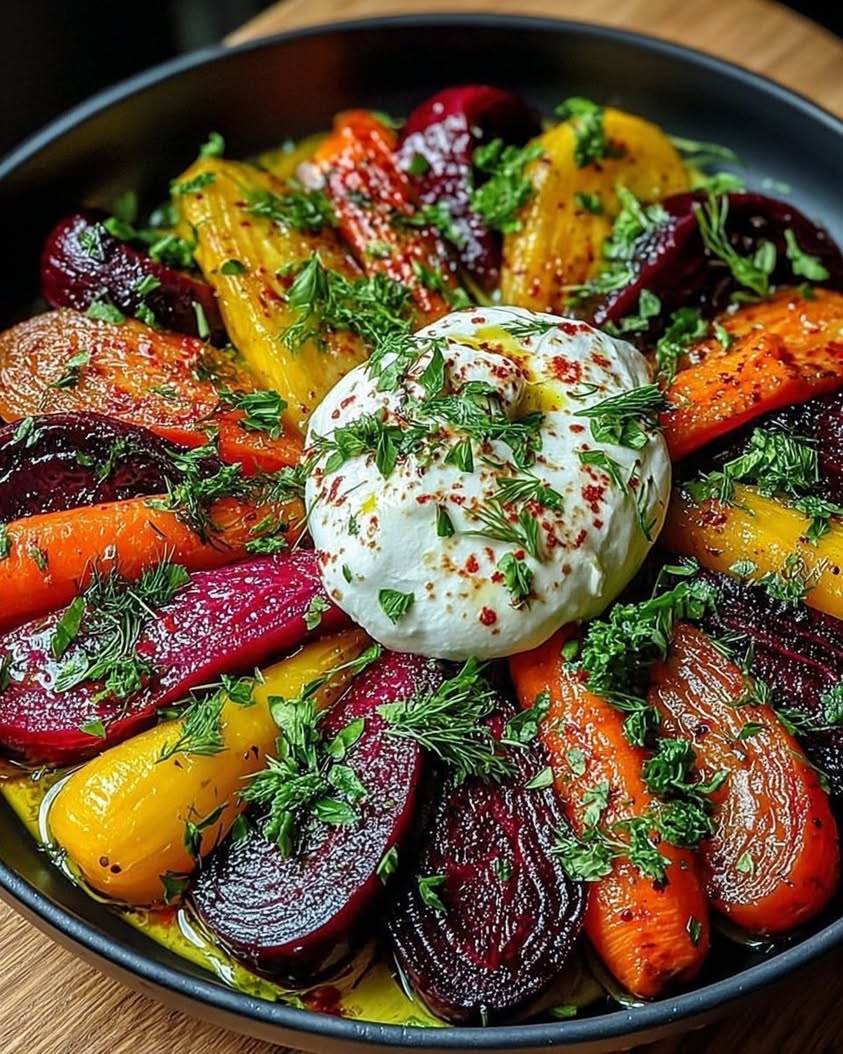
- Visual Appeal: This salad is a feast for the eyes. The deep magenta beets, bright orange carrots, and pure white burrata create a striking color palette. The green herbs provide a fresh pop of color. It looks elegant and rustic at the same time.
- Skill Level Needed: This is an excellent choice for beginner cooks. The techniques involved are basic chopping and oven roasting. Anyone can master this recipe on their first try.
- Special Equipment: You will need a standard sheet pan for roasting the vegetables. A sharp chef’s knife is essential for cutting the beets and carrots. A small saucepan is needed if you want to make your own balsamic reduction.
Recipe Overview
- Difficulty Level: I have rated this recipe as easy because there are no complex steps. The main work is peeling and chopping the vegetables. The oven does the heavy lifting. The assembly is simple. It is a great recipe for building confidence in the kitchen. You can easily make it after a long day at work.
- Category: This dish works perfectly as a side salad for a main course of roasted chicken or grilled fish. It also stands alone as a substantial appetizer or a light lunch. You can even serve it as a vegetarian main dish with a piece of crusty bread.
- Cuisine: The inspiration for this dish comes from modern Italian and California cuisine. It highlights fresh, seasonal produce. The combination of roasted vegetables and fresh cheese is a classic Italian pairing. The bright presentation and simple flavors also fit perfectly with California’s farm-to-table philosophy.
- Cost: The ingredients for this dish are generally quite affordable. Beets and carrots are some of the cheapest vegetables at the market. Burrata is a bit more expensive than mozzarella, but you can find it at most grocery stores for a reasonable price. A high-quality balsamic vinegar is a worthwhile investment. The overall cost is low to moderate.
- Season: This recipe is best during the fall and winter months. This is when beets and carrots are at their peak. They are sweeter and more flavorful during the cooler seasons. However, you can make this dish year-round with good results.
- Occasion: This recipe is perfect for any occasion. It is fancy enough for a holiday table like Thanksgiving or Christmas. It is also simple enough for a casual weeknight dinner. It makes a great dish for potlucks and picnics because it can be served at room temperature.
Why You Will Love This Recipe
The taste and texture of this vibrant roasted beets and carrots salad with creamy burrata recipe are simply addictive. The roasting process pulls out the natural sugars in the vegetables. This gives them a deep, sweet flavor that you cannot get from boiling or steaming. The creamy burrata provides a luxurious, rich counterpoint. The tangy balsamic glaze ties everything together. Every single bite offers a different combination of sweet, rich, and tangy. It is a complex flavor experience from a simple set of ingredients.
The convenience of this recipe is another major reason to love it. You can prepare most of the components ahead of time. You can roast the beets and carrots a day in advance. You can also make the balsamic reduction ahead of time. On the day you serve it, you just need to assemble everything. The active prep time is only about 15 minutes. The oven does the rest of the work. This gives you plenty of time to focus on other dishes or simply relax with your guests.
There are also significant nutritional advantages to this dish. Beets are packed with fiber, folate, and manganese. They are also known for their high levels of antioxidants, which support heart health. Carrots are an excellent source of beta-carotene, which is great for your eyes and immune system. Even the burrata, while rich, provides protein and calcium. This salad is a nutrient-dense side dish that makes you feel good about what you are eating. It is a healthy way to enjoy a decadent-tasting cheese.
This vibrant roasted beets and carrots salad with creamy burrata recipe has great social and entertaining value. It is a showstopper on a buffet table or a dinner plate. People are always impressed by the look of the colorful vegetables and the creamy cheese. It sparks conversation. It encourages sharing. It is a dish that feels special without requiring a lot of effort from the host. This makes it a go-to recipe for dinner parties, holidays, and family gatherings. It is a reliable crowd-pleaser.
Finally, this recipe is incredibly cost-effective and easy to make with accessible ingredients. Beets and carrots are some of the most affordable produce items at the store. You can find them year-round. Burrata is becoming more common and is often available for a very reasonable price at specialty grocery stores or even regular supermarkets. You do not need any exotic spices or expensive pantry items. This makes the dish budget-friendly while still feeling luxurious. It is a perfect example of how simple, cheap ingredients can create a stunning and delicious meal.
Historical Background and Cultural Significance
The combination of root vegetables and fresh cheese has deep roots in Italian culinary history. Beets and carrots have been staples of the Italian diet for centuries. They were often roasted over an open fire by peasants. This method made them tender and sweet. Fresh cheeses like mozzarella and burrata come from the Campania and Puglia regions of southern Italy. These cheeses were created as a way to preserve milk. The tradition of pairing roasted vegetables with fresh cheese is a classic example of the Italian “cucina povera” philosophy. This philosophy emphasizes simple, high-quality ingredients cooked with care.
Burrata itself has a relatively recent history, having been invented in the early 20th century in Murgia, Puglia. Steamed cheese makers created it as a way to use up leftovers from mozzarella production. They stretched the cheese curd into a pouch and filled it with cream and leftover cheese scraps. The result was a decadent, creamy cheese. This invention quickly became a prized delicacy. It spread from Puglia to the rest of Italy and eventually to the world. Its creamy center makes it the perfect partner for the earthy sweetness of roasted beets and carrots.
The specific recipe for this vibrant roasted beets and carrots salad with creamy burrata recipe has evolved in modern kitchens. It has moved from a traditional Italian side dish to a popular item on bistro menus. Chefs began experimenting with different vinegars and glazes. The balsamic reduction became a popular addition. This added a sweet and sour element that cut through the richness of the cheese and the sweetness of the vegetables. The dish became a staple of farm-to-table restaurants in the United States. It highlights the fresh, seasonal produce that is the hallmark of that movement.
Regional variations of this dish exist across Italy and beyond. In the north of Italy, you might find the vegetables roasted with butter and sage. In the south, olive oil and oregano are more common. Some variations use a simple lemon vinaigrette instead of balsamic. Others add toasted pine nuts or walnuts for crunch. In the United States, the dish has been adapted to include a wider variety of root vegetables. Parsnips or sweet potatoes are common additions. The creamy burrata remains the constant, beloved centerpiece of the dish. The basic idea of roasted vegetables and fresh cheese is endlessly adaptable.
Ingredient Deep Dive
Beets: Beets have a long and storied history, dating back to ancient times in the Mediterranean region. They were originally cultivated for their leaves, which were used as a leafy green. The root was not commonly eaten until the Roman era. Beets are incredibly nutritious. They are a great source of folate, which is essential for cell growth. They also contain betalains, a powerful antioxidant that gives beets their deep red color. These antioxidants can help reduce inflammation. When selecting beets at the store, look for ones that are firm, smooth, and heavy for their size. The greens should look fresh and vibrant if they are still attached. Store your beets in a plastic bag in the refrigerator. They will last for several weeks. You can remove the greens and store them separately for a quicker use. If you cannot find fresh beets, you can use golden beets for a milder flavor or even jarred, pre-cooked beets for a shortcut. However, the roasting process works best with fresh beets.
Carrots: Carrots were originally a wild plant with purple or white roots. The orange carrot we know today was developed in the Netherlands in the 17th century as a tribute to the Dutch House of Orange. Carrots are famously rich in beta-carotene, which the body converts into vitamin A. This is vital for good vision, especially night vision. They also provide fiber, vitamin K, and potassium. When buying carrots, look for firm, bright orange roots. Avoid carrots that are limp, cracked, or have a lot of green on the top. The green tops are a sign of freshness, but they should be removed before storage because they draw moisture from the root. Store carrots in a plastic bag in the refrigerator crisper drawer. They can stay fresh for several weeks. You can substitute carrots with parsnips, which have a similar texture but a more earthy, nutty flavor. Rainbow carrots add a great visual pop to the dish if you can find them.
Burrata: Burrata is a fresh Italian cheese that is a relative of mozzarella. It was created in the early 1900s in the Apulia region. The cheese maker would take leftover pieces of mozzarella curd, mix them with fresh cream, and wrap them in a thin layer of fresh mozzarella. The result is a pouch of creamy, milky cheese. Burrata is rich in protein and calcium, but it is also high in fat. It is a special occasion cheese. When selecting burrata, look for a cheese that feels firm but gives slightly when you press it. The package should not be leaking liquid. It should be stored in its liquid in the refrigerator and used within a couple of days of purchase for the best texture. If you cannot find burrata, high-quality fresh mozzarella is a good substitute. It will not be as creamy, but it will still provide a mild, milky flavor. You can also use a soft, spreadable goat cheese for a tangier alternative.
Common Mistakes to Avoid
- Undercooking the beets and carrots is a frequent mistake. The vegetables need to be completely fork-tender. If they are still hard in the center, they will not have that sweet, creamy texture. Always check them with a knife before pulling them from the oven.
- Crowding the sheet pan leads to steaming instead of roasting. The vegetables need space around them to allow hot air to circulate. If they are piled on top of each other, they will release steam and get mushy.
- Not peeling the beets is a common error. While beet skin is edible, it can be quite tough and has a woody texture. Peeling them ensures a tender result. The skin also holds onto dirt, which you do not want in your salad.
- Adding the burrata too early is a big mistake. If you place it on the hot vegetables too soon, it will melt and turn into a puddle. Always let the vegetables cool slightly before adding the cheese.
- Using a low-quality balsamic vinegar can ruin the dish. A cheap balsamic is often thin and acidic. It will not reduce properly into a thick, sweet syrup. Use a good quality, aged balsamic vinegar for the glaze.
- Skipping the salt and pepper on the vegetables is a major error. Salt is essential for drawing out the vegetables’ flavor and helping them caramelize. Season them generously before they go into the oven.
- Not drying the vegetables after washing them is a small but important mistake. Wet vegetables will not roast properly. They will steam instead of caramelizing. Pat them completely dry with a towel.
- Serving the dish ice cold from the fridge is a missed opportunity. This salad is best at room temperature or slightly warm. The flavors are much more pronounced when the dish is not cold.
- Forgetting to remove the beet stems can leave a bitter taste. The stems are edible but can be fibrous and bitter. It is best to use only the root itself for this dish.
- Over-dressing the salad with oil before roasting can make it greasy. A light coating is all you need. Excess oil will just sit on the bottom of the pan and not help with caramelization.
Essential Techniques
Proper roasting is the most critical technique for this vibrant roasted beets and carrots salad with creamy burrata recipe. The goal is to cook the vegetables until they are tender on the inside and caramelized on the outside. This requires a high oven temperature, usually around 400 degrees Fahrenheit. It is important to cut the beets and carrots into uniform sizes so they cook evenly. A good rule is to cut them into pieces that are about the size of a large walnut. This ensures they cook through before the outside burns. Toss the vegetables with a generous amount of oil, salt, and pepper. Spread them in a single layer on a rimmed baking sheet. Do not overcrowd the pan. Roast them until they are fork-tender, which usually takes about 40 to 45 minutes. The biggest pitfall is checking them too early. Trust the process and let them get soft.
Making a balsamic reduction is another key technique that elevates this dish. A balsamic reduction is simply balsamic vinegar that has been simmered to thicken and concentrate its flavor. Pour your balsamic vinegar into a small saucepan. Bring it to a gentle simmer over medium heat. Let it cook, stirring occasionally, until it has reduced by about half and coats the back of a spoon. This usually takes about 10 to 15 minutes. Be careful not to let it boil too hard, as this can cause it to burn and become bitter. The reduction will thicken more as it cools. This glaze adds a beautiful sweetness and acidity that balances the rich burrata and the sweet vegetables.
Handling burrata correctly is a more delicate skill. Because it is so soft, you need to be gentle. First, remove it from its packaging carefully. Let it drain on a paper towel for a minute to remove excess liquid. This prevents the salad from becoming watery. When you are ready to serve, you have a few choices. You can place the whole ball of burrata in the center of the plate and let your guests break it open. Alternatively, you can gently tear it into smaller pieces with your hands. This ensures you get the creamy center distributed throughout the salad. If you cut it with a knife, you might compress the cheese and lose some of the cream.
Pro Tips for Perfect Vibrant Roasted Beets and Carrots Salad with Creamy Burrata Recipe
To get the most flavor out of your beets, try wrapping them in foil before roasting. This method steams them inside the foil, making them incredibly tender. It also makes peeling them a breeze after they are cooked. Just let them cool, and the skin will slide right off.
For the best caramelization, make sure your oven is fully preheated before you put the vegetables in. A hot oven is essential for getting those brown, flavorful edges. If the oven is not hot enough, the vegetables will just steam.
Do not be afraid to use high-quality extra virgin olive oil for roasting. A good oil adds a fruity, peppery flavor that makes a big difference. It is a simple way to elevate the entire dish.
For an extra layer of flavor, add a few sprigs of fresh thyme or rosemary to the pan while the vegetables roast. The herbs infuse the oil and the vegetables with their aromatic oils. Remove the herb stems before serving.
If you want a bit of crunch, add toasted walnuts or pine nuts to the finished salad. Toast them in a dry pan for a few minutes until they are fragrant. This adds a wonderful textural contrast.
Let the roasted vegetables cool for at least 10 to 15 minutes before adding the burrata. This is the most important tip. If the vegetables are too hot, they will melt the cheese into a messy puddle. Warm vegetables are ideal.
Variations and Adaptations
For regional variations, you can look to the Mediterranean for inspiration. A Greek variation might include kalamata olives and crumbled feta cheese instead of burrata. You could also add a sprinkle of dried oregano. A French-inspired version could use a Dijon vinaigrette instead of a balsamic glaze. You could also add some fresh chervil or tarragon for a more delicate flavor profile.
Seasonal adaptations are a wonderful way to keep this dish fresh throughout the year. In the spring, you can add thin slices of fresh fennel and radishes to the raw component of the salad. In the summer, you can swap the oven roasting for a hot grill. Grill the beets and carrots whole until they are tender and charred. In the fall, consider adding roasted cubes of butternut squash or sweet potato to the mix.
Dietary modifications are easy to implement for this recipe. To make this dish vegan, you can substitute the creamy burrata with a dairy-free alternative. A cashew-based ricotta or a dollop of a high-quality vegan cream cheese works very well. You can also make a creamy dressing from blended silken tofu, lemon juice, and nutritional yeast. The roasted vegetables themselves are naturally vegan and gluten-free.
Flavor variations are limited only by your imagination. For a spicy kick, add a pinch of red pepper flakes to the vegetables before roasting. For a smoky flavor, use smoked paprika or chipotle powder. For a more herbal flavor, add a generous amount of fresh mint or basil to the finished salad instead of the traditional thyme. A squeeze of fresh lemon juice at the end can also brighten the flavor significantly.
Texture modifications can completely change the character of this dish. If you want a softer texture, cut the beets and carrots into smaller, more uniform cubes. For a chewier texture that retains more bite, cut them into larger chunks. You can also add a base of arugula or mixed greens to the plate before adding the vegetables. This adds a peppery, fresh crunch that complements the creamy cheese.
Presentation alternatives can make this dish look different every time you make it. You can layer the roasted vegetables in a neat, overlapping pattern on the plate for a formal look. You can also pile them high in a rustic mound in the center. Another beautiful presentation is to serve the vegetables in a shallow bowl and place the burrata in the very center. Drizzle the balsamic reduction around the bowl in a circular pattern.
Serving and Presentation Guide
When it comes to plating techniques for this dish, simplicity often looks best. I recommend using a wide, shallow bowl or a flat plate. This provides a nice canvas for the colors. Start by arranging the roasted beets and carrots in a single, slightly overlapping layer on the plate. This allows each color to show clearly. Then, place the burrata in the center. You can either present it whole or break it open. Breaking it open shows off the creamy center and lets it spill over the vegetables.
Garnishing ideas can elevate the visual appeal even further. A sprinkle of fresh, finely chopped parsley or chives adds a vibrant green contrast. Toasted pumpkin seeds or pistachios provide a beautiful green and deep brown color. A few flakes of sea salt on top of the burrata just before serving is a classic finishing touch. This adds a burst of salty flavor that contrasts with the sweetness of the vegetables.
Traditional accompaniments for a dish like this include crusty bread, which is perfect for soaking up the creamy burrata and any leftover balsamic glaze. A simple green salad on the side is also a nice addition. You can serve this dish alongside grilled or roasted proteins. It pairs wonderfully with chicken, fish, or even a thick pork chop.
Modern serving suggestions involve thinking of it as a main course. You can add a bed of quinoa or farro underneath the vegetables. This turns it into a hearty, vegetarian main dish. You can also add a protein directly to the salad, like some seared scallops or grilled halloumi cheese. This makes it even more substantial.
Temperature considerations are important for the best experience. This salad is best served at room temperature or slightly warm. If you roast the vegetables ahead of time, let them come back to room temperature before serving. Do not serve them directly from the refrigerator, as the cold will dull their sweetness. The burrata should also be at room temperature for the softest, creamiest texture.
Portion control tips are helpful for a balanced meal. As a side dish, this recipe serves about four people. For a main course, it will serve two people. When plating, aim for a generous mound of vegetables and a single ball of burrata per person. This is a rich dish, so a little goes a long way. The creamy cheese is quite filling.
Wine and Beverage Pairing
For wine pairings, this dish is quite versatile. A dry, crisp white wine is an excellent choice. A Sauvignon Blanc from New Zealand or a Sancerre from France works beautifully. The acidity of the wine cuts through the richness of the burrata. It also complements the earthy sweetness of the beets. A Pinot Grigio is another solid option. It is light, clean, and won’t overpower the delicate flavors.
If you prefer red wine, look for a light-bodied, low-tannin option. A Pinot Noir from Oregon or California is a fantastic match. Its fruity notes of cherry and raspberry play nicely with the sweet vegetables. A Beaujolais or a Valpolicella are also great choices. These wines have enough acidity to refresh your palate between bites of the creamy cheese. Avoid heavy, tannic reds like Cabernet Sauvignon, as they can clash with the cheese.
There are excellent non-alcoholic alternatives as well. A sparkling water with a squeeze of lemon or lime is a simple and clean pairing. The bubbles help cleanse the palate. A good quality sparkling apple cider or grape juice also works wonderfully. It has enough sweetness and acidity to stand up to the flavors in the dish.
A dry rosé is another fantastic option for this dish. It combines the refreshment of a white wine with the fruit notes of a red. A rosé from Provence is ideal. It is dry, crisp, and has flavors of strawberry and melon that complement the beets and carrots perfectly. It is a great choice for a warm-weather meal.
For serving suggestions, serve the wine chilled, but not ice-cold. Overly cold wine can mute its flavors. Let the wine breathe for a few minutes in the glass before drinking. For the non-alcoholic drinks, serve them over ice. Present the beverage in a simple, elegant glass to keep the focus on the beautiful food.
Storage and Shelf Life
Proper storage methods are essential for keeping the leftovers fresh. The most important thing is to store the components separately. Do not assemble the salad if you plan to have leftovers. The roasted beets and carrots should be stored in an airtight container. The burrata should be stored in its original liquid in its own container. If you have already made the balsamic reduction, it can be stored in a small jar at room temperature or in the fridge.
Temperature requirements are straightforward. The roasted vegetables need to be refrigerated within two hours of cooking. They should be kept at a temperature below 40 degrees Fahrenheit. The burrata is also perishable and must stay cold. It should be kept in the coldest part of the refrigerator. The balsamic reduction can stay at room temperature for a long time, just like honey or maple syrup.
Container recommendations are simple. For the vegetables, a glass or plastic container with a tight-fitting lid works perfectly. For the burrata, keep it in its original plastic container with the liquid. This liquid is crucial for keeping it moist. If you have lost the liquid, you can place the cheese in a small bowl and cover it with a mixture of milk and water to keep it from drying out.
Signs of spoilage are important to recognize. For the vegetables, look for any slimy texture or a sour smell. This means they have gone bad. For the burrata, if it develops a strong, ammonia-like smell or if the liquid looks cloudy and thick, it is spoiled. Always discard any leftover cheese that looks or smells off. Do not eat food that has been left out at room temperature for more than two hours.
Reheating instructions are simple for this dish. The best way to reheat the vegetables is in the oven. Spread them on a baking sheet and warm them at 350 degrees Fahrenheit for about 5 to 10 minutes. This will restore some of their roasted texture. You can also reheat them in a skillet on the stovetop over medium heat. Do not reheat the burrata. It should always be served cold or at room temperature.
Freezing guidelines are not recommended for this dish. The texture of the roasted vegetables will become watery and mushy upon thawing. The burrata will also become grainy and lose its creamy texture. This is a dish that is best enjoyed fresh. It is so quick to make that freezing is not really necessary.
Make Ahead Strategies
You can prepare this dish most of the way ahead of time using a smart prep timeline. Two days in advance, you can roast the beets and carrots. Let them cool completely and store them in the refrigerator. One day in advance, you can make the balsamic reduction. You can also toast any nuts you plan to use. On the day of serving, you just need to bring the vegetables to room temperature and assemble the dish.
Proper storage between steps is key. After roasting the vegetables, cool them completely on the baking sheet before transferring them to a container. This prevents condensation, which can make them soggy. Seal the container tightly to keep them from absorbing other odors in the fridge. The balsamic reduction can be stored in a small jar with a tight lid.
The quality impact of making it ahead is very positive. In fact, the flavors of the roasted vegetables actually improve after a day in the fridge. The sweetness and earthiness become more pronounced and meld together. The dish will taste even better the next day. The only component that does not improve is the burrata, which is best served fresh.
Assembly tips are important for the final step. When you are ready to serve, remove the vegetables from the fridge and let them come to room temperature for about 30 minutes. This is a crucial step, as cold vegetables will not taste as good. Pat them dry with a paper towel to remove any excess moisture that has accumulated. Then, arrange them on your serving plate.
Reheating guidelines for the pre-roasted vegetables are simple. If you want to serve the salad warm, you can reheat the vegetables very gently. Spread them on a baking sheet and warm them in a 300-degree oven for about 10 minutes. You just want to take the chill off, not cook them further. Let them cool back down to warm before adding the burrata.
Adding fresh elements just before serving is the final tip. The burrata should be added at the very last minute. Also, add any fresh herbs, a final drizzle of oil, and the balsamic glaze right before serving. This ensures the herbs stay bright and the cheese stays firm and creamy. Do not dress the salad ahead of time.
Scaling Instructions
Halving the recipe is very straightforward. If you only need to serve two people, simply cut all the main ingredients in half. Use one large beet and two large carrots instead of two beets and four carrots. Use one ball of burrata instead of two. The cooking time will remain roughly the same, but you should check the vegetables a few minutes earlier because they are in a smaller amount and may cook faster.
Doubling or tripling the recipe is easy as well, but you need to be careful with your equipment. You will need multiple sheet pans to avoid overcrowding. If you try to roast double the vegetables on one pan, they will steam. Use two separate pans and place them on different oven racks. You may need to rotate the pans top to bottom halfway through the cooking time to ensure even roasting. The cooking time might increase by a few minutes.
Equipment adjustments are the most important consideration when scaling up. You will need larger mixing bowls to toss the vegetables with oil and seasonings. Make sure you have enough sheet pans. If you are tripling the recipe, you might need to roast the vegetables in batches if your oven is not big enough. Burrata is sold individually, so you just need to buy more balls.
Timing modifications are usually minor. When you have more vegetables in the oven, it takes a little longer for the oven to recover its temperature after you open the door. Add about 5 to 10 extra minutes to the total roasting time when using multiple pans. Always check for doneness with a fork rather than relying on a timer.
Storage considerations become more important when you have a large batch. You will need more containers to store the leftover components separately. The balsamic reduction can be made in a larger batch and stored easily. Plan your fridge space carefully. The roasted vegetables will keep for the same amount of time, about 4 to 5 days, regardless of the batch size.
Nutritional Deep Dive
The macro breakdown of this dish is well-balanced. The primary source of carbohydrates comes from the beets and carrots. They provide about 15 to 20 grams of carbohydrates per serving. The protein comes mainly from the burrata, which offers about 6 to 8 grams of protein per ball. The fat content is moderate but rich, coming from the burrata and the olive oil used for roasting. A serving contains roughly 15 to 20 grams of fat, most of which is the healthy monounsaturated and saturated kind from the cheese and oil.
The micronutrient analysis is impressive. Beets are a very good source of folate, which is essential for DNA synthesis and cell growth. They are also high in manganese. Carrots are famously packed with vitamin A, mostly in the form of beta-carotene. This is important for vision health. The olive oil provides a good dose of vitamin E, a powerful antioxidant. The burrata provides calcium, which is necessary for strong bones.
Health benefits are numerous. The high fiber content from the vegetables helps with digestion and promotes a feeling of fullness. The antioxidants in the beets and carrots can help reduce inflammation and protect against chronic diseases. The healthy fats in the olive oil and burrata support brain health and nutrient absorption. This is a nutrient-dense dish that provides a lot of good things in one serving.
Dietary considerations are important to note. This dish is gluten-free by nature. It can be adapted to be vegetarian. It is not suitable for a low-fat or low-calorie diet due to the cheese and oil. It is also not appropriate for a strict keto diet because of the carbohydrates from the root vegetables. However, it is a wonderful part of a balanced, whole-foods diet.
Portion analysis shows that this is a satisfying but not overly heavy dish. As Print
Vibrant Roasted Beets & Carrots with Creamy Burrata Salad
- Total Time: 45 minutes
- Yield: 4
Description
A colorful and elegant salad featuring roasted golden and red beets, sweet carrots, and creamy burrata cheese, drizzled with a tangy balsamic vinaigrette.
Ingredients
- 2 large golden beets, peeled and cut into wedges
- 2 large red beets, peeled and cut into wedges
- 4 medium carrots, peeled and cut into sticks
- 2 tablespoons olive oil
- Salt and pepper to taste
- 8 ounces burrata cheese, at room temperature
- 1/4 cup balsamic vinegar
- 1 tablespoon honey
- 1/3 cup extra virgin olive oil
- 1 garlic clove, minced
- 2 tablespoons fresh lemon juice
- 1/2 cup fresh arugula (optional, for garnish)
- 2 tablespoons toasted pine nuts
Instructions
- Preheat oven to 400°F (200°C). Line a large baking sheet with parchment paper.
- In a bowl, toss the beet wedges and carrot sticks with 2 tablespoons olive oil, salt, and pepper until evenly coated.
- Spread the vegetables in a single layer on the prepared baking sheet. Roast for 25-30 minutes, stirring halfway through, until tender and caramelized. Let cool for 10 minutes.
- While vegetables roast, prepare the vinaigrette: In a small jar, combine balsamic vinegar, honey, extra virgin olive oil, minced garlic, and lemon juice. Shake well to emulsify. Season with salt and pepper.
- Arrange the roasted beets and carrots on a serving platter. Gently tear the burrata cheese into pieces and scatter over the vegetables.
- Drizzle the balsamic vinaigrette over the salad. Garnish with fresh arugula (if using) and toasted pine nuts. Serve immediately.
Notes
You can customize the seasonings to taste.
- Prep Time: 15 minutes
- Cook Time: 30 minutes
- Method: Main
- Cuisine: Italian-inspired