Homemade Italian Wedding Soup Recipe for Cozy Comfort Food
This Homemade Italian Wedding Soup Recipe for Cozy Comfort Food is exactly what you need when the weather turns cold. It is a soul-warming bowl of rich broth, tender meatballs, and delicate pasta. The name comes from the Italian phrase “minestra maritata,” which means “married soup.” It refers to the perfect marriage of greens and meat in the broth.
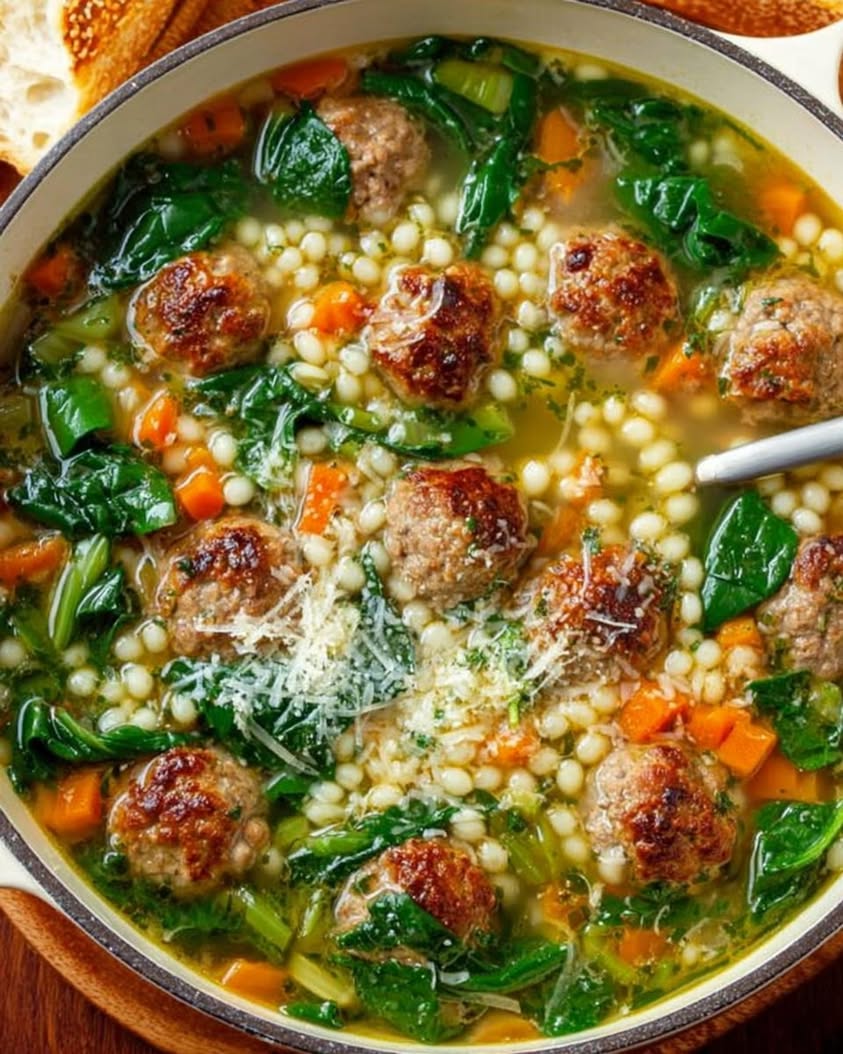
When you ladle this Homemade Italian Wedding Soup into a bowl, you will see tiny acini di pepe pasta swirling with fresh spinach. The small pork and beef meatballs are seasoned with Parmesan and garlic. Each spoonful tastes like a warm hug from an Italian grandmother. The aroma fills your kitchen with oregano and basil. It instantly makes your home feel more inviting.
Making this Homemade Italian Wedding Soup from scratch is easier than you think. You do not need any fancy equipment. The meatballs come together quickly. The broth builds deep flavor from simple ingredients. This is the kind of meal that brings people to the table. It is perfect for a Sunday dinner or a busy weeknight.
Quick Recipe Highlights
- Flavor Profile: This soup delivers a savory and slightly salty taste from the Parmesan cheese and the seasoned meatballs. The broth has a clean, rich flavor from simmering with garlic and fresh herbs. A subtle sweetness from the carrots balances the earthy greens perfectly.
- Texture: The tiny pasta provides a soft, tender bite that contrasts with the firm yet juicy meatballs. Fresh spinach offers a slight wilted chew. The broth is light and silky, coating every ingredient without being heavy.
- Aroma: The scent of sautéed onions and garlic fills the kitchen first. Then the oregano and basil release their herbal notes as the soup simmers. A final touch of fresh parsley adds a bright, clean finish.
- Visual Appeal: Bright green spinach floats among golden-brown meatballs and tiny white pasta pearls. The broth is a warm golden color with specks of herbs. A dusting of grated Parmesan on top creates an inviting finish.
- Skill Level Needed: This recipe requires basic knife skills for chopping vegetables. Forming the meatballs is simple and does not require precision. Beginners will find this recipe straightforward and rewarding.
- Special Equipment: You need a large stockpot or Dutch oven for simmering the broth. A small cookie scoop helps make uniform meatballs. A fine-mesh strainer is useful for rinsing the canned beans.
Recipe Overview
- Difficulty Level: We rate this recipe as medium difficulty because it involves three separate components. You have to make the meatballs, prepare the vegetables, and cook the pasta. However, each step is simple. The timing is forgiving, so you can work at a comfortable pace.
- Category: This dish is a hearty soup that works as a main course. It also fits into the comfort food category. You can serve it as a starter for a larger Italian meal, but a bowl with crusty bread makes a complete dinner.
- Cuisine: Italian cuisine is the foundation of this recipe. The tradition of combining meat and greens in a broth dates back centuries in Southern Italy. Immigrants brought this recipe to America, where it became a classic Italian-American staple.
- Cost: This is a very budget-friendly meal. Ground beef and pork are affordable. Canned beans and pasta cost very little. Spinach and carrots are inexpensive fresh produce. The total cost for six servings is under fifteen dollars.
- Season: Fall and winter are the best seasons for this soup. The warm broth and hearty ingredients fight off the cold. However, you can enjoy it year-round. Spring versions often use fresh peas and baby spinach.
- Occasion: This soup is perfect for casual family dinners. It also works for holiday gatherings like Christmas Eve. You can serve it at a potluck or a game-day party. It travels well and stays hot in a thermos.
Why You Will Love This Recipe
The taste of this Homemade Italian Wedding Soup is truly remarkable. The meatballs are seasoned with garlic, parsley, and Parmesan, which makes them incredibly flavorful. When you bite into one, you get a burst of savory juice. The broth absorbs all those flavors as it simmers. The tiny pasta adds a pleasant starchiness that thickens the soup slightly. Every spoonful delivers a balanced combination of meat, greens, and pasta.
Convenience is a major advantage of this recipe. You can make the meatballs ahead of time and store them in the fridge. The soup comes together in one pot, which means less cleanup. You can even freeze the finished soup for later. The active cooking time is only about thirty minutes. The rest is just simmering while you do other things. This recipe fits perfectly into a busy schedule.
Nutritionally, this soup is a powerhouse. You get lean protein from the meatballs and the cannellini beans. The spinach provides iron, vitamin K, and folate. The carrots add beta-carotene and fiber. The broth is hydrating and low in calories. A generous bowl has around 350 calories. It keeps you full without feeling heavy. This is a well-rounded meal that supports a healthy lifestyle.
Socially, this soup is a crowd-pleaser. You can serve it to guests without worrying about dietary restrictions. It naturally contains dairy in the Parmesan, but you can leave it out. Kids love the tiny pasta and small meatballs. Adults appreciate the complex flavor. The soup looks impressive when you serve it from a nice tureen. It makes you look like a skilled cook without much effort.
Cost-effectiveness is another reason to love this recipe. The ingredients are all pantry staples. You likely already have garlic, onions, and pasta in your kitchen. Ground meat is often on sale. Canned beans cost less than one dollar per can. This Homemade Italian Wedding Soup feeds a family of six for very little money. Leftovers taste even better the next day. You get a big return on a small investment.
Historical Background and Cultural Significance
The origin of Italian Wedding Soup dates back to ancient Rome. The concept of combining meat and vegetables in a broth was practical for using leftovers. The phrase “minestra maritata” first appeared in cookbooks from the 16th century. It described the “marriage” of ingredients rather than an actual wedding. The soup was a way to stretch expensive meat with plentiful greens.
In Southern Italy, this soup held deep cultural importance. Families would make it on Sundays after church. It symbolized abundance and family unity. The ingredients varied by region. In Campania, they used escarole and pork. In Calabria, they added spicy sausage. The soup was a staple of peasant cooking. It fed large families with simple, affordable ingredients.
The recipe evolved when Italian immigrants arrived in America. They found escarole difficult to find, so they substituted spinach or Swiss chard. They also added tiny pasta like acini di pepe or orzo. American versions became heartier with more meat. The soup became a fixture in Italian-American restaurants. It gained the misleading name “wedding soup” because of the mistaken translation of “maritata.”
Regional variations are abundant across Italy today. In Tuscany, they use kale and cannellini beans without pasta. In Sicily, they add fennel and raisins for a sweet note. The version from Lazio uses lamb meatballs. Some regions serve it as a first course. Others make it a main dish with crusty bread. Each variation reflects local ingredients and family traditions.
Ingredient Deep Dive
Ground beef and pork are the heart of the meatballs. The combination of beef and pork provides the best flavor and texture. Beef gives a robust meaty taste. Pork adds fat and tenderness. Together, they create a juicy meatball that does not dry out. When you choose ground beef, look for 80/20 lean-to-fat ratio. For pork, ground shoulder is ideal. You can also use all ground turkey for a lighter version. Store raw meat in the coldest part of your fridge. Use it within two days of purchase or freeze it.
Pancetta or bacon adds a salty, smoky depth to the broth. Pancetta is Italian cured pork belly. It is not smoked like bacon. You can use bacon as a substitute. Pancetta renders fat that you use to sauté the vegetables. This fat carries flavor beautifully. Look for pancetta in the deli section. Ask for a thick slice about a quarter inch thick. Store it wrapped in parchment paper in the fridge. It keeps for up to three weeks.
Cannellini beans provide creaminess and protein. These white kidney beans have a mild, nutty flavor. They soften during cooking and thicken the broth slightly. You can use canned beans for convenience. Rinse them well to remove excess sodium. Dried beans work too if you soak them overnight. Great Northern beans or navy beans are good substitutes. Store canned beans in a cool pantry. Use them before the expiration date.
Acini di pepe pasta is the classic choice for this soup. These tiny, bead-shaped pasta pieces cook quickly. They add a pleasant texture without overwhelming the broth. Orzo or stelline pasta also work well. You can even use pastina. The key is to cook the pasta separately. Cooking it in the soup makes it mushy. Store pasta in an airtight container in a cool, dry place. It lasts for months.
Fresh spinach adds color and nutrition. Baby spinach is tender and mild. It wilts in just a minute. You can use frozen spinach if fresh is unavailable. Thaw it and squeeze out the excess water. Kale or Swiss chard are excellent substitutes. They need a little longer cooking time. Wash fresh spinach thoroughly to remove grit. Store it in a plastic bag with a paper towel. Use it within three days.
Parmesan cheese is the finishing touch. Real Parmesan from Italy has a nutty, salty flavor. It melts beautifully into the broth. You should always grate it fresh from a block. Pre-grated cheese contains anti-caking agents. They prevent smooth melting. Pecorino Romano is a sharper alternative. Store Parmesan wrapped in wax paper in the fridge. It keeps for several weeks.
Common Mistakes to Avoid
- Overcooking the pasta is the most common mistake. The pasta continues to absorb liquid even after you remove it from heat. Cook it al dente and rinse it with cold water. Add it to individual bowls before pouring the soup. This prevents it from turning into mush.
- Using lean meat for the meatballs results in dry, tough meat. You need some fat for moisture. Use ground beef with at least 80% lean. The fat renders during cooking and keeps the meatballs tender.
- Skipping the browning step for the meatballs means less flavor. Browning creates a crust called the Maillard reaction. This adds deep, savory notes to the broth. Do not crowd the pan. Brown the meatballs in batches.
- Adding all the spinach at once causes it to clump. Add the spinach in handfuls. Stir gently after each addition. This allows it to wilt evenly. The spinach should be bright green, not gray.
- Using too much salt early in the process ruins the soup. The pancetta and Parmesan are naturally salty. Add salt at the end after tasting. You can always add more, but you cannot remove it.
- Overmixing the meatball mixture makes them dense. Mix just until the ingredients combine. Use a light hand. Overworking the meat develops gluten and makes the meatballs tough.
- Boiling the soup vigorously breaks the meatballs apart. Keep the soup at a gentle simmer. Bubbles should break the surface slowly. A rolling boil causes the meatballs to disintegrate.
- Forgetting to rinse the canned beans adds excess starch and sodium. Rinsing removes the cloudy liquid. It also washes away the metallic taste from the can. Drain them in a colander and rinse with cold water.
- Adding the pasta to the entire pot means leftovers become a starchy mess. Store the pasta separately. Combine them only when you reheat individual servings. This keeps the soup clear and the pasta firm.
- Neglecting to taste the broth before serving is a missed opportunity. The flavors develop as the soup simmers. You may need more pepper or a splash of lemon juice. Always taste and adjust right before you serve.
Essential Techniques
Browning the meatballs is a crucial technique for flavor development. When you sear the meatballs in hot oil, you create a brown crust. This crust is full of savory compounds. It adds complexity to the entire soup. To master this technique, heat your pan over medium-high heat. Add a thin layer of olive oil. Place the meatballs in a single layer. Do not move them for three minutes. Then flip them carefully. The meatballs should be brown on all sides. They do not need to be cooked through. The simmering broth finishes the job.
Rendering pancetta requires patience and low heat. Pancetta is full of fat that you want to release slowly. Cut the pancetta into small cubes. Place them in a cold pan. Turn the heat to medium. Stir occasionally as the fat melts. The pancetta pieces should become crispy and golden. This process takes about eight minutes. Remove the crispy bits with a slotted spoon. Leave the rendered fat in the pan. This fat is liquid gold for flavoring the vegetables.
Building a soffritto is the foundation of Italian cooking. Soffritto is a mixture of finely chopped onion, carrot, and celery. It provides a sweet and aromatic base. Chop all vegetables to the same size for even cooking. Sauté them in the pancetta fat over medium-low heat. Stir frequently for about ten minutes. The vegetables should soften without browning. They will become translucent and fragrant. This technique extracts sweetness and depth from humble ingredients.
Simmering the broth extracts maximum flavor without clouding. A simmer means small bubbles rise gently to the surface. The temperature should be around 185 degrees Fahrenheit. At this temperature, the meatballs cook gently. The vegetables soften without falling apart. The flavors meld together slowly. If you see large bubbles, reduce the heat. A covered pot simmers more gently. Uncover and check the heat level after fifteen minutes.
Wilting spinach correctly preserves its color and texture. Spinach contains oxalic acid that turns it gray when overcooked. Add the spinach in the last few minutes of cooking. Stir it into the hot broth. It will wilt in under a minute. Remove the pot from heat immediately. The residual heat continues the process. The spinach should stay bright green. Serve the soup right away to capture that vibrant color.
Pro Tips for Perfect Homemade Italian Wedding Soup
Use a small cookie scoop or melon baller to form uniform meatballs. Uniform size ensures even cooking. Dip the scoop in cold water between scoops to prevent sticking. Roll each meatball lightly between your palms for a smooth shape.
Toast the acini di pepe pasta in butter before boiling it. This adds a nutty flavor that complements the broth. Melt one tablespoon of butter in a skillet. Add the dry pasta and stir for two minutes until golden. Then cook it in salted water as usual.
Add a Parmesan rind to the broth while it simmers. The rind releases umami flavor without adding salt. You can freeze leftover Parmesan rinds for this purpose. Remove the rind before serving. It will be soft and pliable.
Let the soup rest for ten minutes before serving. This allows the flavors to settle and meld. The broth becomes more cohesive. The meatballs absorb a bit of liquid. Do not let it rest longer than twenty minutes or the pasta will swell.
Use homemade chicken stock if you have it. Store-bought stock works, but homemade adds a richer flavor. Simmer chicken bones with vegetables for two hours. Strain and cool it. Your Homemade Italian Wedding Soup will taste more authentic.
Add a squeeze of fresh lemon juice at the end of cooking. The acidity brightens all the flavors. It cuts through the richness of the meatballs. Start with half a lemon and adjust to taste. This small step makes a big difference.
Toast crusty bread with olive oil and rub it with garlic for serving. The bread soaks up the broth beautifully. It adds a crunchy texture against the tender soup. This is a classic Italian pairing that you should not skip.
Grate fresh nutmeg into the meatball mixture. Nutmeg has an affinity for spinach and cheese. Use a microplane to grate a small pinch. It is a subtle flavor that adds warmth. Do not use pre-ground nutmeg for this purpose.
Variations and Adaptations
Regional variations across Italy offer endless inspiration. In Naples, they use escarole instead of spinach. Escarole has a slight bitterness that balances the rich broth. In Rome, they add tiny meatballs made from ground veal. The broth is clear and thin. In Lombardy, they use butter instead of olive oil. The soup becomes richer and more decadent. Each region puts its own stamp on this classic dish.
Seasonal adaptations keep the soup fresh all year. In spring, substitute fresh peas for half the spinach. Add asparagus tips for a green vegetable boost. Summer versions can include zucchini and yellow squash. Dice them small so they cook quickly. Fall brings butternut squash cubes and kale. Winter calls for hearty greens like collards or Swiss chard. Adjust the cooking time for tougher greens.
Dietary modifications make this soup accessible to everyone. For a gluten-free version, use gluten-free pasta or omit it entirely. Add extra beans to compensate. Use gluten-free panko breadcrumbs in the meatballs. For dairy-free, skip the Parmesan or use a vegan alternative. The soup is naturally nut-free and egg-free if you omit the egg in the meatballs.
Flavor variations can transform the soup completely. Add red pepper flakes for heat. Stir in a tablespoon of tomato paste for a richer red broth. Use fennel seeds in the meatballs for a sausage-like flavor. Swap the oregano for thyme and rosemary. Add a splash of white wine after sautéing the vegetables. Let it reduce before adding broth.
Texture modifications change the eating experience. Puree half the beans and add them to the broth. This creates a creamy, velvety texture without dairy. You can also shred the meatballs after they cook for a different texture. For a chunkier soup, leave the carrots in larger dice. For a smoother version, grate the carrots finely.
Presentation alternatives make the soup more elegant for guests. Serve the soup in small cups as an appetizer. Top each cup with a single meatball and a drizzle of olive oil. For a main course, serve in wide bowls with a side of garlic bread. Garnish with fresh basil leaves and a shaving of Parmesan. Use a ladle to pour the broth over the ingredients in the bowl.
Serving and Presentation Guide
Plating techniques can elevate your Homemade Italian Wedding Soup. Start with warm bowls to keep the soup hot. Place a portion of pasta in the bottom of each bowl. Arrange three to four meatballs on top. Ladle the broth and vegetables over them. The pasta stays separate and does not get soggy. Finish with a generous dusting of Parmesan cheese and a crack of black pepper.
Garnishing ideas add visual appeal and flavor. A drizzle of extra-virgin olive oil adds richness and shine. Fresh parsley or basil leaves provide a green pop. A lemon wedge on the side allows guests to add acidity. Toasted pine nuts add a nutty crunch. Red pepper flakes offer a hint of heat. Each garnish brings a new dimension to the dish.
Traditional accompaniments are essential for a complete meal. Crusty Italian bread is non-negotiable for dipping. A side salad with a simple vinaigrette cuts the richness. Roasted vegetables like broccoli rabe pair well. A glass of Chianti or Sangiovese complements the tomato and herb notes. For a non-alcoholic option, serve with sparkling water and lemon.
Modern serving suggestions update the classic presentation. Serve the soup deconstructed for a fancy dinner party. Place the broth in a small teapot. Arrange the meatballs, pasta, and greens on a platter. Let guests assemble their own bowls. You can also serve it in hollowed-out bread bowls for a fun twist. This works well for casual gatherings.
Temperature considerations matter for the best experience. Serve the soup piping hot. The broth should steam when you ladle it. Cold broth makes the fat congeal and the texture unpleasant. If you reheat leftovers, bring them to a gentle simmer. Do not boil them. The meatballs can burst if reheated too vigorously. Check the temperature with a thermometer at 165 degrees Fahrenheit.
Portion control tips help with meal planning. A standard serving is about two cups of soup. This includes four to five meatballs, a half cup of pasta, and plenty of greens. For a hearty main course, serve with bread and a salad. For an appetizer, use a half-cup serving. This recipe makes about twelve cups of soup total. Adjust portion sizes based on your group.
Wine and Beverage Pairing
Wine pairings for this Homemade Italian Wedding Soup should consider the savory broth and meatballs. A light-bodied red wine like Chianti works beautifully. Its acidity cuts through the richness of the meatballs. The cherry and herb notes complement the oregano and basil. Another excellent choice is Barbera. It has enough acidity to brighten the soup. Avoid heavy reds like Cabernet Sauvignon. They overpower the delicate flavors.
For white wine lovers, choose a dry Italian white. Pinot Grigio from Alto Adige is crisp and clean. It does not compete with the soup. Another option is Vermentino from Sardinia. It has a slight salinity that pairs well with the Parmesan. A Soave Classico offers almond and citrus notes. These whites keep the meal light and refreshing. Serve them well-chilled at about 45 degrees Fahrenheit.
Non-alcoholic alternatives are just as satisfying. A San Pellegrino with a lemon slice is a classic Italian choice. The bubbles cleanse your palate between bites. You can also make a simple spritzer with sparkling water and a splash of white grape juice. Herbal tea like chamomile or mint is a warm option. It does not interfere with the food flavors.
Italian sodas are a fun non-alcoholic option. Mix sparkling water with a flavored syrup like blood orange or pomegranate. Add a splash of lime juice. Serve it over ice in a tall glass. The sweetness balances the savory soup. You can also serve iced tea with lemon. Avoid sugary sodas that clash with the food.
Beer lovers should reach for a lager or pilsner. Italian lagers like Peroni or Moretti are light and crisp. They have a clean finish that does not linger. Avoid hoppy IPAs that overpower the subtle flavors. A Belgian witbier with citrus notes also works. Serve beer very cold in a frosted glass.
Storage and Shelf Life
Storage methods for this soup require careful separation. The broth and solids should be stored together. Store the pasta separately in a different container. This prevents the pasta from absorbing all the liquid. Use airtight containers to prevent odors from spreading. Glass containers are best because they do not stain. Let the soup cool completely before sealing the lid.
Temperature requirements are critical for food safety. Cool the soup to room temperature within two hours of cooking. Place the pot in an ice bath to speed this process. Stir occasionally to release heat. Once cool, transfer to the refrigerator. Set your fridge to 40 degrees Fahrenheit or below. The soup will keep for three to four days. Do not leave it out overnight.
Container recommendations focus on preventing leaks. Use containers with tight-sealing lids. Plastic containers work but may stain. Mason jars are a good option for individual portions. Leave headspace for expansion. Do not fill containers to the brim. Label each container with the date. This helps you track freshness.
Signs of spoilage are easy to spot. A sour smell indicates bacterial growth. The broth may become cloudy or develop a film. Mold can appear on the surface. The meatballs may feel slimy. Discard any soup that shows these signs. Do not taste it to check. When in doubt, throw it out.
Reheating instructions ensure quality. Reheat only the amount you plan to eat. Pour the soup into a saucepan. Heat over medium-low heat until simmering. Stir occasionally to distribute heat evenly. If you stored the pasta separately, add it to the bowl. Pour the hot soup over it. This keeps the pasta firm. Do not reheat the soup more than once.
Freezing guidelines extend the shelf life significantly. The soup freezes well for up to three months. Use freezer-safe containers or bags. Leave at least an inch of headspace for expansion. Remove as much air as possible from bags. Freeze the soup flat for easy stacking. Thaw it in the refrigerator overnight. Reheat gently on the stovetop. The greens may lose some color, but the flavor remains.
Make Ahead Strategies
A prep timeline helps you stay organized. Make the meatballs up to two days in advance. Form them and place them on a baking sheet. Cover with plastic wrap and refrigerate. You can also freeze them on the sheet. Once frozen, transfer them to a freezer bag. They keep for three months. On the day you serve the soup, you only need to make the broth.
Storage between steps requires proper handling. The meatballs must stay cold until you cook them. Keep them covered to prevent drying. The chopped vegetables can be prepped a day ahead. Store them in separate bags in the crisper drawer. Do not combine carrots and onions. Their moisture can cause premature spoilage.
Quality impact assessment is important for make-ahead cooking. The soup tastes better the next day after the flavors meld. However, the pasta will become mushy. To avoid this, make the soup completely but leave out the pasta. When you reheat it, cook fresh pasta and add it to the bowls. The greens may lose their vibrant color. Add fresh spinach when reheating to refresh the color.
Assembly tips make serving day easy. Have all your ingredients ready in the morning. Cook the pancetta and save the fat. Sauté the vegetables in the fat. Add the broth, beans, and meatballs. Simmer for thirty minutes. Keep the soup warm on low heat. Cook the pasta just before serving. Add the spinach at the very end.
Reheating guidelines for the full pot bring it back to life. Remove the soup from the fridge. Let it sit at room temperature for twenty minutes. Warm it over medium heat. Stir occasionally to prevent sticking. Bring it to a gentle simmer. Add a splash of broth or water if it thickened. Taste and adjust seasoning. The Parmesan flavor may have mellowed. Add a fresh grating at the end.
Fresh element additions restore the soup to its original quality. Add a handful of fresh spinach when reheating. The fresh leaves wilt and brighten the color. A squeeze of lemon juice wakes up the flavors. Freshly grated Parmesan adds a salty finish. A drizzle of olive oil adds richness. These small touches make the soup taste freshly made.
Scaling Instructions
Halving the recipe is straightforward for smaller households. Use half the amount of every ingredient. The cooking time reduces slightly because there is less volume. Use a smaller pot to maintain proper heat distribution. The meatball mixture halves easily. You will make about 20 meatballs instead of 40. The pasta amount should be half a cup dry. Check for doneness at 30 minutes of simmering.
Doubling or tripling the recipe works well for parties. Use a large stockpot at least eight quarts in size. Increase the pot diameter to allow proper browning. You may need to brown the meatballs in three batches. The simmering time may increase by ten minutes. The pasta amount should be doubled exactly. Store leftovers in multiple containers for easy reheating.
Equipment adjustments are necessary for larger batches. A heavy-bottomed Dutch oven is ideal for batches up to double. For tripling, use a large stockpot. You need a bigger skillet for browning meatballs. Have extra baking sheets for chilling the meatballs. Use multiple cutting boards to speed up vegetable prep. A larger colander handles the increased volume of beans.
Timing modifications account for the increased quantity. The vegetables take the same time to sauté. The meatballs need the same time to brown in batches. The simmering time increases by about five to ten minutes. Use a thermometer to check the soup temperature. The pasta cooks in the same time regardless of quantity. Do not rush the process.
Storage considerations change with scale. Doubling the recipe means more leftovers. Use multiple shallow containers to cool the soup quickly. Do not stack hot containers in the fridge. Leave space between them for airflow. Freeze individual portions for easy lunches. The soup keeps for the same duration regardless of batch size. Scale your storage accordingly.
Nutritional Deep Dive
Macro breakdown for one serving of this Homemade Italian Wedding Soup includes approximately 350 calories. The protein content is around 25 grams from the meatballs and beans. Carbohydrates are about 35 grams from the pasta and vegetables. Fat content is roughly 12 grams from the meat and pancetta. Fiber clocks in at 8 grams from the beans and spinach. This is a well-balanced meal with all three macronutrients.
Micronutrient analysis reveals impressive benefits. Spinach provides 180 percent of your daily vitamin K. It also offers high amounts of vitamin A from beta-carotene. The cannellini beans are rich in folate, which supports cell growth. Carrots add vitamin A and biotin for skin health. Parmesan cheese contributes calcium for bone strength. Garlic provides allicin, which supports immune function.
Health benefits go beyond basic nutrition. The soup is high in fiber, which promotes digestive health. The lean protein supports muscle maintenance. The broth is hydrating and contains electrolytes. The combination of vegetables provides antioxidants that fight inflammation. This soup supports heart health with low saturated fat. It is a nutrient-dense meal that keeps you full for hours.
Dietary considerations are important for many people. This soup is naturally nut-free and soy-free. It contains dairy from Parmesan, but you can omit it. The recipe uses eggs in the meatballs. You can substitute with a flax egg. The soup is not vegan or vegetarian due to the meat. However, you can make a vegetarian version with vegetable broth and vegan meatballs.
Portion analysis helps with weight management. A standard serving is about two cups. This portion provides a satisfying meal without overeating. The high water content from the broth promotes fullness. The fiber slows down digestion. You can eat a large bowl for under 400 calories. This makes it an excellent choice for weight maintenance.
Weight management tips include serving the soup as a starter. Eating soup before a main course reduces overall calorie intake. The volume of fluid fills your stomach. You eat less of the higher-calorie main dish. You can also make the soup with less pasta to reduce carbohydrates. Double the spinach for more volume without extra calories. These simple adjustments support your health goals.
Dietary Adaptations
Gluten-free adaptation is simple. Use gluten-free pasta like rice pasta or quinoa pasta. The cooking time may vary, so follow package directions. Replace the breadcrumbs in the meatballs with gluten-free panko or crushed pork rinds. Make sure your broth is certified gluten-free. Most chicken stocks are naturally gluten-free, but check labels. The rest of the ingredients are naturally gluten-free.
Dairy-free adaptation requires swapping the Parmesan. Use a dairy-free Parmesan alternative made from nuts. Nutritional yeast provides a cheesy flavor without dairy. Omit the Parmesan in the meatballs. The flavor changes slightly but remains delicious. Use olive oil instead of butter for toasting the pasta. Check your pancetta for dairy additives. Most pancetta is dairy-free.
Vegan adaptation transforms the soup completely. Replace the meatballs with store-bought vegan meatballs or lentil balls. Use vegetable broth instead of chicken stock. Omit the pancetta and use olive oil for sautéing. Add extra beans for protein. Use vegan Parmesan or nutritional yeast. Add mushrooms for umami flavor. The soup becomes a hearty vegetable soup with a similar texture.
Low-carb adaptation reduces the carbohydrates. Omit the pasta entirely. Increase the spinach to six cups. Replace the beans with extra meatballs or add tofu. Use a low-carb thickener like xanthan gum if desired. The meatballs should use almond flour instead of breadcrumbs. This version has about 15 grams of carbs per serving.
Keto adaptation is similar to low-carb. Use almond flour in the meatballs. Omit the pasta and beans. Add extra olive oil for healthy fat. Increase the meatball portion to six per serving. Use full-fat chicken broth. Add heavy cream for richness if desired. This version has very few carbs. It fits into a strict keto diet.
Paleo adaptation removes grains and legumes. Omit the pasta entirely. Replace the beans with extra vegetables like zucchini. Use almond flour or cassava flour in the meatballs. Ensure your broth is grain-free. Omit the Parmesan if you avoid dairy. Use coconut aminos instead of salt for flavor. The soup remains hearty and satisfying.
Low-FODMAP adaptation helps those with digestive issues. Use garlic-infused oil instead of garlic cloves. Omit the onion or use the green part of scallions. Use canned cannellini beans, but limit to a quarter cup per serving. Omit the Print
Homemade Italian Wedding Soup
- Total Time: 45 minutes
- Yield: 4
Description
A hearty and comforting Italian soup with tiny meatballs, tender greens, and acini di pepe pasta in a flavorful broth.
Ingredients
- 1 lb ground pork
- 1/2 cup breadcrumbs
- 1/4 cup grated Parmesan cheese
- 1 egg
- 2 cloves garlic, minced
- 1 teaspoon salt
- 1/2 teaspoon black pepper
- 1 tablespoon olive oil
- 8 cups chicken broth
- 1 cup acini di pepe pasta
- 4 cups fresh spinach, chopped
- 1/2 cup grated Parmesan cheese (for serving)
- Fresh parsley for garnish
Instructions
- In a large bowl, combine ground pork, breadcrumbs, 1/4 cup Parmesan cheese, egg, minced garlic, salt, and pepper. Mix until well combined.
- Roll the mixture into small, 1-inch meatballs.
- In a large pot, heat olive oil over medium heat. Add the meatballs and brown on all sides, about 5 minutes.
- Pour in the chicken broth and bring to a boil. Reduce heat to a simmer.
- Add the acini di pepe pasta and cook until tender, about 8 minutes.
- Stir in the chopped spinach and cook until wilted, about 2 minutes.
- Ladle the soup into bowls and top with additional Parmesan cheese and fresh parsley.
Notes
You can customize the seasonings to taste. Add a pinch of red pepper flakes for a little heat.
- Prep Time: 15 minutes
- Cook Time: 30 minutes
- Method: Soup
- Cuisine: Italian