The Ultimate Greek Chicken Souvlaki Bowls with Garlic Sauce Recipe
Imagine the aroma of lemon and oregano filling your kitchen as you prepare these Greek Chicken Souvlaki Bowls with Garlic Sauce. This Greek Chicken Souvlaki Bowls with Garlic Sauce recipe brings the vibrant flavors of a Mediterranean taverna directly to your dinner table. We combine tender, marinated chicken skewers with fluffy rice, fresh vegetables, and a creamy, tangy garlic sauce that ties every bite together perfectly. The beauty of this dish lies in its simplicity and the incredible depth of flavor you achieve with just a handful of ingredients.
You will find that this Greek Chicken Souvlaki Bowls with Garlic Sauce recipe is both approachable for beginners and satisfying for experienced home cooks. The marinade relies on basic pantry staples like olive oil, lemon juice, and dried oregano to create a chicken that is juicy and packed with herbs. Furthermore, building these bowls allows you to customize each serving with your favorite toppings, making it a hit for family dinners or meal prep. Consequently, you get a wholesome meal that feels restaurant-quality without the fuss.
This recipe truly shines because it balances convenience with authentic taste. You can prepare the components ahead of time and simply assemble the bowls when you are ready to eat. The garlic sauce, or tzatziki-inspired dressing, adds a cool and refreshing contrast to the warm, savory chicken. So, if you are craving a meal that is both nourishing and deeply flavorful, these Greek Chicken Souvlaki Bowls with Garlic Sauce are your answer.
Quick Recipe Highlights
- Flavor Profile: You taste bright lemon and earthy oregano first, followed by the savory richness of grilled chicken. The garlic sauce provides a creamy, tangy finish that balances the herbs perfectly.
- Texture: The chicken offers a satisfying char on the outside while staying incredibly tender and juicy inside. You also enjoy the crunch of fresh cucumbers and the soft fluffiness of warm rice.
- Aroma: Your kitchen will smell of garlic, grilling meat, and fresh lemon zest. The oregano releases its herbal notes as the chicken cooks, creating an inviting Mediterranean aroma.
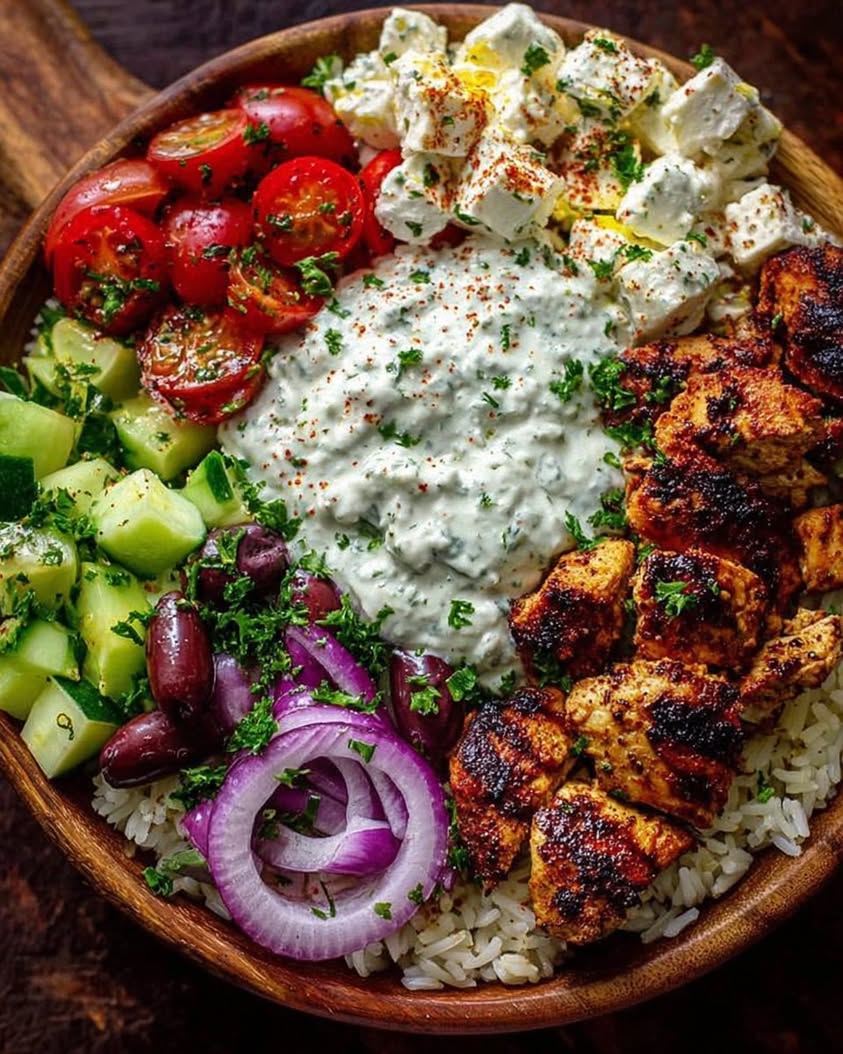
- Visual Appeal: You see colorful vegetables like red onion, tomato, and cucumber arranged around golden-brown chicken pieces. A generous drizzle of white garlic sauce over the top creates an appetizing, finished look.
- Skill Level Needed: You only need basic knife skills and the ability to thread chicken onto skewers. Grilling or pan-searing requires simple temperature management.
- Special Equipment: You need wooden or metal skewers for the souvlaki, a grill pan or outdoor grill, and a box grater for the cucumber in the sauce.
Recipe Overview
- Difficulty Level: This recipe earns an easy rating because the steps are straightforward and forgiving. The marinade does not require precise measurements, and the cooking time is short. Even if you are new to grilling, the chicken cooks quickly and remains moist. You can easily check for doneness with a simple cut test.
- Category: You can serve these bowls for a quick weeknight dinner or as a show-stopping lunch. They also work perfectly for meal prep, as the components store well separately. This dish fits into the main course category with a salad-like assembly.
- Cuisine: This meal draws inspiration from Greek street food and home cooking traditions. Souvlaki, meaning meat on a skewer, is a staple across Greece and Cyprus. We honor that heritage by using classic seasonings and serving it with a yogurt-based sauce.
- Cost: The ingredients are generally affordable, with chicken breast or thigh being the primary expense. You likely already have olive oil, lemon, and garlic in your pantry. The total cost for four servings is comparable to a mid-range takeout order.
- Season: This dish is perfect for summer grilling season because the fresh flavors pair beautifully with warm weather. However, you can enjoy it year-round by using a grill pan indoors. The light and fresh profile makes it a welcome meal after heavier winter dishes.
- Occasion: These bowls are ideal for casual gatherings, backyard barbecues, or a relaxed family dinner. They also impress guests at a potluck or a themed Mediterranean night. The individual bowl presentation makes serving easy and elegant.
Why Youll Love This Recipe
The taste and texture combination in these bowls is simply irresistible. The grilled chicken offers a smoky, charred exterior that gives way to juicy, herb-infused meat. Meanwhile, the cool garlic sauce provides a creamy counterpoint that coats every bite. You also get a satisfying crunch from fresh cucumbers and red onion, plus the soft warmth of rice. As a result, each mouthful delivers a new and delightful sensory experience that keeps you coming back for more.
Convenience is a major reason this Greek Chicken Souvlaki Bowls with Garlic Sauce recipe will become a staple in your kitchen. You can marinate the chicken up to 24 hours in advance, which saves time on busy evenings. The cooking process itself takes only about 15 minutes, which is faster than ordering delivery. Furthermore, you can cook the rice or quinoa ahead of time and simply reheat it. Therefore, you can have a complete, healthy meal on the table in under 30 minutes on a hectic night.
Nutritional advantages make these bowls a smart choice for your weekly meal plan. The chicken provides a lean source of protein that keeps you full and supports muscle health. The vegetables add essential vitamins, fiber, and antioxidants with very few calories. Additionally, the yogurt-based garlic sauce offers calcium and probiotics without the heaviness of creamy dressings. You can easily control portion sizes by adjusting the amount of rice and toppings, which helps with weight management goals.
Social and entertaining value is high with this recipe because it encourages interaction. You can set up a bowl bar with all the toppings and let guests build their own creations. This interactive style makes dining more fun and accommodates different dietary preferences easily. Moreover, the colorful presentation looks beautiful on a buffet table or a family-style spread. Your guests will feel like they are enjoying a meal at a trendy Mediterranean restaurant.
Cost-effectiveness and accessibility are key benefits of this recipe. Chicken thighs are often more affordable than breast meat and yield even more flavor. The required spices and herbs are common pantry items that you probably already have. You can also adapt the recipe using less expensive cuts of meat or even substituting chickpeas for a vegetarian version. Ultimately, you get a high-impact meal without breaking your grocery budget.
Historical Background and Cultural Significance
The origins of souvlaki stretch back to ancient Greece, where street vendors sold small pieces of meat grilled on skewers. Archaeological evidence suggests that Greeks have been cooking meat over coals since the Mycenean period. This cooking method was practical for portable meals and became a staple of Greek street food culture. Over centuries, souvlaki evolved into the beloved dish we know today, typically served with pita bread and sauces.
Cultural importance of souvlaki in modern Greece cannot be overstated. It represents casual dining, community, and the joy of eating with your hands. You find souvlaki shops on nearly every corner in Greek cities, serving both locals and tourists. The dish is a source of national pride and is often enjoyed during festivals, family gatherings, and late-night outings. It embodies the Greek philosophy of simple, high-quality ingredients prepared with care.
The evolution of this recipe from ancient skewers to modern bowls shows culinary adaptation. Originally, souvlaki was simply salted meat cooked over an open fire. Today, we use complex marinades with herbs, yogurt, and citrus to tenderize and flavor the meat. The introduction of the bowl format, with rice and vegetables, is a recent innovation that caters to health-conscious eaters. This evolution makes the dish more versatile and accessible to a global audience.
Regional variations across Greece and the diaspora add depth to the souvlaki story. In Athens, you often find pork souvlaki with tzatziki, tomato, onion, and fries wrapped in pita. In northern Greece, chicken souvlaki is more common, and the sauce might be a mustard-based condiment. Cypriot versions often include halloumi cheese and a different spice blend. These regional differences highlight the adaptability of the core concept while maintaining its Greek identity.
Ingredient Deep Dive
Chicken, the star of this Greek Chicken Souvlaki Bowls with Garlic Sauce recipe, has a rich history in Greek cuisine. Greeks have raised poultry for thousands of years, and chicken became a symbol of hospitality and celebration. Nutritionally, chicken breast is lean and high in protein, providing essential amino acids for muscle repair. When selecting chicken, look for pieces that are plump and free of bruising or strong odors. Store fresh chicken in the coldest part of your refrigerator and use it within two days, or freeze it for up to nine months. For a substitution, you can use turkey breast or firm tofu for a vegetarian option.
Olive oil is another foundational ingredient that carries cultural and culinary weight. Greece is one of the largest producers of high-quality olive oil, which is integral to both cooking and dressing. Extra virgin olive oil offers heart-healthy monounsaturated fats and powerful antioxidants. When selecting olive oil, choose bottles labeled with a harvest date and a dark glass bottle to protect against light. Store it in a cool, dark cupboard away from heat sources to preserve its flavor. You can substitute with avocado oil or a light vegetable oil if needed.
Lemon juice provides essential acidity that tenderizes the chicken and brightens the entire dish. Lemons have been used in Mediterranean cooking for centuries, valued for both their flavor and preserving qualities. They are an excellent source of vitamin C and support immune function. Look for lemons that feel heavy for their size and have smooth, bright yellow skin. Store them at room temperature for a week or in the refrigerator for up to a month. Bottled lemon juice can work in a pinch, but fresh juice yields a superior taste.
Greek yogurt forms the base of the garlic sauce and contributes a creamy, tangy element. This strained yogurt is thicker and more protein-rich than regular yogurt, a tradition dating back to ancient pastoral cultures. It contains probiotics that support digestive health and calcium for strong bones. When buying Greek yogurt, look for plain, full-fat versions for the best texture and flavor. Store it in the refrigerator and use it within the expiration date. For a dairy-free alternative, use coconut yogurt or a cashew cream base.
Common Mistakes to Avoid
- Overcrowding the grill pan or skewers prevents proper searing and leads to steamed chicken. You should leave space between each piece of meat on the skewer and cook in batches if necessary.
- Skipping the marinade resting time reduces the flavor depth of the chicken. You need at least 30 minutes for the herbs and acid to penetrate the meat effectively.
- Using too much salt in the marinade can dry out the chicken by drawing out moisture through osmosis. You should season carefully and consider adding more salt after cooking.
- Overcooking the chicken results in dry, tough meat that lacks juiciness. Use a meat thermometer to reach 165 degrees Fahrenheit for safe consumption without overdoing it.
- Forgetting to soak wooden skewers leads to them burning on the grill. You must soak them in water for at least 30 minutes before threading the chicken.
- Making the garlic sauce too watery by not draining the grated cucumber properly. You should squeeze the shredded cucumber in a clean towel to remove excess liquid.
- Using low-quality or dried-out herbs diminishes the vibrant flavor of the marinade. Always check the freshness of your dried oregano and replace it if it smells musty.
- Neglecting to rest the chicken after grilling causes the juices to run out when you cut it. Let the skewers rest for five minutes before removing the meat.
Essential Techniques
Proper marinating is crucial for maximum flavor in your Greek Chicken Souvlaki Bowls with Garlic Sauce. You combine olive oil, lemon juice, garlic, oregano, salt, and pepper in a bowl and mix well. Then you add the cubed chicken and toss to coat every piece evenly. Cover the bowl and refrigerate for at least 30 minutes, but ideally two to four hours. The acid in the lemon juice helps tenderize the meat while the oil carries the herb flavors deep into the protein. Avoid marinating longer than 24 hours because the acid can break down the meat texture too much. You will know the marinade is working when the chicken looks glossy and smells fragrant.
Grilling or pan-searing the skewers requires attention to heat management for best results. You should preheat your grill or grill pan over medium-high heat until it is hot but not smoking. Carefully place the skewers on the grates and cook for about four minutes per side. You want to see clear grill marks and a golden-brown color developing on the surface. Resist the urge to move the skewers too early, as this prevents proper searing. When the chicken reaches an internal temperature of 165 degrees Fahrenheit, it is done. Letting the meat rest on a plate for five minutes before serving ensures the juices redistribute evenly.
Making the garlic sauce involves a simple emulsion technique that creates a creamy consistency. You start by grating a cucumber and squeezing out all the excess water with a clean kitchen towel. Then you combine the cucumber with Greek yogurt, minced garlic, lemon juice, olive oil, and a pinch of salt. Whisk everything together until the sauce is smooth and uniform in color. The key is to add the olive oil slowly while whisking continuously, which helps the sauce emulsify and thicken. Taste the sauce and adjust the garlic or salt according to your preference. You want a sauce that is thick enough to coat the back of a spoon but still pourable.
Pro Tips for Perfect Greek Chicken Souvlaki Bowls with Garlic Sauce
For the juiciest chicken, use boneless, skinless thighs instead of breasts. Thighs have a higher fat content that keeps them moist during high-heat grilling. You will notice a significant improvement in texture and flavor with this simple swap.
Double the garlic sauce recipe because you will want extra for dipping and drizzling. This sauce keeps well in the refrigerator for up to five days. You can also use it as a dressing for other salads or as a dip for vegetables.
Toast your rice in a bit of olive oil before adding water to enhance its nutty flavor. This step adds depth to the base of your bowl. You can also substitute quinoa or couscous for a different texture.
Prepare all your toppings before you start cooking the chicken so the assembly is quick. Having sliced tomatoes, cucumbers, red onion, and feta cheese ready makes the process seamless. This approach prevents the chicken from cooling while you chop vegetables.
Use a cast-iron grill pan if you do not have an outdoor grill. The cast iron retains heat well and creates beautiful grill marks. You can achieve a similar smoky flavor by adding a drop of liquid smoke to the marinade.
Let the assembled bowls rest for a few minutes before serving to allow the flavors to meld. The warm chicken slightly warms the sauce and vegetables, creating a cohesive dish. This brief rest also makes the bowls more photogenic for sharing.
Variations and Adaptations
Regional variations of souvlaki across Greece inspire different flavor profiles for your bowls. In northern Greece, you might find the chicken marinated with a touch of tomato paste and cumin. You can experiment by adding a teaspoon of smoked paprika or a pinch of cinnamon to the marinade. These small changes honor regional traditions while keeping the base recipe familiar.
Seasonal adaptations allow you to use the freshest produce available throughout the year. In summer, add ripe heirloom tomatoes and fresh mint to the bowls. During winter, roast sweet potatoes or butternut squash as a warm topping instead of raw cucumber. Spring offers tender asparagus and peas that add color and nutrition.
Dietary modifications make this recipe accessible to many lifestyles. For a gluten-free version, ensure your spices and yogurt are certified gluten-free, and use rice or quinoa. To make it dairy-free, substitute the Greek yogurt in the sauce with a coconut-based alternative or a silken tofu blend. A vegan adaptation replaces chicken with portobello mushrooms or extra-firm tofu marinated in the same mixture.
Flavor variations can transform the entire profile of the bowls. You can add a teaspoon of dried mint to the sauce for a refreshing twist. A pinch of cayenne pepper in the marinade introduces a gentle heat. For a smokier flavor, use chipotle powder or smoked paprika in the spice blend.
Texture modifications offer different eating experiences. If you prefer a crunchier texture, add toasted pine nuts or slivered almonds as a topping. You can also include crunchy romaine lettuce or shredded cabbage for extra bulk. For a softer texture, serve the bowls with warm pita bread instead of rice.
Presentation alternatives make the dish suitable for different occasions. You can serve the components deconstructed on a large platter for a family-style meal. Alternatively, stuff the chicken and toppings into warm pita pockets for a handheld version. For a low-carb option, serve the mixture over a bed of fresh greens instead of rice.
Serving and Presentation Guide
Plating techniques for these bowls focus on creating height and visual contrast. Start by placing a generous scoop of warm rice at the bottom of each bowl. Then arrange the sliced chicken pieces in a neat row across the center. Finally, scatter the vegetables and feta cheese around the edges for a colorful frame.
Garnishing ideas elevate the bowls from simple to stunning. A sprinkle of fresh dill or parsley adds a pop of green and a fresh aroma. A few whole kalamata olives placed strategically add a salty burst and visual interest. A final drizzle of extra virgin olive oil over everything ties the flavors together.
Traditional accompaniments for souvlaki include warm pita bread, lemon wedges, and extra sauce on the side. You can serve the bowls with a small Greek salad on the side for a complete feast. Crispy fries or roasted potatoes also complement the meal beautifully.
Modern serving suggestions involve using a grain like farro or freekeh for a healthier twist. You can also use spiralized zucchini noodles as a base for a low-carb option. Serving the bowls in a shallow pasta dish creates a more elegant presentation for dinner parties.
Temperature considerations ensure the best eating experience. The rice should be warm, the chicken hot from the grill, and the vegetables and sauce cool. This temperature contrast makes each bite exciting and refreshing. Let the sauce sit at room temperature for 10 minutes before serving for optimal consistency.
Portion control tips help you serve the right amount for different appetites. Use a standard one-cup measuring cup for the rice base to keep portions consistent. Aim for about six ounces of chicken per serving for a satisfying protein amount. Fill the remaining space with vegetables to add volume without extra calories.
Wine and Beverage Pairing
Wine pairings for these bowls should complement the lemon and herb flavors without overpowering them. A crisp Assyrtiko from Santorini offers mineral notes and high acidity that cut through the creamy sauce. Alternatively, a Sauvignon Blanc from New Zealand works well with its grassy and citrusy character.
Non-alcoholic alternatives include a sparkling water with lemon and mint for a refreshing palate cleanser. A chilled glass of iced green tea with a sprig of mint also pairs nicely with the Mediterranean flavors. For a special treat, try a homemade lemonade with a hint of rose water.
If you prefer red wine, opt for a light-bodied option like a Pinot Noir from California or a young Xinomavro from Greece. These wines lack heavy tannins and have enough acidity to match the lemony marinade. Serve red wines slightly chilled to enhance their refreshing qualities.
Temperature considerations for beverages are important for the overall dining experience. White wines and non-alcoholic drinks should be served well-chilled at around 45 to 50 degrees Fahrenheit. Red wines benefit from being slightly cool, around 55 to 60 degrees Fahrenheit. This temperature range keeps the drinks refreshing without muting their flavors.
Serving suggestions include providing a small pitcher of infused water with cucumber and lemon on the table. You can also offer a selection of Greek beers like Mythos or Fix, which are light and crisp. For a festive touch, serve a traditional Greek digestif like ouzo or tsipouro after the meal.
Storage and Shelf Life
Storage methods for these bowls require separating components for best results. Store the cooked chicken in an airtight container in the refrigerator for up to four days. Keep the garlic sauce in a separate container to prevent the rice from getting soggy. Vegetables like cucumber and tomato should be stored separately and added fresh when serving.
Temperature requirements are straightforward for food safety. Keep all cooked components at or below 40 degrees Fahrenheit in your refrigerator. If you are transporting the bowls for a picnic or lunch, use an insulated bag with an ice pack. Do not leave the assembled bowls at room temperature for more than two hours.
Container recommendations focus on airtight seals to maintain freshness. Glass containers are ideal because they do not absorb odors and allow you to see the contents. BPA-free plastic containers with snap-lock lids work well for portability. Avoid using metal containers for the sauce because the acidity can react with the metal.
Signs of spoilage include an off smell, slimy texture on the chicken, or mold growth on any component. The garlic sauce may separate slightly but is still safe to eat if it smells fine. If the vegetables become limp or discolored, discard them and use fresh ones.
Reheating instructions for the chicken and rice keep them tasting fresh. Warm the chicken in a skillet over medium heat with a splash of water to restore moisture. You can also use a microwave, but cover the bowl with a damp paper towel to prevent drying. Reheat the rice separately in the microwave or on the stovetop with a bit of butter.
Freezing guidelines allow you to prepare this meal even further in advance. Freeze the cooked chicken in a single layer on a baking sheet, then transfer to a freezer bag. You can also freeze the rice in portion-sized bags. The garlic sauce does not freeze well due to the yogurt content, so make it fresh when you are ready to serve.
Make Ahead Strategies
Prep timeline for these bowls can save you significant time on busy days. Up to two days before serving, you can marinate the chicken and store it in the refrigerator. One day before, you can cook the rice and chop all the vegetables. On the serving day, you only need to grill the chicken and assemble the bowls.
Storage between steps requires attention to food safety and quality. Keep the marinating chicken in a sealed container in the refrigerator to prevent cross-contamination. Store the chopped vegetables in separate containers with paper towels to absorb excess moisture. The cooked rice should be cooled completely before refrigerating to prevent bacterial growth.
Quality impact assessment shows that most components taste better when made ahead. The chicken benefits from a longer marinade time, becoming more flavorful and tender. The vegetables retain their crunch if stored properly with moisture-absorbing towels. The only component that suffers is the garlic sauce, which is best made fresh or within one day.
Assembly tips for make-ahead bowls involve layering strategically to prevent sogginess. When packing lunches, place the sauce at the bottom of the container and the rice on top of it. Add the chicken and vegetables on top of the rice, keeping them separate from the sauce until you eat. This method keeps everything fresh until you are ready to mix.
Reheating guidelines for make-ahead portions ensure you enjoy the same quality as fresh. Remove the chicken and rice from the refrigerator and let them sit at room temperature for 10 minutes before reheating. Warm the chicken in a skillet and the rice in the microwave, then assemble with fresh vegetables and sauce. This approach gives you a hot, delicious meal in minutes.
Fresh element additions like cucumber, tomato, and fresh herbs are best added just before serving. These ingredients lose their texture and appeal when stored for long periods. You can prep them ahead of time and store them separately to maintain their freshness. This strategy ensures your bowls always look and taste their best.
Scaling Instructions
Halving the recipe is straightforward and works well for smaller households. Simply use half the amount of chicken and reduce the marinade ingredients by half. The cooking time remains approximately the same because you are using the same size skewers. You will need one less cucumber for the sauce and can store leftover yogurt for another use.
Doubling or tripling this Greek Chicken Souvlaki Bowls with Garlic Sauce recipe requires careful planning. You need to ensure your grill or grill pan can accommodate the volume without overcrowding. Cook the skewers in batches to maintain proper searing and heat distribution. Double the ingredients for the marinade and sauce proportionally to maintain the flavor balance.
Equipment adjustments become necessary when scaling up. You may need to use two grill pans or work in batches on an outdoor grill. If you are using an oven, you can broil the skewers on a baking sheet lined with foil. For the sauce, use a larger bowl and increase the whisking time to ensure proper emulsion.
Timing modifications for larger batches involve adding a few minutes to each step. The chicken may take an additional minute or two per side when cooking in batches because the pan temperature drops. Letting the skillet reheat between batches is crucial for consistent results. The sauce can be made in the same time regardless of batch size.
Storage considerations for scaled recipes require larger containers or multiple smaller ones. Use gallon-sized freezer bags for the marinating chicken and large glass containers for the rice. You can also freeze the extra portions in individual serving sizes for quick future meals. Label each container with the date to keep track of freshness.
Nutritional Deep Dive
Macro breakdown for a typical serving of these bowls is well-balanced for a satisfying meal. You get approximately 40 grams of protein from the chicken, which supports satiety and muscle maintenance. The rice contributes about 45 grams of carbohydrates for sustained energy. The olive oil and yogurt add around 15 grams of healthy fats that aid nutrient absorption.
Micronutrient analysis reveals a wealth of vitamins and minerals in this dish. The chicken provides B vitamins, particularly niacin and B6, which support energy metabolism. The vegetables supply vitamin C, potassium, and antioxidants like lycopene from tomatoes. The yogurt is an excellent source of calcium for bone health and phosphorus for cellular function.
Health benefits extend beyond basic nutrition to include anti-inflammatory properties. Olive oil contains polyphenols that reduce inflammation and support heart health. Garlic offers allicin, a compound known for its immune-boosting and antimicrobial effects. The combination of herbs and vegetables provides a wide array of phytonutrients that fight oxidative stress.
Dietary considerations make this recipe suitable for many eating plans. It is naturally low in added sugars and contains no processed ingredients. The dairy content can be adjusted for lactose intolerance by using lactose-free yogurt. The meal is also relatively low in sodium when you control the salt added to the marinade.
Portion analysis suggests that one bowl is a complete meal that fits most dietary needs. The protein and fat content provide lasting fullness, reducing the urge to snack later. If you are looking for a lighter meal, you can reduce the rice portion and double the vegetables. For a more calorie-dense version, add extra feta cheese and a drizzle of tahini.
Weight management tips include using cauliflower rice instead of regular rice to cut carbohydrates. You can also increase the vegetable-to-grain ratio to add volume without extra calories. The lean protein in these bowls helps preserve muscle mass during weight loss. Finally, the high water content from the vegetables and sauce promotes hydration and fullness.
Dietary Adaptations
Gluten-free adaptation is naturally simple because this recipe contains no wheat-based ingredients. Ensure your spices and yogurt are certified gluten-free to avoid cross-contamination. Use tamari instead of soy sauce if you add any Asian-inspired variations. Serve the bowls with rice or quinoa instead of any wheat-based grains.
Dairy-free adaptation requires substituting the yogurt in the garlic sauce. Use a thick, unsweetened coconut yogurt or a cashew cream made by blending soaked cashews with water and lemon. You can also use a silken tofu blended with garlic and lemon for a similar texture. Omit the feta cheese or replace it with a dairy-free alternative.
Vegan adaptation transforms this dish into a plant-based powerhouse. Substitute the chicken with cubed, extra-firm tofu that has been pressed and marinated in the same mixture. You can also use portobello mushrooms or seitan for a meatier texture. The sauce can be made with a vegan yogurt or a tahini-based dressing for a different flavor profile.
Low-carb adaptation focuses on reducing carbohydrate content without sacrificing satisfaction. Replace the rice with cauliflower rice or a bed of mixed greens. Increase the amount of vegetables and add avocado for healthy fats. You can also add more protein by including an extra skewer of chicken per serving.
Keto adaptation requires maximizing fat intake while minimizing carbohydrates. Use full-fat Greek yogurt for the sauce and add a generous drizzle of olive oil over each bowl. Replace the rice with a large portion of leafy greens or zucchini noodles. Add extra feta cheese and olives to boost the fat content further.
Paleo adaptation removes grains and dairy from the recipe. Substitute the rice with cauliflower rice or roasted sweet potatoes. Make the sauce using a paleo-friendly yogurt alternative like coconut yogurt or a simple lemon and herb vinaigrette. Omit the feta cheese or use a paleo-approved cheese substitute if desired.
Low-FODMAP adaptation requires careful ingredient selection to avoid triggering IBS symptoms. Use garlic-infused olive oil instead of whole garlic cloves for the marinade and sauce. Omit the onion in the toppings and use only the green parts of scallions. Choose lactose-free yogurt for the sauce or use a small amount of low-FODMAP tofu.
Troubleshooting Guide
Texture issues often arise from overcooking the chicken, which makes it dry and tough. To fix this, use a meat thermometer to ensure you cook it to exactly 165 degrees Fahrenheit. If you have already overcooked the chicken, slice it thinly against the grain to make it seem more tender. You can also toss the sliced meat in a bit of extra sauce to add moisture.
Flavor balance problems can occur if the marinade is too salty or acidic. If the chicken tastes too salty, serve it with extra rice or plain yogurt to dilute the saltiness. If the lemon flavor is overpowering, add a pinch of sugar or a bit more olive oil to the sauce. Taste as you go and adjust seasonings gradually.
Temperature problems often involve the grill being too hot or not hot enough. If the grill is too hot, the chicken will burn on the outside before cooking through. Lower the heat and move the skewers to a cooler part of the grill. If the grill is not hot enough, the chicken will steam instead of searing. Increase the heat and wait for the grates to get properly hot before cooking.
Equipment challenges include skewers that spin or chicken pieces that fall off. Use two parallel skewers for each portion of chicken to keep the pieces stable. Alternatively, use flat metal skewers that prevent the meat from rotating. If using wooden skewers, make sure they are soaked thoroughly to prevent burning.
Ingredient substitutions can sometimes lead to unexpected results. If you use a different protein like pork or lamb, adjust the cooking time accordingly. Thicker cuts of meat will need more time on the grill. If you substitute a different herb for oregano, remember that the flavor profile will change significantly.
Timing concerns often involve the sauce splitting or becoming watery. If your sauce is too thin, you can add a spoonful of additional yogurt or a pinch of xanthan gum to thicken it. If the sauce has separated, whisk it vigorously with a few drops of cold water to re-emulsify. Always drain the cucumber thoroughly before adding it to the sauce.
Recipe Success Stories
Community feedback has been overwhelmingly positive for this Greek Chicken Souvlaki Bowls with Garlic Sauce recipe. One reader from Texas shared that the bowls became a weekly request from her family. She mentioned that even her picky eaters loved the combination of flavors. Another home cook from New York said the recipe helped her introduce Mediterranean cuisine to her children. The feedback consistently highlights the ease of preparation and the impressive results.
Variation successes include a reader who substituted the chicken with lamb and added a pinch of cinnamon. She reported that the lamb version was a hit at her Greek-themed dinner party. Another success story involves a vegetarian who used the marinade on grilled halloumi cheese and added chickpeas. She said the adaptation was so delicious that she now makes it for her meat-loving friends.
Adaptation stories from readers with dietary restrictions are inspiring. One woman with celiac disease was thrilled to find a recipe that required no modification for gluten-free eating. A father of two shared that he used the dairy-free version for his lactose-intolerant daughter, and she loved it. These stories show the versatility and inclusivity of this recipe.
Reader suggestions have improved the recipe for everyone. One reader recommended adding a pinch of smoked paprika to the marinade for extra depth. Another suggested serving the bowls with a side of warm pita chips for dipping in extra sauce. These community contributions make the recipe better over time and create a sense of shared culinary discovery.
Photography tips from readers have helped others present the bowls beautifully. One food blogger suggested using a wide, shallow bowl to show off the colorful ingredients. Another recommended using natural light and a dark background to make the colors pop. These tips have helped many people capture and share their successful creations on social media.