Elevate Your Appetizer Game with a Stunning Greek Feta Salad Tower
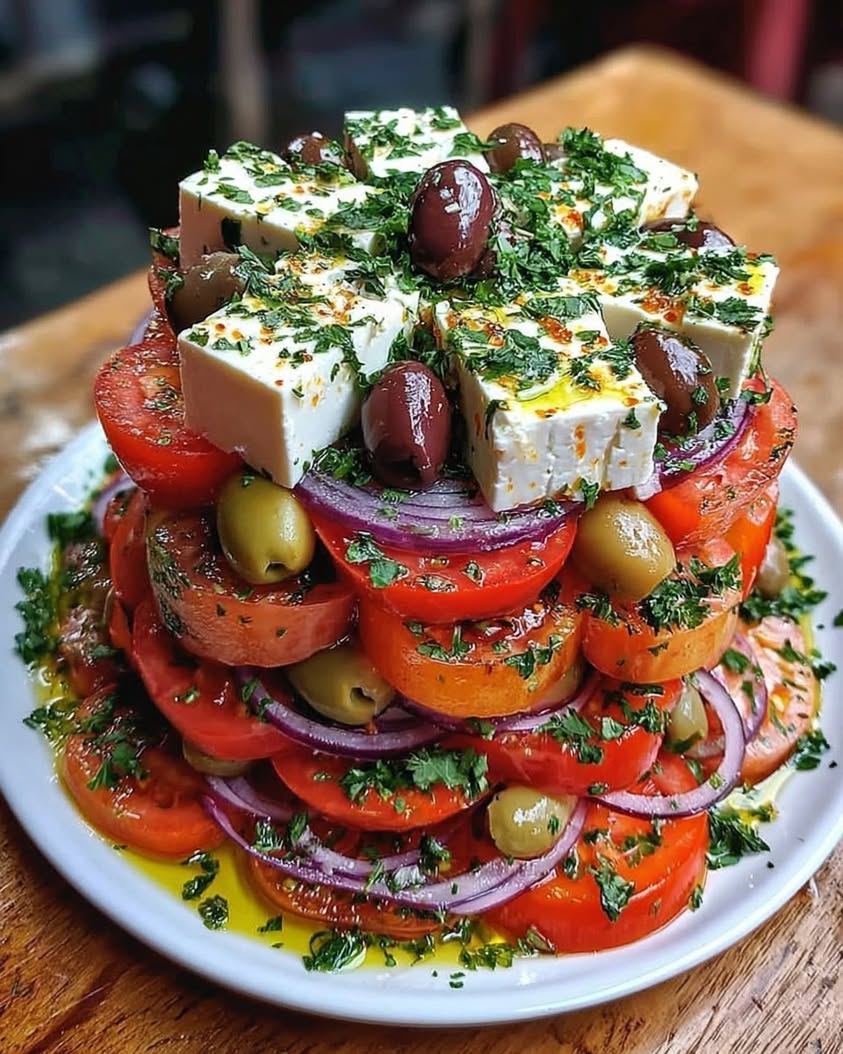
Imagine a dish that captures the sun-drenched hillsides of Greece, the vibrant flavors of a Mediterranean market, and the elegance of fine dining, all stacked neatly on a plate. That is exactly what you get with a Greek feta salad tower. This recipe transforms the classic Greek salad, or horiatiki, into a visually stunning, layered masterpiece that is perfect for impressing guests or treating your family to something special. The tower is not just about looks, though. It delivers a burst of fresh, tangy, and savory flavors in every single bite, making it an unforgettable starter or a light main course.
The magic of this Greek feta salad tower lies in its construction and its core ingredients. You start with a base of crisp, cool cucumbers and juicy tomatoes, then you add creamy, tangy feta cheese, briny Kalamata olives, and sharp red onions. Each layer is carefully stacked to create height and visual appeal, and the whole tower is drizzled with a bright, herby vinaigrette. The result is a dish that offers a textural journey from soft cheese to crunchy vegetables. This is not your ordinary side salad. It is a centerpiece that brings the essence of Greek cuisine to your table with minimal effort and maximum flavor.
Whether you are hosting a summer barbecue, a holiday dinner party, or simply looking for a creative way to enjoy a healthy meal, this recipe fits the bill perfectly. The presentation alone will draw oohs and ahs from your guests. Furthermore, it is incredibly adaptable. You can easily swap in seasonal vegetables, adjust the herbs in the dressing, or even add protein like grilled chicken or shrimp. Because there is no cooking involved, this recipe is also a fantastic way to enjoy a gourmet meal without turning on the oven. Get ready to build a tower of flavor that is as fun to assemble as it is to eat.
Quick Recipe Highlights
- Flavor Profile: This tower offers a classic Greek flavor profile that balances salty, tangy, and fresh notes. The briny feta and olives contrast beautifully with the sweet acidity of tomatoes and the sharp bite of red onion, all brought together by a zesty lemon-oregano vinaigrette.
- Texture: The texture is a delightful contrast of soft and firm elements. The creamy, crumbly feta pairs with the juicy, tender tomatoes and the refreshing crunch of cucumber. The crisp red onion adds a slight snap, while the olives provide a tender, meaty bite.
- Aroma: The aroma is a fresh, herbaceous, and citrusy experience. You will smell the bright, floral notes of dried oregano and the sharp, clean scent of fresh lemon juice. The rich, briny aroma of feta cheese and Kalamata olives rounds out the bouquet.
- Visual Appeal: This dish is a feast for the eyes with its vibrant, layered presentation. You see the brilliant red of the tomatoes, the deep green of the cucumbers, the stark white of the feta, and the dark purple of the olives, all stacked into an elegant, modern tower.
- Skill Level Needed: This recipe is designed for beginners, yet it impresses seasoned cooks. The technique is simply about layering ingredients, so no special knife skills or complex cooking methods are required. Attention to presentation is the only challenge, which comes with practice.
- Special Equipment: You will need a food ring or a tall cookie cutter, ideally 3 to 4 inches in diameter. A sharp chef’s knife for uniform vegetable cuts and a small bowl for whisking the dressing are also essential for this recipe.
Recipe Overview
- Difficulty Level: We have rated this recipe as easy because it involves no actual cooking and only simple assembly steps. The most challenging part is ensuring your vegetable slices are uniform for a stable tower. However, with a sharp knife and a little patience, anyone can master this dish on their first try.
- Category: This dish can serve as a stunning appetizer, a light lunch, or even a side salad at a larger gathering. It is a versatile recipe that fits perfectly into categories like Mediterranean cuisine, vegetarian main dishes, and summer party fare.
- Cuisine: This recipe is firmly rooted in traditional Greek cuisine, specifically the iconic horiatiki salad. The ingredients and flavors are a celebration of Greek culinary traditions, which emphasize fresh, high-quality produce, olive oil, and brined cheeses. It is a modern, deconstructed take on a classic.
- Cost: The cost is relatively low, especially if you buy feta cheese in block form and source produce in season. The main expenses are a good quality block of feta, Kalamata olives, and extra-virgin olive oil. Most of the other ingredients, like cucumbers and tomatoes, are very affordable.
- Season: This Greek feta salad tower is best enjoyed during the late spring and summer months. This is when tomatoes are at their peak sweetness and cucumbers are crisp and abundant. The dish is designed to be served cold or at room temperature, making it ideal for warm weather.
- Occasion: This tower is perfect for a variety of occasions, from casual backyard barbecues to elegant dinner parties. It is a showstopper at potlucks and makes a beautiful centerpiece for a brunch table. It is also a fantastic option for a romantic dinner for two, paired with grilled fish or lamb.
Why You Will Love This Recipe
You will immediately fall in love with the taste and texture of this Greek feta salad tower. The first crunch gives way to the sweet pop of a cherry tomato, followed by the creamy, salty melt of feta cheese. This contrast is the soul of the dish. Moreover, the herby dressing ties everything together, ensuring that every forkful is a perfect bite. It is a simple reminder of how incredible fresh, high-quality ingredients can taste when they are allowed to shine without being overcomplicating the process.
Convenience is a major reason to adore this recipe. You are looking at a total preparation time of just 20 minutes. There is no oven to preheat, no stove to watch, and no complicated sauces to make. The entire recipe relies on basic knife skills and careful stacking. This makes it an incredible option for busy weeknights when you want something beautiful and healthy without spending hours in the kitchen. It highlights the power of assembly over elaborate cooking.
Nutritionally, this tower is a powerhouse. It is packed with vitamins from the fresh vegetables and healthy monounsaturated fats from the olive oil and olives. The feta cheese provides a good source of calcium and protein, which helps keep you feeling full and satisfied. Considering the generous serving of vegetables, this dish is naturally low in carbohydrates and fits perfectly into a Mediterranean diet, which is consistently praised for its health benefits for heart health and longevity.
This recipe shines in its social and entertaining value. There is something undeniably impressive about serving a perfectly stacked tower to your guests. It encourages conversation and interaction, as people are naturally curious about how it was assembled. It is a fantastic conversation starter. Furthermore, because it is served cold or at room temperature, it takes the stress out of timing your dinner party. You can assemble the towers well before your guests arrive and simply set them on the table for a stunning first course.
Finally, the cost-effectiveness and accessibility of this dish are remarkable. All of the ingredients are commonly found in any well-stocked grocery store. There are no exotic, hard-to-find items that require a trip to a specialty shop. By buying feta in a block and vegetables in season, you can create a dish that looks like it belongs in a high-end restaurant for a fraction of the price. This makes it a go-to recipe for anyone looking to eat well and impress others without breaking the bank.
Historical Background and Cultural Significance
The Greek salad, or horiatiki, which translates to “village salad” or “peasant salad,” is a cornerstone of Greek cuisine. Its origins are humble, rooted in the agricultural traditions of the Greek countryside. Farmers and villagers would take simple, readily available ingredients from their gardens and larders, like tomatoes, cucumbers, onions, and olives, and combine them with a generous slab of feta cheese and a drizzle of local olive oil. This simple yet perfect combination sustained generations of hardworking people.
Culturally, the horiatiki is more than just food. It represents the Greek philosophy of eating, which is centered on community, seasonality, and simplicity. In Greece, a plate of horiatiki is shared among the table, enjoyed alongside bread to soak up the flavorful juices. It is a meal that is meant to be savored slowly, often accompanied by conversation and laughter under the Mediterranean sun. This dish is a symbol of hospitality, called “philoxenia,” which is the deep-rooted tradition of welcoming guests with generosity and good food.
The evolution of the horiatiki into a modern “tower” is a reflection of culinary trends that prioritize visual presentation and deconstruction. Chefs in the 20th and 21st centuries began to experiment with classic dishes, using techniques like layering and molding to elevate familiar flavors. The Greek feta salad tower is a perfect example of this trend. It takes all the components of the traditional salad and reimagines them in a vertical, refined form, making it suitable for fine dining while retaining its rustic soul.
Regional variations of the classic Greek salad are abundant, even within Greece itself. Some island versions skip the lettuce, which is traditional in the authentic horiatiki. In the northern regions, you might find a variation that includes green bell peppers or even capers. The dressing is almost always a simple mixture of olive oil, lemon juice, and dried oregano. The Greek feta salad tower we make here honors these regional traditions by using authentic ingredients while presenting them in a creative, modern format that appeals to contemporary palates.
Ingredient Deep Dive
Feta Cheese
Feta cheese is the soul of this tower and of Greek cuisine in general. Its history dates back thousands of years to ancient Greece, where shepherds would use sheep’s milk to create a brined cheese that could be preserved for long periods. Culturally, feta is protected by a PDO status, meaning only cheese made in specific regions of Greece with traditional methods can be legally called feta. Nutritionally, it is a great source of calcium, phosphorus, and protein, though it is higher in sodium due to the brine. For selection, always choose a block of feta stored in brine, not pre-crumbled cheese, as the block has a much creamier texture and richer flavor. Look for a firm but creamy texture that crumbles easily. Store it submerged in its brine in the refrigerator, where it will keep for weeks. If you cannot find or do not like feta, a good substitute would be a mild goat cheese or a firm, salty ricotta salata.
Tomatoes
Tomatoes are the sweet, juicy heart of this salad. While they are now a global staple, they originated in South America and were brought to Europe by Spanish explorers, becoming integral to Mediterranean cooking. In Greek cuisine, the tomato is a sign of summer abundance. Nutritionally, they are packed with lycopene, a powerful antioxidant linked to reduced risk of heart disease and cancer, and are a great source of vitamin C. For selection, look for tomatoes that are firm, heavy for their size, and deeply colored with a sweet, earthy aroma. The best tomatoes for this tower are medium-sized, flavorful ones like Roma or Campari, which are less watery and hold their shape well. Store them at room temperature, never in the refrigerator, as cold dulls their flavor. For a different twist, you can substitute in sun-dried tomatoes for a more intense flavor, though you will need to rehydrate them first.
Cucumbers
Cucumbers provide the essential crunch and refreshing coolness that balances the richness of the feta. They are native to India but have been cultivated in the Mediterranean for centuries. In Greece, they are a staple in summer salads and tzatziki sauce. Cucumbers are incredibly hydrating, as they are over 95% water, and they provide a small amount of vitamin K and potassium. For this tower, English or hothouse cucumbers are the ideal choice. They have thin, edible skin, fewer seeds, and a consistent shape that makes slicing for the stack easy. When selecting, look for cucumbers that are firm, dark green, and free of soft spots. Store them in the refrigerator crisper drawer. If you cannot find English cucumbers, you can use standard garden cucumbers, but you should peel them and remove the seeds before slicing to avoid a watery tower.
Kalamata Olives
Kalamata olives bring a briny, fruity, and slightly bitter note that is essential to the Greek flavor profile. Named after the city of Kalamata in the Peloponnese region of Greece, these olives are protected by a PDO status. They are typically almond-shaped and dark purple in color. Culturally, olives are a symbol of peace and prosperity in Greece and are used in countless dishes. Nutritionally, they are rich in healthy monounsaturated fats and antioxidants. For selection, choose olives that are plump, purple-black, and stored in a brine of red wine vinegar and olive oil. Avoid pitted olives that have been sitting in a can, as they often lack the complex flavor of brine-cured olives. Store them in their brine in the refrigerator. For a different taste, you can substitute with Castelvetrano olives for a milder, buttery flavor or black olives for a more neutral taste.
Red Onion
Red onion adds a sharp, pungent bite that cuts through the fat of the feta and the sweetness of the tomatoes. While onions are native to Central Asia, they have become a foundational ingredient in almost every global cuisine. In Greece, they are used raw in salads and cooked in stews, showing their versatility. Nutritionally, they are packed with quercetin, a powerful antioxidant, and prebiotic fiber that supports gut health. For this tower, choose red onions that are firm, with tight, dry skin. The key to using them in a raw salad is to slice them very thinly, ideally using a mandoline, to soften their bite. If you find the flavor too strong, you can soak the sliced onions in ice water for 10 minutes to mellow them. Store whole onions in a cool, dark, and dry place, away from potatoes. For a milder flavor, you can use shallots or even sweet white onions.
Extra Virgin Olive Oil
Olive oil is the liquid gold of Greek cuisine, and extra virgin olive oil is the only choice for a dish like this. Greece is one of the world’s largest producers of high-quality olive oil, and the oil is used with reverence in almost every dish. Culturally, it is a symbol of life, health, and purity. Nutritionally, extra virgin olive oil is rich in monounsaturated fats and polyphenols, which are potent antioxidants that reduce inflammation. For selection, look for bottles from a specific Greek region like Kalamata or Crete, and choose a “first cold press” or “cold extraction” label to ensure the highest quality. The oil should smell grassy, fruity, or slightly peppery. Store it in a cool, dark cabinet away from heat and light, and use it within a few months of opening. For a slightly different flavor profile, you can use a high-quality avocado oil, but a good Greek olive oil is definitive for the recipe.
Lemon Juice
Fresh lemon juice provides the bright, acidic backbone for the vinaigrette. It is essential for balancing the richness of the olive oil and the saltiness of the feta. Lemons are not native to Greece but have been cultivated in the region for centuries and are now an integral part of its cuisine. Nutritionally, it is a fantastic source of vitamin C and citric acid. For selection, always use fresh lemons over bottled juice, as the flavor is much brighter and more complex. Look for lemons that are heavy for their size, with smooth, bright yellow skin. To get the most juice out of a lemon, roll it on the countertop under your palm before cutting it. Store lemons in the refrigerator to extend their shelf life. If you are out of lemons, you can substitute with white wine vinegar or red wine vinegar, using half the amount to avoid overpowering the dressing.
Dried Oregano
Dried oregano is the signature herb of Greek cooking, and it brings an earthy, slightly floral, and peppery note to the dressing. It grows wild on the Greek hillsides, and the dried form used in Greek cooking is often more potent and aromatic than the variety found in other countries. Culturally, it is used in everything from salads to meat dishes. Nutritionally, oregano is packed with antioxidants and has antimicrobial properties. For selection, look for Greek dried oregano specifically, which is sold in bunches or in jars. It should have a strong, pungent aroma. Store dried herbs in a cool, dark cabinet away from heat, and replace them every six months for the best flavor. If you have fresh oregano, you can use it, but use three times the amount of fresh herb as dried, and add it just before serving to preserve its delicate flavor.
Common Mistakes to Avoid
- Using watery tomatoes can cause the entire tower to collapse. Make sure to remove the seeds and excess pulp from your tomatoes before layering them. You can also lightly salt the tomato slices and let them drain on a paper towel for 10 minutes to remove extra moisture.
- Cutting the vegetables into uneven slices will make your tower look lopsided and unstable. Take the time to slice your cucumbers, tomatoes, and onions to a consistent thickness, ideally about a quarter of an inch, using a sharp knife or a mandoline for precision.
- Over-salting the tower is a common problem because the feta and olives are already very salty. Season each layer lightly, or better yet, rely on the brine of the olives and the saltiness of the feta to provide the necessary seasoning, and taste the dressing before adding any extra salt.
- Using pre-crumbled feta cheese is a mistake because it is often dry, crumbly, and lacks the creamy texture needed for a stable tower. Always buy a block of feta stored in brine and cut it into neat, thick slices or cubes yourself.
- Forgetting to chill the ingredients before assembly can ruin the experience. A cold tower is much more refreshing. Refrigerate your vegetables, feta, and olives for at least 30 minutes before you start building the tower.
- Stacking the ingredients too high can lead to a structural failure. This tower is best when it is moderate in height, around 4 to 5 inches. If you try to make it too tall, the weight of the upper layers will crush the softer ingredients below.
- Applying too much dressing can make the tower soggy and cause it to slide apart. Drizzle the dressing carefully over the top and let it run down the sides, rather than drowning each layer. Serve any extra dressing on the side.
- Neglecting to pack the tower firmly enough will lead to gaps and a flimsy structure. As you place each layer inside the ring, use the back of a spoon or your fingers to gently but firmly press everything down, creating a compact, solid stack.
- Using a ring that is too large or too small for the portion size will affect the presentation. A 3 to 4-inch ring is ideal for a single serving. If the ring is too small, your layers will be too thin and the tower will be short.
Essential Techniques
Uniform Vegetable Slicing
This technique is the foundation of a stable and beautiful tower. If your cucumber and tomato slices vary in thickness, the tower will lean and eventually topple over. To master this, begin with a sharp chef’s knife that you have properly honed. For cucumbers, cut off the ends and slice crosswise into consistent rings of about one-quarter inch. For tomatoes, slice them horizontally into rounds of the same thickness, discarding the stem end. Practice makes perfect, and using a mandoline slicer is a cheat code for achieving perfect uniformity every time. The visual cue for success is a stack that sits perfectly straight and level. A common pitfall is rushing this step, so take your time.
Building in the Ring
Using a food ring is the essential technique for creating the tower shape. Begin by placing the ring on the serving plate. Start with a layer of cucumber slices, overlapping them slightly to cover the bottom of the ring completely. Press down gently to create a solid base. Next, add a layer of tomato slices, then a layer of feta cheese slices, followed by a scattering of olives and red onions. Repeat this layering process until you reach the top of the ring, pressing down firmly after each complete layer. The key is to create a dense, compact structure. A visual cue for success is seeing clear, distinct layers through the side of the ring. A common pitfall is adding too much of one ingredient, which can throw off the balance.
Making the Vinaigrette
This is a simple emulsion technique that brings the dressing together. In a small bowl, whisk together the fresh lemon juice, dried oregano, a pinch of salt, and a generous pinch of black pepper. While whisking continuously, slowly drizzle in the extra-virgin olive oil. The goal is to create a temporary emulsion where the oil and lemon juice combine into a slightly thickened, cohesive sauce. The key to success is a slow, steady stream of oil. If you pour it all in at once, it will separate immediately. A visual cue for success is a dressing that looks slightly opaque and uniform. A common pitfall is using a cold bowl, which makes emulsification harder, so use a room-temperature bowl.
Unmolding the Tower
This final technique reveals your masterpiece. Once you have filled the ring to the top and the tower is compact, it is time to unmold it. Gently lift the ring straight up, using a smooth, vertical motion. If the ring sticks, you can warm it slightly by wrapping a warm, damp kitchen towel around the outside of the ring for a few seconds. This helps release the ingredients from the sides. There is a moment of suspense, but with a solid tower, it should hold its shape beautifully. A visual cue for success is a tall, freestanding cylinder of layered ingredients. A common pitfall is yanking the ring sideways, which can tear the edges of the tower. Patience and a steady hand are all you need.
Pro Tips for Perfect Greek Feta Salad Tower
- Pat your tomato slices dry with a paper towel before layering them. This removes excess moisture that can turn the tower into a soggy mess. It also helps the dressing cling better to the surface of the tomato.
- Chill your serving plates in the refrigerator for 15 minutes before you start building. Serving the tower on a cold plate helps keep it refreshing and prevents the ingredients from warming up too quickly when you add the dressing.
- Use a small offset spatula or the flat side of a knife to spread a thin layer of feta across the base layer. This creates a solid “foundation” for the tower, similar to how you would use mortar for bricks, ensuring maximum stability.
- Always taste the feta cheese before you start building. Some brands are much saltier than others. If your feta is very salty, you can soak it in milk or water for 30 minutes to draw out some of the saltiness.
- Add a pinch of flaky sea salt, like Maldon salt, to the very top of the tower just before serving. It adds a final pop of saltiness and a delightful crunchy texture that contrasts with the soft feta.
- Do not assemble the towers too far in advance. For the best texture, aim to build them no more than 30 minutes before serving. If you need to prep ahead, slice all the vegetables and make the dressing, but keep them separate until the final assembly.
- Experiment with the layering order. While we recommend starting with cucumbers for a stable base, you can also start with a feta base for a richer flavor. The key is to alternate firmer ingredients with softer ones for balance.
- To make individual servings, use small, 2-inch ring molds. This creates perfect single-bite appetizers for a cocktail party. You will need to slice your vegetables thinner, around 1/8 inch, to make the layers work.
Variations and Adaptations
Regional Variations
In different parts of Greece, you will find variations of the classic horiatiki that can inspire your tower. In Crete, for example, they often add capers and a drizzle of paximadi (rusk) crumbs on top for a nutty crunch. In the Peloponnese, you might find a version with chopped green bell peppers added in. For your tower, you can incorporate these regional twists. Try adding a sprinkle of crispy shallots on top for texture, or tuck some caper berries in between the layers for an extra briny punch. You could even crumble some pita chips over the top for a modern, crunchy garnish.
Seasonal Adaptations
This recipe is incredibly flexible and can change with the seasons. In the summer, use the ripest, most flavorful heirloom tomatoes and fresh basil from the garden. In the spring, you can add thinly sliced radishes and pea shoots for a peppery, fresh flavor. In the fall, roasted red peppers and a drizzle of balsamic glaze would add a touch of sweetness and depth. In the winter, you can use good quality sun-dried tomatoes and jarred roasted bell peppers, which hold up well and offer intense flavor even when fresh produce is less flavorful. The core of the recipe remains the same, but the ingredients can mirror the best of what is available.
Dietary Modifications
This recipe is naturally vegetarian and gluten-free, making it a great option for many dietary needs. For a vegan version, simply omit the feta cheese. You can replace it with a high-quality vegan feta alternative made from tofu or cashews, or you can use marinated white beans for a creamy texture and protein. For a dairy-free version without going vegan, you can use a firm, dairy-free cheese alternative that crumbles well. Be mindful of the salt content if using a substitute, as many vegan feta options are also quite salty. The dressing is naturally dairy-free, so no changes are needed there.
Flavor Variations
You can easily change the flavor profile of the dressing to create new experiences. Instead of lemon, try using red wine vinegar for a more traditional, tangy Greek flavor. Add a teaspoon of Dijon mustard to the vinaigrette for a creamy texture and a sharper bite. For a spicy kick, add a pinch of crushed red pepper flakes to the dressing. For a herby twist, use fresh mint or dill in the dressing instead of oregano, which will bring a fresh, aromatic quality. You could even add a clove of minced garlic to the dressing for a more robust, savory flavor.
Texture Modifications
If you prefer a different texture profile, you can modify the ingredients. For a softer, more uniform texture, you can dice all the vegetables into fine pieces and mix them with crumbled feta before packing them into the ring. This creates a more cohesive tower similar to a layered terrine. For a crunchier tower, add a layer of toasted pine nuts or walnuts between the vegetables. You could also add a layer of crispy, fried chickpeas for a salty, crunchy element. For a more tender tower, consider grilling the slices of zucchini or eggplant before adding them as a layer.
Presentation Alternatives
You do not have to use a ring mold. For a more casual look, you can simply layer the ingredients in a glass trifle dish or a tall jar, creating a “deconstructed” tower that is still visually impressive. This is a great option for a picnic or a potluck. You can also make a large, single tower on a platter and let guests serve themselves, breaking it apart with a fork. For an even more dramatic presentation, drizzle the plate with a balsamic reduction or a swirl of basil oil before placing the tower on top, creating a beautiful canvas.
Serving and Presentation Guide
Plating Techniques
Plating is crucial for this recipe, and you have several options for a stunning effect. The most common technique is to place the tower directly in the center of a wide, shallow bowl or plate. Use a dark colored plate to make the bright colors of the vegetables pop. Another technique is to place the tower slightly off-center, creating a dynamic composition. You can also spoon a small pool of the extra vinaigrette onto the plate before placing the tower on top, or you can drizzle it around the tower on the plate for a modern, artistic look. The key is to keep the area around the tower clean and simple to let the structure be the star.
Garnishing Ideas
Garnishes add the final touch of finesse. A simple sprig of fresh oregano or dill placed on top of the tower adds a pop of green and reinforces the Greek flavor theme. You can also add a few whole Kalamata olives around the base of the tower for a beautiful visual anchor. A sprinkle of cracked black pepper is essential. For a more lavish garnish, add a small drizzle of high-quality, thick balsamic glaze or a few edible flowers like pansies or nasturtiums. A very light dusting of smoked paprika can also add a warm, earthy color and a hint of spice.
Traditional Accompaniments
Traditionally, a classic Greek salad is served with crusty bread to soak up the juices and dressing. You should definitely serve your tower with a side of warm, crusty pita bread or a good rustic loaf. You can also serve it alongside other traditional Greek dishes like grilled octopus, dolmades (stuffed grape leaves), or a side of spanakopita. For a lighter meal, it pairs beautifully with a simple bowl of avgolemono soup. In terms of serving temperature, the tower should be served cold or at room temperature to maximize the freshness of the vegetables.
Modern Serving Suggestions
For a contemporary twist, you can serve the tower as part of a “shareable” platter. Place the tower in the center of a large board and surround it with other Greek-inspired bites like grilled halloumi, marinated artichokes, and hummus with pita chips. You can also slice the tower in half horizontally after it is unmolded, revealing the beautiful layers inside, and serve it as a deconstructed salad. For a light main course, serve the tower alongside a bed of arugula or mixed greens tossed in a simple lemon vinaigrette. This adds extra volume and greenery to the meal.
Temperature Considerations
Temperature is a critical element of this dish. The vegetables, feta, and olives must be thoroughly chilled before assembly. This not only makes the tower more refreshing to eat, but it also keeps the ingredients firm and easier to handle. The dressing, however, should be made at room temperature. A cold dressing will not emulsify as well, and the olive oil may thicken and become cloudy. When you are ready to serve, take the tower out of the refrigerator and let it sit for just 5 minutes to take the edge off the chill, but do not let it come fully to room temperature before serving.
Portion Control Tips
When serving this as an appetizer, a 3-inch tower is the perfect single serving for one person. It is generous without being too heavy. If you are serving it as a main course for a light lunch, you can make a 4-inch tower for two people, or serve a 3-inch tower with a side of grilled protein and a larger salad. The key to portion control is to be consistent with your ingredients. Use about 2 to 3 ounces of feta cheese and a generous handful of vegetables for each individual tower. This ensures that everyone gets a balanced and satisfying portion.
Wine and Beverage Pairing
Wine Pairings
The bright, acidic, and salty flavors of this Greek feta salad tower call for a wine that can stand up to the tangy feta and the herbaceous dressing. A classic Greek wine like Assyrtiko from Santorini is the perfect match. This white wine is known for its high acidity, mineral notes, and citrus flavors, which cut through the richness of the cheese and complement the lemon in the dressing. Another excellent option is a Moschofilero, which offers floral and stone fruit notes with a crisp finish. If you prefer a red, a light, chilled red like a Xinomavro rosé works beautifully, as its moderate tannins and red berry flavors do not overpower the delicate vegetables.
Non-Alcoholic Alternatives
For those who prefer non-alcoholic beverages, there are several fantastic options. A tall glass of iced, sparkling water with a generous squeeze of lemon and a sprig of mint is incredibly refreshing and cleanses the palate between bites. Another Greek-inspired choice is a sour cherry juice or a watermelon juice, which is naturally sweet and hydrating. A glass of cold, unsweetened iced tea with a hint of lemon or peach is also a fantastic companion. The key is that the beverage should be acidic, lightly sweet, and very cold to contrast the rich, savory flavors of Print
Greek Feta Salad Tower
- Total Time: 20 minutes
- Yield: 2
Description
A visually stunning layered salad that combines fresh Mediterranean flavors, creamy feta, and crisp vegetables, perfect as an appetizer or light main course.
Ingredients
- 1 large cucumber, peeled and diced
- 2 ripe tomatoes, seeded and diced
- 1/2 red onion, thinly sliced
- 1/2 cup Kalamata olives, halved
- 1/2 cup crumbled feta cheese
- 1/4 cup fresh parsley, chopped
- 2 tablespoons lemon juice
- 2 tablespoons extra-virgin olive oil
- 1/2 teaspoon dried oregano
- Salt and pepper to taste
- For the dressing: 1/4 cup Greek yogurt, 1 tablespoon lemon juice, 1 garlic clove (minced), 1 tablespoon olive oil
Instructions
- In a small bowl, whisk together the dressing ingredients (Greek yogurt, lemon juice, minced garlic, and olive oil). Set aside.
- In a large bowl, combine the cucumber, tomatoes, red onion, olives, feta cheese, and parsley.
- Drizzle with the lemon juice, olive oil, and sprinkle with oregano. Toss gently to combine. Season with salt and pepper.
- To assemble the tower, use a ring mold or a tall glass. Layer the salad mixture, pressing gently to form a compact layer, then top with a spoonful of the yogurt dressing.
- Repeat layering until all ingredients are used, finishing with a dollop of dressing on top. Carefully remove the ring mold and garnish with extra parsley or a few olive slices.
- Serve immediately or refrigerate for up to 1 hour before serving to allow flavors to meld.
Notes
You can customize the seasonings to taste. For added crunch, include sliced bell peppers or toasted pine nuts.
- Prep Time: 20 minutes
- Cook Time: 0 minutes
- Method: Appetizer
- Cuisine: Greek