Ruby Beet & Citrus Salad with Pomegranate, Feta & Toasted Walnuts: A Winter Salad Masterpiece
You have likely tried many winter salads, but this Ruby Beet and Citrus Salad with Pomegranate, Feta and Walnuts will change your entire perspective on cold-weather eating. The combination of earthy roasted beets, bright citrus segments, and juicy pomegranate arils creates a breathtaking dish that works for casual lunches and holiday dinner tables alike. Specifically, this Ruby Beet and Citrus Salad with Pomegranate, Feta and Walnuts delivers a balanced mix of sweet, tangy, and salty flavors that feel both indulgent and wholesome.
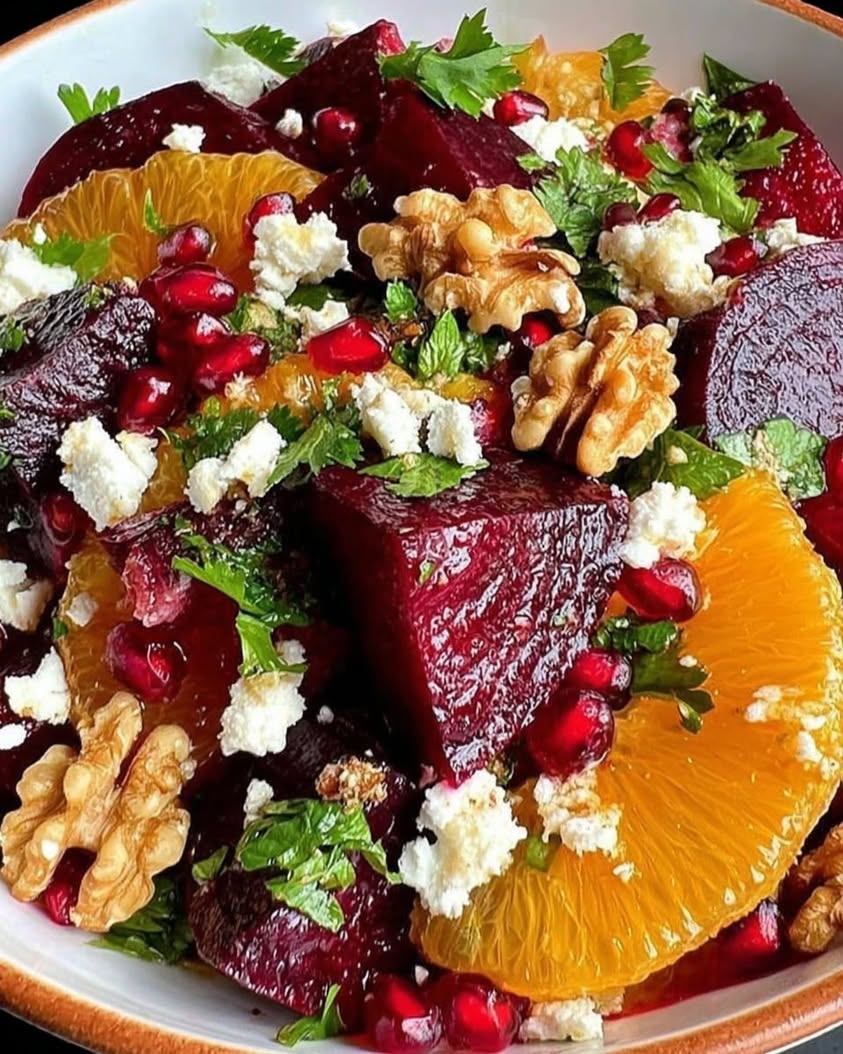
When you first look at this salad, the colors alone demand attention. Deep magenta beets contrast with vibrant orange citrus and ruby red pomegranate seeds. The creamy white feta adds a soft, salty punch, while the toasted walnuts bring a warm, nutty crunch. Moreover, the process of assembling this Ruby Beet and Citrus Salad with Pomegranate, Feta and Walnuts is surprisingly simple, and you can prepare many components ahead of time. This recipe makes an excellent choice for anyone who wants an impressive dish without spending hours in the kitchen.
Beyond its stunning appearance, this salad packs a serious nutritional punch. Beets provide powerful antioxidants and fiber, while citrus fruits deliver a hefty dose of vitamin C. Pomegranates add more antioxidants, and walnuts contribute healthy omega-3 fats. As a result, this Ruby Beet and Citrus Salad with Pomegranate, Feta and Walnuts supports your immune system and digestion during the colder months. You will feel satisfied after eating it, but you will not feel weighed down. It is the kind of recipe that makes healthy eating feel like a celebration.
Quick Recipe Highlights
- Flavor Profile: Sweet roasted beets mingle with tangy citrus and tart pomegranate, while creamy feta adds a savory, salty finish. The toasted walnuts bring an earthy bitterness that ties everything together beautifully.
- Texture: You get a wonderful contrast between tender beet slices, juicy citrus segments, crunchy pomegranate arils, creamy feta crumbles, and crisp walnuts. Every bite offers a new textural surprise.
- Aroma: The citrus oils release a bright, uplifting scent as you segment the fruit. Toasted walnuts add a warm, nutty aroma, and the light vinaigrette carries notes of honey and herbs.
- Visual Appeal: This salad looks like a jewel box on a plate. The red, orange, and white color palette is vibrant and festive, which makes it perfect for holiday gatherings or special occasions.
- Skill Level Needed: Even a beginner cook can master this recipe easily. The techniques involve simple roasting, citrus segmenting, and basic assembly. You do not need any advanced culinary skills.
- Special Equipment: You need a sharp chef knife and a cutting board for slicing beets and citrus. A rimmed baking sheet works for roasting beets, and a small skillet is necessary for toasting walnuts.
Recipe Overview
- Difficulty Level: This recipe earns an easy rating because it uses straightforward techniques. Roasting beets is simple, and segmenting citrus requires only a bit of patience. The assembly is a matter of arranging ingredients on a plate, so there is little room for error.
- Category: This dish fits into the salad category, but it also works well as a side dish or a light main course. You can serve it alongside roasted meats or grilled fish for a complete meal.
- Cuisine: The flavors draw inspiration from Middle Eastern and Mediterranean culinary traditions. Beets and pomegranates appear frequently in these cuisines, and feta cheese is a Mediterranean staple. The use of walnuts and citrus adds a bright, modern twist.
- Cost: Beets, citrus, and pomegranates are typically affordable during their peak winter season. Feta cheese costs a bit more, but you use a modest amount. Walnuts are the priciest ingredient, but a small handful goes a long way.
- Season: This Ruby Beet and Citrus Salad with Pomegranate, Feta and Walnuts shines in late fall and winter. Beets and citrus reach their peak sweetness during these months, and pomegranates are widely available. The flavors also feel comforting and warming during cold weather.
- Occasion: This salad suits many occasions. It works wonderfully as a Thanksgiving side dish, a Christmas appetizer, or a New Year’s celebration starter. It also makes an impressive dish for dinner parties, potlucks, and even weekday lunches.
Why You’ll Love This Recipe
The taste and texture of this Ruby Beet and Citrus Salad with Pomegranate, Feta and Walnuts create a truly memorable eating experience. The earthy sweetness of roasted beets pairs perfectly with the bright acidity of fresh citrus. Each bite offers a burst of juicy pomegranate, followed by the creamy, salty finish of feta. The toasted walnuts provide a satisfying crunch that prevents the salad from feeling one-dimensional. This combination of flavors and textures keeps your palate engaged from the first bite to the last. You will find yourself craving this salad long after you finish it.
Convenience is another major reason to love this recipe. You can roast the beets up to three days ahead of time and store them in the refrigerator. The citrus segments also hold up well for a day or two. When you are ready to serve, you simply toss everything together with the dressing and add the toppings. This makes the recipe perfect for busy weeknights or for hosting dinner parties without stress. The prep work is minimal, and the cleanup is equally easy. You will not need any special equipment beyond a few basic kitchen tools.
Nutritionally, this salad is a powerhouse. Beets are loaded with folate, manganese, and dietary nitrates that support heart health and blood flow. Citrus fruits provide a generous amount of vitamin C, which boosts your immune system during cold and flu season. Pomegranates contain unique antioxidants called punicalagins that fight inflammation. Walnuts deliver omega-3 fatty acids that support brain health. Feta adds calcium and protein without overwhelming the dish with calories. Together, these ingredients create a meal that nourishes your body while satisfying your taste buds.
Socially, this Ruby Beet and Citrus Salad with Pomegranate, Feta and Walnuts impresses guests without requiring advanced culinary skills. The vibrant colors and elegant presentation make it a showstopper on any buffet table or dinner plate. You can serve it family-style in a large bowl or plate it individually for a more refined presentation. Guests will appreciate the thoughtful combination of seasonal ingredients and the careful attention to flavor balance. This salad often becomes the most talked-about dish at gatherings, and people will ask you for the recipe every time.
Cost-effectiveness makes this recipe accessible for nearly any budget. Beets, citrus, and pomegranates are relatively inexpensive when they are in season. You can find them at most grocery stores or farmers’ markets without breaking the bank. Feta cheese is affordable in small quantities, and walnuts can be bought in bulk for savings. The dressing uses pantry staples like olive oil, honey, and vinegar. Overall, this salad costs significantly less than many restaurant-quality dishes, yet it delivers the same level of sophistication and flavor. It proves that you do not need expensive ingredients to create something truly special.
Historical Background and Cultural Significance
Beets have a long and storied history that dates back thousands of years. Originally, people cultivated beets for their leafy greens rather than their roots. The ancient Romans and Greeks prized beet greens for their medicinal properties and used them in various dishes. Over time, farmers developed varieties with larger, sweeter roots, and beets became a staple in European cuisine. In Eastern Europe, beets feature prominently in soups like borscht, and they appear in pickled forms throughout the region. The deep red color of beets has also made them a symbol of vitality and health in many cultures.
Pomegranates hold deep cultural and religious significance across multiple civilizations. In ancient Persia, pomegranates symbolized fertility and abundance. The fruit appears in Greek mythology as the food of the underworld, and it is mentioned in the Bible, the Quran, and Jewish texts. Many Middle Eastern cultures use pomegranates in celebratory dishes, and the fruit is often associated with prosperity and good fortune. The complex flavor of pomegranates, which balances sweetness and tartness, makes them a versatile ingredient in both savory and sweet preparations. Their jewel-like seeds add visual drama to any dish.
Citrus fruits originated in Southeast Asia and spread across the globe through trade routes and exploration. Oranges, grapefruits, and lemons became prized commodities in Europe during the Middle Ages. Wealthy families built ornate orangeries to cultivate citrus trees in cold climates. The discovery of vitamin C in citrus fruits led to their use in preventing scurvy among sailors on long voyages. Today, citrus fruits are grown in warm climates worldwide, and they are a cornerstone of many cuisines. Their bright acidity and refreshing flavor make them a natural partner for earthy vegetables like beets.
Feta cheese has been produced in Greece for centuries, and it remains one of the most beloved cheeses in the Mediterranean diet. Traditionally, feta is made from sheep’s milk or a mixture of sheep’s and goat’s milk. The cheese is brined, which gives it a salty, tangy flavor and a crumbly texture. Feta is a protected designation of origin product in the European Union, meaning only cheese produced in certain regions of Greece can legally be called feta. Its versatility makes it a popular ingredient in salads, pastries, and baked dishes. The salty, creamy quality of feta balances the sweetness of beets and citrus perfectly.
Ingredient Deep Dive
Beets are the foundation of this Ruby Beet and Citrus Salad with Pomegranate, Feta and Walnuts, and they bring a wealth of cultural and nutritional value to the plate. Historically, beets were used in ancient times for medicinal purposes, particularly for treating ailments related to the blood and digestion. Nutritionally, beets are rich in folate, manganese, and potassium. They also contain betalains, which are powerful antioxidants that give beets their distinctive red color. When selecting beets, look for firm, smooth roots with fresh, unwilted greens attached. Smaller beets tend to be sweeter and more tender than larger ones. Store beets in a plastic bag in the refrigerator for up to two weeks. If you cannot find fresh beets, you can use pre-cooked beets from the grocery store, though the flavor will be less vibrant.
Citrus fruits provide the bright, acidic counterpoint to the earthy beets in this salad. Oranges and grapefruits are excellent choices, and blood oranges add a stunning red hue that complements the beets beautifully. Citrus fruits are packed with vitamin C, which boosts immune function and helps your body absorb iron from other foods. They also contain fiber, potassium, and various antioxidants. When selecting citrus, choose fruits that feel heavy for their size, which indicates juiciness. The skin should be smooth and free from soft spots. Store citrus at room temperature for up to a week or in the refrigerator for longer storage. If you prefer a milder flavor, you can use mandarin oranges or clementines instead.
Pomegranates add bursts of tart, juicy flavor and a striking visual element to this salad. The seeds, also called arils, are rich in antioxidants called punicalagins, which are unique to pomegranates. These compounds have been shown to reduce inflammation and support heart health. Pomegranates also contain vitamin C, vitamin K, and fiber. When selecting a pomegranate, choose one that feels heavy for its size and has a firm, unblemished skin. The fruit should feel dense and slightly square-shaped, which indicates fully developed seeds. Store pomegranates at room temperature for up to a week or in the refrigerator for two to three months. To extract the seeds easily, cut the pomegranate in half and tap the back with a wooden spoon over a bowl of water.
Feta cheese brings a salty, creamy element that cuts through the sweetness of the beets and citrus. Traditional feta is made from sheep’s milk, which gives it a rich, tangy flavor and a crumbly texture. Goat’s milk feta is also common and has a slightly sharper taste. Nutritionally, feta is a good source of calcium, protein, and vitamin B12. It is lower in fat and calories than many other cheeses, making it a healthier choice for salads. When buying feta, look for blocks stored in brine rather than pre-crumbled versions, which tend to be drier and less flavorful. Store feta in its brine in the refrigerator and use it within a week of opening. For a dairy-free option, you can use a vegan feta made from tofu or cashews.
Walnuts add a warm, nutty crunch that provides textural contrast to this Ruby Beet and Citrus Salad with Pomegranate, Feta and Walnuts. Walnuts are native to Persia and have been cultivated for thousands of years. They are one of the best plant-based sources of omega-3 fatty acids, which are essential for brain health and reducing inflammation. Walnuts also contain copper, manganese, and vitamin E. When selecting walnuts, look for shells that are intact and free from cracks. Shelled walnuts should smell nutty and fresh, not rancid. Store walnuts in an airtight container in the refrigerator or freezer to prevent them from going rancid. Toast the walnuts before adding them to the salad to enhance their flavor and crunch. You can substitute pecans or almonds if you prefer.
Common Mistakes to Avoid
- Not roasting the beets properly can result in a watery, bland salad. Roast the beets whole in their skins until they are tender when pierced with a fork. This concentrates their sweetness and prevents them from becoming mushy.
- Skipping the step of toasting the walnuts is a missed opportunity. Raw walnuts taste bitter and lack the warm, nutty flavor that toasted walnuts provide. Toast them in a dry skillet over medium heat for three to four minutes, stirring frequently.
- Using pre-shredded feta cheese often leads to a dry, flavorless result. Buy a block of feta stored in brine and crumble it yourself. This ensures a creamy, salty texture that enhances the salad.
- Overdressing the salad makes it soggy and dilutes the flavors. Add the dressing gradually and toss gently until the ingredients are lightly coated. You can always add more dressing, but you cannot remove it.
- Cutting the beets into uneven sizes creates an unattractive presentation and inconsistent texture. Slice the beets into uniform wedges or rounds so they cook evenly and look appealing on the plate.
- Segmenting citrus incorrectly leaves behind bitter white pith. Use a sharp knife to cut off the peel and pith completely, then slice between the membranes to release the segments cleanly.
- Adding the dressing too far in advance makes the salad wilt and lose its crispness. Dress the salad just before serving to keep the ingredients fresh and vibrant.
- Forgetting to season the beets before roasting results in a flat, bland flavor. Toss the beets with olive oil, salt, and pepper before roasting to enhance their natural sweetness.
Essential Techniques
Roasting beets is a fundamental technique that transforms these root vegetables from earthy to sweet and tender. Wrap the beets in aluminum foil after tossing them with oil and salt. This method steams the beets as they roast, which prevents them from drying out. Roast them at 400 degrees Fahrenheit for 45 to 60 minutes, depending on their size. You will know they are done when a knife slides into the center with little resistance. Let the beets cool slightly, then rub off the skins with a paper towel. The skins will slip off easily after roasting. This technique concentrates the natural sugars in the beets and gives them a silky, melt-in-your-mouth texture.
Citrus segmenting, also known as supreming, is a knife skill that removes the peel, pith, and membranes from citrus fruit. Begin by cutting off the top and bottom of the fruit so it sits flat on your cutting board. Then, use a sharp paring knife to slice downward, following the curve of the fruit to remove the peel and white pith. Work your way around the fruit until all the peel is gone. Next, hold the fruit in your hand and slice between the membranes to release each segment. This technique produces clean, beautiful segments without any bitter pith. With practice, you can segment a citrus fruit in under a minute. The resulting segments are perfect for salads because they are easy to eat and look elegant.
Toasting walnuts is a quick process that dramatically improves their flavor and texture. Heat a dry skillet over medium heat and add the walnuts in a single layer. Stir them frequently with a wooden spoon to ensure even toasting. After about three to four minutes, you will notice the walnuts becoming fragrant and slightly darker. Remove them from the skillet immediately to prevent burning. Toasted walnuts have a deeper, nuttier flavor and a crunchier texture than raw walnuts. You can also toast them in the oven at 350 degrees Fahrenheit for five to seven minutes. This technique brings out the natural oils in the walnuts and makes them more aromatic.
Making a simple vinaigrette is a skill that elevates any salad. Combine olive oil, an acid like lemon juice or vinegar, a sweetener like honey, and seasonings like salt and pepper. Whisk the ingredients together until they emulsify into a creamy, cohesive dressing. The ratio of oil to acid is typically three to one, but you can adjust it to your taste. For this Ruby Beet and Citrus Salad with Pomegranate, Feta and Walnuts, a vinaigrette made with orange juice, lemon juice, honey, and olive oil works beautifully. The citrus flavors complement the salad ingredients without overpowering them. You can also add a pinch of Dijon mustard to help the emulsion hold together longer.
Pro Tips for Perfect Ruby Beet and Citrus Salad with Pomegranate, Feta and Walnuts
Always roast an extra beet or two because you will likely sneak a few bites while assembling the salad. The roasted beets are so delicious that you can hardly resist eating them directly from the baking sheet. Having extra beets also gives you flexibility for leftovers.
Use a mix of citrus varieties for a more complex flavor profile. Blood oranges, navel oranges, and pink grapefruit all work wonderfully together. Each variety brings a different level of sweetness and acidity, which keeps the salad interesting.
Toast the walnuts just before serving to maintain their crunch. Toasted walnuts lose their crispness over time, especially when they come into contact with the dressing. Toasting them fresh ensures they stay crunchy and flavorful.
Let the roasted beets cool completely before slicing them. Warm beets can release excess moisture and make the salad watery. Pat the sliced beets dry with a paper towel if they seem damp.
Arrange the ingredients on a large platter instead of tossing them in a bowl for a more striking presentation. The layered look allows each ingredient to shine visually. Guests can also serve themselves easily from a platter.
Add the feta cheese at the very end to keep it from becoming mushy. Feta crumbles easily, and if you toss it too vigorously, it breaks down into a paste. Gently sprinkle it over the top of the salad for the best texture.
Use a microplane to zest some orange peel over the finished salad for an extra burst of citrus aroma. The bright, fragrant oils from the zest elevate the dish and make it smell incredible. This small touch makes a big difference.
Variations and Adaptations
Regional variations of this salad appear in Mediterranean and Middle Eastern cuisines. In Greece, you might find a version with kalamata olives and fresh mint instead of walnuts. In Lebanon, sumac and za’atar are often added to the dressing for a tangy, herbal twist. In Turkey, pomegranate molasses replaces the honey in the vinaigrette, giving the salad a deeper, more complex sweetness. Each regional interpretation honors the core ingredients while adding local flavors. You can experiment with these variations to find your favorite combination.
Seasonal adaptations allow you to enjoy this Ruby Beet and Citrus Salad with Pomegranate, Feta and Walnuts throughout the year. In the spring, you can add fresh peas, radishes, and edible flowers for a lighter, more delicate version. In the summer, grilled peaches or nectarines make a wonderful substitute for citrus. In the fall, roasted butternut squash or persimmons pair beautifully with the beets and pomegranates. The basic structure of the salad remains the same, but the seasonal ingredients keep it feeling fresh and exciting.
Dietary modifications make this salad accessible to many different eating plans. For a vegan version, omit the feta cheese and use a vegan feta substitute or simply add more walnuts and pomegranate seeds for texture. For a gluten-free option, the salad is naturally free of gluten. For a low-carb version, reduce the amount of citrus and pomegranate, and add more leafy greens like arugula or spinach. Each modification maintains the integrity of the original salad while accommodating specific dietary needs.
Flavor variations can transform this salad into something entirely new. Add a pinch of red pepper flakes to the dressing for a subtle heat that contrasts with the sweetness. Include fresh herbs like mint, basil, or dill for an aromatic lift. Swap the walnuts for pistachios or almonds for a different nutty flavor. Drizzle the finished salad with a balsamic reduction for a tangy, sweet finish. These small changes create new flavor profiles without requiring a complete recipe overhaul.
Texture modifications can change the mouthfeel of the salad. Instead of slicing the beets into wedges, you can grate them for a more delicate texture that absorbs the dressing better. You can also chop the walnuts into smaller pieces for a more even distribution. Adding crispy chickpeas or croutons introduces another layer of crunch. For a softer texture, you can substitute goat cheese for feta, which has a creamier consistency. Experimenting with texture makes the salad feel new each time you make it.
Presentation alternatives allow you to customize the salad for different occasions. For a casual gathering, serve the salad family-style in a large wooden bowl. For a formal dinner, plate individual servings on white plates for a clean, elegant look. You can also layer the ingredients in a glass trifle dish to show off the beautiful colors. For a portable option, pack the ingredients separately in a mason jar and shake them together when you are ready to eat. Each presentation style works well with this versatile recipe.
Serving and Presentation Guide
Plating techniques for this Ruby Beet and Citrus Salad with Pomegranate, Feta and Walnuts can range from rustic to refined. For a rustic look, arrange the beet slices and citrus segments on a large platter in an overlapping pattern. Scatter the pomegranate seeds and walnuts over the top, then crumble the feta cheese across the surface. For a refined look, place a ring mold in the center of each plate and layer the ingredients inside. Lift the ring mold carefully to reveal a neat, stacked salad. Both approaches highlight the beautiful colors and textures of the ingredients.
Garnishing ideas add the finishing touch to this already stunning salad. A drizzle of pomegranate molasses or balsamic glaze adds a glossy sheen and a burst of flavor. Fresh herbs like mint leaves or microgreens provide a pop of green that contrasts with the red and orange tones. Edible flowers like nasturtiums or pansies add a whimsical, elegant touch. A sprinkle of flaky sea salt just before serving enhances the sweet and salty balance. Each garnish should complement the existing flavors without overwhelming them.
Traditional accompaniments for this salad include warm, crusty bread and a light soup. You can serve it alongside roasted chicken, grilled fish, or lamb chops for a complete meal. In Mediterranean cuisine, this salad often appears as part of a mezze spread with hummus, baba ganoush, and stuffed grape leaves. The bright, acidic flavors of the salad cut through rich, fatty dishes perfectly. For a vegetarian meal, serve it with quinoa or farro for added protein and heartiness.
Modern serving suggestions include using the salad as a topping for toasted sourdough bread to create an open-faced sandwich. You can also stuff the salad into pita pockets for a portable lunch or snack. For a deconstructed version, serve the components separately and let guests build their own plates. This interactive approach works well for dinner parties and allows guests to customize their portions. The versatility of this salad makes it suitable for many different serving contexts.
Temperature considerations are important for this salad because it contains both roasted and fresh ingredients. Serve the salad at room temperature for the best flavor. The roasted beets should be cool but not refrigerator-cold, and the citrus segments should be at room temperature. If you store the components in the refrigerator, take them out about 30 minutes before serving to let them come to room temperature. This ensures the flavors are at their peak and the textures are pleasant.
Portion control tips help you serve the right amount for your guests. As a side dish, plan for about one cup of salad per person. As a main course, plan for about two cups per person. The ingredients are nutrient-dense, so a smaller portion can be satisfying. If you are serving multiple courses, keep the portions modest to leave room for other dishes. You can always offer seconds if guests want more.
Wine and Beverage Pairing
Wine pairings for this Ruby Beet and Citrus Salad with Pomegranate, Feta and Walnuts should complement the earthy and citrusy flavors without overpowering them. A dry rosé from Provence works beautifully because its acidity mirrors the citrus while its fruit notes echo the pomegranate. A Sauvignon Blanc from New Zealand offers grassy, citrusy notes that enhance the orange and grapefruit segments. For white wine lovers, a Vernaccia di San Gimignano provides a crisp, mineral finish that cleanses the palate between bites. Each of these wines balances the sweet and savory elements of the salad.
Non-alcoholic alternatives are equally delightful and allow everyone to enjoy the meal fully. A sparkling water with a splash of pomegranate juice and a squeeze of lime mimics the flavors of the salad. A hibiscus iced tea offers a tart, floral note that complements the beets and citrus. For a festive option, make a mocktail with fresh orange juice, pomegranate juice, and a sprig of rosemary. These beverages enhance the dining experience without adding alcohol.
Coffee and tea pairings work well if you serve this salad as part of a brunch or light lunch. A lightly floral tea like jasmine green tea or chamomile complements the delicate flavors of the salad. For coffee drinkers, a light roast with bright acidity and citrus notes pairs nicely. Avoid heavy, dark roasts that can overwhelm the subtle flavors of the dish. The goal is to find a beverage that supports the salad rather than competing with it.
Temperature considerations for beverages are similar to those for the salad itself. Serve white wines and rosés chilled but not ice-cold, as extreme cold can mute their flavors. Non-alcoholic beverages should also be served chilled for refreshment. Tea can be served hot or iced depending on the season. The key is to keep the beverage at a temperature that enhances the meal without distracting from it.
Serving suggestions for beverages include offering a small tasting pour of wine alongside the salad. This allows guests to appreciate how the wine interacts with the different components. For non-alcoholic options, provide a pitcher of the chosen beverage so guests can refill their glasses as they please. The presentation of the beverage should match the elegance of the salad, so use nice glassware and garnishes if appropriate.
Storage and Shelf Life
Storage methods for this Ruby Beet and Citrus Salad with Pomegranate, Feta and Walnuts depend on whether you have assembled the salad or kept the components separate. If you have already assembled the salad, store it in an airtight container in the refrigerator for up to two days. However, the texture will degrade over time because the dressing softens the beets and citrus. For the best results, store the components separately and assemble the salad just before serving.
Temperature requirements are straightforward for this salad. Keep all components refrigerated at 40 degrees Fahrenheit or below. The roasted beets, citrus segments, and pomegranate seeds all store well in the refrigerator for several days. The feta cheese should remain in its brine until you are ready to use it. The walnuts should be stored in an airtight container at room temperature or in the refrigerator to prevent rancidity.
Container recommendations include using separate airtight containers for each component. Glass containers work well because they do not absorb odors and they allow you to see the contents. Plastic containers are also fine, but they may absorb the strong odors of beets and citrus over time. Label the containers with the date so you can keep track of freshness. The dressing should be stored in a separate jar or bottle and shaken before use.
Signs of spoilage are easy to identify for each ingredient. Beets will become soft and slimy when they spoil. Citrus will develop mold on the peel or become mushy. Pomegranate seeds will turn brown and lose their juiciness. Feta will develop a strong, ammonia-like smell if it goes bad. Walnuts will taste bitter and rancid if they have turned. If you notice any of these signs, discard the affected ingredient immediately.
Reheating instructions are not applicable for this salad because it is served cold. However, if you have leftover roasted beets, you can warm them gently in a skillet or oven for a different dish. The salad components are best enjoyed at room temperature or cold, so reheating is not recommended.
Freezing guidelines are limited for this salad because the texture of fresh ingredients suffers significantly after freezing. Beets become mushy when thawed, and citrus loses its structure. Pomegranate seeds can be frozen for up to three months, but they will be less juicy when thawed. Feta cheese does not freeze well because it becomes crumbly and dry. Walnuts can be frozen for up to a year, and they maintain their flavor well. Overall, this salad is best enjoyed fresh.
Make Ahead Strategies
Prep timeline for this Ruby Beet and Citrus Salad with Pomegranate, Feta and Walnuts allows you to spread the work over several days. Up to three days before serving, you can roast the beets and store them in the refrigerator. Up to two days before, you can segment the citrus and extract the pomegranate seeds. The dressing can be made up to a week ahead and stored in the refrigerator. On the day of serving, you only need to toast the walnuts, crumble the feta, and assemble the salad. This timeline reduces stress and makes hosting easy.
Storage between steps requires careful handling to maintain freshness. Store the roasted beets in a sealed container with a paper towel to absorb excess moisture. Keep the citrus segments in a separate container with their juice to prevent them from drying out. Pomegranate seeds can be stored in an airtight container in the refrigerator. The dressing should be kept in a jar and shaken before use. Each component remains fresh for several days when stored properly.
Quality impact assessment of make-ahead preparation shows that most components hold up well. Roasted beets actually improve after a day or two because the flavors meld together. Citrus segments lose a small amount of texture but remain delicious. Pomegranate seeds stay fresh and juicy for several days. The only component that must be prepared fresh is the toasted walnuts, which lose their crunch within a few hours. Planning around this one element ensures the salad stays at its best.
Assembly tips include combining the ingredients gently to avoid breaking the citrus segments or crushing the beets. Start with a bed of greens if you are using them, then layer the beets and citrus. Add the pomegranate seeds and walnuts, then finish with the feta. Drizzle the dressing over the top just before serving. This order of assembly ensures each ingredient is showcased and the salad looks beautiful.
Reheating guidelines are not necessary because this salad is served cold. If you have leftover components, you can repurpose them into other dishes. Roasted beets are excellent in soups or grain bowls. Citrus segments work well in smoothies or as a topping for yogurt. Pomegranate seeds add a pop of color to oatmeal or salads. Leftover dressing can be used on any green salad. This versatility reduces food waste and gives you more meal options.
Fresh element additions like a handful of arugula or watercress can brighten the salad just before serving. These greens add a peppery note that contrasts with the sweetness of the beets and citrus. You can also add fresh herbs like mint or parsley for a burst of color and flavor. Adding these fresh elements at the last minute ensures they stay crisp and vibrant.
Scaling Instructions
Halving the recipe is straightforward because the proportions remain the same. Use one medium beet instead of two, one orange instead of two, and half the pomegranate. Reduce the amount of feta and walnuts accordingly. The dressing recipe can be halved easily by using half the quantities of each ingredient. The cooking time for the beets remains the same, regardless of quantity. This scaling works well for a single serving or a smaller gathering.
Doubling or tripling the recipe requires some adjustments to equipment and timing. Use a larger baking sheet for the beets to ensure they roast evenly without overcrowding. You may need to roast the beets in batches if your oven is small. The citrus segmenting process takes longer, but the technique remains the same. The dressing recipe can be multiplied easily, but be prepared to use a larger jar for mixing. The assembly process requires a larger platter or bowl to accommodate the increased volume.
Equipment adjustments for larger batches include using a larger skillet for toasting walnuts. You may need to toast them in batches to ensure even toasting. A larger cutting board makes citrus segmenting more efficient. A big platter or a large serving bowl is necessary for the increased volume of salad. If you are serving a crowd, consider setting up a buffet-style arrangement where guests Print
Ruby Beet & Citrus Salad with Pomegranate, Feta & Toasted Walnuts
- Total Time: 1 hour
- Yield: 4
Description
A vibrant winter salad featuring roasted beets, fresh citrus segments, juicy pomegranate arils, creamy feta cheese, and crunchy toasted walnuts, all tossed in a zesty citrus vinaigrette.
Ingredients
- 4 medium red beets, scrubbed
- 2 navel oranges
- 1 grapefruit
- 1/2 cup pomegranate arils
- 1/2 cup crumbled feta cheese
- 1/3 cup walnuts, roughly chopped
- 3 tablespoons extra virgin olive oil
- 1 tablespoon fresh lemon juice
- 1 teaspoon honey or maple syrup
- Salt and black pepper to taste
- 2 cups mixed greens (optional)
Instructions
- Preheat oven to 400°F (200°C). Wrap beets individually in foil and roast for 45-60 minutes until tender. Let cool, then peel and cut into wedges.
- While beets roast, toast walnuts in a dry skillet over medium heat for 3-4 minutes until fragrant. Set aside.
- Segment the oranges and grapefruit: cut off top and bottom, remove peel and pith, then cut between membranes to release segments. Squeeze leftover membranes for juice.
- In a small bowl, whisk together olive oil, lemon juice, honey, 1 tablespoon reserved citrus juice, salt, and pepper to make vinaigrette.
- Arrange beet wedges on a platter or in a bowl. Top with citrus segments, pomegranate arils, feta cheese, and toasted walnuts.
- Drizzle vinaigrette over salad. Serve immediately, optionally over mixed greens.
Notes
You can customize the seasonings to taste.
- Prep Time: 15 minutes
- Cook Time: 45 minutes
- Method: Salad
- Cuisine: Mediterranean