Creating an appetizer that feels both elegant and approachable can transform a simple gathering into a memorable occasion. This Rustic Beet and Goat Cheese Stacks with Walnut Thyme Vinaigrette recipe is my answer to that challenge. The earthy sweetness of roasted beets pairs perfectly with the tangy creaminess of fresh goat cheese. Combined with a warm, nutty vinaigrette, this dish offers a symphony of flavors and textures that will impress your guests without keeping you stuck in the kitchen all day. This Rustic Beet and Goat Cheese Stacks with Walnut Thyme Vinaigrette recipe is a celebration of simple, high-quality ingredients coming together beautifully.
The beauty of this Rustic Beet and Goat Cheese Stacks with Walnut Thyme Vinaigrette recipe lies in its simplicity. You start by roasting vibrant red and golden beets until they are tender and sweet. Once cooled, you slice them into even rounds. The next step involves stacking these beet slices with creamy goat cheese, creating a visually stunning tower. Finally, you drizzle everything with a warm vinaigrette made from toasted walnuts, fresh thyme, and good olive oil. The result is a dish that tastes far more complex than its component parts suggest, making it a perfect go-to for both weeknight dinners and special occasions.
I love how this Rustic Beet and Goat Cheese Stacks with Walnut Thyme Vinaigrette recipe truly showcases the best of rustic cooking. It relies on the natural sweetness of the beets, the rich tang of the cheese, and the aromatic depth of the vinaigrette. The preparation is straightforward, but the final presentation is nothing short of stunning. These stacks work wonderfully as a starter, a side dish, or even a light main course. They are a fantastic way to eat with the seasons, and they always bring a sense of warmth and hospitality to the table.
Nutrient Burst and Time Commitment
Before you start cooking, here is a quick overview of what you can expect. This Rustic Beet and Goat Cheese Stacks with Walnut Thyme Vinaigrette recipe requires about 20 minutes of active preparation and 45 minutes of roasting time. The total time from start to finish is roughly 65 minutes, but most of that is hands-off oven time. This recipe yields four generous stacks, making it a perfect starter for a dinner party or a satisfying lunch for two. The difficulty level is definitely easy, and the technique is very approachable for any home cook.
The highlighted nutritional benefits of this Rustic Beet and Goat Cheese Stacks with Walnut Thyme Vinaigrette recipe are quite impressive. Beets are packed with fiber, folate, and vitamin C. Goat cheese offers a good source of protein and calcium. Walnuts provide healthy omega-3 fatty acids. This combination creates a balanced, satisfying dish that is both delicious and nourishing. Furthermore, the flavors are incredibly versatile, allowing you to adjust the recipe to suit your taste. The earthy beets, tangy cheese, and nutty vinaigrette create a flavor profile that is both classic and exciting.
Quick Recipe Highlights
- Flavor Profile: This Rustic Beet and Goat Cheese Stacks with Walnut Thyme Vinaigrette recipe delivers a perfect balance of sweet, tangy, and savory. The earthy sweetness of roasted beets is beautifully offset by the creamy, tangy goat cheese. The vinaigrette adds a warm, nutty depth with a hint of fresh thyme.
- Texture: The texture of these stacks is a wonderful contrast. The beets are tender and yielding, while the goat cheese is smooth and creamy. The toasted walnuts in the vinaigrette provide a delightful crunch, creating a satisfying mouthfeel with every bite.
- Aroma: The aroma of this Rustic Beet and Goat Cheese Stacks with Walnut Thyme Vinaigrette recipe is intoxicating. As the beets roast, a sweet, earthy fragrance fills your kitchen. The vinaigrette, with its warm walnut oil and fresh thyme, adds a herbaceous and slightly floral note that is incredibly inviting.
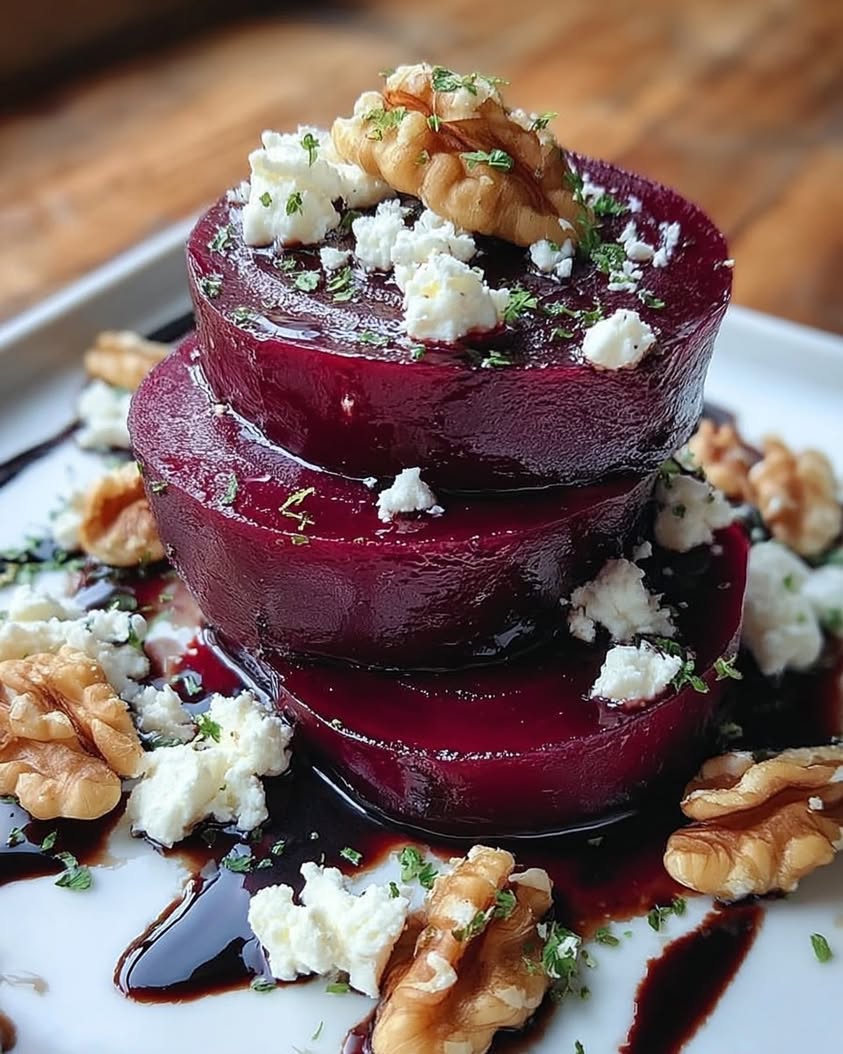
- Visual Appeal: The visual appeal of this dish is striking. The deep magenta of the red beets contrasts beautifully with the pale yellow of golden beets and the white, creamy goat cheese. The green thyme leaves and brown walnut pieces add lovely pops of color and texture, making for a stunning presentation.
- Skill Level Needed: The skill level needed for this recipe is beginner to intermediate. The roasting process is straightforward, and assembling the stacks is a simple matter of layering. The only slightly advanced task is toasting the walnuts and making the vinaigrette, but both are very basic skills.
- Special Equipment: You will need a baking sheet for roasting the beets, a sharp knife for slicing them, and a small saucepan for the vinaigrette. A vegetable peeler is helpful for removing the beet skins, and a serving platter or individual plates will complete the presentation.
Recipe Overview
- Difficulty Level: This Rustic Beet and Goat Cheese Stacks with Walnut Thyme Vinaigrette recipe is considered easy. The techniques involved are fundamental, including roasting, slicing, and whisking. There are no complex steps or special skills required. Even a novice cook can execute this recipe with confidence and great results. The preparation is forgiving, and the final dish looks far more impressive than the effort it requires.
- Category: This recipe fits perfectly into the categories of appetizer, starter, or side dish. It can also serve as a light main course for a lunch or a vegetarian dinner. Its elegant presentation makes it ideal for holiday meals, dinner parties, or special occasions. At the same time, its simple preparation makes it suitable for a quiet weeknight meal.
- Cuisine: The recipe draws inspiration from European and American farmhouse cooking. The combination of roasted beets and goat cheese is a classic in French cuisine. The use of a nutty vinaigrette with fresh thyme adds a rustic, American twist. This Rustic Beet and Goat Cheese Stacks with Walnut Thyme Vinaigrette recipe embodies the farm-to-table philosophy, emphasizing fresh, seasonal ingredients.
- Cost: The cost for this recipe is moderate to low. Beets are typically inexpensive and easy to find. Log goat cheese is also reasonably priced and provides multiple servings. Walnuts are a slightly pricier ingredient, but you only need a small amount. Overall, this dish offers a high-end dining experience without a high-end price tag.
- Season: The best season for this recipe is fall through early spring. Beets are at their peak during these cooler months, offering the sweetest and most tender roots. The earthy, comforting flavors of the dish are particularly welcome when the weather is crisp. However, you can easily make this recipe year-round with good quality beets from the grocery store.
- Occasion: This Rustic Beet and Goat Cheese Stacks with Walnut Thyme Vinaigrette recipe is perfect for many occasions. It is a wonderful starter for a Thanksgiving or Christmas dinner. It also shines at a summer garden party or a casual brunch. You can serve it as an elegant appetizer at a cocktail party or as a simple, satisfying lunch. Its versatility makes it a go-to recipe in your culinary repertoire.
Why You Will Love This Recipe
First and foremost, you will love the incredible taste and texture appeal of this Rustic Beet and Goat Cheese Stacks with Walnut Thyme Vinaigrette recipe. The sweetness of the roasted beets melts into the creamy, tangy goat cheese, creating a flavor combination that is truly irresistible. The warm, nutty vinaigrette then ties everything together, adding a layer of savory depth and a pleasant crunch from the walnuts. Each bite offers a perfect balance of sweet, savory, and tangy flavors, along with a delightful contrast between smooth and crunchy textures. It is a sensory experience that feels both gourmet and comforting.
Beyond the flavor, the convenience and preparation benefits of this recipe will surely win you over. The most time-consuming part is roasting the beets, but that is largely hands-off. You can even roast the beets a day or two in advance to save time. The assembly takes just a few minutes, making this an ideal last-minute appetizer. Additionally, the vinaigrette comes together in a single saucepan in under ten minutes. The recipe demands minimal cleanup and allows you to focus on other elements of your meal. Consequently, this Rustic Beet and Goat Cheese Stacks with Walnut Thyme Vinaigrette recipe is perfect for busy cooks who want to impress without the stress.
The nutritional advantages of this recipe provide another compelling reason to make it. Beets are a powerhouse of essential nutrients, including fiber, folate, manganese, and potassium. They are also rich in antioxidants, which help combat inflammation and promote overall health. Goat cheese, while creamy, is lower in lactose and often easier to digest than cow’s milk cheese. It also provides a good dose of protein and calcium. Walnuts are an excellent source of heart-healthy omega-3 fatty acids and antioxidants. Consequently, this dish is not just delicious but also contributes positively to your well-being, making it a guilt-free indulgence.
This Rustic Beet and Goat Cheese Stacks with Walnut Thyme Vinaigrette recipe also offers significant social and entertaining value. It is a showstopper on any buffet table or dinner plate. The vibrant colors and elegant stacking make it a visual centerpiece. You can prepare all the components ahead of time and assemble the stacks just before serving. This allows you to spend more time with your guests and less time in the kitchen. The recipe is also easy to scale up for larger gatherings. Your guests will definitely be impressed by the sophisticated presentation and the harmonious flavors, making you look like a culinary superstar.
Finally, the cost-effectiveness and accessibility of this recipe make it a winner. The ingredients are all readily available at most grocery stores, and they do not break the bank. Beets are one of the most affordable vegetables, especially in season. Goat cheese is a relatively inexpensive cheese compared to many artisanal varieties. Walnuts are a common pantry staple. Therefore, you can create a dish that feels luxurious and expensive without spending a fortune. This Rustic Beet and Goat Cheese Stacks with Walnut Thyme Vinaigrette recipe is proof that impressive cooking does not require a large budget or exotic ingredients.
Historical Background and Cultural Significance
The origin story of the beet is a long journey spanning thousands of years. Wild beets originally grew along the Mediterranean coast and were initially cultivated for their leafy greens, not their roots. The ancient Romans and Greeks prized beet greens for their medicinal and culinary uses. The familiar bulbous root, known as the garden beet, only became popular much later, around the 16th century. This development took place in Europe, where farmers selectively bred beets for larger, sweeter roots. The beet we know today is a product of centuries of careful cultivation, moving from a leaf vegetable to a versatile root crop.
The cultural importance of the beet, particularly in Eastern European cuisine, is profound. Beets are a central ingredient in iconic dishes like borscht, a hearty soup that varies widely from region to region. They are also a staple in Polish, Ukrainian, and Russian cuisine, often pickled, roasted, or served raw in salads. The beet was an essential winter vegetable due to its excellent storage capabilities. It provided vital nutrients when other fresh produce was scarce. This historical role cemented the beet’s place as a symbol of resilience and sustenance in many cultures, a far cry from its modern status as a gourmet ingredient.
The evolution of the recipe for beet and goat cheese salad is a more recent development, but it draws on these deep roots. The combination of earthy beets with tangy cheese is a classic pairing that emerged in European cuisine, particularly in France and Germany. The addition of a nutty, herbaceous vinaigrette, like the one with walnuts and thyme in this Rustic Beet and Goat Cheese Stacks with Walnut Thyme Vinaigrette recipe, is a modern refinement. This evolution reflects the trend towards lighter, more refined salads and appetizers that highlight the natural flavors of fresh ingredients. It is a testament to how traditional components can be reimagined for contemporary palates.
Regional variations on this dish are plentiful and fascinating. In France, you might find a simple salad of roasted beets with chèvre, dressed with a classic vinaigrette. In Germany, beets are often paired with horseradish and cream. In the United States, beets appear in everything from roasted vegetable medleys to vibrant salads with citrus and nuts. Some variations use balsamic glaze instead of a nut vinaigrette. Others add arugula or watercress for a peppery bite. The flexibility of this basic formula—earthy root, creamy cheese, and a bright dressing—allows for countless creative interpretations, each reflecting its own culinary tradition.
Ingredient Deep Dive
Beets have a rich cultural significance and a long history of human use. As mentioned earlier, they were initially cultivated for their greens in ancient civilizations. The deep red variety, also known as the garden beet, eventually became the most popular. Beyond Europe, beets were introduced to the Americas by European colonists. They quickly became a staple in many home gardens. Nutritionally, beets are a true superfood. They are packed with folate, manganese, potassium, and vitamin C. Their vibrant color comes from betalains, powerful antioxidants with anti-inflammatory properties. Beets are also a good source of fiber, which supports digestive health. For selection, choose beets that are firm, smooth, and heavy for their size, with fresh, unwilted greens attached if possible. Storage is simple: remove the greens and store the roots in a plastic bag in the refrigerator for up to two weeks. For this Rustic Beet and Goat Cheese Stacks with Walnut Thyme Vinaigrette recipe, you can substitute golden beets for a milder, less earthy flavor, or candy cane beets for a beautiful striped presentation.
Goat cheese, or chèvre, offers a delightful tang and creamy texture that is essential to this Rustic Beet and Goat Cheese Stacks with Walnut Thyme Vinaigrette recipe. Its history dates back thousands of years to the Middle East and Mediterranean regions, where goats were domesticated early. Goat cheese is a staple in French cuisine, particularly in the Loire Valley, where it is produced in countless varieties. Nutritionally, goat cheese is lower in lactose than cow’s milk cheese, making it more digestible for many people. It is also a good source of calcium, protein, and vitamin D. For selection, look for a fresh log of goat cheese that is moist, white, and free of any cracks or discoloration. It should have a fresh, slightly tangy aroma. You can store goat cheese in the refrigerator, tightly wrapped, for up to two weeks. For a substitution, you can use feta cheese for a saltier, crumblier option, or fresh ricotta for a milder, creamier texture. For a dairy-free version, a thick cashew-based “cheese” spread works wonderfully.
Walnuts bring a crucial textural and flavor element to this recipe. They have a long cultural history, with archaeological evidence suggesting they were a food source for humans over 8,000 years ago. They originated in ancient Persia and were traded along the Silk Road, spreading to Europe and eventually the Americas. Walnuts are a symbol of wisdom and fertility in some cultures. Nutritionally, they are exceptional, being one of the best plant sources of omega-3 fatty acids. They are also high in antioxidants, protein, and fiber. For selection, choose walnuts that feel heavy for their size and have a fresh, nutty aroma, not a rancid one. They are best stored in an airtight container in a cool, dark place or the refrigerator to prevent them from going rancid. For this vinaigrette, you can substitute pecans for a sweeter, more buttery flavor, or pine nuts for a more delicate nuttiness.
Fresh thyme is the final key ingredient that makes this vinaigrette shine. Thyme has a long and storied history in the Mediterranean region. The ancient Egyptians used it for embalming, and the Greeks used it in baths and temples for its aromatic properties. In European cuisine, thyme is a foundational herb, used in bouquet garni and Herbes de Provence. It pairs beautifully with both beets and goat cheese. Nutritionally, thyme is rich in vitamin C, vitamin A, and several antioxidants. For selection, look for fresh thyme with bright green, fragrant leaves and flexible stems. You can store it in the refrigerator, wrapped in a damp paper towel inside a plastic bag, for up to a week. For a substitution, you can use fresh rosemary for a bolder, pine-like flavor, or dried thyme (use one-third the amount) for a similar but less bright flavor.
Common Mistakes to Avoid
- Overcooking the beets until they become mushy or waterlogged. You want them tender but still firm enough to hold their shape when stacked. Roast them until a knife slides in with a little resistance, not until they fall apart.
- Undercooking the beets, which makes them hard and fibrous. This ruins the texture of the stack. Always test a beet with a knife after 40 minutes to ensure it is cooked through.
- Neglecting to toast the walnuts. Toasting brings out their full, nutty aroma and flavor. Raw walnuts are bland and slightly bitter. Toast them in a dry pan over medium heat for 2-3 minutes until fragrant.
- Using overly cold goat cheese. Cold cheese is hard to slice neatly and will crumble instead of stacking. Let the goat cheese sit at room temperature for 15 minutes before you start assembling the stacks.
- Dressing the stacks too early. If you add the vinaigrette too far in advance, the beets will release water, making the dish soggy and diluting the dressing. Add the vinaigrette just before serving.
- Not seasoning the beets properly. Beets need salt, pepper, and a little olive oil to bring out their sweetness. Forgetting to season them before roasting results in flat-tasting stacks.
- Using a dull knife to slice the beets. A dull knife will squish the beets and create uneven slices. A sharp chef’s knife is essential for clean, even rounds that stack beautifully.
- Forgetting to peel the beets before slicing. While you can peel after roasting, the skins can be tough. It is easier and cleaner to peel them while they are still warm under running water.
Essential Techniques
Roasting is the most critical technique for this recipe, and mastering it is essential for perfect Rustic Beet and Goat Cheese Stacks with Walnut Thyme Vinaigrette. Roasting concentrates the natural sugars in the beets, making them incredibly sweet and tender. To master it, wrap each beet individually in aluminum foil after tossing them with olive oil, salt, and pepper. This steams them as they roast, preventing them from drying out. Roast at 400 degrees Fahrenheit for 45 minutes to an hour, or until a knife slides through the center easily. A common pitfall is overcrowding the pan, which leads to steaming instead of roasting. Ensure you have enough space between the foil packets for heat to circulate. The visual cue for success is a beet that is evenly tender and has a slightly wrinkled, shiny skin.
Toasting walnuts is another technique that cannot be overlooked for this Rustic Beet and Goat Cheese Stacks with Walnut Thyme Vinaigrette recipe. This simple step profoundly impacts the flavor. Toasted walnuts release their natural oils, which become nutty, warm, and aromatic. To master it, place the walnuts in a small, dry skillet over medium heat. Stir or shake the pan frequently to ensure even toasting. You will know they are done when they are fragrant and a shade darker in color. A common pitfall is burning them, as they burn quickly once they reach the right point. Watch them closely and remove them from the heat as soon as they become aromatic. The visual cue for success is a rich, golden-brown color and a shiny sheen from the released oils.
Making a vinaigrette is a fundamental skill used in this recipe. A good vinaigrette is all about emulsification, which means combining oil and vinegar into a stable, creamy mixture. For this Rustic Beet and Goat Cheese Stacks with Walnut Thyme Vinaigrette recipe, you will heat the oil with the walnuts and thyme, then whisk in the vinegar. To master it, you must whisk continuously while adding the vinegar to the hot oil. This suspension stops them from separating immediately. A common pitfall is using cold ingredients, which makes emulsification difficult. Ensure your oil and vinegar are at room temperature. The visual cue for success is a slightly thickened, opaque mixture that does not separate immediately when left to sit.
Assembling the stacks is the final technique, and it is all about even layering and gentle handling. For this Rustic Beet and Goat Cheese Stacks with Walnut Thyme Vinaigrette recipe, you want each stack to be stable and visually appealing. To master it, start with a slice of red beet, add a generous slice of goat cheese, then a slice of golden beet, and another of goat cheese, finishing with a top slice of red beet. Press down very gently to secure the layers. A common pitfall is using slices that are too thick, causing the stack to topple. Aim for slices that are about 1/4 inch thick. The visual cue for success is a tall, symmetrical tower that stands upright on the plate without wobbling.
Pro Tips for Perfect Rustic Beet and Goat Cheese Stacks
To ensure your Rustic Beet and Goat Cheese Stacks with Walnut Thyme Vinaigrette are flawless, start by using a mix of red and golden beets for the most vibrant color contrast. The deep purple of the red beets against the sunny yellow of the golden beets creates a visually stunning dish. This contrast also adds a subtle flavor variation, as golden beets are slightly sweeter and less earthy than red beets. Therefore, feel free to use any combination you like.
Always let you roasted beets cool completely before handling them. Warm beets are very soft and will be difficult to slice into neat, even rounds. They will also tend to crumble or break apart when you try to stack them. Cooling them in the refrigerator for about 30 minutes will firm them up enough for clean slicing. This small step makes a huge difference in the final presentation.
For a perfectly smooth slice of goat cheese, dip your knife in hot water between each cut. The heat helps the knife glide through the creamy cheese without sticking or crumbling. This simple trick produces clean, uniform slices that stack easily and look professional. Dry the knife off briefly after dipping to avoid introducing too much water to the cheese.
Do not skip the step of warming the vinaigrette before serving. A warm vinaigrette is the secret to making this dish shine. The gentle heat slightly softens the goat cheese and warms the beets, which releases their flavors more fully. It also allows the vinaigrette to coat every part of the stack more effectively. Serve it immediately after dressing for the best experience.
You can easily prepare the components of this Rustic Beet and Goat Cheese Stacks with Walnut Thyme Vinaigrette recipe a day ahead. Roast and slice the beets, toast the walnuts, and make the vinaigrette. Store each component separately in airtight containers in the refrigerator. When you are ready to serve, just assemble the stacks, bring the vinaigrette to a gentle simmer, and dress them. This strategy reduces your day-of effort to nearly zero.
Finally, garnish each plate with a few fresh thyme leaves and a light sprinkle of sea salt right before serving. This adds a final pop of color and a burst of fresh, herbaceous flavor. The flaky sea salt also provides a delightful crunch and enhances all the other flavors in the dish. It is that last touch that elevates the dish from good to great.
Variations and Adaptations
Regional variations on this classic combination can inspire your own twist. In the American South, you might see a version where the walnuts are swapped for toasted pecans and the thyme is replaced with a touch of smoked paprika. In the Pacific Northwest, hazelnuts are a popular substitution, giving a more buttery, rich flavor. In France, a version using a balsamic reduction instead of the walnut vinaigrette is common. Each region brings its own local nut and herb profile, adding a unique character to the dish. Do not be afraid to experiment with what you have on hand.
Seasonal adaptations allow you to enjoy this Rustic Beet and Goat Cheese Stacks with Walnut Thyme Vinaigrette recipe all year long. In the summer, you can add fresh basil or mint to the vinaigrette for a brighter flavor. You might also include thin slices of fresh peach or nectarine between the layers for a burst of sweetness. In the autumn, a pinch of cinnamon or nutmeg in the vinaigrette complements the earthy beets wonderfully. In the winter, you can use roasted root vegetables like parsnips or carrots along with the beets for a heartier stack.
Dietary modifications make this recipe accessible to a wider audience. To make it gluten-free, this recipe is naturally gluten-free, so no changes are needed. For a dairy-free version, use a high-quality vegan goat cheese alternative made from cashews or almonds. These products have become widely available and offer a similar tangy flavor and creamy texture. For a vegan version, also ensure you use a plant-based oil and check that your walnut vinaigrette does not contain any dairy. You can also omit the cheese entirely and create a stack of beets drizzled with a rich balsamic glaze for a different but delicious experience.
Flavor variations can dramatically change the character of this Rustic Beet and Goat Cheese Stacks with Walnut Thyme Vinaigrette recipe. You can infuse the vinaigrette with a clove of crushed garlic for a savory punch. A teaspoon of honey or maple syrup in the dressing adds a subtle sweetness that complements the beets. A squeeze of fresh lemon juice, in addition to the vinegar, will brighten the entire dish. You can also sprinkle the stacks with a pinch of red pepper flakes for a hint of heat. These small adjustments allow you to tailor the recipe to your personal taste.
Texture modifications offer another avenue for creativity. For added crunch, you can sprinkle the finished stacks with crispy fried shallots or a handful of pomegranate seeds. The seeds also add a pop of tartness that cuts through the richness of the cheese. If you prefer a softer texture, you can mash the goat cheese slightly before layering it. For a healthier twist, you can use a smaller amount of cheese and a greater quantity of roasted vegetables. The recipe is incredibly forgiving, so feel free to adjust the proportions to your liking.
Serving and Presentation Guide
The plating techniques for these Rustic Beet and Goat Cheese Stacks are crucial for a beautiful presentation. Place each stack in the center of a small appetizer plate. For a more dramatic look, you can create a small pool of the warm vinaigrette on the plate before setting the stack on top. Alternatively, you can drizzle the vinaigrette in a circular pattern around the stack. Use a spoon to carefully create a clean, neat circle. The goal is to make the plate look like a work of art, with the stack as the main focal point.
Garnishing ideas can elevate the dish from simple to stunning. A few fresh thyme sprigs placed artfully on the plate add a touch of greenery and elegance. You can also scatter a few extra toasted walnut halves or pieces around the plate. Another beautiful garnish is a few microgreens, which add a delicate texture and a peppery flavor. A light dusting of flaky sea salt and a crack of black pepper are essential final touches that enhance all the flavors.
Traditional accompaniments for this dish are simple and complementary. A side of crusty bread, such as a baguette or sourdough, is perfect for sopping up any leftover vinaigrette on the plate. The bread also provides a neutral base that balances the strong flavors. A small handful of fresh arugula or watercress dressed with a light lemon vinaigrette makes a wonderful side salad. The peppery greens cut through the richness of the cheese and beets.
Modern serving suggestions allow for more creative presentations. You can serve the stacks as part of a larger appetizer board, alongside other small bites like olives, cured meats, and marinated artichokes. They also work wonderfully as a vegetarian main course, served with a side of roasted potatoes or a quinoa salad. For a brunch, you can serve them next to a poached egg for an extra layer of richness. The versatility of this Rustic Beet and Goat Cheese Stacks with Walnut Thyme Vinaigrette recipe makes it a true multi-purpose dish.
Temperature considerations are vital for this recipe. The beets should be at room temperature or slightly warm, never ice-cold. The goat cheese should be at room temperature to allow its flavor and texture to shine. The vinaigrette should be served warm. This temperature contrast is what makes the dish so inviting. Serving everything at the correct temperature ensures that the flavors and textures are at their absolute peak. Avoid assembling the stacks too far in advance, as they will lose their attractive height and become soggy.
Wine and Beverage Pairing
Wine pairings for this Rustic Beet and Goat Cheese Stacks with Walnut Thyme Vinaigrette recipe should complement its earthy, tangy, and nutty flavors. A crisp, dry rosé is an excellent choice. Its lively acidity cuts through the richness of the goat cheese, while its fruitiness complements the sweetness of the beets. A Sauvignon Blanc from the Loire Valley in France also works beautifully. Its herbaceous notes echo the thyme in the vinaigrette, and its zesty finish refreshes the palate after each bite. For red wine lovers, a light-bodied, fruity Pinot Noir is ideal. Its gentle tannins and bright cherry flavors will not overpower the delicate flavors of the dish.
Non-alcoholic alternatives are equally satisfying for this recipe. A sparkling water with a splash of apple cider or a slice of lemon provides a refreshing, palate-cleansing drink. The bubbles and acidity help to cut through the richness of the cheese. A high-quality apple cider, either still or sparkling, is another fantastic option. Its sweet-tart flavor profile pairs perfectly with the earthy beets and tangy cheese. For a more sophisticated choice, a kombucha with a ginger or elderflower flavor offers a complex, slightly tangy, and effervescent experience.
Coffee and tea pairings are less common with this dish but can be surprising. A chilled herbal tea, such as hibiscus or rooibos, with its floral and slightly tart notes, can be a lovely match. The tartness of the hibiscus mirrors the vinaigrette, while the floral quality complements the thyme. For a more unusual pairing, a cold brew coffee with nutty notes can also work. The bitterness of the coffee contrasts with the sweetness of the beets, creating an interesting flavor dynamic. However, this pairing is more suited to a brunch setting.
When serving, keep the temperature of your beverage in mind. For a refreshing pairing, serve your wine or alternative ice-cold. For a more aromatic experience, a slightly chilled white wine or rosé is also excellent. The goal is to have the beverage be a supporting player that cleanses the palate between each complex, layered bite of the Rustic Beet and Goat Cheese Stacks with Walnut Thyme Vinaigrette recipe. Serve the beverage in a glass that allows for its aromas to be appreciated, enhancing the overall dining experience.
Storage and Shelf Life
Proper storage methods are key to getting the most out of your ingredients and leftovers for this Rustic Beet and Goat Cheese Stacks with Walnut Thyme Vinaigrette recipe. If you have leftover assembled stacks, they will not store well due to the moisture from the vinaigrette. It is far better to store the components separately. Roasted beets can be stored in an airtight container in the refrigerator for up to four days. Slices of goat cheese should be wrapped tightly in plastic wrap and stored in the refrigerator. The vinaigrette should be kept in a sealed jar in the refrigerator for up to a week.
Temperature requirements are important for maintaining quality. All components other than the vinaigrette should be kept cold at 40 degrees Fahrenheit or below. The vinaigrette can be kept at room temperature for a few hours if you plan to use it soon, but for longer storage, refrigerate it. The olive oil in the vinaigrette will solidify when cold, so you will need to re-warm it gently before using it again. A 10-second burst in the microwave or a quick heat in a saucepan will bring it back to a liquid state.
Container recommendations for this recipe are straightforward. For the beets, a glass or plastic container with a tight-fitting lid is ideal. For the goat cheese, a piece of plastic wrap or a reusable beeswax wrap works best to prevent it from drying out. For the vinaigrette, a glass jar with a screw-top lid is perfect because you can easily shake it to re-emulsify it before use. Avoid using metal containers for the vinaigrette, as the acids in the vinegar can react with the metal, affecting the taste.
Signs of spoilage to watch for are crucial for food safety. Roasted beets that have gone bad will feel slimy to the touch and will develop an off, sour smell. They may also show signs of mold on the surface. Goat cheese that is spoiled will become hard, dry, and may develop a strong, ammonia-like odor. The vinaigrette may separate, which is normal, but if it smells rancid or like old oil, it is time to discard it. Always trust your senses, Print
Rustic Beet and Goat Cheese Stacks with Walnut Thyme Vinaigrette
- Total Time: 1 hour 10 minutes
- Yield: 4
Description
A stunning vegetarian starter featuring earthy roasted beets layered with creamy goat cheese, drizzled with a fragrant walnut-thyme vinaigrette and finished with crunchy walnuts.
Ingredients
- 3 medium red beets (about 12 oz), scrubbed
- 3 medium golden beets (about 12 oz), scrubbed
- 4 oz fresh goat cheese, softened
- 1/3 cup walnut halves, toasted and roughly chopped
- 3 tbsp walnut oil
- 2 tbsp extra-virgin olive oil
- 2 tbsp red wine vinegar
- 2 tsp fresh thyme leaves
- 1 tsp Dijon mustard
- Salt and freshly ground black pepper, to taste
- Microgreens or arugula for garnish (optional)
Instructions
- Preheat the oven to 400°F (200°C). Wrap each beet individually in aluminum foil and place on a baking sheet. Roast for 45-60 minutes, until tender when pierced with a knife. Let cool slightly, then peel and slice into 1/4-inch thick rounds.
- While beets roast, make the vinaigrette: In a small bowl, whisk together walnut oil, olive oil, red wine vinegar, thyme, Dijon mustard, salt, and pepper until emulsified.
- To assemble stacks, place a slice of red beet on a serving plate. Top with a small dollop (about 1 tsp) of goat cheese, spreading slightly. Place a slice of golden beet on top, followed by another layer of cheese. Repeat with remaining beets and cheese, forming 3-4 layers per stack. Aim for 4 stacks total.
- Drizzle each stack generously with the walnut-thyme vinaigrette. Sprinkle toasted walnuts over the top, garnish with microgreens or arugula if desired. Serve immediately.
Notes
You can customize the seasonings to taste. For a milder flavor, use chèvre or cream cheese in place of goat cheese, or substitute pecans for walnuts. The beets can be roasted up to 2 days in advance and stored in the refrigerator.
- Prep Time: 20 minutes
- Cook Time: 50 minutes
- Method: Main
- Cuisine: American