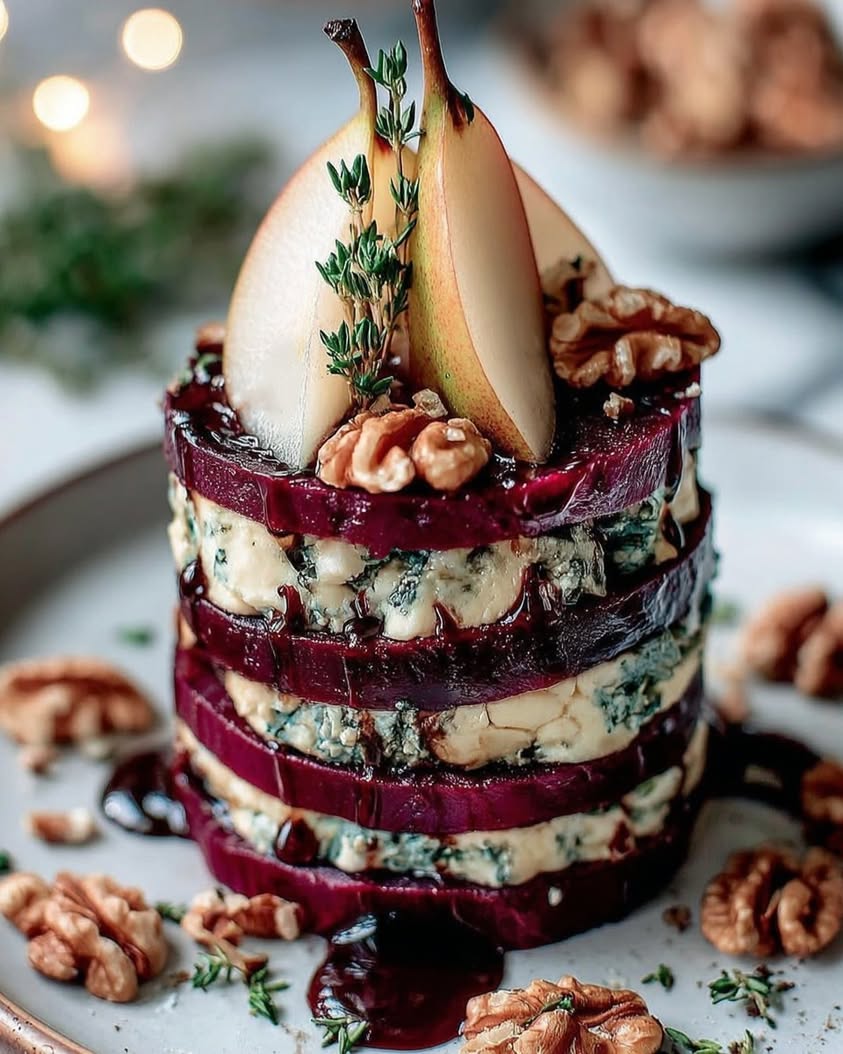
Roasted Beet Blue Cheese Towers with Pear and Balsamic Glaze: An Elegant Appetizer for Any Occasion
When you need an appetizer that looks incredibly impressive but requires minimal hands-on effort, these Roasted Beet Blue Cheese Towers with Pear and Balsamic Glaze deliver every single time. This Roasted Beet Blue Cheese Towers with Pear and Balsamic Glaze recipe combines earthy, sweet roasted beets with the sharp, tangy punch of blue cheese. You also get a crisp, juicy slice of fresh pear and a drizzle of sweet-tart balsamic glaze. The result is a perfect balance of flavors and textures that feels both rustic and refined. Therefore, whether you are hosting a holiday dinner party or looking for a light yet satisfying starter, these towers are a brilliant choice.
The magic of this Roasted Beet Blue Cheese Towers with Pear and Balsamic Glaze recipe starts with the beets. Roasting them brings out their natural sugars, creating a deep, caramelized sweetness. That sweetness stands up beautifully to the salty, crumbly blue cheese. The pear adds a fresh, crisp element and a mild honey flavor. Finally, the balsamic glaze brings everything together with its rich, tangy complexity. Every bite offers a symphony of tastes and sensations. Furthermore, the colors are stunning. The deep ruby red of the beets, the bright white of the cheese, the pale green of the pear, and the dark brown of the glaze create a visual masterpiece on the plate.
These towers are deceptively simple to build. You will roast the beets ahead of time, which is mostly inactive oven time. Once they are cool, you simply slice, layer, and stack the components. The entire process is straightforward, making this an accessible recipe for cooks of any skill level. As a result, you can focus on the fun part of assembling a beautiful dish without any last-minute stress. This Roasted Beet Blue Cheese Towers with Pear and Balsamic Glaze recipe is a true testament to how a few high-quality ingredients can create something extraordinary.
Quick Recipe Highlights
- Flavor Profile: This dish delivers a remarkable contrast. The roasted beets bring deep, earthy sweetness. The blue cheese adds a sharp, salty, and tangy punch. Ripe pear contributes mild, honeyed sweetness, and the balsamic glaze provides a sour-sweet finish.
- Texture: You will experience a delightful interplay of textures. The roasted beets are tender and soft with a slight firmness. The blue cheese is crumbly and creamy. The pear offers a crisp, juicy crunch. The balsamic glaze adds a smooth, syrupy coating.
- Aroma: The aroma is just as complex as the flavors. When roasting, the beets release a rich, earthy scent that fills the kitchen. The blue cheese aroma is pungent and inviting. The balsamic glaze smells sweet and vinegary, promising a bold finish.
- Visual Appeal: These towers are a feast for the eyes. The deep, jewel-toned red of the beets contrasts sharply with the creamy white and blue veins of the cheese. The pale yellow-green of the pear adds a fresh pop of color, while the dark, glossy balsamic glaze creates a stunning finish.
- Skill Level Needed: This is an excellent recipe for beginners. The techniques involved are basic roasting, slicing, and layering. There is no complicated cooking involved, making it a confidence-building dish for new cooks.
- Special Equipment: For this recipe, you will need basic kitchen tools. A baking sheet is essential for roasting the beets. A sharp knife is necessary for slicing. A small saucepan is needed to make the balsamic glaze. A vegetable peeler is helpful for the beets.
Recipe Overview
- Difficulty Level: We rate this recipe as Easy. The primary reason is the low number of active steps. You roast the beets, which requires little attention. Then you create a simple balsamic reduction. Finally, you assemble the towers. There are no critical techniques like frying or tempering. Anyone can successfully make this.
- Category: This dish fits perfectly as an appetizer, first course, or even a light lunch. It works well on a buffet table. It also serves beautifully as a plated starter at a formal dinner party. Because it is substantial, it can also be part of a vegetarian main course.
- Cuisine: While not tied to a single specific cuisine, this dish draws on elements of modern American and European cooking. It uses the classic flavor pairing of beets and blue cheese, which is popular in French and Italian cuisine. The use of balsamic vinegar nods to Italian culinary traditions.
- Cost: This recipe is moderately priced. Beets are generally very affordable, especially in season. Pears can be moderate in cost. Blue cheese is often the most expensive ingredient, but you only need a small amount. Overall, this is a budget-friendly way to create an elegant dish.
- Season: Fall is the absolute best season for this recipe. This is when both beets and pears are at their peak freshness and flavor. The earthy, warming qualities of the dish also make it perfect for cooler weather. However, good-quality beets are available year-round in most grocery stores.
- Occasion: This recipe is fantastic for multiple occasions. It is perfect for Thanksgiving, Christmas, or any holiday gathering. It also shines at bridal showers, cocktail parties, or wine-tasting events. Moreover, it makes a special and impressive date-night dinner starter.
Why You Will Love This Recipe
First, the taste and texture are simply unforgettable. The combination of sweet roasted beets, pungent blue cheese, crisp pear, and tangy balsamic glaze is a classic for good reason. The flavors balance each other perfectly. The textures create a satisfying contrast in every bite. You get the softness of the beet, the crumble of the cheese, the crunch of the pear, and the smooth coat of the glaze. This is a sophisticated flavor profile that feels both indulgent and fresh. It is a dish that will impress your palate and leave you wanting another bite.
Next, the preparation is surprisingly convenient and convenient. The majority of the work is oven time for the beets. This allows you to prepare other parts of the meal while they roast. You can even roast the beets up to three days in advance. This makes the final assembly incredibly quick. When you are ready to serve, you simply slice the beets, crumble the cheese, slice the pears, and stack the towers. This hands-off approach is a lifesaver when you are entertaining. It reduces stress and frees you up to spend time with your guests.
Furthermore, this recipe offers significant nutritional advantages. Beets are a powerhouse of nutrients. They are loaded with fiber, folate, and manganese. They are also rich in nitrates, which can help improve blood flow and lower blood pressure. Pears are an excellent source of fiber and vitamin C. Blue cheese provides calcium and protein, although you use it in moderation. Consequently, this appetizer is a relatively healthy indulgence. It provides a good dose of vitamins and minerals while still feeling like a treat.
Additionally, these towers have incredible social and entertaining value. They are a conversation starter. Guests are immediately drawn to their beautiful, architectural look. The flavor combination is also a safe bet for adventurous and picky eaters alike. Because they are served individually, they are easy to distribute among guests. They also pair wonderfully with a variety of beverages, from crisp white wine to a full-bodied red. Serving these towers instantly elevates the tone of any gathering. They signal that you have put thought and care into the meal.
Finally, the recipe is cost-effective and highly accessible. You can find all the ingredients at any standard grocery store for a reasonable price. There is no need for expensive or hard-to-find specialty items. This makes the dish a great option for a special occasion when you are on a budget. It delivers a high-end restaurant experience for a fraction of the cost. You get to enjoy an elegant and impressive dish without breaking the bank. This combination of affordability and elegance is a major win for any home cook.
Historical Background and Cultural Significance
The pairing of beets and blue cheese is a classic combination that has deep roots in European culinary history. Beets have been cultivated for thousands of years, originally grown for their leaves and later for their sweet roots. They were prized by the Romans and later became a staple in Eastern European and Russian cuisines. Blue cheese, meanwhile, has a history stretching back over a millennium. It is believed to have been discovered accidentally in caves in France and Italy, where the unique molds created the characteristic blue veins. The marriage of these two ingredients in a savory dish is a relatively modern culinary innovation, likely emerging from the farm-to-table and fine-dining movements of the late 20th century.
Culturally, this dish represents a shift towards simpler, ingredient-focused cooking. This particular recipe, with its modern presentation as a tower, embodies the philosophy of showcasing high-quality components without heavy sauces or complicated preparations. It reflects a globalized palate. The beets and blue cheese are European staples, while the pear and balsamic glaze add a touch of Italian and cross-cultural flair. Chefs began experimenting with this flavor profile in the 1980s and 1990s, and it quickly became a beloved classic for its perfect balance. It is now a standard on many modern American and European menus.
The evolution of this recipe from a simple salad into a structured tower is a testament to creativity in the kitchen. Initially, the combination was often served as a warm or cold salad, with the beets and cheese tossed together. The desire for more visually dramatic plating led to the development of the tower format. This style became popular as chefs sought to add height and structure to their plates. The tower format allowed for a clearer presentation of each individual component. It also made portion control easier and created a more restaurant-worthy appearance. The addition of a balsamic glaze as a finishing touch is a further evolution, adding acidity and sweetness.
Regional variations of this dish are abundant. In France, you might see it served with a Roquefort or a local chevre. In Italy, Gorgonzola is the blue cheese of choice, and the glaze is often made with a traditional aged balsamic vinegar from Modena. In the United States, many cooks use a domestic blue cheese like Maytag. You will also see variations with different greens, such as arugula or watercress, added to the salad base below the tower. Some versions include candied walnuts or pecans for added crunch. Others might use a honey-balsamic mixture instead of a straight balsamic reduction. This adaptability makes the core concept endlessly customizable.
Ingredient Deep Dive
Beets are the star of this Roasted Beet Blue Cheese Towers with Pear and Balsamic Glaze recipe, providing its earthy foundation. Culturally, beets have been a symbol of nourishment and vitality for centuries, with ancient Greek mythology suggesting they were offered to Apollo. They are incredibly nutritious. They are a fantastic source of iron, potassium, and antioxidants like betalains. Betalains are what give beets their vibrant red color. These compounds have powerful anti-inflammatory properties. Importantly, beets are also one of the richest dietary sources of nitrates. Your body converts these nitrates into nitric oxide, which helps relax blood vessels and improve circulation.
When selecting beets for this recipe, look for firm, smooth bulbs with crisp, fresh-looking greens still attached if possible. The greens should appear vibrant and not wilted. Smaller to medium-sized beets tend to be sweeter and more tender than very large ones. Avoid beets that are soft, shriveled, or have any cuts or bruises. For storage, separate the greens from the roots immediately upon bringing them home. The greens will only last a few days in the refrigerator. The beet roots, however, can be stored in a plastic bag in the crisper drawer for several weeks. If you cannot find fresh beets, you can use high-quality pre-cooked, vacuum-sealed beets for a quicker version. They will not have the same deep roasted flavor.
Blue cheese is the second most critical ingredient. Its history is as rich as its flavor. Legend says it was discovered when a shepherd forgot a loaf of bread in a cave, and the mold created the first blue cheese. Today, it is a staple in French, Italian, English, and American cuisines. Nutritionally, blue cheese is an excellent source of calcium for strong bones. It also contains a significant amount of protein. However, it is high in saturated fat and sodium, so it is best enjoyed in moderation. The unique mold cultures, specifically Penicillium roqueforti, give it its distinctive flavor and aroma. Some studies suggest these molds may also have positive effects on gut health.
When buying blue cheese, you have several excellent options. Gorgonzola is creamy and milder, making it a great choice for those new to blue cheese. Roquefort is sheep’s milk cheese with a sharper, more pungent flavor. Stilton is a rich, slightly crumbly English cheese with a strong, complex taste. For a milder option, try a Danish blue. Always check the cheese for a moist, creamy texture without any cracks or a very dry surface. Store blue cheese wrapped in wax paper inside a plastic bag in the warmest part of your refrigerator. It will last for a few weeks. Alternatives exist, but none replicate the unique flavor perfectly. You can try feta cheese for a salty, tangy alternative, or goat cheese for a creamy, tangy option.
Common Mistakes to Avoid
- Undercooking the beets is a frequent mistake. Beets need to be roasted until they are completely tender and easily pierced with a fork. If they are still hard in the center, they will be unpleasant to eat and difficult to stack. The internal temperature should be very soft.
- Overcooking the beets is another problem. Overcooking causes them to become mushy and fall apart. They should be tender but firm enough to hold their shape for slicing into 1/4-inch rounds for the towers.
- Skipping the peeling step leads to a gritty texture. While the beet skin is edible, it can be tough and fibrous. It is best to rub it off after roasting. The skin will slip off easily under running water once the beets are cool.
- Not cooling the beets completely before assembly is a common oversight. Warm beets will soften the blue cheese and cause the tower to slide. It is crucial to let them cool to room temperature or even refrigerate them first for best results.
- Using an overly ripe or soft pear is a mistake. The pear needs to be firm enough to provide a crisp bite. A very soft or mushy pear will collapse under the weight of the tower and create a soggy mess.
- Using a low-quality balsamic glaze makes a huge difference. A good balsamic glaze should be thick, syrupy, and have a balance of sweet and sour. A thin, watery glaze will not stick to the towers and will ruin the presentation.
- Adding too much cheese overwhelms the other flavors. Blue cheese is very pungent. A light crumble between layers is enough. Too much will make the dish taste overly salty and one-dimensional.
- Assembling the towers too far in advance is a critical error. The moisture from the pear will begin to soak into the beet, and the blue cheese will soften. They should be assembled no more than 30 minutes before serving.
- Serving the towers cold from the refrigerator kills the flavor. The cold temperature numbs the palate and dulls the vibrant flavors. Let them sit at room temperature for 10-15 minutes before serving for the best taste.
- Not adjusting for salt in the recipe is easy to do. Blue cheese is very salty. You will not need to add any extra salt to the beets or the glaze. Taste the final dish before adding any seasoning.
Essential Techniques
Roasting beets is the most important technique for this recipe. This method concentrates their natural sugars, creating a deep, caramelized sweetness that steaming or boiling cannot replicate. To master it, preheat your oven to 400 degrees Fahrenheit. Wrap each beet individually in aluminum foil with a tiny drizzle of olive oil and a pinch of salt. Place them on a baking sheet and roast for 45 to 60 minutes, depending on size. The test for doneness is simple: a knife or small skewer should slide into the center with no resistance. A common pitfall is not testing them thoroughly enough. Large beets can take much longer than smaller ones. The visual cue for success is a deeply wrinkled, slightly shiny skin and a very soft feeling when squeezed gently through the foil. After roasting, let them steam in the foil for 10 minutes.
Making a balsamic glaze is a straightforward technique that dramatically elevates the dish. This process reduces balsamic vinegar into a thick, syrupy, and concentrated sauce. To master it, pour one cup of good-quality balsamic vinegar into a small saucepan. You can add a tablespoon of brown sugar or honey if you want. Bring it to a gentle simmer over medium heat. Then, reduce the heat to low and let it bubble gently. The key is to watch it carefully. It should reduce by about half to two-thirds. A common pitfall is burning the vinegar. Once it starts to foam up and coat the back of a spoon, it is close to being done. The visual cue for success is a consistency similar to maple syrup. It should coat the spoon and leave a clean trail when you run your finger through it on the back of the spoon. Remove it from the heat immediately, as it will continue to thicken as it cools.
Pro Tips for Perfect Roasted Beet Blue Cheese Towers with Pear and Balsamic Glaze
First, always choose beets of similar size for even roasting. This ensures they all finish cooking at the same time. If you have a mix of sizes, you will end up with some that are perfect and others that are either undercooked or overcooked. Uniformity is key for a consistent texture.
Second, you can wear disposable gloves when handling cooked beets. The natural color can stain your hands for a day or two. This is a simple trick that saves you from temporary purple fingers. It makes the peeling and slicing process much more pleasant.
Third, slice your roasted beets and pear using a sharp knife or a mandoline for perfectly even rounds. Even slices are crucial for a stable tower that does not wobble or topple over. Aim for slices that are about 1/4-inch thick for the best structure.
Fourth, use a flavor-boosting salt like Maldon sea salt or a touch of fleur de sel for the final garnish. This is not about adding saltiness, but about adding a delicate, popping crunch and a burst of flavor that complements the other ingredients.
Fifth, do not be afraid to build your towers taller. You can use more than one round of beet and pear per tower. A good rule of thumb is three to four rounds of each component for a substantial and impressive portion.
Sixth, a small offset spatula or a butter knife is your best tool for spreading a thin layer of cheese. This allows for a more even distribution of flavor without overwhelming any one bite. It also creates a cleaner look.
Seventh, serve the glaze in a small pitcher or a squeeze bottle. This allows your guests to add as much or as little as they like. It also gives you more control over the visual presentation, allowing you to create beautiful drizzle patterns on the plate.
Eighth, for a fantastic texture contrast, add a scattering of toasted walnuts or pecans over the top of the tower. This provides a nutty crunch that pairs wonderfully with the soft beets and crumbly cheese. Toast them in a dry pan for a few minutes for extra flavor.
Variations and Adaptations
Regional variations of this dish are incredibly diverse. In the Mediterranean, you might find it made with a tangy, crumbly feta cheese instead of blue cheese. The feta is less pungent and provides a brinier flavor that pairs well with the sweet beets. In the Southern United States, cooks often add a touch of heat. They might sprinkle the finished tower with a few drops of hot sauce or a pinch of cayenne pepper. This creates a delightful sweet-heat-savory profile. In Scandinavian cuisines, a version with herring or cured salmon becomes a more substantial, savory appetizer. Each region adds its own unique twist to the classic base.
Seasonal adaptations are easy to implement. In the spring, you can substitute roasted asparagus for one of the pear layers. The fresh, grassy flavor of asparagus is a wonderful counterpoint. In the summer, use thin slices of fresh, ripe peach or nectarine instead of pear. The stone fruit offers a beautiful sweetness and a slightly different texture. During the winter months, a layer of roasted butternut squash or sweet potato can add warmth and comfort. These seasonal shifts keep the dish feeling fresh and relevant all year long. You can also use a winter pear like Bosc or Anjou, which hold up well to roasting.
Dietary modifications are straightforward for this recipe. To make it gluten-free, the only step is to ensure your balsamic glaze is gluten-free. Most high-quality balsamic vinegars are naturally gluten-free. For a dairy-free version, simply omit the blue cheese entirely. You can replace it with a creamy, high-quality dairy-free cheese alternative. Vegan cooks can use a store-bought vegan blue cheese or a cashew-based cheese. For a low-carb or keto adaptation, beets are a bit higher in sugar. You can reduce the portion size significantly. The pear is also higher in carbs, so you could substitute it with a thin slice of cucumber or avocado for a different but delicious texture.
Flavor variations are a great way to experiment. A popular variation is to add a drizzle of honey over the assembled tower for extra sweetness. You can also add a sprinkle of fresh thyme or rosemary for an herbal note. For a more complex flavor, marinate the sliced beets in a mixture of olive oil, sherry vinegar, and a pinch of sugar for 30 minutes before assembling. Texture modifications include adding a layer of creamy goat cheese between the beet and pear. This creates a richer, more decadent profile. You could also use a different type of cheese entirely, like a creamy brie or a sharp cheddar, for a completely different flavor journey.
Presentation alternatives allow you to get very creative. Instead of building towers, you can arrange the ingredients in a beautiful, layered salad. Simply place the beet rounds, pear slices, and crumbled cheese on a plate. Dress with the balsamic glaze and some fresh greens like arugula. For a deconstructed version, you can serve the components separately on a charcuterie board. This allows your guests to build their own towers. You can also create a single, large, show-stopping tower as a centerpiece for a party platter. The possibilities are endless.
Serving and Presentation Guide
Plating this dish is an art form in itself. For the most elegant presentation, place the assembled tower directly in the center of a small plate. Then, create a wide, sweeping drizzle of the balsamic glaze around the base of the tower. You can also do a few smaller dots around the plate. The goal is to frame the tower without covering it. A light sprinkle of flaky sea salt and some freshly cracked black pepper on the plate itself adds visual texture. The colors and textures should speak for themselves, so keep the plate clean and uncluttered.
Garnishing ideas can elevate the dish from simple to stunning. A single, fresh thyme sprig placed on top of the tower adds a pop of green and a touch of elegance. Toasted walnuts or pecans, finely chopped, can be sprinkled around the plate for both texture and flavor. A tiny drizzle of extra-virgin olive oil over the top of the tower adds a glossy finish. For a celebratory feel, you can add a few edible flowers like pansies or violas. These add a delicate, beautiful touch. The garnish should always enhance, not overwhelm, the main components.
Traditional accompaniments for this dish are simple. It is often served with a crisp green salad on the side. A simple vinaigrette with a touch of mustard works beautifully. A light, airy crostini or a piece of crusty bread is a wonderful vehicle for the tower. It allows you to soak up every last bit of the balsamic glaze. Many cooks also serve this with a small scoop of arugula or micro greens for a peppery bite. The greens provide a fresh contrast to the rich, earthy flavors of the tower.
Modern serving suggestions are all about creativity. You can serve the towers on a bed of creamy polenta for a more substantial main course. You can also use them as a topping for a flatbread or crostini. For a party, create a single large, layered tower on a platter. Guests can then break off pieces with a fork or spoon. Another modern idea is to serve them in a shot glass or a small mason jar for a fun, individual appetizer. The layers will be visible through the glass, creating a stunning visual effect.
Temperature considerations are crucial for the best experience. The beets should be at room temperature for the most tender and flavorful texture. The blue cheese should also be at room temperature for the best flavor and texture. Cold cheese will not crumble properly. The pear should be cold for a crisp, refreshing contrast. The balsamic glaze should be at room temperature or slightly warm. This allows it to flow easily for drizzling. A balanced temperature profile enhances the overall sensory experience.
Portion control tips are simple to follow. One tower of approximately 4-5 layers is a generous appetizer portion. For a main course, you can serve two towers. For a buffet, you can cut each tower in half horizontally to serve more people. The key is to keep the towers uniform in size for a professional look. You can also use a ring mold for perfect layering every time. This ensures every tower is the same height and diameter, which is impressive for a party setting.
Wine and Beverage Pairing
Wine pairing for this dish is a delightful exercise. The earthy sweetness of the beets and the tangy blue cheese call for specific wine characteristics. A classic choice is a dry Riesling. Its high acidity and slight fruitiness will cut through the creaminess of the cheese and complement the sweetness of the beets and pear. Another excellent option is a Sancerre or Sauvignon Blanc. Its herbaceous, citrusy notes will provide a refreshing contrast. For red wine lovers, a light-bodied Pinot Noir is a fantastic choice. Its bright acidity and red fruit flavors will not overpower the dish. A dry rosé is also a very versatile and food-friendly option.
Non-alcoholic alternatives are equally important. A sparkling water with a squeeze of lemon or lime provides a clean, palate-cleansing effect. A high-quality apple cider or a pear cider offers a sweet, fruity complement to the flavors. For a more sophisticated option, make a shrub. This is a drinking vinegar made with fruit, sugar, and vinegar. A simple apple or pear shrub mixed with sparkling water is a phenomenal pairing. It mirrors the acidity of the balsamic glaze and provides a beautiful, complex flavor. Chilled, strong black tea, or an iced green tea, also works wonderfully.
Coffee and tea pairings should not be overlooked. A light, floral white tea like Silver Needle will not overpower the delicate flavors. A crisp, clean green tea like sencha is also a superb choice. The grassy, slightly astringent notes of green tea provide a beautiful contrast to the rich dish. For a coffee pairing, avoid heavy, dark roasts. A light to medium roast with bright, fruity acidity can work well. The coffee should complement the earthy sweetness of the beets and not fight with the pungent cheese. An espresso after the meal is a classic Italian finish.
Temperature considerations for beverages are key. Wines and ciders should be served slightly chilled but not ice-cold. The cold will mute the flavors. White wines are best at about 45-50 degrees Fahrenheit. Red wines, specifically Pinot Noir, are best at a cool room temperature of about 60 degrees Fahrenheit. Non-alcoholic drinks like sparkling water are best very cold. Tea should be served hot or iced, depending on the variety. The goal is to have the beverage temperature contrast with the room-temperature tower for the best sensory experience.
Serving suggestions for beverages are simple. Place a small carafe of the balsamic glaze on the table. Let your guests drizzle their own. This adds an interactive element to the meal. Provide a wine glass or a flute that is appropriate for the chosen beverage. For a larger party, create a beverage station. This way, guests can serve themselves. Always have a chilled sparkling water option available as a palate cleanser between bites. This helps to reset the taste buds for the next amazing combination of flavors.
Storage and Shelf Life
Storing the individual components separately is the best method. Roasted beets will keep beautifully in an airtight container in the refrigerator for up to five days. Blue cheese can be stored in its original wrapping or a resealable bag for one to two weeks. Pears should be kept at room temperature until ripe, and then they can be stored in the refrigerator for a few more days. The balsamic glaze will last for weeks in a sealed container in the refrigerator. It will solidify when cold. Simply let it come to room temperature before using. Never store assembled towers. They will become soggy very quickly.
Temperature requirements are vital for food safety and quality. The roasted beets and the blue cheese must be kept at a consistent refrigerator temperature of 40 degrees Fahrenheit or below. The balsamic glaze can be stored at room temperature in a cool, dark pantry. However, refrigeration extends its shelf life. The pears should be stored at room temperature if they are not yet ripe. Once ripe, they should be moved to the refrigerator. Improper storage can lead to spoilage. Always check the components for any signs of mold, off-smells, or sliminess before using them.
Container recommendations for each component are important. For beets, a glass or plastic container with a tight-fitting lid works best. For the blue cheese, wrap it in wax paper or parchment paper. Then place it inside a plastic bag. The paper allows the cheese to breathe, while the bag prevents it from drying out. The balsamic glaze is best stored in a glass jar or a squeeze bottle with a tight seal. The pears should be stored in a paper bag at room temperature to ripen. Once ripe, they can be placed in a plastic bag in the refrigerator. The goal is to maintain the ideal humidity level for each item.
Signs of spoilage are easy to spot. For beets, look for a slimy texture, a soft, mushy consistency, or an off, sour smell. For blue cheese, a pink or orange color, a slimy surface, or an ammonia-like smell indicates spoilage. The balsamic glaze is quite stable, but if it develops a mold or an off odor, it should be discarded. For pears, any brown, mushy spots, a fermented smell, or a wrinkled, shriveled appearance are signs of spoilage. Always trust your senses. If something looks, smells, or feels wrong, it is safest to throw it away.
Reheating instructions are primarily for the beets. If you are making the beets fresh for the towers, you will not need to reheat them. However, if you have leftover roasted beets that you want to use in a different dish, you can reheat them. Simply place them in a 350-degree Fahrenheit oven for about 10 minutes. You can also reheat them in a microwave. Do not reheat the entire tower. The cheese and pear will be destroyed by the heat. The beets are best served at room temperature for this recipe. The other components are served at cool room temperature.
Freezing guidelines are limited. Roasted beets freeze quite well. You can freeze them for up to three months. Simply cool them completely, then place them in a freezer-safe bag or container. They will be best if thawed overnight in the refrigerator. The blue cheese can be frozen, but it will change the texture. It will become more crumbly and less creamy upon thawing. The pears will not freeze well raw, as they will become mushy. The balsamic glaze can be frozen, but it is not necessary. It will likely be used long before it goes bad. Freezing the assembled towers is not recommended.
Make Ahead Strategies
Your prep timeline should start two to three days before you plan to serve the towers. Day one is for roasting the beets. You can roast a large batch of beets at once. This is an excellent time-saver. Let them cool completely, then store them in the refrigerator. You can also make the balsamic glaze on the first day. It will keep perfectly in the fridge. The pears should be purchased a few days in advance and allowed to ripen at room temperature. This ensures they are at their peak flavor and texture on serving day.
Storage between steps is critical for quality. After roasting, the beets must be stored in an airtight container. They will release some liquid, so pat them dry before slicing. The balsamic glaze should be stored in a sealed jar. It can solidify slightly in the fridge, so bring it to room temperature before using. The blue cheese should be kept in its original wrapping. The pears should be washed and dried before storing. They can be kept in a paper bag at room temperature until ripe. After that, they go in the fridge. Never slice the pears ahead of time. They will oxidize and turn brown.
The quality impact of making components ahead is generally very positive. The beets actually improve in flavor after a day or two. The flavors meld and deepen. The balsamic glaze can be made weeks in advance. The blue cheese does not suffer from being stored for a few days. The pears are the one component that is best prepared fresh. Slicing them too far in advance will cause them to turn brown and lose their crisp texture. Therefore, the only last-minute task is slicing the pears and assembly. This makes the final assembly very quick.
Assembly is Print
Roasted Beet Blue Cheese Towers with Pear & Balsamic Glaze
- Total Time: 1 hour
- Yield: 4
Description
Layers of roasted beets, creamy blue cheese, and crisp pear slices are drizzled with a sweet balsamic glaze to create an elegant and flavorful appetizer or side dish. These towers offer a beautiful presentation with a perfect balance of earthy, tangy, and sweet notes.
Ingredients
- 4 medium beets (red, golden, or a mix), scrubbed and trimmed
- 2 tablespoons olive oil
- Salt and freshly ground black pepper to taste
- 4 ounces blue cheese, crumbled
- 2 ripe pears (such as Bosc or Anjou), cored and thinly sliced
- 1/2 cup balsamic vinegar
- 2 tablespoons honey or brown sugar
- 1 teaspoon fresh thyme leaves (optional)
- Fresh arugula or microgreens for garnish (optional)
Instructions
- Preheat oven to 400°F (200°C). Wrap each beet individually in aluminum foil with a drizzle of olive oil and a pinch of salt and pepper. Roast for 45-60 minutes until tender when pierced with a fork. Let cool slightly, then peel and slice into 1/4-inch rounds.
- While beets roast, make the balsamic glaze: In a small saucepan, bring balsamic vinegar and honey to a simmer over medium heat. Reduce heat to low and cook, stirring occasionally, until thickened and syrupy (about 10-15 minutes). Remove from heat and let cool.
- To assemble each tower, place one beet slice on a serving plate. Top with a slice of pear, a small amount of crumbled blue cheese, and a few thyme leaves if using. Repeat layers (beet, pear, blue cheese) until you have 3-4 layers per tower. Finish with a final drizzle of balsamic glaze and garnish with arugula or microgreens if desired.
- Serve immediately or refrigerate for up to 2 hours before serving. The towers can be made ahead but are best served at room temperature.
Notes
You can customize the seasonings to taste. For a milder blue cheese, use gorgonzola or Stilton. For a vegan version, substitute the blue cheese with a plant-based alternative and use maple syrup instead of honey in the glaze.
- Prep Time: 15 minutes
- Cook Time: 45 minutes
- Method: Main
- Cuisine: American