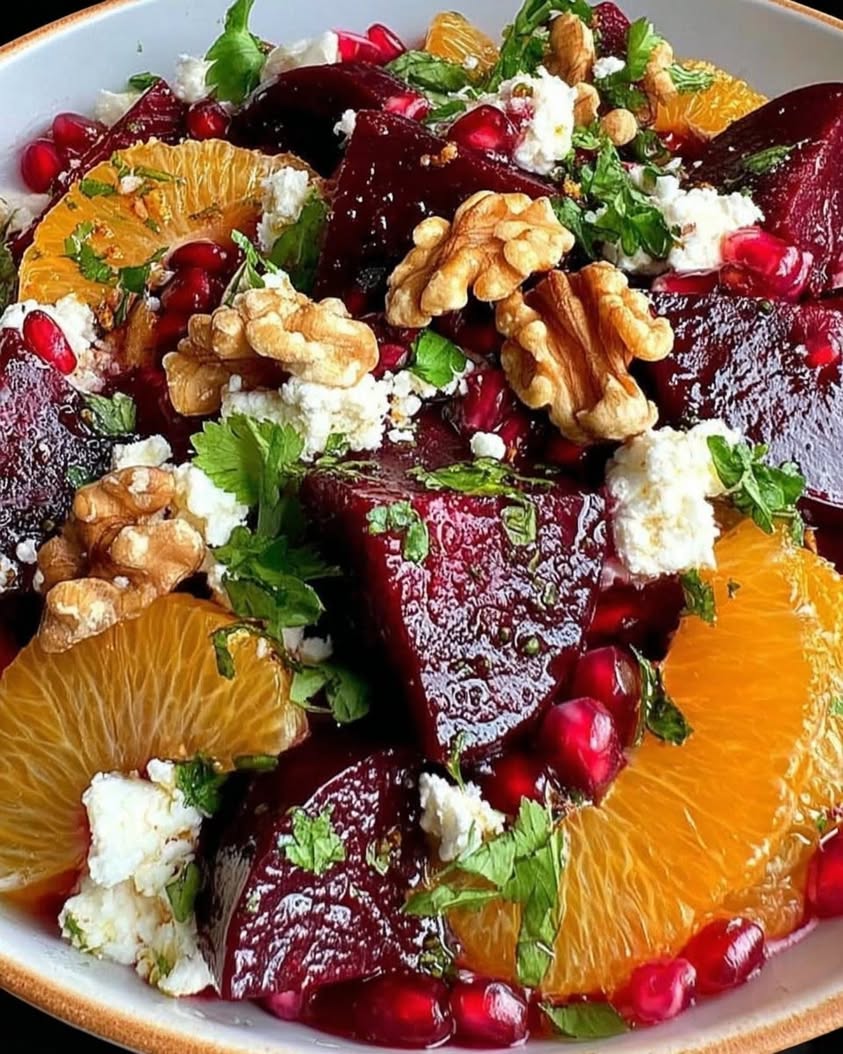
Ruby Beet & Citrus Salad with Pomegranate, Feta & Toasted Walnuts: A Winter Wonder
This Ruby Beet & Citrus Salad with Pomegranate, Feta & Toasted Walnuts is the side dish you need this season. It delivers bold, refreshing flavors that look incredible on the table. The earthy beets pair beautifully with bright citrus, creating a balance that feels both hearty and light. Every forkful offers a mix of tangy, sweet, and savory notes, all tied together with a simple honey citrus dressing. It is truly a showstopper for holiday gatherings or weeknight dinners alike.
When you make this Ruby Beet & Citrus Salad with Pomegranate, Feta & Toasted Walnuts, you get vibrant colors and textures that excite the palate. Roasting the beets brings out their natural sweetness, while segments of orange and grapefruit add a zesty pop. Pomegranate arils provide little bursts of juice, and crumbled feta brings creamy saltiness. Toasted walnuts add crunch and warmth. This combination is not just delicious, it is also packed with nutrients that support your health through the colder months.
I love how simple this salad comes together, even though it looks elegant. You can roast the beets ahead of time, making assembly a breeze on busy days. The dressing requires only a few pantry staples, and the whole dish stays fresh for hours. Whether you serve it as a starter or a side, this recipe always gets compliments. It also adapts easily to different diets, so everyone at your table can enjoy it. Let me show you exactly how to create this stunning Ruby Beet & Citrus Salad with Pomegranate, Feta & Toasted Walnuts.
Quick Recipe Highlights
- Flavor Profile: This salad delivers a symphony of sweet, tangy, and savory tastes. The roasted beets offer deep earthiness, while citrus segments add bright acidity. Pomegranate arils contribute a honeyed sweetness, and feta rounds everything out with salty creaminess.
- Texture: You will experience a wonderful contrast of soft and crunchy elements. Tender roasted beets and juicy citrus give way to crisp walnuts and chewy pomegranate seeds. This interplay keeps each bite interesting and satisfying.
- Aroma: The scent of roasting beets fills your kitchen with warm, caramelized notes. Fresh citrus adds a clean, invigorating fragrance, while toasted walnuts release a nutty, buttery aroma. It is a welcoming smell that signals something special is coming.
- Visual Appeal: This dish is a feast for the eyes with its jewel-toned ingredients. Ruby red beets, bright orange segments, and deep red pomegranate arils create a stunning palette. White feta crumbles and green herbs add beautiful contrast against a bed of greens.
- Skill Level Needed: This recipe is perfect for beginners and experienced cooks alike. The techniques are straightforward, involving basic roasting, chopping, and whisking. You do not need any advanced culinary skills to achieve impressive results.
- Special Equipment: You will need a baking sheet lined with parchment paper for roasting beets. A sharp chef’s knife helps with precise citrus segmenting. A small bowl and whisk are sufficient for the simple dressing.
Recipe Overview
- Difficulty Level: I rate this recipe as easy because it requires minimal hands-on work. The most time-consuming step is roasting the beets, but that is almost entirely hands-off. The remaining tasks involve simple chopping and mixing. Even a novice cook can produce a beautiful, delicious salad with confidence.
- Category: This dish works perfectly as a side salad for roasted meats or grilled fish. It also stands beautifully on its own as a light lunch or starter course. You can serve it at brunch, dinner, or as part of a holiday buffet spread.
- Cuisine: This salad draws inspiration from Mediterranean flavors and ingredients. The combination of beets, citrus, pomegranate, feta, and walnuts appears in various regional cuisines, from Greek to Turkish. It reflects a tradition of using fresh, vibrant produce with simple preparations.
- Cost: The ingredients for this salad are generally affordable and widely available. Beets and citrus are inexpensive, especially during their peak seasons. Feta, walnuts, and pomegranate arils add a bit more cost, but the overall expense remains reasonable for a special dish.
- Season: This salad shines best from late autumn through early spring. Beets and citrus are at their peak during these cooler months, offering maximum sweetness and flavor. Pomegranates also come into season in the fall, making this a natural winter recipe.
- Occasion: This Ruby Beet & Citrus Salad with Pomegranate, Feta & Toasted Walnuts is ideal for festive occasions like Thanksgiving, Christmas, or New Year’s Eve. It also works beautifully for dinner parties, potlucks, or a special weeknight meal. Its vibrant colors make it a standout on any table.
Why You Will Love This Recipe
The taste and texture combination in this salad is truly exceptional. You get the sweet earthiness of roasted beets, the bright tang of fresh citrus, and the juicy pop of pomegranate arils. Feta adds creamy saltiness, while toasted walnuts provide satisfying crunch. Every bite offers something different, keeping your palate engaged from start to finish. It is a harmonious blend that feels both indulgent and refreshing at the same time. You will find yourself reaching for second helpings without any guilt.
Convenience and preparation benefits make this recipe a winner for busy cooks. You can roast the beets up to three days ahead and store them in the refrigerator. The dressing comes together in minutes with ingredients you likely have on hand. Assembly takes only about ten minutes, which is perfect for last-minute entertaining. You do not need to stress over complicated techniques or hard-to-find items. This recipe simplifies your life while still delivering impressive results.
Nutritional advantages are another reason to love this dish. Beets are packed with fiber, folate, and antioxidants that support heart health and reduce inflammation. Citrus fruits provide a powerful dose of vitamin C, which boosts your immune system during cold season. Pomegranate arils contain polyphenols that protect your cells from damage. Walnuts offer healthy omega-3 fatty acids that benefit brain function. Feta adds calcium and protein, making this a well-rounded, nourishing meal component.
Social and entertaining value cannot be overstated for this salad. Its vibrant colors and elegant presentation instantly elevate any gathering. Guests will admire the beautiful arrangement and ask for the recipe before they even take a bite. The dish holds up well on a buffet table without wilting or losing its appeal. You can serve it proudly alongside roasted meats, grilled vegetables, or crusty bread. It sparks conversation and brings people together around the table.
Cost-effectiveness and accessibility make this recipe a practical choice for any household. The ingredients are seasonal and often on sale during winter months. You can find beets, oranges, and pomegranates at most grocery stores without breaking your budget. Walnuts and feta are pantry staples that keep well and can be used in other recipes. Making this salad at home costs a fraction of what you would pay at a restaurant. You get gourmet quality without the premium price tag.
Historical Background and Cultural Significance
The combination of beets and citrus has deep roots in Mediterranean cuisine. Ancient civilizations in Greece and the Middle East valued beets for their earthy flavor and medicinal properties. Citrus fruits traveled along trade routes from Asia to the Mediterranean, where they were embraced by local cooks. Pomegranates also have a long history in this region, symbolizing fertility and abundance. Over centuries, these ingredients naturally came together in salads and side dishes that celebrate the bounty of the land.
Cultural importance of this salad lies in its connection to harvest festivals and winter celebrations. In many Mediterranean countries, winter meals feature root vegetables preserved through the cold months. Citrus fruits arrive at their peak just as the weather turns cold, providing a burst of sunshine. Pomegranates are often associated with New Year traditions, representing prosperity and good luck. This salad honors those traditions by bringing together ingredients that symbolize health, wealth, and joy. It is a dish that carries meaning beyond its delicious flavor.
The evolution of this recipe reflects changing tastes and global influences. Traditional versions might have used simple olive oil and lemon juice as dressing. Modern interpretations often add honey for sweetness and herbs for freshness. Chefs have experimented with different types of beets, from golden to candy-striped varieties. The addition of feta and walnuts is a relatively recent innovation that adds richness and texture. Today, this salad appears on menus around the world, adapted to local ingredients and preferences.
Regional variations of this salad showcase the diversity within Mediterranean cuisine. Greek cooks might use thick yogurt or mizithra cheese instead of feta. Turkish versions often include sumac or pomegranate molasses for added tanginess. In Lebanon, you might find the salad with fresh mint and a touch of rose water. Italian adaptations could include balsamic reduction and shaved Parmesan. Each region adds its own twist while honoring the core combination of earthy beets and bright citrus.
Ingredient Deep Dive
Beets have been cultivated for thousands of years, originally grown for their leaves rather than their roots. Ancient Romans used beets for medicinal purposes, and they became a staple in European kitchens by the Middle Ages. Nutritionally, beets are rich in folate, manganese, and potassium. They also contain betalains, powerful antioxidants that give them their deep red color. When selecting beets, look for firm roots with smooth skin and fresh, unwilted greens attached. Smaller beets tend to be more tender and sweet. Store unwashed beets in a plastic bag in the refrigerator for up to two weeks. For substitutions, you can use golden beets for a milder flavor or pre-cooked vacuum-packed beets to save time.
Citrus fruits like oranges and grapefruit originated in Southeast Asia and spread along trade routes to Europe and Africa. They became prized for their vitamin C content, which helped prevent scurvy on long sea voyages. Nutritionally, citrus fruits are excellent sources of vitamin C, fiber, and various antioxidants. When selecting oranges, choose fruits that feel heavy for their size with smooth, bright skin. Grapefruit should feel firm and have a slight give when squeezed gently. Store citrus at room temperature for up to a week or in the refrigerator for up to three weeks. For substitutions, you can use blood oranges for a deeper color or tangerines for smaller segments. The honey citrus dressing relies on fresh juice, so avoid bottled options for the best flavor.
Pomegranate arils come from a fruit that has been cultivated since ancient times in the Middle East and North Africa. In Greek mythology, pomegranates symbolized fertility and were associated with the goddess Persephone. Nutritionally, pomegranates are loaded with vitamin C, vitamin K, and potent antioxidants called punicalagins. When selecting a pomegranate, choose one that feels heavy for its size with firm, unblemished skin. Store whole pomegranates in a cool, dark place for up to two months. To extract arils easily, cut the fruit in half and tap the back with a wooden spoon over a bowl. For substitutions, you can use dried cranberries or fresh currants in a pinch.
Feta cheese originated in Greece, where it has been made for thousands of years from sheep’s milk or a mixture of sheep and goat milk. Traditional feta has a crumbly texture and a tangy, salty flavor that comes from aging in brine. Nutritionally, feta provides calcium, protein, and beneficial probiotics. When selecting feta, look for blocks stored in brine rather than pre-crumbled varieties, which tend to be drier. Store feta in its brine in the refrigerator, changing the liquid every few days. For substitutions, you can use goat cheese for a similar tang or ricotta salata for a milder flavor. Avoid using low-fat feta, which often has a rubbery texture.
Walnuts have been consumed by humans for over 8,000 years, with origins in ancient Persia. They were highly valued by the Romans, who called them “Jupiter’s royal acorn.” Nutritionally, walnuts are rich in omega-3 fatty acids, antioxidants, and vitamin E. When selecting walnuts, look for ones that feel heavy for their size with intact shells. If buying shelled walnuts, choose pieces that are uniform in color and free from rancid smells. Store walnuts in an airtight container in the refrigerator for up to six months. Toasting enhances their flavor and crunch, making them a perfect addition to this salad.
Common Mistakes to Avoid
- Overcooking the beets until they become mushy and lose their structure. Roast them just until tender when pierced with a fork, about 45 to 50 minutes depending on size.
- Using undressed greens that result in a dry, disappointing salad. Toss the arugula or mixed greens with a small amount of dressing before adding the other ingredients.
- Skipping the step of toasting the walnuts, which leaves them bland and soft. Toasting brings out their natural oils and creates a warm, nutty flavor that elevates the whole dish.
- Adding the dressing too far in advance, causing the greens to wilt and the beets to bleed their color. Dress the salad just before serving for the best texture and appearance.
- Cutting citrus segments incorrectly, leaving behind bitter white pith. Use a sharp knife to remove all peel and pith before segmenting the fruit for clean, sweet pieces.
- Using pre-shredded feta that lacks the creamy texture and tangy flavor of block feta. Always buy feta in brine and crumble it yourself for superior quality.
- Forgetting to season the beets while they roast with salt and pepper. Seasoning at the beginning allows the flavors to penetrate the beets as they cook.
- Adding too many walnuts that overwhelm the other delicate flavors in the salad. Use a measured hand to ensure balanced proportions.
- Neglecting to rest the roasted beets before handling them, which can lead to burns. Allow them to cool completely before peeling and cutting.
- Overdressing the salad, which makes it soggy and masks the natural flavors of the ingredients. Start with less dressing and add more as needed.
Essential Techniques
Roasting Beets: This technique transforms raw beets from crunchy and earthy into sweet and tender. Wrapping the beets in foil with a drizzle of olive oil creates a steaming environment that softens them evenly. You should pierce the beets with a fork to check doneness after 45 minutes. The skin should slip off easily once they cool. Cutting off the root and stem ends before roasting helps them cook more uniformly. Do not peel the beets before roasting, as the skin protects them and keeps moisture inside.
Segmenting Citrus: This technique removes the bitter pith and membranes, leaving only the sweet flesh. Start by cutting off the top and bottom of the fruit so it sits flat on the cutting board. Use a sharp knife to slice downward, following the curve of the fruit to remove all peel and white pith. Then, hold the fruit in one hand and cut along each segment membrane to release the slices. Work over a bowl to catch the juice, which you can use for the dressing. Practice makes this process faster and more efficient.
Toasting Walnuts: This simple technique dramatically improves the flavor and texture of nuts. Spread walnuts in a single layer on a baking sheet and bake at 350 degrees Fahrenheit for 5 to 7 minutes. Alternatively, toast them in a dry skillet over medium heat, shaking frequently until fragrant. The nuts will continue to cook after you remove them from heat, so take them out when they are just golden. Over-toasting can lead to a bitter taste, so watch them closely. Let them cool completely before adding to the salad for maximum crunch.
Making the Honey Citrus Dressing: This emulsified dressing brings all the flavors together with bright acidity and gentle sweetness. Whisk together fresh orange juice, lemon juice, honey, and Dijon mustard until smooth. Slowly drizzle in olive oil while whisking continuously to create a stable emulsion. Season with salt and pepper to taste, adjusting the balance of sweet and tangy as needed. The dressing should coat the back of a spoon lightly without being too thick. Store any extra dressing in the refrigerator for up to a week.
Pro Tips for Perfect Ruby Beet & Citrus Salad with Pomegranate, Feta & Toasted Walnuts
Always wear gloves when handling beets to prevent staining your hands. The pigment can linger on your skin for hours, so disposable kitchen gloves are a smart investment. You can also rub your hands with lemon juice after handling beets to help remove color.
Use a mandoline to slice the beets into uniform, thin rounds for a more elegant presentation. This tool ensures even thickness and creates a professional look. If you do not have a mandoline, a sharp knife works fine, just take your time to get consistent pieces.
Add the walnuts just before serving to keep them crunchy. If you add them too early, they will absorb moisture from the dressing and become soft. For the same reason, reserve some walnuts to sprinkle on top as a garnish for extra texture.
Chill the salad plates or bowl before serving to keep the greens crisp. Cold surfaces help maintain the freshness of the ingredients, especially if you are serving the salad on a warm day. This small step makes a noticeable difference in the final presentation.
Let the dressed greens rest for about two minutes before adding the toppings. This brief moment allows the dressing to cling to the leaves without making them soggy. Then, arrange the beets, citrus, and other toppings artfully on top.
Use a mix of baby arugula and frisée for added peppery flavor and varied texture. The slight bitterness of arugula complements the sweetness of the beets and pomegranate. Frisée adds a delicate, lacy texture that lightens the overall dish.
Keep extra dressing on the side if you are serving the salad at a party. This allows guests to add as much or as little as they prefer. It also helps the salad stay fresh longer on a buffet table.
Variations and Adaptations
Regional variations of this salad highlight different culinary traditions. In Greek versions, you might add Kalamata olives and red onion for extra brine and bite. Turkish adaptations often include pomegranate molasses in the dressing for a deeper, tangier flavor. Middle Eastern versions might incorporate sumac and fresh mint, adding bright, herbaceous notes. These regional twists offer new ways to enjoy the same core ingredients.
Seasonal adaptations allow you to enjoy this salad year-round. In spring, swap citrus for fresh strawberries or rhubarb for a different kind of sweetness. Summer versions can include peaches or nectarines, while fall calls for apples or pears. Winter remains the ideal time for citrus and pomegranates, but you can experiment with other seasonal fruits as they become available.
Dietary modifications make this salad suitable for various eating plans. For a dairy-free version, omit the feta and add avocado for creaminess. For a vegan option, use maple syrup instead of honey in the dressing and skip the cheese. To make it nut-free, substitute toasted pumpkin seeds or sunflower seeds for the walnuts. These adjustments do not compromise the overall flavor and texture of the dish.
Flavor variations can transform the character of this salad entirely. Try adding a pinch of cinnamon or smoked paprika to the roasted beets for warmth. Use blood oranges instead of navel oranges for a deeper color and berry-like flavor. Replace the honey citrus dressing with a balsamic vinaigrette for a different tangy profile. Each variation creates a new experience while keeping the structure intact.
Texture modifications can suit different preferences and dietary needs. For a softer salad, cut the beets into smaller dice instead of slices. For more crunch, add toasted almonds or pecans alongside the walnuts. You can also incorporate shaved fennel or diced cucumber for additional freshness. These adjustments let you customize the mouthfeel to your liking.
Presentation alternatives offer creative ways to serve this dish. Layer the ingredients in a glass trifle dish for a stunning layered salad effect. Serve individual portions on small plates for a more formal dinner setting. Use a ring mold to create neat, stack-like servings for a modern look. These presentation options make the salad suitable for any occasion.
Serving and Presentation Guide
Plating techniques can elevate this salad from simple to spectacular. Start with a bed of dressed greens as the base, then arrange the beet slices in a fan pattern. Place citrus segments around the beets, alternating with pomegranate arils. Crumble feta over the top and finish with toasted walnuts for height and texture. This layered approach creates visual interest and allows each ingredient to shine.
Garnishing ideas add the final touch of elegance to your dish. Fresh mint leaves or microgreens provide a pop of green that complements the vibrant colors. A drizzle of extra dressing around the plate adds a professional finish. Edible flowers like nasturtiums or borage blossoms make the salad even more special for celebrations. Keep garnishes simple to avoid overwhelming the other flavors.
Traditional accompaniments for this salad include crusty bread or warm pita for soaking up the dressing. It pairs beautifully with roasted chicken, grilled lamb chops, or seared salmon. For a vegetarian meal, serve it alongside lentil soup or a grain pilaf. These sides turn the salad into a complete, satisfying meal.
Modern serving suggestions involve incorporating the salad into bowls or wraps. Layer it over quinoa or farro for a hearty grain bowl that works for lunch. Use it as a filling for lettuce wraps or stuffed into pita pockets for a portable meal. These contemporary ideas make the salad versatile for different eating occasions.
Temperature considerations are important for the best eating experience. Serve the salad at room temperature or slightly chilled, but not ice cold. Cold temperatures can dull the flavors of the beets and citrus. Let the ingredients come to room temperature for about 15 minutes before assembling for optimal taste.
Portion control tips help you serve the right amount for your guests. For a side salad, plan on about one cup of finished salad per person. For a main course, increase the portion to about two cups. Use a kitchen scale to weigh ingredients if you want precise control over portions. This ensures everyone gets a satisfying serving without waste.
Wine and Beverage Pairing
Wine pairings for this salad depend on which flavors you want to emphasize. A crisp Sauvignon Blanc with citrus notes complements the tangy dressing and pomegranate. For a white wine with more body, try a Viognier that echoes the floral and stone fruit notes. A dry rosé also works beautifully, bridging the earthiness of beets and the brightness of citrus. Avoid heavily oaked wines that can overpower the delicate flavors.
Non-alcoholic alternatives offer refreshing options for all guests. Sparkling water with a splash of pomegranate juice and a twist of lime mirrors the salad’s citrus notes. A hibiscus iced tea provides tartness that pairs well with the feta and beets. Freshly squeezed orange juice or grapefruit juice works as a simple, complementary beverage. These choices keep the meal inclusive and flavorful.
Coffee and tea pairings might not seem obvious, but they can work for brunch or after-dinner serving. A light, floral green tea like jasmine complements the freshness of the citrus. For coffee lovers, a mild roast with low acidity pairs well without clashing. Avoid dark roasts that can taste bitter against the sweet and tangy salad.
Temperature considerations for beverages depend on the season and setting. Serve white wines and rosés chilled to around 45 to 50 degrees Fahrenheit for maximum refreshment. Non-alcoholic drinks should be well-chilled or served over ice. Red wines should be slightly cool, around 55 degrees, if you choose to serve them. Proper temperature enhances the pairing experience.
Serving suggestions for beverages include offering a selection to accommodate different preferences. Set up a small bar with wine options and non-alcoholic choices for guests to choose from. Provide glassware that suits each type of drink, from wine glasses to highball glasses. Garnish beverages with a slice of citrus or a few pomegranate arils to tie the theme together.
Storage and Shelf Life
Storage methods for this salad require separating components to maintain freshness. Keep the dressed greens in a separate container from the other ingredients. Store roasted beets, citrus segments, and pomegranate arils in their own airtight containers. The dressing should stay in a sealed jar in the refrigerator. This approach prevents sogginess and allows you to assemble fresh salads throughout the week.
Temperature requirements are consistent for all components of this dish. Refrigerate everything at 40 degrees Fahrenheit or below for safety and quality. The salad should not sit at room temperature for more than two hours, especially if you are serving it at a gathering. If you need to keep it out longer, place the serving bowl on a bed of ice to maintain a safe temperature.
Container recommendations focus on airtight options that prevent odor transfer. Glass containers work best for roasted beets and dressing, as they do not absorb flavors. Plastic containers with tight-fitting lids are fine for nuts and citrus segments. Avoid using metal bowls for the dressing, as the acidity can react with the metal and alter the taste.
Signs of spoilage to watch for include off odors, sliminess, or discoloration. Beets that smell sour or have a slimy texture should be discarded. Citrus segments that develop a fermented smell or show mold are no longer safe. Walnuts that taste bitter or rancid indicate they have gone bad. Always check each component before assembling leftovers.
Reheating instructions apply only if you want to serve the beets warm. The other ingredients should remain cold or at room temperature. To reheat beets, place them in a microwave-safe dish and heat in 30-second increments until warmed through. Alternatively, you can sauté them briefly in a pan with a little olive oil. Do not reheat the greens or citrus segments.
Freezing guidelines for this salad are limited to certain components. Roasted beets freeze well for up to three months in an airtight container. Citrus segments do not freeze well because they become mushy upon thawing. Pomegranate arils can be frozen for up to six months and used directly from frozen. Walnuts should not be frozen once toasted, as they lose their crunch.
Make Ahead Strategies
Prep timeline for this salad allows you to spread tasks over several days. Three days before serving, roast the beets and let them cool completely. Two days before, segment the citrus and extract the pomegranate arils. One day before, make the dressing and toast the walnuts. On the day of serving, wash and dry the greens, then assemble everything just before serving.
Storage between steps requires careful handling to preserve quality. Store roasted beets in an airtight container in the refrigerator after they have cooled completely. Keep citrus segments in a separate container with any juice they released. Pomegranate arils should be stored in a sealed container with a paper towel to absorb excess moisture. The dressing can stay in a jar in the refrigerator for up to a week.
Quality impact assessment helps you decide which steps to make ahead. Roasting beets ahead of time actually improves their flavor as they absorb the seasoning. Citrus segments can lose a bit of freshness after a day, so they are best prepared within 24 hours of serving. The dressing holds up very well and may even taste better after resting overnight. Toasted walnuts stay crunchy for several days if stored in an airtight container.
Assembly tips for make-ahead preparation focus on efficiency. Layer the clean, dry greens in a large serving bowl, then arrange the toppings on top without mixing. Cover the bowl with plastic wrap and refrigerate until serving. Add the dressing and toss just before bringing the salad to the table. This method keeps everything fresh and crisp.
Reheating guidelines apply only if you want the beets warm. You can reheat the beets in a microwave or oven while the salad remains cold. Warm beets against cool greens create a pleasant temperature contrast. Just be careful not to overheat the beets, as they can become mushy and lose their structure.
Fresh element additions just before serving ensure the best texture and flavor. Add the toasted walnuts and crumbled feta at the last minute to keep them from getting soggy. Sprinkle fresh herbs like mint or parsley on top for a burst of color and aroma. These final touches make the salad feel freshly prepared, even if you did most of the work ahead of time.
Scaling Instructions
Halving the recipe works well for smaller households or intimate meals. Use one medium beet instead of two, and halve the citrus and other ingredients accordingly. The dressing recipe reduces easily by cutting all ingredients in half. The roasting time for a single beet stays the same, but check for doneness a few minutes earlier. The salad will still look beautiful in a smaller serving dish.
Doubling or tripling the recipe for parties requires some adjustments. Use a larger baking sheet to roast the beets in a single layer, which may require multiple batches. Increase the dressing proportionally, but taste as you go to maintain balance. Use a large mixing bowl to toss the greens with dressing evenly. The assembly time will increase slightly, but the process remains the same.
Equipment adjustments for larger batches involve using bigger tools. A sheet pan that fits in your oven is essential for even roasting. For segmenting multiple citrus fruits, a sharp knife and a large cutting board make the job easier. You may need to use two bowls for tossing the greens if you are making a very large quantity. Plan your workspace to accommodate the increased volume.
Timing modifications for scaled recipes are minimal. Roasting multiple beets takes about the same amount of time as roasting a few, as long as they fit in a single layer. Segmenting citrus and extracting pomegranate arils will take longer for larger quantities. Dressing preparation time does not change significantly. Plan extra time for the prep work if you are scaling up.
Storage considerations for scaled recipes require more containers. Divide the components into smaller batches to fit in your refrigerator. Use multiple airtight containers to store beets, citrus, and arils separately. The dressing can stay in a single large jar. Label each container with the date to keep track of freshness. Leftovers from a large batch can be enjoyed over several days.
Nutritional Deep Dive
Macro breakdown of this salad reveals a balanced and satisfying dish. Each serving contains approximately 280 to 320 calories, depending on the amount of feta and walnuts used. Carbohydrates come primarily from beets, citrus, and pomegranate, providing natural sugars and fiber. Protein is modest, coming from feta and walnuts, while fats are heart-healthy and derived from olive oil and nuts. This balance makes the salad suitable as a side or part of a larger meal.
Micronutrient analysis shows this salad is packed with essential vitamins and minerals. Beets are rich in folate, which supports cell growth and red blood cell formation. Citrus fruits provide a significant amount of vitamin C, which boosts immune function and collagen production. Pomegranate arils contain vitamin K and potassium, important for bone health and blood pressure regulation. Feta contributes calcium and phosphorus for strong bones and teeth.
Health benefits of this salad extend beyond basic nutrition. The antioxidants in beets, pomegranate, and citrus help reduce oxidative stress and inflammation in the body. Walnuts provide omega-3 fatty acids that support brain health and reduce the risk of chronic disease. The fiber content from beets, citrus, and greens promotes digestive health and helps maintain stable blood sugar levels. This salad is a nutrient-dense choice that supports overall wellness.
Dietary considerations make this salad accessible to many eating plans. It is naturally gluten-free, as it contains no wheat-based ingredients. The dish is also low in added sugars, relying on the natural sweetness of beets and fruit. For those watching sodium intake, use reduced-sodium feta or reduce the amount of salt in the dressing. The salad is high in fiber and low in saturated fat, making it heart-healthy.
Portion analysis helps you understand how this salad fits into a balanced diet. One serving provides about one and a half cups of vegetables and fruit, which counts toward daily recommendations. The fat content from olive oil and nuts is beneficial in moderation. If you are watching your carbohydrate intake, you can reduce the amount of beets or citrus. Use a food scale or measuring cups to keep portions consistent.
Weight management tips involve using this salad as a filling, low-calorie option. The fiber and water content of beets and greens help promote satiety and reduce overall calorie intake. You can increase the portion of greens and reduce the nuts and feta to lower calories further. The dressing can be made with less oil or more citrus juice to cut fat. This salad supports weight management goals while still tasting delicious.
Dietary Adaptations
Gluten-free adaptation is already inherent in the recipe, as none of the ingredients contain gluten. Beets, citrus, pomegranate, feta, walnuts, and the dressing ingredients are all naturally gluten-free. Just ensure your Dijon mustard and any other packaged items are certified gluten-free. Cross-contamination is unlikely with whole foods, but always check labels if you have celiac disease.
Dairy-free adaptation requires removing the feta and replacing it with a suitable alternative. You can use crumbled firm tofu that has been marinated in lemon juice and salt for a similar tangy flavor. Vegan feta made from cashews or coconut also works well and Print
Ruby Beet & Citrus Salad with Pomegranate, Feta & Toasted Walnuts
- Total Time: 1 hour 5 minutes
- Yield: 4
Description
A vibrant and refreshing salad featuring earthy roasted beets, bright citrus segments, sweet pomegranate arils, creamy feta, and crunchy toasted walnuts, all drizzled with a tangy citrus vinaigrette.
Ingredients
- 4 medium beets, scrubbed and trimmed
- 2 oranges
- 1 grapefruit
- 1/2 cup pomegranate arils
- 1/2 cup crumbled feta cheese
- 1/2 cup walnut halves, toasted and roughly chopped
- 3 tablespoons extra-virgin olive oil
- 1 tablespoon apple cider vinegar
- 1 teaspoon honey
- 1 teaspoon Dijon mustard
- Salt and black pepper to taste
- 2 cups mixed salad greens (optional)
Instructions
- Preheat oven to 400°F (200°C). Wrap each beet individually in aluminum foil. Roast for 45-60 minutes until tender when pierced with a fork. Let cool, then peel and slice into wedges.
- While beets roast, supreme the oranges and grapefruit: cut off the top and bottom, then slice off the peel and pith. Cut between the membranes to release segments into a bowl. Squeeze the remaining membranes over the bowl to collect juice.
- For the vinaigrette: whisk together 3 tablespoons reserved citrus juice, olive oil, apple cider vinegar, honey, Dijon mustard, salt, and pepper.
- In a large serving bowl, combine roasted beet wedges, citrus segments, pomegranate arils, and toasted walnuts. Gently toss with the vinaigrette.
- Top with crumbled feta cheese and serve immediately over mixed greens if desired.
Notes
You can customize the seasonings to taste. For extra flavor, add fresh mint or basil leaves. To save time, use pre-cooked beets.
- Prep Time: 20 minutes
- Cook Time: 45 minutes
- Method: Salad
- Cuisine: American