The Ultimate Cheesy Spinach-Stuffed Chicken with Sun-Dried Tomato Recipe
This The Ultimate Cheesy Spinach-Stuffed Chicken with Sun-Dried Tomato Recipe brings restaurant-quality flavor straight to your kitchen. Imagine biting into a perfectly seared chicken breast, only to discover a creamy, melty core of spinach, cheese, and tangy sun-dried tomatoes. The contrast between the golden-brown crust and the soft, savory filling creates an unforgettable dining experience. You will love how the sharpness of the cheese balances the earthiness of the spinach, while the sun-dried tomatoes add a burst of sweetness and acidity. Furthermore, this dish is surprisingly simple to master, making it a perfect choice for both weeknight dinners and special occasions. The aroma of garlic and herbs wafting through your home will have everyone asking for seconds.
Creating a cheesy spinach-stuffed chicken breast at home does not require professional skills, but it does demand attention to detail. The key lies in properly preparing the chicken, creating a pocket without tearing the meat, and securing the filling so it stays intact during cooking. This recipe guides you through each step, from selecting the freshest ingredients to achieving that perfect golden sear. Consequently, you will gain confidence in your cooking abilities while impressing your family and friends. The rich, savory flavors and satisfying textures make this dish a standout in any meal rotation. Indeed, once you try this cheesy spinach-stuffed chicken recipe, it will likely become a go-to favorite.
Beyond its incredible taste, this stuffed chicken breast recipe offers fantastic nutritional value. Chicken provides lean protein, while spinach delivers iron and vitamins A and C. Sun-dried tomatoes are packed with lycopene, an antioxidant linked to heart health. Cheese adds calcium and a delightful creamy texture. So, you can enjoy a hearty, satisfying meal that supports your health goals. Whether you are meal prepping for the week or hosting a dinner party, this dish adapts beautifully. Therefore, let us dive into the details and learn how to make this stellar The Ultimate Cheesy Spinach-Stuffed Chicken with Sun-Dried Tomato Recipe.
Quick Recipe Highlights
- Flavor Profile: This dish delivers a complex flavor profile. The creamy cheese and earthy spinach are complemented by the tangy sweetness of sun-dried tomatoes. A hint of garlic and Italian herbs rounds out the savory notes, creating a well-balanced bite every time.
- Texture: The exterior of the chicken is beautifully seared, offering a slight crunch. Inside, the filling is luxuriously creamy and tender. The spinach provides a subtle bite, while the sun-dried tomatoes add a chewy pop of texture that contrasts perfectly with the smooth cheese.
- Aroma: As the chicken cooks, your kitchen will fill with the inviting scent of garlic and herbs. The sun-dried tomatoes release a sweet, concentrated aroma, and the cheese becomes nutty as it browns. This fragrant combination is incredibly appetizing.
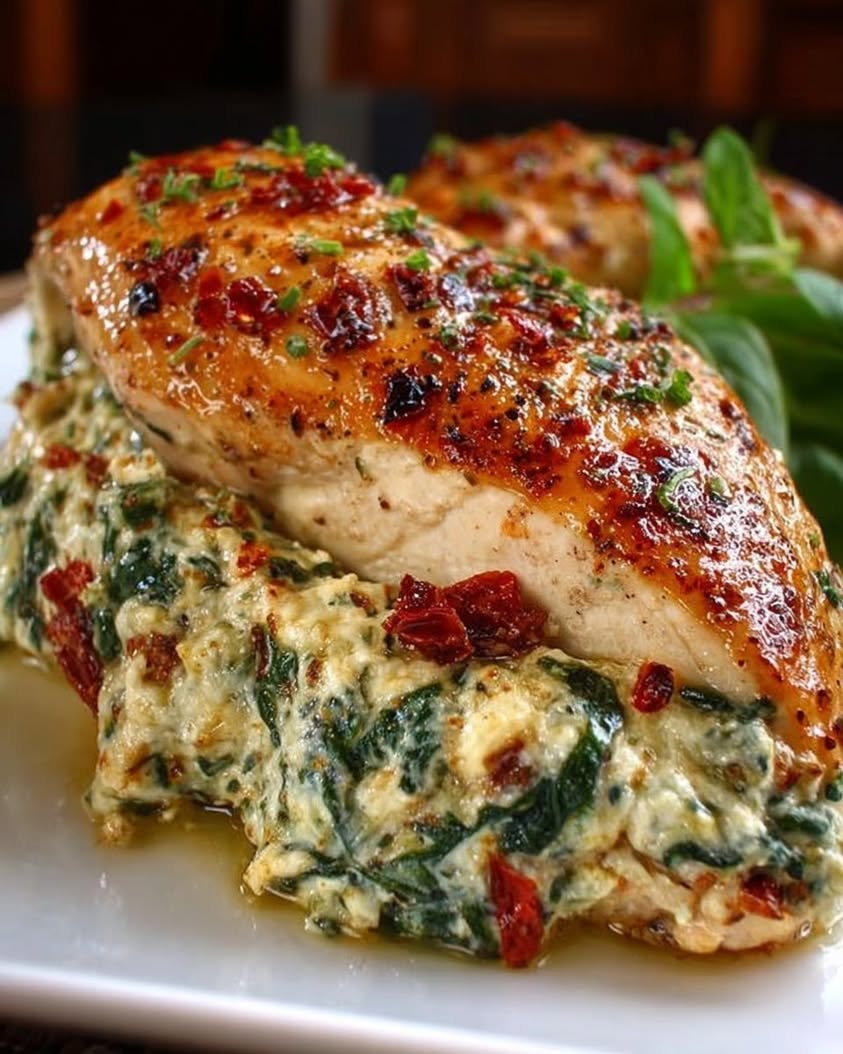
- Visual Appeal: This dish is visually stunning. The golden-brown chicken breast sits proudly on the plate. When sliced, the vibrant green spinach, creamy white cheese, and deep red sun-dried tomatoes create a beautiful mosaic against the white meat, making for an impressive presentation.
- Skill Level Needed: You will need basic knife skills to butterfly the chicken and chop the spinach. The stuffing and rolling require a gentle touch, but the technique is easy to learn. Overall, this recipe is approachable for confident beginners and intermediate cooks.
- Special Equipment: You will need a sharp chef’s knife, a cutting board, kitchen twine or toothpicks for securing the chicken, and a large oven-safe skillet. A meat thermometer is highly recommended to ensure the chicken reaches a safe internal temperature without overcooking.
Recipe Overview
- Difficulty Level: This recipe is rated as medium difficulty due to the need to butterfly the chicken breast without cutting all the way through. Additionally, you must be careful when stuffing and sealing the chicken to prevent the filling from leaking. However, with clear instructions, anyone can succeed. The cooking process itself is straightforward, involving a quick sear followed by oven baking.
- Category: This stuffed chicken falls under the main dish category, specifically for dinner. It pairs wonderfully with pasta, rice, or a simple side salad. It is hearty enough for a satisfying family meal yet elegant enough for entertaining guests at a dinner party.
- Cuisine: This recipe draws inspiration from Italian-American cuisine. The combination of spinach, cheese, and sun-dried tomatoes is a classic flavor trio found in many Italian dishes. The technique of stuffing meats is also common in Italian cooking, where flavors are layered to create a complete meal in one protein.
- Cost: The approximate cost for this recipe is moderate. Chicken breasts are a relatively affordable protein. Cheese, spinach, and sun-dried tomatoes can vary in price but are generally budget-friendly. The total cost for four servings should be less than a similar restaurant entree, making it a cost-effective choice for a special meal.
- Season: While available year-round, this dish is perfect for any season. In the colder months, the warm, cheesy filling is comforting and hearty. During spring and summer, the vibrant flavors of spinach and tomatoes feel fresh and light. It is a versatile recipe that works beautifully in any weather.
- Occasion: This cheesy spinach-stuffed chicken is ideal for many occasions. It works for a romantic date night at home, a family Sunday dinner, or a holiday gathering. Because it looks impressive but is not overly complicated, it also works well for meal prepping lunches for the week.
Why You’ll Love This Recipe
The taste and texture appeal of this The Ultimate Cheesy Spinach-Stuffed Chicken with Sun-Dried Tomato Recipe is undeniable. The combination of creamy, melted cheese with the slight earthiness of spinach is a classic pairing for a reason. The sun-dried tomatoes add a concentrated burst of sweet and tangy flavor that cuts through the richness. Furthermore, the chicken itself remains incredibly moist and tender, thanks to the protective layer of filling and the quick cooking method. Each bite offers a delightful contrast between the savory exterior and the luscious interior, making this a meal that truly satisfies all your cravings.
Convenience and preparation benefits make this dish a winner for busy home cooks. The active preparation time is only about 20 minutes, which includes butterflying the chicken and mixing the filling. After that, the oven does most of the work. You can easily prepare the chicken several hours in advance, stuff it, and refrigerate it until you are ready to cook. This make-ahead capability allows you to manage your time efficiently. Consequently, a gourmet meal can be on your table in under an hour with minimal fuss.
Nutritional advantages are another strong selling point. Chicken breast is a fantastic source of lean protein, which helps build muscle and keeps you feeling full. Spinach is a powerhouse of vitamins, minerals, and antioxidants. Sun-dried tomatoes offer lycopene and fiber. Cheese provides calcium and protein. This meal is naturally low in carbohydrates, making it suitable for lower-carb or keto lifestyles. So, you can enjoy a rich, flavorful dinner without compromising your nutritional goals. It is a balanced meal that supports overall wellness.
Social and entertaining value should not be underestimated. This cheesy spinach-stuffed chicken recipe is a guaranteed crowd-pleaser. The presentation is stunning, especially when you slice the chicken to reveal the colorful filling. Your guests will be impressed by the elegant look and the complex flavors. Yet, the recipe is straightforward enough that you can relax and enjoy your own party. It pairs beautifully with a variety of sides and wines, making it a versatile centerpiece for any gathering. You will receive compliments and requests for the recipe.
Cost-effectiveness and accessibility make this recipe a smart choice. The ingredients are readily available at any grocery store, often for a reasonable price. Chicken breasts are frequently on sale, and you can use frozen spinach and jarred sun-dried tomatoes to save even more. Compared to ordering similar dishes at a restaurant, making this at home saves a significant amount of money. Additionally, the recipe yields generous portions, providing excellent leftovers. Therefore, you get high-end flavor and presentation for a fraction of the cost.
Historical Background and Cultural Significance
The origin of stuffed chicken dishes can be traced back to the art of “farce,” a French cooking technique of stuffing meats and vegetables. This method was used to make tougher cuts of meat more palatable and to incorporate leftover ingredients. Over time, the technique spread across Europe. Specifically, in Italy, the practice of stuffing meats like chicken, veal, and pork with cheese, herbs, and vegetables became deeply ingrained in the regional cuisine. The use of spinach and cheese in a filling is a staple of many Italian dishes, reflecting the importance of simple, high-quality ingredients.
The cultural importance of this style of cooking lies in its resourcefulness and emphasis on home cooking. Italian home cooks have long relied on stuffing as a way to create a complete, satisfying meal from a single protein source. It allows for the use of seasonal vegetables and leftover cheeses, minimizing waste. Furthermore, dishes like this one are often reserved for Sunday dinners or special family celebrations, representing a sense of care and tradition. The act of carefully preparing and stuffing the chicken is an expression of love for the people you are feeding.
The evolution of this specific recipe, featuring sun-dried tomatoes, is a more modern adaptation. Sun-dried tomatoes became popular in the United States during the 1980s and 1990s, bringing a concentrated, sweet-tart flavor to Italian-inspired dishes. Adding them to the classic spinach-cheese stuffing created a new flavor profile that quickly became a favorite. This evolution shows how traditional recipes can be updated with new ingredients to keep them exciting and relevant for contemporary palates. The combination is now a classic in its own right.
Regional variations of stuffed chicken exist across many cultures. In Greek cuisine, you might find chicken stuffed with feta cheese, spinach, and pine nuts. In the American South, chicken is often stuffed with cornbread and herbs. In the Caribbean, you might encounter chicken stuffed with spiced rice and vegetables. This shows that the technique of stuffing chicken is a universal concept. Each culture adapts it with local ingredients and flavors. This recipe, with its Italian-inspired filling, is a testament to the global appeal and versatile nature of the stuffed chicken breast.
Ingredient Deep Dive
Chicken breast is the star of this dish. Culturally, chicken is a versatile and universally loved protein found in nearly every cuisine. For this recipe, boneless, skinless chicken breasts are ideal as they provide a clean canvas for the filling. Nutritionally, chicken breast is an excellent source of lean protein, essential for muscle repair and growth. It is also low in fat and calories when compared to red meats. When selecting chicken, look for breasts that are plump and uniform in thickness, which helps them cook evenly. Store raw chicken in the coldest part of the refrigerator and use it within two days. You can substitute boneless chicken thighs, but they will have a different texture and fat content.
Spinach brings a vibrant green color and earthy flavor to the filling. This leafy green is a powerhouse of nutrients, including iron, calcium, vitamins A, C, and K, and antioxidants. It has been cultivated for centuries and has roots in Persian cuisine. For this recipe, frozen chopped spinach is highly convenient because it is pre-wilting the spinach for you. Alternatively, fresh baby spinach can be quickly sauteed until wilted. When choosing fresh spinach, look for crisp, dark green leaves without yellowing. Store it in a plastic bag in the refrigerator. Sun-dried tomatoes or sauteed mushrooms can work as a substitute, though the flavor will change significantly.
Cheese is the essential creamy element. This recipe calls for a combination of cream cheese and mozzarella or provolone. Cream cheese provides a smooth, tangy base that binds the filling. Mozzarella adds that classic, gooey stretch. Provolone offers a sharper, slightly smoky flavor. Culturally, cheese has been a staple in Mediterranean diets for millennia. Nutritionally, cheese provides calcium, protein, and fat. For the best flavor, use full-fat cream cheese and freshly shredded mozzarella, as pre-shredded cheese contains anti-caking agents that can hinder melting. Store cheese tightly wrapped in the refrigerator. For a dairy-free version, use vegan cream cheese and dairy-free mozzarella shreds, but the texture will differ.
Sun-dried tomatoes are the surprising flavor hero. These intensely flavored tomatoes have been dried to concentrate their sweetness and acidity. They originated in Italy, where they are a summer staple. They add a chewy texture and a deep, savory umami note that balances the richness of the cheese and chicken. Nutritionally, they are rich in lycopene, fiber, and vitamins. Look for sun-dried tomatoes packed in oil, as they are softer and more flavorful. If you have dry-packed ones, rehydrate them in warm water or oil before using. Store opened jars in the refrigerator. Roasted red peppers can be used as a substitute, but the flavor will be milder.
Common Mistakes to Avoid
- One common mistake is not butterflying the chicken correctly, creating a pocket that is either too shallow or cutting all the way through. A too shallow pocket will not hold enough filling, while a cut all the way through will cause the filling to leak. Therefore, use a sharp knife and a steady hand, cutting horizontally from the thickest side and stopping about half an inch from the opposite edge.
- Another mistake is overfilling the chicken pocket. While it is tempting to add a lot of filling, too much will cause the chicken to bulge and the filling to spill out during cooking. Consequently, use a generous but moderate amount, about 2 to 3 tablespoons per breast, and seal the opening firmly with toothpicks or kitchen twine.
- Failing to season the chicken properly is a major oversight. The chicken itself needs salt and pepper to bring out its flavor. If you only season the filling, the exterior of the chicken will taste bland. So, season the inside of the pocket as well as the outside of the breast before cooking.
- Using low-quality or pre-shredded cheese can ruin the texture of the filling. Pre-shredded cheese often has a coating that prevents it from melting smoothly, resulting in a gritty texture. Always shred your own mozzarella or provolone for a creamy, cohesive filling.
- Skipping the searing step is a common error. While you could bake the chicken directly, searing it first in a hot skillet creates a beautiful golden crust and adds deep, savory flavor. This browning, known as the Maillard reaction, is essential for the best taste.
- Overcooking the chicken is perhaps the biggest mistake. Chicken breast is lean and can dry out quickly. Use a meat thermometer to ensure the internal temperature reaches 165 degrees Fahrenheit. Remove it from the oven the moment it hits this temperature to keep it juicy.
- Not allowing the chicken to rest after cooking is another frequent error. Resting for 5 minutes allows the juices to redistribute throughout the meat. If you cut into it immediately, the juices will run out, leaving the chicken dry. Patience is key for a moist result.
- Using frozen chicken that has not been fully thawed can lead to uneven cooking. The outside will cook too quickly while the inside remains undercooked. Thaw chicken completely in the refrigerator before beginning. This step ensures even cooking and food safety.
Essential Techniques
Butterflying a chicken breast is the foundational technique for this recipe. It involves cutting the thickest part of the breast horizontally, almost all the way through, to create a flat, even piece that can be stuffed and folded. This technique is important because it creates a pocket for the filling and ensures the chicken cooks evenly. To master it, place the chicken on a cutting board with your hand flat on top. Using a sharp chef’s knife, slice into the thickest side of the breast. Keep the knife parallel to the board and move it gently, stopping about half an inch from the opposite edge. Open the breast like a book. If the breast is still uneven, place it between two sheets of plastic wrap and pound it gently with a rolling pin to an even thickness of about 1/4 inch. This step ensures the final dish cooks uniformly.
Properly sealing the stuffed chicken is crucial to prevent the filling from escaping during cooking. After placing the filling in the center of the butterflied breast, fold the top half over the filling. The goal is to enclose the cheese mixture completely. The best method is to use several toothpicks to secure the seam. Insert them at a slight angle, about an inch apart, to hold the chicken closed. Alternatively, you can tie the chicken with kitchen twine, which provides an even more secure seal. A common pitfall is using too few toothpicks, which allows the chicken to spring open. Therefore, use at least three or four toothpicks per breast. Visual cues for success include the filling being fully hidden and the chicken holding its shape when handled.
Searing the chicken in a hot skillet is a critical step that builds incredible flavor. This technique creates a golden-brown crust on the outside of the chicken through the Maillard reaction. To master this, heat a tablespoon of olive oil in a large oven-safe skillet over medium-high heat until it shimmers. Carefully place the stuffed chicken breasts in the hot skillet, seam-side down first. Cook without moving them for about 3 to 4 minutes, until the bottom is deep golden brown. Then, carefully flip and sear the other side for another 2 to 3 minutes. A common pitfall is overcrowding the pan, which lowers the temperature and steams the chicken instead of searing it. Cook in batches if necessary. Visual cues for success include a rich, brown crust and the chicken releasing easily from the pan.
Pro Tips for Perfect Cheesy Spinach-Stuffed Chicken
First, ensure your spinach is as dry as possible before mixing it into the filling. Excess moisture from the spinach will make the filling watery and can cause the chicken to steam rather than sear. Therefore, after thawing frozen spinach, squeeze it in a clean kitchen towel until no more liquid comes out.
Second, let the cream cheese come to room temperature before mixing. Softened cream cheese blends more easily with the other ingredients, creating a smooth, homogenous filling. Cold cream cheese will be lumpy and difficult to spread within the chicken pocket.
Third, season the inside of the chicken pocket as well as the outside. This extra step ensures that every bite of the chicken is flavorful. Simply sprinkle a pinch of salt and pepper inside the butterflied breast before adding the filling.
Fourth, use a meat thermometer to guarantee perfectly cooked chicken. The USDA recommends an internal temperature of 165 degrees Fahrenheit. Insert the thermometer into the thickest part of the breast without touching the filling. This ensures food safety and prevents dryness.
Fifth, let the chicken rest for at least 5 minutes after baking. This resting period allows the juices to redistribute throughout the meat, resulting in a moister and more tender final product. Tent the chicken loosely with foil to keep it warm.
Sixth, if you are short on time, you can prepare the filling up to two days in advance. Store it in an airtight container in the refrigerator. When you are ready to cook, simply stuff the chicken and proceed with the recipe. This makes weeknight cooking even easier.
Seventh, consider adding a sprinkle of red pepper flakes to the filling for a subtle kick of heat. The slight spiciness complements the creamy cheese and sweet sun-dried tomatoes beautifully. Adjust the amount to your personal preference for heat.
Eighth, for an extra crispy crust, coat the stuffed chicken lightly in breadcrumbs before searing. Dredge the stuffed and sealed chicken in seasoned breadcrumbs mixed with a little grated Parmesan. This creates a wonderfully crunchy exterior that contrasts with the soft filling.
Variations and Adaptations
Regional variations of stuffed chicken are vast and exciting. For a Mexican-inspired twist, fill the chicken with a mixture of Monterey Jack cheese, chopped cilantro, and roasted poblano peppers. Serve it with a side of salsa verde and rice. For a Mediterranean version, use feta cheese, kalamata olives, and fresh oregano. The salty feta and briny olives create a bold, tangy flavor that is delicious with a side of roasted vegetables. These adaptations show the versatility of the stuffing technique.
Seasonal adaptations can keep this recipe fresh all year. In the spring, add sauteed asparagus and fresh peas to the filling. The bright, green flavors pair perfectly with the cheese. In the fall, incorporate roasted butternut squash or sauteed mushrooms with fresh sage. The earthy sweetness of the squash and the woodsy aroma of sage add a cozy, autumn feel. These seasonal changes make the dish feel new each time.
Dietary modifications make this recipe accessible to many. For a low-carb or keto version, simply omit any breadcrumb coating and focus on the cheese and spinach filling. The recipe is naturally very low in carbohydrates. For a dairy-free adaptation, use a high-quality dairy-free cream cheese and dairy-free mozzarella shreds. Coconut cream cheese can work well, providing a similar tangy base. The texture may be slightly less gooey, but the flavor will still be fantastic.
Flavor variations allow for endless creativity. Instead of sun-dried tomatoes, use roasted red peppers for a milder, sweeter flavor. Add fresh basil or rosemary to the filling for an herbal note. For a more intense cheesy flavor, use a mix of sharp provolone and Parmesan. You can also add a tablespoon of pesto to the cream cheese mixture for a vibrant green color and a garlicky, nutty taste. Each small change creates a new and exciting dish.
Serving and Presentation Guide
Plating techniques for this dish can transform a simple meal into an elegant presentation. Place the rested chicken breast in the center of a warm plate. For a beautiful look, slice the chicken diagonally into 1-inch thick pieces, revealing the vibrant spiral of green, white, and red colors. Fan the slices out slightly for a dramatic effect. Alternatively, you can serve the chicken whole, with the golden crust on full display. A drizzle of balsamic glaze over the top adds a touch of acidity and visual appeal.
Garnishing ideas can elevate the dish further. A sprinkle of fresh, chopped parsley or basil adds a pop of green and a fresh, herbal aroma. Crumbled feta cheese or shaved Parmesan on top provides an extra layer of salty flavor. Toasted pine nuts or slivered almonds add a delightful crunch. A light drizzle of high-quality extra virgin olive oil right before serving adds richness and a glossy sheen. Keep garnishes simple to let the flavors of the main dish shine.
Traditional accompaniments for this Italian-inspired dish include a side of pasta tossed in a light tomato sauce or a garlic butter sauce. Creamy polenta or risotto also pair beautifully, soaking up the juices from the chicken. A simple green salad with a lemon vinaigrette provides a fresh, acidic contrast to the rich chicken. Roasted vegetables like asparagus, zucchini, or bell peppers make a colorful and healthy side dish. These accompaniments create a well-rounded meal.
Wine and Beverage Pairing
Wine pairings for this chicken dish are wonderfully versatile. A medium-bodied red wine like a Chianti or a Pinot Noir complements the savory flavors of the chicken and sun-dried tomatoes without overpowering the delicate cheese. The acidity in these wines cuts through the richness of the filling. A crisp, unoaked white wine like a Sauvignon Blanc or a Vermentino also works well, especially if you prefer white wine. The herbal notes in the wine mirror the spinach and herbs in the filling. For a special occasion, a dry sparkling wine like a Prosecco or a Cava provides a festive and palate-cleansing option.
Non-alcoholic alternatives are just as delightful. A rich, unsweetened iced tea with a squeeze of lemon offers a refreshing and slightly tannic note that pairs nicely with the dish. A sparkling water with a splash of cranberry or pomegranate juice mimics the acidity of wine and cuts through the cheese. For a warm option, a herbal tea like chamomile or mint can be a soothing after-dinner drink. If you are feeling festive, a virgin Bloody Mary with its tomato base and savory spices is a fantastic pairing for the sun-dried tomato flavors.
Storage and Shelf Life
Proper storage methods are essential for food safety and maintaining quality. Store any leftover cooked chicken in an airtight container. Place it in the refrigerator within two hours of cooking. The chicken will stay fresh for up to four days. For best texture, avoid stacking the chicken pieces on top of each other, as this can cause the crust to become soggy. Instead, place them in a single layer in the container, or separate layers with parchment paper.
Reheating instructions will help you enjoy the leftovers without drying out the chicken. The best method is to reheat the chicken in the oven at 350 degrees Fahrenheit for about 10 minutes. Place the chicken on a wire rack over a baking sheet to allow air to circulate. This helps the crust stay crispy. Alternatively, you can reheat it in a skillet over medium heat with a splash of chicken broth or water, covered, until warmed through. The microwave is the least preferred method, as it can make the chicken tough and rubbery. If you must microwave, do so in short bursts at 50% power.
Make Ahead Strategies
Prep timeline is a key strategy for busy cooks. You can prepare the filling up to two days in advance. Simply mix the cream cheese, shredded mozzarella, drained spinach, and chopped sun-dried tomatoes in a bowl. Store it tightly covered in the refrigerator. When you are ready to cook, all you need to do is butterfly the chicken, stuff it, and proceed with the recipe. This significantly cuts down on active cooking time.
Storage between steps requires careful planning. You can also fully assemble the stuffed chicken breasts a day ahead. After stuffing and sealing the chicken with toothpicks, place them on a plate and cover tightly with plastic wrap. Refrigerate for up to 24 hours. When you are ready to cook, let them sit at room temperature for 15 minutes while you preheat the oven and skillet. This allows for a more even sear. The quality impact is minimal, and the flavors actually meld together slightly more.
Scaling Instructions
Halving the recipe is easy for smaller households. Simply divide all ingredient quantities by two. You will need two chicken breasts instead of four. The cooking time will remain roughly the same, but you should start checking for doneness a few minutes earlier, as the smaller pieces may cook faster. Use a smaller skillet to ensure a proper sear.
Doubling or tripling the recipe for a crowd requires some adjustments. You will need a very large skillet or two separate skillets to avoid overcrowding. Overcrowding the pan lowers the temperature and prevents a good sear. Cook the chicken in batches. The baking time may increase slightly if you crowd the chicken in the oven. Use a meat thermometer to check for doneness in the thickest piece. Storage considerations are important; leftovers should be cooled quickly and refrigerated in shallow containers.
Nutritional Deep Dive
This meal provides a healthy balance of macronutrients. A standard serving of one stuffed chicken breast contains approximately 35 to 40 grams of protein, making it an excellent choice for muscle maintenance and satiety. The fat content is moderate, around 15 to 20 grams, coming primarily from the cheese and olive oil. The carbohydrates are low, roughly 5 to 10 grams, mostly from the sun-dried tomatoes and spinach. This makes it a great option for low-carb and keto diets. The protein keeps you full for hours, while the fat provides flavor and helps the body absorb fat-soluble vitamins.
Micronutrient analysis reveals the dish is packed with important vitamins and minerals. Spinach provides a significant amount of iron, which is crucial for oxygen transport in the blood. It is also rich in vitamin K for bone health and vitamin A for immune function. Sun-dried tomatoes are an excellent source of lycopene, a powerful antioxidant linked to heart health and cancer prevention. The cheese contributes calcium and phosphorus, essential for strong bones and teeth. This dish is a nutrient-dense choice that supports overall wellness.
Dietary Adaptations
For a gluten-free version, this recipe is naturally gluten-free as written. No modifications are needed. However, be careful with any added breadcrumbs. If you choose to coat the chicken in breadcrumbs for extra crunch, use gluten-free breadcrumbs or almond flour instead. Check labels on sun-dried tomatoes to ensure they are not processed with gluten-containing ingredients.
For a dairy-free adaptation, you will need to substitute the cheese. Use a high-quality vegan cream cheese as a base for the filling. Look for a dairy-free mozzarella shreds that melts well. Brands made with cashew or coconut milk tend to melt better. The texture will be slightly different, less stretchy, but the flavor will still be creamy and delicious. Adding a tablespoon of nutritional yeast to the filling can provide a cheesy flavor.
For a low-carb and keto version, this recipe is already suitable. The main ingredients are low in carbohydrates. To reduce carbs even further, ensure the sun-dried tomatoes are not packed in oil with added sugar. Some brands add sugar for sweetness, so check labels. Serve with a side of roasted broccoli or cauliflower instead of rice or pasta.
Troubleshooting Guide
If your chicken is dry after cooking, you likely overcooked it. The most common cause is leaving it in the oven too long. Always use a meat thermometer to remove it at precisely 165 degrees Fahrenheit. Another cause could be using chicken breasts that are too thin, which cook too quickly. Try buying thicker breasts or pounding them to an even thickness to ensure consistent cooking.
If the filling leaks out during cooking, the chicken was not sealed properly. Ensure you use enough toothpicks or secure kitchen twine tightly. Another reason could be that you overfilled the pocket. Use a moderate amount of filling. Finally, searing the chicken seam-side down first helps to seal the seam closed as the proteins cook and contract.
If the cheese is not melted in the center, the chicken may have been cooked too quickly. The oven temperature might be too high, cooking the outside before the inside. Ensure your oven is calibrated correctly and use the recommended oven temperature of 375 degrees Fahrenheit. Letting the chicken rest for 5 minutes after baking also allows residual heat to continue melting the cheese in the center.
Recipe Success Stories
Many home cooks have shared their success with this cheesy spinach-stuffed chicken recipe. One reader commented that they made it for their in-laws for the first time and received rave reviews. They noted that the recipe was easy to follow and that the chicken turned out incredibly moist. They especially loved the visual impact of slicing the breast at the table. The sun-dried tomatoes were a hit, adding a flavor they had not tried in stuffed chicken before.
Another adaptation story comes from a reader who substituted the mozzarella with gouda and added a touch of smoked paprika to the filling. They reported that the smoky flavor paired beautifully with the sun-dried tomatoes and elevated the dish to a new level. They served it with a side of creamy mashed potatoes and a simple arugula salad. This demonstrates how a simple substitution can create a completely new and delicious variation. The reader promised to make it again for their next dinner party.
Frequently Asked Questions
Can I use frozen spinach for this recipe? Yes, frozen chopped spinach is actually preferred. Just make sure to thaw it completely and squeeze out all the excess water before adding it to the filling. This prevents the filling from becoming watery and helps the chicken sear better.
Can I use chicken thighs instead of breasts? Yes, boneless, skinless chicken thighs can be used. They are more forgiving and less likely to dry out. However, they are smaller and may require a different stuffing technique. You can flatten them slightly with a mallet and roll them up with the filling inside.
How do I keep the chicken from drying out? The most important step is to not overcook it. Use a meat thermometer and remove the chicken from the oven when it reaches 165 degrees Fahrenheit. The filling also helps keep the meat moist. Allowing the chicken to rest for 5 minutes after cooking is also crucial.
Can I make this dish without an oven-safe skillet? Yes, you can sear the chicken in a regular skillet and then transfer it to a baking dish to finish cooking in the oven. Just make sure the baking dish is large enough to hold the chicken without crowding.
What can I substitute for sun-dried tomatoes? Roasted red peppers are an excellent substitute. They offer a similar sweetness and slight tang. You can also use chopped jarred artichoke hearts or even fresh cherry tomatoes that have been roasted first to concentrate their flavor.
How long do leftovers last? Leftover chicken can be stored in an airtight container in the refrigerator for up to four days. For the best texture, reheat leftovers in the oven or a skillet rather than the microwave.
Can I freeze stuffed chicken? Yes, you can freeze it either before or after cooking. To freeze uncooked, assemble the chicken, wrap each breast tightly in plastic wrap, and then place in a freezer bag. Thaw in the refrigerator overnight before cooking. Cooked chicken can Print
Cheesy Spinach-Stuffed Chicken with Sun-Dried Tomato Flavor
- Total Time: 45 minutes
- Yield: 4
Description
Juicy chicken breasts filled with a creamy blend of spinach, cheeses, and sun-dried tomatoes, then baked to golden perfection. A flavorful and satisfying main dish.
Ingredients
- 4 boneless, skinless chicken breasts
- 1 cup chopped frozen spinach, thawed and drained
- 1/2 cup sun-dried tomatoes in oil, drained and chopped
- 4 ounces cream cheese, softened
- 1/2 cup shredded mozzarella cheese
- 1/4 cup grated Parmesan cheese
- 2 cloves garlic, minced
- 1/2 teaspoon salt
- 1/4 teaspoon black pepper
- 1/4 teaspoon red pepper flakes (optional)
- 2 tablespoons olive oil
Instructions
- Preheat oven to 375°F (190°C).
- In a medium bowl, combine spinach, sun-dried tomatoes, cream cheese, mozzarella, Parmesan, garlic, salt, pepper, and red pepper flakes. Mix well.
- Cut a pocket into the side of each chicken breast without cutting all the way through. Stuff each pocket with the cheese-spinach mixture, pressing gently to close.
- Heat olive oil in an oven-safe skillet over medium-high heat. Sear chicken breasts for 2-3 minutes per side until golden.
- Transfer skillet to the oven and bake for 20-25 minutes, or until chicken is cooked through and internal temperature reaches 165°F.
- Let rest for 5 minutes before serving.
Notes
You can customize the seasonings to taste.
- Prep Time: 15 minutes
- Cook Time: 30 minutes
- Method: Main
- Cuisine: Italian-American