The Ultimate Tender Chuck Roast with Hearty Mushroom Gravy Recipe
Imagine a fork sliding through a perfectly cooked piece of beef. You get that rich, savory aroma filling your entire kitchen. This tender chuck roast with carrots and potatoes, all swimming in a velvety mushroom gravy, delivers that exact experience. It is not just a meal; it is a comforting hug on a plate. The beef becomes incredibly tender after a long, slow braise, so it pulls apart with minimal effort. Meanwhile, the carrots and potatoes soak up all those beefy juices, becoming sweet and caramelized. The mushroom gravy, made from the pan drippings and earthy cremini mushrooms, ties everything together with a deep, umami flavor that feels luxurious. Everyone will think you spent hours on a fancy technique.
But here is the beautiful secret. This tender chuck roast with carrots and potatoes actually requires very little hands-on work. You mainly need patience while the oven does its magic. After a quick sear on the stovetop, you simply place everything in a Dutch oven and let it braise low and slow. The result is a fork-tender roast that rivals any holiday dinner. You get perfectly cooked vegetables and a gravy that is so rich, you will want to eat it with a spoon. This tender chuck roast recipe is truly the undisputed king of comfort food. It is the perfect centerpiece for a Sunday dinner. Moreover, it is a fantastic way to feed a crowd without spending all day in the kitchen. The flavors deepen and meld together, creating a symphony of savory goodness.
When you pull this roast from the oven, the room fills with an irresistible aroma. It smells like warmth, family, and tradition. The beef is fall-apart tender, and the carrots are soft and sweet. The potatoes are perfectly creamy on the inside and slightly crisp on the edges. The mushroom gravy, thick and glossy, coats every single bite. This is not just a recipe; it is an experience. It is a meal that brings people together around the table. You will feel proud serving it. And your family will feel loved eating it. Let’s walk through every step to guarantee your success with this ultimate tender chuck roast with mushroom gravy.
Quick Recipe Highlights
- Flavor Profile: This dish delivers a robust, savory flavor with deep umami notes from the mushrooms and beef. You get a subtle sweetness from the caramelized carrots and onions. The overall taste is rich, hearty, and perfectly balanced.
- Texture: The texture is a study in contrasts. The beef is incredibly tender and shreds like butter. The carrots are soft and yielding. The potatoes are tender and fluffy inside. Finally, the gravy is silky and smooth.
- Aroma: Your kitchen will smell like an old-world tavern with notes of seared beef, earthy mushrooms, and aromatic thyme. The scent of roasting vegetables and caramelizing onions is purely intoxicating.
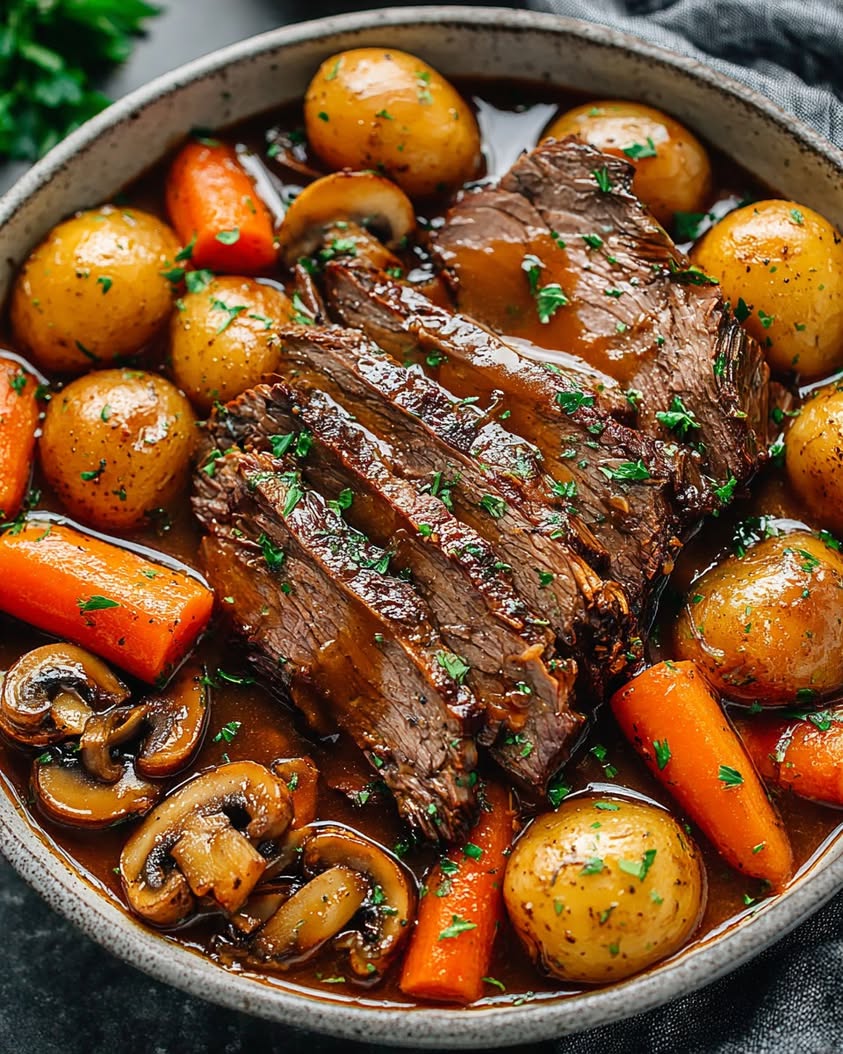
- Visual Appeal: This dish presents beautifully. You see a large, browned chunk of beef surrounded by glazed orange carrots and golden potatoes. The rich, dark brown gravy blankets everything, making it look glossy and irresistible.
- Skill Level Needed: You do not need to be a professional chef for this recipe. Basic knife skills and patience with a Dutch oven are all you need. The technique is straightforward, but the result is impressive.
- Special Equipment: A large, heavy-bottomed Dutch oven is essential. It provides even heat distribution and a tight-fitting lid. You will also need a sharp knife, a cutting board, and measuring spoons.
Recipe Overview
- Difficulty Level: We rate this as medium difficulty. The steps are simple, but the recipe requires careful timing for the sear and the long braise. The biggest challenge is patience, not technique. You must trust the process and resist the urge to peek.
- Category: This dish is a classic main course. It works beautifully for a hearty family dinner, a special Sunday supper, or a festive holiday meal. It can even be part of a meal prep strategy for the week.
- Cuisine: This dish draws inspiration from classic American pot roast and French daube. It combines the rustic simplicity of American cooking with the refined elegance of French braising techniques. The addition of a mushroom gravy adds an earthy, European flair.
- Cost: Chuck roast is one of the most cost-effective cuts of beef, making this a budget-friendly feast. You typically get a large amount of meat for a relatively low price. The vegetables and mushrooms are also very affordable.
- Season: This is primarily a fall and winter dish. It is incredibly warming and comforting during cold months. However, you can enjoy it any time of year for a satisfying meal.
- Occasion: This meal is perfect for a cozy family gathering, a dinner party with friends, or a celebratory holiday dinner. It impresses without causing the cook stress. It is also great for meal prep, as the flavors get even better the next day.
Why You Will Love This Recipe
First, the taste and texture are utterly unforgettable. The beef becomes so tender that it almost melts in your mouth. You get a rich, beefy flavor that is deeply satisfying. The carrots and potatoes absorb the savory broth, turning into sweet, creamy morsels. The mushroom gravy is the crown jewel, adding an earthy, luxurious depth that elevates the entire dish. It is a perfect symphony of flavors and textures.
Second, the convenience and preparation benefits are huge. After the initial sear, the oven does all the work. You simply walk away and let it braise. This frees you up to prepare a salad, set the table, or simply relax with a glass of wine. It is a low-effort, high-reward meal that fits perfectly into a busy lifestyle.
Third, the nutritional advantages are often overlooked. Chuck roast is a good source of protein and iron. The carrots and potatoes provide fiber, vitamins, and complex carbohydrates. The mushrooms add additional vitamins and minerals. This meal is a balanced, wholesome plate that satisfies your hunger and nourishes your body.
Fourth, this recipe has incredible social and entertaining value. It is a showstopper. When you bring that Dutch oven to the table and open the lid, the aroma hits everyone. They will be impressed. It creates a communal dining experience where people pass platters and share the meal. It is the kind of food that builds memories.
Fifth, the cost-effectiveness and accessibility are unbeatable. Chuck roast is a tough cut of meat, but braising transforms it into a tender delicacy. This makes it much cheaper than using a tenderloin or ribeye. The other ingredients are pantry staples. You can feed eight people well for a very reasonable price. This recipe proves you do not need to spend a fortune to eat like royalty.
Historical Background and Cultural Significance
The pot roast has a long and storied history. It originated as a way to tenderize tough, inexpensive cuts of meat by cooking them slowly in liquid. This technique was essential for many cultures. In the United States, it became a staple of home cooking during the Great Depression. Families needed to stretch their food budget, and a pot roast could feed many on a small budget.
Pot roast is more than just a recipe; it is a cultural icon. It represents family dinners and Sunday gatherings. It symbolizes warmth, abundance, and the love of a home cook. For many, the smell of a pot roast simmering in the oven is the smell of childhood. It is a taste of nostalgia and comfort. It connects us to our grandparents and a simpler time.
The recipe has evolved over generations. Early versions were simple, with just beef, water, and some salt. Over time, cooks added vegetables like carrots, potatoes, and onions. The introduction of canned soups for gravy was a mid-century innovation. Today, we have returned to making from-scratch gravies, using mushrooms for a more sophisticated flavor. The technique of searing the meat first was a game-changer, adding a layer of deep flavor called the Maillard reaction.
Regional variations are fascinating. In the American South, you might see a pot roast seasoned with a dry rub and slow-cooked with collard greens. In New England, they often cook it with root vegetables like parsnips and turnips. The Jewish version, known as brisket, is cooked with a sweet and sour sauce. In France, the dish is called a daube, which uses wine and herbs. This variation with mushroom gravy is a modern classic that honors all those traditions while adding a luxurious twist.
Ingredient Deep Dive
Chuck roast is the hero of this dish. It comes from the shoulder area of the cow. This region gets a lot of exercise. That is why it is full of connective tissue and marbling. When cooked slowly, that collagen breaks down into gelatin. This process creates an incredibly tender texture and a silky mouthfeel. It also gives the gravy body. Nutritionally, it is a great source of iron and B vitamins. When you buy chuck roast, look for one with good marbling, which is the white streaks of fat. Those streaks add flavor and moisture during cooking. You want a roast that is thick and even in shape. Store it in the coldest part of your fridge until you are ready to use it. If you cannot find chuck roast, you can substitute a bottom round roast. However, the results will be less tender. Brisket is another excellent substitute.
Mushrooms are the key players in the gravy. They add a deep, savory umami note that is impossible to replicate. Cremini mushrooms are our top choice. They have a firmer texture and a stronger, earthier flavor than white button mushrooms. They are also packed with nutrients like selenium and B vitamins. When selecting mushrooms, look for ones that are firm and dry. Avoid slimy or wrinkled mushrooms. You can store them in a paper bag in the fridge for up to a week. If you want a more intense flavor, you can add dried porcini mushrooms. Soak them in warm water first, then use both the mushrooms and the soaking liquid in your gravy. You could also use shiitake mushrooms for a different flavor profile.
Carrots and potatoes are the supporting actors that become stars. Carrots add a natural sweetness that balances the savory beef and mushrooms. They are also packed with beta-carotene and fiber. Select carrots that are firm and brightly colored. Store them in the fridge in a plastic bag. Potatoes, especially Yukon Gold or red potatoes, add a creamy, comforting element. They hold their shape well during the long braise. Look for potatoes that are firm, smooth, and free of green spots. Store them in a cool, dark, dry place away from onions. You can substitute carrots with parsnips for a more peppery flavor. Sweet potatoes also work, but they will sweeten the gravy more. For the potatoes, you could use russets, but they tend to break down and become mushy.
Beef broth and aromatics complete the flavor profile. A high-quality beef broth, ideally low-sodium, gives you control over the salt level. Homemade stock is even better. Thyme, bay leaves, and black peppercorns provide classic, aromatic warmth. Garlic and onions add a savory base. For the broth, avoid using water. That will dilute the flavor. For the aromatics, fresh thyme is much better than dried. If you must use dried, use about one teaspoon instead of four sprigs. A splash of red wine, if you have it, adds another layer of depth to the gravy. You can use a dry red like Merlot or Cabernet Sauvignon.
Common Mistakes to Avoid
- Do not skip the searing process. This step is critical for developing deep, rich flavor. The browning creates compounds that make the gravy taste incredible. You want a deep, dark crust on the roast before it goes into the oven.
- Avoid overcrowding the pot when you sear the meat. If the pot is too full, the meat will steam instead of brown. Work in batches if necessary. This ensures a proper sear on all sides.
- Do not lift the lid too often. Braising requires steam to stay inside the pot. Each time you lift the lid, you release heat and moisture. This slows down the cooking process. Trust the recipe and wait.
- Do not add too much liquid. The meat and vegetables will release their own juices. You only need enough broth to come about halfway up the meat. Too much liquid will dilute the flavor and make a watery gravy.
- Do not slice the meat immediately when it comes out of the oven. It needs to rest for at least 15 minutes. Slicing it too soon will cause the juices to run out. This leaves the meat dry. Let it rest, and you will have moist, tender slices.
- Avoid using a poor quality broth. This is the backbone of your gravy. Using a watery, artificial-tasting broth will ruin the dish. Use a good, low-sodium beef broth for the best flavor. Homemade is always ideal.
- Do not forget to strain the cooking liquid before making the gravy. There will be bits of herbs and sediment. Straining ensures a smooth, elegant gravy. You can also skim off the excess fat at this stage.
- Do not cut the vegetables too small. They will cook for a long time in the oven. Small pieces will turn into mush. Cut your carrots and potatoes into large, uniform chunks so they hold their shape.
Essential Techniques
Searing the beef is the most important technique. This process, known as the Maillard reaction, creates hundreds of new flavor compounds. It is not simply about browning the meat. It is about creating a deep, savory crust. To master it, you need a smoking hot pan and a dry surface on the meat. Pat the chuck roast very dry with paper towels. Season it generously with salt and pepper. Then, add a high-smoke-point oil like avocado or canola to the Dutch oven. Wait until you see a wisp of smoke. Place the roast in the pan and do not move it for four to five minutes. You want a deep, dark brown crust. A common pitfall is moving the meat too soon. If it sticks, it is not ready. Let it release naturally. A visual cue for success is a crust that is mahogany brown, not black. You should be able to hear a steady sizzle.
Deglazing the pan is the second essential technique. After removing the seared roast, you will see browned bits stuck to the bottom of the pot. Those bits are concentrated flavor. You need to dissolve them into the sauce. To do this, add a splash of red wine or some of your beef broth to the hot pot. Use a wooden spoon to scrape up all those caramelized bits. This process is called deglazing. It lifts the flavor into the liquid. Do not skip this step. It ensures your gravy is rich and brown. A visual cue for success is when the brown bits are completely dissolved into the liquid, and the liquid has reduced slightly.
The final technique is the low and slow braise itself. This is where the magic happens. The goal is to cook the meat in a moist environment at a low temperature. This allows the connective tissue to break down into gelatin without the meat drying out. To master it, you need a heavy pot with a tight-fitting lid. The oven temperature should be around 325 degrees Fahrenheit. You want a gentle simmer, not a rapid boil. A common pitfall is cooking at too high a temperature. This will make the meat tough. A visual cue for success is when the meat is fork-tender. You should be able to insert a fork into the meat and have it slide out with no resistance. The meat will also pull apart easily with two forks.
Pro Tips for Perfect Tender Chuck Roast with Carrots and Potatoes
First, season the chuck roast very well the night before. This dry brine allows the salt to penetrate deep into the meat. It seasons the roast from the inside out. Just sprinkle it with salt and pepper, wrap it in plastic, and leave it in the fridge. You will have a more flavorful roast.
Second, use a heavy-bottomed Dutch oven. Cast iron is the best choice. It retains heat incredibly well and distributes it evenly. This prevents hot spots and ensures a consistent braise. A good Dutch oven is an investment that will last forever.
Third, cook your mushrooms separately before adding them to the gravy. This concentrates their flavor. A quick saute in butter until they release their liquid and start to brown will make the gravy much more mushroomy. Do not just add them raw.
Fourth, add the carrots and potatoes halfway through the cooking time. If you add them at the beginning, they will be overcooked and mushy. Adding them after ninety minutes gives them time to become tender but still have structure. This is a key step for perfect vegetables.
Fifth, use a cornstarch slurry to thicken the gravy at the end. This is more reliable than a flour roux for a gluten-free option. Just mix two tablespoons of cornstarch with two tablespoons of cold water. Whisk it into the strained cooking liquid and simmer for a few minutes.
Sixth, let the roast rest for at least fifteen minutes before slicing. This step is non-negotiable. It allows the juices to redistribute throughout the meat. If you slice it right away, the juices will run out, leaving a dry roast.
Seventh, do not be afraid to adjust the seasoning at the end. The flavors will change during cooking. Taste your gravy and add salt, pepper, or a splash of balsamic vinegar for brightness. A little acidity can really balance the richness.
Eighth, make this dish a day ahead. The flavors meld and deepen overnight. It is actually better the next day. You can refrigerate the whole pot, skim the solidified fat off the top, and reheat it slowly. This also saves you stress on the day you serve it.
Variations and Adaptations
Regional variations can transform this dish. In the American Southwest, you can add a teaspoon of smoked paprika and a few dried ancho chiles to the braising liquid. This gives the gravy a wonderful smoky, mild heat. You might also add some bell peppers. In the Pacific Northwest, you could add a handful of chopped dill pickles and some sour cream at the end for a stroganoff-style dish. This is a fantastic way to use local ingredients.
Seasonal adaptations are easy and fun. In the spring, you can add fresh asparagus spears and fiddlehead ferns in the last thirty minutes of cooking. In the summer, you could use fresh tomatoes and zucchini. In the fall, root vegetables like parsnips, turnips, and celery root are perfect. You could even add some cubed butternut squash alongside the potatoes.
Dietary modifications are simple to manage. For a dairy-free version, simply use olive oil or avocado oil instead of butter for searing and sauteing the mushrooms. The rest of the recipe is naturally dairy-free as long as you use a dairy-free gravy thickener. For a gluten-free version, use cornstarch or arrowroot powder to thicken the gravy instead of a flour-based roux. Just make sure your beef broth is gluten-free.
Flavor variations are endless. Add a few anchovy fillets to the oil when you sear the beef. They will melt away and add a massive umami punch to the gravy. Try using a stout beer instead of wine for a deeper, maltier flavor. A splash of soy sauce or Worcestershire sauce can intensify the savory notes. For a herby twist, add a few sprigs of rosemary along with the thyme.
Texture modifications can change the whole feel of the dish. For a chunkier gravy, leave the sauteed mushrooms whole and do not strain the cooking liquid. For a smoother gravy, blend the cooked onions and some of the carrots into the liquid with an immersion blender. This creates a naturally thick, velvety sauce. If you want a thicker gravy, use a bit more cornstarch slurry.
Presentation alternatives can make the dish seem different each time. Serve the shredded beef on top of a bed of creamy polenta or mashed potatoes. This absorbs the gravy beautifully. You can also serve it over wide egg noodles. For a low-carb option, serve it over cauliflower mash. The beef and gravy are the stars on any base.
Serving and Presentation Guide
Plating techniques for this dish are about rustic elegance. You do not need to be fussy. The beauty is in the richness of the food. A great way to plate it is to place a generous scoop of mashed potatoes or polenta in the center of a shallow bowl. Then, arrange a few slices of the fall-apart tender chuck roast on top. Ladle a generous amount of the mushroom gravy over everything. Arrange the carrots and potatoes around the meat. This creates a beautiful, cohesive plate.
Garnishing ideas can elevate the presentation without much effort. A sprinkle of fresh, chopped parsley adds a pop of green color and a fresh, herbal note. A few fresh thyme leaves on top of the gravy look lovely. You can also add a small dollop of sour cream or creme fraiche for a tangy contrast. A final crack of black pepper is always a good idea.
Traditional accompaniments include crusty bread for sopping up every last drop of gravy. You cannot beat a good crescent roll or a warm dinner roll. A simple green salad with a bright vinaigrette provides a nice contrast to the rich, heavy flavors. Some pickled vegetables, like pickled red onions, add a needed acidity.
Modern serving suggestions can make the meal lighter. Serve the beef and gravy over a bed of sauteed spinach or kale. This adds more nutrients and a different texture. You can also make it a deconstructed dish. Serve the roast sliced on a large platter, surrounded by the vegetables, with the gravy in a separate gravy boat. This allows everyone to serve themselves.
Temperature considerations are crucial. The roast and vegetables should be served very hot. The gravy should be simmering hot when you pour it over the meat. Cold food will not taste as good. If you are serving it at a buffet, use a slow cooker on the low setting to keep everything warm. Make sure the food stays above 140 degrees Fahrenheit for safety.
Portion control tips will help you manage your family or guests. A good rule of thumb is about half a pound of chuck roast per person for a hearty serving of meat. For the vegetables, you want about one carrot and one medium potato per person. When you plate the dish, you want the meat to be the star, but do not skimp on the vegetables or gravy.
Wine and Beverage Pairing
Wine pairings are a joy with this dish. The rich, savory flavors demand a wine that can stand up to them. A full-bodied red wine is the classic choice. A good Malbec from Argentina offers notes of blackberry and plum with a smoky finish. This works beautifully. A Cabernet Sauvignon from California, with its firm tannins and dark fruit flavors, is also a perfect match. The tannins help cut through the fat of the beef. A Zinfandel, with its ripe fruit and hint of spice, is another fantastic option. For a more earthy pairing, try a Pinot Noir from Oregon. Its lower tannins and bright acidity complement the mushrooms wonderfully.
Non-alcoholic alternatives are just as satisfying. A strong, unsweetened black tea like a Ceylon or Assam offers tannins and a savory profile that mimics wine. You can also try a high-quality cranberry or pomegranate juice. Their tartness and slight sweetness balance the savory beef nicely. Another great option is a sparkling water with a squeeze of lemon. The acidity and bubbles will cleanse your palate between bites.
Coffee or tea pairings are an interesting twist. If you are serving this dish for a late lunch or an early dinner, a rich, dark roast coffee can be an excellent palate cleanser after the meal. The bitterness of the coffee is a great contrast to the fat and Umami. For a more aromatic pairing, a chai tea, with its blend of spices like cinnamon, cardamom, and ginger, adds a warm, festive note that complements the thyme and bay leaf in the dish.
Temperature considerations for beverages are important. Red wine should be served slightly below room temperature, around 60 to 65 degrees Fahrenheit. If it is too warm, it will taste alcoholic and flabby. If it is too cold, it will seem tannic and sharp. Non-alcoholic beverages are best served chilled or over ice. Coffee and tea should be piping hot.
Serving suggestions for a complete experience. You can create a signature cocktail for the meal. A classic Manhattan or a Boulevardier, with its whiskey and sweet vermouth, is a divine pairing for this beef. The herbal notes in the vermouth tie into the thyme. If you prefer a simpler drink, a glass of good, ice-cold lager beer is excellent. The carbonation and crispness cut through the richness.
Storage and Shelf Life
Storage methods for leftover tender chuck roast are straightforward. The most important step is to let it cool down to room temperature before putting it in the fridge. However, do not leave it out for more than two hours for safety reasons. Once it is cool, transfer the leftover meat, vegetables, and gravy to an airtight container. Glass or plastic containers with tight-fitting lids work best. You can also store the shredded meat and vegetables separately from the gravy. This helps the meat and vegetables retain their texture for longer.
Temperature requirements are critical for food safety. Your refrigerator should be set at 40 degrees Fahrenheit or below. The cooked chuck roast will last in the fridge for three to four days. If you do not plan to eat it within that time, you should freeze it. The gravy and meat freeze very well, but the vegetables, especially the potatoes, can become a bit mushy after thawing.
Container recommendations will maximize shelf life. For freezing, use heavy-duty freezer bags or rigid plastic freezer containers. Remove as much air as possible from the bags to prevent freezer burn. For the fridge, a glass container with a plastic lid is ideal. Glass does not hold onto odors and is easy to reheat in. Avoid using metal containers for long-term storage, as they can impart a metallic taste.
Signs of spoilage are important to recognize. If the meat has a sour or off smell, throw it away. If you see any mold growing on the surface of the gravy or meat, discard everything. If the texture of the meat becomes slimy or sticky, it is no longer safe to eat. Always trust your senses. When in doubt, throw it out. The USDA advises not to taste food that might be spoiled.
Reheating instructions are key for a good experience. The best way to reheat the chuck roast is slowly. Place the desired portion in a small pot or a skillet. Add a splash of water or beef broth to help create steam. Cover it and warm it over low heat. You can also reheat it in the oven at 300 degrees Fahrenheit. Wrap the meat and gravy in foil to keep it moist. The microwave is the fastest method but can dry out the meat. If you use the microwave, cover the dish and use a lower power setting.
Freezing guidelines will help you stock your freezer. You can freeze the cooked chuck roast and gravy for up to three months. Wrap the meat tightly in plastic wrap, then place it in a freezer bag. Do the same for the gravy in a separate container. When you want to use it, thaw it in the refrigerator overnight. Never thaw it at room temperature. Reheat it gently as described above.
Make Ahead Strategies
Prep timeline is where you can save a lot of time on cooking day. You can season the chuck roast with salt and pepper up to 24 hours in advance. This is the dry brine we talked about. You can also chop all your vegetables a day ahead. Store the carrots and potatoes in a bowl of cold water in the fridge to keep them from turning brown. Slice the mushrooms and store them in a sealed bag.
Storage between steps is easy. Once you have seared the meat and sauteed the aromatics, you can stop. Let the pot cool completely, then cover it and refrigerate everything just as it is. The next day, you just add the vegetables and broth and start the braise. This is a fantastic way to split the work over two days. This does not affect the quality at all.
Quality impact assessment is important. Making this dish a day ahead actually improves the flavor. The flavors have time to meld and deepen overnight. The gravy becomes even richer and more complex. The meat becomes even more tender as it rests in its juices. There is almost no downside to making it ahead. The only thing to watch is that the vegetables might get slightly softer, but many people prefer them that way.
Assembly tips for the day of serving are simple. If you made the entire dish the day before, you have a few options. You can reheat the entire pot in the oven at 325 degrees for about forty-five minutes. Just make sure to bring it up to temperature slowly. You could also reheat it on the stovetop over medium-low heat, stirring occasionally. If you want to add fresh elements, now is the time.
Reheating guidelines for a make-ahead dish are the same as for leftovers. Low and slow is always the best policy. You do not want to rush it. A rapid reheat can make the meat tough and the gravy separate. Patience is key. If the gravy seems too thick after reheating, add a splash of beef broth or water to thin it out.
Fresh element additions can brighten a make-ahead dish. Right before serving, you can quickly saute a handful of fresh spinach or kale and serve it on the side. You can also make a fresh, bright gremolata with parsley, garlic, and lemon zest to sprinkle over the top. This adds a fantastic layer of freshness and color that contrasts with the rich, dark stew.
Scaling Instructions
Halving the recipe is very straightforward. This dish scales down beautifully. If you want to serve only four people, use a three-pound chuck roast instead of a four and a half pound one. Cut the carrots and potatoes in half. Use a smaller Dutch oven if you have one. The cooking time will be slightly less, maybe two and a half hours instead of three. Start checking for tenderness at the two-hour mark.
Doubling or tripling the recipe is also possible, but you need a very large pot. You will need a massive Dutch oven or a large, heavy roasting pan that you can cover tightly with foil. You will need to sear the meat in batches to avoid overcrowding. The cooking time will increase. For a double batch, it might take three and a half to four hours. The key is to not open the lid too often.
Equipment adjustments are necessary when scaling. For a double batch, a nine by thirteen inch baking dish covered with heavy-duty foil can work in a pinch. A large, enameled cast-iron roasting pan is even better. The pan needs to be deep enough to hold all the liquid without boiling over. You also need a large stovetop burner to sear the meat in batches.
Timing modifications are the most important part of scaling. The cooking time is not linear. Doubling the amount of meat does not double the cooking time. The thermal mass of the larger piece of meat means it will take longer to heat through and break down. Use a meat thermometer to be safe. The internal temperature should be around 200 degrees Fahrenheit for the meat to be fork-tender.
Storage considerations change with a larger batch. You will have a lot of leftovers. You might need multiple containers for the fridge or freezer. Plan for this. It is a good problem to have. You can also consider canning some of the leftovers if you are familiar with pressure canning. Otherwise, share with friends and family.
Nutritional Deep Dive
Macro breakdown is essential for understanding this meal as part of a balanced diet. A serving of this dish, including meat, vegetables, and gravy, provides a good balance. You get a significant amount of protein from the beef, which helps with muscle repair and satiety. The carbohydrates come from the potatoes and carrots, providing energy. The fat comes from the marbling in the chuck roast and any added oil or butter. This makes it a satisfying, energy-dense meal.
Micronutrient analysis shows a wealth of vitamins and minerals. The beef is a powerhouse of iron, which is crucial for oxygen transport in the blood. It is also rich in zinc, which supports the immune system. Carrots are famous for their beta-carotene, which converts to Vitamin A for eye health. Potatoes provide Vitamin C and potassium. Mushrooms offer B vitamins and selenium, an antioxidant. This dish is not just delicious; it is nourishing.
Health benefits are numerous when you use whole, unprocessed ingredients. The protein in this dish promotes fullness, which can help with weight management. The fiber from the vegetables supports digestive health. The various antioxidants in the vegetables and mushrooms help fight inflammation in the body. It is a far healthier choice than a processed, frozen dinner.
Dietary considerations are important for many people. This dish is naturally high in protein and iron, making it great for athletes and those with higher iron needs. It is also appropriate for a Whole30 diet, as long as you use compliant broth and no added sugars. The dish contains no grains or legumes. It is naturally paleo-friendly if you omit the potatoes or use sweet potatoes instead.
Portion analysis helps with mindful eating. A reasonable serving size is about four to six ounces of cooked meat. This is about the size of a deck of cards. For the vegetables, half a cup of carrots and half a cup of potatoes is a good serving. The gravy is delicious but can be high in sodium and fat. Use a quarter cup of gravy per serving to keep the calorie count in check.
Weight management tips can make this dish part of a healthy diet. The high protein content helps you feel full and satisfied. This Print
Tender Chuck Roast with Carrots, Potatoes, and Mushroom Gravy
- Total Time: 3 hours 15 minutes
- Yield: 6
Description
A hearty and comforting chuck roast slow-cooked until fork-tender with carrots and potatoes, all smothered in a rich mushroom gravy. Perfect for a cozy Sunday dinner.
Ingredients
- 3 lb chuck roast
- 2 tablespoons olive oil
- 1 teaspoon salt
- 1/2 teaspoon black pepper
- 1 large onion, sliced
- 4 cloves garlic, minced
- 4 large carrots, peeled and cut into chunks
- 4 medium potatoes, peeled and quartered
- 8 oz mushrooms, sliced
- 2 cups beef broth
- 1 tablespoon Worcestershire sauce
- 2 tablespoons cornstarch mixed with 2 tablespoons water (for gravy)
- 2 sprigs fresh thyme
Instructions
- Preheat oven to 325°F.
- Season chuck roast with salt and pepper. Heat olive oil in a large Dutch oven over medium-high heat and sear roast on all sides until browned, about 4 minutes per side. Remove roast and set aside.
- In the same pot, add onion and garlic; cook until softened, about 3 minutes. Add mushrooms and cook until they release their liquid and start to brown.
- Return roast to pot, add carrots, potatoes, beef broth, Worcestershire sauce, and thyme. Bring to a simmer.
- Cover pot and transfer to the oven. Braise for 2.5 to 3 hours, until meat is tender and falls apart easily.
- Remove pot from oven. Transfer roast and vegetables to a platter; keep warm. Discard thyme sprigs.
- Skim fat from the cooking liquid. Set pot over medium heat and bring liquid to a simmer. Stir in cornstarch slurry and cook until gravy thickens, about 1 minute.
- Serve roast sliced with vegetables and gravy spooned over the top.
Notes
You can customize the seasonings to taste. For a thicker gravy, add more cornstarch slurry. Leftovers also taste great the next day.
- Prep Time: 15 minutes
- Cook Time: 3 hours
- Method: Main
- Cuisine: American