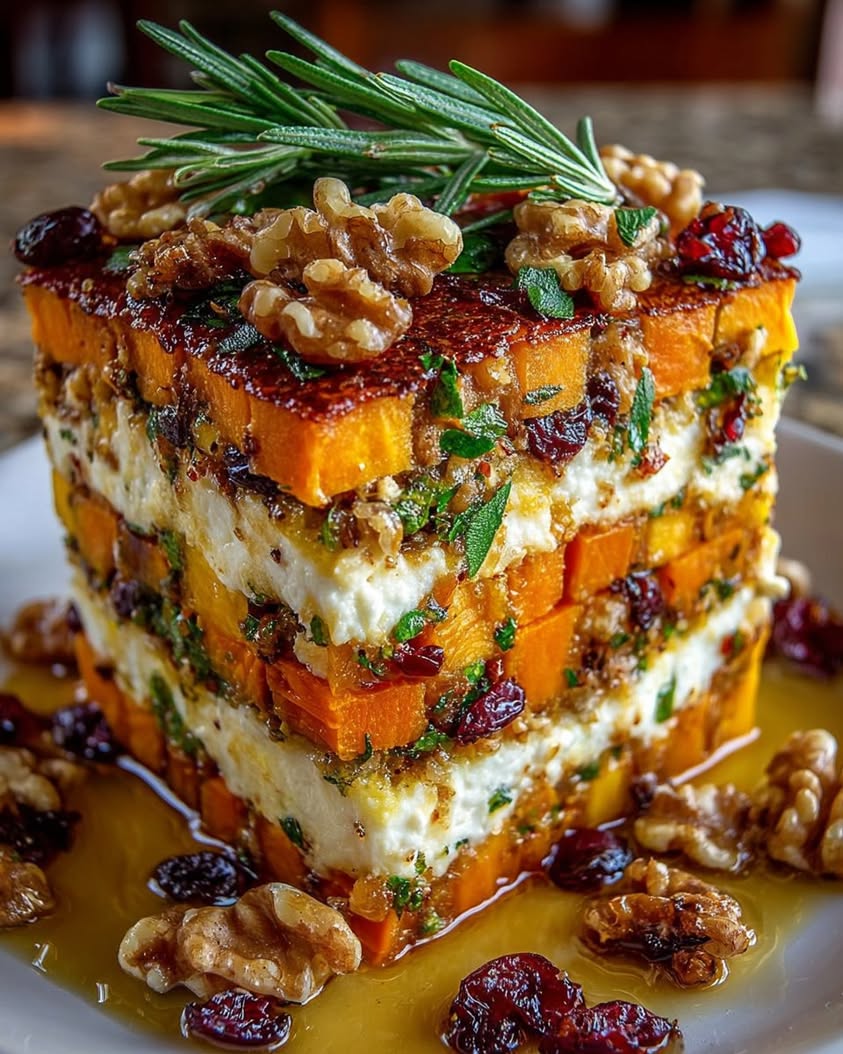
Layered Sweet Potato, Squash & Carrot Lasagna with Feta Glaze: A Festive Autumn Centerpiece
This Layered Sweet Potato, Squash & Carrot Lasagna with Feta Glaze is not your typical Italian pasta dish. We are riffing on a classic lasagna structure by swapping out the pasta sheets for thin, roasted slices of sweet potato, butternut squash, and carrot. The result is a gluten-free, vegetable-forward casserole that tastes like the essence of autumn on a plate. Each bite delivers a stunning combination of tender, earthy roots, creamy crumbled feta, and a sticky, tart cranberry-honey glaze that ties everything together beautifully.
I developed this Layered Sweet Potato, Squash & Carrot Lasagna with Feta Glaze during a particularly chilly October week when I was craving something hearty but not heavy. I wanted a dish that felt indulgent for a holiday gathering yet was simple enough for a weeknight dinner. The natural sweetness of the roasted vegetables plays perfectly against the salty feta, while the cranberry-honey glaze adds a jewel-toned pop of acidity. This recipe proves that comfort food can be both vibrant and surprisingly nutritious.
When you pull this Layered Sweet Potato, Squash & Carrot Lasagna with Feta Glaze from the oven, the top will be bubbling and the edges of the vegetables will be caramelized to a deep amber. The glaze creates a glossy, sticky finish that makes the dish look as if it belongs on a magazine cover. I promise your kitchen will smell like a cozy cabin, with notes of roasting squash, warm honey, and tangy cranberries filling every corner of your home.
Quick Recipe Highlights
- Flavor Profile: The dish offers a beautiful balance of sweet and savory. The roasted sweet potatoes, squash, and carrots bring deep caramelized sweetness. The feta provides a salty, tangy contrast, while the cranberry-honey glaze cuts through the richness with a bright, tart finish.
- Texture: You get a wonderful variety of textures here. The vegetables are fork-tender but still hold their shape. The feta crumbles stay slightly firm and creamy. The glaze reduces to a sticky, almost candied coating on the top layer.
- Aroma: The aroma is intoxicating and autumnal. You will smell the earthy sweetness of the roasting roots, the nutty richness of the walnuts, and the floral notes of the honey mingling with the tart cranberries.
- Visual Appeal: This is a stunning dish with vibrant layers of orange, deep gold, and bright red. The cranberries and walnuts scattered on top add texture and visual interest, making it a gorgeous centerpiece for any table.
- Skill Level Needed: You need basic knife skills to slice the vegetables evenly. The assembly is forgiving, as the layers do not have to be perfect. This is a great recipe for confident beginners who want to build their cooking skills.
- Special Equipment: You will need a sharp mandoline or a very steady hand with a chef’s knife. A 9×13-inch baking dish works perfectly. A small saucepan is needed for the glaze.
Recipe Overview
- Difficulty Level: I have rated this as a medium difficulty recipe. You must slice the vegetables uniformly thin, which requires either a good mandoline or patience with a knife. The layering process is simple, but monitoring the glaze to prevent burning requires attention. Overall, the steps are straightforward, and the result is well worth the effort.
- Category: This dish fits into several categories. It works beautifully as a vegetarian main course for a holiday dinner. It also serves wonderfully as a hearty side dish alongside roasted poultry or pork. You can even enjoy it as a show-stopping brunch item.
- Cuisine: This recipe is a modern American fusion. It draws inspiration from Italian lasagna structure but uses ingredients deeply rooted in North American fall harvest traditions. The combination of cranberries, squash, and sweet potatoes feels very New England, while the feta and honey nod to Mediterranean influences.
- Cost: This is a budget-friendly dish. Sweet potatoes, butternut squash, and carrots are among the most affordable vegetables, especially in the fall. Feta cheese is moderately priced, and walnuts are the most expensive ingredient. The cranberries and honey are pantry staples for many.
- Season: This dish is best enjoyed from late September through December. This is when sweet potatoes, squash, and cranberries are at their peak freshness and flavor. The warming spices and rich glaze make it a natural choice for crisp autumn evenings.
- Occasion: This is perfect for Thanksgiving, Friendsgiving gatherings, or a cozy Sunday supper. It travels well, so it is a great dish to bring to a potluck. It also makes for an impressive yet comforting meal for a special weeknight dinner.
Why You Will Love This Recipe
First, the taste is absolutely unforgettable. The natural sugars in the vegetables caramelize during roasting, creating a deep, almost buttery sweetness. Then, the salty feta crumbles cut through that sweetness perfectly. The cranberry-honey glaze adds a sticky tang that brightens every single layer. It is a flavor profile that feels both familiar and exciting.
Second, this recipe is surprisingly convenient. You can roast the vegetable slices and make the glaze a day ahead. Then, you simply assemble the Layered Sweet Potato, Squash & Carrot Lasagna with Feta Glaze when you are ready to bake. This makes it a stress-free choice for holiday cooking, allowing you to enjoy your guests rather than being stuck in the kitchen.
Third, you get incredible nutritional advantages. This dish is packed with fiber and vitamins. Sweet potatoes provide massive amounts of vitamin A. Butternut squash offers vitamin C and potassium. Carrots are famous for their beta-carotene. The walnuts add healthy omega-3 fatty acids. You eat a hearty, satisfying meal that also nourishes your body.
Fourth, this dish has amazing social value. I can guarantee that when you bring this vibrant, layered casserole to the table, everyone will ask for the recipe. It has a “wow” factor that is usually reserved for more complicated dishes. It makes you look like a culinary genius without the stress of a super complex technique.
Finally, it is cost-effective and uses accessible ingredients. You do not need any exotic specialty items. All the vegetables are found in any grocery store, especially during the fall season. A single dish can feed a crowd of ten people for under twenty dollars, making it a smart choice for feeding a large group on a budget.
Historical Background and Cultural Significance
The concept of layering vegetables in a casserole dish is an ancient cooking technique found in many cultures. From the Greek moussaka to the Italian lasagna, cooks have long used layers to create cohesive, flavorful meals. This recipe specifically celebrates the North American harvest, where squashes and root vegetables were staple foods for Indigenous peoples long before European settlers arrived.
Butternut squash and sweet potatoes have deep roots in the Americas. Indigenous tribes cultivated these crops for thousands of years, valuing them for their long storage life and dense nutrition. Cranberries, too, are native to North America and were used by Algonquian tribes in pemmican and as a natural dye. This dish honors that rich agricultural heritage.
The addition of feta and honey reflects more recent global influences. Feta cheese hails from Greece and has become a staple in fusion cooking for its salty, briny punch. Honey has been used worldwide for millennia, but the specific pairing of honey with cranberries is a classic New England combination. This evolution shows how American cuisine constantly adapts and borrows.
Regional variations are abundant. In the South, you might see pecans replace the walnuts and maple syrup replace the honey. In the Pacific Northwest, cooks might add hazelnuts and a touch of apple cider vinegar to the glaze. This flexibility makes the Layered Sweet Potato, Squash & Carrot Lasagna with Feta Glaze a truly modern American dish that can be tailored to your local pantry.
Ingredient Deep Dive
Sweet Potatoes: Sweet potatoes are a nutritional powerhouse rich in beta-carotene and fiber. They have a long history in Central and South America, with evidence of cultivation dating back over 5,000 years. When selecting sweet potatoes, look for firm, smooth skins without any soft spots or cracks. Store them in a cool, dark, well-ventilated place, but never in the refrigerator, as cold temperatures alter their flavor. For this recipe, Beauregard or Jewel varieties work beautifully due to their deep orange color and creamy texture when roasted.
Butternut Squash: Butternut squash offers a nutty, slightly sweet flavor and a smooth texture that holds up well to roasting. It is an excellent source of vitamin A and potassium. Choose squash that feels heavy for its size, with a hard, beige skin free of soft spots. Store whole butternut squash in a cool, dry pantry for up to a month. If you buy pre-cut cubes, use them within a few days. For this recipe, you need to slice the squash into thin planks, so it is easier to peel and cut a whole squash yourself.
Carrots: Carrots add a subtle sweetness and a beautiful bright orange hue to the layers. They are packed with vitamin A and antioxidants. Select carrots that are firm, crisp, and brightly colored with the green tops still attached if possible. Remove the green tops before storing to prevent moisture loss. Keep carrots in a plastic bag in the vegetable crisper drawer. For the best texture, cut the carrots lengthwise into planks that match the thickness of the sweet potato and squash slices.
Feta Cheese: Feta brings a salty, tangy, and creamy component that cuts through the sweetness of the roasted roots. Traditional Greek feta is made from sheep’s milk or a mix of sheep and goat milk. It is brined, which gives it a distinct salty flavor. When buying feta, look for blocks stored in brine for the best texture and taste. Avoid pre-crumbled feta, as it often contains anti-caking agents that prevent proper melting. Store leftover feta in its brine in an airtight container in the fridge for up to a month.
Walnuts: Walnuts add a pleasant crunch and a rich, earthy nuttiness to the dish. They are an excellent source of omega-3 fatty acids and antioxidants. Choose walnuts that smell fresh and nutty, not bitter or rancid. Store them in an airtight container in the freezer to keep them fresh for months. For the best flavor, toast the walnuts lightly in a dry skillet before adding them to the dish. This step releases their natural oils and deepens their flavor considerably.
Cranberries: Dried or fresh cranberries provide a tart, bright pop that contrasts the sweetness of the vegetables and honey. Cranberries are one of the few fruits native to North America. For this recipe, dried cranberries work best because they hold their shape during baking and do not release excess liquid. Look for dried cranberries that are plump and soft. If you only have fresh cranberries, you can use them, but coarsely chop them first and expect them to release more juice during baking.
Honey: Honey provides natural sweetness and helps create that gorgeous sticky glaze. It also adds floral undertones that vary depending on the source. Local, raw honey is always a fantastic choice, but any good quality honey works. Avoid honey that has crystallized, or simply warm it gently to liquefy it again. The sugar in honey also aids in caramelization, giving the top layer of the dish a beautiful golden-brown finish.
Common Mistakes to Avoid
- Do not slice your vegetables too thick. Thick slices will not cook through in the baking time, leaving you with crunchy, underdone layers. Aim for a uniform thickness of about 1/4 inch.
- Avoid slicing the vegetables too thin. If the slices are paper-thin, they will turn to mush during the long baking time. You need a sweet spot where they hold their shape but soften fully.
- Do not skip the initial roasting step for the vegetables. Raw vegetables will release too much liquid into the dish, making it watery. Roasting them first concentrates their flavor and removes excess moisture.
- Never overcrowd the baking sheet when you roast the vegetable slices. Overcrowding causes them to steam instead of roast, preventing caramelization. Use two baking sheets if needed to give them space.
- Avoid using a glass baking dish for this recipe. Glass can shatter under the high heat of the broiler when you finish the glaze. Use a ceramic or metal baking dish instead.
- Do not use pre-shredded feta cheese. Pre-shredded cheese often contains cellulose to prevent clumping, which affects the melting and texture. Always buy a block of feta and crumble it yourself.
- Avoid burning the cranberry-honey glaze. The glaze can go from perfect to burnt very quickly. Watch it carefully during the final baking and broiling steps to prevent a bitter taste.
- Do not assemble the lasagna too far in advance without adjusting the baking time. If you assemble it a day ahead and keep it in the fridge, the cold dish will need an extra 15-20 minutes in the oven.
- Avoid using low-quality honey or cranberries. The flavor of the glaze is a central component of the dish, so use good ingredients. Cheap honey can taste flat, and poor-quality cranberries can be tough and dry.
- Do not skip the resting time after baking. The lasagna needs at least 15 minutes to rest so the layers can set. Cutting into it immediately will cause it to collapse and slide apart.
Essential Techniques
Roasting Vegetables: Roasting is essential for developing deep, caramelized flavor in the sweet potatoes, squash, and carrots. When you roast them, the natural sugars caramelize, creating a complex sweetness that you cannot achieve through steaming or boiling. To master this, spread the slices in a single layer on a baking sheet, toss them with oil and salt, and roast at 400 degrees Fahrenheit. Look for golden-brown edges and a tender interior that yields easily to a fork.
Making a Reduction Glaze: The cranberry-honey glaze is a simple reduction, but it can easily burn if you are not careful. Combine the cranberries, honey, and a splash of water or orange juice in a small saucepan. Simmer it gently over medium-low heat, stirring occasionally, until the cranberries plump up and the liquid thickens to a syrupy consistency. The visual cue is when the glaze coats the back of a spoon. Remove it from the heat immediately to prevent burning.
Layering the Casserole: Proper layering ensures every bite has a balanced distribution of vegetables, cheese, and walnuts. Start with a thin layer of the glaze on the bottom of the dish to prevent sticking. Then, alternate rows of sweet potato, squash, and carrot slices slightly overlapping each other. Sprinkle feta and walnuts every few layers. The top layer should look beautiful, as it is the first thing people see.
Testing for Doneness: The lasagna is done when the vegetables are completely tender and the top is bubbling and golden. Insert a sharp knife into the center of the dish. It should slide through all the layers with very little resistance. If the top is browning too quickly before the center is cooked, tent the dish loosely with aluminum foil and continue baking.
Pro Tips for Perfect Layered Sweet Potato, Squash & Carrot Lasagna with Feta Glaze
Use a mandoline slicer for perfectly uniform vegetable slices. Even thickness ensures even cooking, so every layer is tender at the same time. A mandoline makes this task easy and safe.
Toast the walnuts before adding them to the dish. Spread them in a single layer in a dry skillet over medium heat, shaking the pan frequently until they smell fragrant. This takes only three to four minutes but dramatically improves their flavor.
Season each vegetable layer lightly with salt and pepper as you build the lasagna. Do not rely only on the glaze for seasoning. Layering the salt ensures every bite is well seasoned.
Let the lasagna rest for a full twenty minutes after it comes out of the oven. This resting period allows the liquids to redistribute and the layers to firm up, making it much easier to slice cleanly.
Use a sharp, thin-bladed knife to cut the portions. A serrated knife works well too. A dull knife will drag through the vegetables and destroy the beautiful layered presentation.
Double the glaze recipe if you want extra to drizzle over the finished dish. The glaze is delicious and your guests might want more. Just be careful not to over-glaze the dish itself, as it can become too sweet.
For a more intense cranberry flavor, use a mix of dried cranberries and a splash of pure cranberry juice in the glaze. The juice adds tartness without extra sugar from the dried fruit.
If you are short on time, you can use pre-cut butternut squash cubes from the grocery store. Just slice the cubes into planks yourself. This saves the labor of peeling and seeding a whole squash.
Variations and Adaptations
Regional Variations: In the American South, you might substitute the walnuts with toasted pecans and use a sorghum syrup glaze instead of honey. The pecans add a buttery, Southern touch that pairs wonderfully with sweet potatoes. In New England, you could add a pinch of dried thyme or sage to the glaze for a more savory, herbal note that complements the cranberries.
Seasonal Adaptations: In the summer, try using zucchini, yellow squash, and eggplant in place of the root vegetables. The feta and cranberry-honey glaze still work beautifully with summer squashes. In the spring, you could use asparagus ribbons and fresh peas, though you would need to adjust the roasting time significantly, as spring vegetables cook much faster.
Dietary Modifications: To make this dish vegan, omit the feta cheese entirely or substitute it with a crumbled firm tofu seasoned with nutritional yeast and salt. Use agave nectar or maple syrup instead of honey in the glaze. The dish will still be delicious and satisfying. For a lower-fat version, reduce the amount of oil used to roast the vegetables and skip the walnuts.
Flavor Variations: Add a pinch of cayenne pepper or red pepper flakes to the glaze for a spicy kick. The heat cuts through the sweetness beautifully. Alternatively, add a tablespoon of balsamic vinegar to the glaze for a more complex, tangy flavor that adds depth. Fresh rosemary or thyme sprinkled between the layers also works wonderfully.
Texture Modifications: If you want a creamier texture, add a layer of ricotta cheese or a béchamel sauce between the vegetable layers. This would make the dish feel more like a traditional lasagna. For a crunchier top, add an extra scattering of walnuts in the last ten minutes of baking so they stay crisp.
Presentation Alternatives: Instead of a large casserole dish, you can assemble individual portions in small ramekins. These personal lasagnas make for an impressive dinner party presentation. Adjust the baking time down by about ten minutes, as the smaller portions cook faster.
Serving and Presentation Guide
For a beautiful plated presentation, use a large, flat spatula to carefully lift out a square portion of the lasagna. Place it in the center of the plate. The golden-brown top layer should be facing up, showing off the glossy cranberries and walnuts. For added color, place the portion on a bed of peppery arugula or sautéed kale.
Garnish the plated lasagna with a few fresh cranberries, a light drizzle of extra cranberry-honey glaze, and a small sprig of fresh rosemary. You can also add a final sprinkle of flaky sea salt, which helps balance the sweetness. The salt provides a wonderful textural contrast as well.
This dish pairs beautifully with a crisp green salad dressed with a simple lemon vinaigrette. The acidity of the salad cuts through the richness of the lasagna. Roasted Brussels sprouts or steamed green beans also make excellent accompaniments, as their earthiness complements the sweet root vegetables.
For a modern serving suggestion, serve the lasagna as a side dish for a roasted turkey or pork loin. The sweetness of the vegetables and glaze creates a perfect harmony with savory roasted meats. You can also serve it as a stand-alone main course for a vegetarian holiday table, accompanied by a hearty grain salad.
Temperature is crucial here. Serve this lasagna hot or warm, but not piping hot straight from the oven, as it needs that twenty-minute rest. Room temperature is also acceptable for a buffet, though the feta will firm up slightly as it cools. Avoid serving it cold, as the texture becomes dense and the fat in the feta solidifies unpleasantly.
Portion control is easy with this dish. A 9×13-inch dish cuts neatly into ten equal portions. Each portion is about one inch thick. If you are serving it as a side dish, you can cut it into twelve smaller pieces. For a main course, ten portions with a side salad is a very satisfying meal.
Wine and Beverage Pairing
For wine pairings, a dry Riesling is an excellent choice. The high acidity of the Riesling cuts through the sweetness of the roasted vegetables and the glaze. The wine’s subtle fruit notes of apple and pear complement the cranberries beautifully. A chilled glass of this wine makes the dish feel even more refreshing.
A light-bodied, unoaked Chardonnay also works wonderfully. Look for a Chardonnay from Chablis or a similar cool-climate region. The crispness of the wine and its subtle citrus notes pair well with the feta and honey. Avoid heavily oaked Chardonnays, as they can overwhelm the delicate vegetable flavors.
For red wine lovers, a Pinot Noir is your best bet. Choose a bottle from Oregon or California that is light to medium-bodied. The soft tannins and bright red fruit flavors of the Pinot Noir echo the cranberries in the glaze. The wine should be served slightly chilled, around 55 degrees Fahrenheit.
If you prefer non-alcoholic options, a sparkling apple cider is a fantastic pairing. The bubbles cleanse the palate, and the sweetness of the cider mirrors the honey in the glaze. A tart cranberry spritzer made with sparkling water, a splash of cranberry juice, and a squeeze of lime also works wonderfully.
For tea lovers, a hot cup of chai tea is a cozy choice. The warming spices in the chai, like cinnamon and clove, complement the roasted vegetables. A strong Earl Grey tea with its bergamot notes also provides a nice contrast to the sweetness of the dish.
Storage and Shelf Life
Store any leftover Layered Sweet Potato, Squash & Carrot Lasagna with Feta Glaze in an airtight container in the refrigerator. It will keep for up to five days. The flavors often meld and deepen overnight, making the leftovers every bit as delicious as the fresh dish. Be sure to let the lasagna cool completely before you cover it to prevent condensation from making the top soggy.
The temperature requirement is standard refrigerator temperature, around 37 to 40 degrees Fahrenheit. Do not leave the lasagna at room temperature for longer than two hours. If you are serving it at a party or buffet, use a warming tray or place the dish on a bed of ice to keep it safe.
A glass or ceramic container with a tight-fitting lid is ideal for storage. If you are stacking multiple containers in the fridge, place a layer of parchment paper between them to prevent sticking. You can also store the lasagna directly in the baking dish if you cover it tightly with aluminum foil or plastic wrap.
Signs of spoilage include a sour smell, visible mold, or a slimy texture on the vegetables. If the feta develops a strong ammonia-like smell, it has gone bad. Always trust your nose. When in doubt, throw it out to avoid any risk of foodborne illness.
To reheat, place individual portions in a microwave-safe dish and microwave on medium power for two to three minutes. For larger portions, reheat the lasagna in a 350 degree Fahrenheit oven for about 15 to 20 minutes, covered with foil to prevent the top from burning. Add a splash of water or broth to the dish to prevent it from drying out.
Freezing this lasagna is an excellent option. Assemble the entire dish but do not bake it. Wrap the dish tightly in a layer of plastic wrap, then a layer of aluminum foil. Freeze for up to three months. When you are ready to bake, thaw it overnight in the refrigerator, then bake as directed, adding about 15 minutes to the cooking time.
Make Ahead Strategies
You can prep all the components for this dish up to two days in advance. Roast the vegetable slices, make the cranberry-honey glaze, and crumble the feta cheese. Store each component in separate airtight containers in the refrigerator. The roasted vegetables will hold up very well for a couple of days.
When you are ready to assemble, take the components out of the fridge and let them come to room temperature for about thirty minutes. This helps the dish cook more evenly. Assemble the lasagna in the baking dish exactly as you would for immediate baking. The assembly process takes only about ten minutes since the hard work is already done.
The quality impact of making this dish ahead is minimal. In fact, the flavors actually improve overnight as the vegetables continue to absorb the glaze and the seasonings meld together. The texture remains excellent, though the walnuts will lose some of their crunch. To fix this, add a fresh scattering of walnuts just before baking.
For assembly tips, brush the bottom of the baking dish with a little olive oil or a thin layer of the glaze before you start layering. This prevents the bottom layer from sticking. Also, do not overfill the dish. The vegetables will shrink slightly during the final bake, so a slightly mounded top layer is acceptable.
Reheating guidelines are simple. If you have assembled the dish a day ahead, add about ten extra minutes to the baking time. The cold dish needs a bit longer to heat through to the center. Always check that the center is piping hot before you serve it.
Add fresh elements just before serving to brighten the dish. A sprinkle of fresh parsley or chives adds color and freshness. A final drizzle of the leftover glaze right before serving adds a beautiful shine and extra flavor. These finishing touches make the dish feel freshly made.
Scaling Instructions
To halve the recipe, use an 8×8 inch baking dish instead of the 9×13 inch dish. Cut all the ingredient quantities in half. You will need fewer layers, so the lasagna will be thinner. Reduce the baking time by about ten minutes, and start checking for doneness a little earlier.
Doubling or tripling the recipe is easy for a crowd. Use two 9×13 inch baking dishes, or a large roasting pan if you have one. Double or triple all ingredient quantities. The baking time will increase slightly, as a larger volume of food takes longer to heat through. Expect to add about ten to fifteen minutes for a double batch.
Equipment adjustments are necessary for larger batches. You will likely need two or three baking sheets to roast the vegetables in a single layer. You will also need a larger saucepan for the glaze. If you are using a roasting pan, be aware that it may not sit perfectly on your oven rack, so place it on a sturdy baking sheet for stability.
Timing modifications are important for large batches. The roasting time for the vegetables may need to be extended by a few minutes because the oven will have more food in it, causing the temperature to drop. Similarly, the final baking time for the assembled dish may need to be extended by up to twenty minutes for a large batch.
Storage considerations for a large batch are straightforward. Leftovers from a double batch can be stored in the refrigerator for up to five days, or frozen for up to three months. Portion the leftovers into smaller containers for easy reheating. This makes for excellent meal-prep lunches throughout the week.
Nutritional Deep Dive
The macro breakdown of this dish is quite balanced. A single serving provides approximately 310 calories, 10 grams of protein, 15 grams of fat, and 40 grams of carbohydrates. The carbohydrates come primarily from the natural sugars in the vegetables and the honey, along with a good amount of fiber from the roots and nuts.
The micronutrient analysis reveals this dish is exceptionally high in vitamin A. A single serving provides over 350 percent of your daily value for vitamin A, thanks to the sweet potatoes, butternut squash, and carrots. It is also a good source of vitamin C, potassium, and manganese. The feta adds calcium and phosphorus for bone health.
The health benefits of this dish are numerous. The high fiber content supports digestive health and helps keep you full. The antioxidants in the cranberries and walnuts help reduce inflammation in the body. The healthy fats from the walnuts support brain function. This is a dish that truly nourishes from the inside out.
Dietary considerations are important for many people. This dish is naturally gluten-free, making it safe for those with celiac disease or gluten sensitivity. It is also vegetarian. However, it contains dairy from the feta cheese. It is also relatively low in added sugars, with the sweetness coming primarily from natural sources.
Portion analysis shows that one serving is quite generous. The portion is about the size of a deck of cards for the protein content, but it is much larger in volume due to the vegetables. This allows you to feel full and satisfied on a relatively moderate calorie count, which is excellent for weight management.
Weight management tips include serving this dish with a large side of non-starchy vegetables, such as a green salad. This increases the volume of the meal without adding many calories. You can also reduce the amount of walnuts in the recipe to lower the fat content, or use a low-fat feta cheese if you can find one.
Dietary Adaptations
Gluten-Free: This dish is naturally gluten-free as written. There are no grains or wheat products in the recipe. However, always check the labels on your dried cranberries and walnuts to ensure they were not processed in a facility that handles wheat. Cross-contamination is a rare but possible concern for those with celiac disease.
Dairy-Free: To make this recipe dairy-free, you need to replace the feta cheese. A high-quality vegan feta made from tofu or cashews works well. Look for one that has a similar salty, tangy profile. Alternatively, you can simply omit the cheese altogether. The dish will still be delicious, though it will be missing that salty contrast.
Vegan: For a fully vegan version, use a vegan feta substitute and replace the honey in the glaze with agave nectar, maple syrup, or date syrup. Agave nectar has a neutral flavor that works well. Maple syrup adds a lovely woodsy sweetness that pairs beautifully with the roasted vegetables. The rest of the dish is already plant-based.
Low-Carb: This dish is naturally moderate in carbohydrates due to the root vegetables. To lower the carb count, replace the sweet potatoes and butternut squash with lower-carb alternatives like cauliflower slices or thinly sliced turnips. The carrots can be reduced significantly or omitted. The taste will be different, but the structure will hold.
Keto: A keto adaptation is challenging because the vegetables are naturally high in carbs. To make a keto version, use a mix of zucchini, yellow squash, and eggplant as the main layers. Use the same feta, walnuts, and a modified glaze made with sugar-free maple syrup and fresh or frozen cranberries (which are lower in carbs than dried).
Paleo: For a paleo version, omit the feta cheese entirely. The original recipe uses feta, which is not paleo-approved. Use a paleo-friendly alternative like a cashew-based “ricotta” or simply double the walnuts for texture. The cranberry-honey glaze is naturally paleo as long as you use raw honey.
Low-FODMAP: For a low-FODMAP adaptation, you need to be careful with the vegetables. Butternut squash and carrots are low-FODMAP in servings of up to half a cup. Sweet potatoes are low-FODMAP in servings of up to one third of a cup. Walnuts and feta are low-FODMAP. Honey is high in fructans, so use maple syrup instead. Dried cranberries are low-FODMAP in small amounts.
Troubleshooting Guide
Texture Issues: If your lasagna turns out watery, the vegetables were likely not roasted long enough to remove their excess moisture. Next time, roast them until they are visibly shriveled around the edges and feel dry to the touch. You can also try squeezing the thawed frozen vegetables if you use any.
Flavor Balance: If the dish tastes too sweet, you need more salt. The salt from the feta should balance the sweetness, but if you used a mild feta, it might not be enough. Add a sprinkle of flaky sea salt over the top before serving. A squeeze of lemon juice over each portion also helps cut the sweetness.
Temperature Problems: If the top is burning before the center is cooked, tent the dish with aluminum foil. The foil deflects the intense heat from the oven and allows the center to cook through without the top getting too dark. Remove the foil for the Print
Layered Sweet Potato, Butternut Squash, Carrot Lasagna with Feta, Walnuts, and Cranberry-Honey Glaze
- Total Time: 90 minutes
- Yield: 8
Description
A savory autumn-inspired lasagna with layers of roasted sweet potato, butternut squash, and carrot, creamy feta, crunchy walnuts, and a sweet-tart cranberry-honey glaze.
Ingredients
- 2 large sweet potatoes, peeled and thinly sliced
- 1 butternut squash, peeled, seeded, and thinly sliced
- 4 large carrots, peeled and thinly sliced
- 2 tablespoons olive oil
- 1 teaspoon salt
- 1/2 teaspoon black pepper
- 1 teaspoon dried thyme
- 1 cup crumbled feta cheese
- 1/2 cup chopped walnuts
- 1/2 cup dried cranberries
- 1/4 cup honey
- 1/4 cup water
- 1 tablespoon balsamic vinegar
- 9 oven-ready lasagna noodles
- 2 cups béchamel sauce (or store-bought)
- Fresh parsley for garnish (optional)
Instructions
- Preheat oven to 400°F (200°C). Toss sweet potato, butternut squash, and carrot slices with olive oil, salt, pepper, and thyme. Spread on a baking sheet and roast for 20 minutes until tender.
- While vegetables roast, make the cranberry-honey glaze: in a small saucepan, combine dried cranberries, honey, water, and balsamic vinegar. Simmer over low heat for 5 minutes, then remove from heat and set aside.
- In a 9×13-inch baking dish, spread a thin layer of béchamel sauce. Layer 3 lasagna noodles, then a third of the roasted vegetables, a third of the feta, and a third of the walnuts. Drizzle with a third of the cranberry-honey glaze.
- Repeat layers two more times: noodles, béchamel, vegetables, feta, walnuts, glaze. Finish with a final layer of noodles and remaining béchamel on top.
- Cover with foil and bake for 30 minutes. Remove foil and bake for another 10 minutes until bubbly and golden.
- Let rest for 10 minutes before slicing. Garnish with fresh parsley if desired. Serve warm.
Notes
You can customize the seasonings to taste. For a vegetarian version, ensure béchamel is made with vegetable broth. Walnuts can be toasted for extra crunch.
- Prep Time: 30 minutes
- Cook Time: 60 minutes
- Method: Main
- Cuisine: American