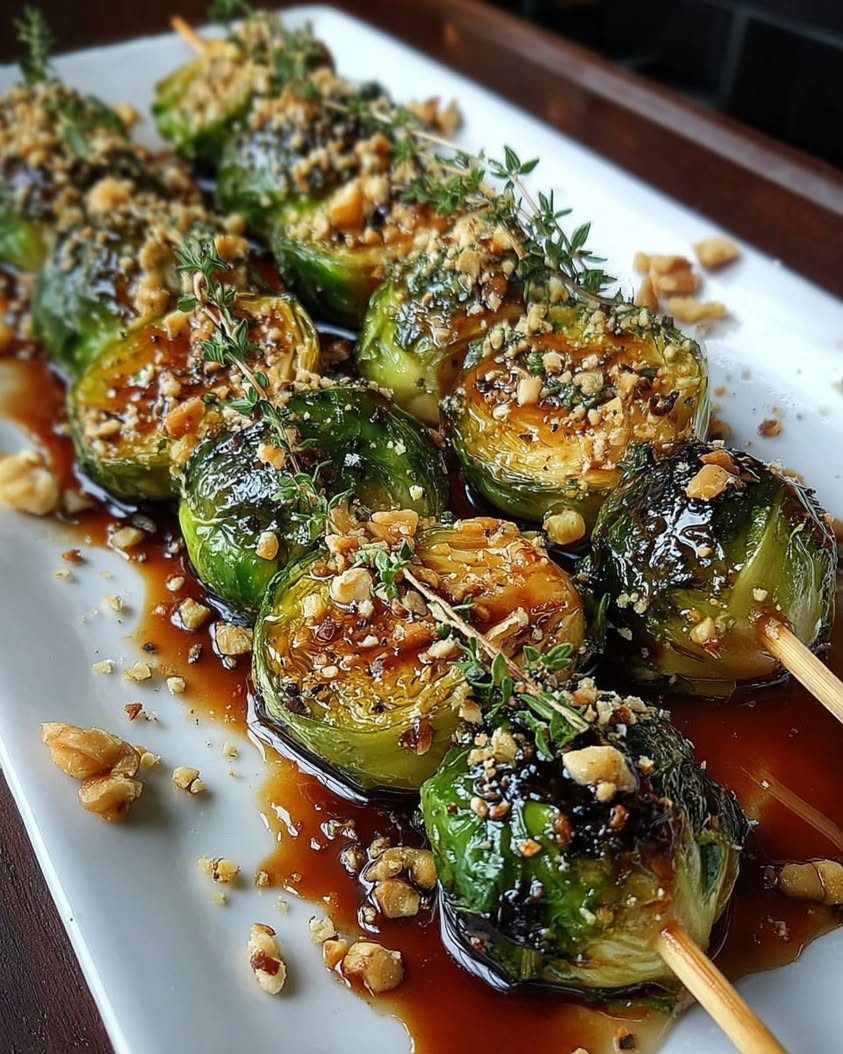
Caramelized Brussels Sprouts Skewers with Walnut Honey: A Flavor Holiday Appetizer
Imagine pulling a sizzling tray of Caramelized Brussels Sprouts Skewers with Walnut Honey from the oven. The kitchen fills with a nutty, sweet aroma that immediately signals something special is about to happen. These skewers transform a humble vegetable into a show-stopping appetizer that even skeptics adore. The magic lies in the caramelization process that brings out deep, almost buttery notes from each sprout. Topped with a rich Walnut Honey drizzle, every bite delivers a perfect balance of savory and sweet. This is a recipe built for gatherings, but it works just as well for a cozy weeknight treat. You get impressive flavor without spending hours in the kitchen.
These Caramelized Brussels Sprouts Skewers with Walnut Honey offer a fantastic way to elevate your appetizer game. The combination of crispy, charred edges and tender centers creates a satisfying texture. The Walnut Honey adds an unexpected layer of complexity that feels gourmet. Best of all, the ingredients are simple and accessible. You can find everything at your local grocery store without breaking the bank. The recipe comes together quickly, making it perfect for busy holiday schedules or last-minute dinner parties. Guests always reach for seconds, and you will love how easy it is to prepare.
What sets this dish apart is the careful balance of flavors and textures. The Brussels sprouts become deeply caramelized in the oven, developing a sweet, nutty crust. Meanwhile, the Walnut Honey provides a sticky, rich finish that clings to every piece. A touch of sea salt and fresh pepper completes the profile, cutting through the sweetness. This recipe works because it honors the natural qualities of each ingredient. It feels both rustic and refined. Whether you serve it as a starter or a side dish, it always makes a memorable impression.
Quick Recipe Highlights
- Flavor Profile: This recipe delivers a bold contrast between savory caramelized vegetables and sweet, nutty honey. The Walnut Honey adds depth with toasted notes that complement the earthy sprouts. A final pinch of flaky salt enhances every flavor layer.
- Texture: You get a satisfying crunch from the well-roasted outer leaves of the Brussels sprouts. The centers stay tender and creamy, creating a wonderful mouthfeel. The sticky Walnut Honey adds a slight chewiness that ties everything together.
- Aroma: The kitchen fills with the warm scent of roasting sprouts and toasted walnuts. The honey caramelizes into a sweet perfume that feels inviting and cozy. It smells like autumn and comfort all at once.
- Visual Appeal: These skewers look stunning on a platter with their deep golden-brown color. The glossy Walnut Honey catches the light beautifully, making the dish pop. Garnished with fresh herbs and walnut pieces, the presentation feels festive.
- Skill Level Needed: This recipe suits confident beginners who can handle simple knife work. You need basic roasting skills and the ability to thread skewers evenly. The technique is straightforward, but the presentation looks quite advanced.
- Special Equipment: You need wooden or metal skewers that have been soaked in water for at least 30 minutes. A large baking sheet lined with parchment paper helps with cleanup. A small saucepan is necessary for gently warming the Walnut Honey.
Recipe Overview
- Difficulty Level: I chose a medium difficulty rating because of the timing required for even caramelization. You need to watch the sprouts closely to avoid burning while achieving a deep char. The honey drizzle also requires attention so it does not crystallize. Overall, the process is simple but demands focus.
- Category: This dish works beautifully as an appetizer for holiday parties or casual get-togethers. It also serves well as a side dish alongside roasted meats or vegetarian mains. The skewer format makes it ideal for buffets and finger food spreads.
- Cuisine: The recipe draws inspiration from modern American cuisine with a focus on seasonal vegetables. The use of honey and walnuts nods to European influences, particularly Italian and French cooking. This cross-cultural approach creates a universally appealing flavor profile.
- Cost: The ingredients are budget-friendly, especially when Brussels sprouts are in season. Walnuts and honey are pantry staples for many households. You can make a generous batch for under ten dollars, which is excellent value for such an impressive dish.
- Season: Brussels sprouts peak from fall through early spring, making this a perfect cold-weather recipe. The warming flavors of caramelized vegetables and honey suit autumn and winter gatherings. However, it works year-round with properly sourced sprouts.
- Occasion: These skewers shine at Thanksgiving, Christmas, and New Year’s Eve celebrations. They also work wonderfully for game-day snacks and casual dinner parties. The elegant presentation makes them suitable for more formal events as well.
Why You Will Love This Recipe
The taste and texture appeal of these Caramelized Brussels Sprouts Skewers with Walnut Honey is simply undeniable. Every bite offers a complex interplay of sweet, savory, and slightly bitter notes. The caramelization process transforms the sprouts into crispy, golden morsels that melt in your mouth. The Walnut Honey adds a luxurious sweetness that feels indulgent. This combination creates a dish that surprises and delights even the most skeptical eaters. It is one of those recipes that converts people into Brussels sprouts fans.
From a convenience perspective, this recipe could not be easier. You prep the ingredients in about 15 minutes and let the oven do the work. The hands-on time is minimal, which is a huge win for busy cooks. Cleanup is simple because you use just a baking sheet and a small saucepan. The skewers make serving effortless, and they stay warm for a while after roasting. You can prepare most components ahead of time for stress-free entertaining.
Nutritionally, Brussels sprouts are a powerhouse vegetable packed with vitamins and fiber. They are rich in vitamin K, vitamin C, and antioxidants that support overall health. Walnuts add healthy omega-3 fatty acids and protein to the mix. Honey provides natural sweetness without refined sugars. This dish offers a balanced, nutrient-dense option that feels like a treat. You can enjoy it guilt-free, knowing it contributes positively to your diet.
Socially and entertainingly, these skewers are a crowd-pleaser that encourages conversation. Their unique presentation stands out on any appetizer table. Guests love picking them up and enjoying the interactive eating experience. The flavors appeal to a wide range of palates, from kids to adults. They pair beautifully with cocktails, wine, or non-alcoholic beverages. This recipe helps you host with confidence and impress your guests effortlessly.
Cost-effectiveness and accessibility make this recipe a smart choice for any cook. The ingredients are widely available at standard grocery stores year-round. You do not need any exotic spices or hard-to-find items. The per-serving cost is very reasonable compared to other appetizer options. Leftovers, if any exist, reheat beautifully for lunch the next day. This recipe proves that great food does not require a big budget.
Historical Background and Cultural Significance
Brussels sprouts have a long and storied history that dates back to ancient Rome. They were cultivated in Belgium as early as the 13th century, which is how they got their name. The vegetable became popular throughout Europe for its hardiness and nutritional value. Immigrants brought Brussels sprouts to North America, where they found a new home. Over centuries, the sprout evolved from a peasant food into a culinary staple. Today, it is celebrated for its versatility and unique flavor profile.
The cultural importance of Brussels sprouts varies across regions. In Belgium, they are a point of national pride and appear in many traditional dishes. British cuisine features Brussels sprouts prominently in Christmas dinners, often boiled or roasted. American cooks have embraced the vegetable more recently, popularizing roasting and caramelization techniques. This shift reflects a broader trend toward vegetable-forward cooking. The humble sprout has become a symbol of culinary innovation and seasonal eating.
The evolution of this recipe mirrors changes in modern cooking philosophy. Traditional preparations often involved boiling, which produced a strong, sometimes bitter flavor. The move toward roasting and caramelization transformed public perception of the vegetable. Adding Walnut Honey is a contemporary twist that builds on ancient flavor pairings. This recipe represents a fusion of old-world techniques with new-world creativity. It shows how simple ingredients can be elevated through thoughtful preparation.
Regional variations of caramelized sprouts exist across many cultures. In Italy, cooks might add balsamic vinegar and pancetta for depth. Middle Eastern versions often include pomegranate molasses and tahini. Asian-inspired preparations use soy sauce and sesame oil for umami richness. The Walnut Honey variation feels distinctly American in its bold, sweet-savory balance. This recipe honors the global tradition of making vegetables delicious through heat and seasoning.
Ingredient Deep Dive
Brussels sprouts are the star of this dish, and they have a fascinating cultural history. They belong to the Brassica family, which includes cabbage, kale, and broccoli. The vegetable was first documented in Belgium during the 16th century, though similar plants existed earlier. Nutritionally, Brussels sprouts are packed with vitamin C, vitamin K, and folate. They also contain sulforaphane, a compound linked to cancer prevention. When selecting sprouts, look for firm, bright green heads with tightly packed leaves. Avoid any that are yellowing or have loose leaves, as these indicate age. Store them in the refrigerator in a breathable bag for up to a week.
Walnuts bring a rich, buttery flavor and satisfying crunch to the honey drizzle. They have been cultivated for thousands of years, with origins in ancient Persia. Walnuts are one of the best plant sources of omega-3 fatty acids, which support heart and brain health. They also contain antioxidants that help reduce inflammation. For this recipe, choose raw, unsalted walnut halves for the best flavor. Toast them lightly before use to enhance their nutty aroma. Store walnuts in an airtight container in the refrigerator to prevent rancidity. If you cannot find walnuts, pecans or almonds make excellent substitutes in the honey mixture.
Honey provides natural sweetness and helps create the glossy glaze that makes these skewers so appealing. The type of honey you use will affect the final flavor profile. Wildflower honey offers a floral note, while clover honey is milder and sweeter. Manuka honey brings a more complex, earthy taste. Honey has antimicrobial properties and contains antioxidants that support immune health. For the Walnut Honey, look for a honey that is not too thick, as it needs to drizzle easily. Store honey at room temperature away from direct sunlight. Do not refrigerate honey, as it will crystallize and become difficult to use.
Common Mistakes to Avoid
- Overcrowding the baking sheet is a frequent error that prevents proper caramelization. When Brussels sprouts are too close together, they steam instead of roast. This results in soft, pale sprouts rather than crispy, golden ones. Always use a large sheet pan and leave space between each skewer.
- Failing to dry the Brussels sprouts thoroughly leads to soggy results. Any moisture on the surface will create steam and inhibit browning. Pat the sprouts dry with a clean kitchen towel after washing them. This simple step makes a significant difference in the final texture.
- Skipping the skewer soaking step can cause wooden skewers to burn in the oven. Dry wood ignites easily at high temperatures, creating a fire hazard. Soak wooden skewers in water for at least 30 minutes before threading. This prevents burning and keeps the skewers intact.
- Cutting the Brussels sprouts into uneven sizes results in inconsistent cooking. Some pieces will be undercooked while others burn. Take the time to trim and halve the sprouts uniformly. This ensures every piece reaches the same level of caramelization at the same time.
- Adding the Walnut Honey too early in the roasting process causes it to burn. Honey contains sugars that caramelize quickly and can turn bitter. Drizzle the honey over the skewers during the last 5 minutes of cooking. This allows it to warm and set without scorching.
- Using too high an oven temperature can char the outside before the inside cooks. The ideal temperature for caramelization is 400 degrees Fahrenheit. Higher heat leads to uneven cooking and potential burning. Lower heat will not create the desired crispy texture.
- Forgetting to season the sprouts properly results in bland flavors. Salt is essential for drawing out moisture and enhancing natural sweetness. Season generously with kosher salt and fresh black pepper before roasting. Additional flaky salt at the end adds a finishing touch.
- Neglecting to flip the skewers halfway through cooking leads to uneven browning. The side touching the pan will caramelize faster than the exposed side. Use tongs to rotate each skewer gently at the midway point. This ensures all sides achieve a beautiful golden color.
Essential Techniques
Proper caramelization is the most critical technique for this recipe. Caramelization occurs when heat breaks down natural sugars in the vegetables, creating complex flavor compounds. This process requires high heat and patience to achieve the ideal result. The Brussels sprouts should develop a deep, golden-brown crust while remaining tender inside. To master this, spread the skewers in a single layer without overlapping. Ensure the oven is fully preheated before adding the pan. Listen for a gentle sizzle when the sprouts hit the hot surface. This sound indicates that the caramelization process has begun successfully.
Making the Walnut Honey requires careful temperature control to preserve its flavor. You want to warm the honey gently to make it pourable without cooking it. Overheating honey can destroy its delicate floral notes and create a bitter taste. Use a small saucepan set over low heat for this task. Add the chopped walnuts and stir constantly for about 2 minutes. The mixture should become fragrant and slightly thinner in consistency. Watch for small bubbles around the edges, which indicate it is ready. Remove the pan from heat immediately to prevent the walnuts from scorching.
Threading the skewers evenly is a simple but important skill for consistent cooking. Each skewer should have similar-sized pieces to ensure uniform roasting. Begin by pushing the skewer through the flat cut side of each sprout half. Space the pieces about a half-inch apart to allow heat to circulate. Avoid crowding too many pieces on one skewer, as this prevents proper browning. Aim for about 5 to 6 sprout halves per skewer for optimal results. This technique also creates a more attractive presentation on the serving platter.
Pro Tips for Perfect Caramelized Brussels Sprouts Skewers with Walnut Honey
Always preheat your baking sheet in the oven while it heats up. A hot pan creates an immediate sear when the skewers hit the surface. This helps develop that deep caramelization faster and more evenly. Be careful when adding the skewers to the hot pan, using oven mitts for safety.
Pat the Brussels sprouts dry thoroughly after washing them. Any lingering moisture turns to steam, which prevents browning. Use a salad spinner or clean kitchen towel for best results. This small step makes a big difference in achieving crispy edges.
Cut the Brussels sprouts into uniform halves for consistent cooking. Large pieces take longer to cook through and may burn on the outside. Small pieces cook faster but can become too dry. Aim for halves that are roughly the same size for the best texture.
Season the skewers generously with kosher salt before roasting. Salt helps draw out moisture and enhances the natural sweetness of the sprouts. Add a second pinch of flaky salt just before serving for a final flavor boost. The contrast of textures is delightful.
Drizzle the Walnut Honey during the last 5 minutes of roasting time. This allows the honey to warm and set without burning. The heat helps the honey adhere to the sprouts while maintaining its sweetness. Watch carefully to prevent the honey from caramelizing too much.
Let the skewers rest for 2 minutes after removing them from the oven. This brief rest allows the honey to set slightly and the flavors to meld. It also makes the skewers easier to handle when transferring to a serving platter. The rest time is worth the patience.
Variations and Adaptations
Regional variations can give this recipe a completely different personality. For a Mediterranean twist, add crumbled feta cheese and a sprinkle of oregano before serving. The salty cheese balances the sweet honey beautifully. An Asian-inspired version could include a drizzle of sesame oil and a pinch of red pepper flakes. These adaptations show the versatility of the basic technique.
Seasonal adaptations allow you to enjoy this recipe year-round. In the summer, pair the skewers with a bright lemon vinaigrette for freshness. During fall, add a sprinkle of cinnamon or nutmeg to the Walnut Honey for warmth. Winter versions can include a touch of maple syrup in place of some honey. Spring brings opportunities for fresh herb garnishes like chives or parsley.
Dietary modifications make this recipe accessible to many eating plans. For a vegan version, substitute the honey with maple syrup or agave nectar. Both options provide similar sweetness and consistency. The dish is naturally gluten-free, which is excellent for those with sensitivities. For a lower-carb option, reduce the honey slightly or use a sugar-free alternative.
Flavor variations can completely transform the dish. Try adding a splash of balsamic vinegar to the honey for tangy depth. Smoked paprika or chipotle powder adds a warm, smoky element. A touch of Dijon mustard mixed into the honey creates a savory-sweet glaze. Experimentation is encouraged to find your perfect combination.
Serving and Presentation Guide
Plating these skewers on a long wooden board creates a rustic, inviting look. Arrange the skewers in a single layer so the glossy honey catches the light. Scatter extra toasted walnuts and fresh thyme leaves around the platter for visual interest. White ceramic platters also work well to contrast with the dark caramelization. The goal is to make the dish look abundant and accessible.
Garnishing ideas can elevate the presentation significantly. A light sprinkle of flaky sea salt adds sparkle and enhances flavor. Fresh pomegranate seeds provide a pop of red color and a burst of tartness. Micro greens or edible flowers add an elegant, chef-inspired touch. Keep garnishes simple to avoid overwhelming the main flavors.
Traditional accompaniments for these skewers include a creamy dip like aioli or yogurt sauce. A simple lemon-herb sauce also complements the sweet honey nicely. For larger gatherings, serve the skewers alongside other finger foods. They pair beautifully with cheese boards and charcuterie platters. The versatility of this dish makes it easy to fit into any menu.
Wine and Beverage Pairing
Wine pairings for these Caramelized Brussels Sprouts Skewers with Walnut Honey depend on the final flavor profile. A dry Riesling or Gewurztraminer works wonderfully with the sweet and savory notes. The slight sweetness of the wine mirrors the honey without overpowering the dish. For red wine lovers, a light Pinot Noir with low tannins also complements the vegetables. Avoid heavy, oaky wines that clash with the delicate honey flavor.
Non-alcoholic alternatives include sparkling water with a splash of apple cider vinegar for acidity. A crisp, unsweetened iced tea with lemon also cleanses the palate between bites. Herbal teas like chamomile or mint provide a soothing contrast to the rich dish. These options ensure everyone at the table has a perfect beverage match.
For coffee or tea pairings, consider a light roast coffee with floral notes. The coffee should not overwhelm the subtle flavors of the Walnut Honey. A chai latte with its warm spices can also complement the dish beautifully. Serve beverages at the appropriate temperature for the best experience.
Storage and Shelf Life
Store leftover skewers in an airtight container in the refrigerator for up to 3 days. Separate the skewers into a single layer to prevent them from sticking together. The honey may become slightly sticky, but the flavor will remain intact. For best texture, reheat leftovers in the oven or an air fryer.
Temperature requirements are important for food safety. Keep the skewers refrigerated at 40 degrees Fahrenheit or below. Do not leave them at room temperature for more than 2 hours. When reheating, ensure the internal temperature reaches 165 degrees Fahrenheit. This prevents foodborne illness and ensures quality.
Container recommendations include glass or BPA-free plastic containers with tight lids. Avoid using aluminum foil directly on the honey glaze, as it may stick. For short-term storage, a covered plate works fine. The key is to minimize air exposure to prevent the sprouts from drying out.
Make Ahead Strategies
You can prep the Brussels sprouts up to 24 hours in advance for convenience. Wash, trim, and halve the sprouts, then store them in a sealed container in the refrigerator. Thread them onto skewers just before roasting to prevent the wood from absorbing moisture. This prep significantly reduces your workload on the day of serving.
Storage between steps is straightforward if you follow a timeline. The Walnut Honey can be made up to 3 days ahead and stored at room temperature. Warm it gently before drizzling over the hot skewers. The sprouts themselves should not be roasted ahead of time, as they lose their crispy texture. Assemble and roast fresh for the best results.
Quality impact assessment shows that roasting fresh yields superior results. The caramelization process is best achieved just before serving. However, the overall recipe is so quick that advance prep is not strictly necessary. For large parties, you can roast multiple batches while guests enjoy the first ones.
Scaling Instructions
Halving the recipe is simple for smaller gatherings. Use half the Brussels sprouts and reduce the Walnut Honey proportionally. The cooking time remains the same because the skewers still need full caramelization. Use a smaller baking sheet to maintain proper spacing between pieces. The flavor balance stays consistent with these adjustments.
Doubling or tripling the recipe requires some planning for oven capacity. You may need to roast the skewers in batches to avoid overcrowding. Use multiple baking sheets and rotate them between racks for even cooking. The honey mixture scales easily by multiplying the ingredients. Keep an eye on the oven temperature, as multiple pans can lower it slightly.
Equipment adjustments become necessary with larger quantities. Ensure you have enough skewers on hand for the increased yield. Soak extra wooden skewers in advance to save time. Using a larger saucepan for the Walnut Honey helps with stirring. The rest of the process remains the same, just multiplied.
Nutritional Deep Dive
The macro breakdown for these Caramelized Brussels Sprouts Skewers with Walnut Honey is well-balanced. Brussels sprouts are low in calories and carbohydrates while providing fiber. Walnuts add healthy fats and a small amount of protein. Honey contributes natural sugars but in modest quantities per serving. This combination creates a satisfying dish that fits into a balanced diet.
Micronutrient analysis reveals high levels of vitamin K, which supports bone health. Vitamin C content is also substantial, boosting immune function. Brussels sprouts provide folate, which is important for cell growth. Walnuts offer magnesium and copper for energy production. Honey contains small amounts of antioxidants and minerals.
Health benefits from this dish are numerous. The fiber in Brussels sprouts aids digestion and promotes fullness. Omega-3s from walnuts support heart and brain health. The antioxidants in honey and walnuts help fight inflammation. This dish offers a nutrient-dense option that aligns with wellness goals.
Dietary Adaptations
For a gluten-free version, this recipe is naturally suitable as written. None of the ingredients contain gluten. Confirm that your honey and nuts are processed in a gluten-free facility if you have celiac disease. The skewers themselves are typically made of wood, which is safe. This adaptation requires no changes to the original recipe.
Dairy-free adaptation is also straightforward since the recipe contains no dairy. The Walnut Honey is naturally dairy-free. Serve the skewers with dairy-free dips if desired. This version suits anyone avoiding dairy for health or ethical reasons. The flavor profile remains rich and satisfying.
Vegan adaptation involves substituting the honey with a plant-based sweetener. Maple syrup or agave nectar work beautifully in this recipe. Both options provide similar sweetness and consistency. The walnut element remains unchanged. This adaptation makes the dish accessible to vegan eaters.
Troubleshooting Guide
If the Brussels sprouts are too soft and not crispy, the oven temperature may be too low. Increase the heat to 425 degrees Fahrenheit for the last 5 minutes of cooking. Another cause is overcrowding the baking sheet, which traps steam. Ensure each skewer has space around it for proper air circulation. A quick broil at the end also helps achieve a crispy exterior.
Flavor balance issues often stem from insufficient seasoning. Brussels sprouts need generous salt to taste their best. Add more flaky sea salt at the end if the dish tastes flat. If the honey is too sweet, add a splash of lemon juice or vinegar to the mixture. This brightens the flavor and creates balance.
Temperature problems usually relate to uneven oven heat. Use an oven thermometer to verify the actual temperature against the setting. Rotate the baking sheet halfway through cooking for even exposure. If the honey burns, reduce the heat slightly or add it later in the process. Consistent monitoring prevents these issues.
Recipe Success Stories
Community feedback for these Caramelized Brussels Sprouts Skewers with Walnut Honey has been overwhelmingly positive. One reader shared that her picky teenager asked for seconds, which never happens. Another cook brought them to a Thanksgiving potluck and returned with an empty platter. These stories highlight how the recipe wins over even the most reluctant eaters. The combination of flavors seems to convert Brussels sprouts skeptics into fans.
Variation successes include a reader who added crumbled bacon for extra smokiness. Another home cook tried a balsamic-honey version that became a family favorite. Someone else served the skewers on a bed of arugula for a complete salad meal. These adaptations show the recipe flexibility and encourage experimentation. The basic technique supports endless creativity.
Reader suggestions have improved the recipe over time. One tip about using an air fryer for even faster cooking has become popular. Another suggestion to double the Walnut Honey for extra sauciness is now common practice. The community continues to share ideas that enhance the original recipe. This collaborative spirit makes the dish even better.
Frequently Asked Questions
Can I use frozen Brussels sprouts for this recipe? Frozen sprouts contain excess moisture that prevents proper caramelization. Fresh sprouts are strongly recommended for the best texture and flavor. If you must use frozen, thaw and pat them very dry before roasting.
How do I prevent the honey from burning in the oven? Add the Walnut Honey during the last 5 minutes of roasting time. The residual heat will warm the honey without scorching it. Watch the skewers closely during this final stage to avoid over-browning.
Can I make this recipe without skewers? Yes, you can roast the Brussels sprouts directly on the baking sheet. The presentation will be less formal but the flavor remains the same. Adjust cooking time slightly as loose pieces may cook faster.
What type of honey works best for the Walnut Honey? A mild honey like clover or orange blossom works best to complement the walnuts. Strong-flavored honey like buckwheat can overpower the dish. Use a honey that you enjoy eating on its own.
How do I toast the walnuts for the honey drizzle? Toast walnuts in a dry skillet over medium heat for 2 to 3 minutes. Stir constantly until they become fragrant and lightly golden. Watch carefully because nuts burn quickly. Let them cool before adding to the honey.
Can I prepare the skewers a day ahead? You can prep the Brussels sprouts up to 24 hours in advance. Thread them onto skewers just before roasting for best results. The Walnut Honey can also be made ahead and stored at room temperature.
What other vegetables can I use with this recipe? Cauliflower florets, broccoli pieces, or butternut squash cubes work well. Adjust cooking times based on the vegetable density. The Walnut Honey pairs beautifully with many roasted vegetables.
Is this recipe suitable for a nut-free diet? Substitute the walnuts with sunflower seeds or pumpkin seeds for a nut-free version. The seeds will still provide a nice crunch in the honey drizzle. Confirm all other ingredients are nut-free as well.
How do I reheat leftover skewers without drying them out? Reheat in a 350 degree Fahrenheit oven for about 5 minutes. Use an air fryer at 350 degrees for 3 minutes for even faster results. Avoid the microwave, which makes the sprouts soggy.
Can I use metal skewers instead of wooden ones? Metal skewers work well and do not require soaking. They conduct heat, which can help cook the sprouts more evenly. Be careful when handling hot metal skewers straight from the oven.
Additional Resources
Related recipes that pair well with these skewers include roasted root vegetables or glazed carrots. A simple arugula salad with lemon vinaigrette complements the sweetness. For heartier meals, serve alongside roasted chicken or grilled salmon. These combinations create a complete, balanced menu that celebrates seasonal flavors. Explore more vegetable-forward recipes on the site for inspiration.
Technique guides available on this blog cover basic roasting and caramelization methods. Videos demonstrate proper skewer threading and honey warming techniques. These resources help build confidence for beginner and intermediate cooks alike. The skills learned here transfer to many other recipes. Bookmark these guides for future reference.
Ingredient information pages provide deeper dives into Brussels sprouts, walnuts, and honey. Learn about sustainability practices for each ingredient. Discover seasonality charts that help you choose the freshest produce. These resources empower you to make informed choices at the grocery store. Expand your culinary knowledge with these articles.
PrintCaramelized Brussels Sprouts Skewers with Walnut Honey
- Total Time: 25 minutes
- Yield: 4
Description
These delicious skewers feature caramelized Brussels sprouts drizzled with a rich walnut-infused honey, making for a perfect appetizer or side dish.
Ingredients
- 16 Brussels sprouts, trimmed and halved
- 2 tablespoons olive oil
- Salt and pepper to taste
- 4 wooden skewers, soaked in water for 30 minutes
- 1/2 cup honey
- 1/4 cup chopped walnuts
- 1 tablespoon butter
Instructions
- Preheat your grill or grill pan to medium-high heat.
- Thread the halved Brussels sprouts onto the soaked skewers, dividing evenly.
- Brush the skewers with olive oil and season with salt and pepper.
- Grill the skewers for 8-10 minutes, turning occasionally, until Brussels sprouts are charred and tender.
- While the skewers grill, prepare the walnut honey: In a small saucepan over medium heat, combine honey, chopped walnuts, and butter. Stir until butter melts and mixture is well combined.
- Drizzle the walnut honey over the grilled skewers before serving.
Notes
You can customize the seasonings to taste. For a spicier version, add a pinch of red pepper flakes to the honey mixture.
- Prep Time: 15 minutes
- Cook Time: 10 minutes
- Method: Appetizer
- Cuisine: American