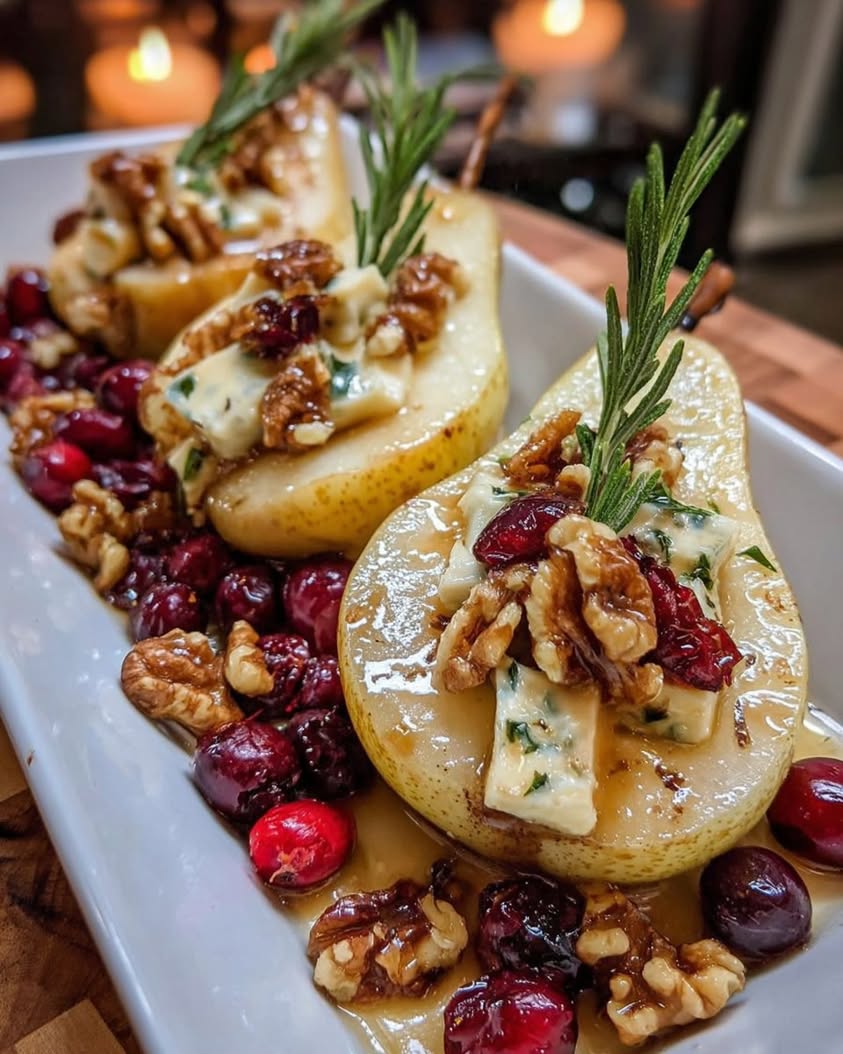
Baked Pears with Brie, Walnuts, and Cranberries: A Sweet and Savory Fall Dessert
Imagine a warm, tender pear, its natural sweetness concentrated by the oven’s heat, cradling a molten core of creamy Brie cheese. Now picture that pear topped with crunchy, toasted walnuts and tart, jewel-like dried cranberries. This is the magic of Baked Pears with Brie, Walnuts, and Cranberries, a dessert that effortlessly bridges the gap between simple weeknight treat and elegant dinner party finale. The combination is a study in contrasts: the soft fruit against the crunchy nuts, the rich, savory cheese against the sweet and tangy fruit. Each bite is a new discovery, a perfect harmony of flavors and textures that feels both familiar and exciting.
This recipe is surprisingly simple to pull together, requiring only a handful of ingredients and minimal hands-on time. You simply halve the pears, scoop out a small well, stuff them with Brie and cranberries, and bake until everything is gloriously melted and bubbly. A final sprinkle of walnuts adds that essential crunch. The aroma that fills your kitchen as these pears bake is intoxicating, a blend of warm fruit, nutty cheese, and sweet honey that promises comfort and delight. Baked Pears with Brie, Walnuts, and Cranberries is a dessert you will turn to again and again, especially during the crisp fall and winter months when pears are at their peak. It is proof that sophistication does not require complexity.
We crafted this recipe with a focus on balance and ease. The pears provide a natural sweetness that allows you to skip heavy sugar additions, while the Brie offers a luxurious creaminess that elevates the entire dish. The walnuts add a necessary textural contrast and a dose of healthy fats, and the cranberries provide bright bursts of acidity. This dessert is naturally gluten-free and can be adapted for various dietary needs. Whether you serve it with a scoop of vanilla ice cream, a dollop of whipped cream, or simply on its own, this dish is a celebration of simple, high-quality ingredients coming together in perfect union. Let us show you how to make this unforgettable dessert.
Quick Recipe Highlights
- Flavor Profile: This dessert is a masterclass in sweet and savory balance. The juicy pears offer honeyed sweetness, which is beautifully offset by the creamy, salty richness of melted Brie. Tart cranberries and earthy walnuts complete the profile with bright, nutty notes.
- Texture: You get a wonderful range of textures in every forkful. The pears become exceptionally tender and almost jammy after baking, while the walnuts stay crunchy. The Brie melts into a luxurious, gooey center that contrasts perfectly with the other elements.
- Aroma: The kitchen fills with the warm, inviting scent of baked pears mingled with the nutty aroma of toasted walnuts and a hint of honey. The Brie adds subtle savory notes that make the fragrance deeply complex and appealing.
- Visual Appeal: The presentation is naturally elegant. Golden-brown pear halves cradle a pool of melted, creamy Brie. The deep red of cranberries and the light brown of walnuts create a beautiful, autumnal color palette that looks stunning on any plate.
- Skill Level Needed: This is an excellent recipe for beginner cooks. The techniques are straightforward, involving basic cutting and assembly. No special culinary skills are required, and the process is very forgiving, ensuring success every time.
- Special Equipment: You need very little equipment for this recipe. A sharp knife and a cutting board for preparing the pears are essential. You will also need a small baking dish to hold the pears snugly during baking.
Recipe Overview
- Difficulty Level: We have rated this recipe as easy because the steps are simple and require no complex techniques. The primary tasks are washing and halving pears, cubing cheese, and measuring nuts and cranberries. The oven does most of the work, making it a very low-stress recipe.
- Category: This dish is most commonly served as a dessert, but it can also work beautifully as a special brunch item or even a savory-sweet appetizer for a fall dinner party. Its versatility allows it to fit into many parts of a meal plan.
- Cuisine: While not tied to a single tradition, this recipe draws inspiration from classic European fall baking, particularly French for the Brie and American for the cranberries. It represents the modern culinary trend of pairing fruit with savory cheese for a balanced dish.
- Cost: The total cost for this recipe is moderate. Pears are affordable when in season, and dried cranberries are very inexpensive. Brie and walnuts are the pricier ingredients, but you only need small amounts, making this recipe a cost-effective way to create a special dessert.
- Season: This is the quintessential fall and winter dessert. Pears are harvested in the fall, and their flavor is best during these cooler months. The warming spices and rich cheese also make it a comforting choice for cold weather holidays.
- Occasion: Baked Pears with Brie, Walnuts, and Cranberries is perfect for Thanksgiving, Christmas dinner, or a cozy Sunday night supper. It also works wonderfully as an elegant dessert for a casual dinner party or a romantic meal for two.
Why You Will Love This Recipe
You will love this recipe first and foremost for its incredible taste. The flavor combination is an absolute winner, and it is one that feels both decadent and fresh. The Brie melts into a creamy, savory puddle that coats the sweet, tender pear with every bite. The tart cranberries cut through the richness, while the walnuts add a necessary crunch. This is not a heavy, overly sweet dessert. Instead, it is sophisticated and balanced, allowing the natural flavors of the ingredients to shine. The texture journey is just as delightful, with soft fruit, crunchy nuts, and creamy cheese all in one dish. It is a dessert that tastes like you spent hours in the kitchen, even though you really did not.
The convenience and preparation benefits are a major reason to love this recipe. With only five main ingredients and about 10 minutes of active prep time, it is incredibly simple to assemble. There is no creaming of butter, no folding of batters, and no complicated pastry work. You simply prepare the pears, make the stuffing, and bake. Because the recipe is so straightforward, it is perfect for a weeknight treat when you crave something special but do not have much time. The hands-off cooking time also allows you to prepare the rest of your meal or simply relax while your kitchen fills with a beautiful aroma. Cleanup is also a breeze since you only use one small baking dish.
Nutritionally, this dessert is a smart choice when compared to many other fall desserts like pies or cakes. Pears are an excellent source of dietary fiber, which aids digestion and promotes fullness. They also provide vitamin C and copper. Walnuts are packed with omega-3 fatty acids, which are great for heart and brain health. Even the Brie contributes valuable protein and calcium. While this dish does have sugar from the fruit and honey, it is not an overly processed sugary dessert. You get wholesome ingredients that provide real nutritional value alongside the indulgence. This makes it a dessert you can feel good about serving to your family and yourself.
This recipe shines in its social and entertaining value. Presentation is key for a host, and these pears look incredibly impressive when served. They are naturally elegant and require no artistic plating skills. You can bake them in a dish and serve them directly from the oven, letting guests help themselves. They are perfect for a buffet-style dinner or a sit-down meal, as they hold their shape beautifully. The fact that they are individual portions makes them ideal for dinner parties, as there is no slicing or serving to coordinate. Your guests will feel cherished when you present them with this warm, stunning dessert, making the meal feel much more special than it was to prepare.
Finally, this recipe wins for its cost-effectiveness and accessibility. You can find pears, Brie cheese, walnuts, and dried cranberries in almost any grocery store, regardless of the season. The need for only a handful of ingredients keeps the grocery bill low, especially since you can buy small amounts of each. Unlike many desserts that require a long list of pantry staples, this recipe uses just a few items you likely already know how to source. The low cost does not reflect the perceived value, as it feels like a lavish, restaurant-quality treat. It democratizes gourmet cooking, proving that beautiful and delicious food does not have to break the bank.
Historical Background and Cultural Significance
The concept of baked fruit is ancient, stretching back to Roman times when fruits like quinces and apples were slow-cooked with honey. Pears have been cultivated for thousands of years, originating in Asia and Europe. The practice of baking pears became particularly popular in medieval European monasteries and manor houses, where they were often poached or baked with wine and spices as a healthy and digestible way to end a meal. This tradition established pears as a fruit worthy of sophisticated preparation, far beyond simple raw eating.
Brie cheese holds a special place in French culinary history. Known as the “Queen of Cheeses,” it has been produced in the Île-de-France region since the 8th century. It was a favorite of royalty, including Charlemagne and King Henry IV. Its creamy texture and mild flavor make it an ideal cheese for melting and pairing with fruit. The combination of Brie and fruit, especially baked, is a classic French technique that highlights the cheese’s ability to balance sweetness with its own rich, savory fat content.
Walnuts and cranberries, both native to North America, were crucial foods for Native American tribes. Walnuts were a valuable source of protein and oil, while cranberries were used for food, medicine, and dye. European settlers quickly adopted both ingredients. Cranberries became a holiday staple, and walnuts found their way into baked goods and stuffings. The modern combination of these New World ingredients with the Old World techniques of baking fruit with cheese is a perfect representation of culinary fusion and the melding of traditions.
This specific recipe for Baked Pears with Brie, Walnuts, and Cranberries is a modern classic that gained popularity in the late 20th and early 21st centuries. It reflects a broader trend in home cooking toward simple, elegant dishes that use high-quality ingredients. It appears frequently in magazines, food blogs, and holiday cookbooks because it is both impressive and accessible. Its popularity endures because it perfectly captures the flavors of autumn and winter, and it satisfies a desire for a dessert that feels special without being overly complicated or heavy.
Ingredient Deep Dive
Pears: Pears have been a symbol of affection and comfort for centuries in many cultures, from ancient Chinese fertility rituals to European Renaissance still-life paintings. They are a fantastic source of dietary fiber, particularly a type called pectin, which helps regulate blood sugar and improve gut health. For this recipe, look for pears that are ripe but still firm. Bosc pears are an excellent choice because their firm flesh holds up well during baking and they have a strong, sweet flavor. Anjou or Bartlett pears also work well as long as they are not overly soft. To test for ripeness, apply gentle pressure near the stem; it should give slightly. Store unripe pears at room temperature and ripe ones in the refrigerator for up to a week.
Brie Cheese: Originating from the Brie region of France, this soft-ripened cheese is known for its edible, downy white rind and creamy, buttery interior. Brie is a good source of protein and calcium, and while it is high in fat, it is also rich in conjugated linoleic acid, which may have health benefits. When selecting Brie for this recipe, choose a wheel that feels slightly springy to the touch, indicating it is ripe and creamy inside. Avoid cheese that is hard or has an overpowering smell of ammonia. For the best melt, bring the Brie to room temperature for 15-20 minutes before cubing it. If you cannot find Brie, you can substitute Camembert, which is similar but slightly stronger, or a mild triple-cream cheese like Saint André.
Walnuts: Walnuts have been cultivated for over 8,000 years and are one of the oldest tree foods known to humanity. They are renowned for their high content of omega-3 alpha-linolenic acid (ALA), which supports heart health and reduces inflammation. When buying walnuts, look for those that are plump and light in color. Avoid shriveled or dark pieces. Because walnuts can become rancid from their high oil content, proper storage is crucial. Keep them in an airtight container in the refrigerator for up to six months or in the freezer for up to a year. For this recipe, toasting the walnuts is highly recommended as it deepens their flavor and adds extra crunch. Simply spread them on a baking sheet and toast at 350°F for 5-7 minutes.
Dried Cranberries: Dried cranberries are a modern American pantry staple, made popular by the commercial availability of sweetened, dried fruit. They are a great source of antioxidants, particularly proanthocyanidins, which are known to help prevent urinary tract infections. When purchasing dried cranberries, check the label for added sugars, as many brands add significant amounts. For this recipe, the tartness is welcome, so look for unsweetened or lightly sweetened versions if possible. Store them in a cool, dark place in an airtight container for up to a year. If they become too hard, you can revive them by soaking them in warm water or orange juice for 10 minutes before using.
Honey or Maple Syrup: Honey has been used as a natural sweetener and medicine for thousands of years across almost every culture. It offers a distinct floral sweetness that pairs beautifully with pears and Brie. Maple syrup, another North American classic, offers a woodsy, caramel-like flavor. Both are high in sugar, so they are used sparingly here. They also provide trace amounts of antioxidants and minerals. For this recipe, you can use either based on your preference. Local, raw honey is a wonderful choice for its unique flavor profile. Pure maple syrup will add a more robust, earthy note. Both should be stored in a cool, dry place, though honey should never be refrigerated.
Common Mistakes to Avoid- A common mistake is using pears that are too soft or overripe. They will turn into mush during baking and lose their shape. Always choose pears that are ripe but still firm to the touch, like Bosc or slightly firm Anjou pears.
- Not removing the core thoroughly is another frequent error. You need to carve out a decent well with a melon baller or small spoon to hold all the delicious stuffing. A shallow divot will not hold enough Brie and cranberries.
- Skipping the toasting of walnuts is a missed opportunity. Toasting brings out their natural oils and deepens their flavor, adding a far superior crunch and nuttiness compared to raw walnuts. It takes only a few minutes.
- Overcrowding the baking dish can cause the pears to steam instead of roast. This prevents them from caramelizing properly and becoming tender. Leave a little space between each pear half for even heat circulation.
- Using too much Brie can overwhelm the other flavors and make the dessert greasy. A small, generous cube is enough to create a creamy, savory pocket that complements the pear without dominating it.
- Baking for too long is a sure way to ruin the dish. The pears should be tender when pierced with a fork but still hold their shape. Overbaking will result in a mushy, unappealing texture. Start checking at the 20-minute mark.
- Forgetting to use a small baking dish that fits the pears snugly can lead to problems. If the dish is too large, the honey and juices will spread out and burn. A snug fit concentrates the juices and creates a beautiful caramelized base.
- Not allowing the pears to rest for a few minutes after baking is a mistake. The cheese will be molten hot and can burn your mouth. Letting them sit for 5 minutes allows the Brie to set slightly and become safer to eat.
- If you choose to add salt, doing so before baking can draw moisture out of the pears. It is better to add a tiny sprinkle of flaky sea salt right before serving to enhance all the flavors without making the pears weep.
Essential Techniques
Preparing the Pears: The technique for preparing the pears is crucial for their structural integrity. After washing and drying them, slice each pear in half lengthwise from the stem to the base. Use a melon baller or a small measuring spoon to scoop out the core and seeds, creating a smooth, shallow well. You also want to remove the small, stringy core that leads up to the stem. Do not peel the pears, as the skin helps them hold their shape during baking. If the pears wobble on the cutting board, slice a very thin piece off the rounded side to create a flat base, ensuring they sit upright in the baking dish.
Stuffing and Assembling: This technique is about even distribution and preventing spillage. Place your cubed Brie inside the well of each pear half. You can also tuck a few pieces under the pear if the well is particularly shallow. Follow this with a few dried cranberries. The goal is to fill the well without overstuffing it, as the cheese will melt and expand. Drizzle a tiny amount of honey or maple syrup over the Brie and cranberries. This not only adds sweetness but also helps them caramelize beautifully in the oven.
Baking and Caramelizing: The key to success here is moderate heat that allows the pears to soften and the Brie to melt without burning the honey. An ideal temperature is 375°F (190°C). Place the stuffed pears in a small baking dish that they fit snugly in. Pour a tablespoon of water or white wine into the bottom of the dish to create a little steam, which helps the pears cook evenly. Bake for 20-25 minutes. You are looking for the pears to be easily pierced with a fork but not collapsing. The Brie should be completely molten and beginning to bubble. For extra caramelization, you can broil them for the last 1-2 minutes, but watch very closely to prevent burning.
Pro Tips for Perfect Baked Pears with Brie, Walnuts, and Cranberries
Always choose firm pears like Bosc or Anjou for baking. Their flesh holds up beautifully to heat without turning into mush, ensuring your pears remain intact and elegant. A ripe but firm pear is your best friend here.
Let your Brie come to room temperature for about 20 minutes before cubing it. This softens the cheese and helps it melt more quickly and evenly during baking, creating a lusciously smooth, gooey center.
Toast your walnuts in a dry skillet over medium heat for 3-5 minutes until they are fragrant and lightly browned. This step enhances their flavor dramatically, adding a deep, toasty crunch that raw walnuts simply cannot match.
Add the toasted walnuts halfway through the baking time, not at the beginning. If added earlier, they can burn in the oven. Sprinkling them on top after about 10-12 minutes allows them to get crisp and warm.
Use a small baking dish. A dish that is just big enough to hold your pear halves snugly prevents the honey and juices from spreading too thinly and burning on the bottom of the pan.
Add a splash of liquid, like water, white wine, or apple cider, to the bottom of the baking dish. This creates a humid environment that helps the pears cook through evenly and prevents the bottom from drying out.
Do not skip the final rest. Once you pull the pears from the oven, let them sit for 5 minutes. This allows the molten Brie to set just slightly, turning from a runny liquid into a perfectly creamy, luscious pocket of cheese.
Finish with a tiny sprinkle of flaky sea salt, like Maldon, just before serving. This counteracts the sweetness and brings out the savory notes of the Brie, creating a more complex and balanced flavor profile.
Variations and Adaptations
Regional Variations: This basic recipe welcomes many cultural twists. For a Mediterranean version, replace the cranberries with chopped dried figs or dates and add a sprig of fresh rosemary to the baking dish. A Middle Eastern adaptation could use pistachios instead of walnuts and drizzle the pears with pomegranate molasses after baking. For a French-inspired dish, trade the cranberries for dried cherries and use a splash of Kirsch or Cognac in the baking liquid.
Seasonal Adaptations: While perfect for fall and winter, this recipe can be adapted for other seasons. In the summer, try it with ripe peaches or nectarines halved and pitted. Substitute the walnuts for sliced almonds and the cranberries for fresh blueberries or raspberries. In the spring, use apricots or plums and top them with pistachios and chopped dried apricots.
Dietary Modifications: This recipe is naturally gluten-free. To make it dairy-free, use a high-quality plant-based Brie alternative, though the melt will differ. For a vegan version, try a cashew-based vegan cheese that melts or simply omit the cheese and stuff the pears with a mixture of nuts, seeds, and dried fruit, drizzled with maple syrup.
Flavor Variations: You can adjust the flavor profile in many ways. Add a pinch of ground cinnamon, nutmeg, or cardamom to the filling for spice. Use orange zest or a splash of orange liqueur like Grand Marnier in the honey drizzle for a citrus note. A few drops of vanilla extract added to the honey can also deepen the sweetness.
Texture Modifications: For a chewier texture, add a few chopped dried apricots or golden raisins to the filling along with the cranberries. If you want a completely smooth center, you can mash the Brie with a fork before stuffing it into the pears. For more crunch, top the baked pears with a few pumpkin seeds or chopped pecans alongside the walnuts.
Presentation Alternatives: Instead of serving the pears whole, you can slice the baked pears and fan them out on a plate for a more modern presentation. You can also serve them over a bed of vanilla yogurt or alongside a scoop of cinnamon ice cream. For a more rustic look, serve them directly in the baking dish with spoons.
Serving and Presentation Guide
Plating Techniques: For the most elegant presentation, use a wide, shallow bowl or a small rimmed plate. Carefully transfer a baked pear half to the center of the plate using a slotted spatula. Spoon any juices from the baking dish over the pear. The pear should sit upright and proud. For a slightly deconstructed look, slice the baked pear in half lengthwise and fan it out on the plate.
Garnishing Ideas: The garnish should be simple and purposeful. A light sprinkle of toasted walnuts and a few extra dried cranberries on the plate add color and texture. A tiny pinch of flaky sea salt is essential for flavor contrast. A fresh sprig of thyme or a small mint leaf provides a beautiful, aromatic green accent.
Traditional Accompaniments: The most classic accompaniment is a scoop of vanilla bean ice cream. The cold, creamy ice cream melting into the warm, sweet pear is an absolute delight. Other excellent options include a dollop of crème fraîche or mascarpone cheese for tanginess, or a drizzle of heavy cream for pure indulgence.
Modern Serving Suggestions: For a lighter option, serve the baked pear over a bed of arugula or mixed greens dressed with a simple balsamic vinaigrette. This creates a beautiful savory-sweet appetizer or light lunch. You can also serve it alongside a slice of toasted sourdough bread to soak up all the delicious juices.
Temperature Considerations: These pears are best served warm, directly from the oven. The contrast of the warm fruit and melted cheese is a key part of the experience. However, they can be served at room temperature, particularly if you are serving them as part of a buffet. Cold pears will have a much firmer texture and the Brie will solidify.
Portion Control Tips: One pear half is typically the perfect portion for a dessert after a large meal. If you are serving this as a main course for brunch or a light dinner, you can offer two halves per person. When scaling for a party, simply multiply the ingredients by the number of guests and bake in batches to avoid overcrowding.
Wine and Beverage Pairing
Wine Pairings: The sweetness of the pears and the savory richness of the Brie call for a wine that can complement both. A late-harvest Riesling or a Gewürztraminer from Alsace is an excellent choice. Their residual sweetness matches the fruit, while their acidity cuts through the cheese. A demi-sec Vouvray, made from Chenin Blanc, will also work beautifully.
Non-Alcoholic Alternatives: A sparkling apple cider or a crisp, dry sparkling apple juice is a perfect non-alcoholic pairing. The bubbles and acidity cleanse the palate between bites. Another wonderful option is a warm cup of spiced apple cider or a chai tea latte, whose spices echo the warmth of the dish.
Coffee and Tea Pairings: A lightly roasted pour-over coffee with fruity notes can be a wonderful companion, as its clean acidity will not overpower the dish. For tea, a smoky Lapsang Souchong or a robust Earl Grey offers a beautiful contrast. A delicate white tea with pear notes is also a subtle and elegant choice.
Temperature Considerations: If serving wine, ensure it is well-chilled, especially for white wines. The cold beverage provides a refreshing contrast to the warmth of the baked pears. For coffee and tea, the serving temperature is personal preference, but a hot beverage alongside a warm dessert is always a comforting combination.
Serving Suggestions: If you are hosting a dinner party, you can offer a small glass of the paired wine with the dessert. For a more casual setting, a carafe of chilled sparkling cider on the table allows guests to serve themselves. When pairing with coffee, offer it alongside or after the pear is finished for a true after-dinner treat.
Storage and Shelf Life
Storage Methods: Store any leftover baked pears in an airtight container. Because the pears are moist and the Brie is soft, it is best to store them in a single layer to prevent them from sticking together or getting crushed. If you need to stack them, place a small piece of parchment paper between the layers.
Temperature Requirements: These pears must be stored in the refrigerator. They are a cooked fruit product containing cheese, so room temperature storage is not safe for more than two hours. The refrigerator will keep them fresh and safe to eat for up to three days.
Container Recommendations: A shallow, wide glass or ceramic dish with a tight-fitting lid is best. Avoid plastic containers that might stain or retain odors. You can also use a sturdy, reusable silicone food storage bag, pressing out as much air as possible before sealing.
Signs of Spoilage: The first sign of spoilage will be a sour or off smell from the cheese or the fruit. The Brie may begin to develop a more pronounced ammonia-like odor. Visually, if you see any mold growing on the pears or the cheese, you should discard the entire batch immediately.
Reheating Instructions: The best way to reheat these pears is in the oven. Place them in a small baking dish, cover loosely with foil, and warm at 350°F for about 10-15 minutes, or until heated through. You can also reheat them in the microwave, but this can make the pears mushy and the cheese rubbery.
Freezing Guidelines: Freezing Baked Pears with Brie, Walnuts, and Cranberries is not recommended. The texture of the pears will become very watery and mushy upon thawing, and the Brie will become grainy and separate. The walnuts will also lose all their crunch and become soggy. It is best to enjoy this dessert fresh.
Make Ahead Strategies
Prep Timeline: You can prepare the pears up to one day in advance. Wash, halve, and core the pears. Place them in a bowl and toss with a little lemon juice to prevent browning. Store them in an airtight container in the refrigerator. The Brie can be cubed and stored separately, and the walnuts can be toasted and stored at room temperature.
Storage Between Steps: It is important to keep the prepared pears separated from the stuffing ingredients. The lemon juice on the pears will inhibit browning and keep them fresh. Keep the cubed Brie and dried cranberries in separate containers in the refrigerator. Assemble and bake the pears right before serving.
Quality Impact Assessment: Making the pears ahead does not significantly diminish the quality. The pears may release a tiny bit of moisture overnight, but this is negligible. The final baked result will still be tender and delicious. The key is not to assemble the pears with the Brie and honey ahead of time, as the Brie can become watery and the honey can seep into the pear unevenly.
Assembly Tips: On the day you plan to serve the dessert, remove the pears from the refrigerator and let them sit at room temperature for 15 minutes. This takes the chill off and ensures more even baking. Then proceed with stuffing them and baking as directed. The total bake time may need to be increased by 5 minutes if the pears are still cold from the fridge.
Reheating Guidelines: Since you are baking them fresh, reheating is not usually required. However, if you are planning a busy schedule, you could bake the pears entirely, let them cool completely, and store them in the refrigerator. Reheat them in the oven covered with foil at 300°F for about 15 minutes to warm through gently.
Fresh Element Additions: To brighten the final dish when making ahead, prepare some fresh elements to add just before serving. Additional toasted walnuts, a few fresh cranberries for color, or a fresh sprig of mint will make the reheated pears look and taste as if they were just made.
Scaling Instructions
Halving the Recipe: Halving this recipe is very straightforward. Use two pears instead of four. Halve the amount of Brie, walnuts, and cranberries. Use one tablespoon of honey and one tablespoon of water. The cooking time should remain roughly the same, but check for doneness starting at 20 minutes.
Doubling or Tripling: Doubling or tripling the recipe for a crowd is also easy. You will need a larger baking dish to accommodate more pears. You may need to use two baking dishes to avoid overcrowding. The cooking time might increase slightly, usually by 5-10 minutes, because the cold mass of fruit is greater.
Equipment Adjustments: When scaling up, switch to a large, ceramic or glass baking dish that holds the pears in a single layer. A 9×13 inch dish works well for eight halves. If you triple it, use two dishes to ensure even cooking. The goal is always to avoid the pears touching too much.
Timing Modifications: For larger batches, expect the cooking time to be slightly longer. The pears might also release more moisture, which can pool in the dish. You can pour off some of the liquid halfway through baking to ensure proper caramelization. Always rely on piercing the pear with a fork to check for doneness.
Storage Considerations: If you are making a large batch, it is best to bake only what you plan to serve immediately. Leftover pears are a treat, but they are best eaten within a day or two. They do not freeze well, so plan your quantities carefully to minimize waste.
Nutritional Deep Dive
Macro Breakdown: A serving of one baked pear half provides a balanced mix of carbohydrates, fats, and protein. The main source of carbohydrates is the pear itself, along with the dried cranberries and honey. The fat content comes from the Brie and walnuts. The protein is primarily from the Brie. This combination makes for a satisfying dessert that can help stabilize blood sugar better than a pure sugar treat.
Micronutrient Analysis: This dessert is a good source of several key micronutrients. Pears provide vitamin C, vitamin K, and copper. Walnuts are rich in magnesium, phosphorus, and vitamin B6. Brie offers calcium and vitamin B12. The dried cranberries contribute some vitamin C and antioxidants. This makes the dish more nutrient-dense than many other desserts.
Health Benefits: The fiber in pears and walnuts is excellent for digestive health and promotes a feeling of fullness. The omega-3 fatty acids in walnuts are crucial for brain function and heart health. The antioxidants in cranberries help combat inflammation and oxidative stress. This dessert offers real health benefits beyond just calories.
Dietary Considerations: This recipe is naturally gluten-free, making it safe for those with celiac disease. It is also vegetarian. It contains dairy from the Brie and tree nuts from the walnuts Print
Baked Pears with Brie, Walnuts, and Cranberries
- Total Time: 40 minutes
- Yield: 4
Description
A warm and elegant dessert featuring sweet pears, creamy brie, crunchy walnuts, and tart cranberries, baked to perfection with a drizzle of honey.
Ingredients
- 4 ripe but firm pears, halved and cored
- 4 oz Brie cheese, sliced into 8 pieces
- 1/2 cup chopped walnuts
- 1/4 cup dried cranberries
- 2 tablespoons honey
- 1 teaspoon cinnamon
- 1/4 teaspoon nutmeg
- 1 tablespoon butter, melted
Instructions
- Preheat oven to 375°F (190°C).
- Place pear halves cut side up in a baking dish.
- Place a slice of Brie on each pear half.
- Sprinkle walnuts and cranberries over the pears and cheese.
- Drizzle with honey and melted butter, then sprinkle with cinnamon and nutmeg.
- Bake for 20-25 minutes until pears are tender and cheese is melted and bubbly.
- Serve warm, optionally with a dollop of whipped cream or vanilla ice cream.
Notes
You can customize the seasonings to taste.
- Prep Time: 15 minutes
- Cook Time: 25 minutes
- Method: Dessert
- Cuisine: American