Mediterranean Orzo with Roasted Vegetables: A Vibrant One-Pan Dinner


Have you ever craved a dish that feels both effortlessly elegant and deeply comforting? This Mediterranean Orzo with Roasted Vegetables delivers exactly that. We toss tender orzo pasta with a medley of sweet bell peppers, earthy zucchini, and juicy cherry tomatoes, all roasted until caramelized and bursting with flavor. A simple lemon-herb dressing ties everything together, creating a meal that works for busy weeknights or relaxed weekend gatherings. The aroma of roasting vegetables fills your kitchen with warmth, promising a dish that tastes bright, fresh, and satisfying.
For anyone seeking a Mediterranean orzo with roasted vegetables recipe that balances simplicity with bold flavor, this one is a keeper. You prep the vegetables while the oven heats, roast them to perfection, and stir them into cooked orzo with feta cheese and fresh herbs. The result is a colorful, hearty dish that feels like a trip to the Greek islands. Whether you serve it as a main course or a side, this recipe adapts to your needs. It also stores well, making it perfect for meal prep or leftovers the next day.
This Mediterranean Orzo with Roasted Vegetables shines because it highlights seasonal produce at its peak. Summer vegetables like eggplant, tomatoes, and bell peppers become sweet and tender when roasted, blending beautifully with the nutty orzo. We finish it with crumbled feta, fresh basil, and a squeeze of lemon for a bright, tangy finish. Every bite offers a mix of textures from creamy cheese to al dente pasta. This dish invites you to enjoy Mediterranean flavors without complicated techniques. Try it once, and it will become a regular in your dinner rotation.
Quick Recipe Highlights
- Flavor Profile: This dish delivers a balance of savory roasted vegetables, tangy feta cheese, and bright lemon. The natural sweetness from bell peppers and cherry tomatoes complements the salty, creamy feta. Fresh basil and oregano add herbal notes that tie everything together in a harmonious blend.
- Texture: You experience al dente orzo pasta alongside tender, caramelized vegetables with slightly crispy edges. The creamy feta crumbles melt into the warm pasta, creating a satisfying mouthfeel. Each forkful offers a pleasant contrast between soft and chewy elements.
- Aroma: Roasting vegetables releases a sweet, earthy fragrance that fills your kitchen with warmth. Lemon zest and fresh herbs add bright, citrusy notes that perk up the senses. The combination of garlic and olive oil creates an inviting, savory base.
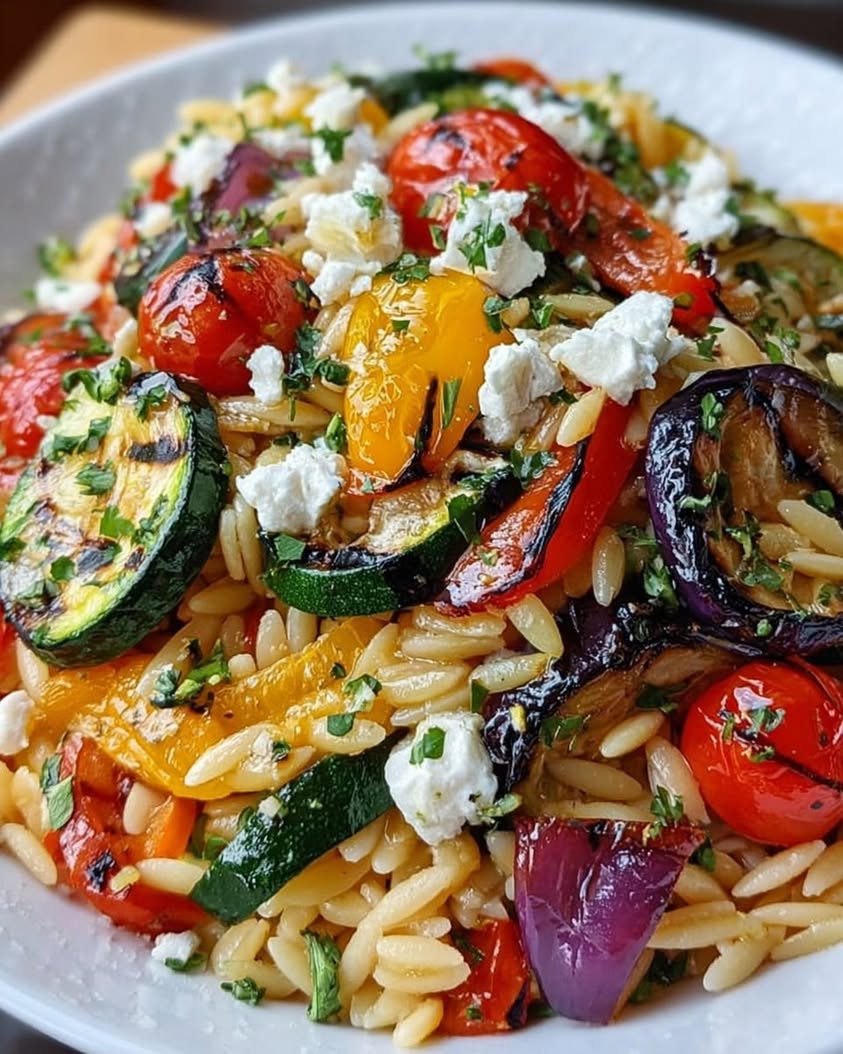
- Visual Appeal: The dish presents a stunning array of colors with deep red tomatoes, orange bell peppers, green zucchini, and white feta against golden orzo. The glossy olive oil dressing makes everything look appetizing and fresh. It resembles a vibrant summer garden on a plate.
- Skill Level Needed: This recipe requires basic knife skills for chopping vegetables and simple stovetop cooking for the orzo. Roasting the vegetables involves minimal hands-on time, mostly waiting for them to cook. Even beginner cooks can achieve great results with this straightforward method.
- Special Equipment: You need a large rimmed baking sheet for roasting the vegetables in a single layer. A medium saucepan with a lid works well for cooking the orzo. A citrus juicer helps extract fresh lemon juice easily for the dressing.
Recipe Overview
- Difficulty Level: We rate this Mediterranean orzo with roasted vegetables as easy because it uses simple techniques like chopping, roasting, and boiling. The recipe does not require advanced cooking skills like making from scratch sauces or complex emulsions. Anyone comfortable with basic kitchen tasks can prepare this dish successfully. The ingredient list is straightforward, and the steps flow logically without rushing.
- Category: This recipe fits perfectly as a main dish for lunch or dinner, offering substantial protein from feta and vegetables. It also works beautifully as a side dish alongside grilled chicken, fish, or lamb. You can serve it warm, at room temperature, or cold as a pasta salad. The versatility makes it suitable for various meal occasions.
- Cuisine: The flavors draw inspiration from Greek and Italian culinary traditions, using ingredients like olive oil, feta, oregano, and basil. This dish celebrates the Mediterranean diet known for its emphasis on fresh vegetables, whole grains, and healthy fats. The cooking method of roasting vegetables reflects simple, rustic techniques common in Mediterranean households. Each ingredient contributes to the vibrant, sun-drenched character of the cuisine.
- Cost: This recipe is budget-friendly because it uses affordable pantry staples like orzo pasta, canned olives, and basic vegetables. Feta cheese and fresh herbs are the most expensive items, but they add significant flavor without requiring large quantities. Buying seasonal produce at local farmers markets can reduce costs further. Overall, this meal costs less than ten dollars for four generous servings.
- Season: Summer and early fall are the best seasons for this recipe when zucchini, bell peppers, tomatoes, and eggplant are at their peak. Roasting intensifies their natural sweetness, making the most of their seasonal flavor. You can still make this dish year-round using hothouse vegetables, though the taste will be less intense. The bright, fresh flavors also make it perfect for spring and early autumn.
- Occasion: This dish suits casual family dinners, potlucks, and summer picnics because it travels well and tastes great at room temperature. It adds a colorful, impressive element to holiday buffets or festive gatherings. The simplicity also makes it ideal for quick lunches or meal prep for busy workweeks. You can easily double the recipe for larger crowds.
Why You Will Love This Recipe
The taste and texture combination in this Mediterranean orzo with roasted vegetables is simply irresistible. The roasted vegetables develop a deep, caramelized sweetness that pairs beautifully with the tangy feta and bright lemon. Each bite offers a delightful mix of soft, creamy, and chewy textures. The orzo absorbs the dressing while retaining its al dente bite. This creates a satisfying mouthfeel that keeps you coming back for more. The fresh herbs add a final layer of brightness that elevates the entire dish.
Convenience is another reason this recipe earns a spot in your weekly rotation. You only need one baking sheet and one pot, which means minimal cleanup. The hands-on preparation takes about fifteen minutes. The oven does most of the work while you prepare the orzo and dressing. This efficiency makes it perfect for busy weeknights when you want a homemade meal without spending hours in the kitchen. You can also prep the vegetables earlier in the day for even faster assembly at dinnertime.
Nutritionally, this dish aligns with the heart-healthy principles of the Mediterranean diet. It provides a good balance of carbohydrates from the orzo, fiber from the vegetables, and protein from the feta. The olive oil offers healthy monounsaturated fats that support cardiovascular health. The vegetables deliver significant amounts of vitamins A and C along with antioxidants. This means you can enjoy a satisfying meal that also nourishes your body with essential nutrients. You can feel good about serving it to your family.
Social and entertaining value makes this recipe a standout choice for gatherings. The vibrant colors and rich aromas immediately catch attention and invite compliments. It pairs easily with grilled meats, seafood, or other Mediterranean side dishes. You can serve it family-style in a large bowl for a casual, communal feel. Guests appreciate the thoughtful flavors even though the preparation is simple. The dish also travels well for picnics or potlucks without losing quality.
Cost-effectiveness and accessibility round out the many reasons to love this recipe. Most ingredients are readily available at any grocery store. The price per serving stays low compared to takeout or restaurant meals. Orzo is an inexpensive pasta that cooks quickly and stores well in the pantry. Fresh vegetables and herbs are affordable when purchased seasonally. Overall, this recipe delivers restaurant-quality taste and presentation at a fraction of the cost.
Historical Background and Cultural Significance
Orzo itself has ancient roots in Greek and Italian cuisines, where small pasta shapes have been crafted for centuries. The name literally means barley in Italian, referencing its similar shape to that grain. Mediterranean cooks have long embraced small pasta because it cooks quickly and absorbs sauces beautifully. This particular dish reflects the tradition of combining pasta with seasonal vegetables, a practice common throughout Greece and Italy. The use of roasting mirrors the rustic cooking methods of village kitchens.
Culturally, this dish represents the core principles of the Mediterranean diet which emphasize fresh, whole foods and simple preparation. Sharing a meal like this brings families together around the table, fostering connection through food. In many Mediterranean homes, vegetable dishes like this one rotate through weekly menus based on what is available from gardens or markets. The inclusion of feta cheese and olive oil pays homage to Greek culinary traditions. This recipe connects modern cooks to generations of home cooks who valued resourceful cooking.
The evolution of this recipe shows how traditional dishes adapt to contemporary lifestyles. Originally, cooks might have stewed vegetables in a pot with pasta rather than roasting them separately. Roasting adds a modern twist that intensifies flavors while reducing hands-on cooking time. The addition of fresh herbs and lemon dressing reflects current preferences for bright, fresh tastes. Today, home cooks can find orzo easily in most supermarkets, making the recipe accessible worldwide. Its popularity continues to grow as people seek healthier, flavorful meal options.
Regional variations of this dish appear across the Mediterranean region with unique local ingredients. In Greece, they might add kalamata olives and capers for a briny kick. In Italy, cooks might use a mix of basil and parsley along with pecorino cheese instead of feta. Some versions incorporate artichoke hearts, sun-dried tomatoes, or roasted red peppers for extra depth. Each variation tells a story about local produce and cultural preferences. This recipe invites you to experiment with your favorite regional ingredients.
Ingredient Deep Dive
Orzo pasta holds cultural significance as a versatile staple in Greek and Italian kitchens. This small, rice-shaped pasta cooks quickly and absorbs flavors better than larger pasta shapes. Nutritionally, orzo provides complex carbohydrates that supply steady energy. It also contains some protein and B vitamins, though whole wheat varieties offer more fiber. When selecting orzo, look for brands that hold their shape well after cooking. Store it in an airtight container in your pantry for up to a year. You can substitute orzo with other small pasta like ditalini or stelline if needed.
Eggplant plays a starring role in this dish with its creamy texture and mild flavor that absorbs the roasting oils and herbs. This vegetable originated in India and traveled to the Mediterranean centuries ago, becoming essential in many regional dishes. Eggplant provides fiber, potassium, and antioxidants called nasunins that support brain health. Choose eggplants that feel heavy for their size with smooth, glossy skin without blemishes. Store them in a cool, dry place and use within a few days for best flavor. Japanese or Italian eggplants work equally well in this recipe.
Bell peppers bring sweetness and vibrant color to the dish, with red peppers offering the most sugar and nutrients. They originated in Central and South America before spreading to Europe where they became staples in Mediterranean cooking. Bell peppers are packed with vitamin C, vitamin A, and antioxidants that boost immune health. Look for peppers with firm, glossy skin and green stems that look fresh. Keep them in the refrigerator crisper drawer for up to a week. Orange or yellow peppers provide similar sweetness and visual appeal.
Zucchini adds a mild, slightly sweet flavor and tender texture that complements the other vegetables. This summer squash originated in the Americas but became a cornerstone of Italian and French cuisine. Zucchini contains high water content along with vitamin C, potassium, and manganese. Select small to medium zucchinis that feel firm and heavy, without soft spots. Store them in the refrigerator and use within a week for optimal freshness. You can substitute yellow squash or pattypan squash for a similar texture.
Cherry tomatoes burst with concentrated tomato flavor and natural sweetness when roasted. These small tomatoes originated in South America and became popular in Mediterranean dishes for their intense taste. Cherry tomatoes provide lycopene, an antioxidant linked to reduced cancer risk and heart health. Choose tomatoes that feel plump and firm with bright, uniform color. Store them at room temperature for best flavor, not in the refrigerator. Grape tomatoes or diced Roma tomatoes work as substitutes, though they may require slightly different roasting times.
Feta cheese brings a salty, tangy creaminess that balances the sweet roasted vegetables. This brined curd white cheese originated in Greece and holds Protected Designation of Origin status there. Feta offers calcium, protein, and beneficial probiotics when made from raw milk. Look for feta stored in brine for the best texture and flavor. Keep it in its brine in the refrigerator for up to a month after opening. Substitute goat cheese or ricotta salata for a similar tangy profile.
Kalamata olives add a briny, fruity note that enhances the Mediterranean character of the dish. These dark purple olives originate from the Kalamata region of Greece where they have been cultivated for centuries. Olives provide healthy monounsaturated fats and antioxidants called polyphenols. Choose olives with smooth, unblemished skin and a meaty texture. Store opened olives in their brine in the refrigerator for months. Black olives or green olives offer different but enjoyable flavor profiles.
Extra virgin olive oil serves as the foundation of the dressing and roasting process, providing fruity, peppery notes. Olive oil has been central to Mediterranean cuisine for thousands of years, valued for both flavor and health benefits. It contains high levels of monounsaturated fats and antioxidants like oleocanthal with anti-inflammatory properties. Select extra virgin olive oil stored in dark bottles to protect it from light. Keep it in a cool, dark cabinet and use within six months of opening. You can substitute avocado oil for a neutral flavor with similar health benefits.
Fresh lemon juice adds brightness and acidity that balances the richness of the olive oil and feta. Lemons originated in Asia but became essential in Mediterranean cooking for their ability to enhance other flavors. Lemon juice provides vitamin C and citric acid that aids digestion. Choose lemons that feel heavy and have smooth, thin skin for the most juice. Store lemons in the refrigerator for up to two weeks. Bottled lemon juice works in a pinch, but fresh offers superior flavor.
Fresh herbs like basil and oregano contribute aromatic complexity and freshness to the dish. Basil originated in India and became central to Italian cooking while oregano is native to the Mediterranean region. Both herbs provide antioxidants and anti-inflammatory compounds with potential health benefits. Look for basil leaves that are vibrant green without wilting or dark spots. Store fresh herbs with stems in water like flowers, or wrap in damp paper towels in the refrigerator. Dried herbs can substitute with a one to three ratio, but fresh herbs deliver brighter flavor.
Common Mistakes to Avoid
- Overcrowding the baking sheet is a frequent error that leads to steamed, not roasted, vegetables. When vegetables sit too close together, they release steam instead of caramelizing properly. Use a large rimmed baking sheet and arrange vegetables in a single layer. If needed, use two sheets or roast in batches.
- Underseasoning the roasting vegetables results in bland final dish. The vegetables need salt and pepper before roasting to enhance their natural sweetness. Sprinkle them generously with kosher salt and black pepper. Remember that feta adds saltiness, but the vegetables themselves need seasoning.
- Overcooking the orzo leads to mushy pasta that lacks texture. Orzo cooks quickly, usually in eight to ten minutes. Start testing for doneness at seven minutes to catch the al dente stage. Drain immediately and rinse if you plan to serve the dish cold.
- Skipping the fresh lemon juice compromises the bright, tangy finish that brings the dish together. The acidity balances the richness of the olive oil and feta. Always use fresh lemon juice rather than bottled for the best flavor. Adjust the amount to your taste preference.
- Using low quality feta cheese that is dry or bland undermines the final dish. Look for feta stored in brine for the creamiest texture and tangiest flavor. Crumble it by hand rather than using pre-crumbled options that may contain anti-caking agents. The quality makes a noticeable difference.
- Forgetting to adjust roasting time for different vegetable sizes leads to uneven cooking. Cut vegetables into uniform pieces so they cook at the same rate. Smaller pieces will cook faster and caramelize more. Check large pieces with a fork for tenderness before removing from the oven.
- Skipping the resting time after roasting causes vegetables to steam inside the pan. Allow vegetables to rest on the baking sheet for five minutes after roasting. This helps them finish cooking and allows the flavors to settle. The texture improves significantly with this brief pause.
- Overmixing the final dish breaks up the vegetables and makes the orzo mushy. Gently fold the vegetables into the orzo using a spatula to avoid crushing tender pieces. Stir just until combined, then garnish and serve. The presentation looks more appealing with intact vegetables.
- Neglecting to taste and adjust seasoning before serving results in a dish that might need more salt or acid. Always taste the final mixture and add more lemon juice, salt, or pepper as needed. The flavors should be bright and balanced, not flat or heavy. Season in layers for the best result.
- Using dried herbs instead of fresh without adjusting the quantity leads to weak flavor. Dried herbs are more concentrated than fresh, so use one third the amount. Fresh herbs provide a brighter, more vibrant taste that really completes this dish. Sprinkle them just before serving for maximum impact.
Essential Techniques
Roasting vegetables properly is the most important technique in this Mediterranean orzo with roasted vegetables recipe. The high heat of 425 degrees Fahrenheit caramelizes natural sugars, creating deep flavor and tender texture. To master this, cut vegetables into uniform one inch pieces so they cook evenly. Toss them generously with olive oil, salt, and pepper before spreading in a single layer. Avoid moving them during roasting to allow proper browning. The visual cue is golden brown edges with tender flesh that yields easily to a fork.
Cooking orzo to al dente requires attention to timing and technique. Bring a large pot of salted water to a rolling boil before adding the pasta. Stir immediately to prevent sticking, then cook according to package directions minus one minute. Test a piece by biting into it it should feel firm at the center but fully cooked on the outside. Drain the orzo in a fine mesh strainer and rinse with cool water if using it cold. The pasta will continue cooking slightly from residual heat after draining.
Making the lemon herb dressing balances acidity and oil for the perfect finish. Whisk together fresh lemon juice, extra virgin olive oil, minced garlic, and dried oregano in a small bowl. The ratio should be about one part lemon juice to three parts olive oil for a well balanced dressing. Season with salt and pepper to taste, then adjust the acidity level as needed. The dressing should taste bright and tangy with a smooth, emulsified texture. Pour it over the warm orzo and toss gently to coat evenly.
Folding ingredients together gently ensures the final dish holds its texture and visual appeal. Use a large spatula or wooden spoon to combine the roasted vegetables with the orzo and dressing. Start from the bottom and lift the mixture upward, rotating the bowl as you go. Repeat until everything is evenly distributed, but stop before the vegetables break apart. The goal is to see distinct pieces of each vegetable throughout the orzo. This technique preserves the beautiful presentation of the dish.
Pro Tips for Perfect Mediterranean Orzo with Roasted Vegetables
Roast your vegetables at the top of the oven for more intense browning and caramelization. The heat is most intense there, which helps develop those delicious crispy edges. Rotate the baking sheet halfway through for even cooking.
Use a mandoline slicer or sharp knife to cut vegetables into very even pieces. Uniform size ensures all pieces finish cooking at the same time. This small step makes a significant difference in the final texture of the dish.
Toast the orzo in a dry pan for two minutes before boiling it for added nutty flavor. This technique works especially well for this recipe because it adds depth to the pasta. Simply stir the dry orzo over medium heat until it smells fragrant and turns golden.
Reserve some of the pasta cooking water before draining to adjust the final consistency. Adding a splash of starchy water helps the dressing adhere to the pasta better. It also loosens the dish if it feels too dry after combining.
Let the roasted vegetables cool for about ten minutes before folding them into the orzo. This prevents them from releasing excess moisture into the pasta and making it soggy. The slight cooling also allows the flavors to meld more effectively.
Taste the feta cheese before adding it to adjust the salt level of the final dish. Some feta is much saltier than others, and you do not want to oversalt the dish. Crumbles should be distributed evenly without clumping together in one area.
Add fresh herbs at the very end of assembly for the brightest flavor and most vibrant color. Basil especially wilts quickly when exposed to heat for long periods. Chop them just before using to preserve their essential oils and aroma.
Serve this dish in a wide, shallow bowl for the best presentation and eating experience. The shape allows the ingredients to spread out, showing off the colorful vegetables. A flat surface also makes it easier to scoop up all components in each bite.
Variations and Adaptations
Regional variations of this Mediterranean orzo with roasted vegetables appear across Greece, Italy, and Turkey with unique local ingredients. In Greece, cooks often add kalamata olives, capers, and a generous amount of dried oregano. Italian versions might include basil, pine nuts, and pecorino romano cheese instead of feta. Turkish adaptations sometimes add pomegranate molasses for a sweet sour note. Each variation reflects the produce and pantry staples of its region, offering you the chance to explore different flavor combinations.
Seasonal adaptations let you enjoy this dish throughout the year using what is freshest at the market. In spring, add asparagus, peas, and spring onions along with fresh mint. Summer calls for the classic combination of tomatoes, zucchini, and eggplant. Autumn variations can incorporate roasted butternut squash, Brussels sprouts, and cranberries. Winter versions might use roasted root vegetables like carrots, parsnips, and sweet potatoes with a hint of cinnamon. Adjust roasting times based on the density of the vegetables you choose.
Dietary modifications make this recipe accessible to many eating preferences without sacrificing flavor. For a gluten free version, substitute orzo with gluten free orzo or quinoa. A dairy free adaptation can replace feta with a plant based feta alternative or omit it entirely, adding extra olives for richness. Vegan versions skip the feta and add more legumes like chickpeas for protein. Each modification maintains the core Mediterranean flavor profile while meeting dietary needs.
Flavor variations allow you to customize the dish to your taste preferences. Add a pinch of red pepper flakes for heat or smoked paprika for a deeper smoky flavor. Incorporate roasted garlic cloves along with the vegetables for a mellow, sweet garlicky note. A splash of balsamic vinegar at the end adds a subtle sweetness and complexity. Fresh dill or mint offers an unexpected but delightful herbal twist. These small changes can transform the dish in exciting ways.
Texture modifications can adjust the mouthfeel of the dish for different preferences. For a crunchier texture, top the finished dish with toasted almonds, pine nuts, or walnuts. Adding crispy chickpeas provides protein and a satisfying crunch. You can also serve the vegetables on a bed of arugula for a fresh, peppery contrast that cuts through the richness. For a softer texture, let the dish sit for a few minutes after combining to allow the flavors to meld further.
Presentation alternatives make this dish suitable for different occasions and aesthetics. For a more elegant look, arrange the roasted vegetables on top of the orzo rather than folding them in. Serve individual portions in shallow bowls with a drizzle of extra olive oil and a sprinkle of fresh herbs. For a family style meal, present the dish in a large ceramic platter with feta crumbled over the top. Garnish with edible flowers like nasturtiums for a truly stunning presentation at special events.
Serving and Presentation Guide
Plating techniques for this dish emphasize the vibrant colors and textures of the ingredients. Use a wide, shallow bowl to allow the components to spread out naturally. Spoon the orzo and vegetables into the center, leaving a little space around the edges. Top with a generous crumble of feta cheese and a few whole olives for visual appeal. The presentation should look abundant and inviting, like a meal from a Greek taverna.
Garnishing ideas elevate the dish from simple to impressive with minimal effort. Sprinkle torn fresh basil leaves and oregano sprigs over the top just before serving. Add a light dusting of sumac for its tangy, lemony flavor and beautiful red color. Drizzle a little extra virgin olive oil around the plate for a glossy finish. A few twists of black pepper add a final touch of flavor and visual contrast.
Traditional accompaniments for this Mediterranean orzo dish include crusty bread for soaking up any dressing left in the bowl. Greek salad with cucumbers, tomatoes, and red onion makes a perfect side dish. Grilled pita bread with tzatziki sauce offers a cool, creamy contrast to the warm pasta. For a heartier meal, serve it alongside grilled chicken souvlaki or lamb chops. The dish also works beautifully as part of a mezze spread with hummus, baba ganoush, and stuffed grape leaves.
Modern serving suggestions include using this dish as a filling for stuffed peppers or zucchini boats. Spoon the orzo and vegetables into halved bell peppers and bake until heated through. You can also serve it as a bed for grilled fish or shrimp for a complete protein rich dinner. For a lighter option, serve the mixture over a bed of mixed greens for a hearty salad. These creative presentations keep the dish exciting and versatile.
Temperature considerations affect the flavor perception of this dish. It tastes delicious warm, at room temperature, or chilled from the refrigerator overnight. Serving it warm highlights the creamy feta and aromatic herbs. Room temperature allows the flavors to meld together more evenly. Cold leftovers work wonderfully as a pasta salad for lunch the next day. The dish adapts well to whatever temperature you prefer.
Portion control tips help you serve the right amount for different appetites. As a main dish, plan for about one and a half cups per serving for a satisfying meal. As a side dish, three quarters of a cup per person is sufficient. The recipe doubles easily for larger gatherings without increasing the difficulty. Leftovers keep well in the refrigerator for up to four days, making it easy to prepare ahead for busy schedules.
Wine and Beverage Pairing
Wine pairings for this Mediterranean orzo with roasted vegetables should complement the bright, herbaceous flavors without overpowering them. A crisp, unoaked Sauvignon Blanc from New Zealand or France offers lively acidity that cuts through the richness of the olive oil and feta. The citrus and herb notes in the wine echo the lemon and basil in the dish. Another excellent choice is a dry, mineral-driven Assyrtiko from Greece, which pairs authentically with the Mediterranean ingredients. A light, fruity Pinot Grigio from Italy also works well, especially when served slightly chilled.
Non alcoholic alternatives provide delicious options for those who do not consume alcohol. A sparkling water with fresh lemon and mint offers a refreshing, palate cleansing accompaniment. Mint iced tea brings herbal notes that complement the oregano and basil in the dish. Pomegranate juice mixed with sparkling water adds a tart, fruity element that matches the tangy feta. A lemon and rosemary infused sparkling water creates a sophisticated, aromatic drink that feels special without alcohol.
Coffee and tea pairings work best if you serve this dish as part of a brunch or lighter meal. A light, floral green tea like jasmine or sencha pairs nicely with the fresh herbs and vegetables. For coffee lovers, a medium roast with bright acidity and citrus notes can follow the meal nicely. Iced tea with lemon is a classic choice that works in any season. Avoid heavy, strongly flavored drinks that might overwhelm the delicate flavors of the dish.
Temperature considerations for beverages matter for the best dining experience. Serve white wines and sparkling water well chilled, between 45 and 50 degrees Fahrenheit. Red wines should be served slightly cool, around 60 degrees, to keep the flavors bright. Non alcoholic drinks taste best over ice with plenty of fresh garnishes. The goal is to provide a refreshing contrast to the warm, savory dish, especially during warmer months.
Serving suggestions include offering both alcoholic and non alcoholic options to accommodate all guests. Set up a self serve beverage station with wine, sparkling water, and flavored seltzers. Provide fresh lemon wedges, mint sprigs, and cucumber slices for guests to customize their drinks. This approach encourages social interaction and allows everyone to find a perfect pairing. The key is to keep the beverages simple and complementary to the Mediterranean flavors of the meal.
Storage and Shelf Life
Storage methods for this Mediterranean orzo dish require airtight containers to maintain freshness and prevent drying out. Transfer leftovers to a glass or plastic container with a tight fitting lid after they have cooled completely. Press a piece of plastic wrap directly onto the surface of the pasta before sealing the lid. This extra step prevents air from reaching the orzo and keeps it moist. Label the container with the date for easy tracking of freshness.
Temperature requirements for storing this dish are straightforward leftovers must go into the refrigerator within two hours of cooking. The ideal refrigerator temperature is 40 degrees Fahrenheit or below to inhibit bacterial growth. Do not leave the dish at room temperature for extended periods, especially in warm weather. The cold environment preserves the flavors and textures for several days. Always reheat only the portion you plan to eat to maintain quality.
Container recommendations prioritize glass or BPA free plastic containers that seal tightly. Glass containers allow you to see the contents and reheat them directly in the microwave or oven. Avoid using metal containers because they can react with acidic ingredients like lemon juice and affect the flavor. Portion leftovers into individual servings for easy grab and go lunches. This also prevents repeatedly cooling and reheating the entire batch.
Signs of spoilage to watch for include off smells, visible mold, or a slimy texture. Feta cheese that develops a strong ammonia smell indicates it has turned bad. The vegetables should remain firm and colorful, not mushy or discolored. If the dish smells sour or unpleasant, discard it immediately. Trust your senses when evaluating leftovers, and when in doubt, throw it out.
Reheating instructions help restore the dish to its original texture and flavor. For best results, reheat the Mediterranean orzo in a skillet over medium heat with a splash of water or olive oil. Stir frequently until warmed through, about three to five minutes. You can also microwave individual portions in thirty second intervals, stirring between each burst. For room temperature serving, simply remove the desired amount from the refrigerator and let it sit for twenty minutes. Avoid overheating, which makes the vegetables mushy and the orzo dry.
Freezing guidelines for this dish are cautious because vegetables with high water content do not freeze well long term. You can freeze the orzo and roasted vegetables for up to one month in an airtight container. The texture will soften upon thawing because of the water released during freezing. For best quality, freeze the dish without the feta cheese and fresh herbs, adding them after thawing and reheating. Thaw in the refrigerator overnight before reheating in a skillet with a little olive oil.
Make Ahead Strategies
Prep timeline for this Mediterranean orzo with roasted vegetables allows you to complete most tasks in advance. Up to three days before serving, wash and chop all the vegetables, storing them in separate containers in the refrigerator. The dressing can be prepared up to five days ahead and stored in a jar in the fridge. Cook the orzo up to two days ahead, toss with a little olive oil to prevent sticking, and refrigerate. On serving day, simply roast the vegetables and assemble the dish.
Storage between steps requires attention to preserve quality and texture. Chopped vegetables should be stored in airtight containers with paper towels to absorb excess moisture. The dressing needs a tight lid and should be shaken well before using. Cooked orzo must be cooled completely before storing to prevent condensation that makes it sticky. Keep each component separate until you are ready to combine them for the best texture.
Quality impact assessment shows that most components hold up well to advance preparation. Roasted vegetables are best when freshly cooked because they retain their texture and caramelization. The orzo and dressing actually improve in flavor after sitting for a day. Fresh herbs should always be added just before serving to preserve their bright color and taste. Feta cheese can be crumbled ahead but stored separately to prevent it from absorbing moisture from the other ingredients.
Assembly tips for make ahead success focus on layering and timing. Start by warming the cooked orzo gently in a skillet with a splash of water or broth. Toss in the roasted vegetables and dressing while everything is still warm Print
Mediterranean Orzo with Roasted Vegetables
- Total Time: 45 minutes
- Yield: 4
Description
A vibrant and hearty dish featuring roasted Mediterranean vegetables tossed with tender orzo pasta, feta cheese, and a lemon herb vinaigrette.
Ingredients
- 1 cup orzo pasta
- 2 cups cherry tomatoes, halved
- 1 zucchini, diced
- 1 red bell pepper, diced
- 1 red onion, diced
- 3 cloves garlic, minced
- 3 tablespoons olive oil
- 1 teaspoon dried oregano
- 1/2 teaspoon salt
- 1/4 teaspoon black pepper
- 1/2 cup crumbled feta cheese
- 1/4 cup chopped fresh parsley
- 2 tablespoons lemon juice
- 1 tablespoon red wine vinegar
Instructions
- Preheat the oven to 425°F (220°C). Line a baking sheet with parchment paper.
- In a large bowl, combine cherry tomatoes, zucchini, bell pepper, red onion, and garlic. Drizzle with 2 tablespoons olive oil, oregano, salt, and pepper. Toss to coat.
- Spread the vegetables in a single layer on the prepared baking sheet. Roast for 20-25 minutes, stirring once, until tender and lightly browned.
- Meanwhile, cook the orzo according to package directions in salted boiling water. Drain and rinse with cold water.
- In a small bowl, whisk together the remaining 1 tablespoon olive oil, lemon juice, and red wine vinegar to make the vinaigrette.
- In a large serving bowl, combine the cooked orzo, roasted vegetables, feta cheese, and parsley. Drizzle with the vinaigrette and toss gently to combine.
- Serve warm or at room temperature.
Notes
You can customize the seasonings to taste. Substitute quinoa for orzo for a gluten-free version, or add chickpeas for extra protein.
- Prep Time: 15 minutes
- Cook Time: 30 minutes
- Method: Main
- Cuisine: Mediterranean