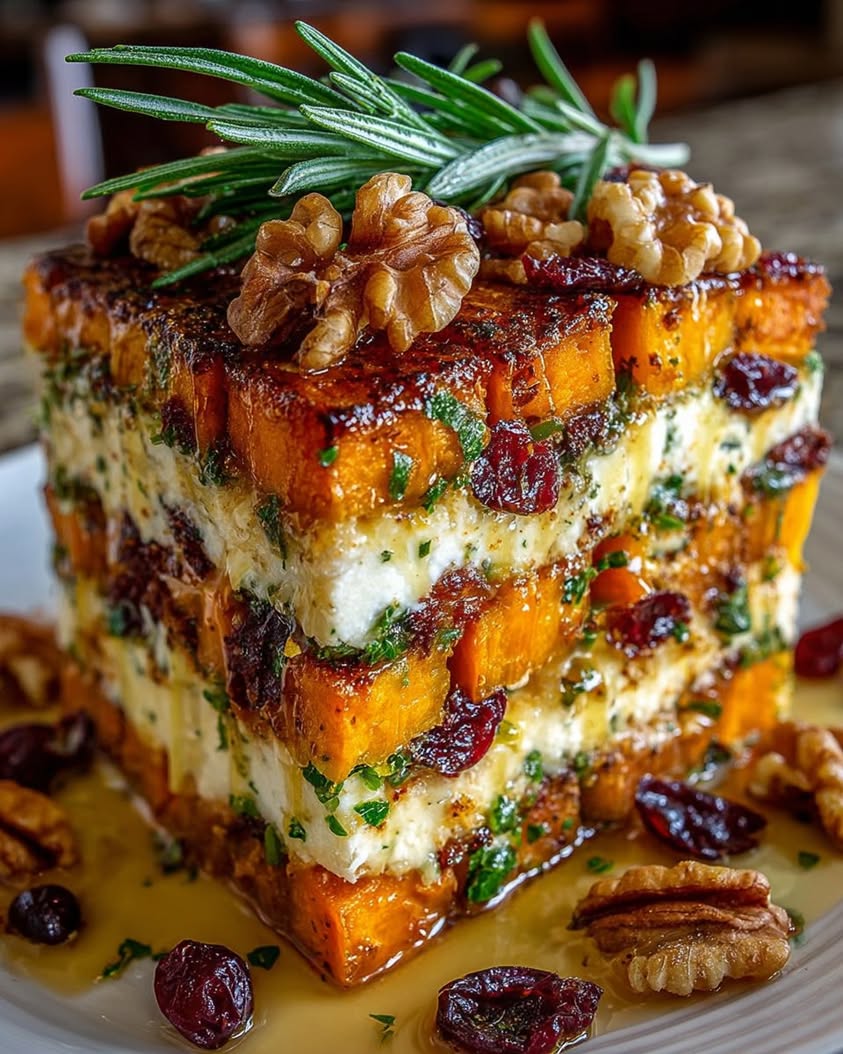
Layered Sweet Potato, Butternut Squash, Carrot Lasagna with Feta, Walnuts, and Cranberry-Honey Glaze
This Layered Sweet Potato, Butternut Squash, Carrot Lasagna with Feta, Walnuts, and Cranberry-Honey Glaze reimagines comfort food with a stunning autumnal twist. Instead of traditional pasta sheets, you use thinly sliced sweet potatoes, butternut squash, and carrots to create a naturally gluten-free lasagna that feels both indulgent and wholesome. The roasted vegetables become tender and caramelized, providing a sweet and earthy foundation that pairs beautifully with the tangy feta cheese, crunchy toasted walnuts, and a glossy cranberry-honey drizzle. This Layered Sweet Potato, Butternut Squash, Carrot Lasagna with Feta, Walnuts, and Cranberry-Honey Glaze brings a beautiful balance of flavors and textures to your table.
When you slice into this lasagna, you immediately notice the vibrant layers of orange, green, and golden hues. The scent of roasted squash and sweet potato mingles with the floral notes of honey and tart cranberries, creating a warm and inviting aroma that fills your kitchen. Each bite delivers a creamy yet slightly firm texture from the roasted vegetables, a salty pop from the crumbled feta, and a satisfying crunch from the walnuts. The cranberry-honey glaze adds a bright, tangy sweetness that ties everything together, making this dish a standout centerpiece for holiday gatherings, Sunday dinners, or any meal where you want to impress without spending hours in the kitchen.
This recipe also works wonderfully for meal prep or entertaining because you can assemble it ahead of time and bake it just before serving. The vegetables hold up well to reheating, and the flavors actually deepen overnight, making leftovers a true treat. This Layered Sweet Potato, Butternut Squash, Carrot Lasagna with Feta, Walnuts, and Cranberry-Honey Glaze offers a refreshing alternative to heavy, cream-based lasagnas while still delivering that satisfying, layered bite everyone craves. Whether you serve it as a main course alongside a simple green salad or as a showstopping side dish, this recipe earns rave reviews every time.
Quick Recipe Highlights
- Flavor Profile: Expect a lovely interplay of sweet, savory, tangy, and nutty notes. The roasted sweet potatoes and butternut squash bring natural sweetness, while the carrots add earthiness. Feta provides a salty, tangy contrast, and the cranberry-honey glaze contributes a tart-sweet finish. Walnuts add toasty bitterness.
- Texture: You get soft, tender vegetable layers that hold their shape, crumbly feta that melts slightly into the crevices, and crunchy walnut pieces that offer contrast. The glaze creates a slightly sticky, glossy coating that clings to each slice.
- Aroma: Expect warm and earthy scents of roasted squash and sweet potato, brightened by the floral sweetness of honey. Notes of tart cranberries and toasty walnuts add depth, while a hint of cinnamon or nutmeg enhances the overall cozy fragrance.
- Visual Appeal: The layered orange sweet potato, deep yellow butternut squash, and bright carrot strips create a colorful mosaic. The white feta crumbles and ruby red cranberries add pops of color, and the shiny glaze gives the top a beautiful, appetizing sheen.
- Skill Level Needed: This recipe qualifies as intermediate due to the precise slicing required for even cooking and the assembly of multiple layers. You need basic knife skills and patience for roasting, but the steps are straightforward and doable for a confident home cook.
- Special Equipment: You need a sharp mandoline or vegetable slicer for uniform vegetable slices, a 9×13-inch baking dish, a sharp chef’s knife, and a small saucepan for the glaze. A pastry brush helps apply the glaze evenly.
Recipe Overview
- Difficulty Level: You should consider this intermediate because you need to slice vegetables uniformly to ensure even roasting and layering. The assembly requires careful arrangement so each slice has an attractive cross-section. However, once you prep the vegetables, the process flows smoothly with no complicated techniques. Most home cooks find the steps manageable after a few practice runs.
- Category: This dish fits perfectly as a main course for a vegetarian dinner or a hearty side dish for holiday meals. It works well for brunch, lunch, or dinner and can serve as a gluten-free alternative to traditional pasta lasagna. You can also present it as a unique appetizer when cut into small squares.
- Cuisine: While this recipe draws inspiration from Mediterranean flavors with its feta and walnuts, it also incorporates American fall harvest ingredients like butternut squash and cranberries. The layering technique mirrors Italian lasagna, but the vegetable base and sweet glaze give it a modern fusion identity that appeals to adventurous eaters. This combination bridges comfort food and seasonal cooking.
- Cost: You should expect a moderate cost, generally between 15 and 20 dollars depending on your location and ingredient sourcing. Butternut squash, sweet potatoes, and carrots are affordable year-round. Feta cheese and walnuts cost a bit more, but cranberries and honey are pantry staples. You can reduce costs by buying walnuts in bulk or choosing store-brand feta.
- Season: Autumn and winter are the ideal seasons because sweet potatoes, butternut squash, and cranberries peak during these months. The warm, earthy flavors and cozy presentation align perfectly with cooler weather. You can still make this dish in spring or summer using frozen cranberries, but the fresh seasonal produce truly shines.
- Occasion: This lasagna works beautifully for Thanksgiving, Christmas, Easter brunch, or any festive gathering where you want to showcase seasonal vegetables. It also makes an impressive dinner party entree for vegetarian guests. You can even serve it as an elegant side for roasted poultry or pork.
Why You’ll Love This Recipe
Every bite of this dish delivers a satisfying combination of creamy, crunchy, tangy, and sweet elements. The roasted sweet potatoes and butternut squash become tender and caramelized, while the carrots add a subtle earthiness that balances the sweetness. The feta crumbles offer a salty, tangy punch that cuts through the richness, and the toasted walnuts provide a pleasant crunch. The cranberry-honey glaze coats everything in a glossy, tart-sweet layer that makes each forkful feel complete. You love how the textures contrast with each other because they keep your palate engaged from start to finish.
Preparing this Vegetable Lasagna with Feta Walnuts and Cranberry Honey Glaze is surprisingly straightforward despite its impressive appearance. You can slice the vegetables using a mandoline in just a few minutes, and the oven does most of the work during roasting. Assembly involves layering the roasted vegetables with feta and walnuts, then drizzling the glaze before a final bake. This process lets you multitask while the vegetables cook, so you can prepare a salad or set the table. You appreciate how the hands-on time stays under 30 minutes once you master the slicing technique.
Nutritionally, this recipe offers a wealth of benefits that make it a smart choice for health-conscious eaters. Sweet potatoes and butternut squash provide high amounts of vitamin A and fiber, which support eye health and digestion. Carrots add beta-carotene and antioxidants, while walnuts supply omega-3 fatty acids that promote heart health. Feta cheese offers protein and calcium with less fat than many other cheeses. The honey and cranberries contribute natural sweetness without refined sugar, making this dish a guilt-free indulgence that fits into balanced eating plans.
You love how this lasagna makes entertaining easy because it looks stunning on the table and requires minimal last-minute effort. The layered vegetables create an eye-catching presentation that impresses guests, and the sweet-tart glaze adds a touch of elegance. You can prepare this dish a day ahead and reheat it just before serving, which frees you to enjoy your party. It also travels well for potlucks or holiday dinners, and the leftovers taste even better the next day. This recipe earns consistent compliments because it feels special without requiring complicated techniques.
Cost-effectiveness plays a major role in why you love this recipe, as the ingredients are affordable and widely available. Butternut squash, sweet potatoes, and carrots cost very little per pound, especially during fall harvest season. Feta cheese and walnuts add flavor without breaking the bank, and you can often find them on sale. The cranberries and honey are pantry staples that you probably already have on hand. You can feed eight people generously for under 20 dollars, making this an economical choice for feeding a crowd or meal prepping for the week. This value makes it accessible for families and budget-conscious cooks.
Historical Background and Cultural Significance
The concept of layering vegetables with cheese and nuts draws from Mediterranean traditions, where cooks have long roasted squash and root vegetables with tangy cheeses like feta. Ancient Greeks and Romans used honey as a sweetener and preservative, often drizzling it over roasted produce and nuts. The combination of sweet, salty, and tart flavors appears in many Middle Eastern and North African dishes, such as roasted carrots with honey and tahini or butternut squash with pomegranate molasses. This recipe updates those ancient flavor pairings with a modern lasagna format that appeals to contemporary palates.
In American culinary history, the lasagna evolved from an Italian pasta dish into a versatile casserole that incorporates regional ingredients. During the 20th century, home cooks began substituting vegetables for pasta to create lighter, gluten-free versions that accommodated dietary needs. The rise of farm-to-table cooking further popularized using seasonal produce like sweet potatoes and butternut squash in layered dishes. This particular Vegetable Lasagna with Feta Walnuts and Cranberry Honey Glaze reflects that evolution by combining Mediterranean influences with American autumn harvest traditions.
Butternut squash and sweet potatoes have deep cultural roots in indigenous American agriculture, where they were staple crops for centuries before European colonization. Native Americans cultivated these vegetables alongside corn and beans, creating a sustainable agricultural system that supported large populations. Cranberries also originated in North America, where Indigenous peoples used them for food, medicine, and dye. The incorporation of these native ingredients into a lasagna-style dish represents a fusion of Old World and New World culinary traditions, honoring both the land and the cultural exchange that shaped modern cooking.
Regional variations of this dish appear throughout the United States, particularly in New England and the South. In New England, cooks often use maple syrup instead of honey and add dried cranberries for extra tartness. Southern versions sometimes include pecans instead of walnuts and use a touch of cayenne or smoked paprika for heat. West Coast adaptations might incorporate goat cheese instead of feta and add fresh herbs like sage or thyme. These regional twists show how versatile this recipe is and how easily it adapts to local ingredients and flavor preferences.
Ingredient Deep Dive
Sweet potatoes hold a special place in global cuisine, from Southern American candied yams to Japanese roasted sweet potatoes. Nutritionally, they are packed with beta-carotene, vitamin C, and fiber, which support immune function and digestive health. When selecting sweet potatoes, choose firm specimens with smooth, unblemished skin and no soft spots. The orange-fleshed varieties work best for this recipe because they become creamy when roasted. Store them in a cool, dark place for up to two weeks, but do not refrigerate them because cold temperatures can alter their flavor and texture. If you need a substitute, you can use yams or even regular potatoes with a touch of added sweetness.
Butternut squash offers a buttery, nutty flavor that pairs beautifully with the other ingredients. This winter squash originated in the Americas and has become a staple in fall cooking worldwide. It provides high levels of vitamin A, vitamin C, and potassium, which support eye health and blood pressure regulation. When choosing a butternut squash, look for one that feels heavy for its size and has a hard, beige skin without cracks or soft spots. You can store whole butternut squash in a cool, dry pantry for up to three months. If you cannot find butternut squash, you can substitute acorn squash, kabocha squash, or even pumpkin, though the cooking time may vary slightly.
Carrots bring sweetness, color, and a subtle earthiness that ties the vegetable layers together. They have been cultivated for thousands of years, with origins in Central Asia, and they became popular in Europe during the Middle Ages. Carrots are rich in beta-carotene, fiber, and antioxidants that protect against cellular damage. For this recipe, choose large, firm carrots with bright orange color and no signs of wilting. You can store carrots in the refrigerator crisper drawer for up to three weeks. If you prefer, you can substitute parsnips for a sweeter, more floral flavor or use celery root for a milder taste.
Feta cheese adds a tangy, salty contrast that cuts through the sweetness of the roasted vegetables. This brined curd white cheese originates from Greece, where it has been made for centuries using sheep’s milk or a mixture of sheep and goat milk. Feta provides calcium, protein, and beneficial probiotics that support gut health. When buying feta, choose blocks stored in brine rather than pre-crumbled varieties, as they have better texture and flavor. You can store feta in its brine in the refrigerator for up to two weeks. For a dairy-free alternative, you can use a firm tofu marinated in lemon juice and salt, or try a plant-based feta style cheese.
Walnuts give this dish a crunchy texture and rich, earthy flavor that complements the roasted vegetables. Walnuts originated in Persia and have been traded along the Silk Road for millennia. They are an excellent source of omega-3 fatty acids, antioxidants, and vitamin E, which support brain health and reduce inflammation. When selecting walnuts, look for ones that feel heavy and have a consistent color without any rancid smell. Store them in an airtight container in the refrigerator or freezer for up to six months to prevent them from going stale. You can substitute pecans, almonds, or pine nuts depending on your preference, though each will change the flavor profile slightly.
Cranberries provide the tart, bright note that balances the sweetness of the honey and vegetables. These native North American berries have been used by Indigenous peoples for centuries in pemmican, teas, and medicinal preparations. Cranberries are packed with vitamin C, fiber, and proanthocyanidins that support urinary tract health. For this recipe, you can use fresh or frozen cranberries, though frozen ones may release a bit more liquid during cooking. If you cannot find cranberries, you can substitute dried cranberries rehydrated in warm water, or use pomegranate arils for a similar tart-sweet pop. Dried cherries or sour cherries also work in a pinch.
Honey serves as the sweetener and glaze base that brings the dish together. Honey has been used as a sweetener and preservative for thousands of years, with evidence of beekeeping dating back to ancient Egypt. It contains antioxidants, enzymes, and trace amounts of vitamins and minerals. For this recipe, choose a mild, floral honey like clover or orange blossom so it does not overpower the other flavors. You can substitute maple syrup, agave nectar, or brown rice syrup for a different sweetener, though each will change the final taste profile. Store honey in a cool, dark place, and if it crystallizes, you can warm it gently to return it to liquid form.
Common Mistakes to Avoid
- You may slice vegetables unevenly, which leads to some pieces cooking faster than others and creating a mushy or undercooked lasagna. Solution: Use a mandoline slicer set to an even thickness, around one-eighth inch, for consistent results.
- You might skip roasting the vegetables before layering, resulting in watery lasagna because raw vegetables release moisture during baking. Always roast or pre-cook the vegetable slices until they are just tender and lightly browned.
- You could use too much feta cheese, which makes the dish overly salty and greasy. Solution: Use the recommended amount and distribute it evenly across the layers for balanced flavor.
- You may forget to toast the walnuts, which makes them less flavorful and slightly chewy. Toast them in a dry pan over medium heat for three to five minutes until fragrant, then let them cool before adding.
- You might apply the cranberry-honey glaze too early, causing it to burn or become sticky during baking. Solution: Add the glaze only during the last ten minutes of baking so it stays glossy and does not caramelize too much.
- You could overcook the vegetables during roasting, turning them into mush that falls apart during assembly. Solution: Roast until fork-tender but still firm enough to hold their shape when lifted.
- You might use frozen vegetables without thawing and draining them, which adds excess water to the lasagna. Solution: If using frozen vegetables, thaw them completely and pat them dry with paper towels before layering.
- You may skip the resting time after baking, causing the lasagna to fall apart when you slice it. Always let it rest for at least fifteen minutes before cutting so the layers set.
Essential Techniques
Proper slicing of vegetables is the most critical technique in this recipe. When you slice sweet potatoes, butternut squash, and carrots into uniform one-eighth-inch rounds, they cook evenly and create beautiful, consistent layers. Use a mandoline slicer with a guard for safety, or use a sharp knife and a steady hand. If the slices are too thick, they will remain hard in the center; if too thin, they will disintegrate. The goal is to have slices that are pliable enough to bend without breaking but sturdy enough to hold their shape during roasting. You can test a slice by trying to roll it between your fingers.
Roasting the vegetables before layering is essential for removing excess moisture and concentrating their natural sugars. When you roast them at 400 degrees Fahrenheit on parchment-lined baking sheets, the edges become lightly caramelized while the centers stay tender. Spread the slices in a single layer without overlapping so they cook evenly. Flip them halfway through the roasting time to ensure both sides brown. You want them to be fork-tender but still firm enough to lift without tearing. This step prevents a watery lasagna and enhances the sweet, nutty flavors that make the dish so appealing.
The cranberry-honey glaze requires careful preparation to achieve the right consistency and flavor balance. Combine fresh or frozen cranberries with honey in a small saucepan and cook over medium heat until the cranberries burst and release their juices. This usually takes about five to seven minutes. Stir occasionally to prevent sticking and allow the mixture to thicken slightly. You want the glaze to coat the back of a spoon but still be pourable. If it becomes too thick, add a tablespoon of water to thin it out. The finished glaze should be tart, sweet, and bright red, with a glossy sheen that makes the finished lasagna look stunning.
Pro Tips for Perfect Layered Vegetable Lasagna with Feta Walnuts and Cranberry Honey Glaze
Use a sharp mandoline for uniform vegetable slices to ensure even cooking and a polished appearance. Invest in a model with adjustable thickness settings so you can control the slice thickness precisely. Test a few slices before committing to the whole batch.
Roast the vegetables in batches if your oven cannot accommodate all the slices at once. Overcrowding causes steaming instead of roasting, leading to soggy vegetables. Use multiple baking sheets if needed and rotate them halfway through.
Toast the walnuts in a dry skillet over medium heat until they become fragrant and lightly golden. Stir frequently to prevent burning, and transfer them to a plate immediately to stop the cooking process. Let them cool before using.
Layer the vegetables in an overlapping pattern so you cover the entire baking dish without gaps. Start with a thin layer of sweet potatoes, then add butternut squash, then carrots. Repeat with feta and walnuts between each layer for even distribution.
Let the assembled lasagna rest at room temperature for ten minutes before baking. This allows the flavors to meld and the vegetables to settle. Cover with foil for the first thirty minutes of baking to trap steam and ensure tenderness.
Brush the cranberry-honey glaze during the last ten minutes of baking to prevent it from burning. Apply a generous layer using a pastry brush, then return the lasagna to the oven uncovered. The glaze will set into a shiny, sticky coating.
Allow the lasagna to rest for at least fifteen minutes after baking before slicing. This resting period lets the layers firm up so you get clean, neat slices instead of a messy heap. Use a sharp serrated knife for the best results.
Variations and Adaptations
Regional variations of this Vegetable Lasagna with Feta Walnuts and Cranberry Honey Glaze appear across the United States, each adding local flair. In the Pacific Northwest, cooks often substitute hazelnuts for walnuts and use a blackberry honey glaze that reflects the region’s berry harvest. Southern variations might include pecans and a touch of bourbon in the glaze for added warmth. New England versions swap the honey for maple syrup and add dried cherries alongside the cranberries. These regional twists let you personalize the recipe while honoring local ingredients and traditions.
Seasonal adaptations allow you to enjoy this dish year-round by swapping vegetables based on availability. In spring, you can replace butternut squash with asparagus or zucchini and use a lemon-thyme honey glaze for a brighter flavor. Summer variations work well with heirloom tomatoes, eggplant, and bell peppers, paired with a basil-infused glaze. For winter, you can add roasted parsnips, turnips, or celery root to the vegetable mix and incorporate rosemary or sage into the glaze. Each season brings new possibilities while maintaining the core concept of layered vegetables, cheese, and sweet-tart glaze.
Dietary modifications make this recipe accessible to a wider range of eaters. For a vegan version, replace the feta cheese with a firm tofu that you marinate in lemon juice, nutritional yeast, and salt. You can also use a store-bought vegan feta made from cashews. For a dairy-free option, use a dairy-free feta alternative or simply omit the cheese and add extra toasted nuts for richness. The recipe already works as a gluten-free dish because it uses vegetables instead of pasta, so you do not need any substitutions for that dietary need.
Flavor variations let you customize the taste profile to your preferences. If you enjoy spicy food, add a pinch of cayenne pepper or red pepper flakes to the glaze for a subtle heat. For an herby version, mix fresh thyme, rosemary, or sage into the feta before layering. You can also experiment with different nuts, such as pecans, almonds, or pine nuts, each bringing its own unique flavor and texture. If you prefer a tangier glaze, add a tablespoon of balsamic vinegar or pomegranate molasses to the honey-cranberry mixture.
Texture modifications allow you to adjust the dish based on what you have available or your texture preferences. For a creamier lasagna, add dollops of ricotta cheese or a béchamel sauce between the layers. If you prefer a firmer texture, slice the vegetables slightly thicker and roast them until they are just tender with some bite remaining. You can also add a layer of cooked quinoa or lentils for extra protein and a chewy texture. Each adjustment changes the final experience without losing the essence of the original recipe.
Presentation alternatives make this dish suitable for different occasions and serving styles. Instead of a large rectangular lasagna, you can assemble individual portions in ramekins for a personalized presentation at dinner parties. You can also serve it as a deconstructed salad by arranging the roasted vegetables on a platter, topping them with feta, walnuts, and a drizzle of glaze. For a more rustic approach, serve it directly from the baking dish with a large spoon, allowing guests to help themselves family-style. Each presentation method highlights the vibrant colors and textures in its own way.
Serving and Presentation Guide
Plating techniques can elevate this Vegetable Lasagna with Feta Walnuts and Cranberry Honey Glaze from a simple casserole to a restaurant-worthy dish. Use a large, flat serving spatula to lift each portion carefully, ensuring the layers remain intact. Place each square in the center of a warm plate, then wipe any excess glaze from the plate edges with a damp paper towel. For a more dramatic presentation, cut the lasagna into wedges instead of squares, exposing the colorful layers in a fan pattern. Garnish the plate with a few fresh cranberries and a sprinkle of chopped parsley for a pop of green.
Garnishing ideas extend beyond simple herbs to create visual interest and reinforce the dish’s flavors. Sprinkle extra toasted walnut pieces over the top just before serving to add crunch and visual texture. Add a few fresh cranberries or pomegranate arils for a jewel-like appearance that echoes the glaze. A light dusting of flaky sea salt enhances the sweet and tangy notes while providing a subtle crunch. For a finishing touch, drizzle a small amount of the glaze in a decorative pattern on the plate around the lasagna, or add a sprig of fresh thyme or rosemary for an aromatic garnish.
Traditional accompaniments pair well with this lasagna to create a complete meal. A simple green salad with a lemon vinaigrette balances the richness of the roasted vegetables and cheese. Roasted Brussels sprouts or steamed green beans add another vegetable element and a contrasting texture. Crusty bread or garlic toast works well for sopping up any extra glaze on the plate. For a heartier meal, serve the lasagna alongside roasted chicken, pork tenderloin, or a grilled fish steak. These accompaniments round out the meal without overshadowing the lasagna’s starring role.
Modern serving suggestions adapt this dish for contemporary dining trends and preferences. You can serve it as a main course for a vegetarian dinner party, paired with a bold red wine like a Syrah or a Zinfandel. For a lighter lunch, serve smaller portions alongside a bowl of butternut squash soup or a kale salad. The lasagna also works incredibly well as a make-ahead brunch item, served warm or at room temperature. For a buffet-style gathering, cut the lasagna into bite-sized squares and serve them on a platter as appetizers, which guests can eat with toothpicks.
Temperature considerations matter because this lasagna tastes delicious at different temperatures. Serve it hot from the oven for the most dramatic presentation and when the glaze is at its glossiest. It also tastes wonderful at room temperature, making it ideal for picnics, potlucks, or outdoor gatherings. If you plan to serve it later, reheat individual portions in a 350 degree Fahrenheit oven for about fifteen minutes, covering them with foil to prevent drying. Avoid microwaving because it can make the vegetables rubbery and the glaze sticky. Allow the lasagna to rest at room temperature for up to two hours after baking without compromising food safety.
Portion control tips help you manage serving sizes for different occasions and appetites. For a main course, plan on one large square about three inches by four inches per person. For a side dish, cut smaller two-by-two-inch squares so guests can sample other dishes as well. If you serve the lasagna as an appetizer, cut it into one-inch cubes and arrange them on a platter with toothpicks. For large gatherings, you can double the recipe and bake it in two 9×13-inch dishes, which gives you enough to feed sixteen people as a main course or thirty as an appetizer. Adjust the roasting time slightly if you double the recipe.
Wine and Beverage Pairing
Wine pairings enhance the flavors of this Vegetable Lasagna with Feta Walnuts and Cranberry Honey Glaze beautifully due to its sweet-savory profile. A dry Riesling offers crisp acidity that cuts through the richness of the feta and roasted vegetables while complementing the sweetness of the cranberry-honey glaze. A Viognier brings floral and stone fruit notes that echo the honey and cranberry flavors without overpowering them. For red wine fans, a Pinot Noir with its bright cherry and earthy undertones pairs wonderfully with the roasted squash and sweet potatoes. A light-bodied Gamay or a Beaujolais also works well, providing fruity freshness that matches the dish’s tart elements.
Non-alcoholic alternatives provide equally satisfying pairings for those who abstain from alcohol. A sparkling apple cider or a non-alcoholic sparkling wine offers effervescence that cleanses the palate between bites. A tart cranberry spritzer made with cranberry juice, soda water, and a squeeze of lime mirrors the flavors in the glaze and adds refreshment. For a warm option, serve a spiced apple cider or a chamomile tea with honey, which complements the dish’s cozy autumn character. Herbal teas like ginger or lemon balm also work well because they bring brightness without competing with the food.
Coffee and tea pairings expand the beverage options beyond wine and cider. A light roast coffee with floral and fruity notes pairs surprisingly well with the sweetness of the glaze and the earthiness of the vegetables. For tea drinkers, a Earl Grey with its bergamot citrus notes echoes the cranberry tartness while adding a sophisticated layer. A chai tea with its blend of cinnamon, cardamom, and ginger complements the warming spices often used in autumn cooking. A green tea like Sencha offers a grassy, slightly vegetal note that contrasts nicely with the rich, sweet vegetable layers. Serve any of these beverages at the appropriate temperature for the best experience.
Temperature considerations for beverages should match the serving temperature of the lasagna. If you serve the dish hot from the oven, offer chilled white wines or sparkling beverages to create a pleasing temperature contrast. For room temperature servings, you can serve red wines at cellar temperature or warm beverages like mulled cider. When serving cold beverages, use stemware that keeps your hands away from the bowl to maintain the drink’s temperature. For hot beverages, pre-warm the cups or mugs so the drink stays hot longer. These small details improve the overall dining experience and show attention to the guest experience.
Serving suggestions for beverages include offering a selection that accommodates different preferences at your table. For a dinner party, provide at least one white wine, one red wine, and one non-alcoholic option so guests have choices. Set up a small beverage station with glasses, napkins, and a card explaining each option’s pairing notes. For a more interactive experience, you can do a small tasting flight featuring a white wine, a red wine, and a sparkling cider, allowing guests to compare how each pairs with the lasagna. This approach turns the meal into an engaging culinary experience that guests remember fondly.
Storage and Shelf Life
Storing your Vegetable Lasagna with Feta Walnuts and Cranberry Honey Glaze properly ensures you enjoy leftovers without quality loss. Let the lasagna cool completely to room temperature before covering it to prevent condensation that makes the vegetables soggy. Once cooled, cover the baking dish tightly with aluminum foil or plastic wrap, or transfer individual portions to airtight containers. Store it in the refrigerator at 40 degrees Fahrenheit or below for up to five days. The flavors actually deepen over the first two days as the ingredients meld together, making leftovers even more delicious than the first serving.
Temperature requirements play a critical role in food safety and quality preservation. Keep the lasagna refrigerated consistently and do not leave it at room temperature for more than two hours total, including serving time. If the room temperature exceeds 90 degrees Fahrenheit, limit the time to one hour. When reheating, ensure the internal temperature reaches 165 degrees Fahrenheit to kill any potential bacteria. Use a food thermometer to check the center of the lasagna. Never reheat the same portion more than once, as repeated heating and cooling cycles degrade texture and increase food safety risks.
Container recommendations affect how well the lasagna retains its texture and flavor. Glass or ceramic containers work best because they do not react with the acidic cranberry glaze and provide even heat distribution during reheating. If you use plastic containers, choose ones labeled BPA-free and microwave-safe. Divide the lasagna into individual portions before storing if you plan to reheat single servings. This approach prevents you from repeatedly heating the entire dish, which dries it out. For short-term storage, you can keep the lasagna in the original baking dish if you cover it tightly with foil.
Signs of spoilage indicate when you need to discard leftovers to avoid foodborne illness. If you see any mold growth, which appears as fuzzy spots in white, green, or black colors, discard the entire dish immediately. A sour or off smell that differs from the original aroma also signals spoilage. If the vegetables become excessively mushy or slimy, or if the glaze separates into a watery liquid, the lasagna has started to degrade. Always trust your senses when evaluating leftovers. When in doubt, throw it out to stay safe.
Reheating instructions help you restore the lasagna to its original delicious state without drying it out. The oven method works best: preheat your oven to 350 degrees Fahrenheit, place the lasagna in an oven-safe dish, cover it with foil, and heat for fifteen to twenty minutes. Remove the foil during the last five minutes to crisp the top slightly. For the microwave, cover a single portion with a damp paper towel and heat on medium power for two to three minutes, checking at one-minute intervals. The microwave method is faster but may result in slightly softer vegetables and less crispy edges.
Freezing guidelines let you preserve the lasagna for up to three months, which is useful for meal prep or holiday planning. Assemble the lasagna completely but do not bake it. Wrap the assembled dish tightly in plastic wrap, then cover it with a layer of aluminum foil. Label it with the date and contents before freezing. When you want to bake it, thaw it overnight in the refrigerator, then follow the original baking instructions. You can also freeze baked lasagna after it cools completely, using the same wrapping method. Reheat from frozen by adding about fifteen minutes to the baking time and covering with foil for the first thirty minutes.
Make Ahead Strategies
Prep timeline planning lets you break down the work across multiple days for stress-free entertaining. Two days before serving, you can roast the vegetables, toast the walnuts, and prepare the cranberry-honey glaze. Store each component in separate airtight containers in the refrigerator. One day before serving, you can assemble the lasagna completely and cover it tightly with foil. On the day of serving, simply bake it according to the recipe instructions. This timeline ensures you have minimal work on the day you serve the dish, freeing you to focus on other dishes or your guests.
Storage between steps requires careful handling to maintain each component’s quality. Roasted vegetables should cool completely before you store them in the refrigerator to prevent condensation. Layer them between sheets of parchment paper if you stack them to prevent sticking. The cranberry-honey glaze can thicken when chilled, so warm it gently on the stove or in the Print
Layered Sweet Potato, Butternut Squash, Carrot Lasagna with Feta, Walnuts, and Cranberry-Honey Glaze
- Total Time: 85 minutes
- Yield: 8
Description
A stunning vegetarian lasagna that layers sweet roasted vegetables with rich feta cheese, crunchy walnuts, and a tangy cranberry-honey glaze. Perfect for holiday gatherings or a special dinner.
Ingredients
- 2 large sweet potatoes, peeled and thinly sliced
- 1 small butternut squash, peeled, seeded, and thinly sliced
- 3 large carrots, peeled and thinly sliced lengthwise
- 1 cup crumbled feta cheese
- 1/2 cup chopped walnuts
- 1 cup fresh cranberries
- 2 tablespoons honey
- 2 tablespoons olive oil
- 1 teaspoon dried thyme
- 1 teaspoon salt
- 1/2 teaspoon black pepper
- 1/2 cup vegetable broth
- 9 lasagna noodles (no-boil or regular, boiled al dente)
- 1/2 cup grated Parmesan cheese (optional)
Instructions
- Preheat oven to 375°F (190°C). In a small saucepan, combine cranberries, honey, and 2 tablespoons water. Cook over medium heat until cranberries burst and mixture thickens slightly (about 5 minutes). Set aside as glaze.
- Toss sliced sweet potatoes, butternut squash, and carrots with olive oil, thyme, salt, and pepper. Arrange on a baking sheet and roast for 15 minutes, until tender but not mushy.
- Grease a 9×13-inch baking dish. Spread a thin layer of vegetable broth on the bottom. Place a layer of lasagna noodles, then a layer of roasted vegetables, followed by a drizzle of cranberry-honey glaze, a sprinkle of feta, and a few walnuts. Repeat layers, starting with noodles, until all ingredients are used, finishing with a top layer of noodles.
- Pour remaining vegetable broth over the top, and cover dish tightly with foil. Bake for 30 minutes. Remove foil and bake 10 more minutes until bubbly and golden.
- Let lasagna rest for 10 minutes before serving. Sprinkle with Parmesan if desired.
Notes
You can customize the seasonings to taste. For a vegan version, omit feta and use maple syrup instead of honey.
- Prep Time: 30 minutes
- Cook Time: 55 minutes
- Method: Main
- Cuisine: American