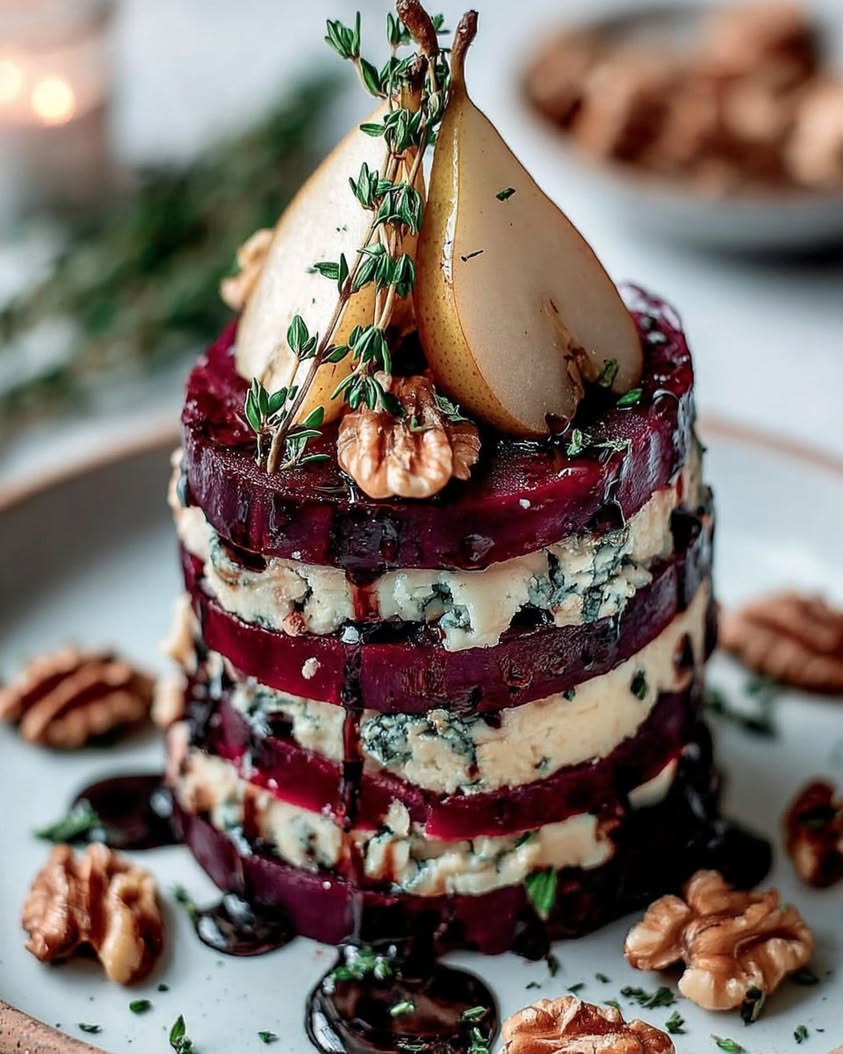
Roasted Beet Blue Cheese Towers with Pear and Balsamic Glaze: A Stunning Appetizer
When you need a showstopping appetizer that combines earthy sweetness with tangy creaminess, look no further than this Roasted Beet Blue Cheese Towers with Pear and Balsamic Glaze recipe. Each tower layers tender, caramelized roasted beets with crisp pear slices and crumbles of sharp blue cheese. A drizzle of glossy balsamic glaze ties everything together, creating a symphony of flavors that surprises and delights. This dish transforms simple ingredients into an elegant centerpiece for any gathering.
Roasted Beet Blue Cheese Towers with Pear and Balsamic Glaze recipe captures the essence of autumn bounty while remaining versatile enough for year-round enjoyment. The beets become intensely sweet and tender after roasting, their deep crimson color providing a stunning backdrop. Slices of ripe, juicy pear add a fresh contrast, while the blue cheese offers a salty, tangy punch. A final drizzle of balsamic glaze adds both sweetness and acidity, balancing the richness of the cheese. The result is a dish that feels both rustic and refined, perfect for impressing dinner guests.
Assembling these towers is surprisingly simple, making them accessible for both novice and experienced home cooks. Roasted Beet Blue Cheese Towers with Pear and Balsamic Glaze recipe does not require advanced culinary skills, just patience for roasting and a steady hand for layering. The visual impact is immense, with vibrant colors and neat stacking that looks straight out of a fine-dining kitchen. Each bite offers a blend of textures and temperatures, from warm beets to cool cheese and crisp pear. This recipe is a celebration of seasonal produce and thoughtful pairing, proving that the best dishes are often the least complicated.
Quick Recipe Highlights
- Flavor Profile: This combination delivers sweet, earthy notes from the beets, tangy and salty richness from blue cheese, and a bright acidity from the balsamic glaze. The pear adds a subtle floral sweetness that ties everything together beautifully.
- Texture: You will experience a satisfying contrast of tender, melt-in-your-mouth beets against the crisp, juicy crunch of fresh pear. The crumbled blue cheese offers a soft, creamy element that binds the layers, and the glaze provides a smooth, sticky finish.
- Aroma: The scent of roasting beets fills your kitchen with a warm, earthy fragrance. The sharp aroma of blue cheese and the sweet tang of balsamic vinegar mingle during assembly, promising a complex and rewarding eating experience.
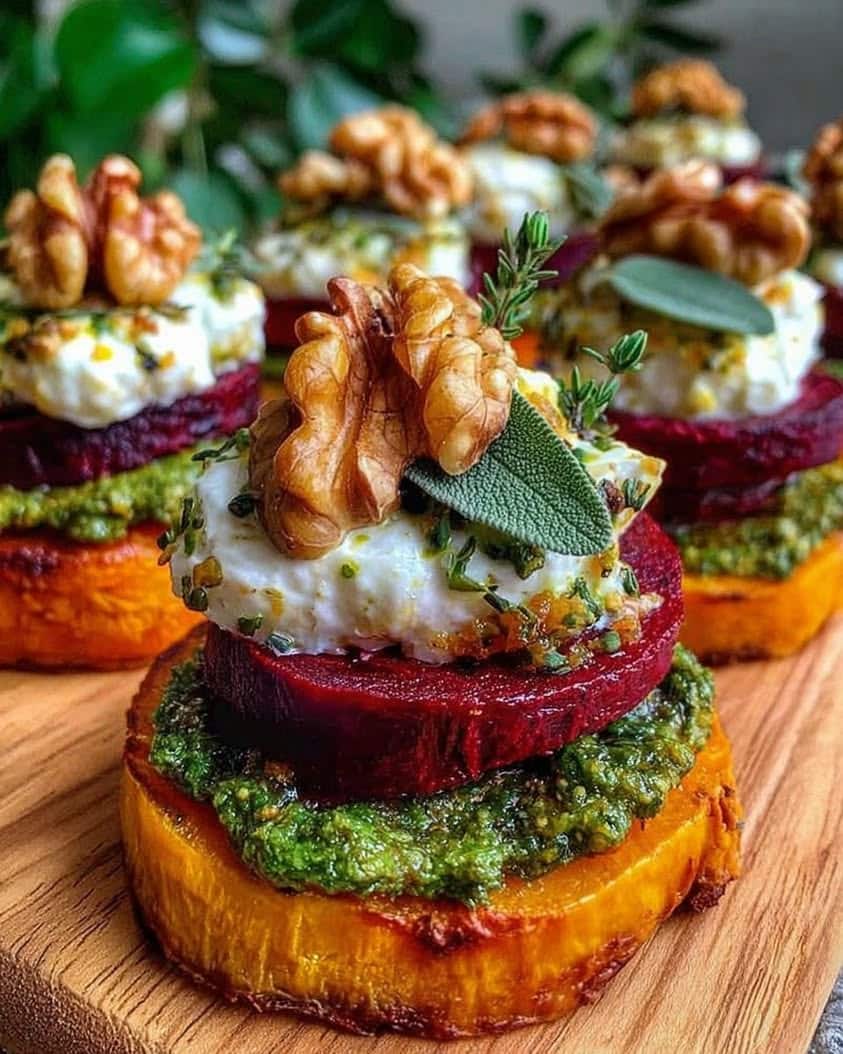
- Visual Appeal: These towers are a feast for the eyes. Vibrant magenta beet rounds alternate with pale green pear slices and stark white cheese crumbles, all topped with a dark, glossy balsamic drizzle. The vertical presentation creates height and drama.
- Skill Level Needed: This recipe requires basic knife skills for slicing beets and pears evenly. Roasting is straightforward, and assembly simply involves careful layering. Anyone comfortable with simple cooking techniques can succeed.
- Special Equipment: You need a baking sheet for roasting the beets, a sharp knife for uniform slices, and a small saucepan for reducing the balsamic glaze. No specialized tools are necessary.
Recipe Overview
- Difficulty Level: I rate this recipe as medium difficulty primarily because of the careful slicing and assembly required. While the components are simple to prepare individually, creating uniform layers that stack evenly demands attention to detail. Roasting the beets to the perfect tenderness without making them mushy also requires some timing precision.
- Category: This recipe fits perfectly as an appetizer or a light first course. It can also serve as a stunning vegetarian main dish when paired with a side salad or crusty bread. Its elegant presentation makes it suitable for dinner parties and holiday tables.
- Cuisine: While not tied to a single cuisine, this recipe draws inspiration from modern American and European culinary traditions. The combination of roasted root vegetables, fruit, and blue cheese is a classic pairing found in salads and tarts across many regions. The balsamic glaze adds an Italian touch that elevates the whole dish.
- Cost: The ingredients for this recipe are relatively affordable. Beets and pears are inexpensive, especially when in season. Blue cheese can vary in price, but you only need a small amount. Balsamic vinegar is a pantry staple. The total cost is moderate but lower than many showstopping appetizers.
- Season: Autumn and winter are the ideal seasons for this dish because beets and pears are at their peak sweetness and availability. However, you can make it year-round with quality produce. The flavors are particularly comforting during colder months when hearty salads and roasted vegetables shine.
- Occasion: This recipe is perfect for Thanksgiving, Christmas, or New Year’s Eve celebrations. It also works wonderfully for dinner parties, romantic meals, or any occasion where you want to impress guests. The vertical presentation makes it a conversation starter.
Why You Will Love This Recipe
The first reason to love this Roasted Beet Blue Cheese Towers with Pear and Balsamic Glaze recipe is the incredible taste and texture combination. Every bite delivers a balance of sweet, savory, tangy, and creamy elements. The earthy sweetness of the roasted beets pairs perfectly with the sharp, salty bite of the blue cheese. The crisp, juicy pear cuts through the richness, while the balsamic glaze adds a complex sweetness and acidity. This flavor profile is sophisticated yet approachable, making it a crowd-pleaser for varied palates. The textures create a satisfying mouthfeel that keeps you coming back for more.
Secondly, this recipe offers remarkable convenience and preparation benefits despite its elegant appearance. Most of the work involves roasting the beets, which can be done ahead of time. You can also prepare the balsamic glaze in advance. On the day of serving, you simply slice the pears and assemble the towers. This makes it an ideal dish for entertaining because you can focus on your guests rather than spending hours in the kitchen. Furthermore, the assembly is quick and intuitive, taking only about ten minutes once all components are ready.
Nutritional advantages also make this recipe a smart choice. Beets are packed with fiber, folate, and antioxidants that support heart health and reduce inflammation. Pears provide vitamin C and additional dietary fiber, promoting good digestion. Blue cheese contains calcium and protein, but you use it sparingly because of its strong flavor. The balsamic glaze adds minimal calories while providing flavor without heavy cream or butter. This means you can enjoy a rich, satisfying appetizer that is actually beneficial for you, without any guilt.
The social and entertaining value of this dish is enormous. Roasted Beet Blue Cheese Towers with Pear and Balsamic Glaze recipe creates instant visual drama and a wow factor that other appetizers seldom achieve. Guests will admire the vertical stacking and vibrant colors before even tasting it. This makes it perfect for holidays, dinner parties, or any gathering where food presentation matters. The dish encourages conversation and compliments, making you feel like a culinary star. It also works beautifully as part of a grazing table or as an elegant passed appetizer.
Finally, this recipe is cost-effective and accessible. You need only a handful of ingredients, most of which are pantry staples or seasonal produce. Beets and pears are generally inexpensive, especially when you buy them from farmers markets or local produce stands. Blue cheese can be purchased in small quantities, and balsamic vinegar lasts for months. Therefore, you can create a restaurant-quality dish at home without spending a lot of money. The yield of four generous towers makes it perfect for a small gathering or a romantic dinner, maximizing value and minimizing waste.
Historical Background and Cultural Significance
The combination of beets and blue cheese has roots in European culinary traditions, particularly in France and Italy, where earthy root vegetables are often paired with pungent cheeses. Beets have been cultivated for thousands of years, originally grown for their leaves and later valued for their roots. Ancient Romans were among the first to appreciate beets as a food source, using them for both medicinal and culinary purposes. Blue cheese, with its distinctive veins created by Penicillium mold, has a similarly ancient history, with records dating back to Roman times. The two ingredients began appearing together in salads and roasted vegetable dishes during the Renaissance, showcasing the European affinity for contrasting flavors.
Culturally, this combination represents a broader tradition of balancing flavors. In French cuisine, the concept of “assaisonnement” emphasizes seasoning and balance, which this recipe embodies perfectly. The sweet earthiness of beets counters the salty sharpness of blue cheese, while the fruit adds freshness. This approach is not unique to any single culture but reflects a universal culinary wisdom. Many Mediterranean and Middle Eastern cuisines also pair sweet roasted vegetables with salty cheeses, such as feta with roasted peppers or eggplant. Therefore, this recipe fits into a global pattern of thoughtful ingredient pairing.
The evolution of this specific recipe into a tower or stack is a more modern development. The vertical presentation became popular in the late 20th century with the rise of nouvelle cuisine and fine-dining plating techniques. Chefs began stacking ingredients to create height and visual interest on the plate. Roasted Beet Blue Cheese Towers with Pear and Balsamic Glaze recipe adapts this idea for home cooks, making restaurant-style presentation accessible. The addition of balsamic glaze, a reduction of balsamic vinegar, is another relatively modern innovation, drawing from Italian culinary traditions and the popularity of balsamic vinegar in recent decades.
Regional variations of this dish are plentiful. In the United States, you might find goat cheese substituted for blue cheese, or walnuts added for crunch. In France, Roquefort cheese is a common choice, and beets are often served with a vinaigrette rather than a balsamic glaze. In Italy, gorgonzola dolce provides a milder blue cheese option, and the glaze might include a touch of honey. Some versions incorporate roasted nuts, fresh herbs like thyme or rosemary, or a bed of arugula. These variations highlight the flexibility of the core concept, proving that the combination is both timeless and adaptable to local tastes and ingredient availability.
Ingredient Deep Dive
Beets are the star of this show, and they hold significant cultural and historical weight. Cultivated since prehistoric times, beets were initially used for their leafy greens. The ancient Greeks and Romans grew beets for medicinal purposes, treating ailments like headaches and digestive issues. By the 19th century, sugar beets became a major source of sugar, revolutionizing the sweetener industry. Nutritionally, beets are a powerhouse. They are rich in folate, manganese, and potassium. More importantly, they contain betalains, powerful antioxidants that have anti-inflammatory and detoxifying properties. These compounds give beets their deep red color and contribute to their health benefits.
When selecting beets, look for firm, smooth roots without soft spots or blemishes. The greens should be fresh and vibrant if attached, though they are often removed for storage. Smaller to medium beets are typically sweeter and more tender than larger ones. Store beets in the refrigerator in a perforated plastic bag for up to two weeks. Remove the greens before storing to prevent moisture loss. For this recipe, you can substitute golden beets for a milder flavor and beautiful yellow color, or candy cane beets for a striking striped effect. If you are short on time, you can use pre-cooked vacuum-sealed beets, though roasting fresh ones yields superior flavor and texture.
Blue cheese is the second key component, and its history is equally rich. Blue cheese likely originated by accident when cheese was stored in caves that naturally contained Penicillium mold spores. Over centuries, cheesemakers in France, Italy, and England perfected the technique, producing iconic varieties like Roquefort, Gorgonzola, and Stilton. Nutritionally, blue cheese is a good source of calcium, protein, and vitamin K2, which supports bone health. It also contains beneficial bacteria that can aid gut health. However, it is high in sodium and saturated fat, so moderation is wise. The flavor intensity means a small amount goes a long way.
For selection, choose blue cheese that is moist but not slimy, with visible blue-green veins throughout. The texture should be crumbly yet creamy. Avoid cheeses with a strong ammonia smell, which indicates over-aging or improper storage. Store blue cheese in the refrigerator wrapped in wax paper inside a sealed container to allow it to breathe. It can last for several weeks. For substitutions, gorgonzola dolce offers a milder, creamier option. Goat cheese provides a tangy alternative that pairs beautifully with beets. Feta cheese can work for a saltier, less creamy texture, though it lacks the signature blue veins. Each substitution changes the flavor profile, so experiment to find your preference.
Pears are the fresh, fruity layer that brightens the towers. Pears have been cultivated for over 3,000 years, originating in Central Asia and spreading along trade routes. They were prized by ancient Greeks and Romans and became a status symbol in Europe during the Middle Ages. Nutritionally, pears are an excellent source of dietary fiber, vitamin C, and vitamin K. They are low in calories and contain antioxidants like flavonoids that support heart health. The crisp texture and natural sweetness of pears perfectly complement the earthiness of beets and the richness of cheese.
When selecting pears for this recipe, choose ripe but still firm fruits. Bosc or Anjou pears work well because they hold their shape when sliced. The neck of the pear should yield slightly to gentle pressure. Store pears at room temperature to ripen, then refrigerate to slow further ripening. Use them within a few days of ripening for best texture. For substitutions, apples provide a similar crispness and sweetness, though their flavor is more tart. Asian pears offer an even crunchier texture with floral notes. Fuyu persimmons can also work, especially in late autumn, adding a unique sweetness that complements the balsamic glaze.
Balsamic vinegar is the final essential ingredient. True balsamic vinegar originated in Modena, Italy, and is made from Trebbiano grape must that is aged for years in wooden barrels. The aging process gives it a complex, sweet-sour flavor with notes of wood and molasses. For this recipe, we create a simple balsamic glaze by reducing the vinegar until it thickens. This concentrates the flavors and adds a glossy finish. Nutritionally, balsamic vinegar is low in calories and contains antioxidants from the grapes, such as polyphenols. It also has a low glycemic index, making it a better choice than many other condiments.
For the glaze, select a good-quality balsamic vinegar but not the expensive aged variety, as you will be reducing it. A mid-range bottle labeled “aceto balsamico di Modena” works perfectly. Store balsamic vinegar in a cool, dark place away from heat sources. It has an almost indefinite shelf life. For substitutions, you can purchase pre-made balsamic glaze from the store to save time. Alternatively, a quick reduction of pomegranate molasses or a mixture of red wine vinegar and honey can mimic the sweet-sour profile. Each substitute will alter the flavor subtly, so test to find what you enjoy most.
Common Mistakes to Avoid
- Roasting beets for too long until they become mushy and lose their shape for stacking is a frequent error. Check them after 40 minutes with a fork; they should be tender but still firm enough to hold their round shape when sliced.
- Not peeling the beets after roasting is a mistake that leaves a fibrous, papery skin on each layer. The skin slips off easily once cooled, so be sure to remove it completely for a smooth texture.
- Using overripe pears that are soft and mushy will cause the towers to collapse. Choose pears that are ripe but still hold their structure when sliced. You want a slight crunch, not a watery mess.
- Crumbling the blue cheese too finely reduces the visual impact and causes it to fall between the layers. Keep larger crumbles for better texture and presentation. Aim for pea-sized pieces.
- Not reducing the balsamic vinegar enough results in a watery glaze that runs off the towers. Cook it until it coats the back of a spoon and has a syrupy consistency. It will thicken further as it cools.
- Assembling the towers while the beets are still hot will cause the cheese to melt and the pear to shrivel. Cool the beets to room temperature or warm, but not hot, before stacking.
- Slicing beets and pears unevenly creates wobbly towers that are difficult to stack neatly. Use a sharp knife or mandoline for uniform slices about a quarter-inch thick for stability.
- Layering ingredients haphazardly results in towers that lack height or balance. Use a consistent pattern: place a beet slice, then a pear slice, then cheese, and repeat. Press gently to set.
- Skipping the resting step after assembly leads to towers that slide apart. Let the assembled towers rest for five minutes before serving to allow the flavors to meld and the structure to settle.
- Trying to make these towers in a humid environment can cause the pear slices to weep water, making the structure soggy. Pat the pear slices dry with a paper towel before layering.
Essential Techniques
Roasting beets to perfection is the foundational technique for this recipe. Wrap each beet individually in aluminum foil after a light drizzle of olive oil and salt. This steaming-and-roasting method allows the heat to surround the beet evenly, cooking it from all sides. Roast them in a preheated 400°F oven for about 45 to 60 minutes, depending on their size. The beets are done when a knife slides through the center with minimal resistance. Let them cool in the foil for ten minutes, then the skins will slip off easily using your fingers or a paper towel. This method preserves the beet’s natural sweetness and prevents it from drying out.
Creating a proper balsamic glaze requires patience and attention. Pour one cup of balsamic vinegar into a small saucepan and bring it to a gentle simmer over medium heat. Reduce the heat to low and let it simmer slowly, stirring occasionally, until it reduces by about half. This process takes 10 to 15 minutes. The glaze is ready when it coats the back of a spoon and leaves a clear trail when you draw your finger through it. It will thicken further as it cools. Be careful not to boil it too vigorously, as this can cause the sugar to caramelize and become bitter. The final consistency should be like warm honey.
Layering the towers requires a steady hand and a methodical approach. Start with a beet slice as your base, as it provides the most stable foundation. Place a pear slice on top, aligning the edges neatly. Sprinkle a generous crumble of blue cheese over the pear. Repeat this layering process, using three to four layers of each component. When you reach the top, finish with a final pear slice and a generous crumble of blue cheese. Drizzle the balsamic glaze over the top, letting it cascade down the sides. Use a small offset spatula or your fingers to gently press each layer to ensure stability, but do not squash the components.
Mastering the slice thickness is crucial for structural integrity. Aim for slices that are about a quarter-inch thick for both beets and pears. If the slices are too thick, the towers become bulky and difficult to stack. If they are too thin, they will fall apart or tear easily. A sharp chef’s knife works well, but a mandoline slicer set to a quarter-inch thickness ensures uniform results. Uniformity is key because you want each layer to support the next evenly. Uneven slices create gaps that cause the tower to lean or collapse. Practice a few slices until you get a feel for the correct thickness.
Pro Tips for Perfect Roasted Beet Blue Cheese Towers
Wear disposable gloves when handling roasted beets to avoid staining your hands. The deep red pigment can be stubborn, and gloves make cleanup effortless. You can also use a paper towel to rub off the skins.
Toast some walnuts or pecans and sprinkle them between the layers for added crunch. The nutty flavor complements the earthiness of the beets and the tanginess of the cheese beautifully. Crumble them coarsely before adding.
If your balsamic glaze becomes too thick after cooling, simply reheat it gently with a teaspoon of water. It will thin out enough for drizzling. Do not microwave it, as that can cause uneven heating.
For a more intense flavor, roast the beets with a few sprigs of fresh thyme or rosemary in the foil packet. The herbs infuse the beets with aromatic notes that carry through the final dish. Remove the herbs before assembling.
Use a microplane to grate a little fresh lemon zest over the finished towers. The bright citrus note lifts all the other flavors and adds a fresh aroma. This small touch makes a significant difference.
Let the towers rest at room temperature for five minutes after assembly. This allows the flavors to meld and the structure to settle. Do not refrigerate them, as the cold can dull the flavors.
If you are making these for a crowd, consider using smaller beets and smaller slices for mini appetizer versions. They are perfect for passing around at parties and are easier to eat in one or two bites.
Always taste your blue cheese before using it. Some blue cheeses are saltier or milder than others. Adjust the amount of salt you add to the beets accordingly to avoid an overly salty final dish.
Variations and Adaptations
Regional variations of this dish are plentiful. In the American South, you might substitute pecans for walnuts and add a drizzle of honey or sorghum syrup instead of balsamic glaze. This creates a sweeter, more honeyed version. In the Pacific Northwest, local hazelnuts and a blue cheese like Rogue River Blue offer a distinct regional character. A drizzle of local cider reduction can replace the balsamic glaze. In the Midwest, where beets are abundant, you might add a sprinkle of caraway seeds or dill for a nod to Eastern European flavors. Each regional twist honors the base recipe while incorporating local ingredients.
Seasonal adaptations allow you to enjoy this recipe year-round. In the spring, use peeled and sliced raw golden beets for a lighter, crunchier texture. Substitute fresh goat cheese for blue cheese and add fresh pea shoots or mint for brightness. In summer, grill the beet slices instead of roasting them, adding a smoky char. Pair with juicy peaches or nectarines instead of pears. In winter, use roasted root vegetables like parsnips or carrots alongside the beets, and add a sprinkle of pomegranate seeds for color and tartness. The flexibility of the concept makes it ideal for seasonal cooking.
Dietary modifications are simple to implement. For a dairy-free version, substitute blue cheese with a vegan blue cheese alternative made from cashews or coconut. The texture and flavor are surprisingly similar. For a gluten-free version, the recipe is naturally gluten-free as long as you check your balsamic vinegar for additives. For a low-carb or keto-friendly version, reduce or omit the pear and increase the amount of cheese and nuts. The balsamic glaze can be replaced with a sugar-free balsamic reduction. For a paleo adaptation, use goat cheese or a nut-based cheese and avoid legumes in your garnish.
Flavor variations offer endless possibilities. Add a sprinkle of flaky sea salt and cracked black pepper on top just before serving to enhance all the flavors. A drizzle of truffle oil over the finished towers adds an earthy, luxurious dimension. For a spicy kick, add a pinch of red pepper flakes to the balsamic glaze while it reduces. For a sweeter version, use honey or maple syrup in the balsamic glaze. You can also infuse the balsamic vinegar with garlic or herbs before reducing. Each variation creates a unique flavor profile while staying true to the core recipe.
Texture modifications can make the dish even more satisfying. Add a layer of toasted nuts between the beet and pear slices for extra crunch. You can also add a thin layer of arugula or microgreens between the layers for a peppery bite and more greenery. For a creamier texture, spread a thin layer of goat cheese or ricotta on each beet slice before layering. The additional creaminess balances the acidity of the balsamic glaze. For a softer texture, briefly roast the pear slices alongside the beets for a few minutes to soften them slightly without making them mushy.
Presentation alternatives keep the dish exciting. Instead of towers, you can arrange the ingredients in a flat, overlapping pattern on a large platter, creating a beautiful composed salad. Alternatively, serve the components deconstructed, allowing guests to build their own towers at the table. This interactive approach is perfect for casual gatherings. You can also serve each component in small bowls and let guests assemble their own portions. For a more refined presentation, use a ring mold to layer the ingredients, then lift the mold off to reveal a perfectly formed cylinder. This method ensures even stacking and a polished look.
Serving and Presentation Guide
Plating techniques for these towers should emphasize height and color. Use a white plate to make the vibrant magenta beets, pale green pears, and stark white cheese stand out. Place the tower slightly off-center for visual interest. Drizzle the balsamic glaze in a circular pattern around the base of the tower, allowing a few streaks to escape for an artistic feel. Use a clean kitchen towel to wipe any stray glaze marks from the plate. A small sprinkle of flaky sea salt and freshly cracked black pepper on the plate adds a gourmet touch. The goal is to create a plate that looks intentional and beautiful.
Garnishing ideas can elevate the presentation further. A few fresh microgreens or small arugula leaves placed on top of the tower add a pop of green and a fresh taste. A thin slice of fresh pear can be fan-shaped and placed next to the tower as an edible garnish. Edible flowers, such as pansies or nasturtiums, offer a colorful and elegant finishing touch. A very small drizzle of honey or a sprinkle of candied walnuts on the plate adds texture and sweetness. Keep garnishes minimal to avoid overwhelming the main ingredients, but use them to enhance the visual story.
Traditional accompaniments include a dressed arugula salad on the side, providing a peppery contrast. Crusty bread or crostini are also common, allowing guests to scoop up any glaze or cheese that falls. Roasted nuts, such as almonds or walnuts, served on the side add crunch. A glass of dry white wine or a light red wine complements the dish beautifully. For a more substantial meal, serve the towers alongside a bowl of roasted root vegetable soup. The combination creates a cohesive and satisfying dining experience.
Modern serving suggestions include presenting the towers as part of a grazing board. Place them alongside other small plates, such as marinated olives, cured meats, and artisan cheeses. The towers become the focal point of the board, drawing guests in with their height and color. You can also serve them as a passed appetizer on a small plate or napkin for cocktail parties. For a brunch event, pair them with a light frittata or a fresh fruit salad. The versatility means they fit into many menu styles, from casual to formal.
Temperature considerations are vital for best results. Serve the towers at room temperature or slightly warm, as cold dulls the flavors and hardens the cheese. If you refrigerate the components, let them sit at room temperature for 20 minutes before assembling. The beets can be served warm, but the pear should be at room temperature to preserve its texture. The balsamic glaze can be drizzled warm or at room temperature. Avoid serving the towers immediately after refrigeration, as the contrast between cold cheese and cool beets is less appealing than a more uniform temperature.
Portion control tips ensure you have enough for your guests. One tower per person works nicely as an appetizer, especially if you are serving other dishes. For a main course salad, you can serve two towers per person. If you are making mini versions for a buffet, plan for three to four per person. Always make a few extra towers in case of breakage or mishaps during assembly. The recipe is easy to scale, so double it for larger gatherings. Remember that the towers are rich, so smaller portions are often more appreciated than large ones.
Wine and Beverage Pairing
Wine pairings for this dish should balance the earthy sweetness of beets and the tangy saltiness of blue cheese. A dry Riesling from Germany or Alsace works beautifully because its bright acidity cuts through the cheese’s creaminess. The subtle sweetness of the wine complements the roasted beets and balsamic glaze. Alternatively, a Sauvignon Blanc from the Loire Valley offers grassy notes that pair well with the pear. For red wine lovers, a light-bodied Pinot Noir from Oregon or Burgundy is an excellent choice. Its earthy, fruity notes do not overpower the dish and harmonize with the beet’s earthiness.
Non-alcoholic alternatives are equally satisfying. A sparkling water with a splash of pomegranate juice and a squeeze of lemon offers a refreshing, tart companion. The bubbles cleanse the palate between bites. A high-quality apple cider, either still or sparkling, pairs well with the pear notes in the dish. For a more sophisticated option, consider a non-alcoholic wine or a shrub made from apple cider vinegar and fruit. The acidity in these drinks balances the richness of the cheese. Herbal iced tea, such as hibiscus or rooibos, adds floral notes that complement the beets.
Coffee and tea pairings are also possible. A light-bodied, floral black tea like Darjeeling pairs well with the dish, especially if you add a touch of honey. The tea’s delicate flavors do not compete with the towers. For coffee lovers, a medium-roast pour-over with bright acidity works better than a dark roast. The coffee’s fruit notes enhance the sweet and tangy elements. Avoid heavily roasted teas or dark, bitter coffees, as they can overpower the dish. A chai tea latte, with its spices, can also work if you enjoy warm, aromatic flavors alongside the towers.
Temperature considerations for beverages are important. Serve white wines and sparkling drinks well-chilled, around 45-50°F, to refresh the palate. Red wines should be served slightly cool, around 55-60°F, to maintain their structure. Non-alcoholic drinks can be served over ice or chilled. Warm beverages like tea and coffee should be served hot to contrast with the cooler temperature of the towers. Always consider the ambient temperature of your serving space. A cold drink on a cold day can be unappealing, so adjust accordingly.
Serving suggestions for beverages include offering a pairing option on the menu. If you are hosting a dinner party, provide a small card with recommended pairings for each course. For the towers, you might suggest one white and one red wine option, plus a non-alcoholic choice. Let guests choose according to their preferences. Glassware matters too. Use stemware for wine glasses to keep them from warming too quickly. For non-alcoholic drinks, use elegant tumblers or wine glasses to maintain the upscale feel of the meal.
Storage and Shelf Life
Storage methods for the components are straightforward. Store roasted beets in an airtight container in the refrigerator for up to five days. Keep them whole or sliced, but add a damp paper towel to prevent them from drying out. Store sliced pears in a sealed container with a squeeze of lemon juice to prevent browning. They will keep for one to two days. Blue cheese should be wrapped in wax paper and placed in a sealed container in the refrigerator for up to two weeks. Balsamic glaze can be stored in an airtight jar at room temperature for several months.
Temperature requirements are critical for food safety. Keep all perishable components refrigerated below 40°F. Do not leave assembled towers at room temperature for more than two hours. If you are serving them outdoors or in a warm room, reduce that time to one hour. For best quality, store each component separately rather than assembled. The assembled towers do not store well because the pear will weep moisture and the beets will soften further. Always plan to assemble them just before serving for optimal texture.
Container recommendations vary by component. For beets, use a glass or plastic container with a tight-fitting lid. For pears, use a shallow container that allows them to lie flat without being squished. For blue cheese, avoid plastic wrap, as it can trap moisture and promote mold. Wax paper allows the cheese to breathe. For balsamic glaze, a glass jar with a tight lid is ideal. Avoid metal containers for the glaze, as the acid in the vinegar can react with the metal. Glass or ceramic containers are best for all components.
Signs of spoilage to watch for include mold growth on the beets or cheese, a slimy texture on the pears, or an off smell from the cheese. If the balsamic glaze develops a cloudy appearance or mold, discard it. Always trust your senses. If something looks or smells wrong, do not use it. Proper storage significantly extends the shelf life of each component. For best results, use the beets within three to four days, the pears within one day, and the cheese within a week. The glaze will last indefinitely.
Reheating instructions are simple. Roasted beets can be reheated in the microwave for 30 seconds or in a 350°F oven for about five minutes. Do not reheat the assembled towers, as the pear will become mushy and the cheese will melt. Serve the components separately and assemble fresh. The balsamic glaze can be reheated gently in a saucepan with a splash of water if it has thickened too much during storage. Alternatively, you can serve it at room temperature. Always let cold components come to room temperature before assembling for best flavor.
Freezing guidelines are limited. Roasted beets freeze well for up to three months. Slice them and place them in a freezer-safe bag with the air pressed out. Thaw them overnight in the refrigerator before using. Do not freeze pears, as they become mushy and watery upon thawing. Blue cheese can be frozen, but the texture becomes cr Print
Roasted Beet Blue Cheese Towers with Pear & Balsamic Glaze
- Total Time: 60 minutes
- Yield: 4
Description
A stunning vegetarian appetizer featuring layers of sweet roasted beets, tangy blue cheese, and crisp pear slices, drizzled with a rich balsamic glaze. Perfect for elegant gatherings or holiday meals.
Ingredients
- 4 medium red beets, scrubbed and trimmed
- 4 ounces blue cheese, crumbled
- 2 ripe pears, thinly sliced
- 1/4 cup balsamic glaze
- 2 tablespoons olive oil
- 1/2 teaspoon salt
- 1/4 teaspoon black pepper
- Fresh arugula for garnish (optional)
Instructions
- Preheat oven to 400°F (200°C). Wrap each beet in aluminum foil and place on a baking sheet. Roast for 45-60 minutes until fork-tender.
- Let beets cool slightly, then peel off skins using a paper towel. Slice into 1/4-inch rounds.
- On a serving plate, layer a beet slice, top with a pear slice, and sprinkle blue cheese. Repeat layers to form a tower, using about 3-4 layers per tower.
- Drizzle with balsamic glaze and season with salt and pepper. Garnish with fresh arugula if desired.
Notes
You can customize the seasonings to taste.
- Prep Time: 15 minutes
- Cook Time: 45 minutes
- Method: Appetizer
- Cuisine: American