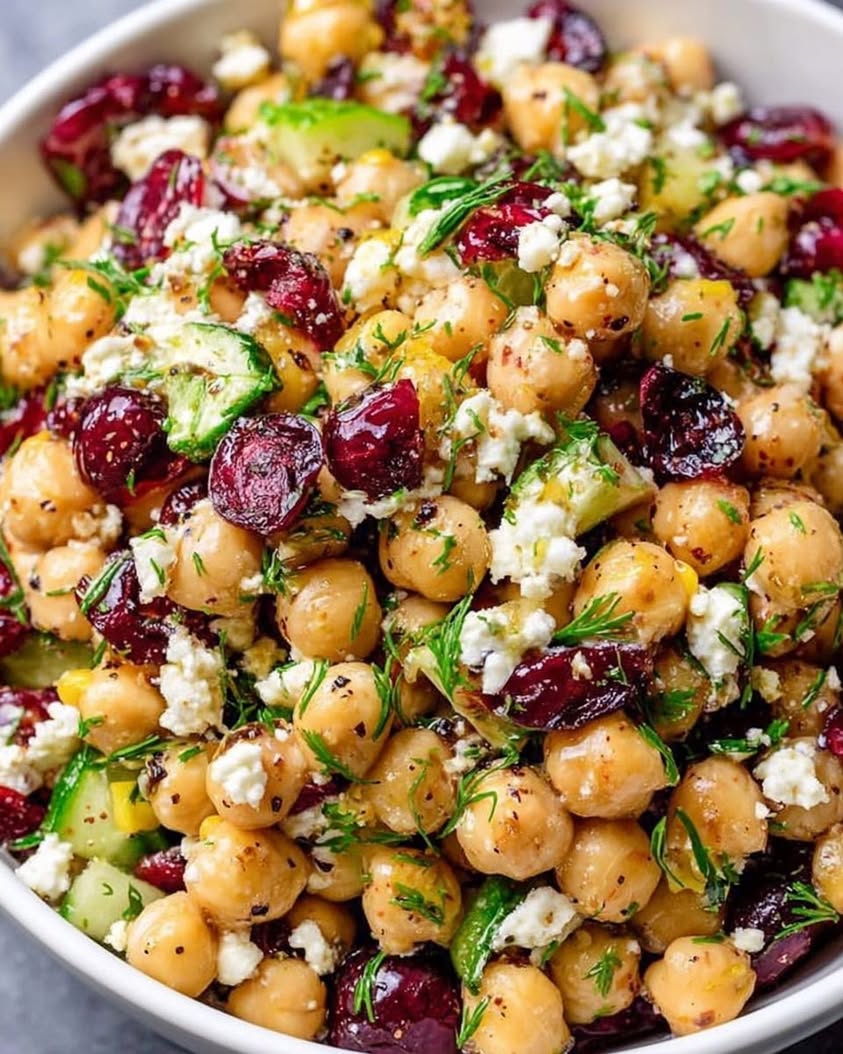
Feta and Cranberry Chickpea Salad with Lemon Vinaigrette: A Burst of Mediterranean Sunshine
Welcome to a recipe that transforms simple ingredients into a lunchtime superstar. This Feta and Cranberry Chickpea Salad with Lemon Vinaigrette is a bright, satisfying, and incredibly easy dish. It combines the creamy, briny bite of feta cheese with the sweet-tart pop of dried cranberries, all nestled within hearty chickpeas. A zesty lemon vinaigrette ties everything together, creating a salad that feels both indulgent and refreshingly light. You will find that this salad is perfect for meal prep, a quick weeknight dinner, or a potluck contribution that always gets compliments.
The beauty of this Feta and Cranberry Chickpea Salad with Lemon Vinaigrette lies in its clever simplicity. It requires no cooking, which means you can have it on the table in under fifteen minutes. The flavors are bold, balanced, and incredibly moreish. Each forkful offers a delightful medley of textures: the soft, creamy chickpeas, the crumbly, salty feta, the chewy, sweet cranberries, and the crisp crunch from fresh cucumber and red onion. The lemon vinaigrette cuts through the richness, leaving your palate clean and eager for the next bite. This is a salad that truly delivers on every level.
Furthermore, this recipe is designed to be incredibly forgiving and adaptable. Whether you are a seasoned home cook or someone just starting their culinary journey, you will find this approachable. The ingredient list is short and grocery-friendly. You likely have many of the vinaigrette ingredients in your pantry already. This Feta and Cranberry Chickpea Salad with Lemon Vinaigrette is more than just a recipe; it is a reliable, go-to meal solution that brings a touch of sunshine to your table, no matter the season.
Quick Recipe Highlights
- Flavor Profile: This salad is a masterclass in contrast. The salty, tangy feta plays beautifully against the sweet, tart cranberries. The lemon vinaigrette adds a sharp, citrusy brightness, while a hint of Dijon mustard in the dressing provides a gentle warmth and depth. Fresh herbs like parsley contribute an earthy, grassy note.
- Texture: The texture is a key reason this salad is so addictive. You get the creamy, almost buttery texture of the chickpeas, the firm, crumbly bite of feta, and the chewy, slightly sticky cranberries. Fresh cucumber adds a watery crunch, and red onion provides a crisp, pungent snap.
- Aroma: The aroma is predominantly fresh and citrusy from the lemon vinaigrette. As you whisk the dressing, the bright, clean scent of lemon zest and juice fills the air. The feta adds a subtle, tangy dairy note, and the fresh herbs release their fragrant, earthy essence when mixed in.
- Visual Appeal: This salad is a feast for the eyes. The deep, earthy green of the fresh herbs and cucumber contrasts with the vibrant red of the cranberries and the stark white of the feta. The golden hues of the chickpeas and the purple-tinged white of the red onion create a beautiful, colorful mosaic.
- Skill Level Needed: This is a perfect recipe for beginners. There are no complex techniques, no heat required, and the steps are straightforward. It is a great confidence builder for new cooks and a reliable, quick win for those with more experience. The only real skill required is the ability to chop vegetables and whisk a simple dressing.
- Special Equipment: You need very little special equipment for this salad. A good chef’s knife and a cutting board are essential for chopping vegetables and herbs. A medium bowl for mixing the salad and a small bowl or jar for whisking the vinaigrette are all you need. A measuring cup and spoons for the dressing are helpful.
Recipe Overview
- Difficulty Level: This recipe is rated as easy because it involves no cooking and uses simple, straightforward steps. The process is a matter of opening cans, chopping a few vegetables, and mixing a simple vinaigrette. There is no risk of overcooking or complex techniques to master. It is a completely stress-free recipe that delivers consistently good results.
- Category: This dish falls primarily into the salad category, but it is hearty enough to be a main course. It is a robust main dish salad, perfect for lunch or a light dinner. It also works beautifully as a side dish, pairing well with grilled chicken, fish, or lamb. It can even be used as a filling for pita bread or wraps.
- Cuisine: The flavor profile is heavily influenced by Mediterranean cuisine. The combination of chickpeas, feta cheese, lemon, and fresh herbs is a classic Mediterranean theme. The use of a simple vinaigrette is also a staple of the region. The addition of cranberries, while not traditional, adds a modern, slightly American twist that enhances the dish’s sweet-savory balance.
- Cost: This is a very budget-friendly recipe. The main ingredients, chickpeas and feta cheese, are both inexpensive and widely available. Dried cranberries can be found at a reasonable price, and the vinaigrette uses pantry staples like olive oil, lemon juice, and mustard. The total cost is significantly lower than a similar salad from a restaurant or a prepared meal service.
- Season: While enjoyable year-round, this salad is especially wonderful during the spring and summer. The bright, citrusy flavors and fresh, crunchy textures are perfect for warmer weather. It is a great choice for picnics, barbecues, and beach trips because it holds up well at room temperature. However, in fall and winter, it provides a welcome burst of sunshine and freshness.
- Occasion: This Feta and Cranberry Chickpea Salad with Lemon Vinaigrette is suitable for a wide range of occasions. It is a stellar choice for weekday meal prep, as the flavors meld and improve over a day or two. It is also a crowd-pleaser at potlucks, barbecues, and holiday buffets. It makes an excellent quick lunch for work or school and a simple, satisfying dinner on a busy weeknight.
Why You Will Love This Recipe
The primary reason you will love this Feta and Cranberry Chickpea Salad with Lemon Vinaigrette is its incredible taste and texture. The flavor combination is a perfect symphony of salty, sweet, tangy, and savory elements. The creamy chickpeas and feta are beautifully offset by the chewy sweetness of the cranberries. The lemon vinaigrette adds a zesty, bright punch that cleanses the palate and prevents the salad from feeling heavy. Every single bite is a delightful contrast of textures and a burst of layered flavors.
Beyond its taste, the convenience of this recipe is a major selling point. It requires absolutely no cooking, which is a game-changer for hot days or busy evenings. The entire process, from opening the cans to mixing the salad, takes less than fifteen minutes. This makes it an ideal solution for a last-minute lunch, a quick side dish, or a healthy meal that can be thrown together in a flash. The cleanup is equally minimal, as you are using just one bowl and a whisk.
From a nutritional standpoint, this salad is a powerhouse. Chickpeas are an excellent source of plant-based protein and fiber, which promotes satiety and steady energy levels. Feta cheese provides calcium and protein, but is lower in fat than many other cheeses. The cranberries offer antioxidants, and the fresh vegetables contribute vital vitamins and minerals. The olive oil in the vinaigrette provides healthy monounsaturated fats. This is a meal that supports your health goals without ever feeling like a sacrifice.
This Feta and Cranberry Chickpea Salad with Lemon Vinaigrette also excels as a social and entertaining dish. It is a vibrant, colorful addition to any table, and its flavors are universally appealing. It travels well, making it perfect for picnics, potlucks, and tailgates. Because it contains no delicate greens that will wilt, it holds up perfectly at a buffet or party. Your guests will appreciate the thoughtful, fresh flavors, and you will appreciate how easy it is to serve a crowd without spending hours in the kitchen.
Finally, its cost-effectiveness and accessibility cannot be overstated. The core ingredients are pantry staples and affordable grocery items. A bag of dried cranberries and a block of feta cheese go a long way. This means you can whip up a delicious and nutritious meal without a special trip to a gourmet store or spending a lot of money. It is a recipe that makes sense for your budget, your time, and your taste buds, making it a true weekday hero in the kitchen.
Historical Background and Cultural Significance
The story of this salad is a modern twist on ancient culinary traditions. Chickpeas, also known as garbanzo beans, are one of the earliest cultivated legumes, with origins in the Middle East over 7,500 years ago. They spread throughout the Mediterranean and into India, becoming a fundamental source of protein for many cultures. Feta cheese, with its protected designation of origin, is a centuries-old staple of Greek cuisine, traditionally made from sheep’s milk or a mixture of sheep and goat milk. The pairing of legumes and brined cheese is a classic Mediterranean combination.
The cultural importance of this salad lies in its representation of fusion home cooking. While the base flavors are undeniably Mediterranean, the addition of dried cranberries is a more contemporary, American twist. Cranberries are native to North America and have a long history with indigenous peoples. Their widespread use in dried form became popular in the late 20th century. This recipe reflects the way home cooks in the United States take culinary traditions from around the world and adapt them with local ingredients, creating something familiar yet new.
The evolution of this recipe is a story of simplification and convenience. Traditional Mediterranean recipes often involve more labor-intensive steps, such as soaking dried chickpeas overnight and simmering them for hours. This recipe harnesses the convenience of canned chickpeas, which are pre-cooked and ready to use. The vinaigrette is whisked directly rather than emulsified in a more complex process. Magazines and food blogs in the 1990s and 2000s heavily popularized these types of “no-cook” or “five-minute” salads as people sought healthier and faster meal solutions.
Regional variations of this type of salad are abundant. In the Mediterranean, you might find a similar salad with olives and roasted red peppers. In the United States, you often see the addition of fresh corn, avocado, or even crumbled bacon. Some versions trade the lemon vinaigrette for a creamy herb dressing. In parts of Europe, it might be served with a side of crusty bread to soak up the dressing. This adaptability shows how a simple, basic formula of beans, cheese, and dressing can become a canvas for regional and personal preferences.
Ingredient Deep Dive
Chickpeas are the hearty, protein-rich foundation of this salad. They have been a staple food in the Middle East and Mediterranean for millennia, symbolizing sustenance and resilience. From hummus in the Levant to farinata in Italy, they are a cultural cornerstone. Nutritionally, they are stellar. They are packed with fiber, which aids digestion and helps maintain stable blood sugar levels. They also contain significant amounts of iron, folate, and manganese, making them excellent for energy and overall health.
When selecting chickpeas for this Feta and Cranberry Chickpea Salad with Lemon Vinaigrette, you have two main options. Canned chickpeas are the most convenient; look for those with no added salt or low sodium to control the sodium level of the final dish. Dry chickpeas offer a superior texture but require overnight soaking and about an hour of cooking. For storage, keep unopened cans in a cool, dark pantry. Leftover cooked chickpeas can be stored in a sealed container in the refrigerator for up to five days. For a substitution, you can use cannellini beans or great northern beans, which will provide a similarly creamy texture.
Feta cheese is the salty, tangy star that brings a distinct Mediterranean character. Culturally, feta is deeply woven into Greek history, with evidence of its production dating back to the Homeric era. It is a brined curd white cheese with a crumbly texture and a sharp, salty flavor. Nutritionally, feta is a good source of calcium, phosphorus, and protein, and it contains less fat than many other aged cheeses. Its high sodium content is the primary consideration for those on a low-sodium diet.
To select the best feta, look for blocks stored in brine, as they are usually more flavorful and creamy than pre-crumbled varieties. The color should be a pure, bright white. Store the feta in its brine in the refrigerator, where it will keep for several weeks. If you need a substitute, goat cheese (chèvre) or ricotta salata are excellent options that provide a similar salty, tangy profile. For a dairy-free version, a firm, high-quality vegan feta or marinated tofu can be used.
Dried cranberries bring a burst of sweet-tart flavor and chewy texture. While not a traditional Mediterranean ingredient, they have become a beloved addition to modern salads. They are a great source of antioxidants, particularly proanthocyanidins, which are linked to urinary tract health. They also provide a quick source of natural energy. When choosing dried cranberries, check the label for added sugars. Many commercial brands are sweetened with apple juice, sugar, or other syrups. Unsweetened or low-sugar varieties are available for a healthier choice.
Store dried cranberries in a cool, dark, and dry place, such as a pantry, for up to a year. Once opened, seal the bag tightly to prevent them from drying out. If they become too hard, you can rehydrate them in hot water for a few minutes. Great substitutions include dried cherries, chopped dried apricots, or golden raisins. These will change the flavor profile but will add a similar sweet and chewy element to your Feta and Cranberry Chickpea Salad with Lemon Vinaigrette.
The lemon vinaigrette is the bright, unifying element of this salad. The star ingredient is fresh lemon juice, which provides a sharp acidity that cuts through the richness of the feta and chickpeas. Its high vitamin C content boosts iron absorption from the chickpeas. Extra virgin olive oil is the foundation, adding fruity, peppery notes and healthy fats. A small amount of Dijon mustard acts as an emulsifier, helping the oil and vinegar combine, while also adding a subtle, spicy depth. A touch of honey or maple syrup balances the acidity.
For the best flavor, always use fresh lemon juice. Bottled lemon juice lacks the bright, zesty fragrance and can have a flat, metallic taste. A high-quality extra virgin olive oil makes a significant difference in the dressing’s taste. Store your olive oil in a cool, dark place to prevent it from going rancid. You can experiment with different vinegars; white wine vinegar or champagne vinegar can work well. A clove of minced garlic can also be added to the vinaigrette for a savory, pungent kick.
Fresh vegetables add crunch, color, and freshness. English cucumber, with its thin skin and few seeds, is ideal. Red onion provides a sharp, pungent bite that mellows slightly when dressed. Fresh parsley adds a bright, grassy flavor, and green onions offer a milder onion note. From a nutritional perspective, these vegetables add small amounts of fiber, vitamin K, and various antioxidants. They are low in calories but high in water content, adding volume and hydration to the salad.
When selecting these vegetables, look for firm, blemish-free specimens. A cucumber should feel heavy for its size. Red onions should have tight, dry skins. Fresh herbs should be vibrant and not wilted. Store these vegetables in the refrigerator. Cucumbers and onions can be stored in the crisper drawer. Fresh herbs are best stored with their stems in a glass of water and a plastic bag loosely covering the leaves. You can substitute celery or bell pepper for cucumber, and shallots are a milder alternative to red onion.
Common Mistakes to Avoid
- Not rinsing the chickpeas: Canned chickpeas come in a starchy, salty liquid called aquafaba. If you do not rinse and drain them, your salad will have a muddy appearance and an overly salty, starchy taste. Always rinse them in a colander under cold water for at least 30 seconds.
- Using low-quality feta: Pre-crumbled feta is often treated with anti-caking agents that prevent it from melting but also give it a dry, chalky texture. It lacks the creamy, moist quality of feta stored in brine. Always buy a block of feta in brine and crumble it yourself for the best texture and flavor.
- Dressing the salad too early: If you add the vinaigrette too far in advance, the salt in the dressing will draw water out of the cucumber and onion, making the salad watery and the vegetables limp. Dress the salad about 15-30 minutes before serving for the best texture.
- Oversalting the salad: Feta is very salty, and some canned chickpeas still contain salt even after rinsing. Always taste the salad after adding the vinaigrette and feta before adding any extra salt. You will likely find that the feta provides all the saltiness needed.
- Chopping vegetables too large or small: Very large chunks of cucumber or onion can be overwhelming in a single bite. Very small pieces can get lost in the chickpeas and disappear. Aim for a uniform, bite-sized dice of about a half-inch to ensure every forkful is balanced.
- Forgetting to marinate the onions: Red onion can be very sharp and pungent. A common trick is to soak the chopped red onion in cold water for 5-10 minutes before adding it to the salad. This mellowes their bite and makes them sweeter and more palatable.
- Using bitter olive oil: An extra virgin olive oil that is old or of poor quality can taste bitter or rancid. This bitterness will ruin your vinaigrette and the entire salad. Use a fresh, high-quality olive oil that you enjoy the taste of.
- Skipping the fresh herbs: Fresh herbs like parsley or mint are crucial for adding a layer of freshness and complexity. Dried herbs are a poor substitute in this recipe. They will not rehydrate properly and will have a different, less vibrant flavor profile.
- Not letting the flavors meld: While this salad is edible immediately, its flavors improve after a short rest in the refrigerator. The chickpeas absorb some of the vinaigrette, and the flavors marry. An hour of resting time makes a noticeable difference in the overall taste.
- Using the wrong serving bowl: If you use a metal bowl, the acidity of the lemon vinaigrette can react with the metal, imparting a metallic taste. Always use a glass, ceramic, or plastic bowl for mixing and serving this salad.
Essential Techniques
Mastering the simple vinaigrette is the most important technique for this salad. A good vinaigrette is an emulsion, a mixture of two liquids that usually do not combine, like oil and vinegar. The Dijon mustard acts as an emulsifier, helping to suspend the oil in the vinegar. To make a stable vinaigrette, whisk the acid, mustard, and honey together first until the salt dissolves. Then, add the oil in a slow, steady stream while whisking constantly. This creates a thick, creamy dressing that coats the salad ingredients perfectly. A common pitfall is adding all the oil at once, which will cause the dressing to separate.
Another essential technique is properly crumbling feta cheese. Do not simply chop the feta block with a knife, as this can result in jagged, powdery pieces. Instead, use your fingers to gently crumble the feta into the salad. This creates irregular, rustic pieces that have more surface area and a nicer texture. If the feta is very firm, you can also use a fork to break it into small chunks. The goal is to get a variety of crumb sizes, from larger creamy chunks to smaller, more intense salty bits that are distributed throughout the salad.
Finally, the technique of seasoning and tasting is critical. This salad relies on a careful balance of flavors. Underseasoning will leave it flat and boring. Overseasoning can make it inedibly salty. The best approach is to add the dressing and mix gently. Then, taste a bite that includes a bit of everything, not just a single chickpea. Assess the balance of salt, acid, and sweetness. Add a pinch of salt, a squeeze of lemon, or a drizzle of honey as needed. This iterative tasting process is what turns a good salad into a great one.
Pro Tips for Perfect Feta and Cranberry Chickpea Salad with Lemon Vinaigrette
For the best texture, pat the rinsed chickpeas dry with a clean kitchen towel or paper towels. Removing excess moisture helps the vinaigrette cling to the chickpeas instead of pooling at the bottom of the bowl. This simple step significantly improves the salad’s overall consistency.
When making the lemon vinaigrette, use a microplane to zest the lemon before juicing it. The lemon zest contains essential oils that pack a powerful citrus flavor that the juice alone cannot provide. Adding a half-teaspoon of this zest to the vinaigrette will make it incredibly vibrant and aromatic.
If you have the time, let the salad rest in the refrigerator for at least 30 minutes before serving. This allows the chickpeas to absorb some of the vinaigrette, making them even more flavorful. The cranberries will also plump up slightly, becoming softer and even more delicious.
Add the fresh herbs at the very end, just before serving. If you mix them in too early, the acid from the vinaigrette can turn them dark and make them wilt. Stirring them in at the last minute preserves their vibrant green color and fresh, herbaceous flavor.
Do not be afraid to customize the texture. If you prefer a creamier salad, you can mash about half of the chickpeas with a fork before mixing them with the other ingredients. This creates a thicker, almost chunky hummus-like base that is incredibly satisfying.
To make this a more substantial main course, add a protein boost. Grilled, chopped chicken or shrimp pairs perfectly with these flavors. You can also add a can of drained and flaked tuna for a classic Mediterranean tuna salad twist. The sweet and tangy cranberries work wonderfully with the added protein.
For a beautiful presentation, reserve a small amount of the feta, cranberries, and fresh herbs to sprinkle on top of the finished salad. This adds a visually appealing pop of color and texture that makes the salad look as good as it tastes, perfect for when you are serving guests.
If you are meal prepping this Feta and Cranberry Chickpea Salad with Lemon Vinaigrette for the week, store the vinaigrette separately. Add it to the salad only when you are ready to eat. This prevents the vegetables from becoming watery and ensures the salad stays crisp and fresh for several days.
Variations and Adaptations
Regional variations of this salad are endless. For a Greek twist, add Kalamata olives, chopped bell peppers, and a sprinkle of dried oregano. For a Middle Eastern version, add fresh mint, a pinch of sumac, and serve it with warm pita bread. A California-style adaptation might include diced avocado, cherry tomatoes, and toasted sunflower seeds for added crunch. Each variation changes the personality of the dish while keeping its core identity.
Seasonal adaptations are an excellent way to keep this recipe fresh. In the summer, add fresh corn kernels cut from the cob, diced peaches, or fresh cherries instead of dried cranberries. In the fall, swap the cucumber for roasted butternut squash cubes and add a pinch of cinnamon to the vinaigrette. In the winter, you can add chopped kale and roast the chickpeas for a warm, hearty salad. Spring welcomes fresh peas and asparagus tips.
Dietary modifications are straightforward. To make this salad gluten-free, simply ensure your Dijon mustard is certified gluten-free, as some brands may contain trace amounts. The recipe is naturally gluten-free. For a dairy-free version, replace the feta with a high-quality vegan feta alternative or simply omit it and add a tablespoon of nutritional yeast for a cheesy flavor. A handful of toasted pine nuts or walnuts can add richness instead.
Flavor variations can be explored by changing the dressing. Instead of lemon, try a lime vinaigrette with a pinch of cumin for a Tex-Mex flavor. A balsamic vinaigrette would add a deeper, sweeter, more complex flavor that pairs beautifully with the cranberries. For a spicy kick, add a finely chopped serrano or jalapeno pepper to the salad. A dash of smoked paprika in the dressing can also add a wonderful warmth.
Texture modifications can completely change the eating experience. For a crunchier salad, add toasted slivered almonds, walnuts, or pepitas. For a softer, more rustic texture, mash the chickpeas as mentioned in the pro tips. You can also swap the fresh cucumber for roasted or pickled vegetables. For a creamier element, you can fold in a few tablespoons of plain Greek yogurt or a ripe, mashed avocado.
Presentation alternatives can make this salad suitable for different occasions. You can serve it on a bed of arugula or mixed greens for more volume. It is excellent stuffed into a whole-wheat pita or a tortilla wrap for a handheld lunch. You can also serve it as a dip with crackers or vegetables, or spoon it over grilled fish or chicken for a complete plate. For a fancy presentation, use a ring mold to create a neat, stacked tower of the salad on each plate.
Serving and Presentation Guide
For simple, everyday plating, a shallow bowl or wide plate is ideal. This allows the salad to spread out, showcasing all the colorful ingredients. Heap the salad in the center and let it cascade slightly. Spoon a little extra vinaigrette around the edges of the bowl for a professional touch. This technique ensures everyone gets some of the dressing with each bite.
Garnishing is the key to a beautiful presentation. As mentioned, reserve a small handful of crumbled feta, cranberries, and chopped parsley. Sprinkle these generously over the top of the salad just before serving. A few thin slices of red onion, a lemon wedge, and a light drizzle of excellent olive oil on top can elevate the visual appeal even further. A grind of black pepper is also a classic finishing touch.
Traditional accompaniments for this Feta and Cranberry Chickpea Salad with Lemon Vinaigrette include warm, crusty bread or pita. The bread is perfect for sopping up the delicious vinaigrette at the bottom of the bowl. Grilled pita chips or crostini also work wonderfully. It is often served alongside grilled lamb kebabs, chicken souvlaki, or baked fish to create a balanced Mediterranean meal.
Modern serving suggestions include using it as a topping for a grain bowl. Serve it over a bed of quinoa, farro, or couscous to create a more filling, nutrient-dense meal. You can also stuff it into a hollowed-out bell pepper or tomato for a fun, edible bowl. For a lighter lunch, serve it with a handful of mixed greens, such as arugula, to add peppery freshness and more volume.
Temperature considerations are important for this salad. It is best served slightly chilled or at cool room temperature. If you have refrigerated it, let it sit out for about 15-20 minutes before serving to take the chill off. The flavors are more pronounced when the salad is not ice-cold. Do not serve it warm, as the feta will become soft and the vegetables will lose their crispness.
For portion control, a serving is typically about one and a half cups. When serving as a main dish, you can be more generous with two cups. When served as a side, one cup is a standard portion. Using a kitchen scale can be helpful for meal prepping precise portions. The salad is very filling due to the fiber in the chickpeas, so you might find that smaller portions are more satisfying than you expect.
Wine and Beverage Pairing
When it comes to wine pairing, the bright acidity and Mediterranean flavors of this salad call for a wine that can match its zest. A classic Sauvignon Blanc, especially one from New Zealand or the Loire Valley, is an excellent choice. Its herbaceous, citrusy notes will complement the lemon vinaigrette and the fresh herbs perfectly. A crisp, unoaked Chardonnay or a dry Pinot Grigio also works beautifully, offering floral and mineral notes that do not overpower the feta.
For a red wine, you need something light-bodied with high acidity. A Beaujolais, especially a Cru Beaujolais made from Gamay grapes, is a fantastic option. Its fruity, low-tannin profile will not clash with the salad. A Pinot Noir from a cooler climate, such as Oregon or Burgundy, is another great choice. Its delicate red fruit flavors and earthy undertones can harmonize with the cranberries without overwhelming the dish.
Non-alcoholic alternatives are equally delightful. A sparkling water with a squeeze of fresh lemon or lime is a classic, refreshing choice that cleanses the palate. An iced herbal tea, such as mint or hibiscus, would be a wonderful pairing. The mint tea echoes the fresh herbs in the salad, while the hibiscus tea has a tartness similar to the cranberries. A simple, high-quality lemonade is another perfect match.
Regarding temperature and serving suggestions, white wines should be served well-chilled, around 45-50 degrees Fahrenheit. Light reds are best served slightly cooler than room temperature, around 55-60 degrees Fahrenheit. Sparkling water should be served as cold as possible. Pour the wine or beverage into a clean glass and consider adding a thin slice of lemon or a sprig of mint to echo the salad’s flavors. The key is to keep the beverage itself simple and light.
Storage and Shelf Life
Proper storage is essential for maintaining the quality of this Feta and Cranberry Chickpea Salad with Lemon Vinaigrette. For the best results, store the salad and the vinaigrette separately. Place the undressed salad in an airtight container. The vinaigrette should be stored in a separate small jar or airtight container. This separation keeps the vegetables crisp and the salad fresh for up to four days.
The temperature requirement for storage is refrigeration at 40 degrees Fahrenheit or below. Do not leave the salad at room temperature for more than two hours, especially if you are serving it outdoors. The feta is a dairy product and is susceptible to bacterial growth if left warm. When storing, ensure your refrigerator is at the correct temperature to maximize food safety.
For container recommendations, glass containers are preferred for storing this salad. They do not stain or absorb odors like plastic can. Look for containers with tight-fitting, airtight lids to prevent the salad from absorbing other smells in the fridge and to keep the vegetables from drying out. A wide-mouthed jar is also excellent for storing the vinaigrette.
Signs of spoilage to watch for include a sour or off smell, especially from the feta or the vegetables. If the cucumbers become excessively soft, slimy, or weepy, the salad has passed its prime. Mold growth is a clear sign to discard the entire batch. The chickpeas should remain firm and not develop a sour, yeasty odor. Trust your senses; if anything seems off, it is best to err on the side of caution.
Reheating this salad is not recommended. It is designed to be served cold. If you try to heat it, the feta will melt and become rubbery, the vinaigrette will break, and the vegetables will become mushy. If you prefer a warm chickpea salad, you can prepare a different recipe. For this one, enjoy it cold or at room temperature.
Freezing this salad is not advisable. The texture of the vegetables, especially the cucumber, will become watery and mushy upon thawing. The feta will also become crumbly and lose its creamy texture. The chickpeas themselves can handle freezing, but the overall integrity of the dish will be compromised. It is best to make this salad fresh as needed.
Make Ahead Strategies
An effective make-ahead strategy for this Feta and Cranberry Chickpea Salad with Lemon Vinaigrette involves a clear timeline. You can fully prepare the vinaigrette up to a week in advance. It will keep perfectly in a sealed jar in the refrigerator. The chickpeas can be rinsed and dried a day ahead. The vegetables, except for the fresh herbs, can be chopped and stored in separate containers the night before. This makes assembly on serving day incredibly fast.
For storage between steps, keep the components separate. Chopped cucumber and onion should be stored in separate airtight containers in the refrigerator. The dried herbs should be stored at room temperature. The crumbled feta should be kept in its own container in the fridge. Do not combine the wet and dry ingredients until you are ready to serve, as the moisture from the vegetables will make the other components soggy.
The quality impact of make-ahead is generally positive, with one major caveat. The flavor of the salad, once assembled and dressed, actually improves after a day in the refrigerator. The flavors meld and marry beautifully. However, the texture of the cucumber will suffer, becoming less crunchy. If you are making it a day ahead, you can chop the cucumber and add it fresh on the day of serving to maintain its crunch.
For assembly tips, take the components out of the fridge about 15 minutes before you plan to assemble to take the chill off. In a large bowl, combine the chickpeas, cranberries, onion, and cucumber. Pour the vinaigrette over the top and toss gently to combine. Then, add the crumbled feta and fresh herbs, folding them in carefully to avoid breaking the feta too much. Taste and adjust seasoning.
Reheating guidelines do not apply to this salad. Do not heat it. If you are bringing it to a potluck or picnic, you can transport the salad in a cooler. The salad is so robust that it can sit Print
Feta and Cranberry Chickpea Salad with Lemon Vinaigrette
- Total Time: 35 minutes
- Yield: 4
Description
A refreshing and protein-packed salad combining creamy feta, sweet dried cranberries, and hearty chickpeas, tossed in a zesty lemon vinaigrette. Perfect for a quick lunch or side dish.
Ingredients
- 1 can (15 oz) chickpeas, drained and rinsed
- 1/2 cup crumbled feta cheese
- 1/3 cup dried cranberries
- 1/4 cup chopped red onion
- 1/4 cup chopped fresh parsley
- 3 tablespoons extra virgin olive oil
- 2 tablespoons fresh lemon juice
- 1 teaspoon lemon zest
- 1/2 teaspoon honey
- Salt and black pepper to taste
Instructions
- In a large bowl, combine chickpeas, feta cheese, dried cranberries, red onion, and parsley.
- In a small bowl, whisk together olive oil, lemon juice, lemon zest, honey, salt, and pepper until well combined.
- Pour the lemon vinaigrette over the chickpea mixture and toss gently to coat.
- Cover and refrigerate for at least 20 minutes to allow flavors to meld. Serve chilled or at room temperature.
Notes
You can customize the seasonings to taste. For extra crunch, add chopped cucumbers or toasted nuts.
- Prep Time: 15 minutes
- Cook Time: 0 minutes
- Method: Salad
- Cuisine: Mediterranean