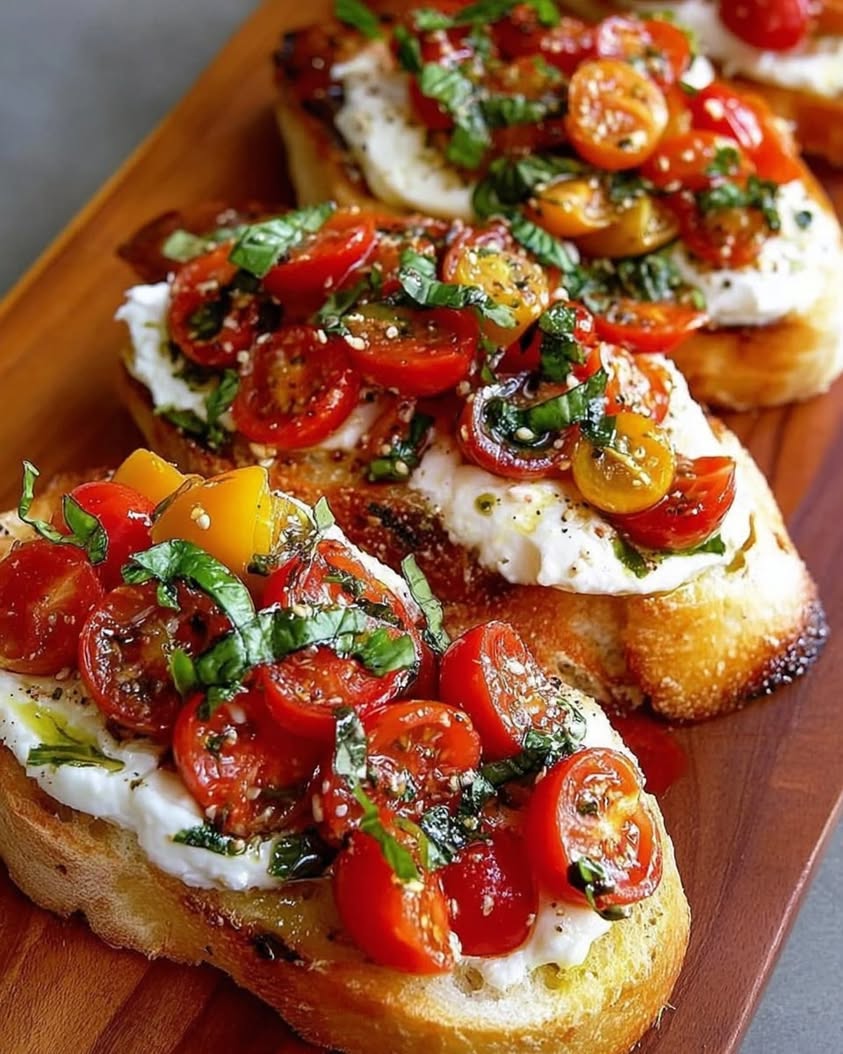
The Perfect Burrata Bruschetta Recipe for Your Next Party
Nothing says summer entertaining quite like a plate of bruschetta, and this Burrata Bruschetta Recipe elevates the classic appetizer to a whole new level of creamy indulgence. Imagine biting into a perfectly toasted slice of crusty bread, rubbed with garlic and drizzled with the finest olive oil, only to be met with a bed of tangy, marinated tomatoes and a luscious, milky center of burrata cheese. This Burrata Bruschetta Recipe is not just an appetizer; it is a statement. It promises a symphony of textures and temperatures that dance across your palate, from the crisp crunch of the crostini to the cool, velvety burst of the burrata.
The beauty of this simple yet elegant dish lies in its incredible balance of flavors. Fresh, juicy tomatoes are macerated with basil, balsamic vinegar, and garlic, creating a vibrant and acidic compote that perfectly cuts through the rich, buttery creaminess of the burrata. The result is a mouthwatering combination that feels both rustic and refined. As you pull apart the soft, pull-apart bread, the burrata releases its creamy heart, mingling with the herbed tomatoes for a bite that is simply unforgettable. This is the perfect party appetizer that requires almost no cooking but delivers immense flavor impact.
Furthermore, this particular adaptation of the traditional Italian starter is designed for maximum ease and minimal stress. You can prepare the tomato mixture hours in advance, allowing the flavors to meld beautifully. Then, right before your guests arrive, you simply toast the bread, assemble the components, and watch the magic happen. It is an incredibly social dish, meant to be shared and pulled apart. The interactive nature of breaking the burrata with friends and family adds a layer of joy to the experience, making it more than just food on a board. It creates a moment of connection and delight around the table.
Quick Recipe Highlights
- Flavor Profile: This appetizer offers a masterclass in contrast. The burst of sweet, acidic tomatoes from the marinated mixture hits first, followed by the rich, milky, and subtly sweet flavor of the burrata cheese. A final note of peppery basil and sharp garlic rounds out the experience nicely.
- Texture: Expect a delightful crunch from the toasted, garlic-rubbed bread. This gives way to the juicy, slightly firm texture of the marinated tomatoes. Finally, you will encounter the silky, creamy, and almost liquid center of the burrata, which creates a luscious and decadent mouthfeel.
- Aroma: The aroma is pure summer. You will smell the bright, grassy scent of fresh basil and the pungent, earthy aroma of raw garlic. This is underpinned by the rich, fruity fragrance of extra virgin olive oil and a subtle tanginess from the balsamic vinegar.
- Visual Appeal: This dish is a feast for the eyes. The deep red of the tomatoes contrasts beautifully with the bright green basil leaves and the pure, snowy white of the burrata. A final drizzle of dark, aged balsamic glaze adds streaks of deep brown, creating a gorgeous, rustic board.
- Skill Level Needed: This is a no-cook marvel that anyone can master. The most challenging part is simple knife work for dicing tomatoes and basil. Toasting the bread is a straightforward process, meaning even a novice cook can present a show-stopping appetizer with absolute confidence.
- Special Equipment: You will need a sharp knife for precise cutting, a large mixing bowl for the tomato mixture, a baking sheet or grill pan for toasting the bread, and a serving platter or wooden board for an attractive presentation. That is all you need for this elegant yet simple dish.
Recipe Overview
- Difficulty Level: This recipe earns the “Easy” rating because it requires no actual cooking of the primary ingredients. The core work involves chopping and mixing. The only heat application is toasting the bread, which is a low-skill, high-reward task. Even the assembly is intuitive and forgiving, making it a flawless choice for beginners or busy hosts.
- Category: This versatile dish fits perfectly as an appetizer, a starter course for a dinner party, or a light lunch when served with a side salad. It can also be categorized as a celebratory snack or “antipasto” for sharing during cocktail hour. It is a staple of summer dining and casual entertaining.
- Cuisine: This dish is a modern, creative take on classic Italian antipasti. The foundation of bread, tomatoes, and basil is firmly rooted in Tuscan and Southern Italian traditions. The addition of burrata, a specialty cheese from the Puglia region, adds a luxurious coastal influence to the humble bruschetta.
- Cost: The cost is moderate and very reasonable for the perceived value. Burrata is a premium cheese, so it is a bit pricier than mozzarella. However, high-quality crusty bread and ripe, in-season tomatoes are inexpensive. A single ball of burrata can be stretched to serve four people, making it a cost-effective luxury.
- Season: This dish truly shines during the summer months, from June through September, when tomatoes are at their peak ripeness. They are bursting with natural sugars and low in acidity, which is essential for the best flavor. Basil is also abundant and fragrant during this time, completing the seasonal profile.
- Occasion: It is the ultimate recipe for summer parties, garden gatherings, and backyard barbecues. Its elegant presentation makes it perfect for dinner parties and holiday brunches as well. It also works beautifully for a romantic picnic or a quiet, special weekend lunch at home.
Why You’ll Love This Recipe
First and foremost, the taste and texture of this Burrata Bruschetta Recipe are simply unparalleled. The moment you take a bite, you experience a series of beautiful sensations. The crunchy bread gives way to the juicy pop of marinated tomatoes. Finally, the cool, creamy burrata cheese spreads across your tongue like savory silk. It is a complex, satisfying, and deeply pleasurable experience that feels like a special occasion in every single bite. The acidic tomatoes are the perfect foil for the rich cheese, creating a balance that is neither too heavy nor too light. It is a taste of pure, unadulterated summer.
Additionally, the convenience and preparation benefits are a major draw for any home cook. This recipe comes together in less than 20 minutes with minimal effort. You can prep the tomato mixture up to 4 hours ahead of time, which is a huge win for party planning. When your guests arrive, you just need to toast the bread and assemble the board. This “mostly make-ahead” quality means you spend less time in the kitchen and more time with your loved ones. There is no hot oil, no sizzling pans, and no complicated techniques to worry about. It is low-stress, high-reward cooking at its very best.
From a nutritional standpoint, this appetizer offers some surprising advantages that make it feel like a smart and satisfying choice. The tomatoes are packed with lycopene, a powerful antioxidant that is great for heart health. The high-quality olive oil provides healthy monounsaturated fats. The base of crusty whole-grain bread offers fiber and complex carbohydrates. Even the burrata, while rich, is a good source of protein and calcium. This dish feels indulgent, but it is built on a foundation of wholesome, simple ingredients that provide real nutritional value. You can feel good about serving it to your family and friends.
From a social and entertaining value perspective, this is the king of sharing plates. There is something incredibly communal and joyful about placing a beautiful board in the center of the table and inviting everyone to dig in. The interactive act of breaking the burrata, tearing off a piece of bread, and loading it up with tomatoes encourages conversation and laughter. It serves as a natural centerpiece that people gather around. It is not just a snack; it is an experience that sets a relaxed, convivial tone for the entire gathering. It makes any host look effortless and sophisticated.
Finally, the cost-effectiveness and accessibility of this recipe make it a reliable go-to for any budget or skill level. You do not need a full pantry of exotic ingredients to create something spectacular. The main components are bread, tomatoes, basil, and one special cheese. Finding high-quality burrata is easier than ever now, as it is commonly stocked in most major grocery stores. For the impressive result you get, the financial investment is minimal. This Burrata Bruschetta Recipe proves that you do not need expensive cuts of meat or hours of labor to create a dish that feels luxurious and tastes unforgettable.
Historical Background and Cultural Significance
The story of bruschetta begins in central Italy, specifically in the regions of Tuscany and Lazio, as a simple way to use up day-old bread. The word “bruschetta” comes from the Italian verb “bruscare,” which means “to roast over coals.” In its earliest form, peasant farmers would grill thick slices of stale bread over the fire, rub them with a clove of garlic for flavor and its antiseptic properties, and then anoint them with a generous drizzle of fresh olive oil from the harvest. It was a frugal, practical, and profoundly delicious meal born from necessity and the bounty of the land. There was no tomato topping initially; the oil and garlic were the star.
The cultural importance of bruschetta in Italy cannot be overstated. It is much more than a simple appetizer; it is a ritualistic celebration of the harvest, especially the olive harvest. In many Tuscan homes, tasting the first pressing of the new olive oil on a piece of hot, garlic-rubbed toast is a sacred autumn tradition. The addition of chopped tomatoes, basil, and other toppings came later, specifically in the post-World War II era when tomatoes became more widely available and affordable. This evolution turned the simple peasant fare into the colorful, iconic antipasto we know and love today, representing the very best of Italian cucina povera, or “poor kitchen” cooking.
The evolution of this recipe into the Burrata Bruschetta Recipe we adore now is a testament to the modern chef’s creativity. Burrata itself has a fascinating history. It originated in the Murgia region of Puglia in the early 20th century as a way to use up leftover scraps of mozzarella. Artisans would stretch the leftover cheese curds into a pouch, fill it with fresh cream and shreds of mozzarella, and then seal it. This clever innovation created a cheese with a solid exterior and a luxurious, creamy heart. It remained a regional specialty for decades. It was only with the rise of modern shipping and food tourism that burrata became a global phenomenon, finding its perfect home atop the classic bruschetta.
In terms of regional variations across Italy, the bruschetta you find in Tuscany might be very different from one in Campania. In Tuscany, the focus remains on the quality of the olive oil, and the toppings are often simple, like finely chopped liver pate or a simple white bean puree. In Campania, the pairing with buffalo mozzarella and San Marzano tomatoes is a classic. In Puglia, the birthplace of burrata, you will find this version of the dish celebrated as a modern classic. Each region brings its local ingredients and traditions to the table. However, the core principle remains the same: high-quality, simple ingredients prepared with love and respect for the food. This Burrata Bruschetta Recipe is a beautiful, pan-Italian tribute to that enduring philosophy.
Ingredient Deep Dive
Burrata Cheese. Burrata is the heart and soul of this dish, and its cultural significance stems from its ingenious creation in Puglia, a region known for its dairy. Historically, it was a way to eliminate waste, but its rich, creamy flavor made it a sought-after delicacy. Nutritionally, burrata is a good source of protein and calcium, though it is high in fat and calories due to the cream filling. When selecting burrata, look for a cheese that feels slightly heavy for its size. The outer shell should be smooth, white, and unblemished. You can often see a slight bulge, indicating the creamy interior. It should feel fresh and smell clean, not sour. For storage, keep it in its original brine in the refrigerator and consume it within 24 to 48 hours of purchase for the best texture and flavor. If you cannot find burrata, a high-quality fresh buffalo mozzarella is a good substitute, though it will be less creamy. Simply tear it into pieces rather than keeping it whole.
Fresh Tomatoes. The tomato is the other pillar of this Burrata Bruschetta Recipe, and its history in Italian cuisine is relatively recent compared to the bread. Tomatoes were introduced to Europe from the Americas in the 16th century and were originally considered ornamental. It took centuries for them to be integrated into Italian cooking, but they are now indispensable. Nutritionally, tomatoes are a powerhouse of vitamin C, potassium, and especially lycopene, a potent antioxidant linked to reduced risk of heart disease and cancer. For selection, always choose tomatoes that are heavy for their size, deeply colored, and fragrant at the stem. They should yield slightly to gentle pressure. Avoid any tomatoes that are rock hard or have blemishes. For this recipe, Roma or plum tomatoes are excellent for their low seed and water content. However, heirloom or cherry tomatoes offer superior sweetness and complex flavor. Store tomatoes at room temperature, never in the refrigerator, as cold ruins their texture and flavor. If tomatoes are not in season, consider using sun-dried tomatoes rehydrated in olive oil for a more intense flavor.
Extra Virgin Olive Oil. The quality of the olive oil in this dish is paramount, as it is the main seasoning for the bread and tomatoes. Olive oil has been a cornerstone of Mediterranean culture for millennia, revered not just as food but also as a medicine and a fuel for lamps. Its nutritional profile is stellar, rich in monounsaturated fats which are heart-healthy and anti-inflammatory. It is also packed with antioxidants, like polyphenols, that protect your cells. When selecting olive oil for this Burrata Bruschetta Recipe, look for a “First Cold Pressed” extra virgin variety. Check the harvest date on the bottle; newer oil will be fruitier and more peppery. A good oil should smell green and grassy, like fresh-cut herbs. For storage, keep it in a cool, dark cabinet away from heat and light. Never buy oil in a clear glass bottle. A good substitute for a more neutral flavor is a high-quality avocado oil, though it will not have the same peppery finish.
Crusty Bread. The bread is the foundation that holds all the other components together. A good, crusty loaf is a staple of Italian baking, where bread is considered a sacred food. Technically, the bread provides a crisp base that contrasts beautifully with the wet toppings. Nutritionally, whole-grain or sourdough varieties are beneficial. Sourdough has a lower glycemic index, meaning it digests slower and does not spike your blood sugar. For selection, choose a loaf with a thick, hard crust and a dense, airy crumb. A classic Italian loaf, a French baguette, or a country-style sourdough are perfect choices. The bread should be sturdy enough to hold the heavy toppings without becoming soggy immediately. For storage, day-old bread is actually ideal for bruschetta because it is drier and toasts better. Fresh bread can be stored in a paper bag for a day. A good substitute for a gluten-free option is a sturdy gluten-free baguette or a large slice of polenta that has been grilled.
Common Mistakes to Avoid
- Using watery tomatoes: If you skip the step of seeding and salting the tomatoes, your bruschetta will become a soggy mess. The liquid released will ruin the crisp texture of the toast. Always seed tomatoes thoroughly and let them sit after salting, draining off the excess liquid before assembling.
- Soggy bread: This is the cardinal sin of any bruschetta. To avoid this, never dress the bread with the tomato mixture until you are ready to serve. Even a few minutes of sitting can lead to a disappointing, mushy bite. Toast the bread just before serving and assemble quickly.
- Using cold burrata directly from the fridge: Cold cheese has a muted flavor and a firm, rubbery texture. Let your burrata sit at room temperature for at least 30 minutes before serving. This allows it to soften and for its milky, creamy flavor to fully develop.
- Slicing the burrata: Never cut burrata with a knife before serving. The whole point of the dish is to break the cheese at the table, allowing the creamy center to flow out naturally. Serve it whole and let your guests enjoy the interactive experience of pulling it apart.
- Over-toasting the bread: Your bread should be golden brown and crunchy but not rock hard or burnt. Over-toasted bread can be difficult to bite into and can even break a tooth. Toast it until it is lightly crisp on the outside but still has a slight chew in the center.
- Not using fresh basil: Dried basil is a completely different ingredient and will not impart the same bright, aromatic flavor. This recipe relies on the fresh, peppery notes of fresh basil leaves. Do not compromise on this crucial ingredient for the topping and garnish.
- Forgetting the garlic rub: This step is essential for adding a subtle but penetrating garlic flavor to the bread. Do not skip it. Use a peeled clove of garlic and rub it firmly over the hot, toasted bread. The heat will release the garlic oils and create a delicious aroma.
- Overcrowding the bread: When arranging the tomatoes on the bruschetta, do not pile them too high. A single, generous layer is perfect. Overcrowding makes the topping heavy and difficult to eat without spilling. It also increases the risk of soggy bread.
- Adding the basil too early: Finely chopped basil can bruise and turn black if it sits too long in the tomato mixture. Add the basil just before serving to keep it bright green and flavorful. This ensures the prettiest and most aromatic final dish.
- Skipping the resting time for the tomatoes: The tomatoes need time to marinate and release their flavors. A quick mix and serve is fine, but letting the tomatoes sit for 15 to 30 minutes allows the salt to draw out their juices, the garlic to infuse, and the flavors to meld.
Essential Techniques
Mastering the Toast. The technique for toasting the bread is crucial for achieving the perfect texture. Why is it important? A good toast provides the structural integrity to hold the wet toppings without collapsing. It also adds a crucial textural contrast of crunch against the creamy burrata. To master this, slice your bread into 1/2-inch thick slices. Brush each slice lightly with olive oil on both sides. Place them on a baking sheet and bake at 400 degrees Fahrenheit for 4 to 6 minutes per side, or grill them for 2 to 3 minutes per side over medium heat. A common pitfall is not preheating the oven or grill, leading to uneven toasting. The visual cue for success is a deep golden brown color with darker, slightly charred spots around the edges of the crust. The bread should feel hard and firm to the touch when pressed.
The Art of the Garlic Rub. This step is a non-negotiable part of the authentic bruschetta experience. Why is it important? Rubbing the raw garlic over the hot, toasted bread performs a gentle infusion. The heat of the bread releases the volatile oils in the garlic, creating a mellow, fragrant, and aromatic base for all the other flavors. To master it, take a peeled clove of garlic and cut it in half. Once your bread is out of the oven or off the grill, immediately rub the cut side of the garlic firmly across the surface of the hot toast. You will see the bread become slightly translucent where the garlic rubs. A common mistake is using too much pressure or rubbing too long, which can create an overpowering, bitter garlic taste. The visual cue is a subtle sheen on the bread. You want the aroma to be present but not dominant.
Seeding and Salting Tomatoes. This technique is the secret to a non-soggy Burrata Bruschetta Recipe. Why is it important? Tomatoes contain a lot of water, or “plasma,” around their seeds. If you do not remove this, your mixture will be watery, and that liquid will soak into your crisp bread immediately. To master this, cut your tomatoes in half crosswise. Use your finger or a small spoon to gently scoop out the seeds and the jelly-like substance surrounding them. Discard this. Then, dice the remaining tomato flesh. Sprinkle it with a generous pinch of kosher salt and let it sit in a colander for 10 to 15 minutes. The salt draws out even more moisture. A common pitfall is skipping the salting step, which leaves too much liquid. The visual cue is the accumulation of a clear, reddish liquid in the bottom of the bowl after resting.
Pro Tips for Perfect Burrata Bruschetta
First, always bring your burrata to room temperature before serving. This is the single most important step for maximizing its flavor. Cold cheese numbs your taste buds and hides its delicate, milky sweetness. Take it out of the fridge 30 to 45 minutes before you plan to serve it, and let it rest in its brine.
Second, do not dress the tomato mixture until you are ready to serve. You can prep the ingredients ahead of time, but keep the garlic, basil, and olive oil separate. When you are ready, combine them. This prevents the basil from wilting and the bread from getting soggy when you assemble.
Third, use a high-quality, aged balsamic vinegar or a balsamic glaze as a final touch. The reduction is sweeter and thicker. A drizzle over the burrata and tomatoes adds a beautiful visual element and a complex, sweet-tart counterpoint to the richness of the cheese.
Fourth, consider adding a pinch of red pepper flakes to the tomato mixture. This is optional but highly recommended. A tiny bit of heat does not make the dish spicy but instead enhances the sweetness of the tomatoes and the creaminess of the burrata, adding a subtle layer of complexity.
Fifth, serve the bruschetta on a large, flat platter or wooden board. A board allows the components to be arranged beautifully and encourages guests to help themselves. It also makes the dish feel rustic and inviting, perfect for a party atmosphere.
Sixth, toast your bread just until it is golden and firm but not hard. You want it to have a crunch, but you also want it to be pliable enough to bite through without shattering. If it is too hard, it becomes a choking hazard and loses its pleasant texture.
Seventh, use a tool known as a tomato shark or a simple serrated knife for the best tomato cutting results. A serrated knife handles the tender skin of a tomato better than a straight edge, preventing the fruit from being crushed or squished. This keeps your dice nice and neat.
Eighth, do not forget the sea salt flakes. A final sprinkle of flaky sea salt, like Maldon, on top of the assembled bruschetta just before serving adds an incredible pop of salinity and a delicate crunch that elevates the entire dish.
Variations and Adaptations
Regional Variations. While this Burrata Bruschetta Recipe is a modern classic, you can explore regional Italian twists. In the south of Italy, the tomatoes might be replaced with a simple pesto made from basil and almonds, topped with burrata. In the north, you might see a version with roasted red peppers and anchovies for a more savory, umami-packed bite. Each variation highlights a local product and respects the core idea of simple, high-quality ingredients on crusty bread.
Seasonal Adaptations. This recipe is perfect for adapting to what is fresh at the market. In the spring, swap the tomatoes for blanched peas, fresh ricotta, and mint. In the autumn, use roasted butternut squash puree, crispy sage leaves, and a dollop of burrata. In the winter, a simple topping of caramelized onions, fresh thyme, and burrata provides incredible warmth and comfort. The creamy cheese is a perfect canvas for seasonal produce.
Dietary Modifications. For a gluten-free version, simply use a high-quality gluten-free baguette or rustic bread. Be sure to toast it well so it is sturdy. For a dairy-free adaptation, burrata is a challenge. However, you can create a “creamy” base by blending soaked cashews with a little nutritional yeast and lemon juice, or use a high-quality plant-based mozzarella that melts well.
Flavor Variations. To change the flavor profile, try adding different herbs. Fresh oregano or even a touch of fresh thyme works beautifully with the tomatoes. You can also add a splash of white balsamic vinegar for a milder acidity. For a bolder flavor, include a small amount of finely chopped kalamata olives or a drizzle of truffle oil over the finished dish.
Texture Modifications. For a different texture, use a variety of tomatoes. A mix of cherry tomatoes, which hold their shape better, and larger Roma tomatoes provides textural interest. You could also add a sprinkle of toasted pine nuts or crushed pistachios on top for a nutty crunch that contrasts with the creamy cheese.
Presentation Alternatives. Instead of a traditional flat board, consider serving the components separately as a DIY bar. Place a bowl of the tomato mixture, a bowl of the burrata, and a pile of toasted bread. This is a fantastic, interactive idea for a large party. Alternatively, you can serve it as individual composed appetizers on a small plate for a more formal dinner.
Serving and Presentation Guide
Plating Techniques. For a stunning presentation, start with your serving vessel. A large, rustic wooden cutting board or a slate platter is ideal. Arrange the toasted bread slices in a single layer or slightly overlapping around the edges. Place the whole burrata cheese in the center of the board, nestled among the bread. Spoon the marinated tomato mixture generously over the burrata and around the board. The goal is a sense of abundance and effortless elegance.
Garnishing Ideas. The garnish is key to the visual appeal. After spooning the tomatoes, drizzle everything with a high-quality aged balsamic glaze or a thick balsamic reduction. This adds dark, beautiful streaks. Scatter fresh, whole basil leaves and small sprigs of micro basil over the top. A final sprinkle of flaky sea salt and freshly cracked black pepper is essential.
Traditional Accompaniments. This dish pairs beautifully with other antipasti. Consider serving it alongside a platter of cured meats like prosciutto di Parma or soppressata. Marinated olives, roasted red peppers, and a small bowl of mixed nuts are also classic accompaniments that round out the board perfectly.
Modern Serving Suggestions. For a modern twist, try serving the burrata directly on a thin, crispy pizza base or a large toasted tortilla. A deconstructed version is also trendy. Serve the components in separate bowls and let guests build their own bruschetta. This is a great way to engage everyone at the table and allow for personalized combinations.
Temperature Considerations. The contrast of temperatures is part of the appeal. The bread should be warm from toasting. The tomato mixture should be at room temperature, which allows its flavors to blossom. The burrata must be at room temperature, as mentioned before. Never serve any component cold. This temperature harmony is essential for the perfect eating experience.
Portion Control Tips. For an appetizer, plan for 2 to 3 pieces of bruschetta per person. A single ball of burrata can easily serve 4 people as a shared starter. If you are making a larger batch, use more burrata. The key is not to overload each piece of bread with too much tomato or too much cheese, as it becomes difficult to eat gracefully.
Wine and Beverage Pairing
Wine Pairings. This dish cries out for a crisp, acidic white wine. A Vermentino from Sardinia or the Tuscan coast is an excellent choice. Its bright citrus notes and saline finish cut through the richness of the burrata perfectly. Another fantastic option is a Pinot Grigio from the Friuli region, which is light, clean, and mineral-driven. For red wine lovers, a light, chilled Lambrusco from Emilia-Romagna is a wonderful, unexpected pairing. Its slight fizz and juicy berry flavors complement the tomatoes beautifully.
Non-Alcoholic Alternatives. For a sophisticated non-alcoholic option, consider a sparkling Italian mineral water like San Pellegrino or a high-quality dry ginger ale. The bubbles help to cleanse the palate. A simple Sanbitter, an Italian non-alcoholic aperitif, is also a perfect match. Its bittersweet, herbal flavor profile mirrors the complexity of the dish.
Coffee and Tea Pairings. While not a traditional pairing, a light, floral green tea with a hint of mint can be a refreshing palate cleanser after the richness of the cheese. For a post-meal option, an espresso is wonderful. Its bitter notes cut through the creamy fat of the burrata and provide a classic Italian finish to the meal.
Temperature Considerations. Your white wine should be served well-chilled, around 45 to 50 degrees Fahrenheit. A rosé is also excellent and should be served at the same temperature. If serving a light red like Lambrusco, a light chill is ideal. For non-alcoholic drinks, serve them very cold. The cold temperature of the beverage is essential for balancing the warm toast and room-temperature cheese.
Serving Suggestions. When serving wine, use stemware that allows the aromas to concentrate. A small, tulip-shaped glass works well for white wines. Present the bottle in a cooler to keep it at the right temperature. For a party, set up a self-serve wine and drink station next to the bruschetta board for easy access and a relaxed, informal vibe.
Storage and Shelf Life
Storage Methods. This Burrata Bruschetta Recipe is best enjoyed fresh and is not designed for long-term storage of the assembled dish. However, you can store the components separately. The tomato mixture should be stored in an airtight container in the refrigerator for up to 2 days. The toasted bread, if fully cooled, can be stored in a paper bag or a loosely covered container at room temperature for a day. Do not refrigerate the bread, as it will become stale and lose its crunch.
Temperature Requirements. The tomato mixture must be kept refrigerated at 40 degrees Fahrenheit or below to prevent bacterial growth. The burrata should remain in its brine in the refrigerator until you are ready to bring it to room temperature. The cooked bread can sit out at room temperature safely for a day. However, any assembled bruschetta left out for more than 2 hours should be discarded for food safety.
Container Recommendations. For the tomato mixture, use a glass or plastic container with a tight-fitting lid. For the burrata, keep it in its original packaging, submerged in its brine. You can also place it in a small bowl and cover it with plastic wrap. For the bread, a paper bag is superior to plastic, as it allows airflow and prevents the crust from becoming soft and chewy.
Signs of Spoilage. The tomato mixture is the most perishable component. Look for any signs of mold, a slimy texture, or an off, sour smell. The basil will also turn dark and wilted if the mixture is old. The burrata will develop a strong, ammoniac smell and a watery, separated texture when it has gone bad. Do not consume any ingredient that shows these signs.
Reheating Instructions. The only component you would reheat is the bread. To revive day-old toast, place it in a 350-degree Fahrenheit oven for 3 to 5 minutes. This will restore its crispness. Never microwave the bread, as this will make it tough and chewy. The tomato mixture should never be reheated; it is best served at room temperature.
Freezing Guidelines. Freezing is not recommended for any component of this dish. The texture of fresh tomatoes becomes mushy and watery upon thawing. The burrata will completely break down and become grainy and separated. The bread will become freezer-burned and dry. This dish is entirely about fresh, high-quality ingredients, so it is best to make it fresh.
Make Ahead Strategies
Prep Timeline. You can prepare the tomato mixture up to 4 hours before serving. Dice the tomatoes, seed them, and salt them. Let them drain in a colander. Do not add the garlic, basil, or olive oil until you are ready to serve. This is the key to make-ahead success. The bread can be sliced the day before and stored in a paper bag.
Storage Between Steps. Store the salted, drained tomatoes in a covered container in the refrigerator. The cut basil should be placed in a damp paper towel Print
Burrata Bruschetta
- Total Time: 25 minutes
- Yield: 4
Description
A luxurious twist on classic bruschetta featuring creamy burrata cheese atop crispy toasted bread, topped with juicy cherry tomatoes, fresh basil, and a drizzle of balsamic glaze.
Ingredients
- 1 large baguette, sliced into 1/2-inch rounds
- 1/4 cup extra-virgin olive oil
- 2 cups cherry tomatoes, halved
- 1/4 cup fresh basil leaves, chopped
- 2 cloves garlic, minced
- 1 tablespoon balsamic vinegar
- Salt and black pepper to taste
- 8 ounces burrata cheese
- Balsamic glaze for drizzling
Instructions
- Preheat oven to 400°F (200°C). Arrange baguette slices on a baking sheet and brush both sides with olive oil. Toast in the oven for 5-7 minutes per side until golden and crispy.
- In a medium bowl, combine cherry tomatoes, basil, minced garlic, balsamic vinegar, and remaining olive oil. Season with salt and pepper. Toss gently and let sit for 10 minutes to meld flavors.
- Remove burrata from refrigerator about 15 minutes before serving. Drain and pat dry.
- Top each toasted baguette slice with a generous amount of the tomato mixture.
- Tear or slice the burrata into pieces and place on top of each bruschetta.
- Drizzle with balsamic glaze and serve immediately.
Notes
You can customize the seasonings to taste. For extra flavor, rub the toasted bread with a cut garlic clove before adding toppings.
- Prep Time: 15 minutes
- Cook Time: 10 minutes
- Method: Appetizer
- Cuisine: Italian