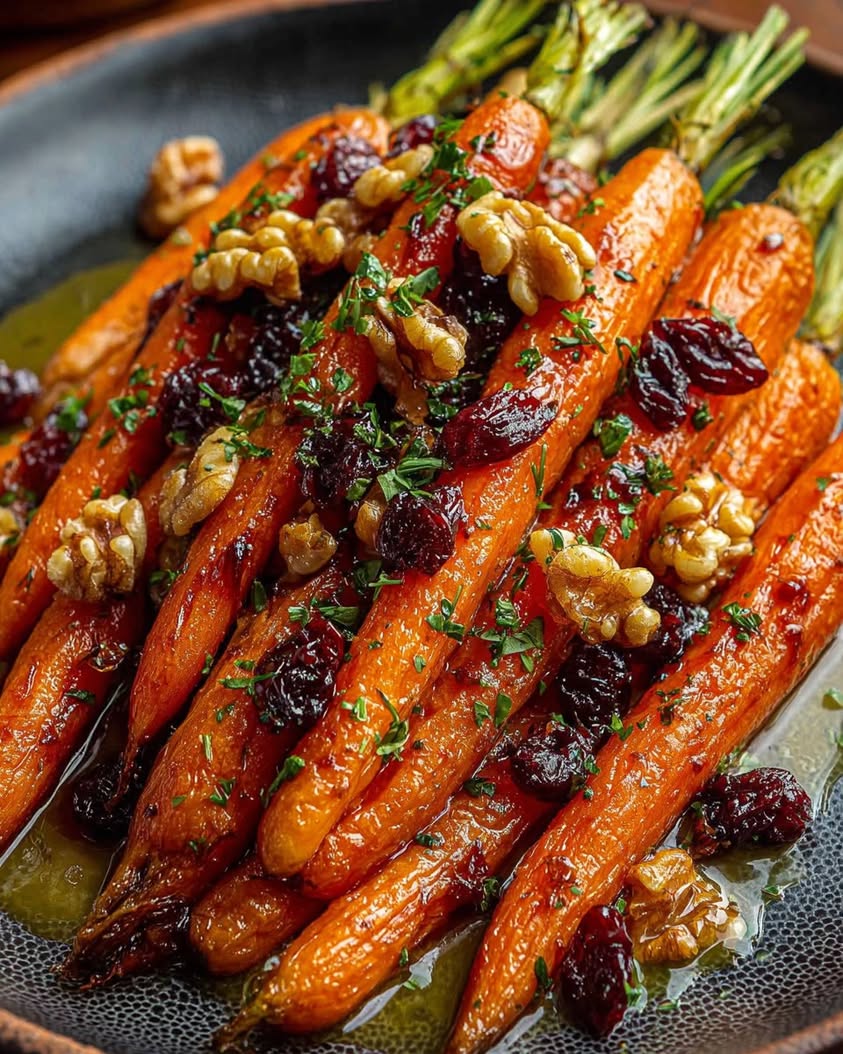
Honey Roasted Carrots with Cherries and Walnuts: A Sweet Side Dish
Transform a simple root vegetable into a stunning centerpiece with this recipe for Honey Roasted Carrots with Cherries and Walnuts. This sweet side dish masterfully balances earthy, tart, and nutty flavors for a truly unforgettable experience. As a result, your holiday table or weeknight dinner will instantly feel more special and vibrant. Furthermore, the natural sugars in the carrots caramelize beautifully under the heat, creating a tender interior with delightful crispy edges.
Imagine the aroma of roasting carrots mingling with warm honey and fragrant thyme filling your kitchen. This dish offers a symphony of textures, from the soft, caramelized carrots to the chewy dried cherries and the satisfying crunch of toasted walnuts. Ultimately, this recipe proves that side dishes can be the star of the meal, offering a colorful and nutritious complement to any main course. Moreover, it requires minimal hands-on effort, letting your oven do most of the work while you prepare the rest of your feast.
This Honey Roasted Carrots with Cherries and Walnuts recipe celebrates seasonal produce with a touch of elegance. The combination is not only delicious but also visually stunning, featuring a vibrant orange canvas speckled with deep red cherries and golden brown nuts. Consequently, it appeals to both the eyes and the palate, making it perfect for entertaining. Whether you serve it alongside a roast chicken, a holiday ham, or a vegetarian grain bowl, this sweet side dish promises to earn rave reviews from every guest at your table.
Quick Recipe Highlights
- Flavor Profile: This dish delivers a perfect harmony of sweet and savory notes. The natural sweetness of the carrots intensifies through roasting, while the honey glaze adds a rich, floral depth. Simultaneously, the tart dried cherries and earthy walnuts introduce a sophisticated complexity that prevents the dish from becoming overly sweet.
- Texture: You will enjoy a wonderful contrast in every bite. The carrots become meltingly tender with caramelized, slightly crisp exteriors. Meanwhile, the dried cherries offer a pleasant chewiness, and the walnuts provide a crucial, satisfying crunch that elevates the entire eating experience.
- Aroma: As the carrots roast, your kitchen will fill with an irresistible fragrance. The primary scent is sweet, earthy carrot mingled with the warm, floral notes of honey and the herbal whisper of fresh thyme. Finally, toasting the walnuts adds a final layer of warm, nutty perfume just before serving.
- Visual Appeal: This dish boasts a stunning color palette that brightens any plate. The vibrant orange carrots glisten with a honey glaze, creating a beautiful sheen. Subsequently, the deep burgundy of the cherries and the rustic brown of the walnuts create a confetti-like garnish that looks both rustic and elegant.
- Skill Level Needed: This is an exceptionally beginner-friendly recipe. Essentially, you only need basic knife skills for trimming the carrots and the ability to toss ingredients on a sheet pan. Therefore, even novice cooks can achieve impressive, restaurant-quality results with minimal stress.
- Special Equipment: You require only standard kitchen tools. A large rimmed baking sheet is essential for allowing the carrots to roast evenly without steaming. Additionally, a small bowl for mixing the glaze and a sharp knife for prepping the carrots are the only other necessities.
Recipe Overview
- Difficulty Level: We classify this recipe as easy because it involves straightforward techniques like chopping, tossing, and roasting. The process has very few steps and demands no advanced culinary skills. Moreover, the margin for error is wide, as slight variations in roasting time still yield delicious results. Essentially, if you can operate an oven, you can master this dish.
- Category: This versatile dish fits into multiple meal categories. Primarily, it serves as a standout side dish for both casual and formal dinners. Alternatively, you can add a protein like chickpeas or quinoa to transform it into a hearty vegetarian main course. It also works wonderfully as part of a festive holiday spread or a potluck contribution.
- Cuisine: While not tied to one specific tradition, the recipe draws inspiration from modern American and rustic European farmhouse cooking. The technique of roasting vegetables with honey echoes Mediterranean traditions, while the use of dried fruit and nuts adds a festive, almost Scandinavian touch. Ultimately, it’s a contemporary fusion that highlights quality, whole ingredients.
- Cost: This is a cost-effective recipe, especially when carrots are in season. Carrots are typically an inexpensive vegetable, and dried cherries and walnuts, while pricier, are used in modest amounts as impactful garnishes. Overall, you can create this impressive side dish for a fraction of the cost of a store-bought prepared version.
- Season: This recipe shines brightest in the fall and winter when carrot harvests peak and their sweetness is most pronounced. However, it’s truly a year-round winner. In spring, it pairs beautifully with lamb, and in summer, it offers a sweet counterpoint to grilled meats. The festive colors make it a natural fit for autumn and winter holiday tables.
- Occasion: This dish is incredibly versatile for any gathering. It’s elegant enough for Thanksgiving, Christmas, or Easter dinner. Conversely, it’s simple enough for a busy Tuesday night alongside baked chicken. It also travels well for potlucks and makes an excellent addition to a buffet table due to its ability to taste great warm or at room temperature.
Why You’ll Love This Recipe
First and foremost, the taste and texture appeal of these Honey Roasted Carrots with Cherries and Walnuts is undeniable. Each forkful delivers a multi-sensory experience, starting with the sweet, caramelized flavor of the carrot, moving to the bright pop of tart cherry, and finishing with the rich, earthy crunch of walnut. This combination is far more exciting than plain steamed vegetables, encouraging everyone to eat their veggies with genuine enthusiasm. The balance is so perfect that it satisfies a sweet tooth while still feeling wholesome and savory, making it a crowd-pleaser for both adults and children.
Next, consider the sheer convenience and preparation benefits. This recipe requires only about 10 minutes of active prep work. You simply toss the ingredients on a single sheet pan, which also means minimal cleanup. It’s a hands-off cooking method that frees you to focus on other parts of your meal or simply relax. Furthermore, the ingredients are easy to find at any standard grocery store, with no obscure or hard-to-source components. This simplicity, paired with the impressive final result, makes it a go-to recipe for busy cooks who want to serve something special without spending hours in the kitchen.
From a nutritional standpoint, this sweet side dish packs a powerful punch. Carrots are famously rich in beta-carotene, which converts to vitamin A and supports eye and skin health. They also provide fiber, vitamin K, and potassium. Walnuts add healthy omega-3 fatty acids and plant-based protein, while dried cherries contribute antioxidants and additional fiber. Using honey as a natural sweetener is a better alternative to refined sugars. Consequently, you are serving a side dish that is as nourishing as it is delicious, contributing valuable nutrients to your overall meal.
Moreover, the social and entertaining value of this dish is high. Its vibrant colors and elegant presentation make it a natural focal point on any dinner table. It sparks conversation and shows your guests that you’ve put thought and care into the meal. Because it appeals to a wide range of palates and dietary preferences (especially with easy modifications), it’s a safe and impressive choice when cooking for a group. Serving a beautiful, homemade dish like this always feels more personal and welcoming than something store-bought.
Finally, the cost-effectiveness and accessibility solidify its place in your recipe rotation. As mentioned, carrots are a budget-friendly vegetable, allowing you to create a large, impressive portion for just a few dollars. The walnuts and cherries, while premium ingredients, are used sparingly as garnishes, so a small bag will last for multiple recipes. This accessibility means you can enjoy a gourmet-tasting side dish regularly without blowing your grocery budget. It democratizes fine dining flavors and brings a touch of restaurant-quality elegance to everyday home cooking.
Historical Background and Cultural Significance
The origin story of roasting root vegetables stretches back to the earliest methods of cooking over open fires. Carrots, in their ancient purple and yellow forms, were cultivated thousands of years ago in Central Asia. Initially, people likely roasted them in embers to soften their tough texture and concentrate their sugars. The practice of glazing vegetables with honey or fruit preserves has roots in medieval European cookery, where sweet and savory combinations were common, especially among the wealthy who had access to precious sweeteners. The modern iteration of a glazed, garnished carrot side dish evolved in 20th-century American cooking, reflecting a desire to make vegetables more palatable and celebratory.
Carrots hold cultural importance in many societies, often symbolizing good health and prosperity. In some traditions, they represent longevity and good vision. The act of sweetening carrots specifically connects to holiday celebrations; for example, honey-glazed carrots or tzimmes (a Jewish stew often featuring carrots and dried fruit) are staples at Rosh Hashanah to symbolize a sweet new year. Therefore, this recipe for Honey Roasted Carrots with Cherries and Walnuts taps into a deeper cultural practice of using sweet foods to mark special occasions and express hopeful wishes for the future.
The evolution of this recipe mirrors broader culinary trends. The mid-20th century saw a surge in recipes that dressed up canned or boiled vegetables with sugary glazes, a trend born from convenience and a limited palate for bitter flavors. However, the contemporary version celebrates the natural flavor of the vegetable itself. Today’s food philosophy emphasizes fresh, whole ingredients, minimal processing, and highlighting natural sweetness through techniques like roasting. Adding nuts and dried fruit for texture and complexity reflects our globalized pantry and interest in layered flavors, moving beyond the simple butter-and-brown-sugar glazes of the past.
Regional variations of this concept abound, showcasing local ingredients and preferences. In the Mediterranean, you might find roasted carrots with olive oil, lemon, and oregano. In the Middle East, carrots are often roasted with cumin and served with yogurt. The Nordic version might use lingonberries instead of cherries and rye crumbs instead of walnuts. The specific combination of honey, cherry, and walnut in this recipe has a distinctly American heartland feel, reminiscent of harvest festivals and Thanksgiving tables. It’s a testament to how a simple concept can travel and adapt, absorbing influences from different food cultures along the way.
Ingredient Deep Dive
Carrots: Cultivated for over a millennium, carrots originated in Persia and were initially prized for their aromatic leaves and seeds rather than their roots. The familiar orange carrot we know today was developed by Dutch growers in the 17th century. Nutritionally, they are a powerhouse of beta-carotene, fiber, vitamin K1, and potassium. For the best results in this Honey Roasted Carrots recipe, choose firm, smooth carrots with vibrant color and fresh, green tops if possible. Avoid limp or rubbery carrots. Store them unwashed in the crisper drawer of your refrigerator in a plastic bag for several weeks. For a variation, try using multi-colored heirloom carrots for a stunning visual effect.
Honey: Honey’s history as a sweetener predates recorded history, with evidence of beekeeping found in ancient Egyptian and Greek civilizations. It has held roles as currency, medicine, and a sacred substance in various cultures. As a natural sweetener, it contains trace amounts of vitamins, minerals, and antioxidants, though its primary benefit in cooking is flavor. When selecting honey for this sweet side dish, a mild, floral variety like clover or orange blossom works beautifully without overpowering the carrots. Store honey at room temperature in a sealed container. For a vegan adaptation, you can substitute pure maple syrup or agave nectar with excellent results.
Dried Cherries: Drying fruit is one of the oldest preservation methods, allowing people to enjoy summer’s bounty year-round. Tart Montmorency cherries, commonly dried in the United States, are native to the Great Lakes region. They are rich in antioxidants like anthocyanins, which have anti-inflammatory properties, and they provide dietary fiber. Look for unsweetened dried tart cherries without added oils or sugars for the best flavor balance in your side dish. Store them in an airtight container in a cool, dark pantry. If unavailable, you can substitute dried cranberries, chopped dried apricots, or even golden raisins for a different but equally delicious twist.
Walnuts: Walnuts are among the oldest tree foods, with remnants found in Neolithic sites. They were traded along the Silk Road and were considered a symbol of intellect due to their brain-like shape. They are an exceptional source of plant-based omega-3 fatty acids (ALA), protein, and minerals like manganese and copper. For this recipe, purchasing walnut halves and chopping them yourself ensures the freshest flavor and crunch. Always taste a walnut before using; rancid nuts will have a bitter, unpleasant taste. Store walnuts in an airtight container in the refrigerator or freezer to prevent their oils from spoiling. Pecans or pistachios make wonderful substitutes.
Fresh Thyme: Thyme has a long history of use in ancient Egyptian embalming and Roman baths for its purifying scent. In the kitchen, it’s a cornerstone of French and Mediterranean herb blends. It contains thymol, a compound with antimicrobial properties. Fresh thyme offers a brighter, more nuanced flavor than dried. Look for vibrant green sprigs without black spots. To store, wrap stems in a damp paper towel and place in a plastic bag in the refrigerator. For this dish, you can substitute fresh rosemary (use sparingly, as it’s stronger) or a teaspoon of dried thyme in a pinch.
Common Mistakes to Avoid
- Crowding the Pan: Placing carrots too close together on the baking sheet is a common error. They will steam instead of roast, resulting in soggy, rather than caramelized, vegetables. Always ensure the carrots are in a single layer with a little space between them for optimal hot air circulation and browning.
- Using Old, Limp Carrots: Starting with subpar ingredients guarantees a mediocre result. Old carrots lack sweetness and moisture, leading to a dry, fibrous texture after roasting. Always select firm, crisp carrots for the best flavor and texture in your finished dish.
- Skipping the Walnut Toast: Adding raw walnuts straight from the bag misses a key step. Toasting walnuts unlocks their deep, nutty flavor and maximizes their crunch. Raw walnuts can taste bland and slightly bitter, so taking the few extra minutes to toast them is crucial.
- Adding Cherries Too Early: Mixing dried cherries in before roasting is a mistake. The high heat can cause them to burn and become unpleasantly bitter. Instead, always stir them in after roasting so they gently warm and soften without scorching.
- Neglecting to Toss Midway: Failing to shake or turn the carrots halfway through cooking leads to uneven roasting. One side may char while the other remains pale. For evenly caramelized Honey Roasted Carrots, a quick flip or stir at the 15-minute mark is essential.
- Overdoing the Honey Glaze: Drenching the carrots in honey will cause them to burn easily in the oven’s high heat. A moderate coating is enough to encourage glazing and caramelization. You can always drizzle a tiny bit more after roasting if desired.
- Underseasoning: Relying solely on the honey for flavor leaves the dish one-dimensional. Salt is critical for balancing the sweetness and enhancing the natural flavor of the carrots. Do not forget a generous pinch of salt and pepper before the carrots go into the oven.
- Using a Dark Pan Unadjusted: Dark baking sheets absorb more heat and can cause the bottoms to burn faster. If using a dark pan, consider reducing the oven temperature by 25 degrees Fahrenheit and checking for doneness a few minutes earlier to prevent burning.
- Not Preheating the Oven: Putting carrots into a cold oven drastically changes the cooking process. They will stew in their own juices instead of roasting. Always ensure your oven is fully preheated to the correct temperature for perfect results.
- Forgetting to Adjust for Size: Using carrot pieces of wildly different sizes means some will be overcooked and others undercooked. Aim for uniform pieces, and if some are thicker, consider cutting them lengthwise to ensure even cooking throughout the batch.
Essential Techniques
Uniform Cutting: This technique is fundamental for even cooking. When carrot pieces are the same size and shape, they roast at the same rate, preventing a mix of burnt and undercooked vegetables. To master it, trim the tops and tails, then cut the carrots on a slight diagonal into pieces about 1/2-inch thick. For very thick carrots, slice them in half lengthwise first. The visual cue for success is a baking sheet filled with consistently sized pieces. A common pitfall is rushing this step, which leads to uneven roasting and an inconsistent texture in the final dish.
Dry Roasting: Proper roasting relies on dry heat to caramelize the natural sugars in the carrots. This technique is important because it develops deep, complex flavors that boiling or steaming cannot achieve. To master it, ensure the carrots are patted dry after washing, toss them with just enough oil to coat lightly, and spread them in a single layer on the pan. The visual cues for success are browned, slightly shriveled edges and a tender interior when pierced with a fork. The main pitfall is adding too much oil or liquid, which steams the vegetables instead.
Toasting Nuts: Toasting walnuts intensifies their flavor and improves their crunchy texture. This step is important because it transforms a raw ingredient into a flavorful, aromatic garnish. To master it, spread walnuts in a single layer in a dry skillet over medium heat. Shake the pan frequently until they become fragrant and lightly browned, usually in 3-5 minutes. The visual cue is a slight darkening in color, and the olfactory cue is a rich, nutty aroma. The common pitfall is walking away, as they can burn in seconds. Always transfer them to a plate to stop the cooking process immediately.
Pro Tips for Perfect Honey Roasted Carrots
First, for extra caramelization, resist the urge to stir the carrots for the first 15 minutes of roasting. This allows the surfaces in contact with the hot pan to develop a beautiful, deep-brown sear. Then, use a thin metal spatula to flip them for the best release.
Second, if your honey is very thick, warm it slightly before mixing with the oil. Simply microwave it for 10-15 seconds or place the jar in a bowl of warm water. This makes it much easier to create a smooth, emulsified glaze that coats every carrot evenly.
Third, add a pinch of spice to complement the sweetness. A quarter teaspoon of ground cumin, smoked paprika, or even cinnamon added to the oil and honey mixture can introduce a wonderful, warm background note that makes the flavor profile even more intriguing.
Fourth, finish the dish with a bright acid. A small squeeze of fresh lemon juice or a drizzle of balsamic glaze over the carrots just before serving cuts through the richness and adds a layer of sophistication that balances the sweet elements perfectly.
Fifth, for a more substantial side, add a creamy element. Serve the warm carrots over a smear of whole-milk Greek yogurt or ricotta cheese mixed with a little lemon zest. The cool, creamy base provides a fantastic contrast to the warm, roasted vegetables.
Sixth, use the residual heat of the baking sheet. After removing the carrots from the oven, immediately scatter the dried cherries onto the hot pan and toss. The residual warmth will plump the cherries slightly and help any sticky glaze on the pan adhere to them.
Seventh, for maximum crunch, add the toasted walnuts at the very last second before serving. This preserves their texture and prevents them from softening from the heat and moisture of the carrots and cherries.
Eighth, if making ahead, roast the carrots and prepare the walnuts and cherries separately. Combine them only when ready to serve. This strategy ensures every component retains its ideal texture, and the walnuts stay perfectly crisp.
Variations and Adaptations
For regional variations, consider drawing inspiration from different cuisines. A Moroccan twist could include tossing the roasted carrots with harissa paste in the glaze and using dried apricots and pistachios. A French-inspired version might use Herbes de Provence and finish with a shower of chopped fresh tarragon. An Asian fusion approach could substitute the honey with miso paste and maple syrup, using sesame oil and topping with black sesame seeds.
Seasonal adaptations are easy and rewarding. In spring, use fresh baby carrots with their tops on and substitute the dried cherries with fresh pea shoots for garnish. During summer, add grilled peaches or nectarines chopped alongside the cherries. For a deep winter version, incorporate roasted parsnips or sweet potatoes with the carrots and use dried cranberries and a sprinkle of pomegranate arils for a festive touch.
Dietary modifications are straightforward. For a vegan Honey Roasted Carrots dish, replace the honey with an equal amount of maple syrup or agave nectar. To make it nut-free, omit the walnuts and use toasted sunflower seeds or pepitas for crunch. For a lower-sugar version, reduce the honey by half and rely more on the carrots’ natural sweetness, amplified by roasting.
Flavor variations can keep this recipe exciting. Infuse the olive oil with a clove of crushed garlic or a sprig of rosemary before tossing with the carrots. Add a tablespoon of Dijon mustard or orange zest to the honey-oil mixture for a tangy, citrusy note. A sprinkle of grated Parmesan cheese over the hot carrots right after roasting adds a savory, umami-rich finish.
Texture modifications can cater to different preferences. For a softer dish, cover the pan with foil for the first 15 minutes of roasting, then uncover to caramelize. For extra crunch, sprinkle the finished dish with buttery breadcrumbs or crispy fried onions. If you prefer a saucier side, dissolve a tablespoon of honey and a teaspoon of apple cider vinegar in the warm pan after removing the carrots to create a quick glaze, then pour it over the top.
Presentation alternatives offer creative ways to serve. Instead of chopping, roast whole baby carrots or rainbow carrots for a dramatic, rustic look. Serve the carrots and toppings in a large, shallow bowl instead of on a platter. Alternatively, create individual servings in small ramekins or on lettuce cups for a composed salad effect.
Serving and Presentation Guide
Plating techniques can elevate this humble side dish to restaurant quality. For a family-style presentation, pile the warm Honey Roasted Carrots with Cherries and Walnuts high on a large, white platter to let the colors pop. Drizzle any remaining pan juices over the top. For individual plating, use a pair of tongs to create a neat, vertical stack of carrots in the center of each plate, then artfully scatter the cherries and walnuts around the base.
Garnishing ideas extend beyond the recipe ingredients. A final flourish of flaky sea salt, such as Maldon, adds texture and enhances flavor. Fresh, soft herbs like chopped parsley, chives, or dill provide a green contrast and fresh aroma. For a luxurious touch, a crumble of soft goat cheese or blue cheese over the warm carrots creates a delicious melt-in effect.
Traditional accompaniments for this sweet side dish include roasted or grilled meats. It pairs classically with honey-glazed ham, herb-roasted chicken, or a simple pan-seared pork chop. For holiday meals, it is a perfect partner to turkey or prime rib. The sweetness complements the savory, umami flavors of the meat beautifully.
Modern serving suggestions lean into vegetarian and flexible dining. Serve the carrots atop a bed of creamy polenta or farro for a hearty vegetarian main. Alternatively, add them to a grain bowl with quinoa, spinach, and a lemon-tahini dressing. They also make a fantastic addition to a festive salad when cooled to room temperature and tossed with bitter greens like arugula or radicchio.
Temperature considerations are important for the best experience. This dish is most flavorful served warm, shortly after coming out of the oven when the walnuts are still crisp. However, it is also delicious at room temperature, making it excellent for buffets or picnics. Avoid serving it cold from the refrigerator, as the fats in the glaze will solidify. If needed, gently reheat in a 350°F oven for about 10 minutes.
Portion control tips are helpful for meal planning. As a side dish, plan for about ½ pound of whole carrots per person. This recipe yields about four generous servings. If serving as part of a large holiday spread with many other sides, you can stretch it to six servings. For a main course component, such as in a grain bowl, one-quarter of the recipe per person is sufficient.
Wine and Beverage Pairing
Wine pairings should complement the sweet and earthy notes of the carrots. An off-dry Riesling or Gewürztraminer is a classic choice, as their slight sweetness mirrors the honey and their acidity cuts through the richness. For red wine lovers, a light-bodied, low-tannin Pinot Noir with its red fruit flavors harmonizes beautifully with the cherries. A rosé with good acidity, especially from Provence, offers a versatile and refreshing option that won’t clash with the dish’s diverse flavors.
Non-alcoholic alternatives can be just as sophisticated. Sparkling apple cider provides festive bubbles and apple notes that pair naturally with the roasted carrots. A ginger beer or spicy ginger ale offers a zesty contrast that cleanses the palate. For a warmer option, a lightly sweetened hibiscus or berry herbal tea served iced or hot complements the fruitiness of the cherries beautifully.
While not a classic coffee dish, certain coffee or tea pairings can work if this is part of a brunch menu. A medium-roast coffee with low acidity and notes of caramel or nut would not compete with the dish. A cup of Earl Grey tea, with its bergamot citrus notes, could provide a lovely, aromatic contrast to the sweet and earthy flavors on the plate.
Temperature considerations for beverages are key. Chilled white wines, rosés, and sparkling non-alcoholic drinks should be served well-chilled, around 45-50°F. Red wines like Pinot Noir are best served slightly cooler than room temperature, around 55°F. Non-alcoholic sparkling ciders should be served very cold to maximize their refreshing quality alongside the warm, roasted vegetables.
Serving suggestions for a complete experience involve considering the entire meal. If the main course is a rich meat, choose a beverage that can stand up to it, like the Pinot Noir. If the meal is lighter, opt for the Riesling or sparkling cider. Always offer water on the table to cleanse palates between bites, especially given the sweet elements in this side dish.
Storage and Shelf Life
Storage methods are simple but important for food safety and quality. Allow the Honey Roasted Carrots to cool completely to room temperature before storing. Place them in an airtight container, separating the walnuts if possible to maintain their crunch. The cherries can remain mixed in with the carrots. Store the container in the refrigerator for the best preservation of freshness and to prevent bacterial growth.
Temperature requirements are strictly refrigerator-cold. This dish must be stored at or below 40°F (4°C). Do not leave it at room temperature for more than two hours after cooking, as the honey and vegetable combination can promote spoilage. For longer storage, freezing is an option, though it will affect the texture of the carrots, making them softer upon thawing.
Container recommendations include glass or BPA-free plastic containers with tight-fitting lids. Avoid storing in the open baking sheet or covering with foil alone, as this leads to drying out and absorption of other refrigerator odors. If you must store the walnuts separately, a small resealable bag or a small jar within the container works well.
Signs of spoilage are usually evident. Look for an off or sour smell, which is the first indicator. Visible mold, an excessively slimy texture on the carrots, or a rancid smell from the walnuts (if stored together) mean the dish should be discarded. When in doubt, it is always safer to throw it out.
Reheating instructions aim to restore texture without overcooking. The best method is to spread the carrots in a single layer on a baking sheet and warm them in a 350°F oven for 10-15 minutes until heated through. You can also reheat them in a skillet over medium heat with a tiny splash of water to prevent sticking. Avoid the microwave if possible, as it will make the carrots and walnuts soggy.
Freezing guidelines are for longer-term storage of up to 2 months. Freeze the cooled carrots (without the walnuts) in a single layer on a parchment-lined sheet, then transfer to a freezer bag. Thaw overnight in the refrigerator before reheating in the oven. Note that the texture will be softer, and it’s best used in soups, purees, or grain bowls after freezing rather than as a stand-alone side dish.
Make Ahead Strategies
A prep timeline can reduce day-of stress significantly. Up to two days ahead, wash, peel, and cut the carrots. Store them submerged in cold water in an airtight container in the refrigerator to keep them crisp. Also, toast the walnuts and store them at room temperature in an airtight jar. Measure out the dried cherries and prepare the honey-oil mixture, storing it separately in the fridge. This leaves only tossing and roasting for the day you plan to serve.
Storage between steps is crucial for maintaining quality. Keep pre-cut carrots in water, changing the water daily. The honey-oil mixture may solidify in the fridge; simply let it sit at room temperature for 15 minutes before using. Keep toasted walnuts in a cool, dark place, not the refrigerator, to maintain their crisp texture until assembly.
Quality impact assessment for make-ahead steps is positive. Pre-cutting carrots does not harm their flavor or roasting ability if kept in water. Toasting walnuts ahead actually allows their flavor to mature. The only step that must happen just before serving is the final combination of the hot carrots with the cherries and walnuts to preserve the ideal texture contrast.
Assembly tips for last-minute finishing are simple. Roast the prepped carrots as directed. While they are roasting, take your pre-toasted walnuts and measured cherries out. The moment the carrots come out of the oven, transfer them to your serving bowl, immediately add the cherries and toss. Finally, top with the walnuts and any fresh herbs just before carrying the dish to the table.
Reheating guidelines for pre-roasted carrots are effective. If you roasted the carrots completely ahead, spread them on a baking sheet and warm in a 400°F oven for 5-8 minutes until hot. This will re-crisp the edges slightly. Then proceed with adding the cherries and walnuts. Avoid reheating the entire assembled dish, as it will soften the nuts.
Fresh element additions are the key to a make-ahead dish tasting freshly made. Even if you prepare everything else in advance, always add a final garnish of something fresh right before serving. This could be a sprinkle of a new herb not used in roasting, a drizzle of high-quality olive oil, or a squeeze of citrus juice. This trick instantly revives the flavors and makes the dish taste newly prepared.
Scaling Instructions
Halving the recipe is straightforward for smaller households. Simply divide all ingredient quantities by two. Use a standard quarter-sheet pan or a smaller baking dish to maintain the proper single-layer spacing for the carrots. The cook time may reduce by about 5 minutes, so start checking for doneness at the 15-minute mark. All other techniques and steps remain exactly the same.
Doubling or tripling the recipe for a crowd requires slight adjustments. Double or triple all ingredients proportionally. You must use two or three separate baking sheets to avoid overcrowding; roasting in batches is better than cramming them all onto one pan. Rotate the sheets between oven racks halfway through cooking to ensure even browning. The total cook time may increase slightly, so rely on the visual cue of tender, browned carrots rather than a strict timer.
Equipment adjustments are necessary when scaling. For larger batches, ensure you have enough large, rimmed baking sheets. If your oven only fits one sheet at a time, roast in batches and keep the first batch warm in a 200°F oven on an open rack (not stacked, to prevent sogginess) while the second batch cooks. For very large quantities, consider using a commercial-sized sheet pan if your oven can accommodate it.
Timing modifications become important for large-scale meal prep. If you are making multiple batches, factor in the time it takes for the oven to reheat between batches. Allow at least 10-15 minutes for the oven to come back to full temperature after removing a hot sheet pan. Plan your overall cooking schedule accordingly to have all components ready at the same time.
Storage considerations change with scale. A double batch will yield more leftovers. Ensure you have enough appropriately sized airtight containers for refrigeration. For food safety, divide large quantities of leftovers into several smaller, shallow containers. This allows them to cool quickly and evenly in the refrigerator, reducing the risk of bacterial growth in the center of a large, hot mass of food.
Nutritional Deep Dive
A macro breakdown for one serving (approximately one-quarter of the recipe) provides a balanced profile. You can expect around 180-220 calories, with the majority coming from healthy carbohydrates in the carrots and cherries. The dish contains about 3-5 grams of plant-based protein from the walnuts, and 10-12 grams of fat, primarily unsaturated fats from the olive oil and walnuts. The fiber content is significant, at roughly 5-7 grams per serving, aiding in digestion and satiety.
The micronutrient analysis reveals a wealth of vitamins and minerals. Carrots are exceptionally high in Vitamin A (from beta-carotene), providing well over 100% of the daily value per serving. They also contribute Vitamin K, potassium, and antioxidants. Walnuts add important minerals like manganese, copper, and magnesium. Dried cherries contribute additional Vitamin C and potassium. Together, they create a nutrient-dense side dish that supports overall health.
Health benefits are numerous due to the whole-food ingredients. The beta-carotene supports eye health and immune Print
Honey Roasted Carrots with Dried Cherries & Walnuts
- Total Time: 45 minutes
- Yield: 4
Description
A sweet and savory side dish featuring tender roasted carrots glazed with honey, topped with tart dried cherries and crunchy walnuts.
Ingredients
- 1 lb carrots, peeled and cut into 2-inch sticks
- 2 tbsp olive oil
- 2 tbsp honey
- 1/2 tsp salt
- 1/4 tsp black pepper
- 1/4 cup dried cherries
- 1/4 cup walnuts, roughly chopped
- 1 tbsp fresh parsley, chopped
Instructions
- Preheat oven to 400°F (200°C). Line a baking sheet with parchment paper.
- In a bowl, toss carrots with olive oil, honey, salt, and pepper until evenly coated. Spread in a single layer on the baking sheet.
- Roast for 25-30 minutes, stirring halfway, until carrots are tender and caramelized. Remove from oven and transfer to a serving dish.
- Top roasted carrots with dried cherries, walnuts, and fresh parsley. Serve warm.
Notes
You can customize the seasonings to taste.
- Prep Time: 15 minutes
- Cook Time: 30 minutes
- Method: Side
- Cuisine: American