Grilled Salmon with Creamy Asparagus and Roasted Baby Potatoes: A Restaurant-Quality Meal at Home
Imagine a meal that feels like a special occasion but comes together on a busy weeknight. This recipe for Grilled Salmon with Creamy Asparagus and Roasted Baby Potatoes delivers exactly that. It combines flaky, perfectly seasoned fish with tender-crisp green spears and golden, buttery potatoes all tied together with a luxurious, herb-flecked cream sauce. Ultimately, it is a complete, balanced plate that looks stunning and satisfies deeply.
Furthermore, this dish celebrates the harmony of simple, high-quality ingredients. The rich, oily flesh of the salmon stands up beautifully to the char of the grill. Meanwhile, the roasted baby potatoes provide a hearty, comforting base. The creamy asparagus sauce, brightened with lemon and herbs, acts as the elegant bridge that brings every element together. You get restaurant-level presentation and flavor with straightforward, approachable techniques.
This Grilled Salmon with Creamy Asparagus and Roasted Baby Potatoes is more than just dinner. It is an experience. The sizzle of the salmon hitting the hot grill grates, the aroma of garlic and herbs wafting from the oven, and the vibrant green of the sauce create a multisensory feast. It is perfect for impressing guests or for treating your family to something extraordinary without spending hours in the kitchen.
Quick Recipe Highlights
- Flavor Profile: This dish offers a masterclass in balance. You get the savory, umami-rich taste of grilled salmon, the sweet, earthy notes of roasted asparagus and potatoes, and the bright, tangy finish of a lemon-herb cream sauce. Every bite is a complex and satisfying blend.
- Texture: Contrast is key here. The salmon has a crisp, slightly charred exterior giving way to a moist, flaky interior. The asparagus retains a pleasant snap, while the baby potatoes are creamy and soft inside with a crispy roasted skin. The velvety sauce coats everything in a smooth, luxurious mouthfeel.
- Aroma: As it cooks, your kitchen will fill with irresistible scents. First, you will smell the earthy fragrance of roasting potatoes and asparagus. Then, the smoky scent of grilling salmon arrives. Finally, the garlic, lemon, and fresh dill in the sauce create a fresh, aromatic finish that makes mouths water.
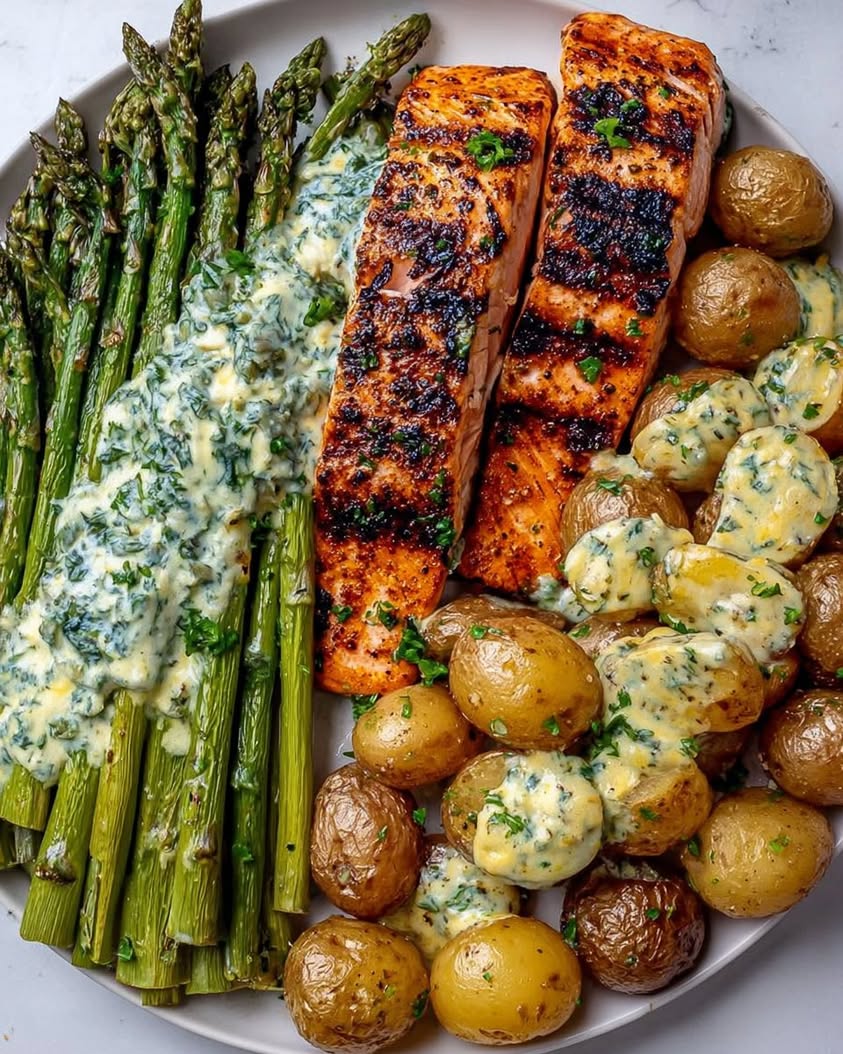
- Visual Appeal: This plate is a feast for the eyes. The vibrant pink of the salmon, the deep green of the asparagus, the golden-brown of the potatoes, and the pale green cream sauce create a beautiful, colorful composition. It looks meticulously plated yet effortlessly rustic.
- Skill Level Needed: This is an accessible recipe for most home cooks. It requires basic skills like seasoning, grilling or pan-searing, roasting vegetables, and making a simple pan sauce. The steps are clearly defined and manageable, making a gourmet result very achievable.
- Special Equipment: You will need a grill or a sturdy grill pan for the salmon. Additionally, a baking sheet for roasting the vegetables and a medium saucepan for the cream sauce are essential. A good chef’s knife and cutting board will make prep work quick and easy.
Recipe Overview
- Difficulty Level: We rate this recipe as “Easy.” The techniques are fundamental: roasting, grilling, and making a simple sauce. The steps are sequential and not rushed. While multitasking is required, the timing is forgiving. Even a novice cook can achieve excellent results by following the clear instructions.
- Category: This dish fits perfectly into the “Main Course” category for lunch or dinner. It is a complete, protein-centric meal with built-in vegetables and starch. It also qualifies as a “Healthy Dinner” and a “Special Occasion” meal due to its impressive presentation and nutrient-dense profile.
- Cuisine: The recipe draws inspiration from contemporary American and Pacific Northwest culinary traditions, where salmon is a celebrated staple. The use of fresh dill and a creamy sauce has hints of Scandinavian influence, while the grilling technique is universally beloved. It is a modern, fusion-style dish.
- Cost: This is a mid-range recipe. Wild-caught salmon is the primary cost driver, but it is an investment in quality protein and flavor. Asparagus and baby potatoes are affordable, especially in season. The cream, butter, and aromatics are pantry staples, making the overall cost reasonable for a restaurant-quality meal.
- Season: Spring is the ideal season for this Grilled Salmon with Creamy Asparagus and Roasted Baby Potatoes, as asparagus is at its peak sweetness and tenderness. However, it is truly a versatile dish for year-round enjoyment. You can find good-quality salmon and potatoes any time, making it a reliable favorite.
- Occasion: This meal is incredibly versatile for different events. It is elegant enough for a date night or dinner party. Conversely, it is simple and wholesome enough for a family Sunday supper. You can also prepare it for a healthy weekly meal prep, dividing the components into containers for easy lunches.
Why You’ll Love This Recipe
First and foremost, the taste and texture combination is utterly irresistible. The flaky, savory salmon pairs magically with the sweet, earthy vegetables. Then, the creamy sauce adds a layer of decadent richness that ties the plate together. Each component complements the others, creating a harmonious and deeply satisfying eating experience from the first bite to the last. You will love the restaurant-quality flavor you can achieve in your own kitchen.
From a convenience standpoint, this recipe is a weeknight hero. The total active prep time is minimal, and much of the cooking is hands-off roasting. You can easily manage all three components simultaneously. Moreover, the ingredients are easy to find at any standard grocery store. This Grilled Salmon with Creamy Asparagus and Roasted Baby Potatoes proves that a spectacular meal does not require a long list of obscure items or complicated techniques.
Nutritionally, this dish is a powerhouse. Salmon is packed with heart-healthy omega-3 fatty acids and high-quality protein. Asparagus provides fiber, folate, and vitamins A, C, and K. Baby potatoes offer energy-sustaining complex carbohydrates and potassium. The cream sauce, while indulgent, is used in moderation to add flavor without overwhelming the dish’s health benefits. It is a balanced meal that fuels your body beautifully.
For social and entertaining value, this recipe is a guaranteed crowd-pleaser. Its stunning visual appeal makes it perfect for serving to guests. You can chat with your company while the potatoes roast and the sauce simmers. The final plating looks professional and thoughtful. Serving this Grilled Salmon with Creamy Asparagus and Roasted Baby Potatoes will make any dinner feel like a celebrated event, earning you compliments with minimal stress.
Finally, it is cost-effective and accessible. Cooking this meal at home costs a fraction of what you would pay for a similar dish at a seafood restaurant. You control the quality of every ingredient, from the sustainability of the salmon to the freshness of the herbs. It democratizes fine dining, allowing you to enjoy a luxurious, healthy, and delicious meal any night of the week without breaking the bank.
Historical Background and Cultural Significance
The story of this dish begins with the individual histories of its core components. Salmon has been a vital food source for coastal indigenous cultures in the Pacific Northwest for millennia, celebrated in ceremonies and preserved for winter. In Europe, asparagus was considered a delicacy by ancient Romans and Greeks, prized for its unique flavor and purported medicinal qualities. The combination is a relatively modern fusion, reflecting contemporary tastes for healthy, visually striking plates.
Culturally, salmon holds immense significance. For many Native American tribes, it is not just food but a sacred being central to identity and survival. In Scandinavian countries, preserving salmon through smoking or gravlax is a deep-rooted tradition. The pairing of salmon with dairy, like the cream sauce in this recipe, echoes Scandinavian culinary practices where dill and creamy sauces are classic accompaniments to fish, bridging cultural traditions on a single plate.
The recipe has evolved with cooking technology and ingredient availability. Historically, salmon would have been cooked over an open fire. The introduction of home grills made that smoky flavor accessible to everyone. Roasting vegetables became a standard, easy technique with modern convection ovens. The creamy asparagus sauce is a contemporary twist, moving beyond plain melted butter or hollandaise to integrate the vegetable directly into the sauce, maximizing flavor and reducing waste.
Regional variations of this concept abound. In the American South, you might find salmon with a pecan crust and creamy grits. On the West Coast, it could be served with a citrus-avocado salsa and quinoa. Our version of Grilled Salmon with Creamy Asparagus and Roasted Baby Potatoes leans into a Pacific Northwest and European herb garden aesthetic. It is a versatile template that welcomes personalization based on local ingredients and culinary heritage.
Ingredient Deep Dive
Salmon is the star. Opt for wild-caught varieties like King, Sockeye, or Coho for superior flavor and a firmer texture, though high-quality farm-raised Atlantic salmon is also excellent and often more readily available. Look for fillets with bright, firm flesh and a fresh, ocean-like smell. Store salmon in the coldest part of your refrigerator and cook within a day of purchase. For a substitution, try arctic char or a thick-cut steelhead trout, which have similar fat content and cooking properties.
Asparagus, a sign of spring, should have tight, firm tips and smooth, vibrant green stalks. Thicker spears are ideal for roasting as they won’t overcook as quickly. To store, trim the ends and stand the spears in a jar with an inch of water, covered loosely with a bag. Beyond the creamy sauce, you can roast or grill it alongside the salmon. If asparagus is out of season, broccolini or haricots verts make good substitutes, though the sauce preparation will differ.
Baby potatoes, or new potatoes, are small, thin-skinned, and wonderfully creamy. They roast quickly and evenly. Varieties like Yukon Gold, Red Bliss, or Fingerlings are perfect. Their thin skin means you don’t need to peel them; just give them a good scrub. Store potatoes in a cool, dark, well-ventilated place—not the refrigerator. For a different twist, try sweet potato cubes or parsnips. However, adjust roasting times as needed for denser vegetables.
The creamy sauce relies on simple, aromatic ingredients. Fresh dill is non-negotiable for its bright, grassy flavor that pairs perfectly with fish; dried dill cannot replicate it. Fresh lemon juice adds necessary acidity to cut through the richness of the cream and butter. Use real garlic, not powder, for the best aromatic base. For a lighter sauce, substitute half the heavy cream with whole milk or vegetable broth, though the sauce will be less thick and luxurious.
Common Mistakes to Avoid
- Overcooking the Salmon: This is the most common error. Salmon continues to cook after removal from heat. Aim for an internal temperature of 125°F (for medium-rare) to 135°F (for medium) and let it rest. Overcooked salmon becomes dry and chalky.
- Soggy Roasted Vegetables: Crowding the baking sheet is the culprit. Ensure the potatoes and asparagus have space. If they are piled on top of each other, they will steam instead of roast, resulting in a soft, lackluster texture.
- Breaking the Cream Sauce: If the heat is too high, the dairy can separate or curdle. Keep the sauce at a gentle simmer, not a rolling boil. Stir constantly when adding the lemon juice to incorporate it smoothly.
- Underseasoning: Season every component generously at every stage. Salt the salmon fillets, toss the vegetables with oil and salt, and taste the sauce for seasoning. Layered seasoning builds depth of flavor.
- Using a Cold Grill or Pan: For a beautiful sear and to prevent sticking, your cooking surface must be properly preheated. Whether using a grill or skillet, ensure it is hot before adding the oil and salmon.
- Not Drying the Salmon: Pat the salmon fillets very dry with paper towels before seasoning and oiling. Excess moisture on the surface creates steam, which inhibits the formation of a delicious, crispy crust.
- Neglecting to Rest the Salmon: Let the grilled salmon rest for 5 minutes before serving. This allows the juices to redistribute throughout the fillet, ensuring every bite is moist and flavorful.
- Overcomplicating the Sauce: The sauce should be a simple, elegant complement. Avoid adding too many herbs or spices that will compete with the natural flavors of the salmon and asparagus. Let the fresh dill and lemon shine.
Essential Techniques
Patting Dry is a simple but critical step for protein and vegetables. Moisture is the enemy of browning. By thoroughly drying the salmon fillets and the washed asparagus with paper towels, you remove surface water. This allows the oil to make direct contact with the food, promoting efficient heat transfer and enabling a beautiful, caramelized sear or roast. Skipping this leads to steaming and pale, soggy results.
Seasoning in Layers builds a foundation of flavor. Do not just salt at the end. Season the salmon fillets on both sides before cooking. Toss the potatoes and asparagus with oil, salt, and pepper before they hit the oven. Finally, season the cream sauce to taste. This method ensures every component is seasoned from the inside out, creating a harmonious and well-rounded final dish where no single element tastes bland.
Roasting Vegetables correctly requires high heat and space. Preheat your oven to 400°F or higher to ensure the vegetables caramelize quickly without drying out internally. Spread them in a single layer on a baking sheet with a little room between pieces. Crowding causes steaming. Toss or shake the pan halfway through cooking to ensure even browning. The visual cue for success is golden-brown spots and tender interiors.
Making a Pan Sauce requires attention to temperature. After sautéing garlic, add the cream and bring it just to a simmer. A rolling boil risks breaking the emulsion. When adding acidic lemon juice, do so off the heat or at a very low simmer while stirring constantly to prevent curdling. The sauce is done when it coats the back of a spoon and has thickened slightly. It will continue to thicken as it cools slightly.
Pro Tips for Perfect Grilled Salmon with Creamy Asparagus and Roasted Baby Potatoes
Bring your salmon to room temperature for 15 minutes before grilling. This helps it cook evenly from edge to center, preventing an overcooked exterior and a cold, raw middle.
Score the salmon skin lightly with a sharp knife. Make a few shallow diagonal cuts. This prevents the fillet from curling dramatically during cooking and allows heat to penetrate more evenly.
Use a fish spatula for flipping. Its thin, flexible edge slides easily under the delicate salmon fillet without breaking it apart, ensuring you get a beautiful, intact piece to plate.
Roast the potatoes on a preheated baking sheet. Placing the potatoes on a hot sheet pan gives them an immediate sear, leading to crispier skins from the very start of the cooking process.
Reserve some fresh dill for garnish. Adding a sprinkle of bright green, fresh herbs just before serving provides a pop of color and a burst of fresh flavor that cooked dill loses.
Warm your serving plates. Placing hot food on a cold plate causes it to cool down too quickly. Warm plates in a low oven or with hot water to keep your meal at the perfect temperature.
Finish the salmon with a squeeze of fresh lemon. A final hit of bright acidity right on the grilled fish just before serving elevates all the other flavors on the plate.
Variations and Adaptations
For regional twists, consider a Mediterranean version. Replace the dill with oregano and add sun-dried tomatoes and kalamata olives to the cream sauce. Serve with a side of orzo instead of potatoes. An Asian-inspired adaptation could use a miso-ginger glaze on the salmon and a sauce made with coconut milk, lime, and a touch of fish sauce instead of the cream sauce.
Seasonal adaptations are easy. In summer, grill the asparagus alongside the salmon for added smoky flavor. In fall, substitute the potatoes with roasted cubes of butternut squash and add a pinch of nutmeg to the cream sauce. For winter, use heartier vegetables like Brussels sprouts or carrots, and incorporate a teaspoon of whole-grain mustard into the sauce for warmth.
Dietary modifications are straightforward. For a dairy-free version, use full-fat coconut milk in place of heavy cream and olive oil instead of butter. To make it gluten-free, ensure all your seasonings are certified GF—this recipe is naturally compliant. For a Whole30 or Paleo approach, omit the potatoes and dairy, serving the salmon and asparagus with a sauce made from blended avocado, lemon, and herbs.
Flavor variations can personalize the dish. Add a teaspoon of capers or a tablespoon of chopped fresh tarragon to the cream sauce. For a spicy kick, sprinkle the salmon with smoked paprika or cayenne pepper before grilling. A tablespoon of prepared horseradish stirred into the finished sauce adds a wonderful pungent note that pairs excellently with the rich salmon.
Serving and Presentation Guide
Plating is key for visual impact. Start by spooning a pool of the creamy asparagus sauce onto the center of a warm plate. Arrange a small mound of the roasted baby potatoes slightly off-center over the sauce. Lean the grilled salmon fillet, skin-side up if you left it on for crispiness, against the potatoes. Finally, artfully drape several spears of the reserved roasted asparagus across the salmon and potatoes.
Garnishing adds the final professional touch. A light sprinkle of the reserved fresh dill, a few twists of freshly cracked black pepper, and a delicate drizzle of extra-virgin olive oil or a lemon wedge on the side are perfect. For special occasions, add edible flowers like nasturtiums or a few microgreens for a stunning, restaurant-worthy finish that requires minimal effort.
Consider traditional accompaniments. A simple, crisp green salad with a lemon vinaigrette balances the richness of the main dish. Crusty bread is excellent for sopping up any extra cream sauce. For a more formal meal, a glass of chilled white wine, as suggested in the pairing section, completes the experience beautifully.
For family-style serving, present each component in its own beautiful serving bowl or on a large platter. Let everyone build their own plate. This approach is less formal but encourages interaction and allows individuals to choose their preferred ratios of salmon, potatoes, asparagus, and sauce.
Wine and Beverage Pairing
White wines are classic partners for this dish. A crisp, unoaked Chardonnay complements the richness of the salmon and cream sauce without overwhelming it. Alternatively, a Sauvignon Blanc with its grassy, citrusy notes mirrors the flavors of the asparagus and lemon beautifully. A dry Riesling or Pinot Gris also works wonderfully, offering acidity to cut through the fat and enhance the meal’s freshness.
For red wine lovers, choose a light-bodied, low-tannin option. A Pinot Noir is the ideal red pairing. Its bright red fruit flavors and earthy undertones harmonize with the salmon and roasted vegetables without clashing. Serve it slightly chilled for the best effect. Avoid heavy, tannic reds like Cabernet Sauvignon, as they can taste metallic with the fish and overpower the delicate sauce.
Non-alcoholic alternatives can be just as sophisticated. Sparkling water with a twist of lemon or lime cleanses the palate. A tart cherry juice or a high-quality ginger beer provides sweetness and spice that stands up to the dish’s flavors. For a crafted mocktail, muddle cucumber and mint in a glass, top with tonic water and a squeeze of lemon.
Temperature is crucial for beverages. White wines and non-alcoholic sparklers should be served well-chilled, between 45-50°F. Light reds like Pinot Noir are best at a cool cellar temperature, around 55°F. Iced beverages should be cold but not diluted; use large ice cubes that melt slowly to maintain the drink’s integrity without watering it down as you enjoy your meal.
Storage and Shelf Life
Store leftovers in airtight containers in the refrigerator for up to 3 days. Keep the components separate if possible—salmon in one container, potatoes and asparagus in another, and sauce in a third. This prevents the crispy salmon skin from becoming soggy and allows you to reheat each element properly. The cream sauce may thicken when cold; this is normal.
Reheating requires care to preserve texture. Reheat the salmon gently in a covered skillet with a splash of water or broth over low heat, or in a 275°F oven until just warmed through. Microwave reheating will make the salmon rubbery. The potatoes and asparagus can be crisped up in a 400°F oven for 5-10 minutes. Gently warm the sauce in a small saucepan over low heat, stirring frequently.
Freezing is not recommended for the assembled dish. The cream sauce is likely to separate and become grainy upon thawing. The cooked salmon and vegetables will suffer significant texture loss, becoming mushy. This recipe is best enjoyed fresh or from refrigerated leftovers within a few days. For meal prep, you can roast the potatoes and trim the asparagus ahead, but cook the salmon and make the sauce the day of serving for optimal quality.
Make Ahead Strategies
You can prep several components a day in advance to streamline dinner. Wash and trim the asparagus, then store it wrapped in a damp paper towel in a resealable bag. Scrub and halve the baby potatoes; keep them submerged in cold water in the refrigerator to prevent browning. Measure out your cream, chop the dill, and mince the garlic. Store each in separate containers.
On the day of cooking, drain and thoroughly dry the potatoes. Pat the asparagus dry as well. This advance prep cuts your active kitchen time in half, allowing you to simply toss vegetables with oil and roast, and quickly assemble the sauce. The salmon should always be cooked fresh, but having everything else ready makes the process calm and efficient.
For the sauce, you can make it a few hours ahead. Prepare the sauce as directed, then transfer it to a container and press a piece of plastic wrap directly onto the surface to prevent a skin from forming. Gently reheat it over low heat, adding a splash of cream or water if it has thickened too much. Stir in the fresh dill just before serving to maintain its vibrant color and flavor.
Scaling Instructions
Halving the recipe for two people is simple. Use two salmon fillets, halve all other ingredients, and use a smaller baking sheet for the vegetables. Cooking times may be slightly shorter, so start checking for doneness a few minutes early. The sauce will reduce more quickly in a smaller saucepan, so watch it closely to prevent over-thickening.
Doubling or tripling for a crowd works well. Use multiple baking sheets for the vegetables, rotating them in the oven halfway through for even cooking. Cook the salmon in batches to avoid overcrowding the grill or pan, and keep cooked fillets warm in a 200°F oven tented with foil. For the sauce, use a wider, deeper saucepan to accommodate the larger volume and extend the simmering time slightly to achieve the proper thickness.
The key to scaling is maintaining cooking conditions. Do not overcrowd pans. If you double the vegetables but put them all on one sheet, they will steam. If you put too many salmon fillets on the grill at once, the temperature will drop, and they will not sear properly. Patience and proper equipment are your best tools for successfully scaling this Grilled Salmon with Creamy Asparagus and Roasted Baby Potatoes.
Nutritional Deep Dive
This meal offers an excellent macro balance. A typical serving provides high-quality protein from the salmon (roughly 30-35 grams), complex carbohydrates from the potatoes for sustained energy, and healthy fats from the salmon, olive oil, and cream. The fats are primarily monounsaturated and omega-3s, which are beneficial for heart and brain health. The cream sauce, while a source of saturated fat, is used in moderation as a flavor accent rather than a main component.
Micronutrient content is impressive. Salmon is a top source of Vitamin B12, selenium, and potassium. Asparagus delivers a significant dose of Vitamin K, folate, and antioxidants like glutathione. Baby potatoes provide Vitamin C, B6, and more potassium. Together, they create a nutrient-dense plate that supports immune function, bone health, and cellular repair. The fresh lemon and herbs add phytochemicals and additional vitamins.
For weight management, this dish is satisfying and portion-controlled. The combination of protein, fiber from the vegetables, and healthy fats promotes satiety, helping to prevent overeating. To make it even lighter, you can reduce the oil used for roasting, use a lighter hand with the cream sauce, or increase the portion of asparagus and potatoes relative to the salmon. It is a meal that fuels an active lifestyle beautifully.
Dietary Adaptations
For a Dairy-Free version, replace the butter with olive oil and the heavy cream with full-fat canned coconut milk. The coconut flavor pairs surprisingly well with salmon. For the sauce, sauté the garlic in oil, add the coconut milk and lemon juice, and simmer until slightly thickened. Finish with dill. The result is a rich, tropical-tinged sauce that is completely plant-based.
A Keto or Low-Carb adaptation is easy. Simply omit the baby potatoes. Increase the portion of asparagus or add another low-carb vegetable like sautéed spinach or zucchini noodles. The salmon and cream sauce are already keto-friendly. Ensure any store-bought seasonings are sugar-free. This turns the dish into a high-fat, moderate-protein, very low-carb meal perfect for ketogenic diets.
For a Paleo version, follow the dairy-free instructions using coconut milk and olive oil. Also, omit the potatoes or replace them with a Paleo-friendly starch like roasted carrots, parsnips, or a sweet potato (though sweet potato is higher in carbs). Use ghee instead of butter if you include dairy in your Paleo protocol. The focus remains on whole, unprocessed ingredients.
Troubleshooting Guide
If your salmon is sticking to the grill, the grill likely wasn’t hot enough or clean enough. Always preheat your grill for at least 10-15 minutes and clean the grates with a brush while hot. Also, ensure the salmon skin or flesh is very dry and well-oiled before placing it on the grates. Do not try to move it immediately; let it cook for 3-4 minutes to develop a sear that will release it naturally.
If the cream sauce breaks or looks curdled, it was likely heated too quickly. Remove it from the heat immediately. For a quick fix, try whisking in a tablespoon of cold cream or a splash of hot water. If that doesn’t work, you can carefully blend it with an immersion blender to re-emulsify it. Next time, keep the heat at a gentle, steady simmer.
If your roasted vegetables are not crispy, the oven temperature may be too low, or the pan is overcrowded. Ensure your oven is fully preheated and use a heavy-duty, rimmed baking sheet. Do not use a pan with high sides, as it traps steam. Giving the vegetables plenty of space is the single most important factor for achieving caramelization and crisp edges.
Frequently Asked Questions
Can I use frozen salmon? Yes, but thaw it completely in the refrigerator overnight first. Pat it exceptionally dry, as frozen fish releases more moisture. The texture may be slightly less firm than fresh, but it will still be delicious.
What if I don’t have a grill? A grill pan on the stovetop works perfectly. Alternatively, you can pan-sear the salmon skin-side down in a hot skillet with oil, then finish it in a 400°F oven for a few minutes until cooked through.
Can I make the sauce ahead of time? Yes, for up to a day. Reheat it gently over low heat, adding a splash of cream or milk to loosen it if it has thickened too much in the fridge. Stir in the fresh dill just before serving.
How do I know when the salmon is done? The best method is an instant-read thermometer. Aim for 125-135°F in the thickest part. Visually, the flesh will be opaque and flake easily with a fork. It will also feel firm to the touch.
Can I use dried dill instead of fresh? It’s not recommended for the sauce garnish. Dried dill lacks the bright, vibrant flavor of fresh. If you must substitute, use one-third the amount of dried dill in the sauce itself, but still try to find fresh for garnish.
What are the best potatoes to use? Any small, waxy potato is ideal. Yukon Gold, Red Bliss, or Fingerling potatoes have thin skins and creamy flesh that roasts beautifully without falling apart.
Is this recipe gluten-free? Yes, as written, this recipe contains no gluten-containing ingredients. Always check labels on pre-made spices or broth if you use them to ensure they are certified gluten-free.
How can I make this meal faster? Use pre-trimmed asparagus and pre-washed baby potatoes. You can also cook the salmon in the oven on a separate sheet pan alongside the vegetables at 400°F for about 12-15 minutes, though you’ll lose the grilled flavor.
What can I serve instead of potatoes? For a lower-carb option, try cauliflower florets roasted with the same seasonings. Quinoa, farro, or crusty bread also make excellent bases for soaking up the delicious cream sauce.
My sauce is too thin. How can I thicken it? Let it simmer a bit longer to reduce and concentrate. You can also make a quick slurry with 1 teaspoon of cornstarch and 1 tablespoon of cold water, whisk it in, and simmer for another minute until thickened.
Additional Resources
If you loved this Grilled Salmon with Creamy Asparagus and Roasted Baby Potatoes, explore other salmon preparations on our site. Try a Cedar-Plank Salmon for intense smoky flavor, or a simple Lemon-Herb Baked Salmon for an even easier weeknight option. We also have a guide to pan-searing salmon perfectly every time, which is a fundamental skill for any home cook.
To master the techniques in this recipe, check out our detailed guides. We have a full tutorial on How to Grill Fish Without Sticking, a deep dive into The Science of Roasting Vegetables for maximum flavor, and a step-by-step video on Making Simple Pan Sauces that will elevate countless other dishes in your repertoire.
For seasonal inspiration, browse our Spring Recipe collection, where asparagus, peas, and fresh herbs take center stage. When salmon season peaks in the summer, our Grilling Section offers endless ideas for outdoor cooking. Learning to cook with the seasons ensures you always get the best flavor and value from your ingredients.
PrintGrilled Salmon with Creamy Asparagus & Baby Potatoes
- Total Time: 45 minutes
- Yield: 4
Description
A light and flavorful dish featuring perfectly grilled salmon fillets served over a bed of creamy asparagus and tender baby potatoes, ideal for a healthy weeknight dinner or elegant gathering.
Ingredients
- 4 salmon fillets (6 oz each), skin-on
- 1 lb baby potatoes, halved
- 1 lb asparagus, trimmed
- 1/2 cup heavy cream
- 2 cloves garlic, minced
- 2 tbsp olive oil
- 1 lemon, juiced and zested
- 1 tsp dried dill
- Salt and black pepper to taste
- Fresh parsley for garnish
Instructions
- Preheat grill to medium-high heat. Toss baby potatoes with 1 tbsp olive oil, salt, and pepper, then roast in a 400°F oven for 20-25 minutes until tender.
- Season salmon fillets with salt, pepper, and dried dill. Grill skin-side down for 5-6 minutes, then flip and cook for another 3-4 minutes until flaky.
- In a skillet, heat remaining olive oil over medium. Sauté asparagus and garlic for 5-7 minutes until crisp-tender. Stir in heavy cream and lemon juice, simmering until slightly thickened.
- Arrange roasted potatoes and creamy asparagus on plates. Top with grilled salmon, garnish with lemon zest and fresh parsley, and serve immediately.
Notes
You can customize the seasonings to taste.
- Prep Time: 15 minutes
- Cook Time: 30 minutes
- Method: Main
- Cuisine: American