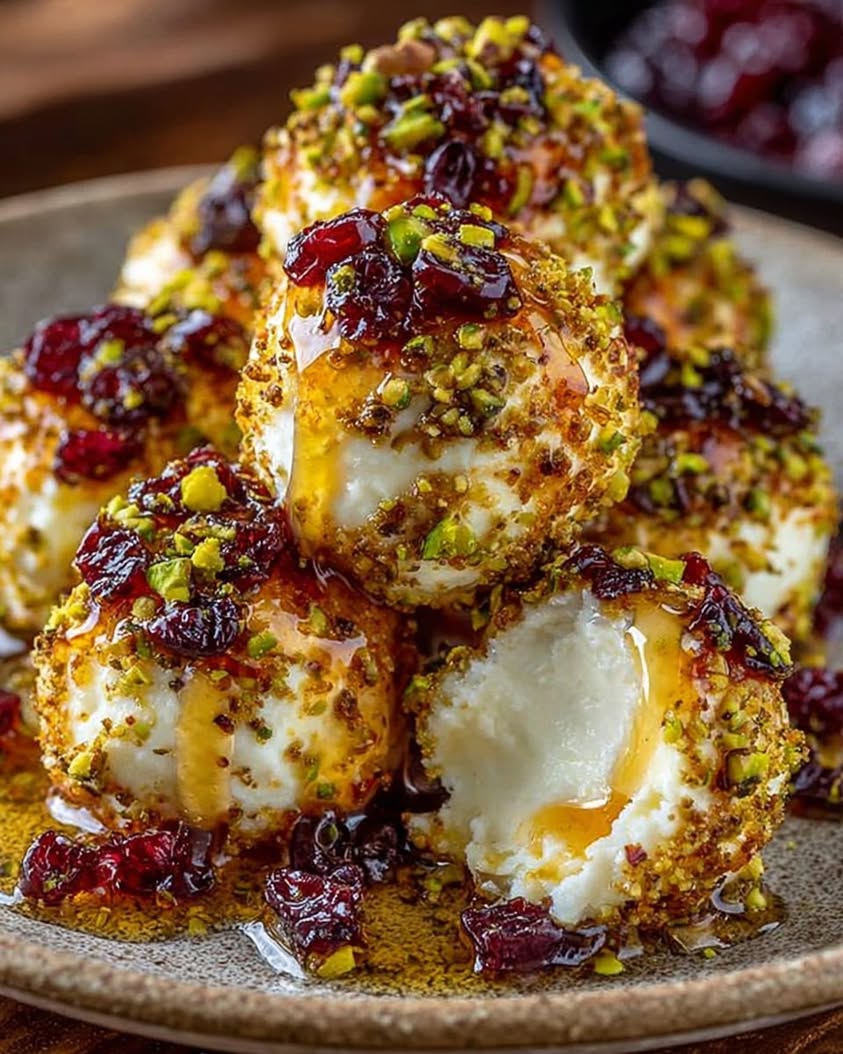
Warm Cranberry Pistachio Goat Cheese Truffles with Hot Honey: The Ultimate Sweet and Savory Appetizer
Imagine a perfect bite that combines creamy tang, sweet-tart fruit, crunchy nuts, and a spicy-sweet drizzle. That is exactly what you get with these Warm Cranberry Pistachio Goat Cheese Truffles with Hot Honey. This recipe transforms simple ingredients into an elegant, crowd-pleasing appetizer that looks and tastes like it came from a gourmet restaurant. Furthermore, it comes together in under thirty minutes, making it the ultimate secret weapon for effortless entertaining.
The flavor journey begins with the creamy, slightly tangy base of goat cheese, which is then studded with vibrant, chewy dried cranberries and rich, salty pistachios. After that, each truffle is rolled in a festive coating of more pistachios and cranberries for extra texture and visual appeal. Finally, the warm truffles are drizzled with a generous pour of spicy hot honey, creating a beautiful glaze that balances heat, sweetness, and acidity. Consequently, every element works in harmony to create a truly unforgettable appetizer.
These Warm Cranberry Pistachio Goat Cheese Truffles are incredibly versatile. For instance, you can serve them as a stunning centerpiece on a holiday charcuterie board, a sophisticated starter for a dinner party, or a unique addition to your game day spread. Their warm, inviting presentation and complex flavor profile guarantee they will be the first dish to disappear from the table. Ultimately, this recipe proves that impressive food does not require hours in the kitchen.
Quick Recipe Highlights
- Flavor Profile: These truffles offer a masterful balance of tangy goat cheese, sweet-tart cranberry, and rich, salty pistachio. The hot honey drizzle introduces a warm, spicy sweetness that ties all the flavors together beautifully, creating a sophisticated sweet and savory experience.
- Texture: You will enjoy a delightful contrast of textures, from the cool, creamy center of the goat cheese to the chewy bite of the cranberries and the satisfying crunch of the pistachio crust. The warm honey adds a lovely, sticky gloss that enhances the mouthfeel.
- Aroma: As the truffles warm, they release the earthy, tangy scent of goat cheese mingled with the sweet fragrance of honey and a subtle, toasty note from the pistachios. It is an inviting aroma that promises a delicious bite.
- Visual Appeal: These truffles are a feast for the eyes with their vibrant red and green speckled coating against the white cheese, all glistening under a golden honey drizzle. They look artisan-crafted and add instant elegance to any plate.
- Skill Level Needed: This is a beginner-friendly recipe requiring no special culinary skills. Basically, you need to mix, roll, and drizzle. Therefore, it is perfect for novice cooks wanting to create something impressive without stress.
- Special Equipment: No special equipment is required. You only need a mixing bowl, a baking sheet, and parchment paper. A small saucepan is helpful for warming the honey, but you can also use a microwave-safe bowl.
Recipe Overview
- Difficulty Level: We rate this recipe as easy because it involves simple techniques like mixing, rolling, and drizzling. There is no baking of the cheese itself, just a brief warming step. Moreover, the ingredient list is short and the process is forgiving, making it ideal for cooks of all levels.
- Category: This dish falls squarely into the appetizer and snack category. It is perfect for finger food at parties, a pre-dinner bite, or an elevated component on a cheese board. Additionally, it can be served as a unique dessert option for those who prefer less sweet treats.
- Cuisine: While not tied to one specific tradition, these truffles draw inspiration from modern American gastropub fare and Mediterranean mezze platters that celebrate cheese, nuts, and honey. The use of goat cheese (chèvre) nods to French culinary influence, while hot honey is a popular contemporary American condiment.
- Cost: This is a moderately priced appetizer. Goat cheese and pistachios are the primary cost drivers, but because a little goes a long way, the per-serving cost remains reasonable. You can expect to spend about fifteen to twenty dollars to make a full batch, which serves six to eight people generously.
- Season: These truffles are especially perfect for the fall and winter holiday season, thanks to the festive cranberry and pistachio colors. However, their refreshing taste makes them suitable for spring gatherings and summer parties as well, especially when served slightly chilled.
- Occasion: They are ideal for holiday parties, Thanksgiving appetizers, Christmas Eve gatherings, New Year’s celebrations, bridal or baby showers, and dinner parties. Essentially, any event where you want to serve something special and memorable is the right occasion for these truffles.
Why You’ll Love This Recipe
First and foremost, you will adore the spectacular contrast of flavors and textures in every bite. The creamy, tangy goat cheese provides a luxurious base that is cut through by the bright, chewy pop of cranberry. Simultaneously, the salty, crunchy pistachios add depth and richness. Then, the warm hot honey cascades over everything, adding a layer of spicy sweetness that makes the entire flavor profile sing. Consequently, each component complements the others perfectly, creating a complex taste experience that feels both indulgent and balanced.
From a practical standpoint, the convenience of this recipe is a major win. You can prepare these Warm Cranberry Pistachio Goat Cheese Truffles with Hot Honey in about twenty-five minutes from start to finish. There is no need for advanced planning or complicated techniques. Furthermore, you can easily prepare the truffle balls ahead of time and simply drizzle them with honey before serving. This makes them a lifesaver for busy hosts who want to spend time with guests rather than stuck in the kitchen all evening.
Nutritionally, these truffles offer some surprising benefits when enjoyed in moderation. Goat cheese is often easier to digest than cow’s milk cheese for some people and provides a good source of protein and calcium. Pistachios are packed with healthy fats, fiber, and antioxidants. Dried cranberries, while sweet, contribute a dose of vitamin C and other phytonutrients. The honey, especially if you use a raw, local variety, contains trace enzymes and antioxidants. Therefore, this appetizer provides more than just empty calories.
For entertaining, these truffles are virtually unmatched in their social appeal. They are visually stunning and encourage conversation. Guests are always impressed by their restaurant-quality presentation. Moreover, they are easy to eat as finger food, requiring just a small plate or napkin. You can arrange them on a beautiful platter with crackers, sliced baguette, and fresh fruit for a complete offering. They effortlessly elevate any gathering from casual to chic.
Finally, this recipe is highly cost-effective and accessible. While the ingredients sound gourmet, they are readily available at most standard supermarkets. You do not need any expensive or obscure items. Additionally, the recipe is easily scalable; you can make a double batch for a large crowd or halve it for an intimate dinner for two. The ingredients also store well, so you can keep them on hand for last-minute inspiration. Ultimately, this dish delivers maximum flavor and visual impact for a minimal investment of time and money.
Historical Background and Cultural Significance
The concept of cheese balls or truffles has roots in mid-20th century American entertaining, often associated with festive gatherings and cocktail parties. Originally, these were simple mixes of cream cheese, dried onion, and nuts. Over time, home cooks and chefs began elevating the idea, experimenting with different cheese bases, mix-ins, and coatings. The Warm Cranberry Pistachio Goat Cheese Truffle represents a modern, gourmet evolution of this classic party staple, swapping processed ingredients for fresh, high-quality components like tangy chèvre and artisanal hot honey.
Culturally, the combination of cheese, fruit, and nuts is a timeless tradition across many cuisines. From French cheese plates with fig jam to Italian antipasti with nuts and honey, these pairings are celebrated for their balanced contrasts. The use of goat cheese, or chèvre, specifically connects to the pastoral traditions of Europe, particularly France, where fresh goat cheese is often served with honey as a simple dessert. This recipe takes that foundational pairing and amplifies it with contemporary textures and a spicy kick, reflecting today’s preference for bold, global flavors.
The evolution of this recipe is also tied to the rise of “hot honey” as a mainstream condiment. While honey infused with chili peppers has existed in various forms globally—such as in Ethiopian or Mexican cuisines—its popularization in American food culture is relatively recent. Brands like Mike’s Hot Honey brought this sweet-heat combination to pizza and cheese boards, inspiring home cooks to experiment. Incorporating hot honey into a cheese truffle recipe is a natural and innovative progression, merging a trendy flavor with a classic format.
Regional variations of this concept are endless. In the Mediterranean, one might find similar treats made with feta, walnuts, and dates. In the American South, a version with pecans and pepper jelly might be popular. The cranberry and pistachio combination, however, has become particularly iconic for winter holidays in North America, its red and green colors symbolizing festive cheer. This recipe, therefore, sits at a delicious crossroads of tradition, innovation, and seasonal celebration, making it a meaningful addition to any culinary repertoire.
Ingredient Deep Dive
Let us start with the star: goat cheese (chèvre). Originating from goat-herding regions across Europe and the Middle East, goat cheese has been produced for thousands of years. It is prized for its distinct tangy, earthy flavor and creamy, spreadable texture when fresh. Nutritionally, it is a good source of protein, calcium, and vitamin A. Moreover, it contains different proteins than cow’s milk cheese, which some people find easier to digest. For this recipe, select a plain, soft goat cheese log. Avoid pre-crumbled varieties, as they often contain anti-caking agents and won’t bind as well. Store it tightly wrapped in the refrigerator for up to two weeks. For a substitution, try an equal amount of creamy feta or ricotta salata, though the flavor profile will shift.
Next, consider the dried cranberries. Native to North America, cranberries were used by Indigenous peoples for food, dye, and medicine long before the first Thanksgiving. Dried cranberries add a chewy texture and a vibrant sweet-tart flavor that cuts through the richness of the cheese. They provide vitamin C, fiber, and antioxidants like proanthocyanidins. Look for fruit-juice-sweetened varieties to avoid excessive added sugar, or use tart cherries for a different twist. Store them in a cool, dry pantry. If they become hard, you can plump them up by soaking in warm water or orange juice for ten minutes before chopping.
Now, examine the pistachios. These “green almonds” have a history dating back to the Middle East and Central Asia, where they have been cultivated for millennia. They contribute a beautiful green hue, a satisfying crunch, and a rich, slightly sweet flavor. Pistachios are nutritional powerhouses, packed with healthy fats, plant-based protein, fiber, and antioxidants like lutein. For the best result, use unsalted, shelled pistachios to control the overall saltiness of the dish. Toast them lightly in a dry pan for a minute or two to enhance their nutty aroma before chopping. Store any leftovers in an airtight container in the freezer to maintain freshness. For a substitution, chopped walnuts, pecans, or almonds would work well.
Finally, the hot honey is the transformative element. Honey itself is one of humanity’s oldest sweeteners, used across countless cultures. Infusing it with chili peppers creates a complex condiment that balances sweetness with capsaicin heat. The warmth from the honey also slightly softens the exterior of the chilled cheese truffle, creating a delightful temperature contrast. You can use a store-bought hot honey or make your own by gently warming honey with crushed red pepper flakes, a sliced fresh chili, or a dash of cayenne pepper. Let it infuse for at least thirty minutes, then strain if desired. Store homemade hot honey in a jar at room temperature. For a non-spicy version, use regular honey infused with a citrus zest or a sprig of rosemary.
Common Mistakes to Avoid
- Using Cold, Hard Goat Cheese: Attempting to mix straight-from-the-fridge goat cheese is difficult and can lead to a lumpy mixture. Always let the cheese sit at room temperature for about fifteen to twenty minutes before starting. This allows it to soften for easy mixing and rolling.
- Over-mixing the Cheese: When you combine the cheese with the cranberries and pistachios, mix just until incorporated. Overworking the cheese can cause it to become greasy or too soft, making it hard to form into neat balls later on. A gentle hand is key.
- Skipping the Chilling Step: After forming the truffle balls, you must chill them for at least fifteen minutes. This firms them up, making the coating step much cleaner and preventing the cheese from melting in your hands. Rushing this step results in messy, misshapen truffles.
- Chopping the Coating Too Fine: The pistachios and cranberries for the outer coating should be chopped into small pieces, but not into a fine dust. You want visible bits for texture and visual appeal. A rough chop provides the perfect balance of crunch and coverage.
- Warming the Honey Too Aggressively: When preparing the hot honey, use low heat. Bringing honey to a boil or high heat can destroy its delicate flavors and beneficial enzymes. Simply warm it gently until it is fluid enough to drizzle. A microwave in short bursts also works well.
- Drizzling Honey on Cold Truffles: For the best experience, drizzle the warm honey over the truffles just before serving. If the truffles are ice-cold from the fridge, the honey will harden and lose its glossy appeal. Let them sit out for five minutes after chilling for the perfect temperature.
- Using Pre-Crumbled Goat Cheese: Pre-crumbled cheese contains stabilizers to prevent clumping, which also prevents it from binding together properly. Always start with a solid log or tub of fresh goat cheese for the best texture and binding ability.
- Forgetting to Toast the Pistachios: While optional, toasting the pistachios for the coating unlocks a deeper, nuttier flavor. Simply toss them in a dry skillet over medium heat for two to three minutes until fragrant. This small step adds a significant flavor boost.
Essential Techniques
Mastering the mixing technique is crucial for perfect truffle texture. Start with room-temperature goat cheese in a medium bowl. Use a sturdy spoon or spatula to stir it until smooth and pliable. Then, fold in the chopped mix-ins (cranberries and pistachios) gently but thoroughly. The goal is an even distribution without overworking the cheese, which can cause it to release oils and become sticky. If the mixture feels too soft after adding the fruit and nuts, briefly chill it for ten minutes before proceeding to the rolling stage. This ensures the truffles hold their shape beautifully.
The rolling and coating method defines the final presentation. Use a small cookie scoop or a tablespoon to portion the cheese mixture for consistency. Roll each portion quickly between your palms to form a smooth ball. If the cheese sticks to your hands, lightly dampen them with water. Immediately roll the ball in the prepared coating of chopped pistachios and cranberries, pressing gently so the pieces adhere. The key is to work swiftly so the cheese doesn’t warm up too much. Place each coated ball on a parchment-lined tray. If the coating isn’t sticking well, you can gently press the mixture onto the ball with your fingers.
Proper chilling is a non-negotiable technique for success. After all truffles are formed and coated, transfer the tray to the refrigerator for a minimum of fifteen minutes. This step solidifies the fat in the cheese, firming up the truffles so they maintain their round shape and provide a cool, creamy contrast to the warm honey. Do not skip this, even if you are short on time. For make-ahead preparation, you can chill them for several hours or overnight. Just cover the tray tightly with plastic wrap to prevent the cheese from drying out or absorbing other refrigerator odors.
The art of the hot honey drizzle finishes the dish. Warm your honey gently in a small saucepan over low heat or in a microwave-safe bowl. It should be fluid and warm to the touch, not scalding hot. Right before serving, arrange the chilled truffles on a serving platter. Using a spoon, zigzag the warm honey over the truffles in a thin, elegant stream. Alternatively, you can serve the honey in a small pitcher on the side for guests to drizzle themselves. The warmth of the honey will slightly soften the exterior of the truffle, creating a perfect textural transition from the sticky glaze to the cool, creamy center.
Pro Tips for Perfect Warm Cranberry Pistachio Goat Cheese Truffles
For an extra flavor dimension, add a pinch of finely grated orange zest or lemon zest to the goat cheese mixture. The citrus brightens the other flavors and complements the cranberries beautifully.
If your kitchen is very warm, chill the mixing bowl in the freezer for ten minutes before you begin. This helps keep the cheese firm during the mixing and rolling process.
Create a double coating for maximum crunch and visual impact. After the initial roll in the nut mixture, place the balls back in the fridge for ten minutes, then roll them a second time in any remaining coating.
Use a melon baller or a small ice cream scoop to portion the cheese. This guarantees every truffle is exactly the same size, which looks more professional and ensures even chilling.
For a smoother drizzle, slightly thin the hot honey with a teaspoon of warm water or apple cider vinegar. This makes it easier to pour in fine lines and gives a more delicate finish.
Garnish the serving platter with a few whole cranberries, extra pistachios, and a drizzle of honey before placing the truffles. This frames the dish and hints at the flavors inside.
If serving on a cheese board, place the truffles on a small, separate dish or leaf of radicchio to prevent the honey from running onto other items and making them soggy.
For a fun interactive element, set up a “truffle bar” with the plain coated truffles, a bowl of warm hot honey, and small spoons so guests can drizzle their own.
Variations and Adaptations
Explore regional variations by swapping the core ingredients. For a Mediterranean twist, use feta cheese, chopped Kalamata olives, and toasted walnuts, finishing with a drizzle of thyme-infused honey. For a Southern-inspired version, try cream cheese base with chopped pecans and a pepper jelly glaze instead of hot honey. An autumnal adaptation could feature goat cheese with chopped apples, toasted pecans, and a maple syrup drizzle with a pinch of cinnamon.
Seasonal adaptations keep this recipe exciting year-round. In spring, incorporate chopped dried apricots, toasted almonds, and lavender honey. For summer, use a base of herbed goat cheese with chopped sun-dried tomatoes and pine nuts, finished with a balsamic reduction. The classic cranberry-pistachio combo is perfect for fall and winter holidays, but feel free to use dried cherries and hazelnuts for a different festive look and taste.
Dietary modifications are straightforward. For a vegan version, use a high-quality vegan cream cheese or a firm almond-based cheese, and ensure your honey substitute is agave nectar or maple syrup. To make it gluten-free, simply confirm that your dried cranberries are not processed with wheat-based anti-caking agents. For a lower-carb or keto adaptation, reduce the amount of dried cranberries significantly or replace them with a few chopped raspberries, and use a sugar-free honey alternative.
Experiment with flavor variations by adding mix-ins to the cheese base. A tablespoon of finely chopped fresh herbs like rosemary, thyme, or chives adds a savory note. A teaspoon of black pepper or smoked paprika introduces warmth and complexity. For a sweeter dessert truffle, mix a tablespoon of powdered sugar into the goat cheese and roll the balls in crushed graham crackers or cinnamon sugar before the honey drizzle.
Texture modifications can cater to different preferences. For a smoother, more uniform truffle, process the coating ingredients (nuts and fruit) into a finer meal. For added crunch, include a tablespoon of crispy bacon bits or fried shallots in the coating mixture. To create a softer exterior, roll the formed cheese balls in powdered sugar or unsweetened cocoa powder before the final nut coating.
Presentation alternatives offer creative ways to serve. Instead of round balls, form the mixture into a small log and roll it in the coating, then slice into medallions. You can also press the mixture into a mini muffin tin lined with plastic wrap, chill, and then pop out for perfectly shaped bites. For individual servings, present each truffle on a small endive leaf or a crispy crostini round.
Serving and Presentation Guide
Plating techniques can elevate these truffles from simple to stunning. Arrange them in a circular pattern on a stark white platter for a modern look, or cluster them on a slab of slate or marble for a rustic feel. Leave enough space between each truffle so they are easy to pick up. For a dramatic effect, place the truffles on a bed of fresh kale leaves, arugula, or edible flowers. The green backdrop makes the red and green speckles pop visually.
Garnishing ideas add the final touch of polish. Sprinkle a few flakes of Maldon sea salt over the honey-drizzled truffles to enhance the sweet and salty contrast. Scatter some whole dried cranberries and pistachio halves around the platter. Fresh herb sprigs like rosemary or thyme add color and fragrance. A light dusting of edible gold dust or glitter on the honey drizzle makes them perfect for New Year’s Eve or celebratory occasions.
Traditional accompaniments include simple, neutral vessels that let the truffles shine. Offer plain water crackers, thinly sliced baguette, or crispbread on the side. Apple slices, pear slices, or seedless grapes provide a fresh, juicy contrast that cleanses the palate between bites. These accompaniments balance the richness and allow guests to customize their experience.
Modern serving suggestions integrate the truffles into broader culinary experiences. Crumble a truffle over a fall salad of mixed greens, roasted squash, and a light vinaigrette. Use them as a gourmet topping for crostini spread with a thin layer of fig jam. Alternatively, place a single truffle beside a cup of creamy butternut squash soup as an elegant garnish and complementary bite.
Temperature considerations are key for the ideal texture. The truffles should be served cool, not ice-cold, with the honey warm. Remove the truffles from the refrigerator five to ten minutes before drizzling and serving. This slight tempering allows the creamy center to be soft and spreadable while still holding its shape. The honey should be warm enough to be fluid but not so hot that it melts the cheese on contact.
Portion control tips help when planning for a crowd. One batch makes about twelve tablespoon-sized truffles. Plan for two to three truffles per person as part of an appetizer spread with other items. If serving as a standalone passed hors d’oeuvre, consider making them slightly smaller (using a teaspoon measure) so guests can eat them in one bite, and plan for three to four pieces per person.
Wine and Beverage Pairing
Wine pairings should complement the sweet, savory, tangy, and spicy notes. A crisp, slightly sweet white wine like a Riesling or Gewürztraminer is a classic choice, as its acidity cuts through the creaminess and its fruitiness mirrors the cranberry. A sparkling wine like Prosecco or Cava offers refreshing bubbles that cleanse the palate. For red wine lovers, a light-bodied, low-tannin Pinot Noir with red fruit notes pairs beautifully without overwhelming the delicate goat cheese.
Non-alcoholic alternatives can be just as sophisticated. A sparkling apple cider or cranberry spritzer provides festive bubbles and complementary fruit flavors. A ginger beer, with its spicy kick, echoes the heat from the hot honey beautifully. For a more refined option, try a chilled hibiscus tea, which has a tartness that pairs wonderfully with the cheese and cranberries. Even a simple club soda with a twist of lemon can reset the palate between bites.
Coffee and tea pairings work wonderfully, especially if serving these truffles as a dessert or at a brunch. A medium-roast coffee with low acidity and notes of caramel or nut complements the pistachios and honey. For tea, choose a black tea like Earl Grey, whose bergamot citrus notes brighten the dish, or a spiced chai tea that harmonizes with the warm spices in the honey. Serve these beverages warm, not scalding hot, to maintain the ideal truffle temperature.
Temperature considerations for beverages are important. White wines, sparklings, and non-alcoholic spritzers should be served well-chilled. Red wines should be served slightly cooler than room temperature, around 60-65°F, to keep them refreshing. Hot coffee or tea should be served alongside, not poured over the truffles, allowing guests to alternate between the cool, creamy bite and the warm sip.
Serving suggestions for a full pairing experience involve setting up a small beverage station near your appetizer spread. Offer one white and one red wine option, plus a signature non-alcoholic drink. Use small tags to describe why each pairing works. For example, a tag next to the Riesling could read: “Pairs with the tangy cheese & sweet heat.” This thoughtful touch engages guests and enhances their tasting experience.
Storage and Shelf Life
Storage methods depend on whether the truffles are coated in honey. Un-drizzled, coated truffles can be stored in a single layer in an airtight container in the refrigerator for up to three days. Place parchment paper between layers if stacking is necessary. For longer storage, you can freeze the un-drizzled truffles on a parchment-lined tray until solid, then transfer to a freezer bag for up to one month. The honey should always be added fresh, just before serving.
Temperature requirements are strict for food safety. Goat cheese is a fresh cheese and must be kept refrigerated at or below 40°F. Never leave the assembled truffles at room temperature for more than two hours. If you are serving them at a party, place the platter on a bed of ice or use a chilled serving tray to keep them cool, especially in a warm room.
Container recommendations include shallow, airtight containers for refrigeration. Glass is ideal as it does not absorb odors. For freezing, use heavy-duty freezer bags with all the air pressed out to prevent freezer burn. If you need to transport the truffles, use a insulated cooler bag with a cold pack to maintain a safe temperature until serving.
Signs of spoilage are important to recognize. Discard the truffles if you notice any off smells, such as an ammonia-like or sour odor beyond the natural tang of goat cheese. Visible mold, an excessively slimy texture, or a significant color change are also clear indicators that the truffles are no longer safe to eat. When in doubt, it is always safer to throw it out.
Reheating instructions are not applicable for the truffles themselves, as they are meant to be served cool. However, if you have refrigerated truffles that have been drizzled with honey (not recommended), the honey will harden. To restore them, let them sit at room temperature for fifteen minutes to soften slightly. You can also very briefly warm the entire platter under a low heat lamp or in a turned-off oven with the light on for a few minutes, but watch carefully to prevent melting.
Freezing guidelines are effective for make-ahead planning. Freeze the un-drizzled, coated truffles in a single layer on a baking sheet until rock solid (about two hours). Then, transfer them to a freezer-safe bag or container. To serve, thaw them overnight in the refrigerator. The texture may be slightly grainier after freezing and thawing, but the flavor will remain excellent. Always add the warm honey drizzle after thawing.
Make Ahead Strategies
Your prep timeline can be spread over two days for stress-free entertaining. Day One: Chop all your pistachios and cranberries. Store the coating mixture in a zip-top bag at room temperature. Soften and mix the goat cheese with the mix-ins, then form the balls and roll them in the coating. Place the coated truffles on a tray, cover tightly with plastic wrap, and refrigerate. Day Two (Day of Serving): Up to two hours before the event, prepare the hot honey and let it infuse. Right before guests arrive, arrange the truffles on a platter and drizzle with the warm honey.
Storage between steps is simple. The coated, un-drizzled truffles are the perfect make-ahead component. They hold beautifully in the refrigerator for up to three days when stored properly in an airtight container. If you need to prepare them further in advance, the freezing method described above works perfectly. The hot honey can also be made up to one week ahead and stored in a jar at room temperature; simply gently re-warm it before using.
Quality impact assessment shows that make-ahead preparation has minimal negative effect. Chilling the formed truffles actually improves their texture and makes them easier to handle. The only element that suffers from being done too far in advance is the honey drizzle, as it can soak into the coating or harden. Therefore, keeping the honey separate until the last moment is the single most important make-ahead rule for optimal quality.
Assembly tips for the day-of are about efficiency. Have your serving platter ready. Take the truffles out of the fridge. Warm your honey. Drizzle artistically. That is it. If you are transporting them, assemble the truffles on their final platter, cover loosely with plastic wrap, and transport in a cooler. Bring the warm honey in a separate insulated thermos or jar, and drizzle at the destination.
Reheating guidelines apply only to the honey component. If your prepared hot honey has solidified at room temperature (common with raw honey), place the jar in a bowl of warm water or microwave it in short, five-second bursts until it returns to a drizzling consistency. Do not boil it. Stir well before using to redistribute any settled chili flakes.
Fresh element additions can be done at the last minute to brighten the make-ahead truffles. Just before drizzling the honey, you can roll the chilled truffles in a small amount of freshly chopped herbs or a second light coating of nuts for a vibrant look. A final sprinkle of flaky salt or citrus zest after the honey drizzle adds a burst of fresh flavor that makes everything taste newly made.
Scaling Instructions
Halving the recipe is straightforward for smaller gatherings. Simply divide all ingredient quantities by two. You will end up with about six delicious truffles. The process and timing remain exactly the same. Use a smaller mixing bowl for easier blending. The only equipment adjustment might be using a smaller baking sheet or plate for chilling. Storage considerations are simpler, as the smaller batch will likely be consumed in one sitting.
Doubling or tripling the recipe is easy for large parties. Multiply all ingredients consistently. For a double batch, you may want to mix the cheese in two separate bowls to avoid overworking a single large quantity. Use multiple baking sheets for chilling to prevent the truffles from getting squished. When warming the honey, use a larger saucepan and consider making two separate infusions if your pot is not large enough, to ensure even heating and spice distribution.
Equipment adjustments become necessary when scaling up. For a triple batch, ensure you have a very large mixing bowl or plan to mix in batches. You will need multiple baking sheets that can fit in your refrigerator. A large, wide platter or several smaller platters will be needed for presentation. For drizzling a large quantity, you may find it easier to warm the honey in a liquid measuring cup with a pour spout for better control.
Timing modifications are minimal when scaling. The prep time will increase linearly—a double batch will take roughly twice as long to mix and form. However, the chilling time remains constant at a minimum of fifteen minutes, regardless of batch size. The honey warming time may increase slightly if you are heating a larger volume, but only by a minute or two. Plan your schedule accordingly.
Storage considerations for large batches are important. If making a huge quantity for an event over several days, store the un-drizzled truffles in multiple shallow containers with parchment between layers. Do not stack them too high, as the weight can deform the bottom layers. Label the containers with the date. For the largest scales, consider forming and freezing portions of the batch a week or two in advance to spread out the work.
Nutritional Deep Dive
A macro breakdown for one truffle (approximate) includes about 80 calories, with 6 grams of fat (3g saturated), 2 grams of protein, and 5 grams of carbohydrates (4g sugars, 1g fiber). The primary sources of fat are the goat cheese and pistachios, which provide healthy monounsaturated and polyunsaturated fats. The protein comes from the cheese and nuts, making this a more satiating appetizer than many carb-based options. The carbs are primarily from the honey and dried fruit.
Micronutrient analysis reveals a good mix of vitamins and minerals. Goat cheese contributes calcium for bone health and vitamin A for vision and immunity. Pistachios offer B vitamins, potassium, and antioxidants like lutein. Cranberries provide vitamin C and various phytonutrients. Honey contains trace amounts of minerals like iron, zinc, and potassium, as well as antioxidants. Together, they create a nutrient-dense bite that offers more than just empty calories.
Health benefits are tied to the quality of ingredients. The probiotics in some goat cheeses can support gut health. The healthy fats in pistach Print
Warm Cranberry Pistachio Goat Cheese Truffles with Hot Honey
- Total Time: 25 minutes
- Yield: 4
Description
Creamy goat cheese truffles rolled in sweet-tart cranberries and crunchy pistachios, served warm and drizzled with spicy hot honey for a perfect appetizer or dessert.
Ingredients
- 8 oz goat cheese, softened
- 1/4 cup dried cranberries, finely chopped
- 1/4 cup shelled pistachios, finely chopped
- 2 tbsp honey
- 1/2 tsp red pepper flakes
- 1 tbsp olive oil
- Salt to taste
Instructions
- Preheat oven to 350°F (175°C). Line a baking sheet with parchment paper.
- In a bowl, mix goat cheese until smooth. Form into 1-inch balls and roll in a mixture of cranberries and pistachios until coated.
- Place truffles on baking sheet and bake for 8-10 minutes until warm and slightly softened.
- While baking, combine honey and red pepper flakes in a small saucepan over low heat. Stir until warm and infused, about 3-5 minutes.
- Drizzle hot honey over warm truffles and serve immediately.
Notes
You can customize the seasonings to taste.
- Prep Time: 15 minutes
- Cook Time: 10 minutes
- Method: Appetizer
- Cuisine: American