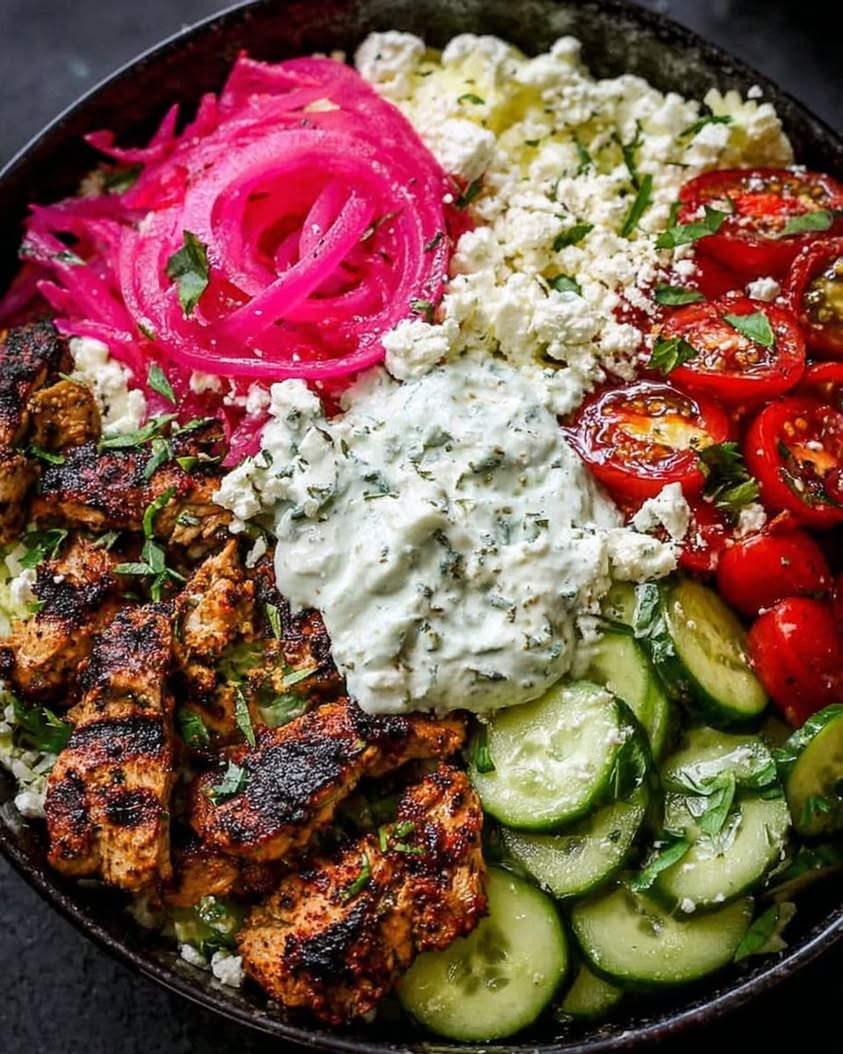
Loaded Mediterranean Chicken Power Bowl with Tzatziki & Feta: Your Ultimate Healthy Weeknight Dinner
Imagine a vibrant, colorful bowl packed with flavor and nutrition, ready in under 35 minutes. This Loaded Mediterranean Chicken Power Bowl with Tzatziki & Feta is exactly that. It is a complete meal that brings the sunny, fresh flavors of the Mediterranean to your table any night of the week. Moreover, it combines juicy, herb-marinated chicken with crisp vegetables, creamy tzatziki, and tangy feta cheese. Ultimately, this recipe delivers a satisfying balance of protein, healthy fats, and complex carbohydrates.
The beauty of this Loaded Mediterranean Chicken Power Bowl Recipe with Tzatziki lies in its versatility and simplicity. You can easily customize it with your favorite vegetables or grains. For instance, swap quinoa for the rice or add roasted red peppers for extra sweetness. Consequently, this dish becomes a perfect solution for meal prep, as all components store beautifully. The bright, herby marinade for the chicken and the cool, garlicky tzatziki sauce create a flavor combination that is truly irresistible. Every bite offers a delightful contrast of textures and tastes.
This is not just another chicken bowl recipe. It is a thoughtfully composed dish designed to nourish your body and please your palate. The marinade, featuring lemon, oregano, and garlic, infuses the chicken with authentic Greek flavor. Meanwhile, the homemade tzatziki adds a refreshing creaminess that ties everything together. Finally, a sprinkle of briny feta cheese provides the perfect salty finish. This Loaded Mediterranean Chicken Power Bowl Recipe with Tzatziki is a guaranteed crowd-pleaser for both busy families and health-conscious individuals.
Quick Recipe Highlights
- Flavor Profile: This bowl bursts with bright, fresh Mediterranean flavors. Expect tangy lemon, earthy oregano, pungent garlic, and cool dill from the tzatziki. The salty feta cheese perfectly balances the juicy chicken and crisp vegetables.
- Texture: Enjoy a fantastic mix of textures in every forkful. You get tender, succulent chicken, crunchy cucumber and red onion, fluffy rice or quinoa, and creamy, smooth tzatziki sauce. The contrast makes the eating experience exciting and satisfying.
- Aroma: As the chicken cooks, your kitchen will fill with the irresistible scent of garlic, lemon, and herbs. The fresh dill and cucumber in the tzatziki add a clean, garden-fresh aroma that complements the savory notes beautifully.
- Visual Appeal: This bowl is a feast for the eyes with its vibrant colors. Think golden-brown chicken, white feta, green herbs, red onion, and the bright white of the tzatziki. Presentation is effortless and impressive.
- Skill Level Needed: This is a beginner-friendly recipe. Basic skills like chopping vegetables, mixing a marinade, and pan-cooking chicken are all you need. The steps are straightforward and clearly explained.
- Special Equipment: No special tools are required. You just need a good knife, cutting board, mixing bowls, a skillet or grill pan for the chicken, and a box grater for the cucumber if making tzatziki from scratch.
Recipe Overview
- Difficulty Level: We rate this recipe as easy. The techniques are fundamental, and the process is linear without complicated steps. You marinate, cook, chop, and assemble. There is no intricate timing or advanced culinary skill required, making it perfect for weeknights.
- Category: This dish falls squarely into the categories of healthy dinner, high-protein meal, and meal prep staple. It is a balanced main course that provides all essential macros. Additionally, it works wonderfully for lunch the next day.
- Cuisine: The cuisine is firmly rooted in Greek and broader Mediterranean culinary traditions. Key hallmarks include the use of olive oil, lemon, oregano, garlic, feta cheese, and yogurt-based sauces like tzatziki. These elements define the flavor profile.
- Cost: This is a cost-effective meal, especially when you consider it serves four. Chicken thighs or breasts, rice, and vegetables like cucumber and onion are budget-friendly. Feta and Greek yogurt are splurges that deliver high value in flavor.
- Season: This recipe is fantastic year-round but truly shines in spring and summer. The fresh, bright flavors pair perfectly with warmer weather. Furthermore, it utilizes fresh produce that is at its peak during these seasons.
- Occasion: It is ideal for casual weeknight family dinners, healthy meal prep for the workweek, or even a relaxed lunch with friends. The components can be prepared ahead, making it stress-free for entertaining.
Why You’ll Love This Recipe
First and foremost, the taste and texture appeal is off the charts. Each component of this Loaded Mediterranean Chicken Power Bowl Recipe with Tzatziki is chosen for a specific reason. The marinated chicken is savory and juicy, while the tzatziki sauce provides a cool, garlicky contrast. Crisp vegetables add freshness and crunch, and the fluffy base soaks up all the delicious juices. Every single bite is a harmonious blend of flavors that never gets boring. You will find yourself craving this combination of tangy, salty, and fresh notes regularly.
Next, consider the sheer convenience and preparation benefits. This entire meal comes together in about 35 minutes, with most of that time being hands-off marinating. The steps are simple and logical. You can even prepare the tzatziki and chop the vegetables while the chicken marinates. Consequently, your active cooking time is minimal. This efficiency makes it a lifesaver on busy evenings when you want a wholesome meal without spending hours in the kitchen. The process is straightforward and rewarding.
From a nutritional standpoint, this bowl is a powerhouse. It is packed with lean protein from the chicken, which supports muscle repair and keeps you full. Healthy fats come from the olive oil and feta, promoting heart health and nutrient absorption. The complex carbohydrates from the rice or quinoa provide sustained energy. Additionally, the vegetables deliver essential vitamins, minerals, and fiber. This Loaded Mediterranean Chicken Power Bowl with Tzatziki & Feta is a balanced meal designed to fuel your body properly without any guilt.
Furthermore, this dish offers incredible social and entertaining value. It is visually stunning when served, making it perfect for sharing. You can easily set up a “power bowl bar” where guests build their own bowls with the components you provide. This interactive element is fun and ensures everyone gets exactly what they like. The flavors are universally appealing, pleasing both adventurous eaters and those with simpler tastes. It is a meal that feels special without requiring chef-level skills to prepare.
Finally, the cost-effectiveness and accessibility are major wins. The ingredients are common and easy to find at any standard grocery store. You do not need expensive or exotic items. Chicken, rice, cucumber, onion, yogurt, and basic herbs and spices form the foundation. This accessibility means you can make this delicious, restaurant-quality meal at home for a fraction of the cost. It proves that eating well does not have to be complicated or expensive.
Historical Background and Cultural Significance
The concept of the “power bowl” or grain bowl is a modern culinary trend, but its components are deeply ancient. The Mediterranean region, spanning Southern Europe, North Africa, and the Middle East, has a food history thousands of years old. Central to this cuisine is the idea of “mezze” or small shared plates featuring fresh vegetables, dips, grilled meats, and cheeses. This Loaded Mediterranean Chicken Power Bowl Recipe with Tzatziki is essentially a deconstructed, portable version of a classic Greek mezze spread, combining these iconic elements into a single, satisfying vessel.
Culturally, each ingredient tells a story. Olive oil, the foundational fat, is sacred in Mediterranean cultures, symbolizing peace, wisdom, and prosperity. Herbs like oregano and dill grow wild in the hills of Greece and are used abundantly for their medicinal and culinary properties. Feta cheese, protected by EU law, must be produced in specific regions of Greece from sheep’s milk or a sheep-goat blend. Yogurt-based sauces like tzatziki have roots across the Eastern Mediterranean and Middle East, valued for their cooling properties in hot climates. This bowl is a celebration of these timeless food traditions.
The evolution of this specific recipe format is a product of contemporary wellness and convenience culture. As people seek meals that are both nutritious and quick, the “bowl” concept has exploded in popularity. It allows for complete nutritional balance in one dish. The marriage of traditional Mediterranean flavors—known for their health benefits in the famed “Mediterranean Diet”—with this modern format is a natural progression. Chefs and home cooks alike have embraced combining these vibrant, health-supportive ingredients in an easy-to-eat, visually appealing way.
Regional variations of this concept are endless. In Turkey, you might find a similar bowl with chicken shish kebab, a tomato-based ezme salad, and cacik (a close relative of tzatziki). In Lebanon, the chicken could be seasoned with baharat and served with toum (garlic sauce) and tabbouleh. The Greek version, which this recipe embodies, is characterized by its specific herb profile (oregano, dill), the use of feta, and the classic tzatziki sauce. This adaptability shows the strength and appeal of the core formula: seasoned protein, fresh veggies, a creamy sauce, and a hearty base.
Ingredient Deep Dive
Chicken Thighs or Breasts: Chicken is the primary protein source here. Thighs are recommended for their juiciness and flavor, as they have a slightly higher fat content that withstands high-heat cooking beautifully. Breasts are a leaner option. From a nutritional standpoint, chicken is an excellent source of complete protein, B vitamins (especially niacin and B6), and selenium. For the best results, look for organic or air-chilled chicken if possible. Pat the chicken dry before marinating to ensure a good sear. Store raw chicken in the coldest part of your fridge and use within 1-2 days of purchase.
Greek Yogurt (for Tzatziki): Authentic tzatziki uses thick, strained yogurt, which is what Greek yogurt is. Its history in the region dates back centuries. Nutritionally, it’s a probiotic powerhouse, supporting gut health, and is high in protein and calcium while being lower in sugar than many other yogurts. For this recipe, use full-fat Greek yogurt for the creamiest, most flavorful sauce. Low-fat versions can work but may result in a thinner tzatziki. Always check that your yogurt contains live active cultures. Store it tightly sealed in the refrigerator.
English Cucumber: The cucumber in the tzatziki provides crucial freshness and crunch. English or Persian cucumbers are ideal because they have fewer seeds and thinner skin, requiring no peeling. They are high in water content, aiding hydration, and provide vitamin K and potassium. The key step is salting and draining the grated cucumber to remove excess water. This prevents your tzatziki from becoming watery. Select firm, dark green cucumbers without soft spots. They can be stored in the refrigerator’s crisper drawer for up to a week.
Feta Cheese: Feta is a brined curd cheese with a tangy, salty flavor that is iconic in Greek cuisine. Authentic Greek feta is made from at least 70% sheep’s milk. It adds a punch of umami and creaminess to the bowl. Nutritionally, feta is a good source of calcium and protein, though it is higher in sodium. For the best flavor, buy feta in a block stored in brine, not pre-crumbled. The brine keeps it moist and flavorful. Crumble it just before serving. Store leftover feta in its brine in the fridge.
Extra Virgin Olive Oil: This is the heart of Mediterranean cooking and the base of the chicken marinade. High-quality extra virgin olive oil (EVOO) provides fruity, peppery notes that refined oils lack. It is rich in monounsaturated fats and antioxidants, which have anti-inflammatory properties. Use a good EVOO for the marinade and for drizzling. Store olive oil in a cool, dark place away from the stove to prevent it from becoming rancid. It is not just a cooking fat; it is a foundational flavor ingredient in this Loaded Mediterranean Chicken Power Bowl Recipe with Tzatziki.
Common Mistakes to Avoid
- Not Draining the Cucumber: Skipping the step of salting and draining the grated cucumber is the top mistake. This excess water will dilute your tzatziki, making it runny and less flavorful. Always take the few extra minutes to drain it thoroughly in a fine-mesh strainer or cheesecloth.
- Overcooking the Chicken: Chicken, especially breasts, can quickly become dry and tough if cooked too long. Use a meat thermometer to ensure doneness (165°F) without guessing. Remember, carryover cooking will continue after you remove it from the heat.
- Using Low-Fat Yogurt for Tzatziki: Low-fat or non-fat Greek yogurt often contains stabilizers and more water. This results in a thin, less creamy sauce that can separate. Full-fat Greek yogurt yields a luxuriously thick and stable tzatziki that clings to the ingredients.
- Marinating for Too Short a Time: While 15 minutes is the minimum, marinating the chicken for only a few minutes won’t allow the flavors to penetrate. Aim for at least 30 minutes, or even overnight for maximum flavor infusion. The acid in the lemon juice also helps tenderize the meat.
- Skipping the Resting Time for Chicken: Cutting into the chicken immediately after cooking causes all the precious juices to run out onto the cutting board. Let it rest for 5-10 minutes before slicing. This allows the juices to redistribute, ensuring every bite is moist.
- Using Pre-Crumbled Feta: Pre-crumbled feta is often drier, chalkier, and contains anti-caking agents. A block of feta stored in brine is far superior in flavor and texture. Crumble it yourself just before serving for the best results.
- Crowding the Pan: When cooking the chicken, avoid overcrowding the skillet. If you add too many pieces at once, they will steam instead of sear. Cook in batches if necessary to get that beautiful, flavorful golden-brown crust on each piece.
- Forgetting to Season the Base: A bowl of plain rice or quinoa can be bland. Remember to season your grain base with a pinch of salt while it cooks. You can also cook it in broth instead of water for an extra layer of flavor.
Essential Techniques
Making a Proper Marinade: A marinade has three key components: acid (lemon juice), oil (olive oil), and flavorings (garlic, herbs). The acid helps break down surface proteins for tenderness, the oil carries flavor and promotes browning, and the herbs/spices provide taste. To master it, whisk the ingredients vigorously to create an emulsion. Ensure the chicken is fully coated and marinate in a sealed container in the fridge. The common pitfall is marinating too long in a highly acidic marinade, which can make the texture mushy. For chicken, 30 minutes to 8 hours is ideal.
Pan-Searing Chicken for a Golden Crust: This technique creates deep flavor through the Maillard reaction. Start with a very hot pan and pat the chicken completely dry before adding it. Furthermore, do not move the chicken for the first few minutes; let it develop a sear. You will know it’s ready to flip when it releases easily from the pan. The visual cue for success is a uniform, deep golden-brown color on the surface. The common mistake is flipping too early, which tears the seared crust from the meat.
Preventing Watery Tzatziki: This is a critical technique for sauce success. After grating the cucumber, toss it with a little salt and let it sit in a strainer for 10-15 minutes. The salt draws out the water. Then, use your hands or a clean kitchen towel to squeeze out as much liquid as possible. This step is non-negotiable. The result should be dry, crumbly cucumber shreds that will integrate into the yogurt without watering it down. Your tzatziki will be thick, creamy, and perfect for dolloping.
Pro Tips for Perfect Loaded Mediterranean Chicken Power Bowl
First, let your tzatziki sauce rest. After mixing it, cover and refrigerate it for at least an hour before serving. This allows the garlic flavor to mellow and all the flavors to marry beautifully, resulting in a much more cohesive and delicious sauce.
Second, cook your grain base in broth. Instead of using plain water, cook your rice or quinoa in chicken or vegetable broth. This simple swap infuses the entire base layer with savory depth, making every component of the bowl more flavorful.
Third, get your pan screaming hot. Before you add the marinated chicken, ensure your skillet or grill pan is very hot. You should see a slight shimmer in the oil. A hot pan is the secret to achieving that restaurant-quality sear and preventing the chicken from sticking.
Fourth, use a meat thermometer. To guarantee perfectly cooked, juicy chicken every single time, invest in an instant-read thermometer. Pull the chicken off the heat when it reaches 160-162°F. The residual heat will carry it to the safe temperature of 165°F as it rests.
Fifth, prep your vegetables uniformly. Take the time to chop your cucumber, onion, and any other veggies into similar-sized pieces. This ensures a consistent texture in every bite and makes the bowl more pleasant and professional to eat.
Sixth, warm your serving bowls. For the ultimate comfort food experience, place your empty serving bowls in a warm oven (turned off) for a few minutes before assembling. A warm bowl keeps the food hot longer, especially the grain and chicken.
Seventh, reserve some fresh herbs for garnish. While herbs are in the marinade and tzatziki, set aside a small handful of fresh dill or parsley. Sprinkling these on top of the assembled bowl just before serving adds a burst of fresh color and aroma.
Eighth, make extra. This Loaded Mediterranean Chicken Power Bowl Recipe with Tzatziki is arguably even better the next day. Double the recipe for effortless, healthy lunches. Store components separately and assemble just before eating to maintain optimal texture.
Variations and Adaptations
Regional Variations: Travel your taste buds by adapting the bowl to different Mediterranean regions. For a Turkish twist, season the chicken with paprika and cumin and serve with a side of spicy ezme salad. For a Lebanese version, use chicken seasoned with sumac and allspice, and swap tzatziki for a garlicky toum sauce. Add a scoop of hummus and some pickled turnips for authenticity.
Seasonal Adaptations: Embrace seasonal produce. In summer, add juicy cherry tomatoes, grilled zucchini, or charred corn. In fall, incorporate roasted sweet potatoes or Brussels sprouts. Winter calls for heartier additions like roasted cauliflower or sautéed kale. Spring is perfect for fresh peas, asparagus, or artichoke hearts.
Dietary Modifications: This bowl is incredibly adaptable. For a gluten-free version, ensure your chosen grain (like quinoa or rice) is certified GF. To make it dairy-free, omit the feta and use a dairy-free yogurt (like coconut or almond-based) for the tzatziki. Increase the olives and avocado for creaminess.
Flavor Variations: Change up the flavor profile easily. Use a different marinade for the chicken, such as a harissa paste blend for spice or a pesto marinade for an Italian twist. Swap the tzatziki for a different sauce like romesco, tahini lemon, or a simple herby vinaigrette.
Texture Modifications: Play with textures for a new experience. Instead of a grain base, use a bed of massaged kale, shredded lettuce, or zucchini noodles for a lower-carb option. For extra crunch, add toasted pine nuts, slivered almonds, or crispy chickpeas on top.
Presentation Alternatives: Think beyond the bowl. Serve all the components deconstructed on a large platter for a family-style “mezze” meal. Alternatively, wrap everything in a large whole-wheat pita or lavash bread to make a hearty, portable sandwich or wrap.
Serving and Presentation Guide
Plating this bowl is part of the fun. Start with a warm, shallow bowl to keep everything hot. Create a base layer with your fluffy rice or quinoa, slightly mounded in the center. Then, artfully arrange your sliced chicken on one side of the grain. Place your chopped vegetables (cucumber, red onion, etc.) in small piles around the bowl, creating distinct sections of color. This method is visually appealing and allows eaters to appreciate each component.
Garnishing is the final touch that elevates the dish from homemade to restaurant-quality. Drizzle high-quality extra virgin olive oil over everything. Generously dollop the cool tzatziki sauce over the warm chicken and grains. Crumble the briny feta cheese across the top. Finally, finish with a sprinkle of fresh chopped dill or parsley, a grind of black pepper, and perhaps a few Kalamata olives or a lemon wedge on the side. The contrast of the white sauce, green herbs, and red onion is stunning.
Traditional accompaniments for a Greek meal would include warm pita bread for scooping, a simple Greek salad (horiatiki), or a small bowl of olives. For a modern twist, serve with a glass of Assyrtiko white wine or sparkling water with lemon. If serving for a crowd, consider offering small bowls of additional toppings like pepperoncini, roasted red peppers, or toasted pine nuts so guests can customize their own Loaded Mediterranean Chicken Power Bowl with Tzatziki & Feta.
Wine and Beverage Pairing
Wine pairings for this dish should complement its bright, herbal, and tangy flavors without overpowering them. A classic Greek Assyrtiko is the perfect match. This white wine from Santorini has high acidity and mineral notes that cut through the richness of the tzatziki and feta, while its citrus tones echo the lemon in the marinade. Alternatively, a Sauvignon Blanc from New Zealand or a Vermentino from Italy would work beautifully with their herbaceous and crisp profiles. For red wine lovers, a light-bodied, low-tannin red like a Beaujolais or a Greek Xinomavro can be served slightly chilled.
Non-alcoholic alternatives are just as important. A sparkling lemonade or limeade mirrors the citrus notes in the dish. Iced herbal teas, like mint or chamomile, are refreshing and palate-cleansing. For something more authentic, try a glass of chilled ayran, a savory Turkish yogurt drink made with water, salt, and sometimes mint. It complements the tzatziki wonderfully. Always serve beverages well-chilled to contrast the warm elements of the bowl and enhance the overall refreshing quality of the meal.
Storage and Shelf Life
For optimal freshness and food safety, store the components of this Loaded Mediterranean Chicken Power Bowl Recipe with Tzatziki separately in airtight containers in the refrigerator. The cooked chicken will keep for 3-4 days. The tzatziki sauce is best consumed within 3-4 days as well, as the cucumber will continue to release water over time. The chopped vegetables (like cucumber and onion) are best used within 2-3 days for maximum crunch. Cooked rice or quinoa can be refrigerated for up to 5 days.
Signs of spoilage to watch for include an off or sour smell from any component, especially the chicken or yogurt sauce. Mold growth, significant liquid separation in the tzatziki, or a slimy texture on the chicken or vegetables are clear indicators the food should be discarded. When reheating, only reheat the chicken and grain base. Gently warm the chicken in a skillet with a splash of water or broth to prevent drying out, or microwave it covered. Always add the fresh vegetables, cold tzatziki, and feta after reheating.
Make Ahead Strategies
This recipe is a meal prep superstar. You can prepare almost every component 1-3 days in advance. Marinate the chicken and store it in the fridge in a sealed bag or container—this only improves the flavor. Prepare the tzatziki sauce up to 3 days ahead; the flavors will deepen beautifully. Cook your grain base (rice/quinoa) and store it separately. Chop your sturdy vegetables like red onion. The day you plan to serve, all you need to do is cook the chicken, which takes 15 minutes, and assemble the bowls. This strategy turns a 35-minute meal into a 15-minute assembly job.
When storing between steps, keep everything in separate, clearly labeled containers. This prevents cross-contamination of flavors and textures. For assembly, reheat the grain and chicken gently. Always add the cold, fresh elements (tzatziki, crumbled feta, fresh herbs) at the very end. If taking this for lunch, pack the tzatziki and feta in a small separate container and add them just before eating to keep the bowl from getting soggy. The make-ahead quality is a key reason this Loaded Mediterranean Chicken Power Bowl with Tzatziki & Feta is so popular for healthy weekly planning.
Scaling Instructions
Scaling this recipe is straightforward due to its component-based nature. To halve the recipe, simply divide all ingredient quantities by two. Use a smaller skillet for the chicken. The cooking time may be slightly less, so rely on your meat thermometer. To double or triple the recipe for a crowd, multiply all ingredients accordingly. You will likely need to cook the chicken in multiple batches to avoid overcrowding the pan and ensure proper searing. Keep the cooked chicken warm in a low oven (200°F) on a sheet pan while you finish subsequent batches.
Consider equipment adjustments when scaling up. You may need a very large mixing bowl for the marinade or multiple bowls for prepped vegetables. For timing, the prep time will increase linearly with the quantity, but the cook time for the chicken will only increase if you have to cook in batches. When storing a large batch, use several smaller containers instead of one giant one. This cools the food faster and safer, and makes it easier to grab individual portions throughout the week.
Nutritional Deep Dive
This Loaded Mediterranean Chicken Power Bowl Recipe with Tzatziki is a nutritionally balanced meal. A typical serving provides a robust amount of high-quality protein from the chicken and Greek yogurt, essential for muscle maintenance, satiety, and metabolic function. Healthy fats come primarily from the olive oil and feta cheese, offering monounsaturated fats that support heart health. The complex carbohydrates from the rice or quinoa deliver sustained energy and dietary fiber, especially if you use brown rice or quinoa.
Micronutrient analysis reveals a wealth of vitamins and minerals. You get B vitamins from the chicken and grains, calcium from the yogurt and feta, potassium from the cucumber, and antioxidants from the herbs, garlic, and olive oil. The dish is also rich in phytonutrients from the colorful vegetables. For dietary considerations, it can easily be adapted to be gluten-free and is naturally nut-free. For weight management, the high protein and fiber content promote fullness, helping to control overall calorie intake. It’s a meal that truly fuels your body efficiently.
Dietary Adaptations
Gluten-Free: This recipe is naturally gluten-free if you ensure your grain base (like rice or quinoa) is certified gluten-free and that all packaged ingredients (like spices) are free from cross-contamination. Double-check labels to be safe.
Dairy-Free: Omit the feta cheese. For the tzatziki, use a thick, plain, unsweetened dairy-free yogurt made from coconut, almond, or soy. The flavor will be different but still delicious. Add extra olives for a salty element.
Vegan: Replace the chicken with grilled tofu, tempeh, or chickpeas marinated in the same lemon-herb mixture. Use dairy-free yogurt for the tzatziki and omit the feta or use a vegan feta alternative. Ensure your grain base is vegan-friendly.
Low-Carb/Keto: Substitute the rice or quinoa with a base of cauliflower rice or a bed of leafy greens like spinach or arugula. Ensure the tzatziki is made with full-fat yogurt and be mindful of the carb count in the onion and cucumber.
Paleo: Use cauliflower rice as the base. Omit the dairy by leaving out the feta and creating a tzatziki-inspired sauce with coconut cream, cucumber, dill, and garlic. Ensure all other ingredients are whole, unprocessed foods.
Low-FODMAP: This requires careful modification. Use only the green tops of spring onions instead of red onion. Flavor the chicken with garlic-infused olive oil (where the garlic is strained out) instead of minced garlic. Omit the regular garlic from the tzatziki or use a garlic-infused oil in it as well. Lactose-free Greek yogurt can be used if tolerated.
Troubleshooting Guide
Texture Issues (Dry Chicken): If your chicken turns out dry, it was likely overcooked. Next time, use a meat thermometer and pull it at 160-162°F. For this batch, slice it thinly and drizzle it with extra olive oil or a bit of the tzatziki sauce to add moisture back. Consider using thighs next time, as they are more forgiving.
Flavor Balance (Bland Bowl): If the overall bowl tastes bland, the issue is likely underseasoning. Remember to season each component: salt the marinade generously, salt the grain cooking water, and season the tzatziki. Just before serving, taste and add a final pinch of flaky sea salt and a squeeze of fresh lemon juice to brighten everything up.
Watery Tzatziki: If your sauce is runny, you can try to salvage it by straining it through a fine-mesh sieve or cheesecloth for 30 minutes to remove excess liquid. For future attempts, never skip the cucumber draining step. Using full-fat Greek yogurt is also crucial for thickness.
Equipment Challenges (No Grill Pan): A regular skillet works perfectly fine. The goal is a good sear. Cast iron is excellent for this. If you only have a non-stick skillet, get it hot, add a little oil, and cook the chicken without moving it to develop color. You won’t get grill marks, but you’ll still get great flavor.
Recipe Success Stories
This Loaded Mediterranean Chicken Power Bowl Recipe with Tzatziki has become a reader favorite, with many sharing their adaptations. One home cook reported substituting the chicken for large, seasoned shrimp for a pescatarian version, which cooked in just minutes. Another family makes it weekly for their “Meatless Monday” by using marinated and baked chickpeas, which their kids love to help prepare. The common thread in feedback is how the recipe simplifies eating well without sacrificing flavor.
Photography tips from successful makers highlight the importance of natural light. They suggest assembling the bowl near a window and using a shallow, neutral-colored bowl to make the vibrant ingredients pop. The final drizzle of olive oil and sprinkle of fresh herbs right before the photo makes the dish look alive and appetizing. Many have found that sharing their beautiful bowl on social media inspires friends to try the recipe themselves, creating a wonderful cycle of healthy cooking.
Frequently Asked Questions
Q: Can I use chicken breasts instead of thighs?
A: Absolutely. Chicken breasts are a great lean option. Just be extra vigilant not to overcook them, as they can dry out faster than thighs. Use a meat thermometer and pull them at 160°F, then let them rest. You may want to pound them to an even thickness for uniform cooking.
Q: How long can I store the assembled bowl?
A: It’s best to store components separately and assemble just before eating. A fully assembled bowl with the tzatziki and vegetables mixed in will become soggy within a few hours. The individual components, stored separately, will keep for 3-4 days in the fridge.
Q: Can I freeze this meal?
A: You can freeze the cooked, sliced chicken and the cooked grain base successfully for up to 3 months. Thaw in the fridge overnight. The tzatziki sauce and fresh vegetables do not freeze well and should be made fresh. The texture of the cucumber and yogurt will be ruined by freezing.
Q: What’s the best substitute for Greek yogurt in tzatziki?
A> For a dairy-free version, use a thick, plain, unsweetened coconut yogurt or a soy-based Greek-style yogurt. The flavor will be different but can still be delicious. For a non-dairy creamy element, you could also try a tahini-lemon sauce as a complete alternative to tzatziki.
Q: Do I have to marinate the chicken for 30 minutes?
A> While 30 minutes is the minimum for good flavor, marinating for even 15 minutes is better than nothing. For the most flavorful and tender chicken, aim for at least 30 minutes, or up to 8 hours in the refrigerator. Do not marinate for more than 24 hours, as the acid can start to break down the texture.
Q: Can I cook the chicken on an outdoor grill?
A> Yes, an outdoor grill is fantastic for this recipe. It adds a wonderful smoky char. Preheat your grill to medium-high heat. Grill the chicken for 5-7 minutes per side, or until it reaches an internal temperature of 165°F. Let it rest before slicing.
Q: Is
Print A vibrant, protein-packed bowl featuring marinated grilled chicken, crisp vegetables, quinoa, and creamy tzatziki, topped with tangy feta cheese for a fresh Mediterranean-inspired meal. You can customize the seasonings to taste.Loaded Mediterranean Chicken Power Bowl with Tzatziki & Feta
Description
Ingredients
Instructions
Notes