Creamy Chicken Ricotta Meatballs with Spinach Alfredo Sauce: A Luxurious Weeknight Dinner
Imagine tender, juicy meatballs that practically melt in your mouth, swimming in a velvety, herb-flecked sauce. This recipe for Creamy Chicken Ricotta Meatballs with Spinach Alfredo Sauce delivers exactly that. It transforms simple ground chicken into an elegant, comforting dish perfect for any night of the week. The secret lies in the ricotta cheese, which keeps the meatballs incredibly moist and light. Meanwhile, the sauce is a dreamy blend of Parmesan, garlic, and fresh spinach for a pop of color and nutrition.
This dish feels indulgent and restaurant-worthy, yet it comes together in under an hour. The aroma of garlic and herbs sautéing will fill your kitchen with an irresistible fragrance. Consequently, your family will gather around the table in anticipation. Ultimately, this recipe proves that a gourmet-tasting meal doesn’t require complicated techniques or hours of prep. It is a fantastic way to elevate your pasta night or serve over creamy polenta or zucchini noodles.
Furthermore, the combination of lean protein and creamy sauce creates a satisfying balance. Each bite offers the savory flavor of chicken, the subtle tang of ricotta, and the rich, garlicky embrace of the Alfredo. The fresh spinach adds an earthy note and a beautiful green contrast. This Creamy Chicken Ricotta Meatballs with Spinach Alfredo Sauce is a complete meal in one pan. It is sure to become a new favorite in your dinner rotation.
Quick Recipe Highlights
- Flavor Profile: These meatballs offer a savory, garlicky taste with a bright hint of parsley and a rich, creamy sauce. The Parmesan cheese adds a salty, umami depth that perfectly complements the mild chicken and ricotta.
- Texture: Expect incredibly tender and moist meatballs that are never dry, thanks to the ricotta. The sauce is luxuriously smooth and velvety, while the wilted spinach provides a pleasant, soft texture.
- Aroma: The cooking process releases a mouthwatering scent of sautéed garlic and onion, followed by the savory smell of browning meatballs and the comforting aroma of simmering cream and Parmesan.
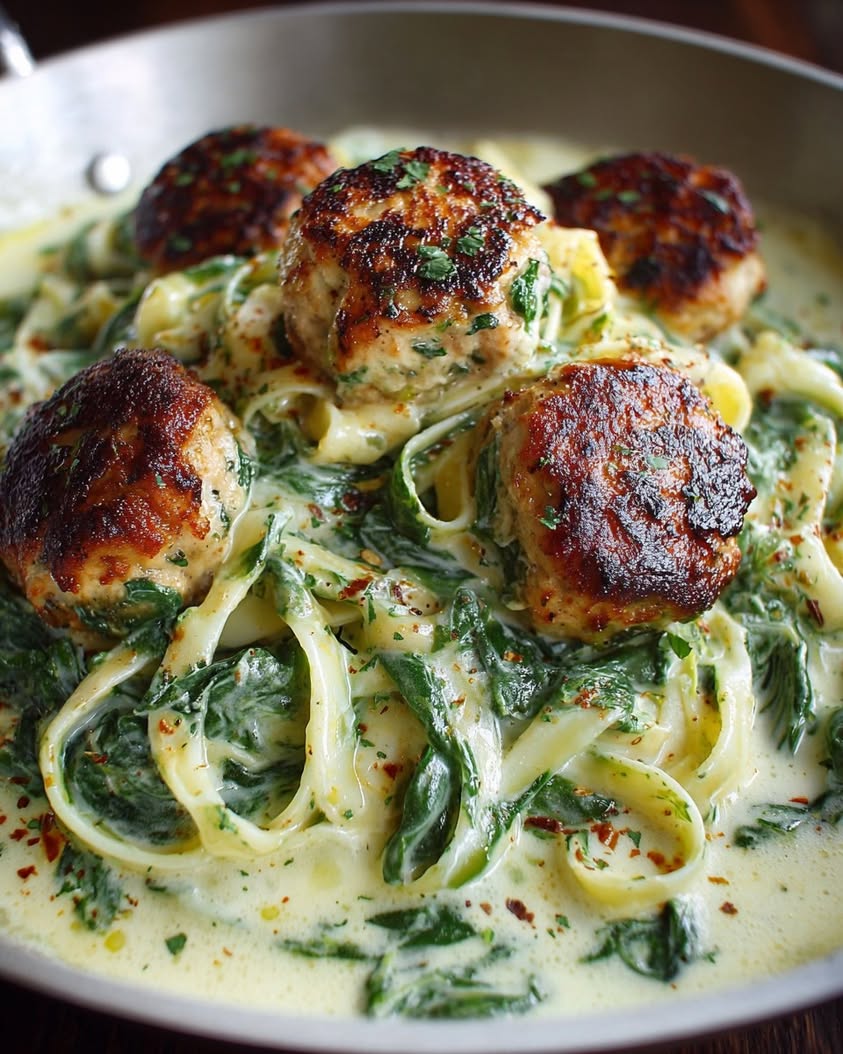
- Visual Appeal: The dish presents beautifully with golden-brown meatballs nestled in a pale green, creamy sauce. The flecks of green spinach and fresh parsley make for a colorful and appetizing plate.
- Skill Level Needed: This is a beginner-friendly recipe. The steps are straightforward: mixing, forming meatballs, pan-searing, and making a simple sauce. No advanced techniques are required.
- Special Equipment: You only need basic kitchen tools: a large mixing bowl, a large skillet (oven-safe if finishing in the oven), and a wooden spoon or spatula. A cookie scoop helps form uniform meatballs easily.
Recipe Overview
- Difficulty Level: We rate this recipe as easy because it uses common ingredients and simple techniques like mixing and pan-frying. The sauce comes together in the same pan as the meatballs, minimizing cleanup. Even novice cooks can achieve impressive results with careful attention to browning and simmering.
- Category: This dish falls squarely into the main course category. It is a hearty, protein-centric meal. Additionally, it can be classified as a comfort food or a family dinner recipe due to its satisfying and crowd-pleasing nature.
- Cuisine: The recipe is inspired by Italian-American cuisine, taking the concept of classic meatballs and Alfredo sauce and combining them. It uses core Italian ingredients like ricotta, Parmesan, garlic, and parsley but in a modern, fusion-style preparation.
- Cost: The recipe is moderately priced. Ground chicken is often affordable, and ricotta and Parmesan are staple cheeses. Using fresh spinach and herbs might increase the cost slightly, but overall, it is a cost-effective meal for four people compared to dining out.
- Season: This is truly an all-season dish. It is comforting and hearty in the fall and winter. Conversely, the bright flavors feel fresh in the spring and summer, especially when served over a lighter base like zucchini noodles.
- Occasion: Perfect for a cozy weeknight family dinner, a casual weekend meal, or even for entertaining small groups. It feels special enough for guests but simple enough for a regular Tuesday night.
Why You’ll Love This Recipe
First and foremost, the taste and texture are utterly divine. The chicken ricotta meatballs are exceptionally tender and flavorful, avoiding the common pitfall of dry, dense meatballs. Each one is juicy and light. The spinach Alfredo sauce is rich and creamy without being overly heavy, coating every meatball and pasta strand perfectly. The garlic and Parmesan create a deeply savory base, while the fresh spinach adds a subtle earthy balance. Every forkful is a harmonious blend of comforting flavors that will have everyone asking for seconds.
From a convenience standpoint, this recipe is a weeknight hero. It uses one main skillet, meaning less cleanup. The prep is simple: just mix, form, and cook. Moreover, the entire dish comes together in about 45 minutes from start to finish. You can easily multitask by boiling pasta or preparing a side salad while the meatballs brown and the sauce simmers. It is a fantastic solution for busy evenings when you want a homemade, satisfying meal without spending hours in the kitchen.
Nutritionally, this dish offers a good balance. Chicken provides lean protein, while ricotta adds calcium and more protein. Spinach is a powerhouse of vitamins A, C, and K, along with iron and fiber. By using a moderate amount of cream and real Parmesan, you get rich flavor without needing excessive quantities. You can further boost the nutrition by serving it over whole-wheat pasta, chickpea pasta, or steamed vegetables. It is a meal that feels indulgent but can be part of a balanced diet.
For social and entertaining value, this recipe is a winner. It is visually impressive and universally appealing. You can easily double the recipe to feed a crowd. Preparing it in a large, presentable skillet allows for beautiful family-style serving. Guests will be delighted by the gourmet appearance and taste. It is a reliable dish that eliminates the stress of cooking for company because the process is straightforward and the results are consistently delicious.
Finally, it is cost-effective and accessible. The ingredients are common and available at any standard grocery store. Ground chicken is typically affordable, and you control the quality of every component. Compared to ordering similar dishes at a restaurant or buying pre-made frozen versions, making these Creamy Chicken Ricotta Meatballs with Spinach Alfredo Sauce at home saves money and yields a far superior product. You can customize it to your taste and dietary needs, making it a versatile staple recipe.
Historical Background and Cultural Significance
The origin story of this dish is a fusion of two Italian-American classics. Meatballs, or polpette, have roots in Italy, often made from leftover meats and bread. However, the large, sauce-simmered meatball served with pasta is largely an Italian-American creation. Alfredo sauce, famously created by Alfredo di Lelio in Rome in the early 1900s, originally consisted of just butter and Parmesan tossed with fettuccine. The creamy, heavy Alfredo sauce known in the U.S. is an adaptation that likely developed stateside. This recipe creatively marries these two beloved concepts into a single, decadent dish.
Culturally, meatballs and creamy pasta sauces both hold significant places as comfort food in American households. They represent hearty, family-style dining. Combining them speaks to a modern cooking trend of creating “bowl” meals or one-pan wonders where protein and sauce are unified. This dish reflects the evolving nature of home cooking, where traditional elements are blended for convenience and maximum flavor impact. It honors its Italian-inspired roots while being a distinctly contemporary American weeknight dinner solution.
The evolution of the recipe likely follows the popularity of using ricotta in meatballs. Cooks discovered that ricotta, a fresh cheese, adds unparalleled moisture and a delicate texture to lean meats like chicken and turkey. Simultaneously, adding vegetables like spinach to Alfredo sauce became a common way to incorporate color and nutrition into a rich dish. The logical next step was to combine these two improved versions, resulting in a meal that is greater than the sum of its parts. It is a testament to culinary innovation in home kitchens.
Regarding regional variations, you might find similar concepts under different names. In some regions, you may see “chicken meatballs in white wine cream sauce” or “ricotta meatballs with marinara.” The specific combination of chicken, ricotta, and spinach Alfredo is a popular iteration found in food blogs and modern recipe collections. It has gained traction because it addresses the desire for creamy pasta dishes with integrated protein, reducing the need to prepare multiple separate components.
Ingredient Deep Dive
Ground Chicken: A lean and versatile protein, ground chicken forms the base of our meatballs. It is milder in flavor than beef or pork, allowing the ricotta and herbs to shine. Culturally, its use in meatballs is a modern, health-conscious twist. Nutritionally, it is high in protein and lower in saturated fat. For the best texture, look for a mix of white and dark meat, often labeled “ground chicken,” not “ground chicken breast,” which can be too lean and dry. Store it in the coldest part of your fridge and use within 1-2 days of purchase, or freeze for longer storage. For a substitute, ground turkey works perfectly.
Ricotta Cheese: This fresh, soft Italian cheese is the secret to incredibly moist meatballs. Historically, ricotta was made from the whey leftover from producing other cheeses. Its name means “recooked.” It adds protein, calcium, and a slight tang without making the meatballs cheesy. Always opt for whole-milk ricotta for the best flavor and texture. Part-skim will work but may result in slightly less richness. Drain any excess liquid from the container before using. Store it tightly sealed and use by the date on the container. For a dairy-free version, a firm, blended tofu can be used, though the flavor profile will change.
Fresh Spinach: Spinach brings color, nutrients, and a subtle earthy flavor to the Alfredo sauce. It is packed with iron, vitamins, and antioxidants. When selecting spinach, look for bright green, crisp leaves without wilting or sliminess. Baby spinach is ideal as it is tender and requires minimal prep. To store, keep it unwashed in the original bag or a container lined with a paper towel in the crisper drawer. For this recipe, you can also use frozen chopped spinach that has been thoroughly thawed and squeezed dry. Kale or Swiss chard are suitable, more robust substitutes.
Parmesan Cheese: The king of Italian hard cheeses, Parmesan (Parmigiano-Reggiano) is non-negotiable for authentic Alfredo flavor. It provides salty, nutty, umami depth. Always grate it fresh from a block for the best melting and flavor; pre-grated cheese contains anti-caking agents that can make sauces grainy. A microplane is the perfect tool for fine grating. Store a block of Parmesan wrapped in parchment and then foil in the refrigerator. For a substitute, Pecorino Romano is sharper and saltier, while a high-quality Asiago can work in a pinch.
Heavy Cream: This is the foundation of a luxurious, velvety Alfredo sauce. Its high fat content allows it to simmer and reduce without curdling, creating a thick, cohesive sauce. For a slightly lighter version, you can use half-and-half, but the sauce will be thinner and less rich. There is no direct dairy-free substitute that replicates the texture perfectly, but soaked and blended cashews can create a creamy, neutral base for a vegan adaptation.
Common Mistakes to Avoid
- Overmixing the Meatball Mixture: Combine the ingredients just until they are incorporated. Overmixing develops the proteins in the chicken, leading to tough, rubbery meatballs. Use a gentle hand or a fork to mix.
- Using Cold Ingredients: Take your ground chicken, ricotta, and egg out of the fridge about 15-20 minutes before starting. Cold ingredients do not bind as well and can result in crumbly meatballs that fall apart during cooking.
- Not Browning the Meatballs Properly: Do not rush the browning step. Let the meatballs develop a deep golden-brown crust on one side before turning. This fond (browned bits) left in the pan is essential for building flavor in the sauce.
- Crowding the Pan: Cook the meatballs in batches if necessary. Crowding the pan steams them instead of searing them, preventing that beautiful caramelization and causing them to release too much liquid.
- Adding Cheese to a Boiling Sauce: Always reduce the heat to low or remove the pan from the heat before stirring in the grated Parmesan. Adding cheese to a violently bubbling sauce can cause it to separate and become oily or grainy.
- Using Pre-Grated Parmesan: As mentioned, pre-grated cheese contains cellulose, which prevents clumping but also prevents smooth melting. Your sauce will be much smoother and more flavorful with freshly grated cheese.
- Overcooking the Spinach: Add the spinach at the very end, just until wilted. Overcooked spinach becomes slimy and loses its vibrant color and nutritional value. It will continue to wilt from residual heat after you turn off the stove.
- Skipping the Resting Time: Let the cooked meatballs rest for a few minutes after they come out of the pan or oven. This allows the juices to redistribute, ensuring they stay moist when you cut into them.
- Underseasoning: Taste your sauce before serving! The amount of salt needed can vary based on your Parmesan and broth. Always do a final seasoning adjustment with salt and pepper.
- Pouring the Sauce Over Crispy Meatballs Too Early: If you plan to serve the meatballs sitting in the sauce for a while before eating, be aware the crispy exterior will soften. For maximum texture contrast, combine them just before serving.
Essential Techniques
Pan-Searing for Flavor: This technique is crucial for developing deep, savory flavor. Heat your oil until it shimmers before adding the meatballs. Do not move them for a few minutes to allow a proper crust to form. This Maillard reaction creates complex flavors and a pleasing texture. The browned bits left in the pan (fond) are deglazed with broth or wine, transferring all that flavor into your sauce. The common pitfall is flipping too early; wait until the meatballs release easily from the pan.
Deglazing the Pan: After removing the meatballs, you will have delicious browned bits stuck to the pan. Adding a liquid like chicken broth and scraping vigorously with a wooden spoon dissolves these bits. This process, called deglazing, is the foundation of a flavorful pan sauce. It ensures no flavor is wasted. Use enough liquid to cover the bottom of the pan and scrape thoroughly until the bottom is clean. This liquid then reduces and becomes the base of your creamy Alfredo sauce.
Simmering to Thicken: After adding the cream to the pan, bring it to a gentle simmer. Simmering allows the sauce to reduce slightly, concentrating the flavors and thickening the consistency. A rapid boil can cause the cream to separate or scorch. Look for small bubbles around the edges of the pan. Stir occasionally to prevent sticking. The sauce is ready when it coats the back of a spoon—a stage known as “nappé.”
Finishing with Cheese Off Heat: This is a critical step for a smooth, emulsified sauce. Remove the pan from the heat source before stirring in the grated Parmesan. The residual heat is enough to melt the cheese smoothly. Stir constantly until the cheese is fully incorporated and the sauce is uniform. Adding cheese to high, direct heat can cause the fats to separate, resulting in a greasy, broken sauce.
Pro Tips for Perfect Creamy Chicken Ricotta Meatballs with Spinach Alfredo Sauce
Use a cookie scoop or ice cream scoop to portion the meatball mixture. This ensures all meatballs are the same size, which leads to even cooking. It also keeps your hands cleaner and speeds up the process.
For the most flavorful meatballs, let the mixed meatball mixture rest in the refrigerator for 15-30 minutes before forming. This allows the breadcrumbs to fully absorb moisture and the flavors to meld, resulting in a more cohesive and tasty meatball.
If your meatball mixture feels too wet to handle, dampen your hands with a little water or oil. This prevents the mixture from sticking to your palms and makes rolling much easier and less messy.
For a richer sauce, use the fond from browning the meatballs as described, but also consider adding a splash of dry white wine to deglaze the pan before adding the broth. Let the wine reduce by half to cook off the alcohol, leaving behind a wonderful acidity that balances the cream.
To ensure your meatballs are cooked through without burning the exterior, you can finish them in a preheated 375°F oven after browning. Transfer the entire oven-safe skillet to the oven for 8-10 minutes, then proceed with the sauce in the same pan.
For a brighter, herbaceous note, stir in a handful of freshly chopped basil or parsley into the finished sauce along with the spinach. The fresh herbs will add a pop of color and a layer of fresh flavor that complements the richness.
If you need to make the meatballs ahead of time, you can form them and place them on a baking sheet, then cover and refrigerate for up to 24 hours. This makes for incredibly quick cooking when you are ready to prepare the meal.
Always taste and adjust seasoning at the very end, after the sauce has come together and the cheese has melted. The saltiness of Parmesan varies, so your dish might need a final pinch of salt or a crack of black pepper.
Variations and Adaptations
Regional Variations: For a Tuscan twist, add sun-dried tomatoes and a pinch of red pepper flakes to the sauce. A French-inspired version might use tarragon instead of parsley and a splash of brandy for deglazing. For an American diner-style dish, serve the meatballs and sauce over thick slices of toasted garlic bread.
Seasonal Adaptations: In spring, use fresh peas and mint instead of spinach. For summer, incorporate roasted red peppers and fresh oregano. In autumn, swap spinach for sautéed mushrooms and sage. During winter, a dash of nutmeg in the sauce adds a warm, cozy note perfect for the holidays.
Dietary Modifications: For gluten-free, use gluten-free breadcrumbs or almond flour in the meatballs. For dairy-free, substitute the ricotta with blended silken tofu and use a cashew-based cream sauce with nutritional yeast instead of Parmesan. For keto or low-carb, serve over cauliflower rice or shirataki noodles.
Flavor Variations: Add lemon zest to the meatball mixture for brightness. Mix in crumbled cooked bacon or pancetta into the meatballs for a smoky flavor. Stir a tablespoon of pesto into the finished Alfredo sauce for an herby, nutty dimension. Use a blend of Italian sausage and chicken for a more robust meatball.
Texture Modifications: For a chunkier sauce, do not wilt the spinach completely; leave it with a bit of bite. For extra creamy meatballs, increase the ricotta by a couple of tablespoons. For a crispier exterior, bake the formed meatballs on a parchment-lined sheet at 400°F for 20-25 minutes instead of pan-frying.
Presentation Alternatives: Serve the meatballs and sauce in a hollowed-out bread bowl for a fun, shareable presentation. Skewer the meatballs as appetizers with the sauce for dipping. Layer the meatballs and sauce in a baking dish, top with mozzarella, and broil for a baked “meatball Alfredo bake.”
Serving and Presentation Guide
Plating Techniques: For individual plates, create a bed of pasta or zucchini noodles. Ladle a generous amount of sauce over the base, then artfully arrange 3-4 meatballs on top. Spoon a little extra sauce over the meatballs and garnish. For family-style, use a large, shallow serving bowl or bring the skillet directly to the table. Nestle all the meatballs into the sauce in the center of the dish, surrounded by the pasta.
Garnishing Ideas: A final sprinkle of freshly grated Parmesan and a drizzle of high-quality olive oil adds shine and flavor. Fresh chopped parsley, basil, or chives provide color and freshness. A few cracks of black pepper or a pinch of red pepper flakes offer visual contrast and a hint of heat. For a luxurious touch, a few shavings of Parmesan made with a vegetable peeler look elegant.
Traditional Accompaniments: The classic pairing is with long pasta like fettuccine, linguine, or tagliatelle, which holds the creamy sauce beautifully. Creamy polenta or mashed potatoes are excellent, comforting alternatives. A simple side of garlic bread or a crusty baguette is essential for soaking up every last drop of sauce.
Modern Serving Suggestions: For a low-carb meal, serve over spaghetti squash, zucchini noodles (zoodles), or roasted cauliflower steaks. It also makes a fantastic filling for stuffed peppers or a topping for a baked potato. Consider deconstructing it into a salad by placing warm meatballs and sauce over a bed of fresh arugula.
Temperature Considerations: Serve this dish immediately while the sauce is hot and creamy and the meatballs are tender. The sauce will thicken as it sits, so if needed, you can thin it with a small splash of warm pasta water, broth, or cream. Warm your serving plates or bowl to keep the food hot longer at the table.
Portion Control Tips: This recipe yields about 16-20 meatballs, serving 4 people (4-5 meatballs per person). If serving as part of a larger multi-course meal, 2-3 meatballs per person is sufficient. The sauce is rich, so a little goes a long way; start with a modest amount and offer more on the side.
Wine and Beverage Pairing
Wine Pairings: A medium-bodied white wine with good acidity cuts through the richness of the Alfredo sauce beautifully. An Italian Pinot Grigio or a French Chardonnay (unoaked or lightly oaked) are classic choices. For red wine lovers, a lighter red like a Pinot Noir or a Chianti Classico with its bright acidity complements the savory meatballs without overpowering the dish. Avoid heavily oaked wines, as they can clash with the creamy sauce.
Non-Alcoholic Alternatives: Sparkling water with a squeeze of lemon or lime provides a refreshing palate cleanser. A tart lemonade or an herbal iced tea (like mint or basil) balances the creaminess. For a more complex option, a non-alcoholic sparkling grape juice or a ginger beer with a squeeze of lime offers sweetness and spice that pairs well.
Coffee/Tea Pairings: This dish is typically served for dinner, so post-meal beverages are more relevant. A smooth, medium-roast coffee or an espresso would be a fine finish. For tea, an herbal peppermint or ginger tea can aid digestion after a rich meal, or a light, floral white tea would be a gentle complement.
Temperature Considerations: White wines should be served chilled, around 45-50°F. Light reds like Pinot Noir are best served slightly cooler than room temperature, around 55°F. Non-alcoholic sparkling drinks should be well-chilled. Iced teas and lemonades are, of course, served cold.
Serving Suggestions: Always offer water on the table to cleanse the palate between bites. If serving wine, pour a small taste first to ensure it pairs well with the finished dish. For a dinner party, you might offer both a white and a red wine option to cater to different preferences.
Storage and Shelf Life
Storage Methods: Allow the dish to cool completely before storing. Store meatballs and sauce together in an airtight container in the refrigerator. Alternatively, you can store them separately, which sometimes helps the meatballs retain a better texture. They will keep for up to 3-4 days.
Temperature Requirements: Refrigerate at 40°F or below. Do not leave the cooked dish at room temperature for more than two hours. When reheating, ensure the internal temperature reaches 165°F to ensure food safety.
Container Recommendations: Glass containers with tight-fitting lids are ideal as they do not absorb odors and allow you to see the contents. If using the sauce’s acidity might react with metal, ensure containers are lined or use alternative materials.
Signs of Spoilage: Discard if you notice an off or sour smell, significant discoloration (graying meatballs, brown sauce), or visible mold. If the sauce has separated irreversibly or developed an unusual texture, it is best to err on the side of caution and not consume it.
Reheating Instructions: Reheat gently on the stovetop over low heat, stirring frequently. Add a splash of broth, milk, or cream to loosen the sauce as it will thicken when cold. You can also reheat in the microwave in 30-second intervals, stirring between each, until hot throughout.
Freezing Guidelines: This dish freezes reasonably well. Place cooled meatballs and sauce in a freezer-safe container or bag, leaving some space for expansion. They will keep for up to 2-3 months. Thaw overnight in the refrigerator before reheating gently on the stovetop. Note that the cream sauce may separate slightly upon thawing; a vigorous whisk during reheating can often re-emulsify it.
Make Ahead Strategies
Prep Timeline: You can prepare the entire dish 1-2 days in advance. Simply cook as directed, cool, cover, and refrigerate. The flavors often meld and improve overnight. Reheat gently before serving. For components, you can mix the meatball mixture and store it covered in the bowl for up to 24 hours before forming and cooking.
Storage Between Steps: Formed, uncooked meatballs can be placed on a parchment-lined baking sheet, covered with plastic wrap, and refrigerated for a day. For longer storage, flash-freeze them on the sheet until solid, then transfer to a freezer bag for up to 3 months. Cook from frozen, adding a few minutes to the cooking time.
Quality Impact Assessment: Making the sauce ahead can cause it to thicken significantly. Plan to thin it with a little warm broth or cream when reheating. The meatballs may absorb some sauce, making them extra flavorful but slightly less crisp. Overall, the make-ahead convenience outweighs the minor textural changes for most home cooks.
Assembly Tips: If making for a party, cook the meatballs and sauce, then combine them in a slow cooker on the “warm” setting for serving. This keeps everything hot without further cooking. Keep a little extra cream or broth nearby to adjust the sauce consistency if it thickens in the slow cooker.
Reheating Guidelines: Always reheat on low heat to prevent the sauce from breaking or the meatballs from toughening. Stir frequently and add liquid as needed. Avoid boiling the sauce when reheating.
Fresh Element Additions: If making ahead, add the fresh spinach only when you reheat the sauce, just until wilted. Also, add any fresh herb garnishes (parsley, basil) right before serving to maintain their vibrant color and flavor.
Scaling Instructions
Halving the Recipe: Halving is straightforward for smaller households. Use a medium skillet instead of a large one. All ingredient quantities are simply divided by two. The cook times will remain roughly the same, though you may need to brown the meatballs in just one batch. The sauce will reduce slightly faster due to the smaller volume.
Doubling or Tripling: For a crowd, use a very large skillet or Dutch oven, or cook the meatballs in batches to avoid crowding. You may need to deglaze with a bit more broth. The sauce may take a few minutes longer to reduce and thicken when doubled. Consider using two skillets simultaneously to manage the volume efficiently.
Equipment Adjustments: Scaling up requires a larger cooking vessel to accommodate more meatballs for browning and a greater volume of sauce. A wide, deep pan or a Dutch oven is ideal. For very large batches, browning the meatballs in the oven on sheet pans at 425°F can be more efficient than stovetop searing.
Timing Modifications: The prep time will increase linearly when scaling up. The cook time for browning meatballs will increase if you are cooking in batches. The sauce simmering time may increase by a few minutes for larger volumes to reach the proper thickness.
Storage Considerations: When making a large batch, plan your storage in advance. Have multiple airtight containers ready. Consider freezing portions for future quick meals. Label containers with the date and contents.
Nutritional Deep Dive
Macro Breakdown: A serving of these Creamy Chicken Ricotta Meatballs with Spinach Alfredo Sauce (without pasta) provides a balance of macronutrients. It is high in protein from the chicken and ricotta, which supports muscle maintenance and satiety. The sauce contributes fats from the cream, butter, and Parmesan, offering energy and helping absorb fat-soluble vitamins. The carbohydrates are minimal, primarily from the breadcrumbs and the spinach. This makes it a suitable option for lower-carb eating plans when served over vegetables.
Micronutrient Analysis: This dish is a good source of several key micronutrients. Spinach provides vitamins A, C, and K, along with folate, iron, and magnesium. Ricotta and Parmesan are excellent sources of calcium and phosphorus for bone health. Chicken offers B vitamins, particularly niacin and B6, which are important for energy metabolism.
Health Benefits: The lean protein promotes fullness and helps maintain muscle mass. The calcium supports strong bones and teeth. The antioxidants and vitamins in spinach contribute to immune function and healthy vision. Using herbs like parsley adds additional antioxidants without extra calories.
Dietary Considerations: For those monitoring sodium, be mindful of the salt in the broth and Parmesan; you can use low-sodium broth and adjust salt to taste. The dish contains dairy, so it is not suitable for lactose-intolerant individuals without modification. It is naturally gluten-free if gluten-free breadcrumbs are used.
Portion Analysis: A standard serving is 4-5 meatballs with sauce. This portion is satisfying due to the high protein and fat content, which promote satiety. Pairing it with a large side salad or steamed vegetables can create a very balanced plate with fiber and volume.
Weight Management Tips: To reduce calories, you can use half-and-half instead of heavy cream, though the sauce will be thinner. Increase the proportion of spinach in the sauce to add volume and nutrients without many calories. Serving over spiralized vegetables instead of pasta significantly reduces the carbohydrate and calorie count of the meal.
Dietary Adaptations
Gluten-Free: This adaptation is simple. Substitute the regular breadcrumbs with an equal amount of gluten-free breadcrumbs, almond flour, or crushed gluten-free crackers. Ensure all other packaged ingredients (like broth) are certified gluten-free. The dish is otherwise naturally gluten-free.
Dairy-Free: Replace the ricotta with firm, blended silken tofu or a store-bought vegan ricotta. For the sauce, use a cashew cream base (soaked cashews blended with water) or a high-quality, plain, unsweetened vegan cream alternative. Nutritional yeast can replace the Parmesan for a cheesy, umami flavor. Use vegan butter or olive oil for sautéing.
Vegan: Use a plant-based ground “meat” or lentils mixed with the dairy-free ricotta substitute mentioned above. For binding, a flax egg (1 tbsp ground flax + 3 tbsp water) can replace the egg. Follow the dairy-free sauce instructions. The result will be a different but delicious plant-based version of the dish.
Low-Carb/Keto: Omit the breadcrumbs and use ¼ cup of grated Parmesan or almond flour as the binder in the meatballs. For the sauce, ensure you use full-fat cream and real butter. Serve over zucchini noodles, spaghetti squash, or shirataki noodles to keep the net carbohydrates very low.
Paleo: Omit the breadcrumbs and dairy. For the meatballs, use almond flour as a binder. For the sauce, create a “cream” sauce from blended cauliflower or cashews with nutritional yeast and garlic. This requires a more significant recipe modification but can align with Paleo principles.
Low-FODMAP: Use garlic-infused oil instead of sautéing fresh garlic to impart flavor without the high-FODMAP garlic fructans. Ensure the onion is omitted entirely. Use lactose-free cream and hard cheeses like Parmesan, which are typically low in lactose. Spinach is low-FODMAP in moderate servings (1 cup cooked).
Troubleshooting Guide
Meatballs Falling Apart: Print
Chicken Ricotta Meatballs with Spinach Alfredo Sauce
- Total Time: 45 minutes
- Yield: 4
Description
Tender chicken meatballs made with ricotta cheese, served in a creamy spinach Alfredo sauce over pasta or with crusty bread.
Ingredients
- 1 lb ground chicken
- 1 cup ricotta cheese
- 1/2 cup grated Parmesan cheese
- 1 large egg
- 1/2 cup breadcrumbs
- 2 cloves garlic, minced
- 1 tsp dried oregano
- Salt and black pepper to taste
- 2 tbsp olive oil
- 2 cups heavy cream
- 2 cups fresh spinach, chopped
- 1/2 cup grated Parmesan cheese (for sauce)
- 1/4 tsp nutmeg
- Fresh parsley for garnish
Instructions
- In a bowl, combine ground chicken, ricotta, 1/2 cup Parmesan, egg, breadcrumbs, minced garlic, oregano, salt, and pepper. Mix until just combined, then form into 1-inch meatballs.
- Heat olive oil in a large skillet over medium heat. Add meatballs and cook for 8-10 minutes, turning occasionally, until browned and cooked through. Remove and set aside.
- In the same skillet, add heavy cream and bring to a simmer. Stir in chopped spinach, 1/2 cup Parmesan, and nutmeg. Cook for 5-7 minutes until sauce thickens and spinach wilts.
- Return meatballs to the skillet, coating them in the sauce. Simmer for 2-3 minutes to heat through. Garnish with fresh parsley and serve hot over pasta or with bread.
Notes
You can customize the seasonings to taste.
- Prep Time: 15 minutes
- Cook Time: 30 minutes
- Method: Main
- Cuisine: American