Layered Mediterranean Vegetable Lasagna with a Creamy Three-Cheese Drizzle: A Vibrant, Meatless Masterpiece
Imagine a lasagna that bursts with the sun-drenched flavors of the Mediterranean, yet feels completely new. This Layered Mediterranean Vegetable Lasagna with a Creamy Three-Cheese Drizzle is exactly that. It is a celebration of seasonal produce, transforming humble eggplant, zucchini, and vibrant bell peppers into a stunning, satisfying centerpiece. This dish proves that a vegetarian lasagna can be every bit as hearty and complex as its meaty counterpart. Ultimately, it is a feast for the eyes and the palate.
This recipe layers roasted vegetables with a rich tomato sauce and a trio of cheeses. The final touch is a luxurious, herb-infused cheese drizzle that cascades over the top. Each bite offers a symphony of textures, from the tender, almost meaty eggplant to the slight crunch of the peppers. The aroma alone, a blend of roasted garlic, sweet basil, and melted cheese, will draw everyone to the kitchen. This Mediterranean Vegetable Lasagna is perfect for a special family dinner or an impressive dish to share with friends.
Furthermore, this lasagna is a fantastic way to enjoy a bounty of vegetables. It is packed with nutrients and vibrant color. The method of roasting the vegetables first concentrates their natural sugars, creating deep, caramelized flavors. This step is key to building a lasagna with incredible depth. The creamy three-cheese drizzle, meanwhile, adds a final layer of indulgence that ties every element together beautifully. This is comfort food reimagined with a bright, healthy twist.
Quick Recipe Highlights
- Flavor Profile: This Mediterranean Vegetable Lasagna delivers a robust, savory-sweet taste from roasted eggplant, zucchini, and bell peppers, perfectly balanced by a tangy tomato sauce and a rich, garlicky cheese drizzle. Herbs like oregano and basil provide an aromatic, earthy backbone.
- Texture: Experience a delightful contrast between the soft, melt-in-your-mouth layers of roasted vegetables and creamy cheese against the firm, al dente pasta sheets. The top layer crisps slightly under the broiler for a perfect finish.
- Aroma: As it bakes, the lasagna fills your kitchen with an irresistible scent of roasting garlic, sweet tomatoes, and fragrant herbs like basil and oregano, mingling with the nutty aroma of melting Parmesan and mozzarella.
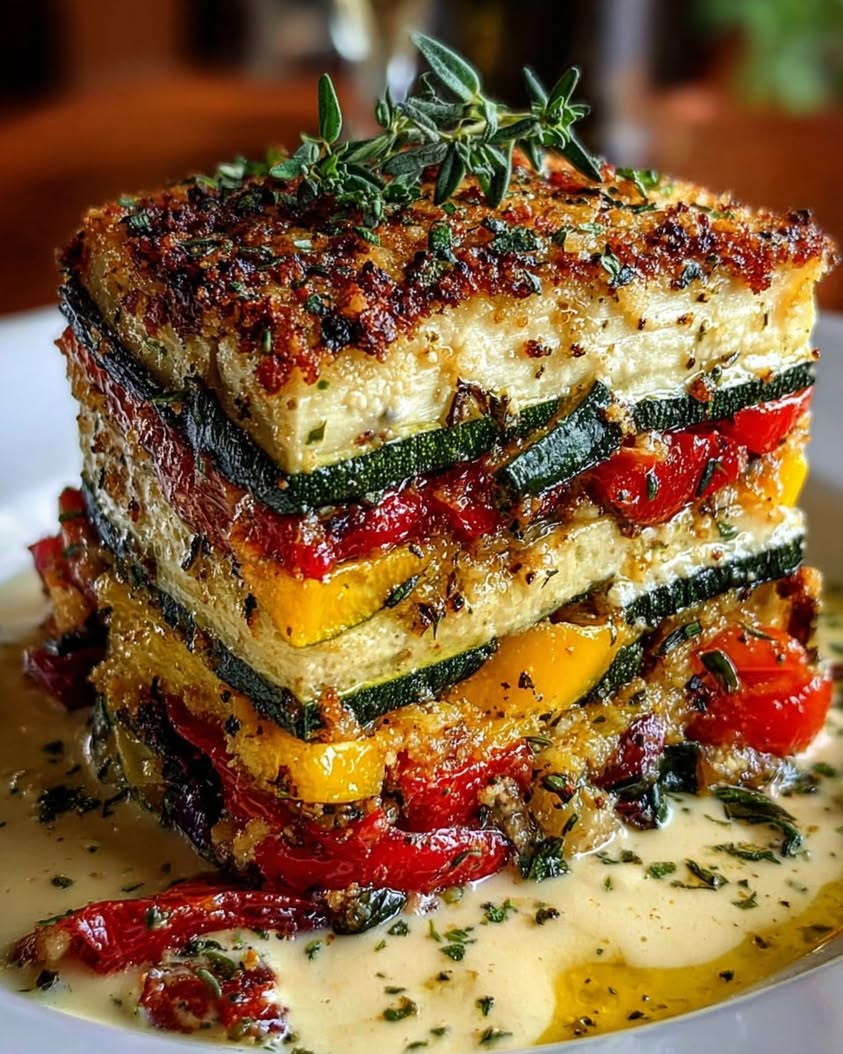
- Visual Appeal: This dish is a rainbow on a plate. Striking layers of deep purple eggplant, green zucchini, and bright red and yellow peppers create a visually stunning cross-section that is as beautiful as it is delicious.
- Skill Level Needed: This recipe is intermediate, requiring some multitasking like roasting vegetables and preparing a sauce. However, clear instructions make it achievable for confident home cooks looking to expand their vegetarian repertoire.
- Special Equipment: You will need a large sheet pan for roasting, a 9×13 inch baking dish, and a medium saucepan. A mandoline slicer is helpful for uniformly thin vegetables but a sharp knife works perfectly.
Recipe Overview
- Difficulty Level: We rate this Mediterranean Vegetable Lasagna as intermediate. The process involves several coordinated components: prepping and roasting multiple vegetables, building a flavorful tomato sauce, and creating a separate cheese drizzle. Managing these elements simultaneously requires a bit of kitchen organization, but each step is straightforward.
- Category: This dish squarely fits into the main course category. It is a hearty, complete meal that needs only a simple green salad or crusty bread on the side. It also works wonderfully as a featured dish for potlucks and holiday gatherings.
- Cuisine: The inspiration is firmly rooted in Mediterranean cuisine, drawing from the vegetable-forward, herb-centric cooking styles of Italy and Greece. The use of eggplant, zucchini, oregano, and basil creates a flavor profile that evokes coastal European kitchens.
- Cost: This is a moderately priced dish. The main expenses are the fresh vegetables and the three cheeses. Using in-season produce can lower the cost significantly. Overall, it is more economical than a meat lasagna and yields generous portions.
- Season: This Mediterranean Vegetable Lasagna shines brightest in late summer and early fall when eggplant, zucchini, and bell peppers are at their peak flavor and most affordable. However, it is a welcome taste of sunshine during colder months.
- Occasion: It is ideal for Sunday family dinners, vegetarian holiday feasts like Christmas or Easter, and dinner parties where you want to impress with a stunning, meat-free centerpiece. It also travels well for potlucks.
Why You’ll Love This Recipe
First and foremost, the taste and texture of this Mediterranean Vegetable Lasagna are utterly captivating. Each forkful is a journey through layers of savory, sweet, and creamy elements. The roasted vegetables become intensely flavorful, their natural sugars caramelizing in the oven. Meanwhile, the tomato sauce provides a bright, acidic counterpoint. Finally, the creamy three-cheese drizzle adds a luxurious, velvety finish that makes every bite feel special. This combination ensures the dish is deeply satisfying without being heavy.
From a convenience standpoint, this recipe is a fantastic make-ahead meal. You can roast the vegetables and prepare the sauces a day in advance. Consequently, assembly on the day you plan to serve becomes a quick and simple task. This makes it a lifesaver for busy weeknights or stress-free entertaining. Additionally, the leftovers reheat beautifully, often tasting even better the next day as the flavors continue to meld.
Nutritionally, this Mediterranean Vegetable Lasagna is a powerhouse. It is loaded with vitamins, minerals, and fiber from its colorful array of vegetables. Eggplant and zucchini are particularly good sources of antioxidants. Using whole milk ricotta and mozzarella provides protein and calcium. Choosing a whole wheat or legume-based lasagna noodle can further boost the fiber and protein content, making it a well-rounded, nourishing meal.
For social gatherings, this dish is a true crowd-pleaser. Its vibrant appearance is instantly inviting, and it caters beautifully to vegetarians and meat-eaters alike. Serving a show-stopping Mediterranean Vegetable Lasagna often becomes the conversation starter of the meal. It demonstrates thoughtfulness and culinary skill, making guests feel truly cared for. It is a recipe that builds community around the table.
Finally, this recipe is cost-effective and accessible. The ingredients are common and can be found at any well-stocked grocery store. You can easily adapt it based on what is seasonal or on sale. Swapping vegetable types or using a different herb blend allows for creativity without compromising the core concept. This flexibility makes it a reliable staple in your cooking repertoire.
Historical Background and Cultural Significance
The concept of layering food, especially pasta, cheese, and sauce, has ancient roots. However, the modern lasagna we know originated in the Emilia-Romagna region of Italy. Traditionally, it featured ragù, béchamel, and Parmigiano-Reggiano. Our Mediterranean Vegetable Lasagna with a Creamy Three-Cheese Drizzle is a vibrant evolution of this classic. It reflects a more contemporary, global approach to cooking that prioritizes vegetable-centric meals and fusion flavors.
Culturally, this dish taps into the heart of Mediterranean dietary patterns, which are celebrated worldwide for their health benefits. Diets from countries like Italy and Greece emphasize fresh vegetables, olive oil, herbs, and cheese. This lasagna is a direct homage to those principles. It transforms the rustic, peasant-style cooking of using what is fresh and local into an elegant, layered casserole. Therefore, it carries the cultural significance of resourcefulness and celebration of the harvest.
The recipe has evolved significantly from its meat-heavy ancestors. The rise of vegetarianism and flexitarian diets has inspired chefs and home cooks to reimagine classics. Replacing meat with substantial, flavorful vegetables like roasted eggplant and zucchini is a natural progression. The creamy drizzle, reminiscent of a simplified béchamel or Greek yogurt sauce, adds a modern, decadent twist. This evolution shows how cuisine adapts to new health trends and ingredient availability.
Regional variations of vegetable lasagna are endless. In Southern Italy, you might find a version with roasted red peppers and ricotta. In Greece, a pastitsio might use eggplant and a cinnamon-spiced tomato sauce. Our version borrows broadly from these traditions, creating a fusion that highlights the best of the Mediterranean palette. It is less about strict authenticity and more about capturing a spirit of abundance, color, and shared joy around food.
Ingredient Deep Dive
Eggplant (Aubergine): Originally cultivated in Southeast Asia, eggplant made its way to the Mediterranean via Arabic trade routes. It became a staple in Italian, Greek, and Middle Eastern cuisines. Nutritionally, it is low in calories and a good source of fiber, antioxidants like nasunin (found in the skin), and vitamins B1 and B6. For this Mediterranean Vegetable Lasagna, choose firm, glossy eggplants with smooth skin. Salting slices before roasting can draw out excess moisture and bitterness, though modern varieties are often less bitter. Store whole eggplants at cool room temperature for a day or in the fridge for up to three days.
Zucchini (Courgette): A summer squash native to the Americas, zucchini was brought to Europe and subsequently embraced, especially in Italian cooking. It is incredibly versatile and mild, making it a perfect carrier for other flavors. It provides vitamin C, manganese, and additional fiber to our lasagna. Select small to medium-sized zucchini that feel heavy for their size, with bright, taut skin. Avoid large ones with big seeds. Store in a plastic bag in the refrigerator crisper for up to a week. Zucchini can be substituted with yellow summer squash.
Bell Peppers (Capsicum): Christopher Columbus brought peppers from the New World to Europe, where they were quickly adopted. Red, yellow, and orange bell peppers are simply ripe green peppers, making them sweeter and richer in vitamins A and C. Their vibrant colors and sweet, crisp texture are essential for the visual and taste appeal of this dish. Choose peppers with firm, unwrinkled skin and a sturdy stem. Store them in the refrigerator for up to a week. For a different flavor, you could use roasted red peppers from a jar.
The Three-Cheese Blend (Ricotta, Mozzarella, Parmesan): This combination is classic in Italian baked dishes. Ricotta provides a light, creamy base. Mozzarella offers that iconic stretchy, melty quality. Parmesan adds a sharp, salty, umami punch that deepens the overall flavor. Together, they create a perfect balance of texture and taste for the drizzle. For best results, use whole-milk ricotta and fresh mozzarella if possible. Always grate your own Parmesan for superior melting and flavor. These cheeses provide protein, calcium, and fat, which contribute to the dish’s satisfying richness.
Common Mistakes to Avoid
- Skipping the Vegetable Roasting Step: Roasting is non-negotiable. It concentrates flavors and removes excess water. If you layer raw vegetables, they will release too much liquid during baking, resulting in a soggy, watery lasagna.
- Not Salting the Eggplant: While not always essential, salting eggplant slices for 30 minutes draws out moisture and any potential bitterness. Rinse and pat them dry thoroughly before roasting to ensure proper browning and texture.
- Using a Watery Tomato Sauce: Choose a high-quality, thick marinara or simmer your sauce to reduce it. A thin sauce will make the lasagna layers slip apart and contribute to sogginess. The sauce should coat the back of a spoon.
- Overloading the Layers: More is not always better. Create distinct, moderate layers of noodles, sauce, vegetables, and cheese. Over-stuffing can prevent even cooking and cause structural collapse when serving.
- Forgetting to Let it Rest: Cutting into the lasagna immediately after baking is a recipe for a messy plate. Let it rest for at least 15-20 minutes. This allows the layers to set, making clean, beautiful slices possible.
- Using No-Boil Noodles Incorrectly: If using no-boil noodles, ensure there is enough sauce directly surrounding them. They need the liquid to hydrate and cook properly. Do not let dry noodle edges be exposed.
- Burning the Garlic in the Drizzle: When making the creamy garlic herb drizzle, cook the garlic gently just until fragrant. Browned or burnt garlic will taste bitter and ruin the delicate sauce.
- Underseasoning the Layers: Season each component as you go—the roasted vegetables, the tomato sauce, and the cheese mixture. Layered dishes require seasoning in every stratum for a balanced final flavor.
Essential Techniques
Roasting Vegetables for Maximum Flavor: This technique is crucial for our Mediterranean Vegetable Lasagna. Roasting at a high heat (around 425°F) caramelizes the natural sugars in the eggplant, zucchini, and peppers. Consequently, it creates a deep, sweet, and complex flavor base that raw vegetables cannot provide. To master it, cut vegetables uniformly so they cook evenly. Toss them generously with oil, salt, and pepper, and spread them in a single layer on the sheet pan. Do not overcrowd, or they will steam instead of roast. The visual cue for success is tender vegetables with golden-brown, slightly charred edges.
Building a Flavorful Tomato Sauce: Even if using a good jarred marinara, enhancing it builds depth. Start by sautéing onions and garlic in olive oil until soft and fragrant. Then, add your marinara and let it simmer for 10-15 minutes. This step allows the flavors to marry and any raw edge from canned tomatoes to mellow. Stir in fresh herbs like basil or oregano at the end to preserve their brightness. A successful sauce will be thick enough to coat a spoon and taste balanced—not too acidic, not too sweet.
Creating the Creamy Three-Cheese Drizzle: This sauce should be pourable but still coatable. The technique involves making a simple roux with butter and flour, then whisking in milk until smooth. Cook until slightly thickened before stirring in the cheeses off the heat. The residual heat will melt them gently. Adding the cheese to boiling liquid can cause it to seize or become grainy. Finally, stir in fresh herbs and garlic. The perfect drizzle will coat the back of a spoon and flow slowly off it.
Layering for Structural Integrity: Proper layering ensures each bite has every component and the lasagna holds its shape. Start with a thin layer of sauce on the bottom to prevent sticking. Then follow the pattern: noodles, sauce, vegetables, cheese. Repeat, finishing with a layer of noodles, sauce, and a generous amount of the cheese drizzle. Press down gently on each layer to eliminate air pockets. This technique guarantees cohesive slices that don’t fall apart on the plate.
Pro Tips for Perfect Mediterranean Vegetable Lasagna
Use a mandoline slicer to get perfectly even, thin slices of eggplant and zucchini. This ensures they roast uniformly and layer neatly. If you use a knife, take your time to make the slices as consistent as possible.
For an extra flavor boost, sprinkle a little breadcrumb mixed with grated Parmesan between the vegetable layers. This absorbs any excess moisture and adds a delightful textural contrast.
Let all your components cool slightly before assembling. Layering very hot roasted vegetables onto noodles can start to cook them prematurely, leading to mushy pasta in the final bake.
Cover the lasagna with foil for the first two-thirds of the baking time. This allows the noodles to cook through and the flavors to meld without over-browning the top. Remove the foil for the last 15-20 minutes to get a beautifully golden, bubbly finish.
If your cheese drizzle seems too thick after cooling, whisk in a tablespoon of warm milk or pasta water to loosen it to the perfect drizzling consistency before adding it to the top layer.
For a stunning presentation, reserve a few perfect slices of roasted red and yellow pepper. After baking, arrange them artfully on top of the lasagna along with a few fresh basil leaves before serving.
Variations and Adaptations
For regional variations, consider a Greek-inspired version. Add a layer of sautéed spinach and swap the ricotta for a mixture of feta and Greek yogurt in the drizzle. A pinch of cinnamon or nutmeg in the tomato sauce would also be authentic. Alternatively, a Provençal take could include layers of sautéed mushrooms and a drizzle made with goat cheese and Herbes de Provence.
Seasonal adaptations are simple. In winter, use roasted butternut squash and kale. For spring, try layers of asparagus, leeks, and peas. The method remains the same; simply adjust roasting times for different vegetables. This flexibility makes the Mediterranean Vegetable Lasagna a year-round favorite.
Dietary modifications are straightforward. For a gluten-free lasagna, use gluten-free no-boil noodles or thin slices of roasted potato or zucchini as the noodle layers. To make it dairy-free, use a vegan ricotta (like cashew-based) and vegan mozzarella shreds for the drizzle, thickened with cornstarch instead of a roux.
Flavor variations can personalize the dish. Add heat with red pepper flakes in the tomato sauce or a pinch of smoked paprika on the roasted vegetables. For an umami bomb, add a layer of sautéed mushrooms or a spoonful of sun-dried tomato pesto between the vegetable strata.
Serving and Presentation Guide
Plating this lasagna is part of the enjoyment. Use a sharp chef’s knife to cut clean portions. A thin, flexible spatula or pie server helps lift each piece onto the plate intact. Wipe the knife between cuts for pristine edges. Serve on warm plates to keep the lasagna hot.
Garnishing elevates the presentation. A final drizzle of high-quality extra virgin olive oil, a sprinkle of flaky sea salt, and a few fresh basil or oregano leaves add color and freshness. A light dusting of microgreens or edible flowers makes it restaurant-worthy.
Traditional accompaniments include a simple arugula salad with lemon vinaigrette to cut through the richness. A basket of warm, crusty bread for soaking up any sauce is always welcome. For a more substantial meal, serve with grilled Italian sausages on the side for meat-eaters.
Consider modern serving styles for a dinner party. You can bake the lasagna in individual ramekins for personalized portions. Alternatively, deconstruct it: serve a stack of roasted vegetables on a pool of tomato sauce, topped with the cheese drizzle and a crisp lasagna noodle chip.
Wine and Beverage Pairing
Wine pairings should complement the rich vegetables and cheese. A medium-bodied Italian red like Chianti Classico or Barbera works beautifully. Their bright acidity cuts through the fat, and their cherry notes pair well with tomato. For a white wine option, choose a fuller-bodied white like a Vermentino or a lightly oaked Chardonnay, which can stand up to the layered flavors.
Non-alcoholic alternatives are just as important. Sparkling water with a twist of lemon or lime cleanses the palate. A tart pomegranate spritzer or a ginger-based mocktail can mirror the dish’s vibrant flavors. Iced herbal tea, like mint or basil, is also a refreshing choice.
For coffee or tea pairings, serve after the meal. A dark roast espresso or a French press coffee pairs well with the savory notes. An herbal tea like chamomile or a light black tea with lemon can be a soothing end to the feast.
Storage and Shelf Life
Store leftover Mediterranean Vegetable Lasagna tightly covered with plastic wrap or in an airtight container in the refrigerator. It will keep for 3-4 days. For best quality, let it cool completely at room temperature for no more than two hours before refrigerating to prevent bacterial growth.
Reheating instructions are key to preserving texture. Reheat individual portions in the microwave covered with a damp paper towel to prevent drying out. For larger portions, cover with foil and reheat in a 350°F oven until warmed through, about 20-30 minutes.
Freezing guidelines: This lasagna freezes exceptionally well. Cool completely, then wrap the entire baking dish tightly in plastic wrap and foil, or cut into portions and freeze in individual containers. It can be frozen for up to 3 months. Thaw overnight in the refrigerator before reheating.
Make Ahead Strategies
You can prep almost every component ahead. Roast the vegetables and store them in a container in the fridge for up to 2 days. Prepare the tomato sauce and the creamy cheese drizzle, storing them separately in airtight containers for up to 3 days. The cheese drizzle may thicken; simply whisk in a little milk when reheating gently.
For assembly, you can build the entire lasagna in the baking dish, cover tightly, and refrigerate for up to 24 hours before baking. Add 10-15 minutes to the covered baking time if starting from cold. You can also freeze the assembled, unbaked lasagna for up to a month.
Scaling Instructions
Halving the recipe is simple for smaller households. Use an 8×8 inch baking dish. Halve all ingredient quantities precisely. Roasting times may be slightly shorter due to less crowding on the sheet pan. Keep a close eye on the vegetables and sauce reduction.
Doubling or tripling for a crowd requires planning. You will need multiple sheet pans to roast the vegetables in batches to avoid steaming. Use two 9×13 inch dishes or one large disposable half-sheet pan. Increase baking time slightly and check for doneness—the center should be bubbly and the top golden.
Nutritional Deep Dive
This Mediterranean Vegetable Lasagna provides a balanced macronutrient profile. The vegetables and whole wheat noodles (if used) offer complex carbohydrates and fiber. The ricotta, mozzarella, and Parmesan contribute protein and healthy fats. Olive oil provides monounsaturated fats. A single serving is satiating and energy-sustaining.
Micronutrient analysis reveals a wealth of vitamins. Eggplant offers nasunin, an antioxidant. Bell peppers are loaded with Vitamins A and C. Zucchini provides manganese and Vitamin C. The tomatoes contribute lycopene, especially when cooked. Together, they support immune function, vision, and skin health.
Dietary Adaptations
For a gluten-free version, use certified gluten-free no-boil lasagna noodles or substitute with thin slices of eggplant or zucchini. Ensure all other packaged ingredients, like tomato sauce, are gluten-free.
To make it dairy-free, use vegan cheese alternatives for the ricotta, mozzarella, and Parmesan. For the drizzle, make a roux with vegan butter and flour, use unsweetened plant milk, and stir in vegan cheese shreds. Nutritional yeast can add a cheesy flavor.
For a vegan adaptation, follow the dairy-free guidelines above. Also, ensure the pasta noodles do not contain egg. You can add plant-based protein by including a layer of cooked lentils or crumbled tofu seasoned with Italian herbs in place of some vegetables.
Troubleshooting Guide
If your lasagna is watery, the most likely cause is under-roasted vegetables or a thin sauce. Next time, ensure vegetables are well-roasted and patted dry, and simmer your sauce longer. To salvage a baked watery lasagna, let it rest longer so the layers absorb more liquid, or carefully spoon out excess liquid from the edges.
If the noodles are still hard after baking, they may not have had enough liquid or coverage. Always ensure noodles are completely surrounded by sauce. For no-boil noodles, adding a little extra water or broth around the edges of the dish before baking can help.
If the cheese drizzle is grainy, the cheese may have been added to sauce that was too hot or cooked too long after adding. Cheese sauces should be warmed gently off direct heat. To fix a grainy sauce, try blending it with an immersion blender to smooth it out.
Frequently Asked Questions
Can I use no-boil lasagna noodles for this recipe? Absolutely. No-boil noodles work perfectly. The key is to ensure they are completely covered with sauce and that there is enough moisture in the dish. You may even add a quarter cup of water or vegetable broth around the edges before baking.
Do I have to salt the eggplant? With modern, less-bitter varieties, it’s not always necessary for taste. However, salting does draw out moisture, which helps prevent a soggy lasagna. For best texture, we recommend taking the time to salt, rinse, and pat dry.
Can I make this lasagna ahead of time? Yes, it’s an excellent make-ahead dish. You can assemble it completely, cover, and refrigerate for up to 24 hours before baking. Add 10-15 minutes to the covered baking time if starting from cold.
What can I use instead of ricotta? Cottage cheese, blended until smooth, is a common substitute. For a richer option, use mascarpone. For a dairy-free version, use a cashew-based vegan ricotta.
How do I get clean slices when serving? Let the lasagna rest for at least 15-20 minutes after baking. This allows the layers to set. Use a very sharp knife and wipe it clean between cuts for the neatest portions.
Can I freeze the leftovers? Yes, it freezes very well. Cool completely, then wrap individual portions or the whole dish tightly. It will keep for up to 3 months. Thaw in the refrigerator overnight before reheating.
My cheese drizzle is too thick. How can I thin it? Simply whisk in a little warm milk, one tablespoon at a time, until it reaches your desired drizzling consistency. Do this gently over low heat if needed.
Is this recipe suitable for a keto diet? Not as written due to the pasta and some higher-carb vegetables. For a keto version, use thin slices of eggplant or zucchini as the noodle layers and reduce or omit the higher-carb bell peppers.
Additional Resources
If you loved this Mediterranean Vegetable Lasagna, explore other vegetable-forward casseroles like a classic Ratatouille, a Greek Moussaka, or a Spinach and Artichoke Lasagna. These dishes follow similar principles of layering and baking for deep, developed flavors.
For technique guides, mastering the art of roasting vegetables is a game-changer. Learn how to roast every vegetable perfectly, from root vegetables to delicate greens. Understanding how to build and balance flavors in a sauce is another fundamental skill worth developing.
Investing in a few key pieces of equipment makes this recipe easier. A large, rimmed half-sheet pan is essential for roasting. A good quality 9×13 inch ceramic or glass baking dish conducts heat evenly. A microplane grater is perfect for fresh Parmesan and garlic.
PrintLayered Mediterranean Eggplant, Zucchini, Yellow & Red Bell Pepper Lasagna with Creamy Garlic Herb Three-Cheese Drizzle
- Total Time: 45 minutes
- Yield: 4
Description
A vibrant, vegetable-packed lasagna featuring roasted eggplant, zucchini, and bell peppers layered with a rich tomato sauce and topped with a decadent three-cheese garlic herb drizzle.
Ingredients
- 1 large eggplant, sliced into 1/4-inch rounds
- 2 medium zucchinis, sliced lengthwise into 1/4-inch strips
- 1 yellow bell pepper, sliced into strips
- 1 red bell pepper, sliced into strips
- 2 cups marinara sauce
- 9 no-boil lasagna noodles
- 1 cup ricotta cheese
- 1 cup shredded mozzarella cheese
- 1/2 cup grated Parmesan cheese
- 3 cloves garlic, minced
- 2 tablespoons olive oil
- 1 teaspoon dried oregano
- 1/2 teaspoon dried basil
- Salt and black pepper to taste
- 1/4 cup heavy cream
- 2 tablespoons fresh parsley, chopped
Instructions
- Preheat oven to 400°F (200°C). Arrange eggplant, zucchini, and bell peppers on baking sheets, drizzle with olive oil, season with salt, pepper, oregano, and basil, and roast for 20 minutes until tender.
- In a bowl, mix ricotta, half the mozzarella, half the Parmesan, minced garlic, and parsley. Set aside.
- Spread a thin layer of marinara sauce in a 9×13 inch baking dish. Layer 3 lasagna noodles, half the roasted vegetables, and half the ricotta mixture. Repeat layers, ending with a final layer of noodles and remaining marinara sauce.
- Cover with foil and bake for 25 minutes. Remove foil, sprinkle with remaining mozzarella and Parmesan, and bake uncovered for 10 more minutes until bubbly.
- In a small saucepan, warm heavy cream over low heat. Stir in remaining Parmesan and garlic until smooth. Drizzle over baked lasagna before serving.
Notes
You can customize the seasonings to taste.
- Prep Time: 15 minutes
- Cook Time: 30 minutes
- Method: Main
- Cuisine: Mediterranean