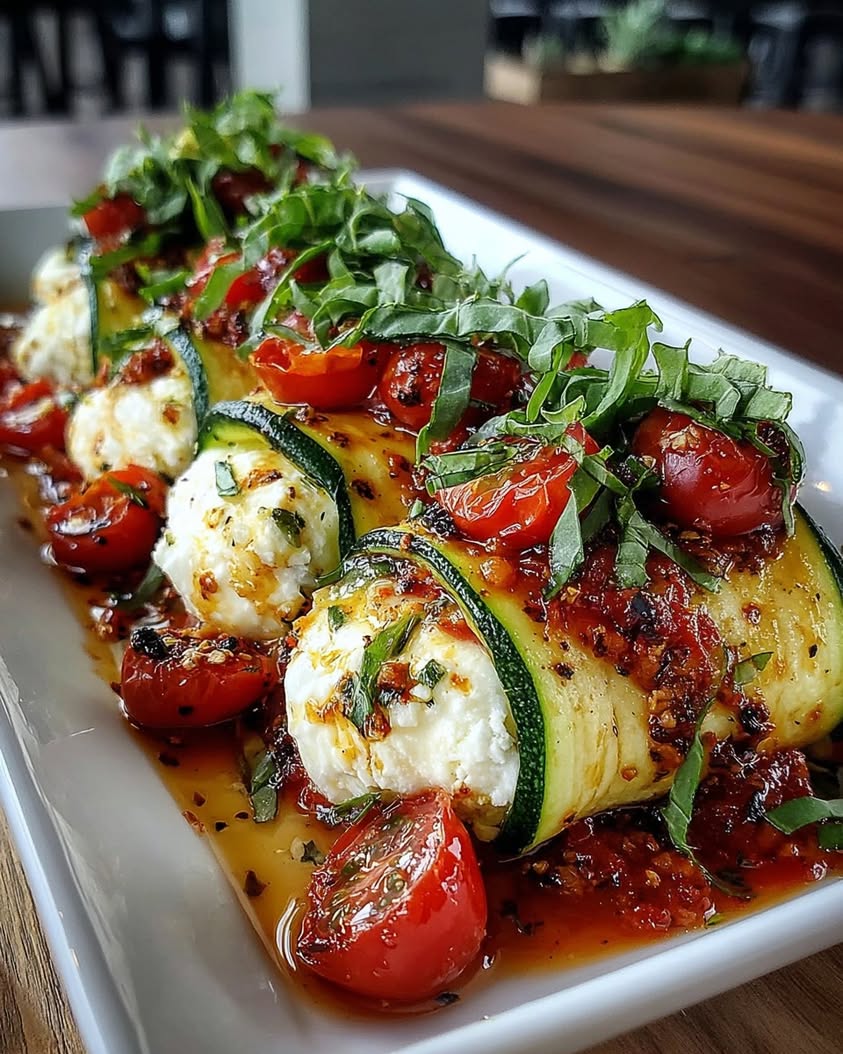
Creamy Burrata Stuffed Zucchini Rolls with Tomato Glaze: An Elegant Summer Appetizer
Imagine a dish that captures the essence of a sun-drenched Italian garden on a single, elegant plate. That is precisely the experience offered by these Creamy Burrata Stuffed Zucchini Rolls with Tomato Glaze. This recipe transforms humble summer vegetables into a show-stopping appetizer or light main course, perfect for entertaining or a special family dinner. Moreover, each bite delivers a symphony of textures and flavors, from the tender, slightly sweet zucchini ribbons to the luxurious, molten center of fresh burrata cheese.
The magic of this dish lies in its beautiful simplicity and stunning presentation. Consequently, these zucchini rolls look like they came from a high-end restaurant, yet the techniques are approachable for any home cook. The process involves creating delicate zucchini sheets, filling them with a rich herbed burrata mixture, and then baking them under a glossy, sweet tomato glaze. Ultimately, the final result is a visually impressive and incredibly delicious creation that will have your guests asking for the recipe.
Seasonal cooking reaches its peak with this recipe, as it highlights the best of summer produce. Fresh zucchini provides a mild, versatile canvas, while ripe tomatoes are cooked down into a concentrated, jammy glaze that adds a touch of sweetness and acidity. Meanwhile, the star of the show, burrata cheese, brings an unforgettable creamy texture that oozes out with every cut. This combination creates a dish that feels both indulgent and refreshingly light, making it an ideal choice for warm weather gatherings.
Quick Recipe Highlights
- Flavor Profile: These rolls masterfully balance creamy, savory, and sweet notes. The rich, milky burrata is perfectly complemented by fresh herbs and a tangy-sweet tomato glaze, creating a complex and satisfying taste experience.
- Texture: You will enjoy a delightful contrast between the soft, yielding zucchini ribbon, the decadently creamy and slightly stringy burrata filling, and the sticky, jam-like consistency of the tomato glaze on top.
- Aroma: As the rolls bake, your kitchen will fill with the irresistible scent of roasting garlic, sweet tomatoes, and fresh basil, promising a truly Mediterranean feast.
- Visual Appeal: The vibrant green zucchini rolls, speckled with herbs and topped with a deep red glaze, create a stunning color contrast on the plate. They are a true feast for the eyes before the first bite.
- Skill Level Needed: This recipe requires some basic knife skills for slicing the zucchini and a bit of patience for rolling. However, the steps are straightforward and well within reach for an intermediate home cook or a confident beginner.
- Special Equipment: A sharp chef’s knife or mandoline slicer is highly recommended for creating even, thin zucchini ribbons. You will also need a good baking dish and a small saucepan for preparing the glaze.
Recipe Overview
- Difficulty Level: We rate this recipe as medium difficulty. The primary challenge lies in slicing the zucchini into long, even strips without breaking them. Additionally, rolling the filled zucchini requires a gentle touch. However, each step is clearly explained, and the payoff is absolutely worth the effort.
- Category: This dish is incredibly versatile. It shines as an impressive appetizer for a dinner party, a elegant light lunch, or a stunning side dish alongside grilled meats or fish. For a vegetarian meal, simply serve two or three rolls per person with a crisp salad.
- Cuisine: The inspiration is firmly rooted in Italian cuisine, celebrating fresh, high-quality ingredients with minimal fuss. The use of burrata, basil, tomato, and zucchini is a classic combination found throughout Southern Italy, especially in the summer months.
- Cost: This is a moderately priced recipe that feels luxurious. The main cost driver is the burrata cheese. Zucchini and tomatoes are typically very affordable in season. Overall, you can create a restaurant-quality dish for a fraction of the price you would pay dining out.
- Season: This recipe is perfect for late spring through early fall when zucchini and tomatoes are at their peak flavor, sweetness, and affordability. Using in-season produce ensures the best possible taste and texture for your Creamy Burrata Stuffed Zucchini Rolls.
- Occasion: These rolls are ideal for special occasions like bridal showers, anniversary dinners, or holiday gatherings. They also make a wonderful weekend project for a date night in or a treat-yourself moment. Their elegance ensures they are always appropriate for a celebratory table.
Why You’ll Love This Recipe
First and foremost, the taste and texture are simply unforgettable. The creamy burrata filling, enriched with garlic and herbs, melts in your mouth against the tender zucchini. Meanwhile, the sweet tomato glaze adds a necessary pop of acidity that cuts through the richness. Every component works in harmony, creating a bite that is both comforting and sophisticated. Furthermore, the visual appeal cannot be overstated; presenting this dish instantly elevates any meal and shows your guests you care.
From a convenience standpoint, this recipe offers significant preparation benefits. You can prepare many elements ahead of time. For instance, you can slice the zucchini and make the glaze several hours in advance. Consequently, assembly before baking becomes quick and stress-free. This make-ahead flexibility is a game-changer for entertaining, allowing you to enjoy your own party instead of being stuck in the kitchen. The actual baking time is also relatively short, meaning you can have a hot, impressive appetizer ready in minutes.
Nutritionally, this dish packs a powerful punch. Zucchini is low in calories but high in fiber, vitamin C, and potassium. Tomatoes are renowned for their lycopene content, a powerful antioxidant. Burrata provides a good source of calcium and protein, though it is richer in fat. When enjoyed in moderation as part of a balanced meal, these Creamy Burrata Stuffed Zucchini Rolls offer a satisfying way to eat your vegetables in a truly delicious form. You are indulging in a treat that also nourishes your body.
The social and entertaining value of this recipe is exceptionally high. These rolls are conversation starters. They look intricate and professional, which will impress your friends and family. Serving a beautiful, homemade dish like this creates a memorable dining experience and shows a level of thoughtfulness that store-bought appetizers cannot match. They encourage sharing and are perfect for a tapas-style meal where everyone can try a little bit of everything.
Finally, this recipe is cost-effective and accessible. While burrata can be a splurge, the other ingredients are pantry staples or inexpensive seasonal produce. You are creating a dish that feels luxurious without requiring expensive cuts of meat or rare ingredients. Most components are readily available at any well-stocked grocery store. This accessibility means you can recreate a taste of an Italian summer anytime you wish, making gourmet cooking an achievable goal for your home kitchen.
Historical Background and Cultural Significance
The story of these Creamy Burrata Stuffed Zucchini Rolls is a modern tale woven from ancient Italian culinary traditions. While the specific roll format is a contemporary creation, its soul belongs to the cucina povera, or “poor kitchen,” of Southern Italy. This philosophy emphasizes transforming simple, readily available ingredients into extraordinary meals. Zucchini, tomatoes, and fresh cheese have been staples in Italian gardens and kitchens for centuries. Consequently, modern chefs and home cooks continually find new ways to honor these ingredients, leading to innovative dishes like this one.
Culturally, this dish celebrates la dolce vita and the importance of the summer harvest. In regions like Puglia, where burrata was invented, and Campania, famous for its tomatoes, summer meals revolve around the bounty of the garden. Meals are leisurely, ingredients are fresh, and presentation is valued. These zucchini rolls embody that spirit perfectly. They are not meant to be eaten quickly but to be savored, shared, and appreciated. They represent a moment to slow down and enjoy the fruits of the season with good company.
The evolution of this recipe follows the global popularity of its star ingredient: burrata. Originally a way for cheesemakers to use up scraps, burrata was a local secret in Puglia for decades. However, as it gained international fame in the early 2000s, chefs worldwide began incorporating its creamy texture into all sorts of dishes. The idea of stuffing vegetables with cheese is ancient, but using burrata specifically is a modern twist. Pairing it with zucchini and a sweet tomato glaze is a natural progression that highlights the cheese’s delicate flavor without overpowering it.
Regional variations of stuffed vegetables are endless throughout Italy. In the north, you might find rolls made with thinly sliced eggplant. In Sicily, they might include raisins and pine nuts in the filling. The specific combination of zucchini and tomato glaze has a particularly Central Italian feel, reminiscent of the flavors found in Tuscany and Umbria. Today, home cooks adapt the concept to their local produce, perhaps using yellow squash or adding a sprinkle of chili flake for heat. This recipe, therefore, is part of a living, evolving tradition of Italian home cooking.
Ingredient Deep Dive
Let us start with zucchini, the foundation of our rolls. This summer squash, native to the Americas, was brought to Italy in the late 19th century and embraced wholeheartedly. It is incredibly versatile and mild, making it the perfect wrapper for our filling. Nutritionally, zucchini is mostly water, but it provides a good amount of vitamin C, manganese, and fiber with very few calories. When selecting zucchini for this recipe, choose medium-sized, firm specimens with glossy, unblemished skin. Avoid very large zucchinis, as they tend to be seedy and watery. Store them unwashed in your refrigerator’s crisper drawer for up to a week.
Next, we have the star: burrata cheese. Burrata means “buttered” in Italian, a name that perfectly describes its rich, creamy interior. It originated in the Puglia region in the early 20th century as a resourceful way for cheesemakers to use up the stracciatella (shredded mozzarella curds) and cream. The result is a mozzarella pouch filled with this decadent, stringy cream. It is a good source of calcium and protein but is high in saturated fat, so enjoy it in moderation. Always seek out the freshest burrata possible, sold in a liquid-filled container. Use it within a day or two of purchase for the best flavor and texture. If unavailable, fresh mozzarella can be mixed with a tablespoon of ricotta or cream as a substitute.
The sweet tomato glaze is the flavor catalyst. Tomato cultivation in Italy dates back to the 16th century, and the fruit quickly became central to the cuisine. Cooking tomatoes slowly into a glaze concentrates their natural sugars and umami. This process also increases the bioavailability of lycopene, a potent antioxidant linked to heart health. For the best glaze, use ripe, in-season Roma or San Marzano tomatoes, which have fewer seeds and more flesh. Out of season, high-quality canned whole peeled tomatoes are an excellent alternative. The glaze can be made ahead and stored in the refrigerator for up to five days, making it a versatile condiment.
Fresh herbs like basil and oregano are non-negotiable for authentic flavor. Basil, symbolizing love in Italy, adds a sweet, peppery aroma that is quintessentially summer. Oregano provides a earthy, slightly bitter backbone. Both herbs offer antioxidants and anti-inflammatory compounds. For the brightest flavor, always use fresh herbs in this recipe. If you must substitute dried oregano, use only one-third the amount, as dried herbs are more potent. Store fresh herbs like a bouquet of flowers: trim the stems and place them in a glass of water on your counter or in the fridge, loosely covered with a bag.
Common Mistakes to Avoid
- Slicing Zucchini Too Thick: This is the most common error. Thick slices will not roll properly and will remain too crunchy after baking. Always aim for slices about 1/8-inch thick. A mandoline slicer set on the thinnest setting provides the most consistent results.
- Not Salting the Zucchini: Skipping the salting step leads to watery, soggy rolls. Salting draws out excess moisture, which is crucial for achieving a pliable texture that rolls without breaking and a final result that is not swimming in liquid.
- Overfilling the Rolls: It is tempting to add a large scoop of burrata, but overfilling will cause the rolls to burst open during baking. Use a modest tablespoon of filling, spreading it thinly along the length of the zucchini strip.
- Using Cold Burrata: Burrata is easiest to mix and handle when it is slightly cooler than room temperature. Taking it out of the fridge 15-20 minutes before you start prep allows the cream to soften, making it simpler to combine with the herbs.
- Underseasoning the Filling: The burrata itself is mild. Failing to adequately season the filling with salt, pepper, and garlic will result in bland rolls. Always taste your filling mixture before assembling to ensure it is flavorful.
- Rushing the Tomato Glaze: A truly sweet, concentrated glaze requires patience. Cooking it over medium-low heat and allowing it to reduce slowly is key. A rushed, high-heat reduction can lead to a burnt or bitter flavor.
- Overbaking the Rolls: The goal is to heat the rolls through and melt the cheese, not to cook them to mush. Baking for the full 20-25 minutes is usually sufficient. The zucchini should be tender but still have a slight bite.
- Skipping the Fresh Garnish: Adding fresh basil or a drizzle of high-quality olive oil after baking is essential. It provides a burst of fresh aroma and flavor that cooked herbs simply cannot replicate, lifting the entire dish.
Essential Techniques
Mastering the zucchini ribbon is your first crucial technique. Why is it important? A uniform, thin ribbon ensures even cooking and easy rolling. To achieve this, use a sharp vegetable peeler or mandoline. Hold the zucchini firmly and make long, steady strokes from one end to the other. Apply even pressure to get a consistent thickness. A common pitfall is applying too much pressure at the start or finish, creating uneven ends. The visual cue for success is a translucent, flexible strip that you can bend without it snapping. If it cracks, it is likely too thick.
Next, understand the salting and draining process. This step is vital because it removes excess water, concentrating the zucchini’s flavor and preventing a soggy final dish. After slicing, lay the ribbons on paper towels, salt them lightly, and let them sit for 10-15 minutes. You will see beads of moisture form on the surface. Then, pat them thoroughly dry with fresh paper towels. The key is to be gentle; the ribbons are delicate. The common mistake is not patting them dry enough, leaving residual moisture that will steam in the oven. Success is marked by pliable, dry-feeling ribbons ready for filling.
Creating the tomato glaze requires the technique of reduction. This process intensifies flavor by evaporating water. Start with chopped tomatoes, garlic, and a touch of sugar in a saucepan. Simmer over medium-low heat, stirring occasionally to prevent sticking. As it cooks, the mixture will thicken and darken to a deep red, jammy consistency. The pitfall here is impatience—cranking up the heat can cause burning. A successful glaze will coat the back of a spoon and leave a clear trail when you run your finger through it. It should taste sweet, tangy, and deeply savory.
Finally, the rolling technique itself is important for structure. Place a zucchini ribbon on a clean surface. Spread a thin line of filling along one of the shorter ends. Then, gently but firmly roll the zucchini around the filling, tucking it in as you go. Do not roll too tightly, or the filling will squeeze out the ends. The common mistake is placing the filling in the center, which makes for an awkward roll. The visual cue for a good roll is a neat, cylindrical shape that holds together when you place it seam-side down in the baking dish. Practice makes perfect with this step.
Pro Tips for Perfect Creamy Burrata Stuffed Zucchini Rolls
First, invest in a mandoline slicer. This tool is a game-changer for creating perfectly even, paper-thin zucchini ribbons in seconds, ensuring uniform cooking and easy rolling. Just remember to use the safety guard to protect your fingers.
Second, do not discard the ends of the zucchini. Instead, finely dice them and sauté them with the garlic for the tomato glaze. This adds an extra layer of zucchini flavor to the sauce and reduces food waste.
Third, mix a teaspoon of lemon zest into the burrata filling. The bright citrus note cuts through the richness of the cheese and adds a surprising, refreshing element that elevates the entire flavor profile.
Fourth, lightly grease your baking dish with olive oil before adding the rolls. This prevents sticking and helps the bottoms of the zucchini ribbons develop a lovely golden color as they bake.
Fifth, let the assembled rolls rest at room temperature for 10 minutes before baking. This takes the chill off the filling, promoting more even heating and preventing the oven temperature from dropping sharply when you put the dish in.
Sixth, use a pastry brush to apply the tomato glaze. This gives you precise control over the amount of glaze on each roll and creates a beautiful, glossy finish without making the dish too wet.
Seventh, finish with a flaky sea salt. After baking, a light sprinkle of Maldon or another flaky salt on top adds a delightful crunch and a final burst of salinity that makes all the other flavors pop.
Eighth, reserve some fresh herbs for garnish. While herbs are mixed into the filling, having a handful of pristine basil leaves or oregano sprigs to scatter over the baked rolls adds visual appeal and a hit of fresh aroma.
Variations and Adaptations
For regional variations, look to different Italian traditions. A Sicilian twist might include adding toasted pine nuts and chopped raisins to the burrata filling. A Ligurian version could incorporate pesto into the cheese mixture instead of fresh basil. For a Roman influence, consider adding a few anchovy fillets, minced finely into the tomato glaze for a deep umami flavor. Each region’s pantry offers inspiration to personalize this dish while staying true to its Italian roots.
Seasonal adaptations are straightforward. In late summer, add thin slices of fresh peach or nectarine on top of the rolls before baking for a sweet contrast. In the fall, incorporate roasted pumpkin or butternut squash puree into the burrata filling. During winter, when fresh tomatoes are lackluster, rely on a high-quality canned tomato passata for your glaze and add a pinch of dried chili flake for warmth. The recipe framework is wonderfully adaptable.
Dietary modifications are easy to implement. For a vegan version, use a high-quality vegan mozzarella or ricotta alternative mixed with plain vegan yogurt to mimic the creaminess. A gluten-free diet requires no changes, as the recipe is naturally free of gluten. For a lower-carb or keto adaptation, ensure your tomato glaze uses a sugar substitute like monk fruit or simply omit the sugar altogether, relying on the natural sweetness of well-cooked tomatoes.
Flavor variations can take this dish around the world. For a Greek feel, use feta cheese mixed with dill and mint in the filling, and top with a lemon-oregano glaze. For a Mexican-inspired version, add roasted corn and chopped jalapeño to the filling, and use a smoky chipotle-tomato glaze. An American summer twist could involve adding cooked, crumbled bacon to the burrata and using a brown sugar-infused tomato glaze. The possibilities are truly endless.
Serving and Presentation Guide
Plating techniques are key to showcasing these beautiful rolls. For individual servings, place two or three rolls slightly overlapping in the center of a white or neutral-colored plate. Alternatively, for family style, arrange all the rolls in a radiating spiral pattern in a shallow serving platter. Drizzle any remaining tomato glaze from the baking dish around the plate, not directly over the rolls, to create an artistic swoosh. This keeps the tops visually clean and glossy while adding sauce to the plate.
Garnishing is the final touch of elegance. A few small, whole basil leaves or delicate oregano sprigs placed strategically on or beside the rolls add color. A light drizzle of your best extra virgin olive oil just before serving adds sheen and flavor. For a touch of luxury, add a few shavings of Parmigiano-Reggiano cheese or a sprinkle of toasted breadcrumbs for crunch. A twist of freshly cracked black pepper on top is always welcome.
Traditional accompaniments keep the meal light and Italian. A simple arugula salad dressed with lemon juice and olive oil is a classic pairing. For a heartier meal, serve the rolls alongside grilled chicken scallopini or a piece of simply prepared white fish like branzino. A crusty baguette or focaccia is essential for soaking up every last bit of the delicious tomato glaze and creamy burrata that escapes onto the plate.
Modern serving suggestions might include deconstructing the elements. Serve the baked zucchini rolls on a smear of the tomato glaze, with a quenelle of the herbed burrata mixture on the side. For a cocktail party, make miniature versions using thinner zucchini ribbons and serve them as one-bite passed appetizers on small spoons or skewers. Presentation innovation can make the same recipe feel new and exciting.
Wine and Beverage Pairing
Wine pairings should complement the creamy, tangy, and sweet notes of the dish. A classic Italian white like a Vermentino or a Falanghina is perfect. These wines have bright acidity to cut through the burrata’s richness and often have citrus and herbal notes that mirror the fresh basil. A light-bodied, fruity red like a Bardolino or a Schiava can also work beautifully if served slightly chilled. Avoid heavily oaked wines, as they will clash with the dish’s fresh flavors.
For non-alcoholic alternatives, consider sophisticated options that mimic wine’s role. A tart cherry or pomegranate spritzer made with sparkling water provides a fruity acidity. A high-quality lemonade infused with fresh basil or thyme offers herbal complexity. Iced hibiscus tea (agua de jamaica) has a beautiful color and tangy flavor that pairs wonderfully with the tomato glaze. These drinks cleanse the palate between bites just as effectively as wine.
Coffee and tea pairings are ideal if serving these rolls for a brunch or lunch. A medium-roast coffee with low acidity and notes of chocolate or nuts would complement the savory elements without overpowering them. For tea, a green tea like Sencha or a white tea like Silver Needle provides a clean, delicate finish that won’t compete with the dish’s subtle flavors. Serve these beverages after the meal as a digestif rather than alongside.
Storage and Shelf Life
Storage methods for leftovers are straightforward but time-sensitive. Allow any leftover Creamy Burrata Stuffed Zucchini Rolls to cool completely to room temperature. Then, transfer them to an airtight container, separating layers with parchment paper to prevent sticking. Store in the refrigerator for up to 2 days. The tomato glaze may cause the zucchini to release more moisture over time, so the texture is best when fresh.
Reheating instructions are crucial for preserving quality. The microwave is not recommended, as it will make the zucchini soggy. Instead, reheat rolls in a preheated 350°F (175°C) oven for 10-15 minutes, or until warmed through. You can place them in a covered baking dish with a splash of water to create steam and prevent drying out. For best results, consider reheating them in a skillet with a lid over low heat.
Freezing is not recommended for this particular dish. The high water content in the zucchini means it will become mushy and watery upon thawing. The burrata filling will also separate and become grainy. This recipe is truly best enjoyed fresh or within a day of preparation. If you must plan ahead, prepare the components separately—the tomato glaze freezes well for up to 3 months, and you can slice the zucchini a day in advance.
Make Ahead Strategies
A smart prep timeline makes entertaining effortless. The day before, you can prepare the sweet tomato glaze and store it in the fridge. You can also slice the zucchini ribbons, salt and drain them, pat them dry, and store them layered between paper towels in an airtight container in the refrigerator. On the day of serving, simply mix the burrata filling, assemble the rolls, and bake. This splits the work and minimizes last-minute stress.
Storage between steps is simple with proper planning. The drained zucchini ribbons will keep perfectly for 24 hours in the fridge. The tomato glaze can be made up to 3 days ahead. The burrata filling, however, should be mixed no more than an hour before assembly, as the salt will draw moisture out of the cheese and herbs, making it watery. Keep components covered and chilled until you are ready to put everything together.
Assembly tips for make-ahead success: You can assemble the rolls up to 4 hours before baking. Arrange them in the baking dish, cover tightly with plastic wrap, and refrigerate. Let them sit at room temperature for 20-30 minutes before baking to take the chill off. This ensures even cooking. Do not add the tomato glaze until just before the dish goes into the oven, as the acidity can start to “cook” the zucchini prematurely.
Scaling Instructions
Halving the recipe is simple for a smaller meal. Use one medium zucchini, half a ball of burrata (about 4 oz), and simply prepare half the amount of all other ingredients. Use a smaller baking dish, like a bread loaf pan or small gratin dish. The baking time may reduce by 5 minutes, so start checking for doneness at the 15-minute mark. All other techniques remain exactly the same.
Doubling or tripling the recipe for a crowd requires slight adjustments. You will need multiple baking dishes or one very large roasting pan to ensure the rolls are in a single layer and cook evenly. Work in batches when salting and drying the zucchini ribbons to keep your workspace manageable. The tomato glaze can be made in one large batch. Baking time may increase slightly due to the fuller oven, so add 5-10 minutes and rely on the visual cue of bubbly filling and tender zucchini.
Equipment adjustments are necessary when scaling. A commercial-sized baking sheet (half-sheet pan) lined with parchment can work for a double batch. For a triple batch, consider using two oven racks and rotating the pans halfway through baking. If you are making a large quantity, a food processor with a slicing disk can speed up the zucchini prep immensely. Just be extra careful to maintain even pressure for uniform ribbons.
Nutritional Deep Dive
A macro breakdown for one serving (approximately two rolls) is informative. You can expect a moderate amount of calories, primarily from the healthy fats in the olive oil and burrata cheese. The dish provides a good amount of protein from the cheese, along with some carbohydrates from the zucchini and tomato glaze. The fat content is significant but consists largely of saturated fat from the dairy and monounsaturated fat from the olive oil. This makes it a satisfying, energy-dense appetizer or light meal.
The micronutrient analysis reveals several benefits. Zucchini contributes vitamin C, potassium, and manganese. Tomatoes are famous for lycopene and vitamin C. The fresh herbs provide various antioxidants and phytonutrients. Burrata offers calcium and phosphorus for bone health. While not a low-calorie health food, this dish delivers valuable nutrients alongside its indulgent flavors, especially when made with high-quality, fresh ingredients.
Dietary considerations are important for specific needs. The recipe is naturally gluten-free and vegetarian. For those on a low-carb or keto diet, the net carbs are relatively low, especially if you minimize the sugar in the glaze. For a low-FODMAP adaptation, use only the green parts of the scallions and ensure the garlic is infused into the oil for the glaze and then removed, rather than minced and left in. Always tailor the recipe to your individual health requirements.
Dietary Adaptations
For a gluten-free diet, this recipe requires no changes, as it contains no flour, breadcrumbs, or other gluten-containing ingredients. Just ensure all packaged products like canned tomatoes are certified gluten-free if you have celiac disease or a severe sensitivity. This dish is a fantastic, safe option for gluten-free entertaining.
A dairy-free or vegan adaptation is achievable with modern substitutes. Replace the burrata with a mixture of vegan mozzarella shreds and plain, unsweetened vegan yogurt or cashew cream to mimic the creamy texture. Nutritional yeast can add a cheesy flavor. Use a high-quality vegan parmesan for garnish. The result will be different but still delicious, with the same beautiful presentation and herbaceous tomato flavor.
For a keto adaptation, focus on reducing the carbs in the tomato glaze. Omit the sugar entirely and rely on the natural sweetness of slow-cooked tomatoes. You can add a pinch of a keto-friendly sweetener like erythritol if desired. Ensure the tomatoes you use are not from a can with added sugars. The zucchini and cheese are already keto-friendly, making this a relatively simple switch.
A paleo adaptation requires omitting the dairy. Follow the dairy-free instructions above, using a cashew-based cheese alternative. Also, ensure any canned tomatoes used have no additives. The dish then aligns with paleo principles, focusing on whole, unprocessed vegetables, herbs, and healthy fats from olive oil and nuts.
Troubleshooting Guide
If your zucchini rolls are falling apart, the issue is likely the zucchini ribbon thickness or dryness. Ensure your slices are thin enough to be flexible and that you have patted them completely dry after salting. If they are still cracking, you can briefly blanch the ribbons in boiling water for 30 seconds, then shock them in ice water and pat dry. This makes them extremely pliable, though it adds an extra step.
If the final dish is watery, several factors could be at play. First, you may not have salted and dried the zucchini sufficiently. Second, the burrata might have been too wet; always drain it well. Third, you may have covered the dish while baking, which traps steam. Bake uncovered to allow moisture to evaporate. If excess liquid remains in the pan after baking, you can carefully pour it off or use a baster to remove it before serving.
If the flavor is bland, it is almost always a seasoning issue. Remember to season each component: salt the zucchini, season the burrata filling generously, and ensure the tomato glaze has enough salt and a touch of acid (like a drop of balsamic vinegar) to balance the sweetness. Taste as you go. The fresh garnish of basil and a final drizzle of good olive oil also adds essential layers of flavor that cooked ingredients lose.
Recipe Success Stories
Community feedback on this recipe has been overwhelmingly positive. Many home cooks report that it has become their go-to “impress the in-laws” dish. One reader shared that she made a double batch for a baby shower and they were the first appetizer to disappear, with multiple guests asking for the recipe. Another mentioned that her husband, who claims to dislike zucchini, asked for seconds. These stories highlight the universal appeal and crowd-pleasing nature of these elegant rolls.
Variation successes from readers are inspiring. One cook added lump crab meat to the burrata filling for a special anniversary dinner. Another created a winter version using roasted red pepper glaze instead of tomato. A parent successfully “hid” finely chopped spinach in the filling for their kids, who devoured the rolls without complaint. These adaptations show the recipe’s fantastic flexibility and how it can be a canvas for personal creativity while still delivering stunning results.
Reader suggestions have also improved the recipe. One tip was to add a pinch of red pepper flake to the tomato glaze for a subtle heat, which many now consider essential. Another suggested using a Y-peeler instead of a straight peeler for wider zucchini ribbons, making rolling easier. A third recommended lining the baking dish with a light layer of the tomato glaze before placing the rolls in, which adds flavor and prevents sticking. The community’s collective wisdom makes the recipe even better.
Frequently Asked Questions
Can I use a different cheese instead of burrata? Yes, you can. Fresh mozzarella is the closest substitute, though it won’t be as creamy. For a similar texture, mix fresh mozzarella with a tablespoon of ricotta or mascarpone. The flavor profile will change, but it will still be delicious.
Do I have to use a mandoline to slice the zucchini? No, but it is highly recommended for even, thin slices. A sharp vegetable peeler or a very good knife and steady hand can also work. The key is achieving uniform thickness so the zucchini cooks evenly and rolls without breaking.
Can I grill these instead of baking them? Absolutely. After assembling, brush the rolls lightly with oil and place them on a preheated, medium-hot grill. Cook for 3-4 minutes per side, or until grill marks appear and the zucchini is tender. The smoky flavor is a wonderful addition.
How do I know when the rolls are done baking? The zucchini should be tender when pierced with a fork, and the burrata filling should be visibly melted and bubbly around the edges. The tomato glaze on top will look set and slightly caramelized. This usually takes 20-25 minutes in a 400°F oven.
Can I make these completely ahead and reheat? You can assemble them up to 4 hours ahead and refrigerate, then bake just before serving. I do not recommend baking them fully and then reheating, as the texture of the zucchini suffers. Freshly baked is always best.
My tomato glaze is too acidic. How can I fix it? Balance is key. Add a tiny pinch of baking soda to neutralize some acid, or stir in a teaspoon of honey or maple syrup to add sweetness. A pat of butter stirred in at the end can also mellow sharp acidity beautifully.
What can I do with the leftover burrata liquid? Do not discard it! This liquid is seasoned, creamy, and flavorful. Use it to make a vinaigrette for a side salad, stir it into mashed potatoes, or add a spoonful to Print
Creamy Burrata Stuffed Zucchini Rolls with Tomato Glaze
- Total Time: 45 minutes
- Yield: 4
Description
Thinly sliced zucchini rolls filled with creamy burrata cheese and fresh basil, baked and topped with a sweet and tangy tomato glaze for an elegant appetizer or light main.
Ingredients
- 2 medium zucchinis, thinly sliced lengthwise
- 8 oz burrata cheese, drained
- 1/4 cup fresh basil leaves, chopped
- 1 cup cherry tomatoes, halved
- 2 tbsp olive oil
- 1 tbsp balsamic vinegar
- 1 tsp honey
- Salt and black pepper to taste
- 1/4 cup grated Parmesan cheese for topping
Instructions
- Preheat oven to 375°F (190°C). Lightly grease a baking dish.
- Lay zucchini slices on a baking sheet, brush with olive oil, and bake for 5-7 minutes until pliable. Let cool.
- In a bowl, mix burrata cheese, chopped basil, salt, and pepper until creamy.
- Spread a spoonful of burrata mixture onto each zucchini slice, roll up tightly, and place seam-side down in the baking dish.
- For the glaze, blend cherry tomatoes, balsamic vinegar, honey, and a pinch of salt until smooth. Simmer in a saucepan for 5-10 minutes until thickened.
- Pour tomato glaze over zucchini rolls, sprinkle with Parmesan, and bake for 15-20 minutes until bubbly and golden.
Notes
You can customize the seasonings to taste.
- Prep Time: 15 minutes
- Cook Time: 30 minutes
- Method: Appetizer
- Cuisine: Italian-American