Homemade Boston Cream Donuts: An Easy Bakery-Style Recipe
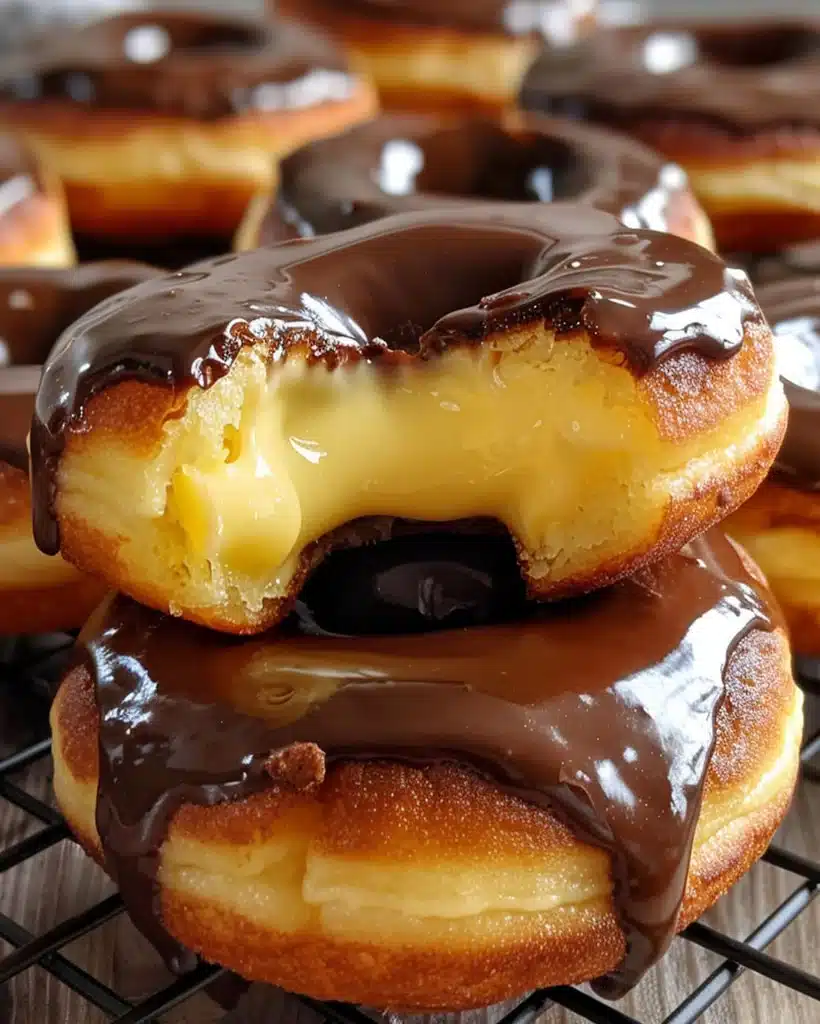
Imagine biting into a perfectly fluffy, golden-brown donut filled with silky vanilla custard and topped with a glossy chocolate glaze. This is the magic of a classic Boston cream donut. Our homemade Boston cream donuts recipe brings that iconic bakery experience right into your kitchen. Furthermore, you will find the process surprisingly approachable. Ultimately, the reward of a fresh, warm donut you made yourself is simply unbeatable.
The journey to perfect homemade Boston cream donuts involves three distinct components: a tender yeast-raised donut, a rich pastry cream, and a shiny chocolate ganache. Each element is simple on its own, yet together they create a symphony of textures and flavors. Specifically, the contrast between the airy dough, the cool, creamy filling, and the bittersweet chocolate shell is what makes this dessert legendary. Consequently, mastering this recipe will give you serious bragging rights at any brunch or gathering.
Forget the dry, overly sweet versions from the grocery store. Our homemade Boston cream donuts recipe guarantees a fresh, high-quality treat. The aroma of yeast dough frying will fill your home with an irresistible warmth. Meanwhile, the act of piping the creamy custard into the center is deeply satisfying. In short, this recipe is a project worth undertaking for anyone who loves the art of baking.
Quick Recipe Highlights
- Flavor Profile: These homemade Boston cream donuts offer a beautiful balance. The sweet, vanilla-forward pastry cream complements the slightly yeasty, fried dough perfectly. Finally, a semi-sweet chocolate glaze adds a sophisticated, bittersweet finish that prevents the dessert from being cloying.
- Texture: The texture journey is key. You get a crisp, delicate exterior from the fried dough that gives way to an incredibly soft and airy interior. Subsequently, you encounter the lush, thick, and smooth vanilla custard filling. The entire experience is capped by the firm, snap of the chocolate coating.
- Aroma: The scent profile is intoxicating. First, the yeast dough proofs with a warm, bready fragrance. Then, frying introduces deep, comforting notes. The vanilla custard adds a sweet, comforting aroma, while the melted chocolate provides a final rich, decadent scent.
- Visual Appeal: These donuts are stunning. They boast a perfect ring shape with a golden-brown fry. A telltale dollop of chocolate on top and a discreet filling hole hint at the treasure inside. When sliced open, the clean line of yellow custard against the white crumb is a classic, beautiful sight.
- Skill Level Needed: This recipe is intermediate. It requires comfort with yeast doughs, frying, and making a stovetop custard. However, the steps are broken down clearly. Therefore, a confident beginner with patience can absolutely achieve fantastic results.
- Special Equipment: You will need a few key tools. A stand mixer with a dough hook makes the dough easy, and a candy/deep-fry thermometer is non-negotiable for perfect frying temperature. Additionally, a piping bag with a long tip is essential for filling the donuts cleanly.
Recipe Overview
- Difficulty Level: We rate these homemade Boston cream donuts as intermediate. The reason involves managing multiple components—a yeasted dough that requires proofing, a custard that needs careful tempering, and the technique of frying. However, each step is straightforward with clear instructions. Consequently, the challenge is in organization and timing, not complex culinary skill.
- Category: This recipe falls squarely into the dessert and sweet pastry category. It is a classic fried dough treat, often enjoyed for breakfast or as an afternoon snack. Moreover, it serves as a celebratory centerpiece for weekend brunches, potlucks, or holiday mornings.
- Cuisine: The Boston cream donut is a distinctly American pastry, with its roots in the Boston cream pie. It reflects the innovation of New England baking traditions. While doughnuts have global origins, this specific filled and glazed version is a U.S. bakery staple.
- Cost: Making homemade Boston cream donuts is cost-effective compared to buying a dozen from a high-end bakery. Basic ingredients like flour, milk, eggs, and sugar are pantry staples. The main cost comes from oil for frying and good quality chocolate for the glaze. Overall, you get a premium product for a fraction of the price.
- Season: These donuts are truly a year-round treat. They feel cozy and indulgent in the fall and winter. Conversely, they are a bright, sweet delight in the spring and summer. There is no wrong time for a perfect Boston cream donut.
- Occasion: They are perfect for special weekend breakfasts, birthday celebrations, or as a impressive contribution to a bake sale or office party. Essentially, any time you want to show off your baking skills and treat loved ones, this recipe fits the occasion.
Why You’ll Love This Recipe
First and foremost, the taste and texture of these homemade Boston cream donuts are far superior to store-bought. You control the quality of every ingredient, from the real vanilla bean in the custard to the type of chocolate in the glaze. The donut itself is lighter and less greasy than commercial versions. Furthermore, the custard filling is lush and not overly sweet, providing a perfect contrast to the rich chocolate. Every bite is a harmonious blend of soft, creamy, and crisp textures that is incredibly satisfying.
Next, consider the convenience and preparation benefits. While the recipe has several steps, they can be broken up over time. For instance, you can make the pastry cream a day ahead. This makes the final assembly much quicker. Additionally, frying donuts at home fills your kitchen with an amazing aroma and creates a fun, interactive cooking experience. The process is rewarding and allows for customization, like making the glaze darker or the filling more vanilla-forward.
From a nutritional perspective, homemade always wins. You eliminate the preservatives, artificial flavors, and high-fructose corn syrup common in mass-produced donuts. You can use organic dairy and eggs, and adjust the sugar level slightly if desired. While still a treat, knowing exactly what goes into your food provides peace of mind. Moreover, sharing something made with care and real ingredients feels more nourishing for the soul.
The social and entertaining value of this recipe is immense. Presenting a platter of freshly made homemade Boston cream donuts is guaranteed to impress guests. They spark conversation and nostalgia. Baking them can also be a fun family activity, with tasks like cutting out dough circles or filling the donuts. It creates a memorable experience centered around creating and enjoying food together, which is priceless.
Finally, these donuts are cost-effective and accessible. A dozen gourmet Boston cream donuts from a specialty shop can be very expensive. This recipe yields the same quantity for a fraction of the cost. The ingredients are common and easy to find at any grocery store. Therefore, you can enjoy a luxurious bakery-style treat regularly without breaking the bank. The skill you gain is an invaluable bonus.
Historical Background and Cultural Significance
The origin story of the Boston cream donut is intrinsically linked to the Boston cream pie. In 1856, French chef M. Sanzian at Boston’s Parker House Hotel created the original Boston cream pie. It was a two-layer sponge cake filled with custard and topped with chocolate glaze. This dessert became a New England icon. Later, innovative bakers took the core concept—custard and chocolate—and applied it to the popular American doughnut. This transformation created a portable, handheld version of the classic dessert.
The cultural importance of this treat is significant. The Boston cream pie was declared the official state dessert of Massachusetts in 1996. Consequently, the donut version carries that same regional pride. It represents a piece of American culinary history, blending French pastry techniques (the custard) with a beloved American fried dough format. It is a staple in doughnut shops across the nation, a familiar and comforting sight in bakery cases from coast to coast.
The evolution of the recipe showcases American ingenuity. Bakers are always adapting and reinventing. The shift from a pie to a donut made the dessert more convenient and snackable. Over time, variations emerged, like Boston cream cakes, cupcakes, and even Boston cream whoopie pies. However, the homemade Boston cream donut remains the most iconic and popular iteration. Its perfect ratio of dough to filling to glaze is hard to improve upon.
Regional variations are subtle but interesting. Some bakeries use a vanilla pudding instead of a true pastry cream for the filling, resulting in a lighter, less rich texture. Others might top the donut with a chocolate icing that hardens versus a ganache that stays slightly soft. In some parts of the country, you might find a “Boston cream” flavor applied to other pastries, like croissants or danishes. Yet, the classic yeast-raised, filled, and chocolate-dipped donut remains the gold standard.
Ingredient Deep Dive
Let’s start with bread flour. Bread flour has a higher protein content (12-14%) than all-purpose flour. This protein forms more gluten when kneaded, giving the donut dough its essential structure and chew. It helps the donuts rise tall and maintain their shape during proofing and frying. Without this strength, your donuts might be dense or flat. If you only have all-purpose flour, you can use it, but the texture will be slightly more tender and less robust.
Whole milk is crucial for both the dough and the pastry cream. In the dough, the fat in milk enriches the dough, leading to a softer crumb and better browning. In the pastry cream, milk is the liquid base that gets thickened by the egg yolks and cornstarch. Using whole milk ensures the custard is luxuriously creamy and rich. Lower-fat milks will result in a thinner, less flavorful filling. For the best results, do not substitute the milk in this recipe.
Instant yeast is our leavening agent of choice for its convenience. It can be mixed directly into the dry ingredients without needing to be dissolved in water first. It acts quickly, helping the dough double in size in about an hour. This yeast is responsible for the light, airy holes in the finished donut. Ensure your yeast is fresh for the best rise. If you only have active dry yeast, you can use it by dissolving it in the warmed milk at the beginning.
Egg yolks are the superstar of the pastry cream. They provide richness, flavor, and most importantly, act as a thickening agent when cooked. The proteins in the yolks coagulate, setting the custard. They also give it that beautiful sunny yellow color. Using high-quality, fresh eggs is key for both safety and taste. The yolks from the dough also contribute to a tender, golden-brown crust when fried.
Semi-sweet chocolate for the glaze is the perfect choice. Its balanced sugar content prevents the donut from becoming overwhelmingly sweet. When melted with heavy cream, it creates a smooth, pourable ganache that sets with a slight snap. You can use chocolate chips in a pinch, but a bar of good quality baking chocolate will melt more smoothly and provide a superior flavor. This chocolate layer is the signature finish that makes a Boston cream donut instantly recognizable.
Common Mistakes to Avoid
- Killing the Yeast: Adding salt directly to the yeast or using liquid that is too hot will kill the yeast. Always mix the salt with the flour first, and ensure your milk is just warm to the touch (about 110°F).
- Overproofing the Dough: Letting the dough rise too long makes it unstable. It will collapse when handled or fried, leading to dense, oily donuts. Look for the dough to just double in size, not triple.
- Incorrect Frying Temperature: This is the most critical error. Oil that’s too cool makes greasy, soggy donuts. Oil that’s too hot burns the outside before the inside cooks. Use a thermometer and maintain 350-360°F.
- Overcrowding the Fry Pot: Adding too many donuts at once causes the oil temperature to plummet. Fry in small batches, usually 2-3 donuts at a time, to maintain consistent heat.
- Undercooking the Pastry Cream: Not cooking the custard long enough after it thickens leaves a starchy, floury taste. Cook for a full 1-2 minutes of bubbling to cook out the cornstarch flavor.
- Not Chilling the Custard Thoroughly: Attempting to fill donuts with warm custard is disastrous. It will be too runny and melt the dough. Chill it completely, for at least 4 hours or overnight, until it’s very firm.
- Filling Donuts While They Are Hot: Hot donuts will melt the custard. Let them cool completely on a rack before attempting to fill them. Otherwise, you’ll have a messy, liquidy center.
- Applying Glaze to Warm Donuts: If the donuts are even slightly warm, the chocolate glaze will melt and slide off instead of setting into a beautiful shell. Patience is key.
- Using a Dull Cutter: A dull tool will pinch and seal the edges of your dough circles, inhibiting their rise. Use a sharp biscuit cutter or the open end of a drinking glass.
- Skipping the Paper Towel Step: Not draining the fried donuts on a paper towel-lined rack leaves excess oil on the surface, making them greasy. Always let them drain properly.
Essential Techniques
Kneading the dough properly is fundamental. You need to develop the gluten network in the bread flour. This gives the dough the strength to trap the gases produced by the yeast, resulting in a light and airy texture. Knead in a stand mixer for 6-8 minutes on medium speed until the dough is smooth, elastic, and pulls away from the bowl’s sides. The windowpane test is a good indicator: take a small piece of dough and gently stretch it. If you can see light through it without it tearing immediately, it’s ready.
Making pastry cream requires careful tempering. This technique prevents the egg yolks from scrambling when hot milk is added. Whisk your egg yolk-sugar-cornstarch mixture well. Then, slowly drizzle in about half of the hot milk while whisking constantly. This gradually raises the temperature of the eggs. Finally, pour the tempered egg mixture back into the pot with the remaining hot milk. Now you can cook it over medium heat, whisking constantly, until it thickens into a lush custard.
Maintaining proper fry temperature is non-negotiable. Use a deep-fry or candy thermometer clipped to the side of your pot. Heat the oil slowly to 360°F. When you add the cold dough, the temperature will drop. Adjust the heat to bring it back to and hold at 350°F. Fry the donuts for 60-90 seconds per side until they are a deep golden brown. Consistent temperature ensures the donuts cook through evenly and absorb minimal oil.
Filling the donuts cleanly is the final technique. Use a piping bag fitted with a long, narrow tip (like a Bismarck tip). First, use a skewer or chopstick to poke a hole into the side of the cooled donut and wiggle it gently to create a small cavity inside. Insert the piping tip deep into the center. Squeeze firmly until you feel a slight resistance, indicating the donut is full. A small amount of custard might peek out of the hole; just wipe it away.
Pro Tips for Perfect Homemade Boston Cream Donuts
Proof your dough in a slightly warm, draft-free environment. The turned-off oven with the light on is perfect. This consistent, gentle warmth helps the yeast work efficiently for an even rise.
Use a spider strainer or slotted spoon to gently flip and remove the donuts from the hot oil. This gives you more control than tongs, which can pinch and deflate the delicate dough.
For extra flavor, steep a split vanilla bean in the milk for the pastry cream, or add a teaspoon of good vanilla bean paste to the finished custard along with the extract.
Let your oil come back to temperature fully between batches. Dropping dough into oil that’s too cool is the main cause of greasy donuts. Be patient.
If your chocolate glaze is too thick to dip, add warm cream a teaspoon at a time. If it’s too thin, add a bit more chopped chocolate or let it cool slightly to thicken.
For a professional look, after dipping the top in chocolate, hold the donut over the bowl and twist your wrist slightly to let the excess glaze drip off in a neat spiral.
Make the pastry cream the day before. Not only does this save time, but a long, thorough chill makes it firmer and much easier to pipe without leaking.
Keep unfilled, unglazed donuts in an airtight container at room temperature for a day. Fill and glaze them just a few hours before serving for the best texture.
Variations and Adaptations
For regional variations, some New England bakeries use a donut that is almost like a sweet brioche, richer with more butter and eggs. You could add an extra egg yolk to the dough for this effect. In other areas, a cake donut base is used instead of yeast, offering a denser, more crumbly texture. Simply substitute your favorite cake donut recipe for the yeast dough in this homemade Boston cream donuts guide.
Seasonal adaptations are fun. In fall, add a pinch of cinnamon or pumpkin pie spice to the dough. For a winter holiday twist, flavor the pastry cream with a hint of eggnog or peppermint extract and crush candy canes over the chocolate glaze. In spring, fold a handful of lemon zest into the custard for a bright, citrusy note.
Dietary modifications are straightforward. For gluten-free donuts, use a 1:1 gluten-free flour blend with xanthan gum in the dough. For dairy-free, use plant-based milk and butter in the dough, and coconut milk with a dairy-free butter substitute for the pastry cream. Use a high-quality dairy-free chocolate for the glaze.
Flavor variations can personalize your batch. Add a tablespoon of instant espresso powder to the chocolate glaze for a mocha twist. Infuse the milk for the custard with Earl Grey tea or lavender. Swap the vanilla custard for a chocolate or peanut butter pastry cream. The possibilities are endless once you master the basic technique of these homemade Boston cream donuts.
Serving and Presentation Guide
Plating techniques matter. For a classic bakery presentation, arrange the donuts on a simple white platter or a wooden board. Space them out so the chocolate glaze doesn’t stick together. If serving individually, place each donut on a small square of parchment paper or a decorative paper doily. This makes them easy to pick up and looks professional.
Garnishing ideas can elevate your presentation. A light dusting of powdered sugar over the chocolate looks elegant. You can also sprinkle finely chopped toasted nuts (like almonds or hazelnuts) on the wet glaze so they adhere. For a special occasion, add edible gold leaf flakes or colorful sprinkles. A few fresh berries on the side of the platter add color and a fresh contrast.
Traditional accompaniments are coffee and milk. A strong cup of black coffee or a latte cuts through the sweetness perfectly. Cold milk is a classic, nostalgic pairing. For a brunch spread, serve these homemade Boston cream donuts alongside fresh fruit salad, crispy bacon, and savory egg dishes to balance the meal.
Modern serving suggestions include deconstructing the donut. Serve the components in a parfait glass: layers of donut crumbles, pastry cream, and chocolate sauce. Alternatively, make mini donut holes using a small cutter, fill them, and dip them in chocolate for a bite-sized party appetizer. They are perfect for grazing tables.
Wine and Beverage Pairing
Wine pairings should complement the dessert’s richness. A late-harvest Riesling or a Moscato d’Asti works beautifully. Their bright acidity and honeyed fruit flavors contrast the chocolate and custard without overpowering them. A creamy, nutty Tawny Port is another excellent choice, as its caramel notes mirror the fried dough and vanilla. Avoid dry, tannic red wines, as they will clash with the sweetness.
Non-alcoholic alternatives are just as important. A cold glass of whole milk is the ultimate classic pairing. For a coffee shop feel, a vanilla latte or a mocha highlights the flavors in the donut. Sparkling water with a twist of orange or lemon cleanses the palate between bites. A chai tea latte, with its warm spices, also makes a wonderful companion to these homemade Boston cream donuts.
Coffee and tea pairings are essential. A medium-roast drip coffee or Americano provides a bitter balance to the sweet pastry. An espresso shot is a sophisticated match. For tea, choose a strong black tea like English Breakfast or Earl Grey. The bergamot in Earl Grey pairs exceptionally well with the vanilla custard. Serve all beverages hot to contrast the cool filling.
Storage and Shelf Life
Storage methods are crucial for maintaining quality. Unfilled, unglazed donuts can be stored in an airtight container at room temperature for 1 day. Once filled and glazed, they are best enjoyed within 4-6 hours. The moisture from the custard will start to soften the dough and make the glaze sticky. Therefore, plan your preparation timeline accordingly for the freshest experience.
Refrigeration is not recommended for assembled donuts. The cold temperature causes the starchy dough to harden and become stale faster. It also can cause the chocolate glaze to “sweat” and become dull when brought back to room temperature. The pastry cream itself must always be refrigerated, but the final product is meant to be eaten fresh.
Signs of spoilage are usually obvious. If the custard develops an off smell, a sour taste, or visible mold, discard the donut immediately. A fried donut that has been stored improperly may also develop a rancid odor from the oil. Because of the dairy-based filling, it’s always better to err on the side of caution and not keep assembled homemade Boston cream donuts for more than a day.
Freezing guidelines apply only to components, not the finished donut. You can freeze the unfried, proofed dough circles on a parchment-lined sheet, then transfer to a freezer bag for up to 2 months. Thaw in the refrigerator overnight, then let come to room temperature before frying. The pastry cream does not freeze well, as it will separate and become grainy when thawed.
Make Ahead Strategies
A prep timeline is your best friend. Day 1: Make the pastry cream and chill overnight. Day 2: In the morning, make and proof the dough, fry the donuts, and let them cool. In the afternoon, fill and glaze them a few hours before your event. This spreads the work out and ensures every component is at its peak.
Storage between steps is simple. Keep the chilled pastry cream in a covered bowl with plastic wrap pressed directly on its surface. Store the cooled, unfried dough (after the first rise) wrapped in the refrigerator for up to 24 hours if needed. Let it come to room temperature before shaping and doing the second proof.
Quality impact assessment is important. Making the custard ahead greatly improves its flavor and thickness. Frying donuts ahead and storing them unfilled is acceptable, but they are best the same day. The final assembly should always be done as close to serving as possible for the ideal textural contrast in your homemade Boston cream donuts.
Scaling Instructions
Halving the recipe is easy for a smaller batch. Simply divide all ingredient quantities by two. Use a medium saucepan for the smaller amount of pastry cream, as it will cook faster. Fry in even smaller batches (1-2 donuts at a time) to prevent the oil temperature from fluctuating too much in a large pot. All proofing times will remain roughly the same.
Doubling or tripling the recipe for a crowd requires planning. Use a very large bowl or your stand mixer’s largest bowl for the dough. You may need to knead the dough in two batches. For the pastry cream, it’s safer to make two separate batches rather than one enormous one, as it will cook unevenly. Have a large cooling station ready with multiple racks and paper towels for the fried donuts.
Equipment adjustments are necessary when scaling. For a double batch, you may need a larger Dutch oven or fryer to maintain oil temperature with more donuts. Have multiple piping bags ready if you’re filling many donuts. Ensure you have enough sheet pans and parchment paper for proofing all the dough circles without them touching.
Nutritional Deep Dive
A macro breakdown for one homemade Boston cream donut is approximately: 320-350 calories, 15-18g of fat (from the frying oil, egg yolks, and cream), 40-45g of carbohydrates (from flour and sugar), and 6-8g of protein (from flour, milk, and eggs). This is a energy-dense treat, with most calories coming from fats and refined carbohydrates. It is designed for occasional enjoyment as part of a balanced diet.
Micronutrient analysis shows contributions from several ingredients. Egg yolks provide Vitamin A, D, E, and B12, along with choline. Milk contributes calcium and Vitamin D. However, the high sugar and fat content overshadow these benefits. The key is to view this as a dessert that provides pleasure and satisfaction, not as a primary source of nutrition.
Health benefits are more about mental well-being than physical. The joy of baking, the satisfaction of creating something beautiful, and the social connection of sharing food have measurable benefits for mood and stress. Using real, whole ingredients as in this homemade Boston cream donuts recipe avoids the artificial additives found in commercial versions, which is a positive choice for your body.
Dietary Adaptations
For gluten-free donuts, use a certified gluten-free 1:1 baking flour blend that contains xanthan gum. The dough may be stickier, so chill it before shaping. Fry carefully, as gluten-free dough can sometimes be more fragile. Ensure all other ingredients (like baking powder) are certified gluten-free.
For dairy-free adaptations, replace the whole milk in the dough and custard with an unsweetened, full-fat plant milk like oat or soy milk. Use a vegan butter substitute. For the pastry cream, a canned full-fat coconut milk works excellently for richness. Use a dairy-free chocolate for the glaze.
For a vegan version, use the dairy-free substitutions above. Replace the egg yolks in the custard with a cornstarch slurry (more cornstarch) or commercial vegan custard powder. For the dough, use a flax egg and ensure your sugar is vegan (not processed with bone char). The frying process itself is vegan-friendly.
Troubleshooting Guide
If your donuts are dense and heavy, the yeast may have been old or killed, the dough may have been overproofed and collapsed, or the oil temperature was too low. Next time, test your yeast, watch proofing times closely, and religiously monitor your fry thermometer.
If the pastry cream is lumpy, you may have added the hot milk too quickly to the eggs, causing them to scramble. To fix it, immediately strain the hot custard through a fine-mesh sieve. This will remove any cooked egg bits. Whisk vigorously as it cools to smooth it out as much as possible.
If the chocolate glaze is too thick or too thin, you can adjust it. Too thick: gently reheat and stir in warm cream, a teaspoon at a time. Too thin: add more finely chopped chocolate and let the residual heat melt it, or let the glaze cool and thicken at room temperature for 10-15 minutes.
If the custard leaks out of the donut, it was likely too warm when piped, the donut was too warm, or you overfilled it. Ensure everything is completely cool. Fill until you feel slight resistance, then stop. A small amount of leakage is normal; wipe it away with a clean finger.
Frequently Asked Questions
Q: Can I bake these donuts instead of frying them?
A: While you can bake donuts, the texture will be fundamentally different—more like a soft bread or cake. Frying creates the characteristic crisp exterior and airy, light interior essential for a true Boston cream donut. For best results, we recommend frying.
Q: How do I know when the oil is at the right temperature?
A: Use a deep-fry or candy thermometer. The ideal temperature is 350-360°F. If you don’t have one, you can test by dropping a small piece of dough into the oil. It should sizzle actively and turn golden brown in about 60 seconds without burning.
Q: Can I use a pre-made custard or pudding?
A: You can use a high-quality store-bought vanilla pastry cream or pudding in a pinch. However, homemade pastry cream has a superior flavor and thicker, more luxurious texture that holds up better inside the donut. The homemade component is worth the effort.
Q: My dough isn’t rising. What went wrong?
A: Your yeast may be expired, the liquid may have been too hot and killed it, or your proofing environment was too cold. Test your yeast in warm water with a pinch of sugar first to ensure it’s active. Proof the dough in a warm, draft-free spot.
Q: How far in advance can I make these?
A: For optimal quality, assemble the donuts no more than 4-6 hours before serving. You can make the pastry cream 1-2 days ahead and fry the donut shells the day before. Store them separately and fill/glaze on the day you plan to eat them.
Q: What’s the best oil for frying donuts?
A: Use an oil with a high smoke point and neutral flavor. Vegetable, canola, peanut, or sunflower oil are all excellent choices. Avoid olive oil or butter, as they have low smoke points and will impart strong flavors.
Q: Can I fill the donuts with something else?
A: Absolutely! Raspberry jam, lemon curd, chocolate hazelnut spread, or even a whipped chocolate mousse make delicious alternatives. Just ensure your filling is thick enough not to leak out and make the donut soggy.
Q: Why did my chocolate glaze turn dull?
A: Dull glaze usually means it was exposed to humidity or refrigerated. The chocolate can “bloom” (sugar or fat rises to the surface). To keep it shiny, glaze at room temperature in a dry environment and do not refrigerate the finished donuts.
Additional Resources
For related recipes, if you love these homemade Boston cream donuts, you might enjoy trying a classic Boston cream pie, custard-filled eclairs, or traditional jelly donuts. Mastering one filled pastry opens the door to many others. Explore recipes that involve yeast doughs and pastry creams to build your confidence and skill set.
Technique guides are invaluable. Look for online video tutorials on “windowpane test for dough,” “how to temper eggs for custard,” and “how to pipe fillings into donuts.” Seeing these steps in action can clarify the written instructions and help you visualize the process, leading to greater success in your baking projects.
PrintBoston Cream Donuts
- Total Time: 45 minutes
- Yield: 12
Description
Classic homemade donuts filled with rich vanilla pastry cream and topped with a smooth chocolate glaze.
Ingredients
- 2 1/4 cups all-purpose flour
- 1/4 cup granulated sugar
- 1 packet active dry yeast
- 1/2 cup warm milk
- 2 large eggs
- 1/4 cup unsalted butter, melted
- 1/2 teaspoon salt
- Vegetable oil for frying
- 1 cup vanilla pastry cream (store-bought or homemade)
- 4 ounces semi-sweet chocolate, chopped
- 1/2 cup heavy cream
- 1 tablespoon light corn syrup
Instructions
- In a bowl, combine warm milk, sugar, and yeast; let sit for 5 minutes until foamy. Mix in eggs, melted butter, and salt. Gradually add flour until a soft dough forms. Knead on a floured surface for 5 minutes, then place in a greased bowl, cover, and let rise for 1 hour.
- Roll out dough to 1/2-inch thickness and cut into 3-inch rounds. Place on a baking sheet, cover, and let rise for 30 minutes. Heat oil in a deep pot to 350°F (175°C). Fry donuts for 1-2 minutes per side until golden. Drain on paper towels.
- Fill a piping bag with pastry cream and inject into the side of each cooled donut. For the glaze, heat heavy cream until simmering, pour over chocolate and corn syrup, and stir until smooth. Dip the top of each donut in the glaze, let set, and serve.
Notes
You can customize the seasonings to taste.
- Prep Time: 15 minutes
- Cook Time: 30 minutes
- Method: Dessert
- Cuisine: American