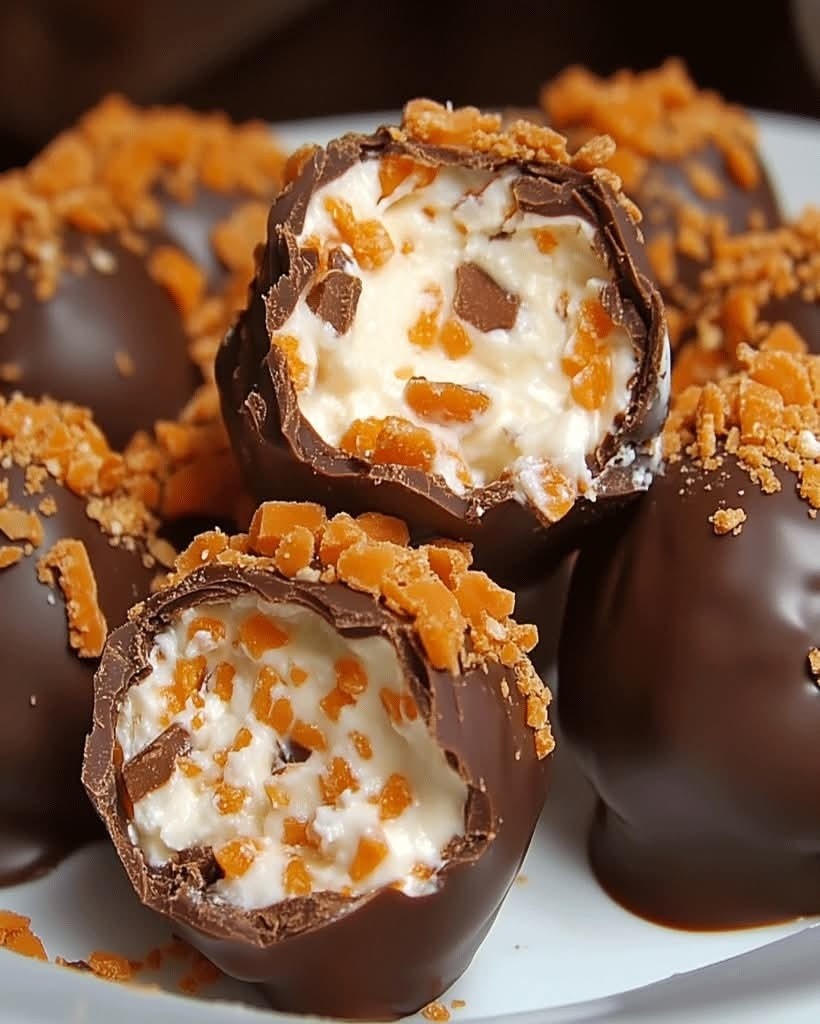
Butterfinger Truffles: Easy Chocolate Caramel Crunch Bites
Imagine a dessert that delivers the iconic flavor of a Butterfinger candy bar in a sophisticated, bite-sized truffle. These Butterfinger Truffles are exactly that. They combine a creamy, peanut-buttery center with a satisfying crunch, all enveloped in a smooth layer of rich chocolate. Consequently, they offer a perfect balance of textures and flavors in every single bite. This recipe transforms simple ingredients into an impressive treat that looks and tastes like it came from a professional chocolatier.
Furthermore, these easy chocolate caramel crunch bites require no baking and minimal effort. You simply mix, shape, dip, and enjoy. They are the ultimate no-fuss dessert for busy hosts or anyone with a sweet tooth. The process is straightforward and fun, making it a fantastic activity to do with kids or friends. Ultimately, you end up with a stunning platter of homemade candies that are guaranteed to earn compliments at any gathering.
Best of all, these truffles capture the nostalgic taste of the classic candy. The combination of peanut butter, crushed Butterfinger bars, and a hint of caramel creates a deeply familiar and comforting flavor profile. Meanwhile, the chocolate coating adds a layer of decadence that elevates the entire experience. Whether you need a quick party dessert, a homemade gift, or just a special treat for yourself, this recipe delivers incredible results with ease.
Quick Recipe Highlights
- Flavor Profile: These Butterfinger Truffles deliver a powerful peanut butter and chocolate combination. The center boasts a rich, buttery peanut flavor with notes of caramelized sugar. Additionally, the dark or milk chocolate coating provides a bittersweet contrast that perfectly complements the sweet, nutty filling.
- Texture: The texture is a delightful play of contrasts. You get a smooth, creamy peanut butter base from the cream cheese. Then, you experience the fantastic crunchy bits of Butterfinger candy throughout. Finally, the firm snap of the chocolate shell gives way to the soft interior.
- Aroma: As you make these truffles, the kitchen fills with the warm, inviting scent of roasted peanuts and melted chocolate. The aroma is sweet and nutty, reminiscent of a candy shop. It’s a scent that promises a delicious treat is moments away.
- Visual Appeal: These truffles have a beautiful, professional appearance. The glossy chocolate shell looks elegant, while the golden sprinkles of crushed Butterfinger on top hint at the crunch inside. They are uniform and neat, making them perfect for gift boxes or a decorative dessert platter.
- Skill Level Needed: This is a beginner-friendly recipe. It requires no special pastry skills, no baking, and no complicated techniques. Essentially, if you can mix ingredients and roll a ball, you can master these Butterfinger Truffles. It’s a great confidence-builder for new cooks.
- Special Equipment: You need only basic kitchen tools. A mixing bowl, a hand mixer or sturdy spoon, a baking sheet, and parchment paper are the essentials. For dipping, a fork or specialty dipping tools are helpful but not mandatory. A microwave or double boiler is needed for melting the chocolate smoothly.
Recipe Overview
- Difficulty Level: We rate these Butterfinger Truffles as easy. The steps are simple and sequential, with no complex techniques involved. The most challenging part, melting chocolate, has straightforward methods to ensure success. Therefore, even a first-time candy maker can achieve excellent results without stress.
- Category: This recipe falls squarely into the dessert and candy categories. It’s a perfect no-bake dessert option, ideal for potlucks, parties, and holiday trays. Moreover, it fits well within the realm of homemade confections and edible gifts.
- Cuisine: While not tied to a specific traditional cuisine, these truffles are a classic American treat. They draw inspiration from the beloved Butterfinger candy bar, an iconic American snack. The use of cream cheese and peanut butter is also common in many modern American dessert recipes.
- Cost: Making these Butterfinger Truffles at home is surprisingly cost-effective. The primary cost comes from the chocolate and the Butterfinger bars. Compared to buying similar gourmet truffles from a store, this recipe offers significant savings. You can easily make dozens of truffles for the price of a small box from a chocolatier.
- Season: These truffles are fantastic year-round. They are particularly popular during the holidays for gift-giving and festive trays. However, their no-bake nature also makes them a perfect summer dessert when you don’t want to turn on the oven. They are truly an all-season treat.
- Occasion: These are incredibly versatile for any occasion. They are perfect for birthday parties, baby showers, and holiday gatherings. Furthermore, they make thoughtful homemade gifts for teachers, neighbors, or friends. Pack them in a cute box or tin for a personal touch.
Why You’ll Love This Recipe
First and foremost, the taste and texture of these Butterfinger Truffles are utterly irresistible. The creamy peanut butter center, loaded with crunchy candy bits, creates a symphony in your mouth. Then, the rich chocolate coating adds a layer of sophistication that makes each bite feel indulgent. The flavor is intensely satisfying, hitting all the right notes of sweet, salty, and nutty. Consequently, these truffles satisfy cravings in a way that few other simple desserts can.
Another major benefit is the sheer convenience of this recipe. You don’t need to preheat an oven or wait for anything to bake and cool. The entire process, from mixing to setting, takes less than an hour of active time. Moreover, you can make them ahead of time and store them, which simplifies party planning immensely. This makes them a lifesaver for last-minute events or unexpected guests.
While these are a treat, you can also appreciate having control over the ingredients. You choose the quality of chocolate and peanut butter you use. For instance, you can opt for dark chocolate with a higher cocoa content for a less sweet, more antioxidant-rich option. You can also use natural peanut butter if you prefer. This control allows for slight customizations that align with your preferences.
The social and entertaining value of these truffles is exceptionally high. A plate of beautifully dipped, homemade candies impresses everyone. They spark conversation and show that you put care into your hosting. Additionally, they are easy for guests to eat without utensils, making them perfect for cocktail parties or stand-up gatherings. People always remember the host who serves amazing homemade treats.
Finally, these Butterfinger Truffles are incredibly cost-effective and accessible. The ingredients are common and easy to find at any grocery store. You likely have many of them in your pantry already. Compared to the cost of buying gourmet truffles, making a large batch at home is very economical. This accessibility means you can enjoy a luxurious-tasting dessert without a luxurious price tag.
Historical Background and Cultural Significance
The origin story of these truffles is rooted in the American love for the Butterfinger candy bar itself. The Butterfinger bar was introduced by the Curtiss Candy Company in 1923. Its name was famously chosen through a public contest, promising a cash prize to the winner. The unique “crispety, crunchety, peanut-buttery” texture and flavor quickly made it a national favorite. Our truffle recipe is a modern, homemade homage to this classic candy, deconstructing its elements into a elegant, bite-sized form.
Culturally, the Butterfinger bar holds a significant place in American snack history. It has been featured in decades of advertising, most memorably with cartoon mascots and later, tie-ins with shows like The Simpsons. Consequently, the flavor profile evokes a strong sense of nostalgia for many people. Transforming this everyday candy into a truffle elevates it from a casual snack to a special occasion treat. It bridges the gap between childhood nostalgia and adult dessert sophistication.
The evolution of the truffle recipe format is also interesting. Traditional French chocolate truffles are made with a ganache center. This recipe, however, represents a more Americanized, simplified approach using cream cheese as a binder. This style of “no-bake truffle” or “candy ball” became hugely popular in home kitchens in the late 20th century. It democratized candy making, allowing home cooks to create beautiful confections without specialized training or equipment.
Regarding regional variations, the core concept is adaptable worldwide. In different regions, one might substitute the Butterfinger bar with a local peanut-based crunchy candy. The peanut butter and cream cheese base, however, is a distinctly American combination. This recipe’s beauty lies in its flexibility; it provides a template that can be customized with local ingredients while maintaining its essential character as an easy, impressive homemade candy.
Ingredient Deep Dive
Let’s start with the star: Butterfinger candy bars. This iconic American candy was created to have a unique flaky, crunchy texture that differs from other peanut butter candies. The process involves layering peanut butter and a crispy, honeycombed toffee-like center. For our truffles, they provide the essential crunch and that signature flavor. When selecting them, fresh bars are best for maximum crispness. For storage, keep them in a cool, dry place to prevent the candy from becoming sticky or stale.
Peanut butter is the soul of the filling. It provides the creamy, nutty base that binds the crushed candy together. From a nutritional standpoint, peanut butter offers protein, healthy fats, and vitamins like Vitamin E. For this recipe, using a standard commercial creamy peanut butter (not the natural kind that separates) works best because of its consistent texture and sweetness. It blends smoothly with the cream cheese. If you need a substitution due to allergies, sunflower seed butter can work, though it will alter the classic flavor.
Cream cheese is the secret weapon that creates the perfect truffle texture. It adds a slight tang that balances the sweetness and gives the filling a smooth, rollable consistency. Historically, cream cheese is a young cheese, invented in the United States in the late 1800s. Ensure your cream cheese is fully softened to room temperature before mixing. This prevents lumps and ensures a silky, homogeneous filling. Full-fat cream cheese is recommended for the best texture and flavor.
The chocolate coating is what transforms these from simple candy balls into elegant truffles. Chocolate has a rich history dating back to ancient Mesoamerican cultures. For dipping, using high-quality chocolate chips or baking bars is crucial, as they contain stabilizers that help them melt smoothly and set firmly. Couverture chocolate is the professional choice for a super glossy finish. When melting, do so gently to avoid seizing. Properly tempered chocolate will give your Butterfinger Truffles a beautiful snap and sheen.
Common Mistakes to Avoid
- Using Cold Cream Cheese: This is a top mistake. Cold cream cheese will not blend smoothly, leaving lumps in your filling. Always ensure your cream cheese has sat out until it’s completely soft at room temperature for easy mixing.
- Overcrushing the Candy Bars: You want distinct crunchy bits, not fine dust. Pulse the Butterfingers in a food processor or place them in a bag and crush with a rolling pin. The goal is small, pea-sized pieces for the best texture contrast.
- Rushing the Chilling Steps: After mixing, the dough must be firm enough to roll. If you skip chilling it, the mixture will be too sticky. Similarly, after rolling, chill the balls again so they are cold and firm before dipping, which helps the chocolate set quickly.
- Melting Chocolate Incorrectly: Melting chocolate over direct, high heat will cause it to seize into a grainy lump. Always use a double boiler or microwave in short bursts at 50% power, stirring frequently between intervals.
- Adding Liquid to Chocolate: Be careful not to let any steam or water droplets get into your melting chocolate. Even a tiny amount of moisture can cause the chocolate to seize. Ensure all your tools are completely dry.
- Dipping Warm Truffle Balls: If the centers are not chilled, they will start to melt when dipped into the warm chocolate. This can cause the chocolate to bloom (get white streaks) and make a mess. A cold center is key for a clean dip.
- Not Tapping Off Excess Chocolate: When you lift a truffle out of the melted chocolate, gently tap your fork or tool on the side of the bowl. This removes excess chocolate for a neater, thinner shell and prevents a messy chocolate puddle underneath.
- Skipping the Topping Garnish: Adding the final sprinkle of crushed Butterfinger on top of the wet chocolate is not just decorative. It signals what’s inside and adds an extra textural element. Do it immediately after dipping each truffle before the chocolate sets.
Essential Techniques
Properly crushing the Butterfinger bars is your first essential technique. You want pieces that are small enough to distribute evenly but large enough to provide a satisfying crunch. The best method is to place whole bars in a sealed plastic bag and use a rolling pin to crush them. Alternatively, pulse them in a food processor a few times. Avoid over-processing into a powder. This technique ensures every bite of your Butterfinger Truffles has that iconic crispy texture.
Thoroughly combining the filling is another critical step. You must beat the cream cheese and peanut butter together until they are completely smooth and uniform. Any lumps of cream cheese will be noticeable in the final texture. Use a hand mixer on medium speed or a sturdy spatula and some elbow grease. Scrape down the sides of the bowl frequently. This technique creates the creamy, cohesive base that holds the candy pieces together.
Melting the chocolate is arguably the most important technique for a beautiful finish. The gentle, indirect heat of a double boiler is foolproof. Simply place a heatproof bowl over a pot of simmering water, ensuring the bowl doesn’t touch the water. Stir the chocolate constantly until it’s just melted and smooth. If using a microwave, heat in 30-second bursts at 50% power, stirring well after each interval. This prevents the chocolate from burning or seizing.
The dipping technique itself defines the truffle’s appearance. Use a fork or a specialty dipping tool. Drop a chilled truffle ball into the melted chocolate. Use the fork to roll it around, then lift it out, letting the excess chocolate drip back into the bowl. Gently tap the fork on the rim of the bowl to remove more excess. Then, slide the truffle off the fork onto a parchment-lined sheet. Mastering this motion gives you a smooth, even, professional-looking coating.
Pro Tips for Perfect Butterfinger Truffles
Use a small cookie scoop to portion the filling. This ensures all your Butterfinger Truffles are uniformly sized, which looks more professional and ensures even setting. A one-inch diameter scoop is typically perfect.
Roll the chilled mixture between your palms quickly. The heat from your hands can soften the dough. If it becomes too sticky, pop it back in the fridge for five minutes to firm up again.
For an extra-thin, professional chocolate shell, consider thinning your melted chocolate with a teaspoon of coconut oil or vegetable shortening. This makes it easier to coat and gives a beautiful snap.
Keep a bowl of hot water nearby when dipping. If chocolate starts to harden on your fork or tools, simply dip them in the hot water and dry them quickly to melt the chocolate off.
After dipping and topping, let the truffles set at cool room temperature. Avoid putting them directly in the refrigerator while the chocolate is wet, as condensation can form and dull the finish.
For gift-giving, consider using different types of chocolate. Dip some in dark chocolate, some in milk chocolate, and even some in white chocolate. This creates a visually stunning and flavorful assortment.
Variations and Adaptations
For regional variations, think about local candy substitutions. In areas where Butterfingers are less common, try using crushed peanut brittle, Skor bars, or even crushed pretzels mixed with peanut butter for a sweet-and-salty crunch. The basic creamy peanut butter and cream cheese base remains wonderfully adaptable.
Seasonal adaptations are easy and fun. For autumn, mix a pinch of pumpkin pie spice into the filling. During the winter holidays, roll the finished truffles in crushed peppermint candy instead of Butterfinger bits. For spring, use pastel-colored candy melts for the coating.
Dietary modifications are straightforward. To make gluten-free Butterfinger Truffles, ensure your Butterfinger bars are a gluten-free variety or use a certified gluten-free crunchy peanut candy. For dairy-free, use a dairy-free cream cheese alternative and dairy-free chocolate chips.
Flavor variations can take this recipe in new directions. Add a tablespoon of instant espresso powder to the filling for a mocha twist. Incorporate a splash of bourbon or rum for an adult version. You could even swap the peanut butter for almond butter or cookie butter for a completely different profile.
Texture modifications are simple. For a smoother truffle, process the Butterfinger bars into a finer crumb. For extra crunch, add a handful of chopped roasted peanuts to the filling. For a surprise inside, place a whole peanut or a small piece of caramel in the center of each ball before rolling.
Presentation alternatives abound. Instead of a full dip, you can drizzle melted chocolate over the rolled balls. Roll the finished truffles in cocoa powder, powdered sugar, or colored sprinkles. Place them in mini paper candy cups for a classic, polished look perfect for a dessert tray.
Serving and Presentation Guide
Plating techniques can elevate your Butterfinger Truffles from simple candy to dessert art. Arrange them on a sleek white platter or a rustic wooden board for visual contrast. Space them evenly in rows or create a casual, clustered pile in the center. For a more formal presentation, place each truffle in a gold or silver foil candy cup. This not only looks elegant but also keeps the chocolates from sticking together.
Garnishing ideas extend beyond the initial Butterfinger sprinkle. Just before serving, a light dusting of flaky sea salt on top enhances the sweet and salty flavors. A delicate drizzle of melted white chocolate or caramel sauce across the plated truffles adds a beautiful finishing touch. You can also add a tiny edible gold leaf flake to each for a truly luxurious presentation.
For traditional accompaniments, coffee is a perfect partner. The bitterness of a strong espresso or a cup of black coffee cuts through the sweetness of the truffles beautifully. A glass of cold milk is a classic, nostalgic pairing that complements the peanut butter and chocolate flavors perfectly, especially for a family-friendly dessert.
Modern serving suggestions include pairing them with a dessert wine. A tawny port or a sweet sherry works wonderfully. For a party, create a DIY truffle bar with different coatings and toppings, allowing guests to customize their own. You can also crumble a truffle over a scoop of vanilla ice cream for an incredible sundae.
Temperature considerations are important. Serve these truffles at cool room temperature. If they are too cold from the refrigerator, the chocolate can be overly hard and the filling too firm. Letting them sit out for 10-15 minutes before serving allows the flavors to bloom and the textures to soften slightly for the best eating experience.
Portion control tips are helpful because these treats are rich. Serving two to three truffles per person is usually sufficient as part of a dessert course. If you’re serving them as part of a larger candy buffet or dessert table, one per person allows guests to sample other items. Their small, rich nature makes them ideal for satisfying a sweet tooth without overindulgence.
Wine and Beverage Pairing
Wine pairings for these rich truffles should focus on balancing sweetness. A late-harvest Riesling or a Moscato d’Asti, with their bright acidity and fruity notes, can cut through the richness. For red wine lovers, a lighter-bodied, fruity red like a Beaujolais or a Lambrusco works surprisingly well. The effervescence of the Lambrusco is particularly refreshing. Avoid very dry or tannic wines, as they can clash with the sweetness of the chocolate and peanut butter.
Non-alcoholic alternatives are just as important. Sparkling apple cider provides a festive, fizzy contrast. A rich, creamy milkshake or a malted milk leans into the indulgent, nostalgic theme. For a more sophisticated option, a chilled glass of almond milk or oat milk offers a nutty flavor that complements the peanut butter beautifully without overwhelming the palate.
Coffee and tea pairings are a natural fit. A dark roast coffee or a straight espresso provides a bitter counterpoint that makes each bite of the truffle taste sweeter. For tea, a strong black tea like English Breakfast or Earl Grey stands up to the bold flavors. A chai tea, with its warm spices, also creates a wonderfully cozy pairing, especially in cooler weather.
Temperature considerations for beverages depend on the season. In summer, iced coffee, cold brew, or an iced chai latte are fantastic. In winter, hot beverages are the way to go. Regardless of temperature, ensure your beverage is served at its ideal drinking temperature to provide the best contrast or complement to the room-temperature truffles.
Serving suggestions for a pairing event are simple. Offer a small flight of options: perhaps a glass of dessert wine, a cup of coffee, and a glass of milk. This allows guests to discover their favorite combination. Always provide water as well to cleanse the palate between tastes, ensuring each truffle and sip is enjoyed to its fullest.
Storage and Shelf Life
Storage methods are straightforward but important for maintaining quality. Once the chocolate coating is fully set, transfer the Butterfinger Truffles to an airtight container. Layer them between sheets of parchment or wax paper to prevent them from sticking together or damaging their delicate chocolate shells. A single layer is best, but if you must stack, be very gentle.
Temperature requirements are specific. Store the container in the refrigerator. The cool, stable environment prevents the chocolate from melting or developing bloom (those white streaks caused by fat separation). The filling, which contains cream cheese, also requires refrigeration for food safety. They will keep their best texture and flavor when chilled.
Container recommendations include glass or plastic food storage containers with tight-fitting lids. Metal tins are also excellent, especially for gifting, as they protect the truffles from light and odors. Avoid storing them near strong-smelling foods in the refrigerator, as chocolate can absorb odors.
Signs of spoilage are rare if stored properly but good to know. If the truffles develop an off smell, a slimy texture on the surface, or visible mold, discard them immediately. The primary concern is the dairy-based cream cheese. Properly stored, however, this should not be an issue within the recommended shelf life.
Reheating instructions are generally not needed, as these are meant to be eaten cool. If they become too cold and hard, simply let them sit at room temperature for 10-15 minutes before serving. Do not microwave them, as this will melt the chocolate and make the filling overly soft.
Freezing guidelines allow for long-term storage. Place the fully set truffles in a single layer on a baking sheet and freeze until solid. Then, transfer them to a heavy-duty freezer bag or airtight container. They can be frozen for up to 2-3 months. Thaw overnight in the refrigerator before serving to prevent condensation from forming on the chocolate.
Make Ahead Strategies
Prep timeline for these truffles is very flexible. You can make the entire recipe, including dipping, up to 3 days in advance. Store them in the refrigerator in an airtight container until ready to serve. This makes them a perfect stress-free dessert for parties and holidays. The flavors even meld and improve slightly after a day.
Storage between steps is also an option. The un-dipped filling balls can be prepared, rolled, and stored on a parchment-lined tray in the refrigerator for up to 2 days before you dip them in chocolate. You can also freeze the un-dipped balls for a month. Simply thaw in the refrigerator before proceeding with the chocolate coating.
Quality impact assessment shows that make-ahead is beneficial. The chilling time allows the peanut butter and cream cheese flavors to fully meld with the Butterfinger pieces. The texture of the candy bits may soften slightly over a few days, but they retain a pleasant crunch. The chocolate shell protects the interior and stays glossy if stored properly.
Assembly tips for a make-ahead schedule: Complete all steps up to and including the initial chill of the rolled balls. The day before your event, melt the chocolate and complete the dipping and topping. This breaks the work into two manageable sessions and ensures the chocolate is as fresh as possible.
Reheating guidelines don’t apply, but “tempering” guidelines do. When taking make-ahead truffles from the refrigerator to serve, let the sealed container sit at room temperature for about 15 minutes before opening. This prevents warm, moist air from hitting the cold chocolate and causing condensation, which can dull the finish.
Fresh element additions are limited, but you can add a final garnish just before serving. A last-minute sprinkle of flaky sea salt or a fresh drizzle of caramel sauce on the plated truffles can add a touch that makes them look freshly made, even if the truffles themselves were prepared days earlier.
Scaling Instructions
Halving the recipe is simple if you need a smaller batch. Simply divide all ingredient quantities by two. The process remains identical. Halving is perfect for a small family treat or testing the recipe. Be mindful that melting a very small amount of chocolate can be tricky; it’s best to melt a bit more than you need to make the dipping process easier.
Doubling or tripling the recipe is excellent for large events or holiday gifting. Multiply all ingredients accordingly. When mixing a large batch, ensure your mixing bowl is large enough. You may need to chill the filling in batches if your refrigerator space is limited. For dipping, work in smaller batches of melted chocolate to keep it at the right consistency.
Equipment adjustments for scaling are minimal. A stand mixer becomes very helpful for doubling or tripling the filling. For very large batches, consider using multiple baking sheets for chilling the rolled balls. Have plenty of parchment paper on hand. A larger melting bowl or multiple melting stations can streamline the dipping process.
Timing modifications are mostly for chilling. A larger batch of filling may require a slightly longer initial chill time to become firm enough to roll. Similarly, you may need to work in sections when rolling and dipping to prevent the filling balls from warming up too much on the counter. Plan for a bit more total hands-on time.
Storage considerations for scaled batches are important. Ensure you have enough airtight containers or gift boxes for the finished truffles. If making for gifts, scale up your packaging supplies as well. A doubled or tripled batch may take up significant refrigerator space, so plan ahead to clear a shelf.
Nutritional Deep Dive
A macro breakdown for one truffle typically shows a balance of fats, carbohydrates, and a small amount of protein. The primary sources are the peanut butter (fats and protein), the candy bars and powdered sugar (carbohydrates), and the chocolate coating (fats and carbs). These are energy-dense treats, with most calories coming from fats and sugars, which is expected for a dessert truffle.
Micronutrient analysis reveals some benefits amidst the indulgence. Peanut butter provides Vitamin E, an antioxidant, and minerals like magnesium. Dark chocolate, if used, contains flavonoids and iron. However, these truffles are not a significant source of vitamins and minerals and should be enjoyed as part of an overall balanced diet.
Health benefits are more about mental satisfaction than physical nutrition. The pleasure of eating a well-made, flavorful treat can be part of a healthy relationship with food. Using dark chocolate with a high cocoa percentage can increase antioxidant content. The protein and fat from peanut butter can also provide more satiety than a purely sugar-based candy.
Dietary considerations are important to note. This recipe contains common allergens: peanuts (in the candy and peanut butter), dairy (cream cheese, chocolate), gluten (in the candy bars), and soy (often in chocolate). Always check labels if serving to people with allergies. The recipe is not suitable for vegan, keto, or low-sugar diets in its standard form.
Portion analysis is key to enjoyment. One truffle is a satisfying serving due to its richness. The small size helps with natural portion control. Compared to eating several full-size candy bars, one or two of these truffles can satisfy a similar craving with more elegance and potentially less overall volume of sugar and fat.
Weight management tips involve mindful enjoyment. Savor one truffle slowly with a cup of tea or coffee instead of eating several quickly. Incorporate them as an occasional treat rather than a daily habit. Making them yourself allows you to control the size, potentially making them slightly smaller if desired.
Dietary Adaptations
For a gluten-free version, the main issue is the Butterfinger bars. Check for a certified gluten-free “crispy peanut butter” candy bar, or use a homemade peanut brittle made with gluten-free ingredients. Ensure all other products, like powdered sugar, are certified gluten-free. The rest of the recipe is naturally gluten-free.
A dairy-free adaptation requires two swaps. Use a high-quality dairy-free cream cheese alternative. For the chocolate coating, use dairy-free chocolate chips or baking bars. Be sure to check the Butterfinger candy bars, as some versions may contain dairy. Many dark chocolates are naturally dairy-free, but always read the label.
Creating a vegan version combines the dairy-free steps with finding a vegan peanut butter candy. This can be challenging, as most commercial ones contain dairy or other animal products. A reliable alternative is to use a vegan peanut brittle or simply increase the amount of peanut butter and add extra crushed peanuts or vegan crispy rice cereal for crunch.
For a low-carb or keto adaptation, significant changes are needed. Replace the powdered sugar with a powdered keto-friendly sweetener like erythritol. Use a sugar-free peanut butter. Omit the Butterfinger bars and replace the crunch with crushed nuts or keto-friendly crispy cereal. Use a sugar-free dark chocolate for the coating. The ratios will need experimentation to achieve the right texture.
A paleo adaptation is complex due to the dairy and processed sugar. Substitute the cream cheese with a paleo-friendly “cream cheese” made from cashews. Use a natural peanut butter (check for no added sugar). Replace the Butterfinger bars with a homemade mixture of crushed nuts, coconut flakes, and a touch of honey. Use a paleo-approved dark chocolate.
Troubleshooting Guide
If your filling is too sticky to roll, the mixture is likely too warm or wasn’t chilled long enough. Solution: Place the bowl of filling back in the refrigerator for another 20-30 minutes. You can also lightly dust your hands with powdered sugar or cocoa powder to prevent sticking while rolling.
If the filling is too dry and crumbly, it may not be binding. Solution: Add more moisture. A teaspoon of milk (or a non-dairy alternative) or a little extra softened cream cheese can be worked in until the mixture holds together when pinched.
If your melted chocolate is thick and clumpy (seized), it likely got too hot or a drop of water got in. Solution: Try rescuing it by stirring in a teaspoon of vegetable oil or shortening until smooth. If that fails, you must start over with new chocolate. Prevention is key: melt gently and keep everything dry.
If the chocolate coating cracks after setting, the truffle centers were likely too cold, causing the chocolate to contract too quickly. Solution: Let the rolled balls sit at room temperature for just 2-3 minutes before dipping to take the extreme chill off. Also, ensure your chocolate isn’t too thick.
If the finished truffles develop white streaks (bloom), it’s a fat or sugar bloom from temperature changes. Solution: They are still safe to eat but less pretty. To prevent, avoid storing them in fluctuating temperatures. Bloom often happens when moving from cold fridge to warm room too quickly. Let them gradually come to temperature in their container.
Recipe Success Stories
Community feedback on this recipe consistently highlights its reliability and crowd-pleasing nature. Many home cooks report that these are the first homemade candies they’ve ever made successfully, which boosted their confidence in the kitchen. Parents love making them with their kids, noting that the rolling and dipping steps are fun and manageable for little hands. The most common comment is that guests never believe how easy they were to make, assuming they came from a specialty shop.
Variation successes from readers are inspiring. One baker created a “salted caramel” version by adding a soft caramel cube to the center of each ball. Another successfully made a completely nut-free version using sunflower seed butter and crushed toffee bits, catering to school allergy policies. A holiday baker shared that rolling them in crushed candy canes made them the hit of her Christmas party.
Adaptation stories often focus on dietary needs. A reader with gluten intolerance was thrilled to find that using a specific gluten-free candy bar worked perfectly. Another, cooking for a vegan friend, used the cashew cream cheese and dairy-free chocolate suggestions with great results, proving the recipe’s versatility. These stories show how a solid base recipe can be a springboard for creativity and inclusion.
Reader suggestions have also improved the recipe over time. One tip that many now swear by is adding a tiny pinch of salt to the peanut butter filling to enhance all the flavors. Another popular suggestion is to use a mixture of dark and milk chocolate for coating, creating a more complex flavor profile. The community’s collective experience is a valuable resource.
Photography tips from successful posters often emphasize natural light. Shooting the truffles on a simple, textured background like marble or wood makes the chocolate pop. Getting a close-up shot that shows the interior crunch is a great way to showcase the texture. Many recommend taking the photo right after the final garnish is added, when the chocolate is still slightly glossy for the most appetizing look.
Frequently Asked Questions
Can I use natural peanut butter? We don’t Print
Butterfinger Chocolate Caramel Crunch Truffles
- Total Time: 45 minutes
- Yield: 24 truffles
Description
Decadent chocolate truffles filled with crushed Butterfinger candy and caramel, coated in a smooth chocolate shell for a satisfying crunch.
Ingredients
- 1 cup crushed Butterfinger candy bars
- 8 oz cream cheese, softened
- 1/2 cup caramel sauce, plus extra for drizzling
- 2 cups semi-sweet chocolate chips
- 1 tbsp coconut oil
- 1/4 cup crushed peanuts for garnish
Instructions
- In a mixing bowl, combine softened cream cheese, crushed Butterfinger, and caramel sauce until well blended.
- Roll the mixture into 1-inch balls and place on a parchment-lined baking sheet. Freeze for 30 minutes.
- Melt chocolate chips with coconut oil in a double boiler or microwave, stirring until smooth. Dip each frozen ball into the chocolate, coating evenly, then return to the baking sheet. Drizzle with extra caramel and sprinkle with crushed peanuts before the chocolate sets.
Notes
You can customize the seasonings to taste.
- Prep Time: 15 minutes
- Cook Time: 30 minutes
- Method: Dessert
- Cuisine: American