Mediterranean Veggie Stack with Feta & Orange Honey: A Tower of Fresh Flavors
Imagine a dish that captures the essence of a sun-drenched Mediterranean coastline on a single plate. This Mediterranean Veggie Stack with Feta and Orange Honey does exactly that. It is a vibrant, layered masterpiece that is as beautiful to look at as it is delicious to eat. Moreover, it transforms simple, wholesome ingredients into an elegant presentation perfect for a light lunch or a stunning dinner party appetizer. The combination of smoky grilled vegetables, creamy feta, and a sweet-tart citrus dressing creates a symphony of flavors that will transport your taste buds.
This recipe celebrates the simplicity and freshness of Mediterranean cooking. Each layer contributes its own unique texture and taste, from the meaty eggplant and zucchini to the juicy tomato and sharp red onion. Ultimately, the crowning glory is a drizzle of orange-infused honey that ties everything together with a touch of floral sweetness. Consequently, this dish is not only a feast for the senses but also a nutritious powerhouse packed with vitamins and fiber. It is a testament to how plant-based ingredients can be the star of any meal.
Furthermore, the Mediterranean Veggie Stack with Feta and Orange Honey is incredibly versatile. You can serve it warm off the grill or at room temperature, making it ideal for meal prep or entertaining. The process is straightforward and rewarding, allowing you to enjoy the act of creating something truly special. Whether you are a seasoned cook or a kitchen novice, this recipe promises impressive results with minimal effort. So, gather your freshest summer produce and get ready to build a tower of flavor.
Quick Recipe Highlights
- Flavor Profile: This stack delivers a harmonious balance of smoky, savory, sweet, and tangy notes. The grilled vegetables offer a deep, charred flavor that contrasts beautifully with the salty, creamy feta cheese. Meanwhile, the orange honey dressing adds a bright, citrusy sweetness that cuts through the richness.
- Texture: You will experience a wonderful contrast of textures in every bite. The eggplant and zucchini become tender yet firm, while the tomato adds a juicy burst. Additionally, the feta provides a creamy, crumbly element that melds with the other components.
- Aroma: As the vegetables grill, they release an irresistible smoky, earthy scent. The aroma of fresh herbs like oregano and thyme mingles with the zesty orange from the dressing. Finally, the warm honey adds a subtle, floral fragrance that completes the sensory experience.
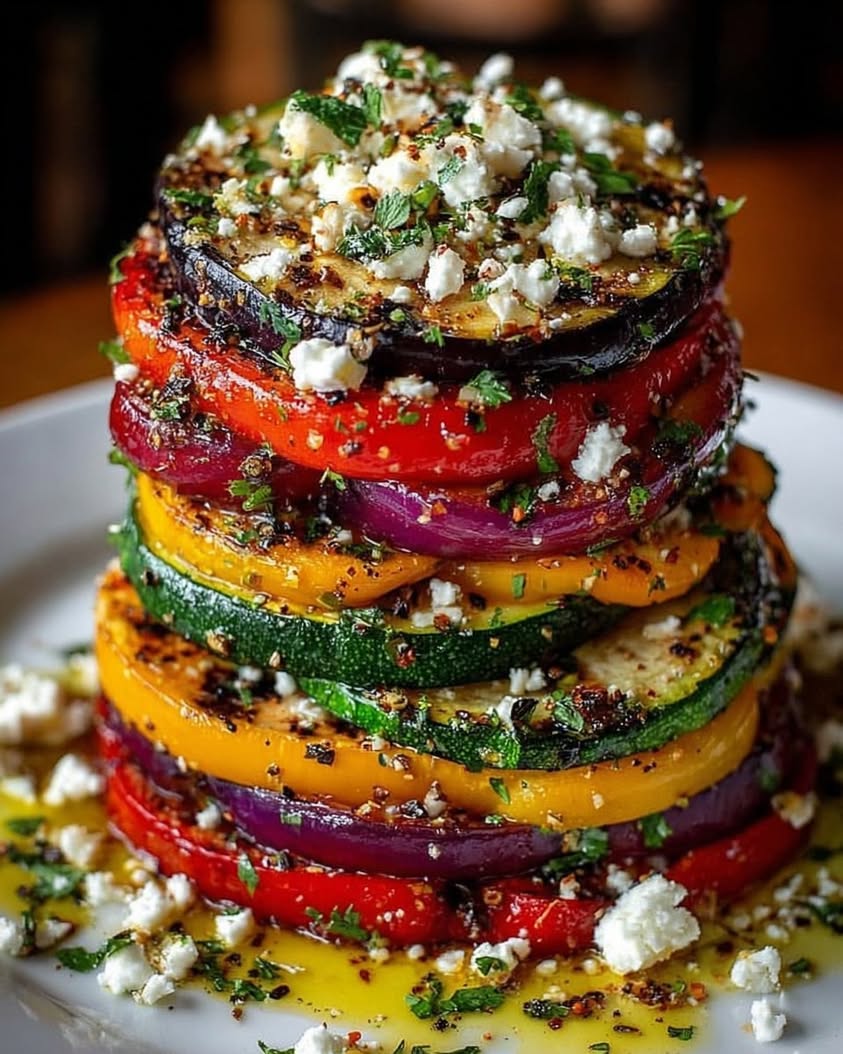
- Visual Appeal: This dish is a colorful work of art on a plate. The deep purple of the eggplant, green zucchini, red tomato, and white feta create a stunning rainbow. Consequently, the glossy orange honey drizzle adds a final touch of elegance that makes it perfect for sharing on social media or impressing guests.
- Skill Level Needed: This is an accessible recipe for cooks of all levels. Primarily, it requires basic knife skills for slicing vegetables and the ability to manage a grill or grill pan. There is no complex technique, making it a great confidence-builder in the kitchen.
- Special Equipment: A grill, grill pan, or a good quality non-stick skillet is essential for achieving the perfect char. You will also need a sharp chef’s knife, a cutting board, and a small bowl for whisking the simple dressing. A pastry brush can be helpful for applying oil evenly.
Recipe Overview
- Difficulty Level: We rate this Mediterranean Veggie Stack as easy because it involves fundamental techniques like slicing and grilling. The assembly is intuitive and forgiving, allowing for personal creativity. There are no tricky sauces or precise baking times to worry about. Essentially, if you can slice a vegetable and turn on a grill, you can master this dish.
- Category: This recipe fits perfectly into several meal categories. It is an outstanding vegetarian main course, a substantial side dish for grilled meats or fish, or an impressive appetizer when made in smaller portions. Furthermore, it works beautifully as part of a mezze platter or a light summer lunch.
- Cuisine: The dish is firmly rooted in the culinary traditions of the Mediterranean basin, drawing inspiration from Greek, Turkish, and Levantine cuisines. The use of eggplant, feta, olive oil, and oregano are classic hallmarks of this region’s cooking. The orange honey dressing adds a modern, citrusy twist on traditional glazes.
- Cost: This is a very cost-effective recipe, especially when vegetables are in season. Eggplant, zucchini, and tomatoes are typically affordable. The feta cheese and honey are the only slightly pricier components, but a little goes a long way. Overall, you can create a restaurant-quality dish for a fraction of the price.
- Season: This Mediterranean Veggie Stack shines brightest in late summer and early fall. This is when eggplant, zucchini, and tomatoes are at their peak of flavor, sweetness, and affordability. However, you can make it year-round using greenhouse vegetables, though the flavor intensity may vary.
- Occasion: It is ideal for casual weeknight dinners, healthy meal prep, or elegant entertaining. The stacks look spectacular on a buffet table and can be partially prepared ahead of time. They are also perfect for outdoor barbecues and potlucks, as they taste great at room temperature.
Why You’ll Love This Recipe
First and foremost, the taste and texture appeal of this Mediterranean Veggie Stack is undeniable. Each bite offers a satisfying journey from the smoky, tender vegetables to the creamy, salty feta, all finished with that surprising hint of orange honey. It is a dish that feels indulgent yet is fundamentally wholesome. The layers ensure you get a perfect combination of flavors in every forkful, unlike a salad where ingredients can separate. Ultimately, it is a celebration of produce that will make even the most dedicated carnivore happy.
From a convenience standpoint, this recipe is a winner. The prep work is simple and mostly involves slicing. The cooking happens quickly on a grill or stovetop, meaning you are not heating up your kitchen for hours. Additionally, the components can be prepared in advance and assembled just before serving, making it a stress-free option for entertaining. The cleanup is minimal, especially if you use a grill pan lined with foil.
Nutritionally, this stack is a powerhouse. It is packed with fiber from the array of vegetables, which aids digestion and promotes satiety. The olive oil provides heart-healthy monounsaturated fats, and the feta offers a good dose of calcium and protein. Since it is plant-forward, it is naturally lower in calories and saturated fat than many meat-based mains. Consequently, it supports a balanced diet without sacrificing an ounce of flavor or satisfaction.
The social and entertaining value of this dish is incredibly high. It presents beautifully, creating an immediate “wow” factor when you bring it to the table. Guests will be impressed by the elegant presentation, and it serves as a great conversation starter about Mediterranean cuisine or vegetarian cooking. Because it can be served family-style or plated individually, it adapts to any dining scenario, from a romantic dinner for two to a large garden party.
Finally, the cost-effectiveness and accessibility of the ingredients make this a go-to recipe. You do not need any rare or expensive components. Most items are pantry staples or readily available at any grocery store. Even if you need to substitute an ingredient, the recipe is flexible and forgiving. This means you can create a stunning, restaurant-quality meal on a modest budget, which is always a reason to love any recipe.
Historical Background and Cultural Significance
The concept of layering vegetables and cheese has deep roots in Mediterranean culinary history. Dishes like the Greek “Briam” (roasted vegetables) and Turkish “Şakşuka” showcase the region’s love for combining eggplant, zucchini, and tomatoes. However, the modern “stack” presentation is a more recent innovation, likely influenced by global restaurant trends that emphasize vertical plating. The Mediterranean Veggie Stack with Feta and Orange Honey is a contemporary homage to these timeless flavor combinations, presented in a visually striking way.
Culturally, the ingredients tell a story of trade and agriculture. Eggplant, originally from Asia, found a beloved home in Mediterranean cuisine centuries ago. Feta cheese, protected by EU law as a Greek product, is a staple of the region’s dairy tradition. Honey has been a cherished sweetener since ancient times, with orange blossom honey being particularly prized. Therefore, this dish is a edible map of Mediterranean history, blending ingredients that arrived via ancient trade routes with those native to the land.
The evolution of this specific recipe reflects modern dietary preferences and culinary creativity. As plant-based eating has gained popularity, chefs and home cooks have sought ways to make vegetables the centerpiece. The stack format achieves this elegantly, providing substance and visual appeal. The addition of a citrus-honey dressing is a nod to contemporary palates that enjoy balancing savory elements with a touch of unexpected sweetness and acidity. It is a dish that respects tradition while embracing modern tastes.
Regional variations of this concept abound. In the south of France, you might find a similar stack with ratatouille vegetables and goat cheese. In Italy, it could feature grilled peppers, mozzarella, and a balsamic reduction. The version with feta and orange honey leans into Eastern Mediterranean flavors, where the combination of honey, citrus, and oregano is common. This adaptability is a testament to the foundational soundness of the concept—take fresh, seasonal produce, add a flavorful cheese and a simple glaze, and you have a meal that feels both local and globally inspired.
Ingredient Deep Dive
Let us start with eggplant, the sturdy base of our Mediterranean Veggie Stack. This versatile fruit, often treated as a vegetable, has been cultivated in Southeast Asia for thousands of years before becoming a cornerstone of Mediterranean and Middle Eastern cooking. Nutritionally, it is low in calories but high in fiber and antioxidants, particularly nasunin found in its purple skin. When selecting eggplants, choose ones that feel heavy for their size with smooth, shiny skin and a green stem. Avoid any with soft spots or wrinkles. For this recipe, salting the slices to draw out bitterness is optional with modern varieties, but it does help reduce oil absorption during grilling.
Feta cheese brings the essential salty, tangy creaminess to the stack. Traditionally made from sheep’s milk or a sheep-goat blend in Greece, feta is a brined cheese with a crumbly texture and bold flavor. It is a good source of calcium, protein, and beneficial fatty acids. For the best taste in your Mediterranean Veggie Stack, seek out authentic Greek feta stored in brine. If unavailable, any good quality crumbled feta will work. For storage, keep feta submerged in its brine in the refrigerator. If you need a dairy-free alternative, a firm, salted tofu or a vegan “feta” made from almonds or coconut oil can provide a similar texture and salty punch.
The orange honey dressing is the magical element that elevates the entire dish. Honey has been used as a sweetener and preservative since prehistoric times, and orange blossom honey carries the delicate floral notes of citrus groves. Honey contains antioxidants and has natural antimicrobial properties. When combined with fresh orange zest and juice, it creates a complex syrup that is sweet, tart, and aromatic. For the best flavor, use a raw, locally-sourced honey if possible. To select a good orange, choose one that is firm and heavy with a bright, fragrant skin. You can substitute the orange with lemon or even a blood orange for a different twist. Always add the dressing just before serving to maintain its bright flavor.
Common Mistakes to Avoid
- Cutting Vegetables Unevenly: Slices that are too thick will not cook through properly, while slices that are too thin may burn or become mushy. Aim for consistent 1/2-inch thick slices to ensure even cooking and stable stacking.
- Skipping the Oil Brush: Do not just drizzle oil over the vegetables on the grill pan. Instead, use a pastry brush to lightly but evenly coat both sides of each slice. This prevents sticking and promotes beautiful, even char marks without making the dish greasy.
- Overcrowding the Grill Pan: Cooking too many vegetable slices at once will steam them instead of grilling them. You want direct contact with the hot surface for those signature grill marks and smoky flavor. Cook in batches if necessary.
- Moving Vegetables Too Soon: When you place a vegetable slice on a hot grill, let it sear undisturbed for a few minutes. If you try to move it immediately, it will likely stick and tear. Wait until it releases naturally.
- Using Cold Feta Straight from the Fridge: Very cold feta is too firm and can be bland. Let it sit at room temperature for 15-20 minutes before crumbling. This allows its full, tangy flavor and creamy texture to shine.
- Drowning the Stack in Dressing: The orange honey dressing is a finishing accent, not a sauce. A light drizzle over the top is sufficient. Adding too much will make the stack soggy and overpower the other flavors.
- Assembling While Vegetables Are Piping Hot: If you stack the vegetables right off the grill, the residual heat can wilt the delicate layers and melt the feta into a mess. Let them cool for 5 minutes so they hold their shape.
- Neglecting Seasoning: Grilled vegetables need salt. Do not forget to season each layer lightly with salt and pepper as you build your Mediterranean Veggie Stack. This builds flavor from the inside out.
Essential Techniques
Grilling or Pan-Grilling Vegetables is the core technique for this Mediterranean Veggie Stack. The goal is to achieve tender interiors with slightly charred, flavorful exteriors without using excessive oil. First, ensure your grill or grill pan is very hot before adding the vegetables; you should hear a satisfying sizzle. Next, resist the urge to move the slices constantly. Let them develop a sear, which will naturally release them from the surface when ready to flip. This technique concentrates the vegetables’ natural sugars, creating a deeper, sweeter flavor that is essential to the dish.
Building a Stable Stack requires a bit of strategy. Start with the largest, sturdiest piece as your base—usually the eggplant. Then, layer the other vegetables in order of sturdiness, offsetting them slightly like building with bricks for better balance. Place the cheese and herbs between the warm vegetable layers so they soften slightly. Finally, use a wide spatula for transferring the assembled stack to a plate. If you are nervous, you can secure the stack with a long skewer inserted vertically through the center, removing it just before serving for a polished look.
Emulsifying the Orange Honey Dressing is simple but crucial. The key is to dissolve the honey completely so the dressing is smooth, not grainy. In a small bowl, whisk the honey vigorously with the fresh orange juice and zest first. Then, while continuing to whisk, slowly drizzle in the extra virgin olive oil. This gradual incorporation helps create a temporary emulsion, suspending the oil in the citrus juice for a cohesive dressing. If you add the oil all at once, it will separate quickly. A small pinch of salt can also help stabilize the mixture.
Pro Tips for Perfect Mediterranean Veggie Stack
For extra flavor, marinate your vegetable slices for 30 minutes before grilling in a mix of olive oil, minced garlic, dried oregano, salt, and pepper. This infuses them with herbaceous notes throughout.
If your eggplant seems particularly seedy or you are concerned about bitterness, salt the slices and let them sit in a colander for 30 minutes. Rinse and pat them thoroughly dry before grilling. This step also improves texture.
Use a mandoline slicer to achieve perfectly uniform vegetable slices. This guarantees even cooking and creates a more professional-looking stack. Always use the safety guard.
Warm your serving plates slightly before assembling the stacks. This keeps the food at an ideal eating temperature longer, especially if you are serving multiple portions.
Add a layer of fresh, peppery arugula or baby spinach between two of the vegetable layers for an extra pop of color, freshness, and nutrients.
Toast pine nuts or slivered almonds and sprinkle them over the top of the finished stack for added crunch and a nutty flavor that complements the feta beautifully.
For a more substantial meal, serve each Mediterranean Veggie Stack on a bed of lemon-herb quinoa, couscous, or a simple green salad.
Make a double batch of the orange honey dressing and store it in a jar in the fridge. It is fantastic on salads, grilled chicken, or roasted carrots.
Variations and Adaptations
For regional variations, consider a Spanish twist with manchego cheese and a sherry vinegar glaze. An Italian version could use grilled portobello mushrooms, fresh mozzarella, and a balsamic reduction. To channel the Middle East, swap feta for halloumi and add a sprinkle of za’atar spice blend to the vegetables before grilling.
Seasonal adaptations are easy. In spring, use asparagus spears and artichoke hearts. For autumn, incorporate slices of roasted butternut squash or sweet potato. In winter, robust vegetables like cauliflower steaks or thick slices of Brussels sprout halves can be used, though cooking times will adjust.
Dietary modifications are straightforward. For a vegan Mediterranean Veggie Stack, omit the feta and use a dollop of creamy hummus or a vegan almond feta. A gluten-free version requires no changes. For a lower-carb or keto adaptation, focus on eggplant and zucchini layers, reduce the amount of honey in the dressing, and increase the fat with a generous drizzle of high-quality olive oil.
Flavor variations can keep this recipe exciting. Add a smear of sun-dried tomato pesto or black olive tapenade between layers. Incorporate different herbs like fresh basil, mint, or dill. Spice it up with a pinch of red pepper flakes in the dressing or on the vegetables before grilling.
Texture modifications can cater to personal preference. For a creamier stack, add a thin layer of whipped goat cheese or tzatziki sauce. For more crunch, include a layer of thinly sliced raw radish or cucumber just before serving.
Presentation alternatives include deconstructing the stack into a salad, chopping the grilled vegetables and tossing them with the feta and dressing. Alternatively, make mini stacks on crostini for a passed appetizer, or layer the ingredients in a mason jar for a portable lunch.
Serving and Presentation Guide
Plating techniques matter for this visually driven dish. Center each stack on a white or neutral-colored plate to let the vibrant colors pop. Use a wide, flexible spatula to transfer the stack gently. If a few pieces slide, simply nudge them back into place with a clean finger or the back of a spoon. For a restaurant-style touch, swipe a small spoonful of plain Greek yogurt or a reduced balsamic glaze across the plate before placing the stack on top.
Garnishing ideas are simple but effective. A final sprinkle of fresh chopped parsley, dill, or microgreens adds a touch of green. A few extra crumbles of feta, a twist of black pepper, or edible flowers elevate the look instantly. A light dusting of sumac or smoked paprika on the plate’s rim adds color and a hint of extra flavor.
Traditional accompaniments might include warm pita bread or crusty baguette slices to soak up the delicious juices and dressing. A side of kalamata olives, marinated artichoke hearts, or dolmas (stuffed grape leaves) completes a Mediterranean-themed meal.
Modern serving suggestions pair the stack with a grain bowl base like farro or freekeh. You can also serve it alongside a protein like grilled lemon-herb chicken skewers or pan-seared salmon for a more filling dinner. For a brunch option, top a stack with a poached or fried egg.
Temperature considerations are flexible. This dish is excellent served warm, right after assembly. It is also fantastic at room temperature, making it ideal for picnics or potlucks. Avoid serving it cold from the refrigerator, as the flavors will be muted and the textures less appealing.
Portion control tips are simple. One medium stack makes a satisfying vegetarian main for most appetites. For a side dish or appetizer, create smaller, two-layer stacks. You can also slice a large stack in half and serve it over a salad for a lighter meal.
Wine and Beverage Pairing
Wine pairings should complement the dish’s earthy, sweet, and salty notes. A crisp, dry Greek Assyrtiko or a Sauvignon Blanc with its citrusy acidity cuts through the richness of the feta and mirrors the orange in the dressing. For red wine lovers, a light-bodied, low-tannin red like a Pinot Noir or a Greek Xinomavro works well, as it will not overpower the vegetables. Rosé is a perfect all-around choice, especially a Provençal style, bridging the gap between the red and white categories beautifully.
Non-alcoholic alternatives can be just as sophisticated. Sparkling water with a twist of orange or lemon peel is refreshing. A homemade lavender lemonade or a minty iced tea provides a sweet and herbal counterpoint. For something more unique, try a pomegranate spritzer or a glass of chilled, non-alcoholic ginger beer.
Coffee and tea pairings are less common but possible if serving this for lunch. A light, citrusy herbal tea like lemon verbena or chamomile would be pleasant. A medium-roast coffee with low acidity could work if served after the meal, but its bitterness might clash with the honey dressing if consumed simultaneously.
Temperature considerations are key. White, rosé, and sparkling wines should be served well-chilled, around 45-50°F. Red wines should be served slightly cooler than room temperature, around 55-60°F, to keep them refreshing. Non-alcoholic beverages are best served cold or over ice to refresh the palate between bites of the savory stack.
Serving suggestions include offering a carafe of water on the table to cleanse the palate. If serving wine, pour a small taste first to ensure it pairs well with the completed dish. For a party, consider creating a signature cocktail, like an Aperol Spritz or a gin and tonic with an orange slice, which echoes the citrus theme.
Storage and Shelf Life
Storage methods depend on whether the stack is assembled. Unassembled, grilled vegetables can be stored separately from the feta and dressing. Place cooled vegetables in an airtight container in the refrigerator. Store the crumbled feta in its own container, and keep the dressing in a sealed jar.
Temperature requirements are straightforward: everything must be refrigerated at or below 40°F. Do not leave assembled stacks or the components at room temperature for more than two hours to prevent bacterial growth.
Container recommendations include glass or BPA-free plastic containers with tight-fitting lids. For the dressing, a small mason jar is perfect for shaking and storing. Store vegetables in a single layer if possible, or separate layers with parchment paper to prevent them from sticking together.
Signs of spoilage include a sour or off smell, slimy texture on the vegetables, or mold growth. The dressing may separate, which is normal, but if it develops an odd smell, discard it. Feta that becomes excessively dry, discolored, or smells ammoniated should be thrown out.
Reheating instructions are simple for components. Reheat grilled vegetables gently in a microwave for 30-60 seconds, in a warm oven (300°F) for 5-10 minutes, or briefly in a skillet over medium heat. Reheat only what you will eat, as repeated reheating degrades quality. Do not reheat the assembled stack with feta, as the cheese will melt. Assemble fresh with reheated vegetables.
Freezing guidelines are not recommended for the assembled dish or the dressed vegetables, as the texture will become watery and mushy upon thawing. You can freeze the orange honey dressing in an ice cube tray for future use, but the fresh citrus flavor may diminish slightly.
Make Ahead Strategies
Prep timeline can stretch this recipe over two days. Day 1: Wash and slice all vegetables. Make the orange honey dressing and store it in the fridge. Crumble the feta. Day 2 (up to 4 hours before serving): Grill the vegetables and let them cool. Just before serving, assemble the stacks at room temperature and drizzle with dressing.
Storage between steps is crucial for quality. Keep sliced, uncooked vegetables in a sealed container or zipper bag in the fridge. The acid in the dressing will mellow and blend over 24 hours, which is actually beneficial. Keep feta tightly covered in its brine or a sealed container.
Quality impact assessment shows that grilling the vegetables ahead is the best timesaver. They hold up well for 24 hours refrigerated. The dressing improves with a brief rest. The only element that must be done at the last minute is the final assembly and garnishing to prevent sogginess.
Assembly tips for make-ahead include having all your components lined up and ready. If the vegetables are cold from the fridge, let them sit out for 15-20 minutes to take the chill off. Build the stacks on the individual serving plates to avoid a second transfer.
Reheating guidelines for pre-grilled vegetables are covered above. The key is gentle reheating to avoid overcooking. If you are serving the stacks at room temperature, simply pull the grilled vegetables from the fridge an hour before assembly.
Fresh element additions are the final touch. Always use freshly chopped herbs for garnish, not herbs stored from days prior. If using nuts for crunch, toast them just before serving to ensure maximum flavor and crispness. A final drizzle of high-quality extra virgin olive oil right before serving adds a fresh, fruity note.
Scaling Instructions
Halving the recipe is simple for a meal for two. Use one small eggplant, one zucchini, one tomato, and a quarter block of feta. Prepare a half-batch of the dressing. Cooking times will remain the same, but you will have fewer batches to grill. All other instructions stay identical.
Doubling or tripling the recipe is perfect for a party. The most important adjustment is to not overcrowd your cooking surface. Grill in consistent, manageable batches to ensure each vegetable slice gets proper searing. Use multiple grill pans or bake sheets in the oven on a high broil setting as an alternative. Mix the dressing in a larger bowl or jar.
Equipment adjustments may be necessary when scaling up. You may need an additional grill pan or to use your outdoor grill’s full surface area. For very large batches, consider roasting the vegetable slices on sheet pans in a very hot oven (425°F) instead of pan-grilling, though you will lose some smoky char flavor.
Timing modifications are minimal when scaling. The prep time will increase linearly with more vegetables to slice. The cook time per batch remains constant, so factor in the time for multiple batches. Start grilling the vegetables well ahead of your serving time to avoid a last-minute rush.
Storage considerations for large batches are important. Have enough containers to store components separately if not serving immediately. For a buffet, you can pre-assemble stacks on a large platter and cover them loosely with plastic wrap, but do not add the dressing until the last moment to keep them from becoming soggy.
Nutritional Deep Dive
Macro breakdown for one serving is favorable. It provides a good balance of complex carbohydrates from the vegetables, healthy fats from the olive oil and feta, and a moderate amount of protein from the cheese. The dish is relatively low in saturated fat, especially if you use olive oil sparingly for grilling. It is also naturally low in sugar, with the only added sugar coming from the honey in the dressing.
Micronutrient analysis reveals a wealth of vitamins and minerals. Eggplant and zucchini provide potassium and vitamin C. Tomatoes are an excellent source of lycopene, a powerful antioxidant. Feta cheese contributes calcium and phosphorus for bone health. The olive oil and nuts, if added, provide vitamin E. The orange in the dressing boosts the vitamin C content significantly.
Health benefits are numerous due to the plant-forward, Mediterranean diet approach. This meal supports heart health through its low saturated fat and high fiber content. The antioxidants combat inflammation. The combination of fiber, healthy fats, and protein promotes steady blood sugar levels and prolonged satiety, which can aid in weight management.
Dietary considerations are mostly positive. The recipe is naturally vegetarian and gluten-free. It can be adapted for vegan and dairy-free diets as noted. For those on a low-sodium diet, be mindful of the feta cheese and adjust the amount or seek out a lower-sodium variety.
Portion analysis shows one stack is a satisfying and volumous meal due to the high water and fiber content of the vegetables. It fills the plate and the stomach without excessive calories. This makes it an excellent choice for those focusing on mindful eating or weight maintenance.
Weight management tips include being measured with the olive oil during grilling and the honey in the dressing. These are calorie-dense ingredients where a little goes a long way. You can also increase the portion of non-starchy vegetables like zucchini and decrease the slightly higher-carb eggplant if desired.
Dietary Adaptations
For a gluten-free Mediterranean Veggie Stack, no changes are needed as all ingredients are naturally gluten-free. Just ensure any pre-packaged items like feta or spices are certified gluten-free if you have celiac disease or a severe sensitivity.
A dairy-free version requires omitting the feta. Excellent substitutes include a vegan feta made from tofu, almonds, or coconut oil. Alternatively, add creaminess with a dollop of dairy-free tzatziki made with coconut yogurt or a smear of hummus. Nutritional yeast can add a cheesy, umami flavor.
To make this recipe vegan, follow the dairy-free guidelines above. Also, ensure the honey is replaced with maple syrup, agave nectar, or vegan brown rice syrup to maintain the sweet element in the dressing. All other components are plant-based.
A low-carb or keto adaptation focuses on the eggplant and zucchini, which are lower in net carbs than tomatoes. Reduce or omit the honey in the dressing, using a keto-friendly sweetener like monk fruit or erythritol instead. Increase the fat content by being generous with olive oil and adding avocado slices or olives to the stack.
For a Paleo version, omit the dairy (feta) and the grains if serving with a side. The dressing can use raw honey, which is generally Paleo-approved. Ensure all oils used are Paleo-friendly like olive or avocado oil.
A Low-FODMAP adaptation requires careful selection. Eggplant and zucchini are low-FODMAP in moderate servings. Use only the green part of spring onions instead of red onion. Omit the honey and use maple syrup in the dressing, as it is low-FODMAP in small amounts. Feta cheese is typically low-FODMAP at a 40g serving.
Troubleshooting Guide
If your vegetables are soggy, you likely overcrowded the pan or did not get it hot enough before adding them. Steam, not sear, was the primary cooking method. Solution: Cook in batches on a properly preheated surface. Also, ensure you pat sliced vegetables very dry before oiling and grilling, especially if you salted and drained the eggplant.
If the stack falls apart, the slices may be too thin or uneven, or you may have added too much slippery dressing between layers. Solution: Use a stable base (eggplant), cut even slices, and let vegetables cool slightly so they are firm enough to handle. Assemble directly on the serving plate. A skewer can provide internal support.
If the flavor is bland, you probably under-seasoned. Vegetables need salt to bring out their natural sweetness. Solution: Season each vegetable layer lightly with salt and pepper as you stack. Also, ensure your feta is flavorful and at room temperature, and that you used enough fresh herbs and citrus zest in the dressing.
If the feta is not creamy, it was likely too cold. Very cold feta is crumbly and dry. Solution: Always let feta sit out of the fridge for 15-20 minutes before crumbling and using. The residual warmth from the grilled vegetables will then soften it perfectly.
If the dressing separates, this is natural for a simple vinaigrette. Solution: Simply whisk or shake it vigorously again right before drizzling. For a more stable emulsion, add a tiny dab of Dijon mustard to the honey and orange juice before whisking in the oil.
If you lack a grill pan, use a heavy-duty non-stick skillet or a cast-iron skillet over medium-high heat. You will still get a good sear. For a larger batch, you can also broil the oiled vegetable slices on a sheet pan 4-6 inches from the element, flipping once, until tender and charred in spots.
Recipe Success Stories
Community feedback on this Mediterranean Veggie Stack has been overwhelmingly positive. Many home cooks report that it has become their go-to “impress the guests” dish. One reader mentioned serving it at a bridal shower where several guests requested the recipe. Another found that their children, who usually avoid eggplant, devoured it because of the fun stack presentation and sweet honey drizzle. These stories highlight the recipe’s broad appeal and user-friendly nature.
Variation successes are frequently shared. A cook from California added grilled peaches to their summer version, which paired wonderfully with the feta and orange. Someone else used a fig balsamic glaze instead of the honey dressing for a fall twist. A family with a nut allergy used toasted sunflower seeds for crunch. Print
Mediterranean Veggie Stack with Feta & Orange Honey
- Total Time: 45 minutes
- Yield: 4
Description
A vibrant, layered dish featuring grilled vegetables, creamy feta, and a zesty orange honey drizzle, perfect for a light lunch or appetizer.
Ingredients
- 1 large eggplant, sliced into 1/2-inch rounds
- 2 zucchinis, sliced lengthwise
- 2 red bell peppers, seeded and quartered
- 1 red onion, sliced into thick rings
- 4 oz feta cheese, crumbled
- 1/4 cup extra virgin olive oil
- 2 tbsp honey
- Zest and juice of 1 orange
- 1 tsp dried oregano
- Salt and black pepper to taste
- Fresh basil leaves for garnish
Instructions
- Preheat a grill or grill pan over medium-high heat. Brush eggplant, zucchini, bell peppers, and onion with olive oil and season with salt, pepper, and oregano.
- Grill vegetables for 3-4 minutes per side until tender and charred. Remove and let cool slightly.
- In a small bowl, whisk together honey, orange zest, and orange juice until well combined.
- On a serving plate, stack grilled vegetables in alternating layers, sprinkling feta between each layer.
- Drizzle the orange honey over the stack and garnish with fresh basil leaves. Serve warm or at room temperature.
Notes
You can customize the seasonings to taste.
- Prep Time: 15 minutes
- Cook Time: 30 minutes
- Method: Main
- Cuisine: Mediterranean