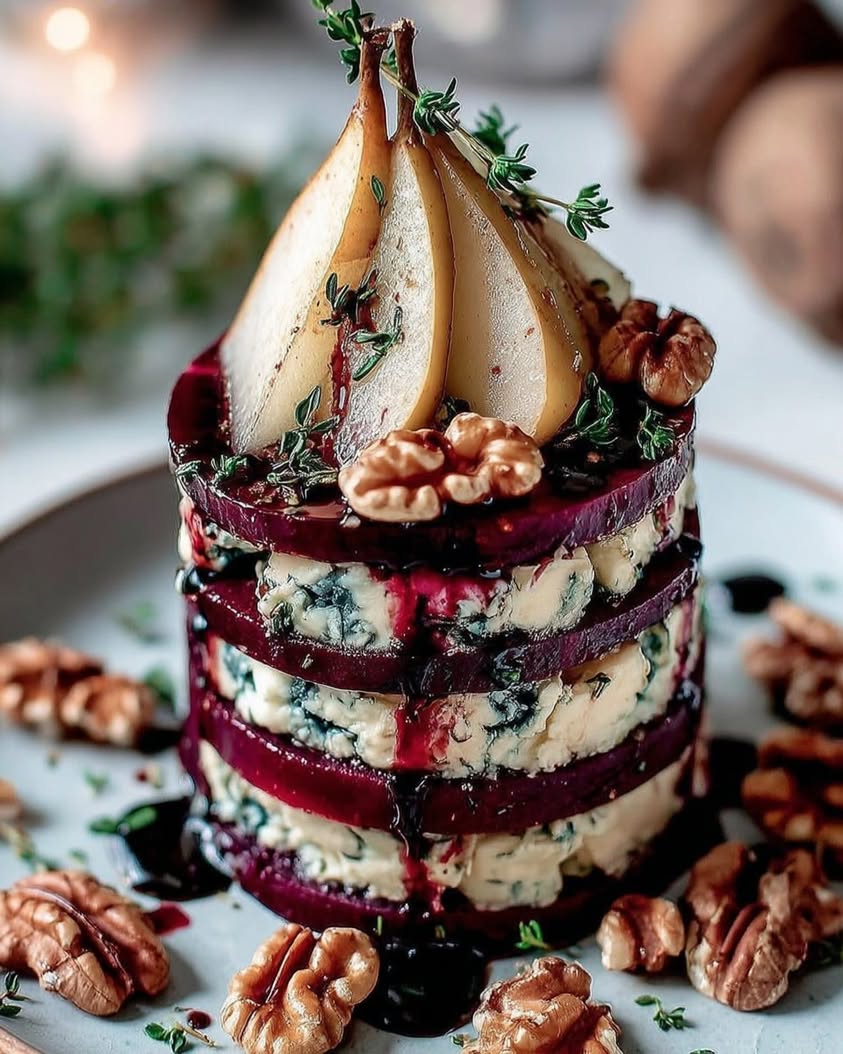
Roasted Beet and Blue Cheese Towers with Pear Balsamic Glaze: An Elegant Appetizer for Any Occasion
Imagine a dish that looks like a piece of modern art and tastes like a symphony of sweet, earthy, tangy, and creamy notes. That is exactly what you get with these stunning Roasted Beet and Blue Cheese Towers with Pear Balsamic Glaze. This recipe transforms humble root vegetables into an elegant, layered appetizer that will impress your guests from the very first glance. Moreover, the combination of tender roasted beets, pungent blue cheese, crisp pear, and a sweet-tart balsamic reduction creates a perfect balance of flavors and textures in every single bite.
These beautiful towers are surprisingly simple to assemble, making them an ideal choice for dinner parties, holiday gatherings, or even a fancy date night at home. The process of roasting the beets deepens their natural sugars, while the balsamic glaze adds a luxurious, glossy finish. Consequently, you end up with a dish that feels restaurant-worthy but is entirely achievable in your own kitchen. Ultimately, this recipe is about celebrating fresh ingredients and presenting them in a creative, visually dramatic way.
Furthermore, this dish is a fantastic conversation starter. The vibrant crimson and golden hues of the beets layered with white cheese and green arugula create a stunning color contrast on the plate. Each component plays a crucial role: the beets provide an earthy base, the blue cheese offers a sharp and creamy punch, the pear adds a refreshing crunch, and the glaze ties everything together with its complex sweetness. Therefore, you are not just serving food; you are offering a memorable culinary experience.
Quick Recipe Highlights
- Flavor Profile: This dish delivers a sophisticated harmony of sweet roasted beets, sharp and salty blue cheese, and the bright, fruity acidity of a pear balsamic glaze. The flavors are bold yet balanced, with each ingredient complementing the others perfectly.
- Texture: You will enjoy a wonderful contrast between the tender, almost velvety roasted beets, the creamy crumble of blue cheese, the juicy crispness of fresh pear, and the slight bite of peppery arugula. The reduced glaze adds a sticky, syrupy mouthfeel that coats everything beautifully.
- Aroma: As the beets roast, they fill your kitchen with a warm, earthy, and subtly sweet fragrance. When you add the balsamic vinegar to reduce, it releases tangy, caramel-like notes. Finally, the aroma of the finished tower is a complex blend of these deep scents with the sharp tang of blue cheese.
- Visual Appeal: The presentation is dramatic and elegant. The stacked layers of deep red and yellow beets, white cheese, and green greens create a vertical presentation that is perfect for modern plating. A final drizzle of the dark balsamic glaze adds a professional, artistic touch.
- Skill Level Needed: This is an accessible recipe for most home cooks. The techniques involved—roasting vegetables, reducing a sauce, and simple assembly—are foundational. No special pastry or knife skills are required, making it a great recipe for building confidence in the kitchen.
- Special Equipment: You will need a good chef’s knife, a vegetable peeler, a baking sheet, parchment paper, and a small saucepan. A mandoline slicer can help achieve uniformly thin beet slices for neater stacking, but a sharp knife works perfectly fine.
Recipe Overview
- Difficulty Level: We rate this recipe as “Easy” because it breaks down into very manageable steps. Roasting beets is largely hands-off, and reducing balsamic vinegar is a simple process of simmering. The assembly requires a bit of patience but no technical skill. Therefore, even novice cooks can achieve impressive results with careful attention to the layering process.
- Category: This dish falls squarely into the appetizer or starter category. It is designed to be a show-stopping first course that stimulates the palate. Alternatively, you could serve a larger portion as a light lunch or a sophisticated side salad alongside a simply prepared protein like grilled chicken or fish.
- Cuisine: While not tied to one specific tradition, the recipe draws inspiration from modern American and European bistro cuisine. It uses classic flavor pairings—beets and blue cheese, pear and balsamic—that are celebrated in French and Italian cooking, but presents them in a contemporary, architectural style.
- Cost: This is a moderately priced appetizer. Beets, arugula, and pears are typically affordable, especially in season. The primary cost drivers are a good quality blue cheese and aged balsamic vinegar. Fortunately, you use small amounts of these pricier ingredients, so the cost per serving remains reasonable for a special occasion dish.
- Season: This recipe shines in the fall and winter when beets and pears are at their peak. The earthy, robust flavors feel comforting in cooler weather. However, with the availability of produce year-round, you can certainly make these elegant towers any time you want to add a splash of color and flavor to your table.
- Occasion: Perfect for dinner parties, holiday meals (think Christmas or Thanksgiving starters), anniversary dinners, or any event where you want the food to make a statement. It is also an excellent choice for a potluck where you want to bring something uniquely beautiful and delicious.
Why You’ll Love This Recipe
First and foremost, the taste and texture appeal is undeniable. Each bite of these Roasted Beet and Blue Cheese Towers is a journey. You start with the dense, sweet earthiness of the beet, move through the sharp and creamy blue cheese, get a clean, crisp break from the pear, and finish with the peppery arugula and sweet-tart glaze. This combination is incredibly satisfying and complex, yet the individual flavors remain distinct and clear. It is a dish that makes you pause and appreciate each component.
Secondly, the convenience and preparation benefits are significant. While the total time includes roasting, most of that is inactive. You can roast the beets a day ahead, and the balsamic glaze can be made and stored for weeks. Consequently, when it is time to serve, assembly is quick and straightforward. This make-ahead flexibility is a huge advantage when entertaining, as it removes last-minute stress and allows you to enjoy your own party.
From a nutritional standpoint, this appetizer is packed with advantages. Beets are a fantastic source of fiber, folate, and immune-boosting vitamin C. They also contain unique compounds like betalains, which have anti-inflammatory properties. Arugula adds a dose of vitamins A, C, and K, while pears contribute additional fiber and vitamin C. Even the blue cheese offers calcium and protein. So, you are serving a dish that is as wholesome as it is indulgent.
Furthermore, the social and entertaining value is through the roof. This is not a recipe you simply plop on a plate. The act of building the towers is part of the culinary experience, and the final presentation is guaranteed to elicit compliments. It shows thoughtfulness and care, setting a tone of elegance for the entire meal. It encourages guests to interact with their food, discussing the layers and flavors, which enhances the overall dining experience.
Finally, considering cost-effectiveness and accessibility, this recipe delivers high-end restaurant appeal without the exorbitant price tag. The ingredients are readily available at most grocery stores. By preparing it yourself, you control the quality of each element—like using a truly aged balsamic or a favorite local blue cheese. This allows for customization and often results in a superior product compared to what you might order out, all for a fraction of the cost per person.
Historical Background and Cultural Significance
The story of combining beets and blue cheese is a tale of peasant food meeting aristocratic refinement. Beets have been cultivated for thousands of years, initially for their leafy greens. The root itself was often considered coarse peasant fare in many European cultures. Meanwhile, blue cheese, with its deliberate mold cultivation, represents a pinnacle of dairy craftsmanship, with varieties like Roquefort from France and Gorgonzola from Italy holding protected status and historical prestige. The pairing likely emerged in modern European cuisine as chefs sought to balance the earthy, humble beet with a strong, sophisticated cheese.
Culturally, this pairing signifies a bridge between rustic and refined culinary traditions. In Eastern European countries, beets are a cornerstone of the diet, appearing in soups like borscht. In Western Europe, particularly France and England, blue cheeses have been celebrated for centuries. The modern combination, especially when presented in an elegant format like a tower, reflects a contemporary culinary philosophy that values elevating simple, seasonal ingredients through technique and presentation. It is a dish that respects its rustic roots while dressing them up for a special occasion.
The evolution of this specific recipe into a “tower” is a relatively recent phenomenon, influenced by the late 20th-century trend of architectural plating in fine dining. Chefs began stacking ingredients vertically to create height and drama on the plate. This technique applied to a beet and blue cheese salad transformed it from a tossed or arranged salad into a structured, intentional composition. The addition of pear and a balsamic glaze further modernized the pairing, adding elements of sweetness and acidity that are hallmarks of contemporary flavor balancing.
Regional variations of this concept abound. In the United States, you might find it with local blue cheeses like Maytag Blue or Point Reyes Original Blue. In Australia, it could feature a creamy Roquefort dressing. Some versions incorporate walnuts or pecans for crunch, others use goat cheese instead of blue for a tangier profile, and some replace the pear with apple or even a citrus segment. The core idea—sweet earthiness paired with pungent creaminess—remains constant, but the execution adapts to local tastes and available ingredients, showcasing the versatility of this classic flavor combination.
Ingredient Deep Dive
Let us start with the star: beets. These vibrant root vegetables have a history dating back to ancient Mediterranean civilizations. Nutritionally, they are powerhouses of folate, manganese, potassium, and vitamin C. Their deep color comes from betalain pigments, which have antioxidant and anti-inflammatory properties. When selecting beets, look for firm, smooth bulbs with vibrant greens still attached if possible—a sign of freshness. Store them unwashed in the refrigerator for up to two weeks. For a twist, try golden beets for a milder, sweeter flavor and less mess, or Chioggia beets for stunning striped interiors.
Next, blue cheese. This category includes famous varieties like French Roquefort (sheep’s milk), Italian Gorgonzola (cow’s milk), and English Stilton. The blue veins are Penicillium mold, cultivated during aging. Beyond its bold flavor, blue cheese provides calcium, protein, and probiotics. Choose a cheese that is crumbly yet creamy, not dry. For a milder taste, use Gorgonzola Dolce. For intense pungency, opt for a well-aged Roquefort. If blue cheese is too strong, a good substitute is a creamy goat cheese (chèvre), which offers a tangy contrast without the moldy notes.
The pear brings essential freshness and crunch. Pears have been cultivated for over 4,000 years and symbolize immortality in Chinese culture. They are an excellent source of dietary fiber and vitamin C. For this recipe, choose a firm, barely ripe pear like Bosc or Anjou that will hold its shape when sliced and provide a clean, crisp texture. Avoid overly ripe, soft pears as they will become mushy. A splash of lemon juice on the slices will prevent browning. If pears are out of season, a crisp, sweet apple like Honeycrisp is a perfect alternative.
Finally, the balsamic glaze. Authentic Traditional Balsamic Vinegar of Modena (Aceto Balsamico Tradizionale) is a protected, aged product from Italy, often costing hundreds of dollars. For cooking, a good quality “condimento” grade or aged balsamic vinegar works perfectly. The reduction process concentrates its natural sugars, creating a thick, sweet-tart syrup. It adds a complex acidity that cuts through the richness of the cheese. For a shortcut, you can purchase pre-made balsamic glaze, but homemade allows you to control the sweetness and consistency. A non-alcoholic alternative for the reduction could be a reduction of pomegranate juice for a similar sweet-tart profile.
Common Mistakes to Avoid
- Over-roasting the beets: Beets roasted too long become mushy and difficult to slice cleanly. They should be tender when pierced with a knife but still hold their shape firmly. Test them a few minutes before the recommended time to ensure perfect texture.
- Using pre-cooked, vacuum-sealed beets: While convenient, these often lack the deep, concentrated sweetness and firm texture of freshly roasted beets. They can also be waterlogged, making your towers soggy and difficult to stack properly.
- Not letting the balsamic reduction cool and thicken: If you drizzle the glaze while it is still hot and thin, it will run off the towers and pool on the plate. Let it cool to a syrupy consistency so it drapes beautifully over the layers.
- Slicing the pears too far in advance: Pears oxidize and turn brown quickly. Slice them just before assembly and consider tossing the slices in a tiny bit of lemon juice to preserve their fresh, white appearance.
- Choosing the wrong blue cheese texture: A very dry, crumbly blue cheese will not adhere well between layers. Conversely, an overly soft, spreadable one can make the tower unstable. Aim for a cheese that is cool and can be broken into small, creamy crumbles.
- Neglecting to dry the roasted beets: After peeling, pat the beet slices dry with a paper towel. Any excess moisture will make the cheese slide and prevent the tower from holding its impressive vertical structure.
- Building towers that are too tall or wide: Over-ambitious stacking leads to toppling. Start with a stable base and keep the diameter reasonable. Three to four layers per tower is usually the sweet spot for stability and elegance.
- Skipping the arugula or substitute: The peppery green is not just garnish; it provides a crucial flavor contrast and textural break. If you dislike arugula, use watercress, baby spinach, or even microgreens, but do include a fresh green element.
Essential Techniques
Roasting Beets to Perfection: This technique is crucial for developing the beets’ natural sweetness and achieving a tender-but-firm texture. Wrap them individually in foil to steam in their own moisture, which concentrates flavor and makes peeling effortless afterward. The key is roasting until a paring knife slides in with just a hint of resistance. Under-roasting leaves them hard and difficult to slice; over-roasting turns them to mush. Let them cool slightly in the foil before handling—the skins will slip right off.
Reducing Balsamic Vinegar: Reducing transforms thin, sharp vinegar into a luxurious, sweet-tart syrup. Use a small, heavy-bottomed saucepan and simmer gently. A vigorous boil can cause it to reduce too quickly and potentially burn. Watch for the bubbles to become slow, thick, and glossy. The glaze is ready when it coats the back of a spoon and leaves a clear trail when you run your finger through it. Remember, it will thicken significantly as it cools.
Layering and Stacking for Stability: This is the architectural heart of the dish. Start with your largest, flattest beet slice as a solid base. Pat each component dry before adding it. Apply cheese and pear in even, moderate amounts—overloading any layer causes slippage. Use a gentle, pressing-down motion as you build to compact the layers slightly. Finally, if a tower feels wobbly, you can secure it with a decorative skewer or toothpick through the center, removing it just before serving.
Pro Tips for Perfect Roasted Beet and Blue Cheese Towers
Wear disposable gloves when peeling and slicing the beets to prevent your hands from staining pink for days. This simple step makes the process much more pleasant.
Use a small biscuit cutter or round cookie cutter as a mold for building perfectly uniform towers. Simply place it on your plate, layer the ingredients inside, then gently lift the ring away.
For an extra flavor dimension, toss the arugula very lightly in a teaspoon of the reduced balsamic glaze before placing it on top. This adds a hint of sweetness and helps it stick.
If your balsamic reduction becomes too thick after cooling, you can gently re-warm it for a few seconds over low heat or stir in a few drops of warm water to loosen it to a drizzling consistency.
For the most dramatic presentation, use a combination of red and golden beets. Alternate the colors in your towers for a stunning, striped visual effect that highlights the layers.
Let all components come to room temperature before assembly. Cold beets and cheese straight from the fridge will mute the flavors. Room temperature allows the full aroma and taste to shine.
Season each layer lightly. A tiny pinch of flaky sea salt and a crack of black pepper on the beet slices can elevate the entire dish, enhancing the natural flavors of each component.
Variations and Adaptations
For regional variations, consider your local cheese. In the Pacific Northwest, use a creamy Oregon Blue. In the South, a buttermilk blue could be delightful. For a French twist, use Roquefort and add a few toasted walnuts. An Italian version might feature Gorgonzola Dolce and a sprinkle of toasted pine nuts.
Seasonal adaptations are easy. In spring, add a few shaved radishes for extra peppery crunch. In summer, incorporate edible flowers like nasturtiums for color. For a winter holiday version, sprinkle with pomegranate arils for a festive burst of color and juicy pop.
Dietary modifications are straightforward. For a vegan version, replace the blue cheese with a cashew-based “cheese” spread or a crumbled, firm tofu marinated in miso and lemon juice. Use maple syrup instead of honey in the glaze if needed. For a nut-free version, simply omit any nut garnishes.
Flavor variations can personalize the dish. Add a thin layer of horseradish cream between beet layers for a spicy kick. Incorporate a sprinkle of orange zest into the balsamic reduction for a citrus note. Swap the pear for a very thin slice of fresh fig when they are in season for a more decadent feel.
Texture modifications can add interest. Include a layer of finely chopped, toasted walnuts or pecans for crunch. For a smoother experience, you could blend the blue cheese with a touch of cream cheese to create a more spreadable layer that holds the tower together firmly.
Presentation alternatives offer flexibility. Instead of towers, deconstruct the salad: arrange beet slices artfully on a platter, scatter with cheese and pear, and drizzle with glaze for a family-style serving. You could also make individual “stacks” on small plates or even serve the components as a composed salad in a wide, shallow bowl.
Serving and Presentation Guide
Plating techniques are key. Use a large, white or neutral-colored plate to make the vibrant colors pop. Wipe the plate edge clean after drizzling the glaze for a professional look. Consider placing a small bed of arugula under the tower base for added height and color before you even start building.
Garnishing ideas go beyond the basic. A final sprinkle of flaky sea salt like Maldon adds texture and enhances flavor. Microgreens, fresh thyme leaves, or a few edible flower petals provide a delicate finish. A light dusting of finely grated orange zest can brighten the entire plate visually and aromatically.
For traditional accompaniments, a simple, crusty baguette is perfect for soaking up any extra glaze on the plate. These towers also pair beautifully with a small cup of a creamy soup, like a chilled cucumber or a warm potato leek, as a starter course.
Modern serving suggestions might include placing the tower on a swipe of pureed cauliflower or a smear of Greek yogurt mixed with herbs. For a cocktail party, consider making miniature one-bite versions using a small round cutter and serving them on spoons or small crackers.
Temperature considerations are important. Serve the towers immediately after assembly. The beets and cheese should be at cool room temperature. If the components are too cold, the flavors are muted; if too warm, the cheese may become overly soft and the tower may slump.
Portion control is simple. This recipe makes four substantial appetizer towers. For a larger crowd, you can make smaller, two-layer “stacks” to yield more servings. As a side salad, one tower per person is sufficient. As a main component of a light lunch, consider serving two towers per person with added protein like grilled shrimp on the side.
Wine and Beverage Pairing
Wine pairings should complement the dish’s sweet, earthy, and pungent notes. A slightly sweet white wine like a German Riesling or a Vouvray (Chenin Blanc) from France beautifully balances the earthiness of the beets and the sharpness of the cheese. Their acidity cuts through the creaminess. For red wine lovers, a light-bodied, low-tannin red like a Pinot Noir or a Beaujolais works well, as heavy tannins can clash with the earthiness of the beets.
Non-alcoholic alternatives can be just as sophisticated. A sparkling water with a twist of pear or a splash of pomegranate juice mirrors the fruit elements. A cold-brewed hibiscus tea (agua de jamaica) offers a tart, cranberry-like flavor that pairs wonderfully. For a creamy option, a chai-spiced almond milk latte provides warming spices that complement the sweet beets.
While not a classic coffee course, if serving this as a lunch, a light roast coffee with bright, fruity notes (like an Ethiopian Yirgacheffe) can surprisingly echo the fruitiness of the pear and the tang of the balsamic. A green tea, such as Sencha, with its vegetal and slightly sweet notes, can also be a refreshing and palate-cleansing accompaniment.
Temperature is crucial for beverages. White wines and non-alcoholic sparklers should be well-chilled. Red wines should be served slightly cooler than room temperature, around 60-65°F, to keep them refreshing. Non-alcoholic teas can be served either iced or hot, depending on the season and preference.
Serving suggestions include offering the wine in appropriate stemware to enhance aroma. For non-alcoholic options, use elegant glassware as well. Always provide a water glass alongside any paired beverage to allow guests to cleanse their palates between bites of this richly flavored dish.
Storage and Shelf Life
Storage methods differ for components and the assembled dish. Roasted, peeled beets can be stored in an airtight container in the refrigerator for 3-4 days. Balsamic glaze can be kept in a sealed jar at room temperature for weeks. Blue cheese should be re-wrapped tightly in its original foil or parchment and stored in the coldest part of the fridge.
Temperature requirements are standard refrigeration at or below 40°F for all perishable components. The balsamic glaze is shelf-stable due to its sugar content and acidity. Do not freeze assembled towers or the individual beet slices, as freezing drastically alters their texture, making them watery and soft upon thawing.
Container recommendations are simple. Use glass or BPA-free plastic containers for beets. A small glass jar or squeeze bottle is ideal for the balsamic glaze. For cheese, the best storage is in specialized cheese paper or parchment paper followed by a loose plastic bag to allow it to breathe slightly and prevent mold overgrowth.
Signs of spoilage to watch for include a slimy texture on the beets, an off or sour smell from any component, or visible mold on the cheese (beyond the intended blue veins). If the balsamic glaze develops an unusual odor or visible mold, discard it immediately.
Reheating instructions are not applicable for the assembled cold towers. However, if you have cold roasted beets and wish to warm them slightly for assembly, you can place them in a microwave for 10-15 seconds or in a warm oven for a few minutes. Always let them return to cool room temperature before building to prevent wilting the greens and melting the cheese.
Freezing guidelines are not recommended for this recipe. The high water content of the beets and pears causes cell walls to rupture when frozen, leading to a mushy, unappealing texture upon thawing. The cheese also does not freeze well, becoming crumbly and losing its creamy quality. This is a dish best enjoyed fresh or made with components stored separately in the fridge for short periods.
Make Ahead Strategies
A smart prep timeline makes entertaining effortless. Up to two days ahead, roast and peel the beets. Store them sliced and layered between parchment paper in a container. One week ahead, prepare the balsamic glaze and store it at room temperature. On the day of serving, purchase or slice the pear and have your cheese crumbled and ready.
Storage between steps is simple. Keep the prepared beet slices in the fridge. Leave the glaze in its jar on the counter. Keep the cheese wrapped in the fridge and the pear whole until the last possible moment to prevent browning. Having everything prepped and organized is called “mise en place” and is the secret to stress-free assembly.
Assess the quality impact of make-ahead steps. Roasting beets ahead actually improves their flavor, allowing it to concentrate. The glaze’s flavor mellows and integrates over time. The only element that suffers from advance prep is the pear, which must be sliced just before serving to maintain its crisp texture and prevent oxidation.
Assembly tips for make-ahead include building the towers no more than 30 minutes before serving. If you need to assemble slightly earlier, you can build them without the arugula on top, cover loosely with plastic wrap, and refrigerate. Then, add the fresh greens and final drizzle of glaze right before presenting them at the table.
Reheating guidelines are not needed, as this is a cold dish. However, if your beets are very cold from the fridge, let them sit out for 15-20 minutes to take the chill off. This ensures the full flavor profile is present, as extreme cold numbs taste buds and mutes aromas.
Fresh element additions are your last-minute saviors. Always add the sliced pear and the arugula at the very end. The final drizzle of glaze should also be applied just before serving to maintain its glossy appearance and prevent it from soaking into the other layers and making them soggy.
Scaling Instructions
Halving the recipe is straightforward for a romantic dinner for two. Use one medium beet, half a pear, and about 2 ounces of blue cheese. The balsamic glaze recipe can be halved, but it is easier to make the full batch and save the rest for salads or other dishes throughout the week. Cooking time for the beet remains the same.
Doubling or tripling for a party requires some planning. Use multiple baking sheets for the beets, ensuring they are in a single layer and not crowded. You may need to roast in batches. Make a double or triple batch of balsamic glaze in a larger saucepan. Consider setting up an assembly line for building the towers to streamline the process.
Equipment adjustments may be needed when scaling up. For a large batch, a mandoline slicer becomes invaluable for uniformly slicing many beets quickly. Ensure you have enough serving plates or a large platter if making smaller stacks. Have extra containers ready for storing any prepped components in the fridge before final assembly.
Timing modifications are minimal for scaling. The roasting time for beets does not change significantly with quantity if they are spaced properly. The balsamic reduction may take a few minutes longer to reach the proper consistency when making a larger volume. Always start your prep earlier when cooking for a crowd to account for any unforeseen delays.
Storage considerations become more important with larger quantities. If making components a day ahead for a big event, ensure you have adequate refrigerator space for containers of beet slices. Label containers clearly. For the cheese, buy a whole wedge and crumble it yourself just before the event for the best flavor and texture.
Nutritional Deep Dive
Looking at the macro breakdown, this dish provides a balanced mix. The beets and pear contribute complex carbohydrates and fiber, offering sustained energy. The blue cheese provides protein and fat, which promote satiety. The small amount of honey or sugar in the glaze adds simple carbohydrates. Overall, it is a dish with a good balance, though the sodium content can be moderate due to the cheese, so those monitoring intake should be mindful.
The micronutrient analysis is impressive. Beets are rich in folate, essential for cell function and tissue growth, and manganese, important for bone health and metabolism. Arugula is a powerhouse of vitamin K, crucial for blood clotting and bone health, and vitamin A for vision and immunity. Pears add vitamin C and copper. Blue cheese contributes calcium for strong bones and phosphorus.
Health benefits are numerous. The fiber from the beets and pear aids digestion and promotes gut health. The antioxidants in beets (betalains) and arugula help combat oxidative stress and inflammation in the body. The probiotics in aged blue cheese can support a healthy gut microbiome. This combination makes the dish not just tasty but also a functional part of a health-conscious diet.
Dietary considerations include the presence of dairy (blue cheese) and potential gluten (if the vinegar is not certified gluten-free, though it usually is). The dish is naturally vegetarian. For those on a low-FODMAP diet, beets and arugula are generally safe in moderate portions, but the pear and honey in the glaze are high in FODMAPs and would need substitution.
Portion analysis shows one tower is a satisfying appetizer without being overly heavy. It is substantial enough to take the edge off hunger before a main course but light enough to leave room for what is to come. The vertical presentation also creates visual satisfaction, which can contribute to a feeling of fullness and dining pleasure.
Weight management tips include being mindful of the amount of cheese and glaze used, as these are the most calorie-dense components. You can lightly spray or brush the glaze instead of pouring it. Using a strong blue cheese means you can use less while still getting a powerful flavor punch. The high fiber and water content of the beets and pear also help you feel full.
Dietary Adaptations
For a gluten-free adaptation, this recipe is naturally compliant. Simply ensure your balsamic vinegar is certified gluten-free, as some cheaper brands may use wheat-based additives in the production process. Most quality balsamic vinegars are safe, but always check the label if you have celiac disease or a severe sensitivity.
A dairy-free or vegan version requires replacing the blue cheese. A great substitute is a cashew cheese: blend soaked cashews with nutritional yeast, lemon juice, and salt until creamy, then chill to firm up. For the glaze, use maple syrup or agave instead of honey. The result is a different but equally delicious and creamy tower with tangy, umami notes from the nutritional yeast.
For a low-carb or keto adaptation, the primary concern is the carbohydrates in the beets and pear. You can significantly reduce the amount of beet used, making a shorter tower, or replace some beet layers with slices of roasted radish or daikon, which are much lower in carbs. Replace the pear with a few slices of cucumber or jicama for crunch. Use a sugar-free sweetener like erythritol in the balsamic reduction.
A Paleo adaptation would omit the dairy cheese. Use the cashew cheese substitute mentioned above, as nuts are Paleo-friendly. Ensure the balsamic vinegar is free from additives and use raw honey for the glaze. All other components—beets, arugula, pear—are perfectly aligned with Paleo dietary principles.
For a low-FODMAP version, this recipe needs careful modification. Beets are only low-FODMAP in servings of 2 slices (20g), so keep the beet layers very thin. Replace the pear with a low-FODMAP fruit like a few slices of orange (peeled) or some blueberries as a garnish. Omit the honey in the glaze and use maple syrup, which is low-FODMAP in small amounts, or just reduce the balsamic vinegar without any added sweetener.
Troubleshooting Guide
Towers are falling over: This is usually a base or moisture issue. Ensure your bottom beet slice is the largest and lies flat on the plate. Pat every component completely dry before adding it. Do not overfill any single layer, especially with cheese. If needed, use a round cutter as a mold for support during building, then remove it carefully.
Balsamic glaze is too thin or too thick: If too thin, return it to the saucepan and simmer a bit longer until it reduces further. If too thick, it has likely cooled completely. Gently re-warm it over low heat or stir in a few drops of warm water, one at a time, until it reaches a drizzling consistency.
Beets are staining everything, including the cheese: This is natural, especially with red beets. To minimize bleeding, ensure beet slices are thoroughly dried after peeling. You can also use golden beets, which are much less prone to staining. Assemble the towers just before serving to limit the contact time between the beets and the white cheese.
Flavor is bland or unbalanced: Season each layer! A tiny pinch of salt on the beet slices makes a world of difference. If the blue cheese is very mild, add a crack of black pepper. If the dish tastes flat, a small squeeze of fresh lemon juice over the top can brighten all the flavors instantly.
Pear slices are turning brown: This is oxidation. Slice the pear at the very last minute. If you must slice ahead, submerge the slices in a bowl of cold water with a tablespoon Print
Roasted Beet Blue Cheese Towers with Pear & Balsamic Glaze
- Total Time: 45 minutes
- Yield: 4
Description
Elegant, layered stacks of roasted beets, creamy blue cheese, and fresh pear slices, drizzled with a sweet-tangy balsamic glaze for a stunning appetizer or light meal.
Ingredients
- 3 medium beets, peeled and sliced into 1/4-inch rounds
- 1 ripe but firm pear, thinly sliced
- 4 oz blue cheese, crumbled
- 1/2 cup balsamic vinegar
- 2 tbsp honey
- 2 tbsp olive oil
- 1 tsp fresh thyme leaves
- Salt and black pepper to taste
- Fresh arugula for serving
Instructions
- Preheat oven to 400°F (200°C). Toss beet slices with olive oil, salt, and pepper, then roast on a baking sheet for 25-30 minutes until tender. Let cool.
- In a small saucepan, simmer balsamic vinegar and honey over medium heat until reduced by half and syrupy, about 10 minutes. Set aside to cool slightly.
- On serving plates, layer roasted beet slices, pear slices, and blue cheese crumbles into towers, repeating until ingredients are used.
- Drizzle each tower with balsamic glaze, sprinkle with thyme leaves, and serve over a bed of fresh arugula.
Notes
You can customize the seasonings to taste.
- Prep Time: 15 minutes
- Cook Time: 30 minutes
- Method: Appetizer
- Cuisine: American