Authentic Greek Salad Recipe: A Traditional Horiatiki Salad Guide
Imagine a sun-drenched table on a Greek island, overlooking the Aegean Sea. The centerpiece is a rustic bowl brimming with vibrant colors and fresh, honest ingredients. This is the essence of the authentic Greek salad, known in Greece as Horiatiki, which translates to “village salad.” This is not the lettuce-heavy version often found elsewhere; it is a celebration of peak-season produce, salty cheese, and the purest olive oil. Our authentic Greek salad recipe guides you through creating this iconic dish exactly as it’s meant to be. Consequently, you will experience a true taste of the Mediterranean with every single bite.
This traditional Horiatiki salad is a masterclass in simplicity. Fundamentally, it relies on the quality of its few components rather than complex preparation. Ripe tomatoes, crisp cucumber, sharp red onion, briny Kalamata olives, and creamy feta cheese come together under a generous drizzle of extra virgin olive oil and a sprinkle of dried oregano. The magic happens when the juices from the tomatoes mingle with the oil and oregano, creating a sublime, simple dressing right in the bowl. Therefore, mastering this authentic Greek salad recipe is about respecting each ingredient and allowing its natural flavor to shine. Ultimately, it is a dish that feeds both the body and the soul.
Quick Recipe Highlights
- Flavor Profile: This authentic Greek salad recipe delivers a perfect harmony of bright, acidic tomatoes, salty feta and olives, and the peppery finish of high-quality olive oil. The dried oregano adds an earthy, aromatic note that is unmistakably Greek.
- Texture: You will enjoy a wonderful contrast of crisp cucumber, juicy tomato chunks, and the firm, creamy bite of feta cheese. The olives provide a satisfying chew, while the overall mouthfeel is refreshing and substantial without being heavy.
- Aroma: The moment you prepare this traditional Horiatiki salad, the air fills with the grassy scent of extra virgin olive oil and the warm, woody fragrance of crushed oregano. These aromas are the very essence of the Greek countryside.
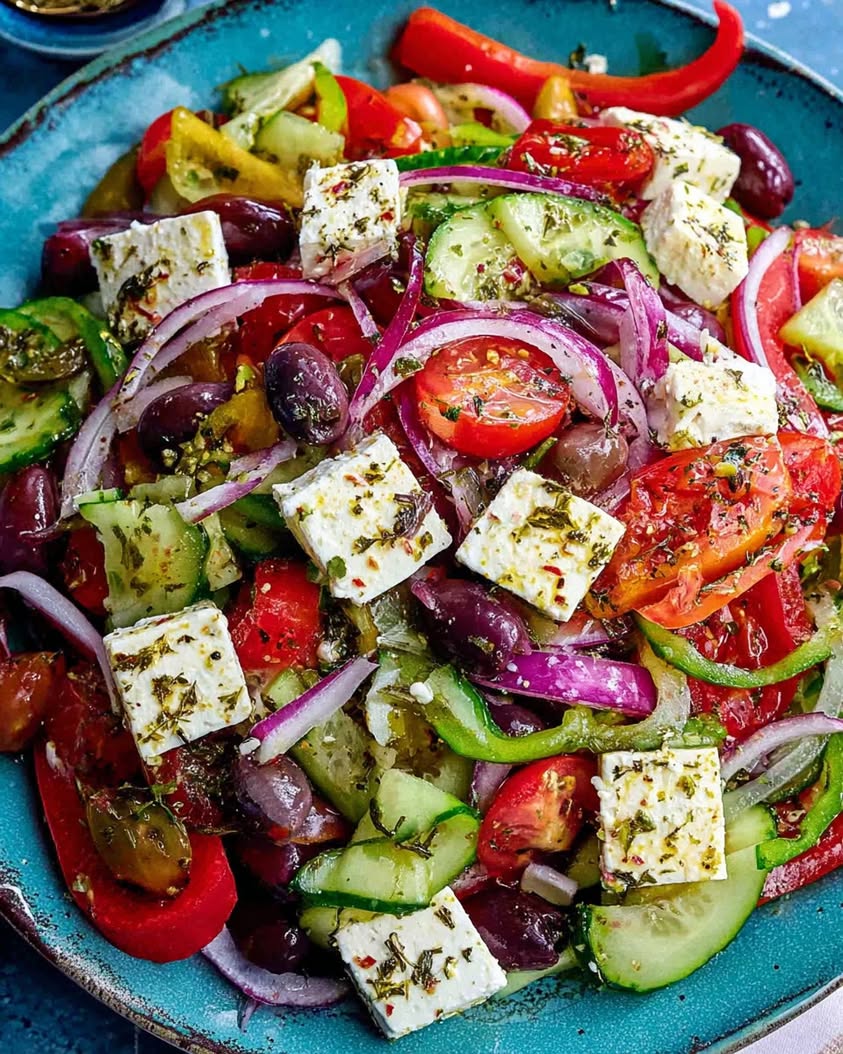
- Visual Appeal: The salad is a stunning mosaic of red, green, black, and white. The deep red of the tomatoes, the green of the cucumber and pepper, the purple-red onion, black olives, and white feta create a presentation that is as beautiful as it is appetizing.
- Skill Level Needed: Absolutely beginner-friendly. This authentic Greek salad recipe requires no cooking, only simple chopping and assembling. The key skill is selecting the best possible ingredients you can find.
- Special Equipment: You need only a sharp knife, a sturdy cutting board, and a large, wide bowl for serving. A traditional approach even suggests using your hands to gently mix the ingredients, connecting you directly to the food.
Recipe Overview
- Difficulty Level: We rate this authentic Greek salad recipe as “Easy” because it involves zero cooking techniques. The entire process is assembly-based. However, the difficulty can shift slightly based on your access to high-quality, authentic ingredients like Greek oregano and barrel-aged feta. Sourcing these elevates the dish from good to extraordinary.
- Category: This dish is a classic salad, but in Greece, it often serves as a shared appetizer or a light main course, especially when paired with crusty bread for dipping in the flavorful juices. It is a quintessential side dish for grilled meats and seafood.
- Cuisine: This is a cornerstone of Greek cuisine and Mediterranean cooking. The traditional Horiatiki salad embodies the principles of the famously healthy Mediterranean diet: an abundance of vegetables, healthy fats from olive oil, and modest amounts of dairy and protein.
- Cost: The cost is generally moderate and depends heavily on ingredient quality. Investing in a good bottle of Greek extra virgin olive oil and authentic feta cheese is worthwhile, as they are the backbone of flavor. Seasonal, local vegetables will taste best and often cost less.
- Season: This salad is truly a summer dish, tasting best when tomatoes and cucumbers are at their peak sweetness and juiciness. In Greece, you would rarely find a true Horiatiki made with off-season, flavorless tomatoes.
- Occasion: Perfect for casual summer lunches, barbecues, picnics, and mezze-style dinners. It is also an impressive yet simple dish to bring to a potluck or serve at a dinner party, offering a refreshing and healthy option.
Why You’ll Love This Authentic Greek Salad Recipe
First and foremost, the taste is irresistibly fresh and satisfying. Unlike salads drenched in heavy dressings, this traditional Horiatiki salad lets each ingredient speak for itself. The juicy tomatoes provide a sweet base, the cucumber adds a clean crunch, and the red onion offers a sharp bite. Meanwhile, the feta cheese contributes a creamy saltiness, and the Kalamata olives bring a deep, briny complexity. All these elements are unified by the rich, fruity olive oil and the aromatic oregano. Every forkful is a balanced explosion of Mediterranean flavors that is both light and deeply fulfilling.
Furthermore, the convenience is a major benefit. This authentic Greek salad recipe comes together in about 15 minutes with no cooking required. It is the ultimate solution for a hot day when you do not want to turn on the stove. You simply chop, arrange, and drizzle. Additionally, it requires minimal cleanup. This makes it an ideal last-minute side dish or a quick, healthy lunch. You can easily double or triple the recipe to feed a crowd without any additional hassle.
From a nutritional standpoint, this salad is a powerhouse. It is packed with vitamins, antioxidants, and fiber from the fresh vegetables. The extra virgin olive oil provides heart-healthy monounsaturated fats, which are a cornerstone of the Mediterranean diet. The feta cheese offers protein and calcium. As a result, this dish supports overall wellness, aids digestion, and provides sustained energy. It is a guilt-free pleasure that aligns perfectly with a healthy lifestyle.
For entertaining, this traditional Horiatiki salad is a guaranteed crowd-pleaser. Its vibrant, rustic presentation is visually stunning on any table. Served family-style in a large bowl, it encourages sharing and conversation. It pairs wonderfully with a variety of main courses, from grilled lamb and chicken to fresh fish. Serving this authentic Greek salad recipe shows your guests that you value simple, high-quality food made with care. It creates a warm, communal dining experience.
Finally, it is remarkably cost-effective and accessible. While splurging on premium olive oil and imported feta is recommended, you can still make a delicious version with good-quality local alternatives. The vegetable components are inexpensive, especially in season. This recipe proves that eating well does not require expensive or hard-to-find ingredients. Instead, it celebrates the natural goodness of basic, wholesome foods prepared with respect.
Historical Background and Cultural Significance
The origins of the traditional Horiatiki salad are humble and deeply rooted in Greek rural life, or “horio,” meaning village. Farmers and villagers would take this salad to the fields for their midday meal. They used ingredients that were readily available from their gardens and local producers: tomatoes, cucumbers, onions, olives from their trees, and homemade cheese, often feta preserved in brine. The salad was practical, nourishing, and required no refrigeration, as the olive oil and acidic tomato juice helped preserve it. This authentic Greek salad recipe is therefore a direct link to the agrarian history and resourcefulness of the Greek people.
Culturally, this salad is more than just food; it is a symbol of Greek identity and the Mediterranean way of life. It represents “philoxenia,” or hospitality, as it is almost always offered to guests. Sharing a Horiatiki salad from a common plate embodies community and togetherness. The dish is a staple in every Greek taverna, served as a starter to be enjoyed with bread and wine. Its preparation and consumption are ingrained in daily rituals, from family lunches to festive gatherings. Mastering this authentic Greek salad recipe means participating in a centuries-old culinary tradition.
The recipe has evolved very little over time, which is a testament to its perfection. The introduction of the tomato to Greece in the early 19th century was the final piece of the puzzle, transforming earlier versions of the dish. Since then, the formula has remained remarkably consistent. However, outside of Greece, the salad has often been adapted with additions like lettuce, bell peppers, and various dressings. While these versions can be tasty, they stray from the authentic, minimalist philosophy of the original traditional Horiatiki salad. The true evolution has been in the global appreciation and recognition of its simple genius.
Regional variations within Greece do exist, but they are subtle. On some islands, you might find capers added for an extra briny punch. In other regions, a green pepper might be included alongside or instead of the cucumber. The type of oregano can vary, with wild Greek oregano being the most prized. The one constant is the absence of lettuce, which is considered filler that dilutes the robust flavors of the core ingredients. Understanding these nuances helps you appreciate the integrity of the authentic Greek salad recipe and why specific choices are made.
Ingredient Deep Dive
Tomatoes: The tomato is the non-negotiable foundation of this salad. In Greece, they use ripe, flavorful varieties like beefsteak or heirloom tomatoes that are juicy and slightly soft. The juice from the tomatoes mixes with the olive oil to create the dressing. Nutritionally, tomatoes are rich in lycopene, vitamin C, and potassium. For the best authentic Greek salad recipe, choose tomatoes that are heavy for their size, fragrant at the stem, and deeply colored. Never refrigerate them, as cold temperatures destroy their flavor and texture. If you cannot find great fresh tomatoes, a high-quality canned whole tomato, drained and roughly chopped, can be a better substitute than a bland, out-of-season fresh one.
Cucumber: The cucumber provides essential crunch and a cooling contrast. English or Persian cucumbers are ideal because they have fewer seeds and thinner skin, which is often left on for texture and color. In a traditional Horiatiki salad, the cucumber is typically cut into thick half-moons or large chunks. Cucumbers are hydrating, low in calories, and a source of vitamin K. Select firm cucumbers without soft spots. Store them in the refrigerator’s crisper drawer. For the best texture in your authentic Greek salad recipe, you can salt the cucumber chunks lightly and let them drain for 10 minutes to remove excess water, preventing a watery salad.
Red Onion: The sharp, pungent bite of red onion is crucial for balancing the sweetness of the tomatoes. Its vibrant purple color also adds visual appeal. To mellow its raw intensity for the traditional Horiatiki salad, slice it thinly and soak the slices in ice water for 10-15 minutes before adding them to the bowl. This process crisps them and removes some of the harsh sulfur compounds. Red onions contain antioxidants and prebiotic fiber. Choose onions that are firm with tight, shiny skin. Store them in a cool, dark, dry place. A possible substitute is shallots, which offer a more delicate flavor.
Feta Cheese: Authentic Greek feta is a PDO (Protected Designation of Origin) product made from at least 70% sheep’s milk, often blended with goat’s milk. It has a tangy, salty, and crumbly texture. For this authentic Greek salad recipe, you must buy a block of feta in brine, not pre-crumbled dry feta. The block is creamier and more flavorful. Place the whole block on top of the salad, don’t crumble it. Feta is a good source of calcium and protein. Store leftover feta submerged in its brine in the refrigerator. If you need a dairy-free version, a firm, brined tofu can mimic the texture, though the flavor profile will differ.
Kalamata Olives: These iconic, almond-shaped olives from the Kalamata region are dark purple, meaty, and have a rich, winey flavor. They are always used with their pits in a traditional Horiatiki salad, as the pit contributes to the depth of flavor. Provide a small bowl for the pits. Kalamata olives are a source of healthy monounsaturated fats and antioxidants. Look for olives sold in jars or from an olive bar in their natural brine. Avoid canned, pitted black olives, as they lack the characteristic flavor and texture. Store opened olives in their liquid in the refrigerator.
Extra Virgin Olive Oil: This is the liquid gold that binds the salad. Use the best, fruitiest, most aromatic extra virgin olive oil you can afford, ideally from Greece. Its flavor is a primary component of the dish. A robust, peppery oil stands up well to the other ingredients. Olive oil is rich in antioxidants and healthy fats. Store it in a cool, dark place away from heat and light to prevent rancidity. Never use “light” olive oil or vegetable oil in this authentic Greek salad recipe, as they lack the necessary flavor.
Dried Oregano: Greek oregano is a specific variety with a more intense, earthy flavor than common Mediterranean oregano. It is traditionally dried. You sprinkle it directly over the vegetables and feta, where the tomato juices and oil activate its aroma. Rubbing the oregano between your palms as you add it releases its essential oils. Oregano has antimicrobial properties. For the best traditional Horiatiki salad, seek out Greek oregano online or in specialty stores. As a last resort, regular dried oregano can be used, but the flavor will be milder.
Common Mistakes to Avoid
- Using Low-Quality Olive Oil: This is the most critical error. A bland or rancid oil will make the entire salad taste flat. Your olive oil should taste fruity and peppery on its own. It is not just a dressing; it is a main ingredient.
- Crumbling the Feta: In an authentic Greek salad recipe, the feta is placed as a whole slab on top. Crumbling it causes it to disintegrate and become chalky in the juices. The block allows you to cut off creamy, substantial pieces with each bite.
- Adding Lettuce or Leafy Greens: This is a modern, non-Greek addition. Lettuce waters down the powerful flavors and alters the texture. A traditional Horiatiki salad is about the hearty chunks of vegetable, not a bed of greens.
- Using Pitted Olives: Pitted olives are more processed and often sit in a different brine, losing their firm texture and complex flavor. The pit inside a Kalamata olive helps retain its meaty quality and authentic taste.
- Dicing Ingredients Too Small: The salad should feel rustic and substantial. Chopping everything into tiny pieces creates a mushy texture and makes it look more like a salsa. Keep the chunks large and bold.
- Mixing the Salad Too Early or Too Vigorously: Assemble the salad just before serving. If you mix it too early, the vegetables will start to release too much water and become soggy. Gently toss once to combine the oil and juices.
- Forgetting to Season the Tomatoes: A light sprinkle of sea salt on the tomato chunks after you place them in the bowl helps draw out their juices, which is essential for creating the dressing with the oil.
- Using Fresh Oregano Instead of Dried: While fresh herbs are often preferred, dried oregano is traditional here. Its concentrated, earthy flavor holds up better and is more authentic to the traditional Horiatiki salad.
- Skipping the Onion Soak: Not soaking the sliced red onion leads to an overpowering, harsh flavor that can dominate the salad. The quick ice-water bath is a simple step that makes a dramatic difference.
- Chilling the Salad: This salad is meant to be served at room temperature to allow the flavors to bloom. Serving it cold from the refrigerator mutes the taste of the olive oil and tomatoes.
Essential Techniques
Choosing and Preparing Tomatoes: The technique starts at the market. For this authentic Greek salad recipe, you must seek out ripe, in-season tomatoes. Gently press near the stem; it should yield slightly and smell sweet and earthy. To prepare, wash and dry the tomato. Cut it into irregular, wedged chunks, about 1 to 1.5 inches in size. This large cut prevents the tomato from turning to mush. As you place them in the bowl, season them lightly with salt. This salt draws out the natural juices, which is the first step in creating the dressing. The common pitfall is using refrigerated or under-ripe tomatoes, which are mealy and lack the necessary sweetness and juice.
Soaking Red Onion Slices: This technique transforms the onion from a harsh ingredient to a crisp, pungent yet palatable component. After peeling the onion, cut it in half from root to tip, then slice it thinly along the grain. Place the slices in a bowl of ice water for 10-15 minutes. The cold water crisps the onion and draws out the sulfurous compounds that cause a sharp bite. Afterwards, drain the slices and pat them dry with a paper towel. This step ensures the onion integrates beautifully into the traditional Horiatiki salad without overwhelming the other flavors. Skipping it is a common mistake for beginners.
The Art of Assembly: The order and method of assembly are intentional. First, place the tomato and cucumber in the bowl and season with salt. Then, add the drained onion and olives. Next, place the whole block of feta on top. Drizzle everything generously with olive oil. Finally, sprinkle the dried oregano over the feta and vegetables. Do not toss yet. This layering allows each ingredient to be showcased. The visual cue for success is a colorful, rustic mound with the white feta prominently displayed. The final gentle toss is done just before serving to combine the oil and tomato juices.
Pro Tips for Perfect Authentic Greek Salad
Always serve your salad at room temperature. Taking the tomatoes, cucumber, and feta out of the refrigerator 30 minutes before assembling allows their true flavors to shine. Cold ingredients suppress taste and prevent the olive oil from properly coating everything.
Use a wide, shallow serving bowl instead of a deep one. This presentation allows the ingredients to spread out in a single layer, preventing them from getting crushed and becoming watery. It also makes for a more beautiful and accessible display.
Invest in a bottle of high-quality Greek extra virgin olive oil specifically for finishing dishes like this salad. The difference between a generic oil and a robust, fruity Greek oil is night and day in terms of flavor impact.
When adding the oregano, take a pinch and rub it vigorously between your palms directly over the salad. This friction releases the essential oils in the dried herb, dramatically intensifying its fragrance and flavor.
Provide a crusty loaf of bread, like a rustic sourdough or pita, on the side. The bread is not just an accompaniment; it is a tool for “mopping up” the incredible juices and oil left at the bottom of the bowl, which is considered the best part.
If you must prepare components ahead, chop the cucumber and onion and store them separately in airtight containers in the fridge. Chop the tomatoes and slice the feta only at the last minute to preserve their texture.
For an extra layer of flavor, add a few capers or a very light drizzle of red wine vinegar. While not strictly traditional, these are accepted variations in some Greek regions and can add a nice punch.
Variations and Adaptations
Regional variations within Greece offer subtle twists on the traditional Horiatiki salad. On the island of Santorini, you might find the addition of salty capers, which grow wild on the island’s volcanic cliffs. In Crete, they sometimes add a handful of wild greens like purslane or arugula (rocket), though this edges away from the strict “no lettuce” rule. Some tavernas in the Peloponnese include a green bell pepper for extra crunch and a slight bitterness. Exploring these regional takes can be fun, but always start with the classic authentic Greek salad recipe as your foundation.
For seasonal adaptations, the core recipe is designed for summer. In winter, when tomatoes are lackluster, you can pivot to a different Greek salad concept. Try a salad of shredded cabbage, carrots, and a similar olive oil-lemon-oregano dressing. Alternatively, roast cherry tomatoes to concentrate their flavor before adding them to the mix. You can also add roasted beetroot cubes for sweetness and color during the colder months, creating a hearty winter version.
Dietary modifications are straightforward. For a vegan traditional Horiatiki salad, omit the feta cheese. You can add extra olives or capers for saltiness, or use a vegan “feta” made from marinated tofu or almonds. For a lower-sodium version, rinse the feta and olives briefly under cold water to remove some surface brine, and be mindful of added salt. To make it more of a meal, add a can of drained chickpeas or white beans for plant-based protein and fiber.
Flavor variations can cater to personal taste. Add a pinch of dried mint along with the oregano for a fresher aroma. A light zest of lemon over the top can brighten the entire dish. For a spicy kick, add a few slices of fresh pepperoncini or a pinch of crushed red pepper flakes. If you love garlic, rub the inside of the serving bowl with a cut clove before adding the ingredients for a subtle, infused background note.
Serving and Presentation Guide
Plating is key for visual appeal. Use a wide, shallow ceramic or wooden bowl that provides a neutral backdrop for the vibrant colors. Arrange the tomato and cucumber chunks first, creating a base. Scatter the onion slices and olives around them. Then, place the solid block of feta prominently in the center or slightly off-center on top of the vegetables. This “crowning” of the feta is traditional and impressive.
For garnishing, keep it simple and edible. A final extra drizzle of olive oil over the feta block makes it glisten. You can add a whole sprig of fresh oregano or basil for a fragrant garnish that guests can remove. A light dusting of freshly ground black pepper just before serving adds visual contrast and flavor. Never use non-edible garnishes; the beauty of this authentic Greek salad recipe is in its edible components.
Traditional accompaniments are minimal but essential. Crusty bread is non-negotiable for soaking up the juices. In Greece, it is often served alongside other mezze like tzatziki, dolmades (stuffed grape leaves), and grilled octopus or sardines. A glass of chilled Assyrtiko white wine or a simple glass of water completes the experience. For a modern twist, serve individual portions on large plates as a main course for a light lunch, perhaps with a piece of grilled chicken or fish laid beside it.
Wine and Beverage Pairing
Wine pairing for this salad is a delight. The sharp acidity of the tomatoes and the salty feta call for a crisp, high-acid white wine. A Greek Assyrtiko from Santorini is the classic choice, with its citrus and mineral notes that cut through the richness. Alternatively, a Sauvignon Blanc or a dry Rosé also work beautifully. If you prefer red, choose a light-bodied, low-tannin red like a Beaujolais or a Greek Xinomavro rosé. The key is to avoid oaky or heavily tannic wines that will clash with the salad’s freshness.
For non-alcoholic alternatives, consider sparkling water with a squeeze of lemon or lime to cleanse the palate. A homemade lemonade, not too sweet, complements the Mediterranean flavors. Iced herbal teas, such as mint or chamomile, are also refreshing. In Greece, you would often simply drink cool, fresh water with your meal, which is always a perfect pairing.
Storage and Shelf Life
This salad is best enjoyed immediately after assembly. However, if you have leftovers, store them with care. Transfer the salad to an airtight container and refrigerate for up to 24 hours. Be aware that the vegetables will continue to release water, and the cucumber will soften. The feta will also continue to absorb flavors and may become saltier.
For the best leftover experience, try to store components separately. Keep the tomato-cucumber-onion mixture in one container and the feta block in another, both covered and refrigerated. The olives can stay in their brine. When ready to eat again, let everything come to room temperature, reassemble, add fresh olive oil and oregano, and serve. The salad will not be as perfect as when first made, but it will still be tasty. Do not freeze this salad, as the texture of all the vegetables will be destroyed upon thawing.
Make Ahead Strategies
You can efficiently prep components ahead of time to streamline assembly. Up to a day in advance, wash and chop the cucumber. Store it in an airtight container in the fridge. Slice the red onion and soak it in ice water; you can then drain it and store it in a separate container in the fridge. Keep the olives ready in their brine.
On the day of serving, take the pre-chopped cucumber and onion out of the refrigerator about 30 minutes early to take the chill off. Then, chop your tomatoes, slice the feta from its block, and assemble everything fresh. This strategy ensures the tomatoes remain firm and juicy and the feta maintains its creamy texture. The final drizzle of oil and sprinkle of oregano must always be done just before serving to preserve their peak aroma and flavor.
Scaling Instructions
Scaling this recipe is very straightforward because it is an assembly of whole ingredients. To halve the recipe, simply use half of each ingredient. Use a smaller block of feta. The prep time remains roughly the same. To double or triple for a crowd, use a very large, wide platter or multiple bowls to avoid overcrowding. You may need to work in batches to ensure even seasoning with salt and oregano. The key is to maintain the ratio of vegetables to feta to oil. When making a large batch, consider adding the olive oil in stages as you build layers to ensure everything gets coated.
Nutritional Deep Dive
This traditional Horiatiki salad is a nutritional powerhouse aligned with the Mediterranean diet. A typical serving provides a excellent balance: healthy fats from olive oil and olives, protein and calcium from feta, and a wide array of vitamins, minerals, and fiber from the fresh vegetables. Tomatoes are rich in vitamin C, potassium, and the antioxidant lycopene. Cucumbers provide hydration and vitamin K. Red onions offer quercetin, an anti-inflammatory compound.
The monounsaturated fats in olive oil are heart-healthy and help absorb fat-soluble vitamins from the vegetables. While feta is a cheese and contains saturated fat and sodium, it is used in moderation as a flavoring agent. For weight management, this salad is very filling due to its high water and fiber content, which can help control appetite. To reduce calories slightly, you can moderate the amount of olive oil, though this will impact the authentic flavor profile.
Dietary Adaptations
Gluten-Free: This authentic Greek salad recipe is naturally gluten-free. Just ensure that any bread served on the side is a certified gluten-free variety.
Dairy-Free/Vegan: Omit the feta cheese. For a similar salty, creamy element, use a vegan feta alternative made from tofu, almonds, or coconut oil. Alternatively, add extra olives and capers, or include creamy avocado chunks (though not traditional).
Low-Carb/Keto: This salad is already relatively low in carbohydrates. The primary carbs come from the tomatoes and onion. For a stricter keto approach, reduce the amount of tomato and red onion slightly, and increase the proportion of olives, feta, and olive oil to maintain fat intake.
Low-Sodium: Rinse the feta block and olives thoroughly under cold water to remove surface brine. Use a light hand when salting the tomatoes, and consider using a low-sodium feta if available. The flavor will still come from the fresh vegetables and high-quality oil.
Troubleshooting Guide
Salad is too watery: This happens if the tomatoes are overly ripe or the salad is mixed too early. Next time, choose firmer tomatoes, salt them and let them sit for 5 minutes, then drain off any excess liquid before adding other ingredients. Also, assemble at the last minute.
Flavor is bland: The culprit is almost always low-quality olive oil or under-seasoned tomatoes. Taste your olive oil on its own. Season the tomatoes adequately with salt to draw out their juices, which form the dressing base. Ensure your oregano is fresh, not stale.
Onion is too overpowering: You skipped the soaking step. For future reference, always soak sliced red onion in ice water for at least 10 minutes. For the current salad, you can try picking out some of the onion or adding a touch more olive oil and feta to balance it.
Feta is dry and crumbly: You likely used pre-crumbled feta, which is drier and meant for topping baked dishes. For this salad, you must use a block of feta stored in brine. It retains moisture and creaminess. For now, drizzle a little more olive oil directly over the feta to moisten it.
Frequently Asked Questions
Q: Can I use cherry tomatoes instead of large tomatoes?
A: Yes, you can use cherry or grape tomatoes. Halve or quarter them to mimic the chunkier texture. They are often sweeter and more reliable out of season. However, they may release less juice, so you might need a tiny splash of red wine vinegar to balance the dressing.
Q: Is there a substitute for Kalamata olives?
A: If you cannot find Kalamatas, other brined black olives like Gaeta or Niçoise olives can work. Avoid canned, pitted black olives, as they have a very different, milder flavor and softer texture that won’t provide the same authentic taste.
Q: Why is my salad called “Horiatiki”?
A: “Horiatiki” (χωριάτικη) directly translates to “village” or “peasant” salad. It distinguishes the traditional, rustic version with large chunks and no lettuce from other, more composed Greek salads. It’s the original and most beloved form.
Q: Can I add bell peppers?
A: While not part of the most classic version, a green bell pepper is a common addition in many Greek households and tavernas today. It adds a nice crunch and slight bitterness. If you enjoy it, feel free to include it.
Q: How do I properly eat the olives with pits?
A: Simply take an olive in your fingers, bite the flesh off the pit, and discreetly place the pit on the side of your plate or in a provided small bowl. Eating around the pit is part of the traditional, leisurely experience.
Q: What’s the best bread to serve with it?
A: A crusty, rustic sourdough or a traditional Greek barley rusks (paximadia) are excellent. The key is a bread with a sturdy crust and a soft interior that can soak up the flavorful juices without falling apart.
Q: Can I make the dressing separately?
A: Technically yes, but it’s not traditional. The magic of the authentic Greek salad recipe is that the dressing forms naturally from the tomato juices, olive oil, and oregano mingling in the bowl. Making it separately loses that fresh, integrated quality.
Q: How long can I store the leftover salad?
A> It’s best within 2-3 hours of assembly. As leftovers in the fridge, it will be safe to eat for up to 24 hours, but the texture of the cucumbers and tomatoes will soften significantly. The flavor will still be good, but the texture won’t be ideal.
Additional Resources
To deepen your knowledge of Greek cuisine, explore other classic recipes that pair perfectly with this salad. Learn to make homemade tzatziki, a cucumber-yogurt dip, or spanakopita (spinach pie). Understanding the principles of the Mediterranean diet can also inspire your overall cooking approach, focusing on vegetables, whole grains, legumes, and healthy fats.
For technique guides, research how to select and store extra virgin olive oil to preserve its quality. Learning basic knife skills for chopping vegetables efficiently will make preparing this and many other recipes faster and more enjoyable. If you’re interested in the cultural aspect, reading about Greek food traditions and the history of key ingredients like olives and feta can enrich your cooking experience.
PrintGreek Salad (Traditional Horiatiki Recipe)
- Total Time: 15 minutes
- Yield: 4
Description
A classic Greek village salad featuring fresh vegetables, tangy feta cheese, and a simple olive oil dressing.
Ingredients
- 4 large ripe tomatoes, cut into wedges
- 1 cucumber, sliced into thick rounds
- 1 red onion, thinly sliced
- 1 green bell pepper, sliced
- 200g feta cheese, cut into a slab
- 1/2 cup Kalamata olives
- 2 tbsp extra virgin olive oil
- 1 tsp dried oregano
- Salt to taste
Instructions
- Combine tomatoes, cucumber, onion, and bell pepper in a large bowl.
- Place the slab of feta cheese on top of the vegetables and scatter olives around it.
- Drizzle with olive oil, sprinkle with oregano and salt, and gently toss just before serving.
Notes
You can customize the seasonings to taste.
- Prep Time: 15 minutes
- Cook Time: 0 minutes
- Method: Main
- Cuisine: Greek