Creamy Tuscan Ravioli with Spinach and Sun-Dried Tomatoes: A Restaurant-Quality Weeknight Wonder
Imagine a dish that delivers the rustic charm of an Italian trattoria directly to your dinner table in under thirty minutes. This Creamy Tuscan Ravioli with Spinach and Sun-Dried Tomatoes is exactly that kind of culinary magic. It transforms simple, fresh ingredients into a luxurious and deeply satisfying meal that feels special enough for company yet simple enough for a busy Tuesday. The recipe hinges on a velvety, garlic-infused cream sauce that clings perfectly to every curve of cheese-filled pasta, creating a harmony of textures and tastes that is utterly irresistible.
Furthermore, the beauty of this Creamy Tuscan Ravioli recipe lies in its brilliant balance. For instance, the sweet, tangy punch of sun-dried tomatoes cuts through the rich cream, while fresh spinach adds a pop of color and a whisper of earthiness. Each forkful is a delightful contrast: the tender pasta gives way to a molten cheese center, all swathed in that decadent sauce. Ultimately, this dish proves that you don’t need a passport or a whole afternoon to enjoy the soul-warming flavors of Tuscany.
Finally, this recipe is a true testament to the power of a well-stocked pantry. By using store-bought cheese ravioli, you achieve a spectacular result with minimal effort. Consequently, you can focus on building layers of flavor in the pan, from toasting the garlic to wilting the spinach and reducing the cream to silky perfection. This Creamy Tuscan Ravioli is your secret weapon for an impressive, no-fuss dinner that will have everyone asking for seconds.
Quick Recipe Highlights
- Flavor Profile: This dish boasts a rich and complex taste. The savory, umami depth of Parmesan and garlic forms the base, beautifully contrasted by the tangy sweetness of sun-dried tomatoes. A hint of Italian herbs ties everything together for a truly authentic Tuscan-inspired experience.
- Texture: You’ll enjoy a wonderful play of textures here. The pasta is tender yet al dente, giving way to a soft, creamy cheese filling. Meanwhile, the sun-dried tomatoes offer a delightful chew, and the wilted spinach provides a silky, delicate mouthfeel against the lush sauce.
- Aroma: As it cooks, your kitchen will fill with an intoxicating scent. First, the pungent, nutty aroma of sautéing garlic hits you. Then, the fragrance of dried herbs blooms in the warm oil, followed by the comforting, milky scent of cream reducing and melding with sharp, salty Parmesan cheese.
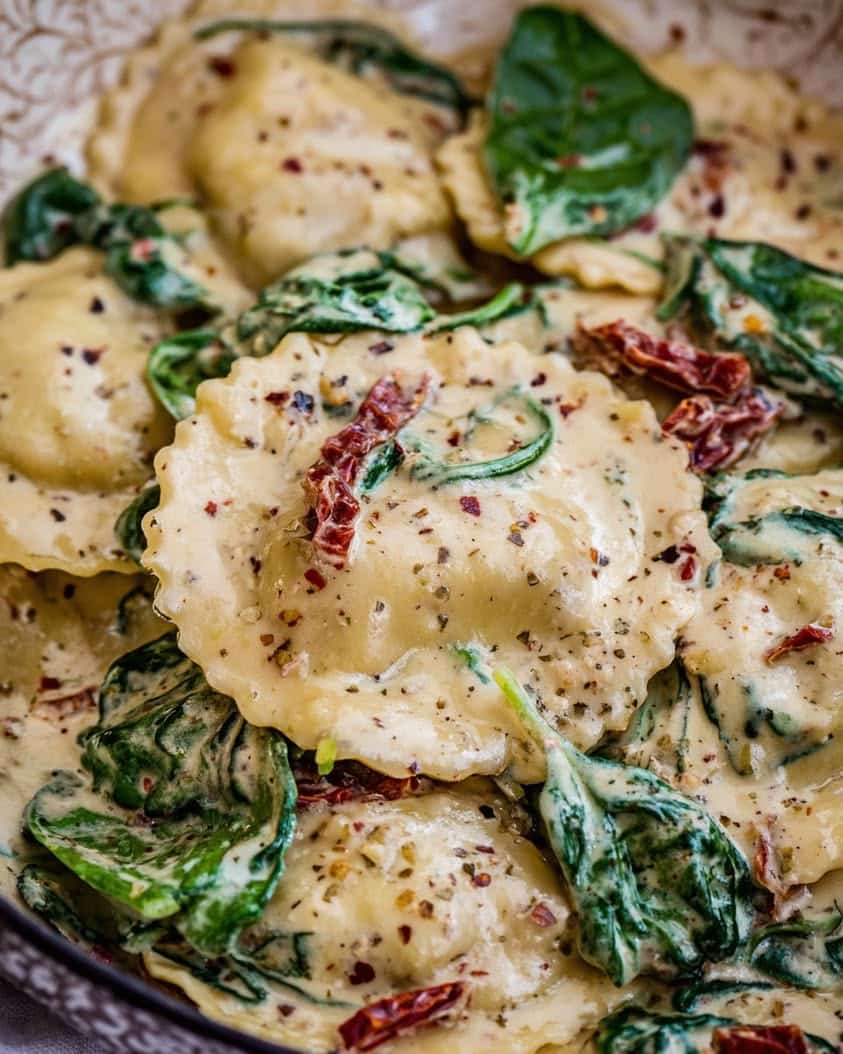
- Visual Appeal: This plate is a feast for the eyes with its vibrant color palette. The creamy white sauce is studded with ruby-red sun-dried tomatoes and emerald green spinach, all cradling golden-brown ravioli. A final snowdrift of grated Parmesan and a fresh herb garnish make it picture-perfect.
- Skill Level Needed: This is a fantastic recipe for cooks of all levels. It requires only basic techniques like sautéing and simmering. If you can boil water and stir a sauce without burning it, you can absolutely master this restaurant-quality Creamy Tuscan Ravioli with ease.
- Special Equipment: You need only standard kitchen tools. A large pot for boiling pasta, a large skillet or sauté pan for the sauce, a wooden spoon for stirring, and a grater for the Parmesan cheese are all that’s required. No fancy gadgets are necessary for this simple, stunning meal.
Recipe Overview
- Difficulty Level: We rate this Creamy Tuscan Ravioli as “Easy” for very good reason. The steps are sequential and logical, with no advanced skills like making pasta from scratch required. The primary tasks involve boiling, sautéing, and simmering—foundational techniques most home cooks use regularly. Additionally, the forgiving nature of the cream sauce means minor timing variations won’t ruin the dish.
- Category: This versatile dish fits multiple meal categories beautifully. It’s a stellar main course for a vegetarian dinner, yet substantial enough to satisfy hearty appetites. Alternatively, you can serve smaller portions as a luxurious first course or pasta course for a multi-course Italian feast. It’s truly an all-purpose culinary star.
- Cuisine: This recipe is inspired by the hearty, rustic cooking of Tuscany, Italy. Tuscan cuisine, or “cucina povera,” emphasizes simple, high-quality ingredients transformed into deeply flavorful dishes. The use of sun-dried tomatoes, garlic, Parmesan, and cream reflects this tradition, celebrating preservation and dairy. While not a strictly historical dish, it captures the region’s spirit perfectly.
- Cost: This is a moderately priced meal that delivers high-end flavor. The main cost drivers are the cheese ravioli and the heavy cream. However, sun-dried tomatoes, spinach, and basic aromatics are relatively inexpensive. Overall, you can prepare this impressive Creamy Tuscan Ravioli for a fraction of the cost of a similar restaurant entrée, making it a brilliant value.
- Season: This dish is wonderful year-round, but it particularly shines in the cooler months. The rich, creamy sauce and comforting pasta provide warmth and satisfaction on autumn and winter evenings. Conversely, you can lighten it for spring or summer by using a squeeze of lemon juice or fresh basil, proving its fantastic adaptability.
- Occasion: It’s perfect for countless occasions. Whip it up for a quick and special weeknight family dinner. Alternatively, double the batch to serve a crowd at a casual dinner party. Its elegant appearance and incredible taste make it a reliable choice for date nights at home, potlucks, or any time you crave cozy, indulgent comfort food.
Why You’ll Love This Recipe
First and foremost, the taste and texture of this Creamy Tuscan Ravioli are simply unforgettable. Each bite delivers a symphony of flavors: the deep, savory richness of garlic and Parmesan, the bright, tangy pop of sun-dried tomatoes, and the fresh, earthy note of spinach. Texturally, it’s a dream—the tender pasta, the gooey cheese filling, and the velvety sauce create a luxurious mouthfeel that is deeply comforting. Moreover, the balance is impeccable; the acidity from the tomatoes perfectly cuts through the cream, ensuring the dish feels indulgent but never heavy or cloying on your palate.
From a practical standpoint, the convenience of this recipe is a major win. With a total time of just 25 minutes, it’s faster than ordering takeout. You can have a restaurant-quality meal on the table with minimal active cooking time. Furthermore, it uses mostly pantry-stable ingredients or items with a long fridge life, like cream and frozen ravioli. This means you can likely make it without a special grocery trip. Ultimately, it solves the eternal “what’s for dinner” question with a solution that is both quick and spectacularly delicious.
Nutritionally, this dish offers more than just empty calories. Spinach is a powerhouse, packed with iron, vitamins A, C, and K, and fiber. Sun-dried tomatoes are concentrated sources of antioxidants like lycopene. While it is a rich dish, you control the portions and can easily add a side salad for balance. Using a quality cheese ravioli provides protein and calcium. Therefore, you can enjoy this indulgent-tasting Creamy Tuscan Ravioli knowing it contributes valuable nutrients to your meal.
For entertaining, this recipe is a true social superstar. It’s incredibly impressive to serve, looking and tasting like it came from a professional kitchen. However, it doesn’t trap you in the kitchen while your guests are having fun. You can do nearly all the prep ahead of time. Consequently, you can mingle with your company and simply finish the sauce and cook the pasta at the last minute. It’s the perfect dish for a host who wants to provide a memorable meal without the stress.
Finally, the cost-effectiveness and accessibility of this Creamy Tuscan Ravioli recipe cannot be overstated. The ingredients are readily available at any standard supermarket. You don’t need expensive, hard-to-find specialty items. Compared to dining out, making this at home saves a significant amount of money while yielding a similar or superior result. Additionally, the recipe is highly adaptable to what you have on hand, making it a fantastic way to create a gourmet meal on a budget. It democratizes fine dining, bringing luxurious flavors into everyday home cooking.
Historical Background and Cultural Significance
The story of this dish is less about ancient tradition and more about modern culinary evolution. Tuscan cuisine, known as “cucina povera” or “poor cooking,” is historically based on simplicity, resourcefulness, and maximizing the flavor of few, high-quality ingredients. Dishes like ribollita (bread soup) and pappa al pomodoro (tomato bread soup) exemplify this tradition. Our Creamy Tuscan Ravioli with Spinach and Sun-Dried Tomatoes draws inspiration from these principles—using preserved tomatoes, garden greens, cheese, and cream—but presents them in a contemporary, convenient format that respects the spirit of making much from little.
Culturally, pasta filled with cheese or other ingredients has roots across Italy, with each region boasting its own signature shapes and fillings. Ravioli, in particular, is believed to have origins in the Middle Ages, possibly in the regions of Liguria or Emilia-Romagna. The Tuscan approach to pasta often favors simpler, egg-based noodles like pappardelle, served with robust meat or mushroom sauces. Therefore, this recipe represents a delightful fusion: it takes the convenient, beloved form of ravioli and dresses it in a sauce that uses iconic Tuscan flavors like garlic, herbs, and preserved tomatoes, creating a bridge between regional styles.
The evolution of this specific recipe is a testament to globalized home cooking. The use of sun-dried tomatoes became wildly popular in American and international kitchens in the late 20th century, prized for their intense flavor and long shelf life. Combining them with cream, garlic, and spinach to create a quick pan sauce for pasta or chicken became a staple of “weeknight gourmet” cooking. Applying this sauce formula to cheese ravioli was a natural and brilliant progression, resulting in a dish that feels both familiar and special, a perfect example of how recipes adapt and improve over time through home cook innovation.
Regarding regional variations, the core concept is wonderfully flexible. In Northern Italy, a similar dish might use a rich mascarpone cheese in the sauce instead of heavy cream. In coastal areas, you might find capers or olives added for a briny note. A truly traditional Tuscan cook might use fresh ricotta and spinach ravioli (tortelli) and a simpler sauce of butter and sage. Our version, with its creamy tomato-spinach sauce, is a modern interpretation that prioritizes depth of flavor and ease of preparation, making the essence of Tuscan-inspired cooking accessible to everyone, anywhere.
Ingredient Deep Dive
Cheese Ravioli: The foundation of the dish, cheese ravioli provides the satisfying, hearty base. Typically filled with a blend of ricotta, mozzarella, and Parmesan, it offers creamy texture and salty, milky flavor. Culturally, stuffed pasta is a celebration of ingenuity, turning simple ingredients into a special meal. Nutritionally, it provides carbohydrates for energy, protein from the cheese and eggs in the pasta, and calcium. For best results, choose a high-quality fresh or frozen brand; avoid overcooking, as they can become mushy. You can substitute with tortellini, meat ravioli, or even a sturdy short pasta like rigatoni in a pinch.
Sun-Dried Tomatoes: These are the flavor powerhouses, offering a concentrated sweet-tart umami punch. Traditionally, tomatoes were dried in the summer sun across Southern Italy to preserve the harvest for winter, a technique that intensifies their sugars and acids. They are rich in antioxidants, particularly lycopene, which is linked to heart health. Look for tomatoes dried without sulfites and packed in oil for the best flavor and plump texture. You can use the oil from the jar to start your sauce for an extra flavor boost. If substituting, try slow-roasted cherry tomatoes or a tablespoon of tomato paste for a different but still delicious depth.
Fresh Spinach: This leafy green adds vital color, freshness, and nutrients. It wilts quickly into the sauce, providing a silky texture and a mild, earthy flavor that balances the richness. Spinach has been cultivated for centuries and is celebrated in many cuisines for its versatility and health benefits. It’s an excellent source of iron, vitamins A, C, and K, and fiber. Always choose crisp, dark green leaves and wash them thoroughly. Baby spinach is ideal as it’s tender and requires no stemming. You can substitute with other quick-wilting greens like kale (remove tough stems) or Swiss chard, though the flavor will be more pronounced.
Heavy Cream: This ingredient creates the luxurious, velvety sauce that defines the dish. Cream, a staple in Northern Italian cooking, adds body, richness, and a subtle sweetness that mellows the garlic and Parmesan. It provides fat, which carries flavor and creates a satisfying mouthfeel. For the best texture, use full-fat heavy cream or whipping cream; lower-fat alternatives may curdle or not thicken properly. To store, keep it refrigerated and use by the date on the carton. For a dairy-free version, full-fat coconut cream can work, though it will impart a coconut flavor. Alternatively, a cashew cream can provide a neutral, rich base.
Parmesan Cheese: More than just a garnish, Parmesan (Parmigiano-Reggiano) is a key flavor agent. This hard, aged cheese from Italy brings a complex, nutty, salty umami that elevates the entire sauce. Its history dates back nearly 1,000 years, and it’s protected by strict production rules. It’s a good source of protein and calcium. Always grate it fresh from a block for the best flavor and meltability; pre-grated cheese contains anti-caking agents that can make sauces grainy. Store wrapped in parchment in the fridge. For substitutions, a similar hard, aged cheese like Pecorino Romano (saltier, sharper) or Grana Padano can be used.
Common Mistakes to Avoid
- Overcooking the Ravioli: This is the most common pitfall. Ravioli cooks very quickly, often in 3-4 minutes. Overcooked ravioli becomes bloated, mushy, and can even burst open. Always follow the package instructions for al dente and taste a piece a minute early. Remember, it will continue to cook slightly when added to the hot sauce.
- Burning the Garlic: Garlic burns in a flash and turns bitter, ruining the entire sauce base. Cook it over medium-low heat just until it becomes fragrant, about 30-60 seconds. If it starts to brown, immediately remove the pan from the heat and add your liquid (cream or wine) to stop the cooking process.
- Using Pre-Grated Parmesan: Pre-grated cheese contains cellulose to prevent clumping, which prevents it from melting smoothly into the sauce. Consequently, your sauce can become grainy or gritty. For a perfectly silky Creamy Tuscan Ravioli sauce, invest five minutes in grating a block of real Parmigiano-Reggiano yourself.
- Adding Cold Cream to a Hot Pan Too Quickly: If you pour cold cream directly into a very hot pan, it can shock the dairy and cause separation or curdling. To prevent this, let the pan cool slightly after sautéing the garlic, or temper the cream by adding a splash of the hot pasta water to it first before introducing it to the pan.
- Not Reserving Pasta Water: The starchy, salty water from cooking the ravioli is liquid gold. It helps thin the sauce to the perfect consistency and helps it cling to the pasta. Always scoop out a cup of water before draining your ravioli. You may not need it all, but it’s essential for adjusting the sauce at the end.
- Crowding the Sauce Pan: When you add the ravioli to the sauce, ensure your skillet is large enough to hold everything comfortably. If the pan is too crowded, you can’t toss the pasta properly to coat it, and you risk breaking the delicate ravioli as you try to stir. Use a large, wide skillet for best results.
- Skipping the Seasoning Layers: Seasoning only at the end results in a flat-tasting dish. Instead, season in layers: salt the pasta water generously, season the garlic as it cooks, and taste the sauce before adding the pasta. Finally, remember that Parmesan is salty, so adjust your final seasoning after it’s been incorporated.
- Letting the Sauce Sit Too Long Before Serving: Cream-based sauces can thicken and become gloppy as they sit. For the ideal texture, have your serving plates ready and serve the Creamy Tuscan Ravioli immediately after tossing it in the sauce. If you must hold it, keep it on the lowest possible heat with a splash of reserved pasta water to keep it loose.
Essential Techniques
Sautéing Garlic to Perfection: This technique is crucial for building a flavorful foundation without bitterness. First, ensure your oil or butter is warm but not smoking over medium heat. Then, add minced garlic and stir constantly. The goal is to cook it just until it becomes fragrant and loses its raw, pungent edge—this takes only 30 to 60 seconds. If you see it starting to turn golden, immediately proceed to the next step. The common pitfall is walking away, which leads to burned, acrid garlic that permeates the entire dish. Success is signaled by a warm, nutty aroma, not by visible browning.
Wilting Spinach Properly: Wilting spinach correctly ensures it integrates seamlessly into the sauce without becoming watery or slimy. After adding the fresh leaves to the pan, use tongs to gently toss and fold them into the hot sauce. The residual heat and steam will cause the leaves to collapse rapidly. Continue tossing for about one minute, just until the spinach is uniformly wilted and bright green. Overcooking releases too much water and turns the spinach a dull, army-green color. The visual cue for success is vibrant, fully wilted leaves that have reduced in volume by about three-quarters.
Reducing a Cream Sauce: This technique concentrates flavor and thickens the sauce to a luxurious, coating consistency. After adding the cream and other liquids, bring the mixture to a gentle simmer. Let it bubble lightly, stirring occasionally, for several minutes. As it reduces, the sauce will slowly thicken and coat the back of a spoon. The key is patience; a rapid boil can cause the cream to separate or scorch. The common pitfall is not reducing enough, resulting in a thin, runny sauce. You know it’s ready when you drag your spoon through the sauce and the path holds for a few seconds before filling in.
Finishing Pasta in the Sauce (The “Mantecatura”): This classic Italian method is what makes pasta dishes restaurant-quality. Instead of just topping cooked pasta with sauce, you combine them in the skillet. The pasta finishes cooking for the last minute or two in the simmering sauce. This allows the ravioli to absorb flavor and the sauce to cling to every surface. Always reserve some starchy pasta water to adjust consistency. The technique ensures each bite is perfectly seasoned and sauced, creating a harmonious dish rather than separate components on a plate.
Pro Tips for Perfect Creamy Tuscan Ravioli
First, use the oil from the sun-dried tomato jar to sauté your garlic. This infused oil is packed with tomato flavor and will give your sauce an incredible depth from the very first step. It’s a simple trick that maximizes flavor with zero extra effort.
Second, consider adding a splash of white wine after toasting the garlic. Let it simmer for a minute to cook off the alcohol before adding the cream. This adds a layer of acidity and complexity that elevates the entire dish to a new level of sophistication.
Third, for an extra flavor boost, toast your dried Italian herbs in the oil for about 30 seconds before adding the garlic. Heat unlocks the volatile oils in dried herbs, making them more fragrant and potent, which results in a more aromatic and flavorful sauce base.
Fourth, if using frozen ravioli, do not thaw it first. Add it directly to the boiling water from frozen. This prevents the pasta from becoming soggy or sticky before cooking and helps it maintain a perfect al dente texture in the final dish.
Fifth, finish the dish with a drizzle of high-quality extra virgin olive oil and a crack of black pepper just before serving. The fresh oil adds a fruity note and luxurious sheen, while the pepper provides a slight heat that complements the creamy sauce beautifully.
Sixth, let the Creamy Tuscan Ravioli rest for two minutes after tossing it in the sauce and before serving. This brief pause allows the pasta to fully absorb the sauce and the flavors to marry, ensuring every component is perfectly integrated and at the ideal temperature for eating.
Variations and Adaptations
For regional variations, explore different Italian inspirations. An Alfredo-style version would omit the tomatoes and spinach, using just cream, butter, and Parmesan. A “Rosa” sauce variation adds a few tablespoons of tomato paste or marinara to the cream for a pink hue. For a coastal twist, add a handful of chopped kalamata olives and a teaspoon of lemon zest with the spinach. A more rustic, truly Tuscan take might use cannellini beans and chopped fresh rosemary instead of sun-dried tomatoes.
Seasonal adaptations are easy and rewarding. In spring, use fresh peas and asparagus tips along with the spinach. Summer calls for fresh basil and cherry tomatoes roasted quickly in the pan. For autumn, incorporate sautéed mushrooms (like cremini or shiitake) and a pinch of sage. In winter, a dash of nutmeg or white pepper in the cream adds warming spice. These changes keep the core recipe feeling fresh and connected to the time of year.
Dietary modifications are straightforward. For a gluten-free Creamy Tuscan Ravioli, use certified gluten-free cheese ravioli. To make it dairy-free, substitute the heavy cream with full-fat coconut cream and use a vegan Parmesan alternative; note the flavor will be different but still delicious. For a lower-carb option, serve the sauce over spiralized zucchini noodles (“zoodles”) or roasted spaghetti squash instead of pasta.
Flavor variations can personalize the dish to your taste. Add protein by including cooked, shredded chicken, shrimp, or Italian sausage to the sauce. For a spicy kick, include red pepper flakes with the garlic. For an umami bomb, stir in a teaspoon of white miso paste with the cream. A tablespoon of pesto swirled in at the end adds a vibrant herbal note. Experiment with different ravioli fillings, like butternut squash, mushroom, or lobster, to create entirely new experiences.
Serving and Presentation Guide
Plating is key for visual appeal. Use shallow pasta bowls or wide-rimmed plates. With tongs, place a portion of ravioli in the center, ensuring they aren’t piled on top of each other. Then, spoon the remaining sauce, spinach, and sun-dried tomatoes from the pan over and around the pasta. The goal is an artful, casual arrangement that looks abundant but not messy, allowing the beautiful colors of the ingredients to shine through.
Garnishing adds the final professional touch. A fresh snowfall of grated Parmesan is essential. Then, add a sprinkle of chopped fresh parsley, basil, or chives for color and a burst of freshness. A final drizzle of extra virgin olive oil adds shine. For texture contrast, consider a small handful of toasted pine nuts or chopped walnuts scattered over the top. A single whole basil leaf placed strategically can make the dish photo-ready.
Traditional accompaniments keep the meal Italian-focused. A simple side salad of arugula with a lemon vinaigrette cuts the richness perfectly. Crusty, warmed bread like a baguette or ciabatta is mandatory for soaking up every last drop of the luxurious sauce. For a more substantial meal, start with an antipasto platter of olives, cured meats, and marinated vegetables.
Modern serving suggestions can lighten the meal. Instead of bread, offer a side of roasted broccolini or grilled asparagus. For a family-style presentation, bring the entire skillet to the table and let everyone serve themselves, creating a warm, communal dining experience. Serve in individual, pre-warmed bowls to keep the pasta hot from the first bite to the last.
Wine and Beverage Pairing
Wine pairings should complement the rich, creamy, and tangy profile of the dish. A white wine with good acidity cuts through the fat beautifully. A Pinot Grigio from Northern Italy, with its crisp citrus notes, is a classic and perfect match. Alternatively, a lightly oaked Chardonnay provides a buttery texture that mirrors the sauce. For red wine lovers, choose a light-bodied, low-tannin red like a Chianti Classico or a Barbera; their bright acidity and cherry notes stand up to the tomatoes without overwhelming the dish.
Non-alcoholic alternatives can be just as sophisticated. Sparkling water with a twist of lemon or lime cleanses the palate between bites. For a more crafted option, a rosemary-infused lemonade offers herbal notes that complement the Italian seasoning. A tart cherry or pomegranate spritzer can mirror the fruity acidity of a red wine pairing without the alcohol.
While not traditional post-pasta, a coffee or tea pairing can work for a full Italian meal experience. After enjoying your Creamy Tuscan Ravioli, a shot of espresso helps digest the rich meal. A pot of mint tea is also soothing and refreshing. These are best considered as concluding beverages rather than accompaniments served alongside the pasta itself.
Temperature considerations are crucial. White wines should be chilled but not ice-cold (around 45-50°F), so their flavors aren’t muted. Red wines should be served slightly cooler than room temperature (around 55-60°F). Non-alcoholic sparkling drinks are best served very cold. Always serve water at the table—still or sparkling—to refresh the palate throughout the meal.
Storage and Shelf Life
Storage methods for leftovers are important for food safety and quality. Allow the Creamy Tuscan Ravioli to cool completely, but do not leave it at room temperature for more than two hours. Transfer it to an airtight container and refrigerate promptly. It’s best to store the pasta and sauce together, as separating them can dry out the ravioli. For optimal texture, consume within 2-3 days.
Reheating instructions require care to prevent the sauce from breaking. The best method is on the stovetop. Place the leftovers in a skillet or saucepan with a splash of milk, cream, or water. Gently warm over low heat, stirring frequently, until heated through. Avoid boiling, as this can cause the cream to separate. The microwave can be used in a pinch; heat in 30-second intervals, stirring between each, and add liquid as needed.
Freezing is possible but not ideal for cream-based sauces, as they can separate and become grainy upon thawing. If you must freeze, expect a change in texture. Cool completely, then store in a freezer-safe container for up to 1 month. Thaw overnight in the refrigerator before reheating gently on the stovetop, vigorously stirring to re-emulsify the sauce as best you can.
Make Ahead Strategies
You can prep nearly all components in advance for a lightning-fast assembly. Chop the sun-dried tomatoes and garlic, and wash the spinach a day ahead, storing them separately in the fridge. Measure out your cream and grate your Parmesan cheese. This “mise en place” reduces your active cooking time to just the 15 minutes needed to cook the pasta and assemble the sauce.
For a true make-ahead meal, you can prepare the entire sauce base in advance. Sauté the garlic and sun-dried tomatoes, add the cream and seasonings, and simmer until slightly thickened. Cool and refrigerate this base sauce for up to two days. When ready to serve, reheat the sauce gently, wilt the fresh spinach in it, cook the ravioli, and combine everything. This preserves the vibrant color and texture of the spinach.
Understand the quality impact. Ravioli is best cooked fresh, so avoid cooking the pasta ahead of time. The sauce holds up very well when made ahead, though it will thicken in the fridge. You will need to thin it with a little milk or cream when reheating. Adding the fresh spinach and Parmesan at the last minute is crucial for the best flavor and texture in your final dish.
Scaling Instructions
Halving the recipe is simple for a smaller meal. Use a medium skillet and simply divide all ingredient quantities in half. The cook times will remain roughly the same, though the sauce may reduce a bit faster due to the smaller volume. Keep a close eye on it. This is perfect for a romantic dinner for two.
Doubling or tripling for a crowd requires slight adjustments. Use a very large, wide pan or a Dutch oven to ensure even cooking and reduction of the sauce. You may need to increase the sauce reduction time by a few minutes. Cook the ravioli in batches to avoid overcrowding the pot, which lowers the water temperature and leads to gummy pasta. Keep the first batch warm by tossing it with a little olive oil.
Equipment adjustments are key for scaling. A large pasta pot is essential for cooking multiple servings of ravioli. For the sauce, if doubling, a 12-inch skillet may work; for tripling, consider using a large soup pot or braiser. Ensure you have a colander large enough to drain all the pasta at once, and warm your serving platter in a low oven so the scaled-up dish stays hot when served.
Nutritional Deep Dive
A typical serving provides a balance of macronutrients. The ravioli and sauce offer carbohydrates for energy, with a significant portion coming from the pasta. The cheese, cream, and olive oil contribute fats, including saturated fat, which carries flavor and promotes satiety. Protein comes from the cheese in the ravioli filling and the Parmesan. While it’s a rich dish, it is a complete meal providing energy, building blocks for the body, and essential fatty acids.
The micronutrient profile is boosted significantly by the spinach and sun-dried tomatoes. Spinach is an excellent source of Vitamin K for bone health, Vitamin A for vision, and folate. Sun-dried tomatoes are concentrated in the antioxidant lycopene, which is linked to heart health and may reduce cancer risk. The dairy components provide calcium and Vitamin D. Using whole ingredients ensures you’re consuming nutrients in their natural, bioavailable forms.
For dietary considerations, this is a vegetarian dish. It contains gluten (from the pasta), dairy, and is relatively high in saturated fat and sodium. Portion control is the easiest way to fit this into a balanced diet—enjoy a reasonable serving alongside a large green salad. For those monitoring calories, using a lighter cream or less Parmesan can reduce the count, though it will alter the classic texture and flavor of the Creamy Tuscan Ravioli.
Dietary Adaptations
For a gluten-free version, the only change needed is the pasta. Seek out high-quality fresh or frozen gluten-free cheese ravioli, which are increasingly available. Ensure all other packaged ingredients (like sun-dried tomatoes) are certified gluten-free. The cooking method remains identical. Be gentle when stirring gluten-free pasta, as it can sometimes be more fragile.
A dairy-free Creamy Tuscan Ravioli is achievable with smart swaps. Use a rich, neutral plant-based cream like cashew cream or a thick, full-fat coconut milk. For the Parmesan, use a store-bought vegan Parmesan or a homemade blend of nutritional yeast, ground almonds, and salt. Be aware that coconut milk will impart a distinct flavor. Look for vegan cheese ravioli made with plant-based cheeses to complete the adaptation.
For a vegan version, combine the dairy-free adaptations above with vegan ravioli. Many brands offer ravioli filled with plant-based ricotta made from tofu or nuts. Follow the same cooking steps. To boost umami in the absence of Parmesan, consider adding a teaspoon of white miso paste to the sauce or a sprinkle of mushroom powder.
Low-carb and keto adaptations focus on replacing the pasta. Serve the luxurious Tuscan cream sauce over spiralized zucchini noodles (sautéed briefly), shirataki noodles, or roasted spaghetti squash. Ensure the sun-dried tomatoes are used sparingly, as they contain natural sugars. The sauce itself, being high in fat from cream, fits well within a keto framework. Adjust other ingredients to fit your specific macronutrient goals.
Troubleshooting Guide
If your sauce is too thin, don’t panic. Continue to simmer it over medium heat, stirring frequently, to encourage reduction. If you’re out of time, create a quick slurry by mixing a teaspoon of cornstarch with a tablespoon of cold water, then whisk it into the simmering sauce. It will thicken within a minute. Remember, the sauce will also thicken slightly as it cools and when the grated Parmesan is added.
If your sauce is too thick or gloppy, the fix is simple: liquid. Use the reserved starchy pasta water first, adding a splash at a time and stirring until you reach the desired consistency. If you’ve run out of pasta water, warm milk, cream, or even vegetable broth will work. Reheat the sauce gently after adding the liquid to ensure it’s fully incorporated and hot.
If the sauce separates or looks curdled, it’s often due to high heat shocking the dairy. Immediately remove the pan from the heat. Try vigorously whisking in a tablespoon of cold cream or a splash of pasta water. Sometimes this can bring it back together. If it’s a lost cause, an immersion blender can re-emulsify it into a smooth, if not perfectly traditional, sauce.
If the ravioli are sticking together after cooking, it’s likely they were not cooked in enough vigorously boiling water or were not stirred immediately after adding to the pot. To salvage, gently separate them with a fork in the colander under warm running water. Then, toss them immediately with a little olive oil or sauce to prevent further sticking before incorporating them into the main dish.